It's the first time in the history of the world.
The seven electrons on the surface of the globe have made it difficult for humans to survive for hundreds of years.As of today, 10 Claude Sonnets 5.5 have been transmitting 1,270 messages over the course of 15 hours, writing 17,895 lines of Lean code.
As a result, a physics-mathematical difficulty of 122 years has been solved by solving the Thompson problem N = 7.

There is no human intervention, no predetermined division of labor.
Ten Claude 5.5 groups themselves, their own quarrels, their own algorithms, their own combinations of code.
Most alarmingly, the proof passed dual verification of the Lean kernel and the independent kernel nanoda. Changing an integer, the nanoda immediately reported it.
This is the moment that AI is not just solving the problem. AI is starting to do its own research.

It's the seventh in a series.Hundreds of Years of Trouble in Physics
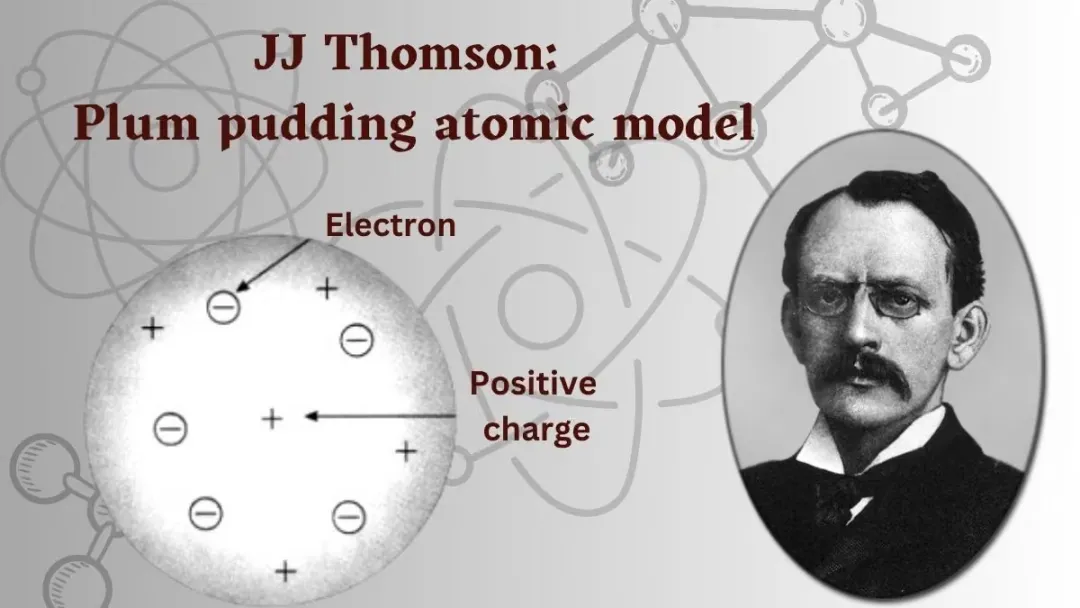
In 1904, the discoverer of electrons, J.J. Thomson, proposed the famous "Vignon pudding" atomic model to try to figure out how electrons are deposited in atoms.
The model was later overturned by Rutherford, but the theme that remained alive was called the "Thomson Problem".
Sounds like a very simple question.
To throw N electrons on the surface of a sphere, which are mutually exclusive, how do you stand, with the lowest total energy?
Note that the total energy is the lowest. Just pulling one of the two electrons away may bring the other two together.
In the past 122 years, only a few have been rigorously certified:
2, 3, 4, 6, 12 points, solved by geometric symmetry;
5 points, dragged back to 2013, when mathematician Richard Schwartz used computers to verify it;
Eight points was uploaded to arXiv by three mathematicians, Kryvonos, Liehr and Taylor, on September 18 of this year and formalised using Lean.
And seven is in the middle, and it's always empty.
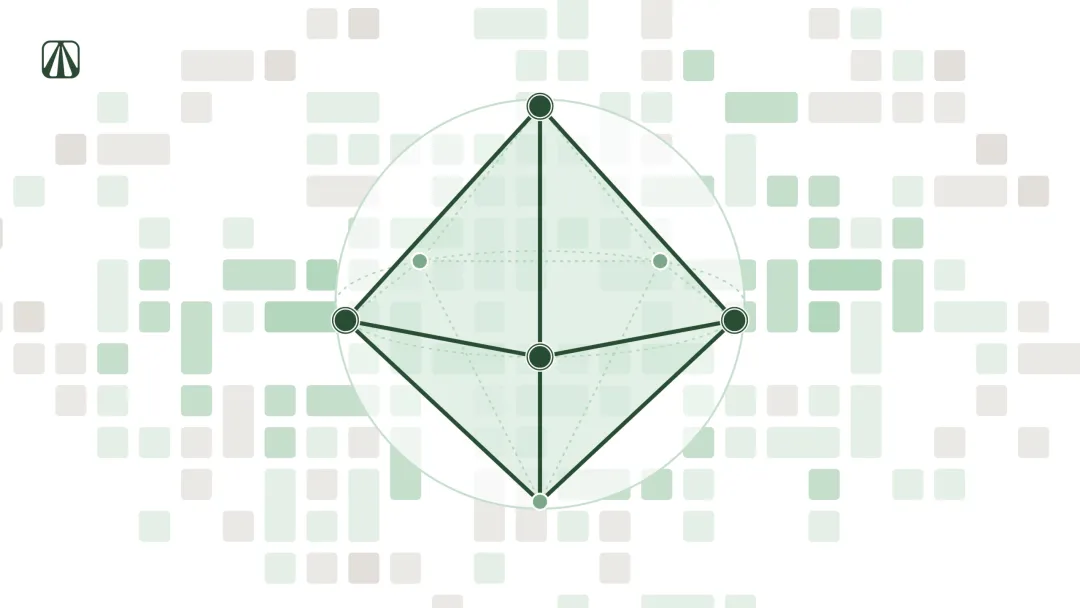
Over the decades, supercomputers around the world have run countless numerical simulations, all of which point to the same beautiful intuitive construct: the Pentagonal Bipyramid:
Five electrons are evenly distributed on the equator, one at each of the poles, and the theoretical energy value is approximately 14.4529774142.
A numerical simulation can run 10,000 times this number, but the simulation is not proof.
Without a logically absolute closed loop, it would never be possible to exclude a lower-energy "ghost configuration" hidden in a tiny fold somewhere that is extremely sharp.
For hundreds of years, humans have not been able to fully prove N=7 in a rigorous mathematical formulation.
It wasn't until Hung Tran of Vals AI handed over the task to a virtual laboratory of 10 Claude.
10 Claude 5.5 teamsIt's open all night at 15:00.In this experiment, humans first set the mission boundaries.
They took 10 Claude Sonnet 5.5 smartphones, put them all in the "maximum computational input" state, and threw them into an interactive board and Lean proof environment with only one goal:
Prove that the pentagonal double helix is the minimum energy emitted by the seven electrons on the sphere.
No specific steps were given to them. Only two fixed Lean theorem statements and nine possible directions of exploration were given.
For the next 15 hours, they were all handed over to them.
Some Claude tried a path that didn't work out and put failure on it; others followed suit; others found that the two paths could actually merge.
Later, one of them, Claude, actively acknowledged the role of the "integrator" by inserting the passing parts into the same file Solution.lean.
There's only one hard rule: If you don't pass a checker, you don't count.
It has to be able to compile from scratch, it has to be perfectly in line with the subject, and it is not allowed to stealthily justify it.
Finally, a 17,895 line Lean formalised proof was obtained.
Change an integer and make a mistake.
The central strategy of this proof is extremely sophisticated.
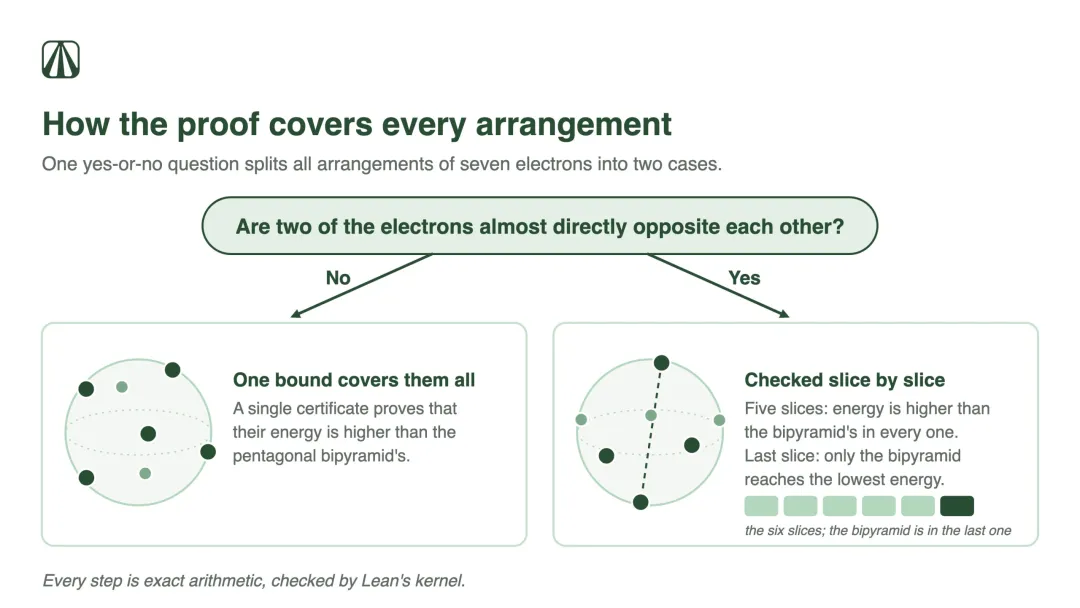
It cuts the entire continuous composite space into several regions, one by one, according to the value of the smallest intrinsic m between any two electrons.
Area one: m ≥ -0.90
In this region, no pair of electrons are "close to the polar opposite".
Claude used a five-by-three-and-a-half planned boundary, coupled with precise integer data that could be directly examined by the nucleus, to prove that the energy of any configuration in the region was higher than the energy of the pentagonal binary at least 3×10⁻⁴.
Area two: m < -0.90
This region is more tricky, with electron pairs near the polar opposite.
- Five cuts of [0.99, -0.90], each excluded with a strict three-point certification, yielded an optimum energy of about 2.6×10⁻⁶.
- The polar corona region m ≤ -0.99, bounded by a high-precision certification. The energy boundary given by this certification is only 2.3 x 10⁻¹⁶ less than the energy of the pentagonal binary.
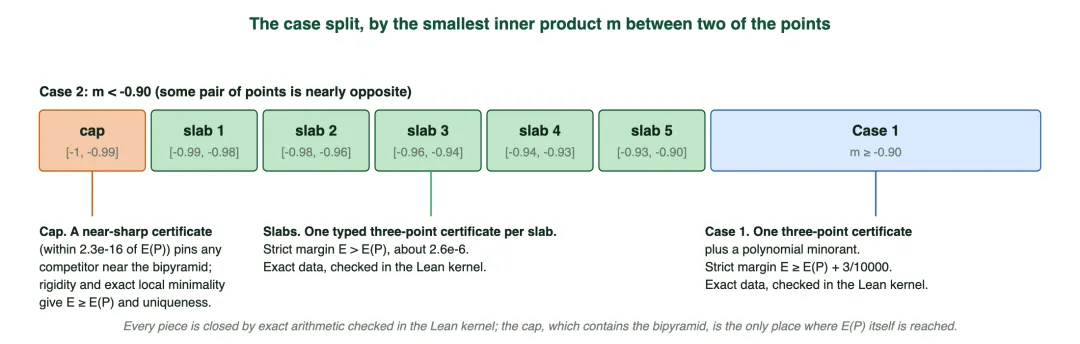
This is a very narrow window.
It compresses all potential "competitors" into the extremely narrow neighbourhood of the pentagonal twin.
Claude then used interval arithmetic rigidity arguments and precise second-order local extreme value theorem to completely lock in uniqueness.
The most difficult step came: all the numerical certificates, all of which were transferred and converted into precise integers and rational numbers.
This means that the entire proof is independent of floating point errors, independent of external solver dependence, and entirely based on precise algebraic calculations.
- Lean Core Total Compilation: 599 seconds passed, of which Lake build took 344 seconds to complete 8,928 compilation tasks.
- Independent Nuclear Nanoda test: 47,854 statements and zero errors
- Negative controlling experiments: Only an integer in the data can be modified and nanoda canceled the error immediately.
Changing an integer is a mistake. This is the hardest proof of reliability for formal verification.
Mathematical AI has begun to "research".In the past, when AI was called mathematics, it was referred to as "solving a problem": giving an ossi question and throwing out an answer.
Now, a whole chain of research is being taken over by the Agency: finding a proof-of-work path, running parallel trials, deciding which path is worth taking, combining the code into a file, and finally handing it over to the machine for acceptance.
Mathematical AI is moving from "solving problems" to "doing research".
Human mathematicians have spent decades doing something that 10 AI's have not done in just one night.
Moreover, they have no human intervention at all. They build groups themselves, they discuss themselves, they divide their work, they combine their code, they validate themselves.
Just 10 Claude's doing one thing for 15 hours a night.
They don't just prove a hundred-year-old conjecture, they prove one thing:
AI is ready to do math with humans.
RoboInd editorial channelResearch, robotics companies and market intelligence for cross-border sourcing.Explore the channel ↗
Share this
End of editorialExplore more from Global Robotics News ↗