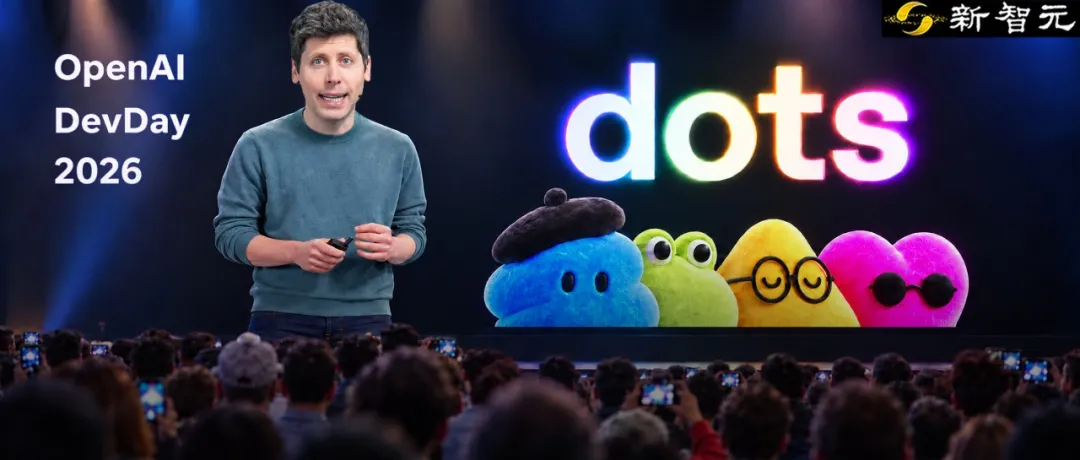
It's the first time in the history of the world.
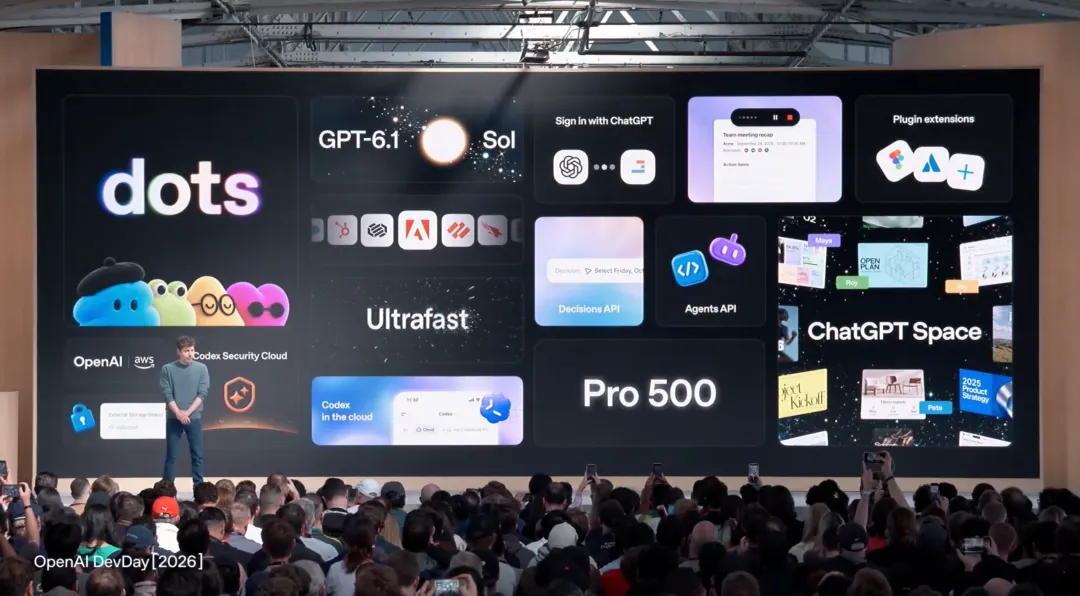
At Fort Mason in San Francisco, the OpenAI Developer Conference is on fire!Just as Ottman walked onto the DevDay stage, for an hour, he threw out 20 big releases.

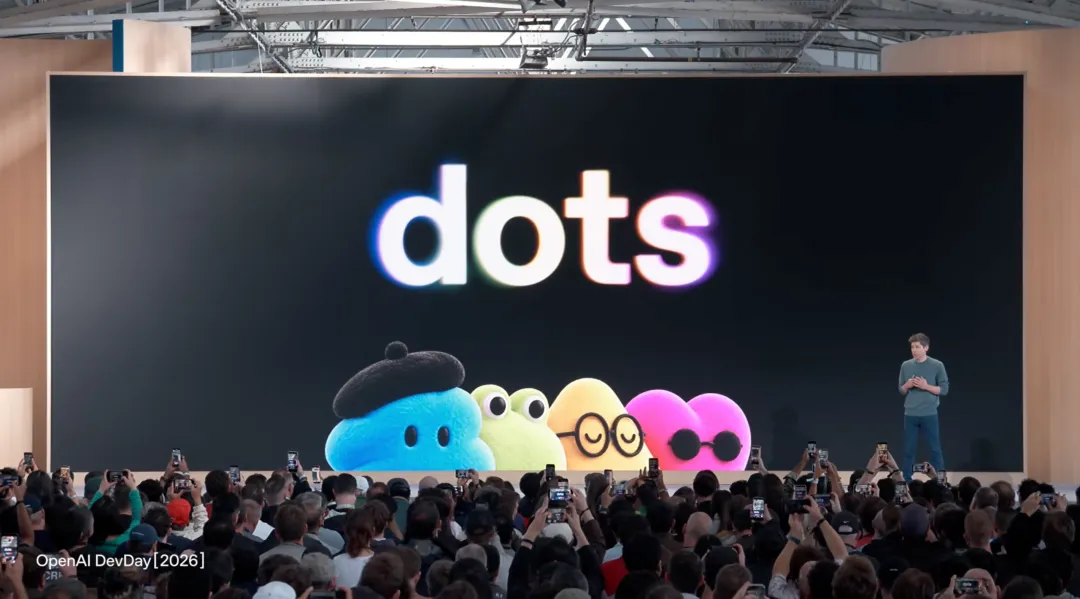
An entirely new species of dots, 7x24h online AI, is officially born.
Unlike ChatGPT, it was OpenAI's first standalone cloud computer, replacing human runtime codes at any time and as a "resident agent" for the ChatGPT project.
What's even more shocking is that the next-generation flagship GPT-6.1 Sol, a top-of-the-line Astra-level reasoning and coding capability, was offered by Ottman at a price cut of 80 percent.
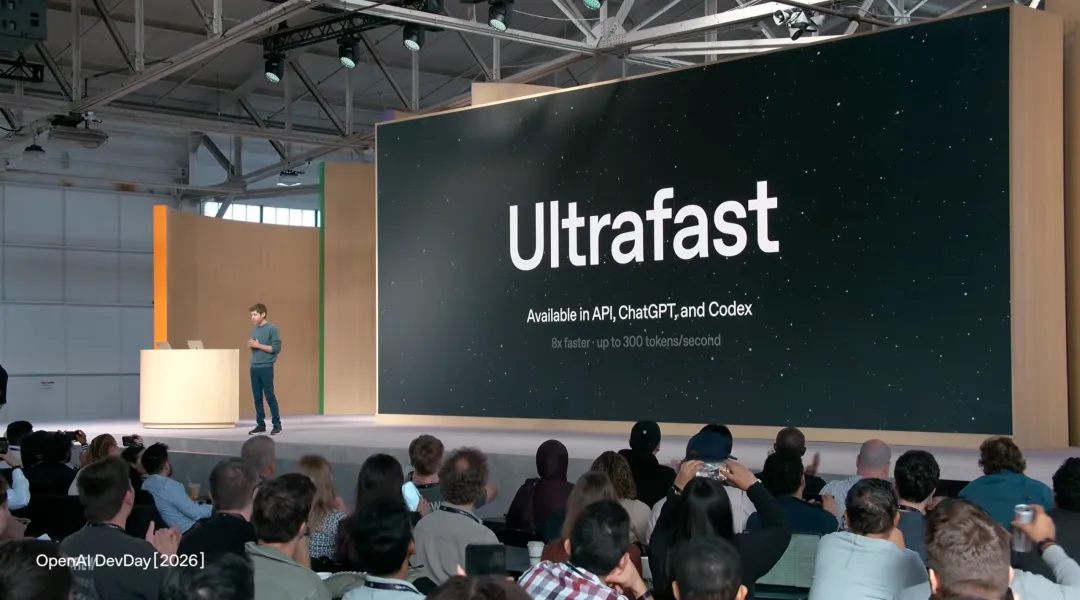
The ultrafast high-speed mode, which generates 300 tokens per second, is eight times faster than the standard version.

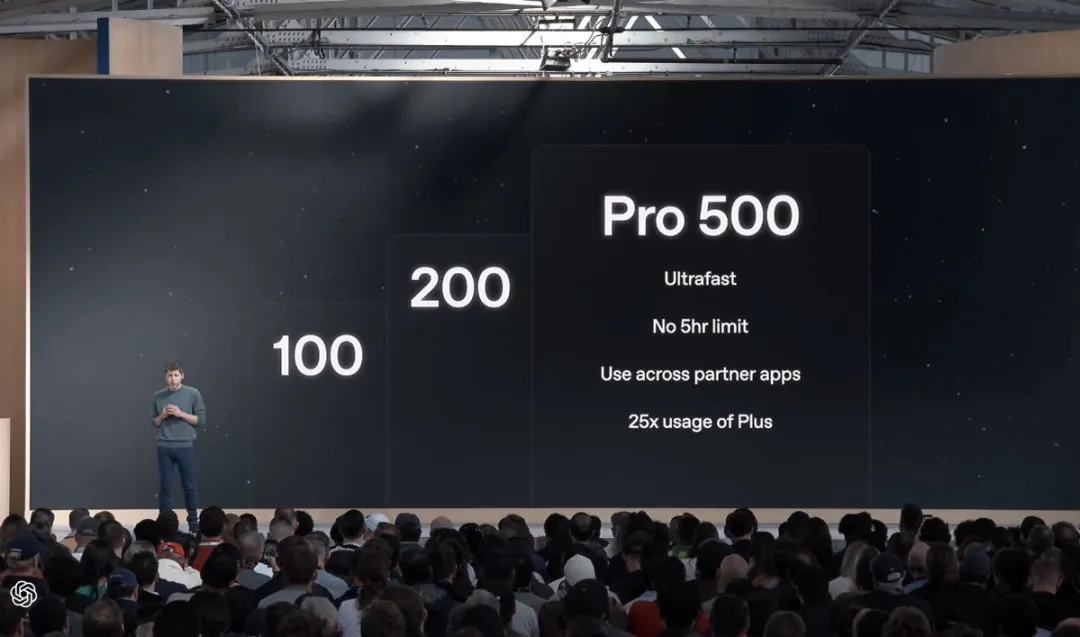
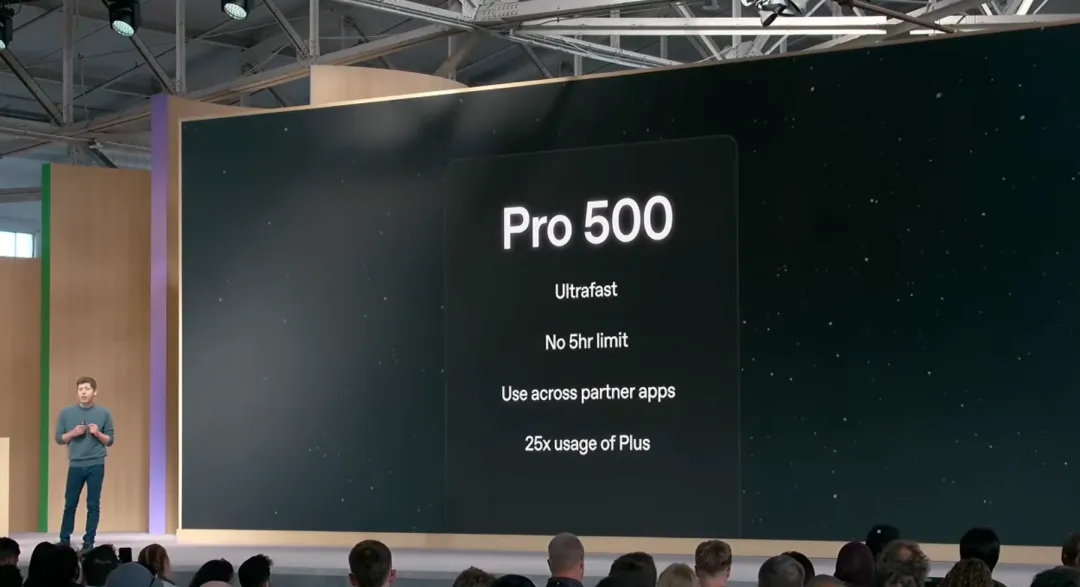
On the spot, Ottman reopened his $200 Pro subscription and for the first time threw out "The Noble Package" Pro 500.
Usage is 25 times that of ChatGPT Plus, which allows access to Ultrafast mode without a five-hour limit.
In addition, at the conference, OpenAI also released ChatGPT Space, the Agents API, the Codex cloud version.
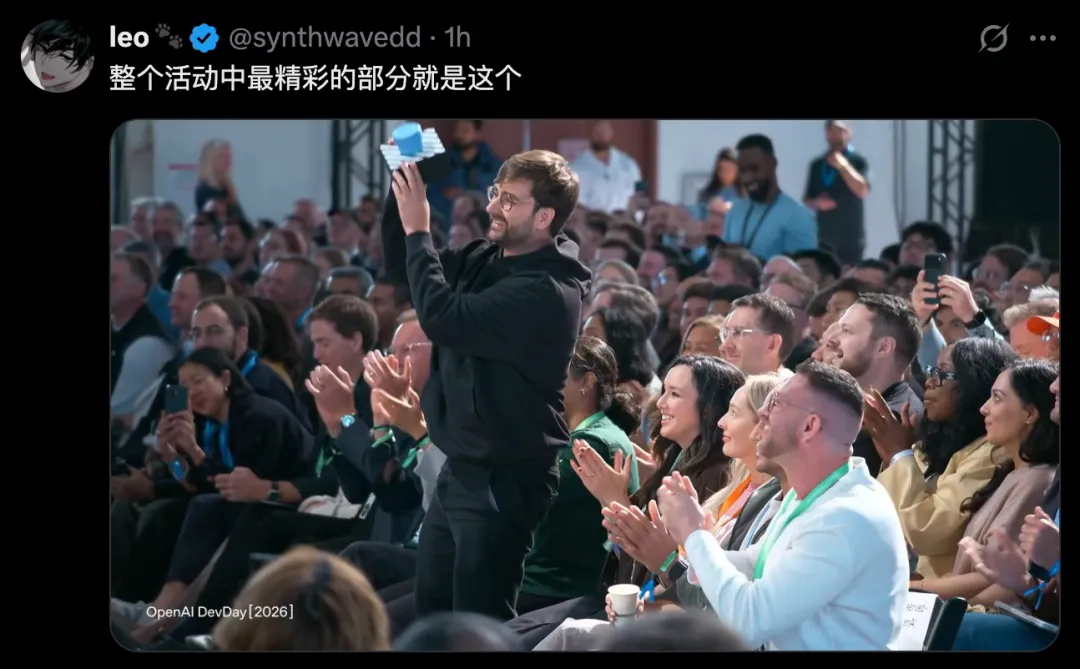
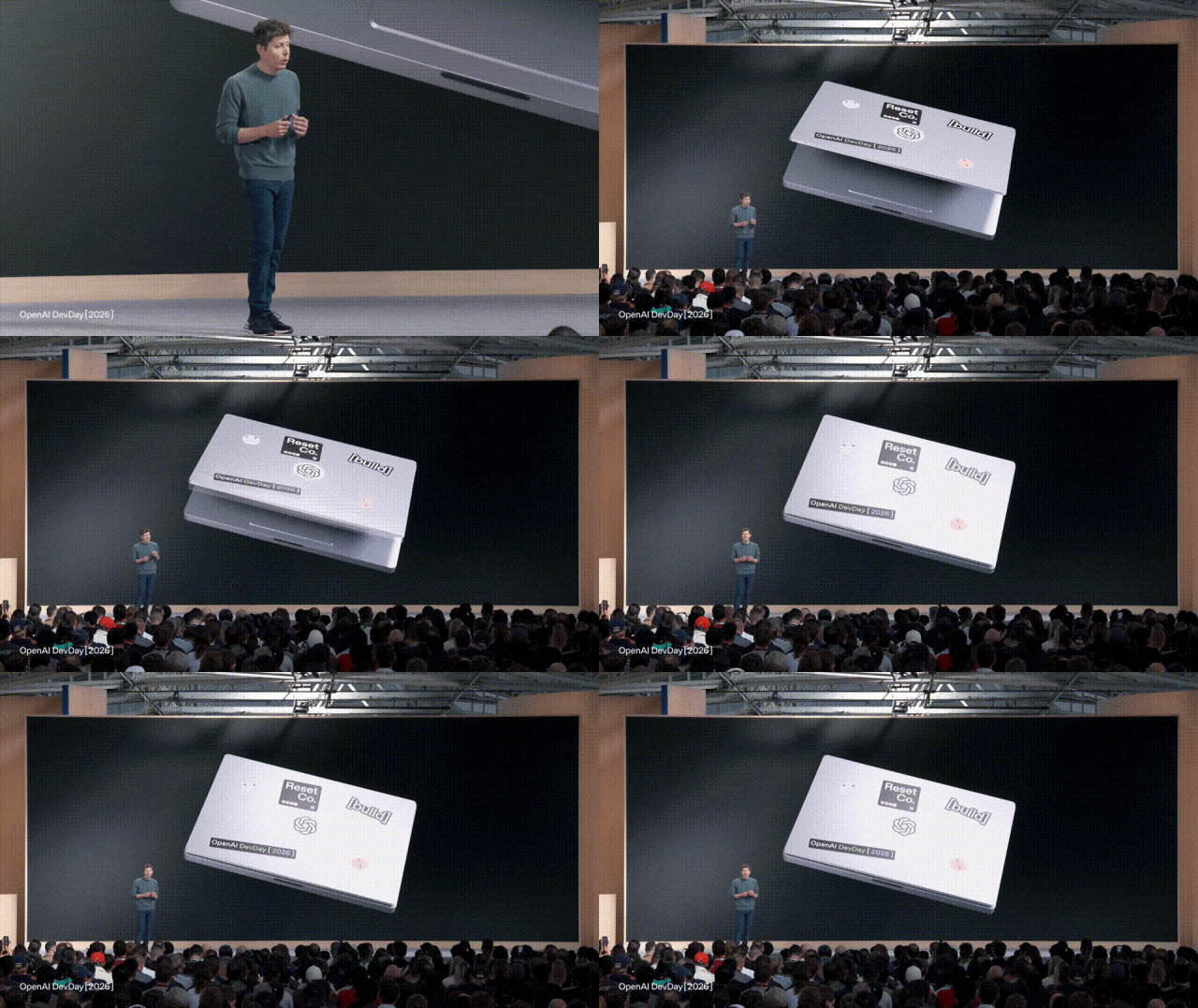
Finally, Father Tibo took a reset button and reopened it with a button for everyone on the scene.

There are comments from netizens that the most amazing thing about the whole event is this link.
The dots are coming.OpenAI is the first ever 7x24h online AI
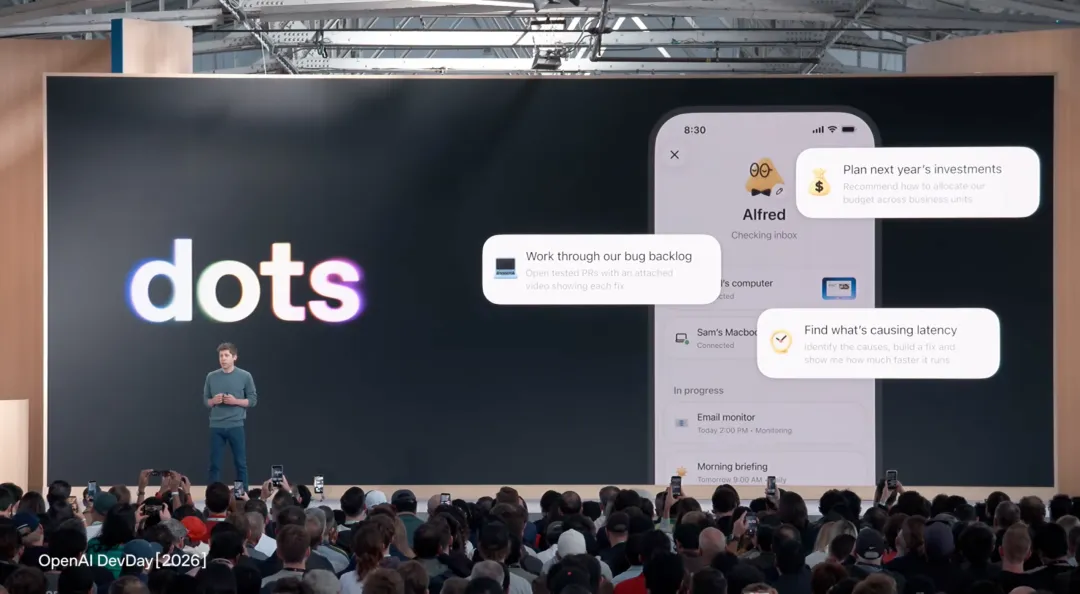
The main protagonist of the event is Dots.
It is not an OpenAI chatbot, or even a ChatGPT add-on.
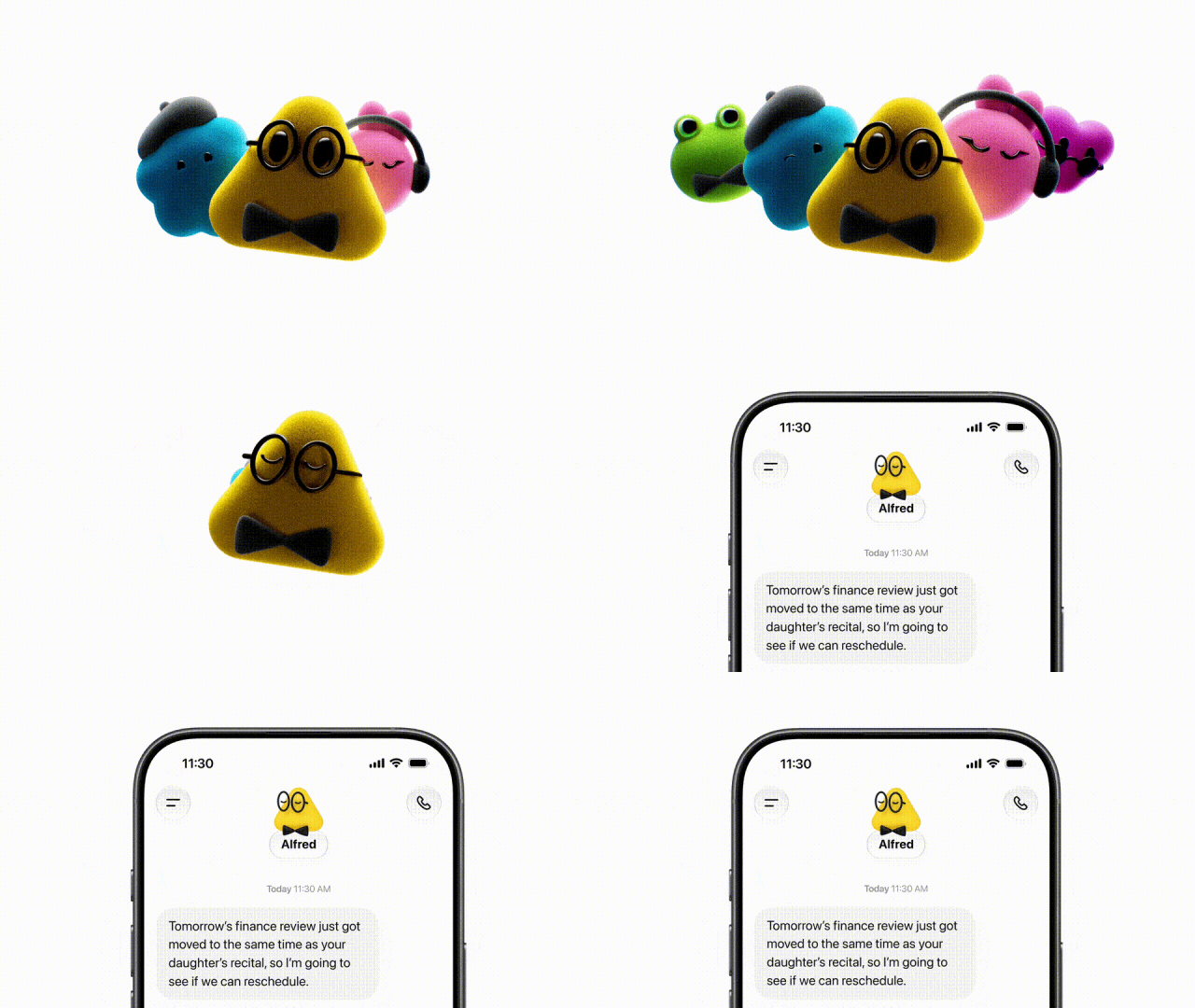
Dots is an all-weather, 7x24-hour online agent owned by GPT-6 Astra.
Not only does it have its own cloud computer and browser, but it also naturally opens up more than 4,000+ tools, directly into Slack and Teams.
Give it a goal, it does it by itself, without you having to teach it step by step.
With no ChatGPT login, the dots can be accessed anywhere, anytime, for you.
The process of the first meeting was quite ceremonial.
When you open the ChatGPT, your dot will say, "Hey, I'm your dot, I just got the ChatGPT report, and then I'll get the door".
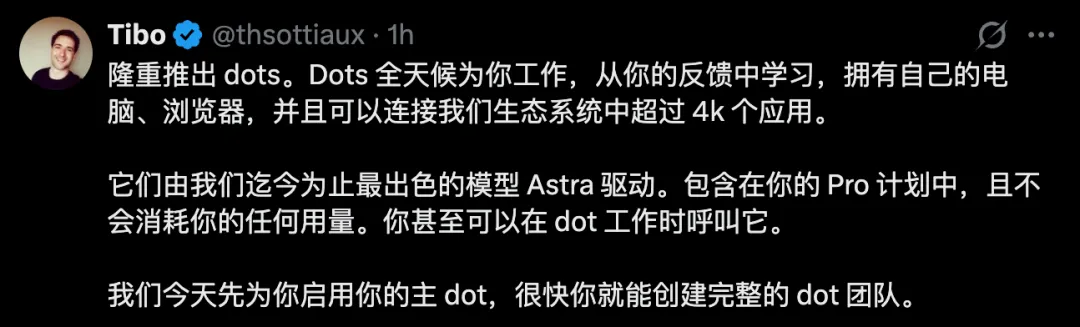
On the spot, OpenAI researchers named it Alfred.
From the second it was activated, Alfred took full control of all the shrapnel operations in the background.
- Automated construction and connection of stations
According to the revised design drafts, Alfred independently pushed updates to the website in the background, encountering the need for human decision-making (such as replacing the first and third layouts) to activate a pop-up window alert, confirming that it is completed immediately after posting online.
- Cross-platform data tracking and board reporting
It autonomously monitors user feedback data in Teams, directly synchronizes updates to the Board's reporting PPT, and even accurately crawls through core metrics.
Product ease-of-use has skyrocketed, with revenue growing 51% year-on-year.
- Long-term engineering reconstruction
From meeting logs at Google Meet to capture "Apps need to migrate" information, automatically scan the process and draw up an architecture.

There's another real case from within OpenAI: an employee who forgot to develop a ticket for a publishing house, and after discovering that his Dot was automatically ready to issue a ticket, sent a message asking him, "Do you want to send it out?"
He confirmed that it was done.
This is the underlying logic shift of Dots: it's not a tool, it's a colleague.
You hire a digital employee who never asks for a vacation, never forgets, who is online 24 hours a day.
And the more it uses it, the more it learns about your preferences, your standards, what "good" is in your mind.
Of course, Ottman didn't shy away from security issues either. Each dot runs on independent cloud computers, isolating personal computers and data by default. It doesn't expose the code to the model when it uses stored passwords.
When it is not performing a task, it uses read-only permissions in the background, "active research", and does not send messages or modify any content.
On stage, Ottman said a remarkable line, "You're not using a tool, you're building a team".
Starting today, Pro, Business Premium and Enterprise users can create their first Dot without using ChatGPT.

This is an interesting release. Over the past year, all Silicon Valley giants have added AI to Google Docs, AI to Notion, and Copilot to Microsoft Office.
But OpenAI did the opposite: it directly created a "native AI" collaboration space.

In Space, you can collaborate with colleagues and their respective Dots on the same page.
You can write plans on the page, do research, generate charts, analyze data.
You can drag Dot in and ask it, like a colleague, "Help me turn this into a column diagram".
More importantly, Space makes Dot's work no longer "in someone's chat log". Team owners and all Dot's share the same knowledge base, and the context of the project will not be interrupted by changing people.
In Ottman's own words, "You have pages and files in space together, like a disk. But space is alive".
GPT-6.1 Sol shocks the sceneAstra-class smart, 1/5 price
It's been a while since we've released a new model for DevDay, and we didn't expect too much.
Unsurprisingly, Ottman threw out the next-generation flagship GPT-6.1 Sol, which was applauded.
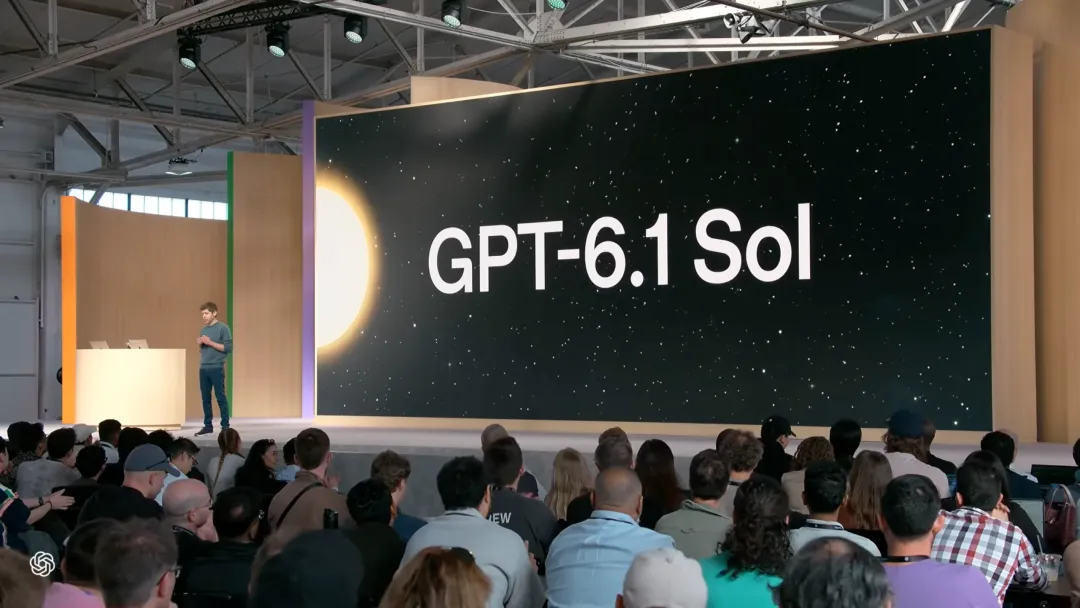
This is another major release by OpenAI, less than a week after the release of GPT-6 Sol.
The GPT-6.1 Sol is a super-powered model, directly matching the performance of Astra in the DeepSWE v1.1 software engineering test.
In addition, the long-term business automation assessment of AutomationBench and the scientific reasoning of Terminal-Bench Science directly overturned Opus 5.5.
Of the long-range tasks OSWorld 2.0 performed by the operating computer, 6.1 Sol was only 2.1 percentage points behind Astra, costing about one-seventh.
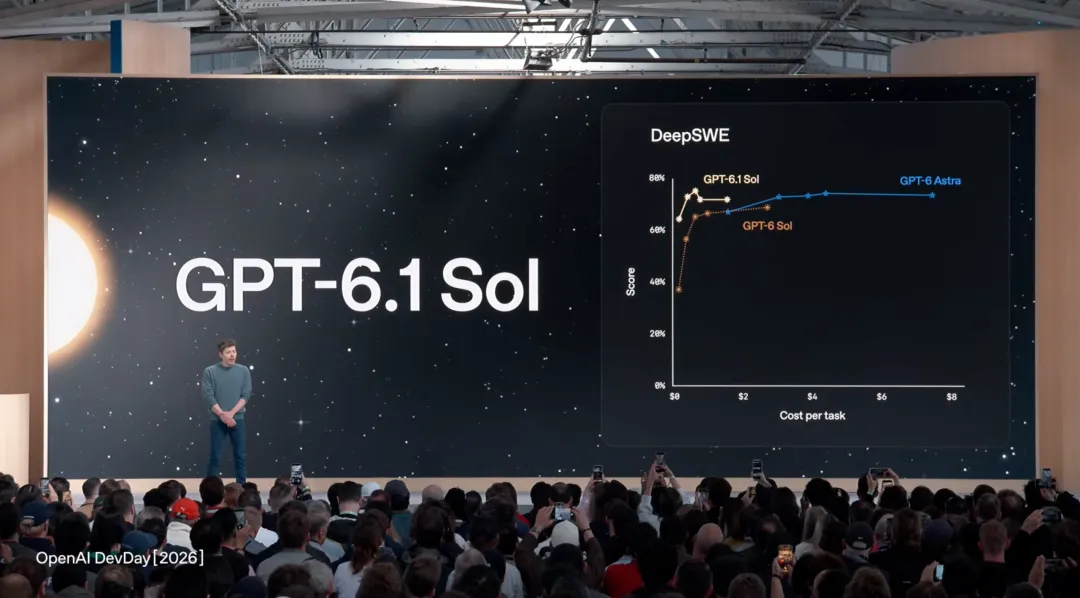
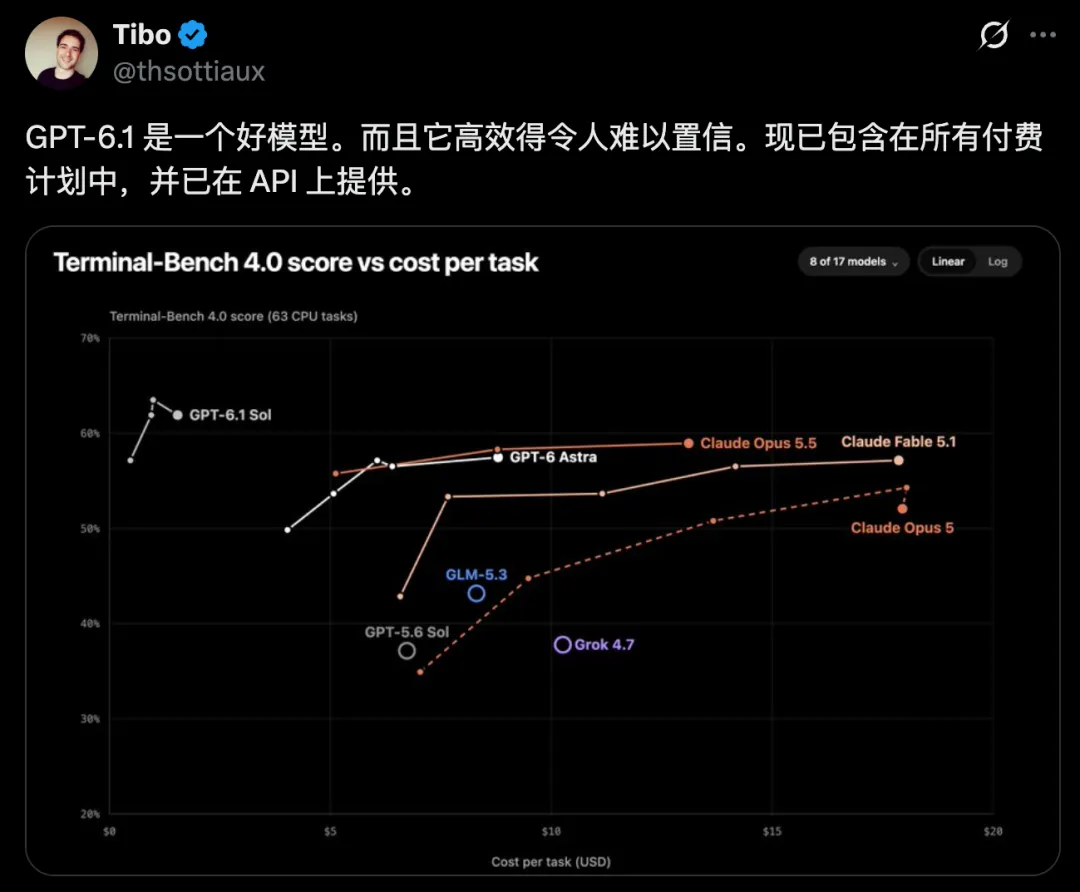
In terms of price, the GPT-6.1 Sol once again shattered the threshold.
Two dollars per million tokens are entered and 10 dollars are issued. $10 and $50 for Astra are only one-fifth.
Even more exaggerated is context caching, which costs only $0.10 per million of tokens, up to a 95% discount on standard input.
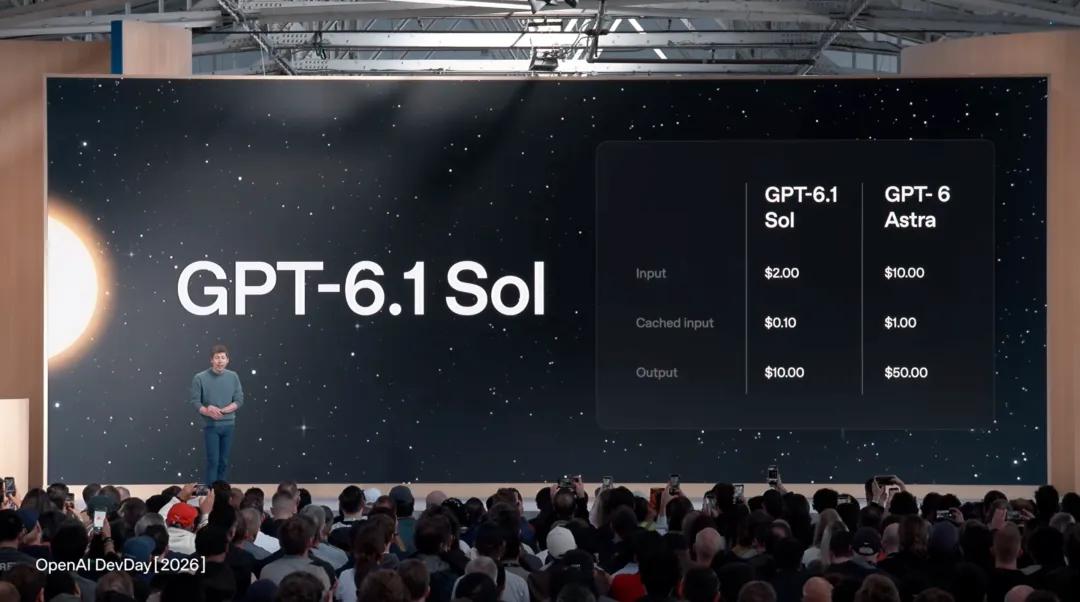
On the spot, Ottman also introduced Ultrafast Logic Mode, which is eight times faster than the standard mode, with about 300 tokens per second.
In the live demonstration, the same "rocket-building" mission, Ultrafast's rocket has already been launched, while the standard model has not been completed.

Currently, Ultrafast initially only supports Astra and will be open to Sol.
To match the frequency of such horrific calls, the previously suspended Pro 200 membership has been fully restarted.
Not only that, OpenAI further pushed the Pro 500 rating, 25 times Plus's call rate and Ultrafast's native usage rights, completely unlocking the productivity limit.
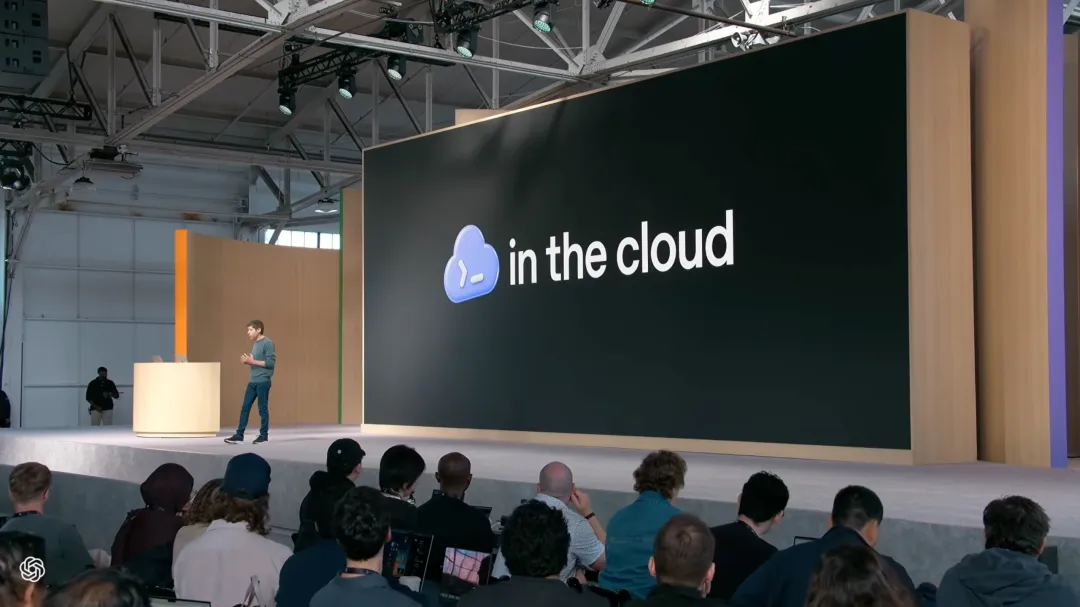
Codex moves to the cloudWriting code without having to watch the computer
After all, DevDay is the home of the developer, and the codex line is nowhere to be found.
The biggest change is that the entire codex has moved to the cloud.
The development environment can be set up in advance, reused repeatedly, and the permissions set once is enough. You are outside and you can remotely control it with your phone.
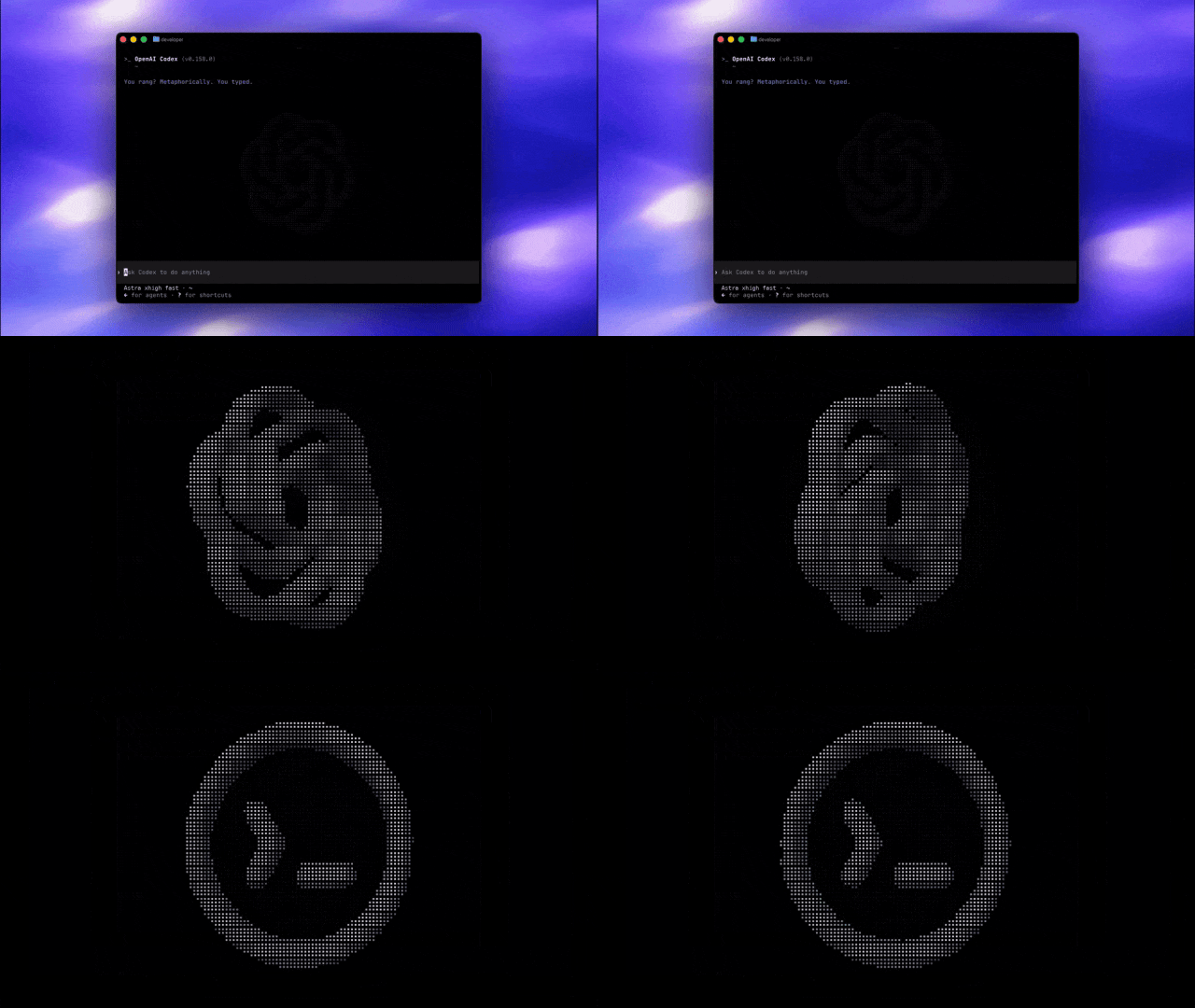
The command line version of the Codex CLI has also been modified, allowing direct voice commands to be used to change direction in the middle.
The newly added/agents view can clutter multiple subtasks at once, and will not be disrupted for long periods of time.
ChatGPT's desktop has a lot of code reviews.
As soon as you leave the computer, it automatically reviews the changes and reviews the comments directly back to GitHub or GitLab.
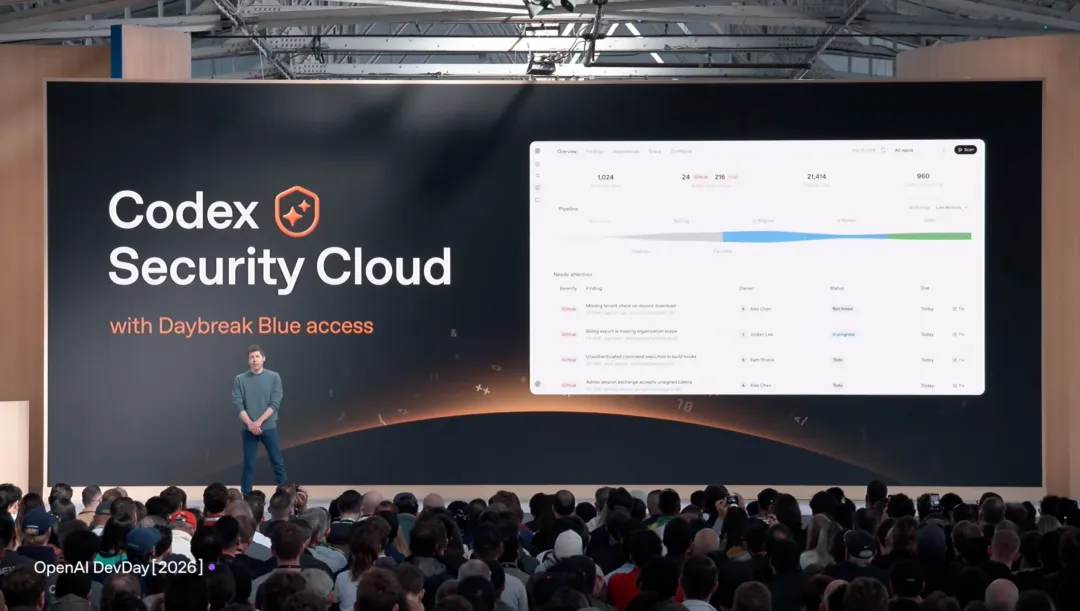
Codex Security Cloud is dedicated to cracking security vulnerabilities.
It scans the entire GitHub repository, checks each new submission, checks it out, reviews it, and then prepares the repair program for you to test.
There is a lot of excitement around the API.
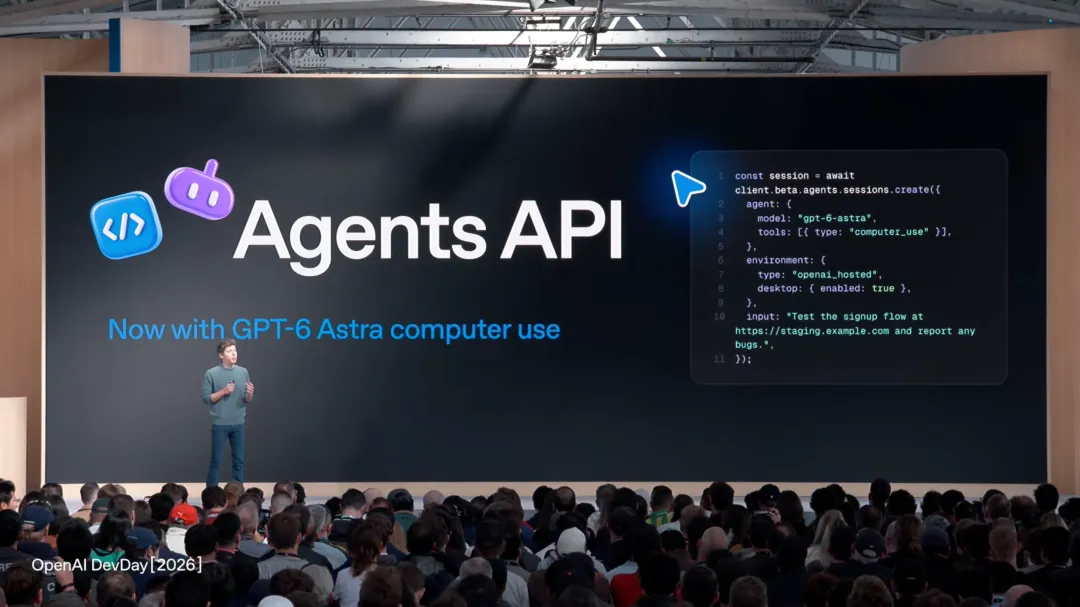
The underlying technology that drives the dots is directly packaged into the Agents API.
Computer operations, multi-intelligent collaboration, tool searches, and context compression allow developers to make direct calls, equivalent to putting out a dot themselves.
Another new interface is the Decisions API, which deals specifically with decisions such as "quickly picking one out of several fixed options", such as which category an email should fall into, and which button the smartphone will click on next.
The pre-tested editors ran it through the computer's operating playback, selected 78 times to 76 times, and responded with only 230 milliseconds.
However, in another group of dialog classification tests, it matched the accuracy of the opponent's model and slowed down.
Tibo also unveiled a set of tokens for the OpenAI Core Interface Responses API, which is 100 times faster than it is today last year, with availability still at 99.9%.
Personal intelligence warfareOpenAI brings out all the basicsMore than 20 of these releases were released this evening, and each of them could be written individually.
All in all, OpenAI actually does only one thing: turn ChatGPT from a place where you ask questions to a place that works for you.
Cheap Sol lets smartphones open up, dots connect to the past, Space and Pages give them jobs, plugins connect to an external application, and subscription fees can even go to Notion and Devin.
The reason for this haste is because the opponent has already rushed to the front.
Meta's Muse has been online for three weeks, has been downloaded over 3 million times, is free to use, only with weekly limitations, and has recently expanded to small businesses. Google's Spark is already working for users in the cloud 7x24 hours, and SpaceXAI has launched Grock Bot.
Individual intelligences have become the next entry point for every giant.
What's so special about dots is the way it works: you haven't opened it yet, it's already put the results in front of you. It doesn't ask, "What do you need me to do?"
At the end of his speech, Ottman said, "Someone has described AI as a new industrial revolution. I don't like the metaphor. If it's right, it's more like a new renaissance".
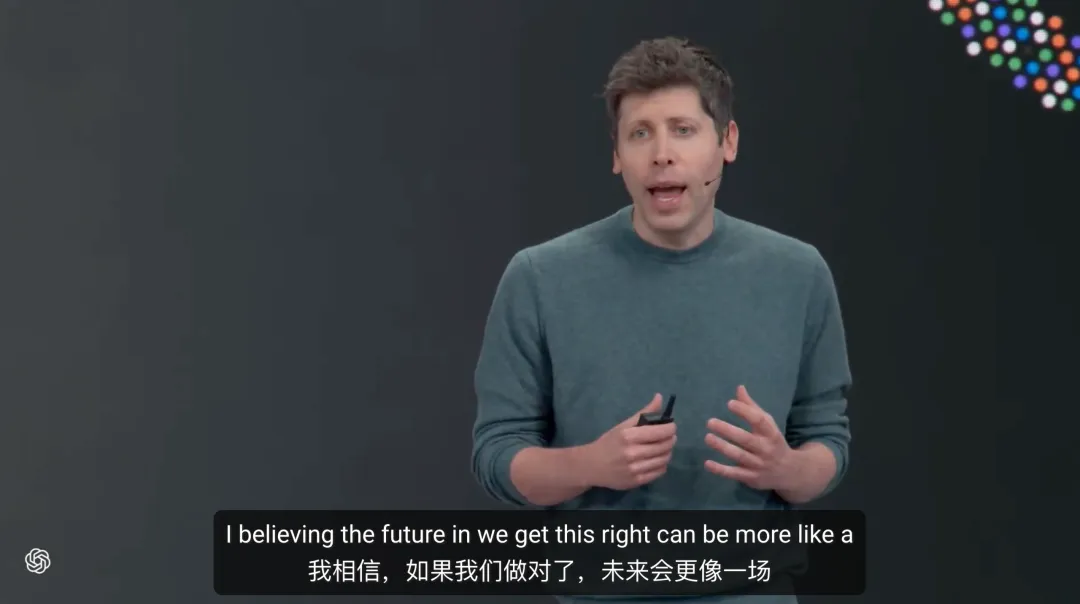
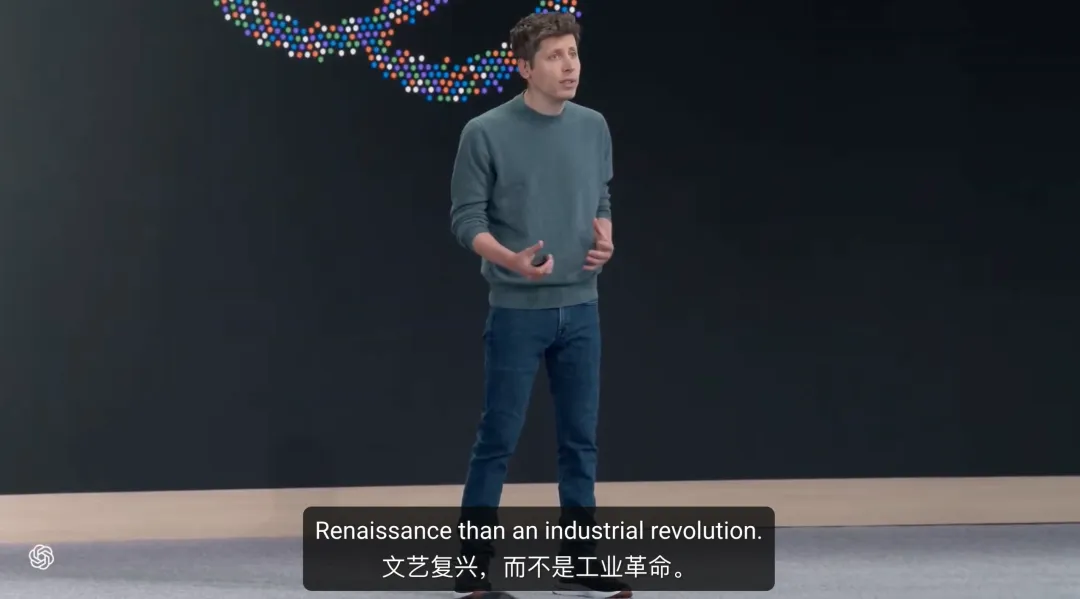
At the heart of the Renaissance was giving people more time to do creative, meaningful things.
What do you plan to do with the time you save if the dots can really help you deal with those boring, repetitive, distracting distractions?
The conference released a clear signal: AI is moving from "tools" to "colleagues", from "you use it" to "it's for you".
The transformation has already taken place.
Your dots are waiting for you.
RoboInd editorial channelResearch, robotics companies and market intelligence for cross-border sourcing.Explore the channel ↗
Share this
End of editorialExplore more from Global Robotics News ↗