What is it?It's the next link to robotics with agility.
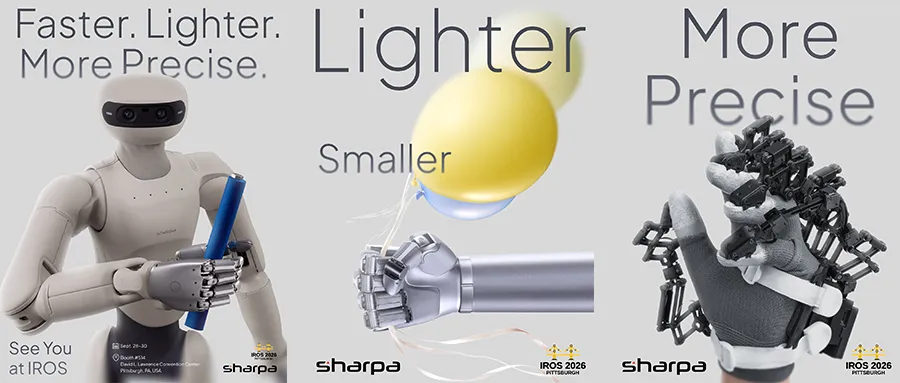
On September 28, at the David L. Lawrence Convention Center in Pittsburgh, Sharpa simultaneously showcased three complete sets of humanoid robots, shiny hands, and skeleton gloves. Unlike most exhibitors, which only showcased a single robot module, this showcase was not a new piece of hardware, but a concentrated set of shiny operating systems. It attempted to build end-to-end operating systems with closed-loop scenarios, relying on customer feedback, rebuilding system engineering ideas hardware, raising touch perception powers, breaking down real machine operation data acquisition problems, and ultimately directing down the shop's real business landscape rather than staying in the laboratory.
As robots move out of laboratories and standardized workplaces into real-world scenarios such as catering and retail, the industry needs to address a range of real-world problems: maintaining control accuracy in high-speed motion, identifying real physical contact, tools designed for human use, processing complex objects such as thin films and fluids, efficiently collecting high-quality operational data, and coordinating body, wrist, finger and touch feedback.
These overlapping problems are often referred to as sophisticated operations in the industry. Over the past decade, industry resources have focused primarily on visual perception and large models, with robots increasingly gaining insight into the world around them; but from perception to landing, the final step is almost entirely dependent on the level of interaction with the physical world, which is why sophisticated operations are considered to be the last kilometre of a humanoid robot landing.
The racetrack line is differentiated by the fact that manufacturers can select single-point breakthroughs to maximize agile hardware; and, like Sharpa, the layout of a complete agile operating system that synchronizes body, end-user, and human data input devices to allow the three to work together under a single standard.
The engineering value of this set is reflected in the layered, incremental verification of whether the components can complete the engineering reconstruction of the scene, the depth of touch perception coverage, the way in which real machine operations data are obtained, and whether the entire system can run steadily over the long term at the business door.
01.
How do three sets of hardware come up with a complete robot-operated shutter?
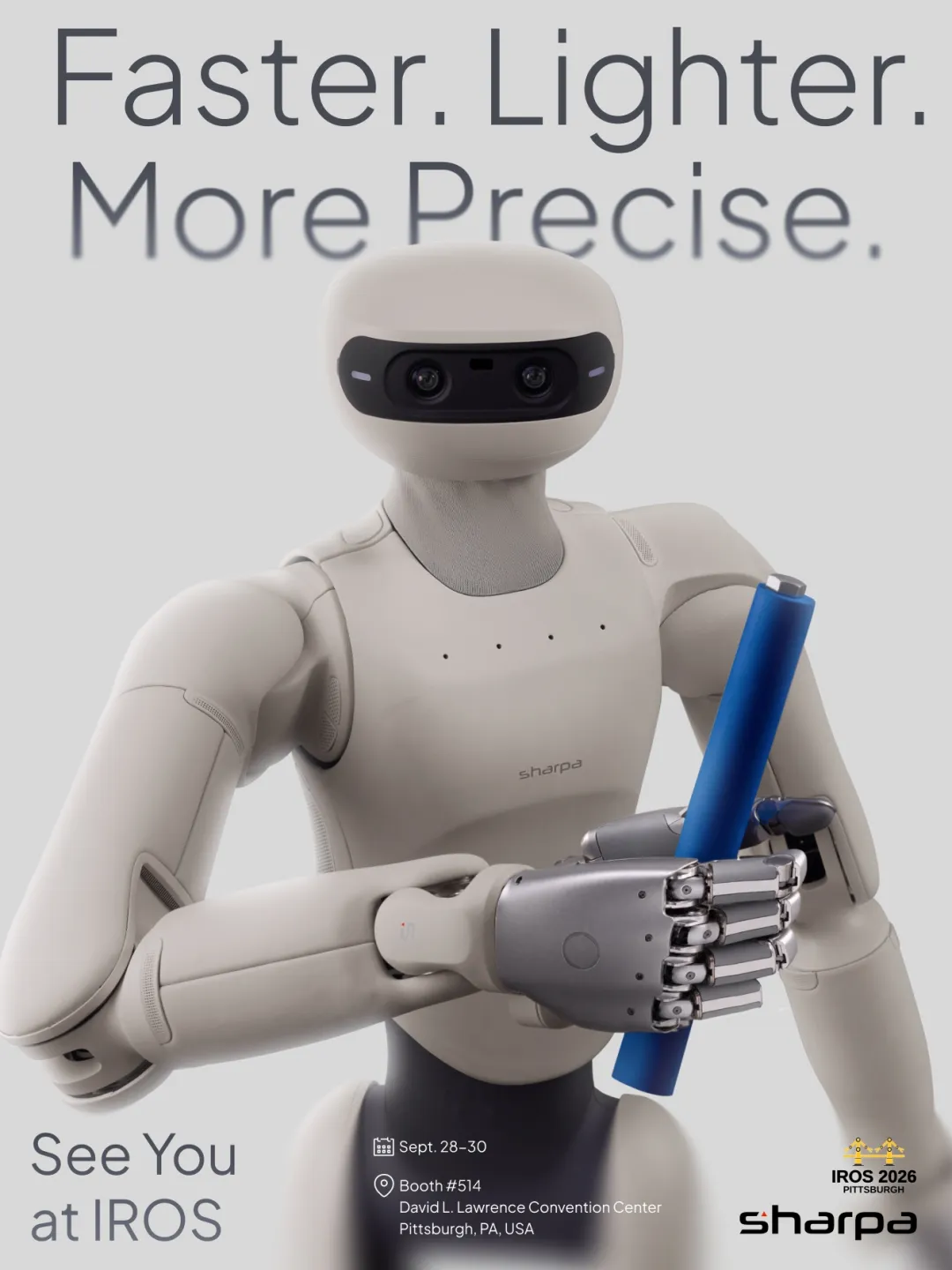
The D01 humanoid robot, the W02 craftsman, and the AE01 outer skeletal glove were introduced to perform the functions of intrinsic movement, end-operation, and human-machine data input into the three main modules respectively.
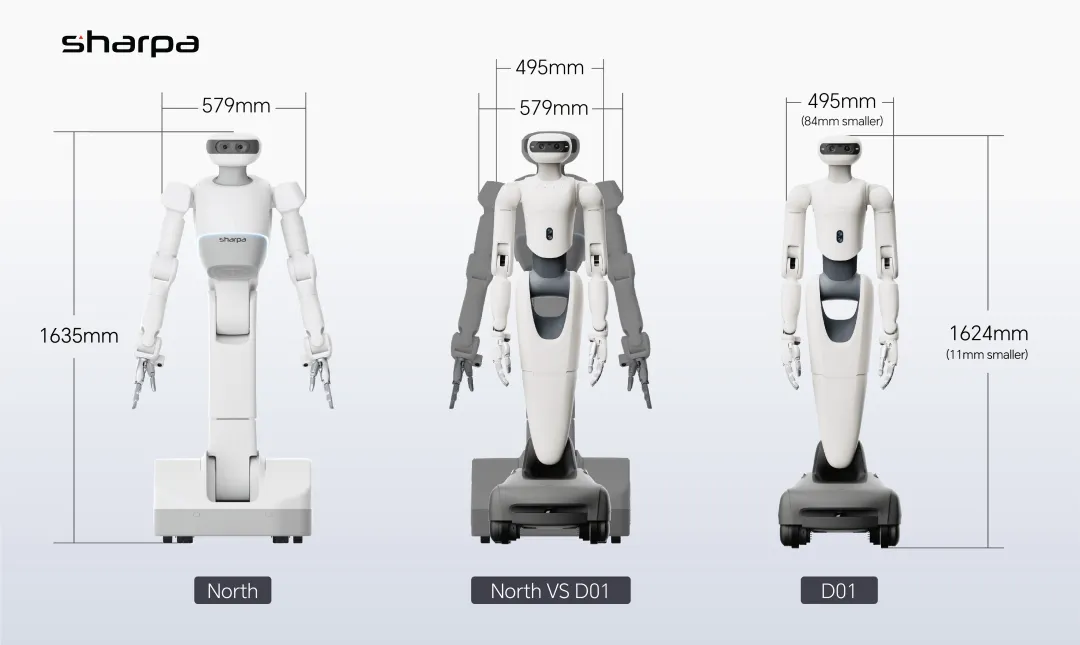
The D01 is Sharpa's first fully self-designed general-purpose humanoid robot body, with a 1:1 real-life size, arm-load self-weight approaching 1:1, end-to-end maximum operating speed exceeding 10.5m/s, communication frequency 1000Hz, repositioning precision of 0.2mm, and a ball-shaped wrist joint.
The product revolves around a stronger, faster and more precise three-way design, which configures the hardware to target long-term pain points: high-speed movement and high-precision control are difficult to achieve at the same time, and the goal of the D01 is to land both.
D01 also extends touch perception to the arm and chest. This whole-body touchset is not just a stack of sensors, but helps robots understand themselves, the physical interactions between humans and their surroundings, and supports human-machine interactions.
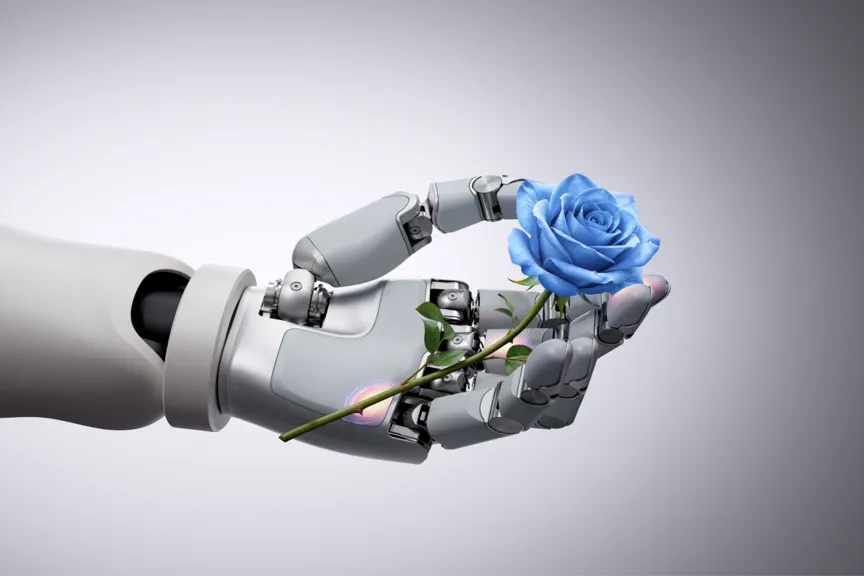
The W02 was reduced in volume by 30% compared to the previous generation, with a further reduction in weight, and the protection level reached IP54, with 21 active degrees of freedom integrated internally.
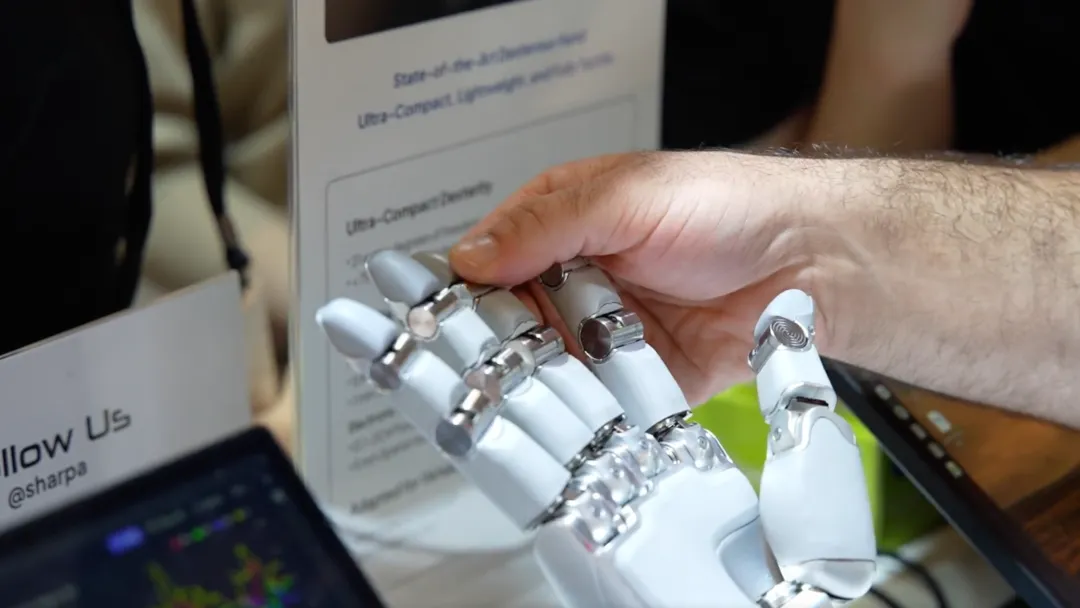
The fingertips are equipped with high-resolution visual touch sensors, a measuring range of 5mN-30N, a spatial resolution of 1mm; the rest of the fingers and palms are covered with electronic skin, a measuring power of 0.1-20N, a spatial resolution of 5mm, and a grip of almost zero radius, allowing for extremely thin objects such as cards and film.
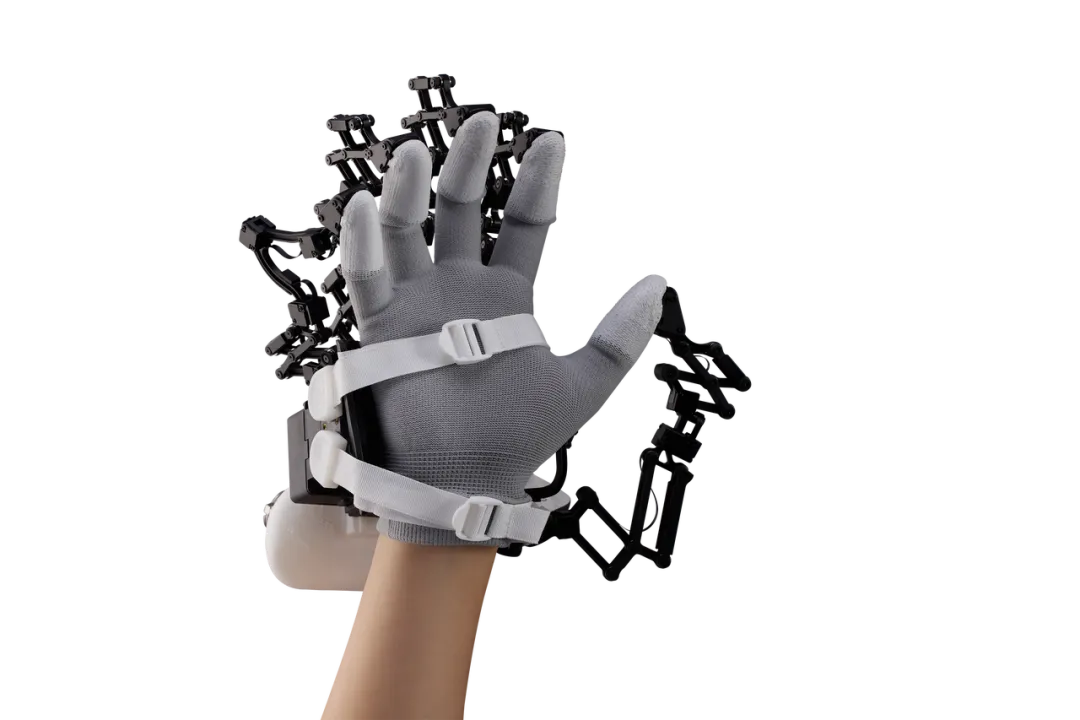
AE01 External skeleton glove controller machine data input, human hand native mouse design, equipped with 22 encoders, complete collection of human hand joint movement, providing 22 freedom input, finger positioning repeat accuracy less than 1mm; each finger has 256 degrees of touch feedback, which can transmit the robot's contact with external force signals back to the operator; equipment without labeling, stronger resistance to environmental interference.
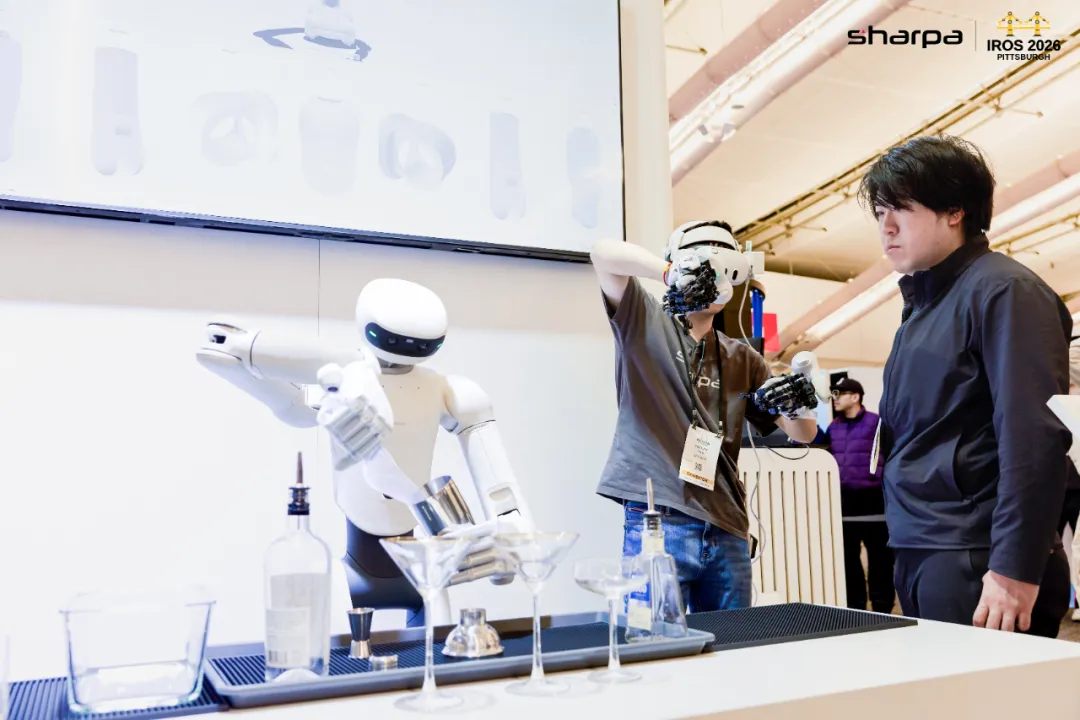
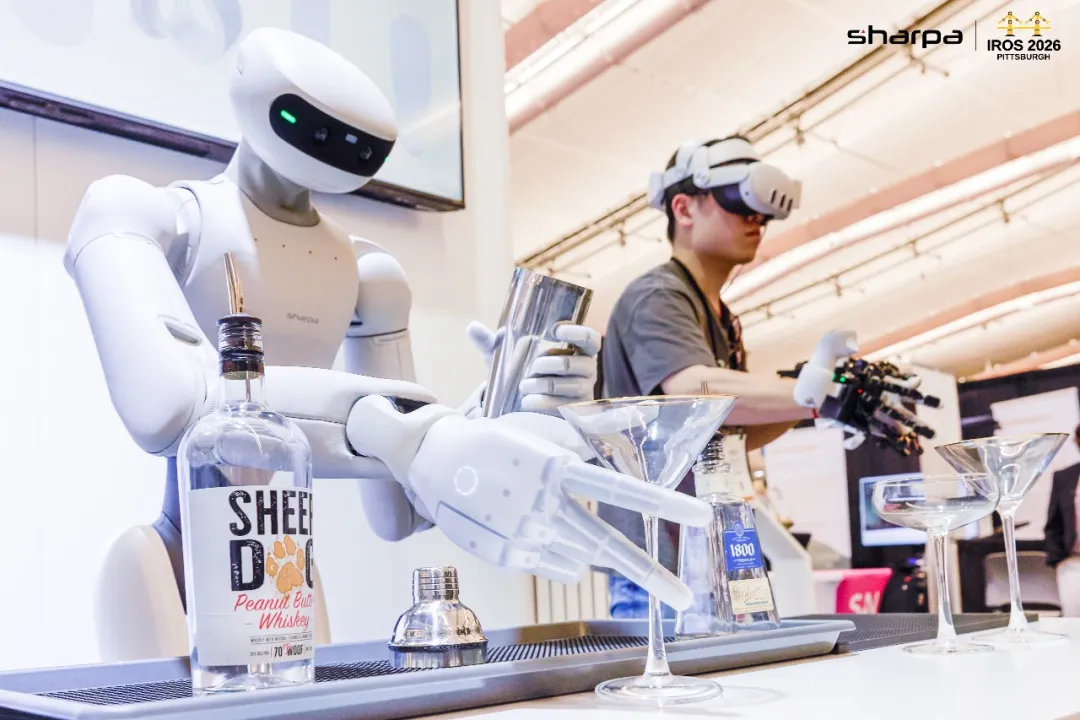
The three components comprise a complete workflow: the operator wears AE01 output action instructions and human intentions, the D01 itself is paired with W02 to accomplish real-world tasks; all contact power is recorded during operation; position gesture data is collected; anti-breastfeeding robot control strategies are optimized and overall capabilities are optimized. Data collection, entity execution, precision, touch feedback and the four major links are integrated into the same closed system.
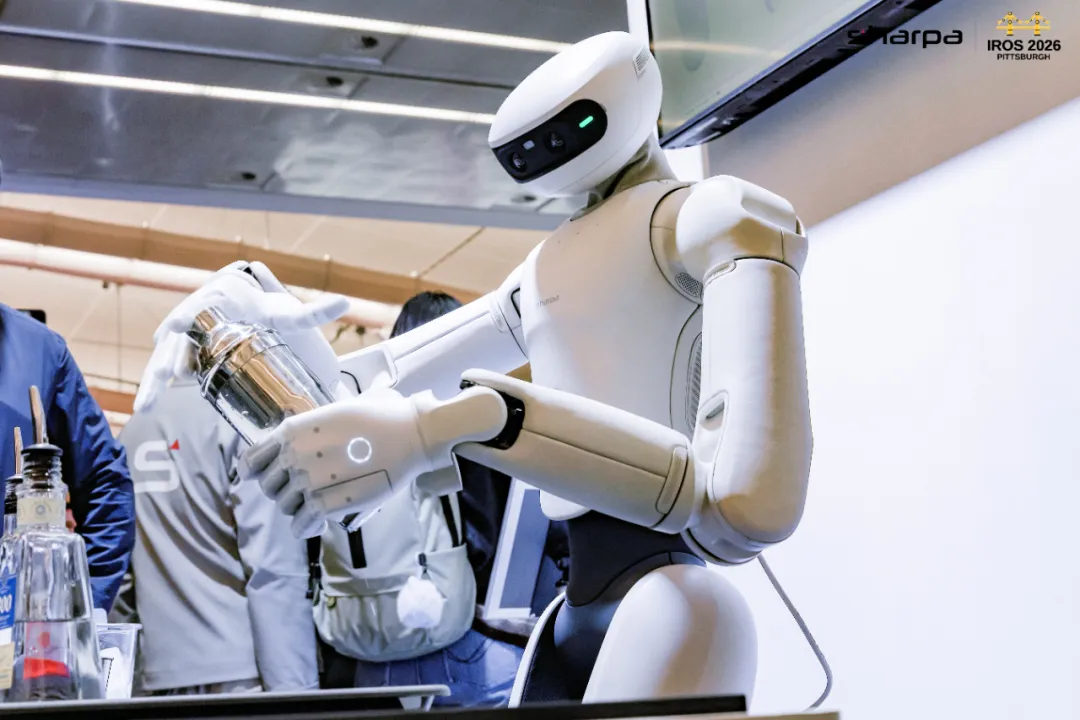
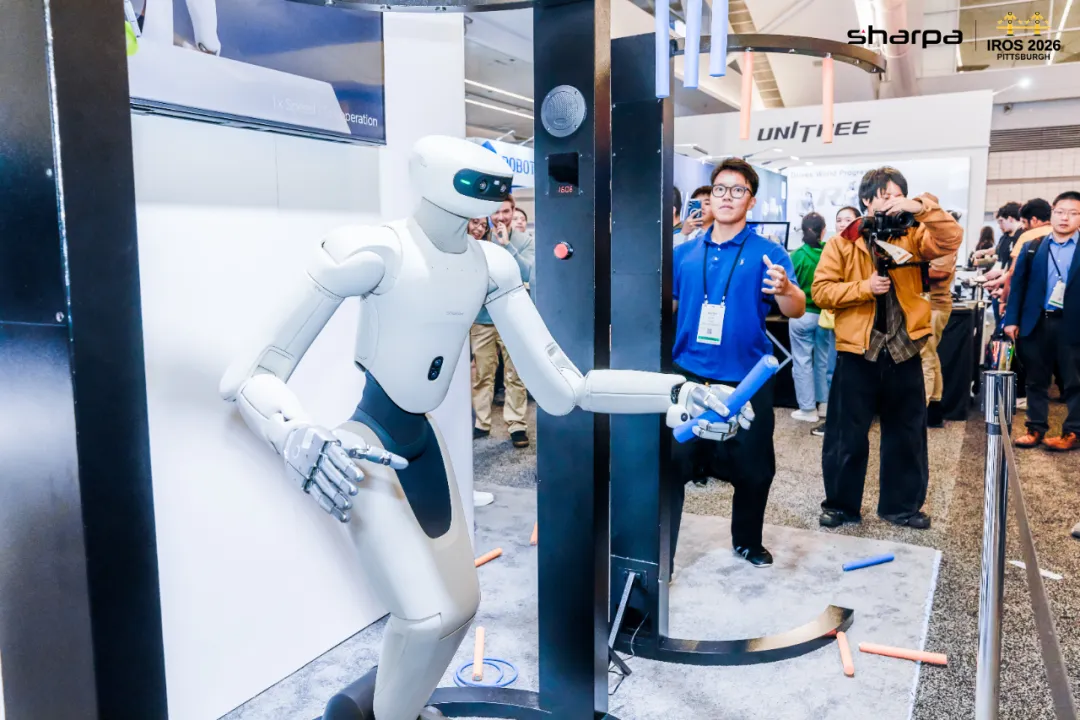
Sharpa also presented a number of real-world demonstrations at the IROS site, including the bat-taking challenge, full-body tactile response, and robotic cocktails.
The company's customers cover the world's leading robotics makers, universities and research institutes, and this debut, simultaneously aimed at industry and research, sends a clear signal that its capabilities are no longer limited to this finite-handed endpiece. The company was founded at the end of 2024, with a team of more than 300 people, and 80% of the R&D staff.
After the closed loop run, the tests were carried out at the component level. The system was designed to run for a long time in a real environment, with a completely different rating scale for the design of the components and the laboratory samples. A modification of the W02 explains the new scale.
02.
Why actively cut a degree of freedom?
This time around, there is an anti-industry consensus change: the previous generation W01 has 22 active degrees of freedom, while the new W02 has been reduced to 21.
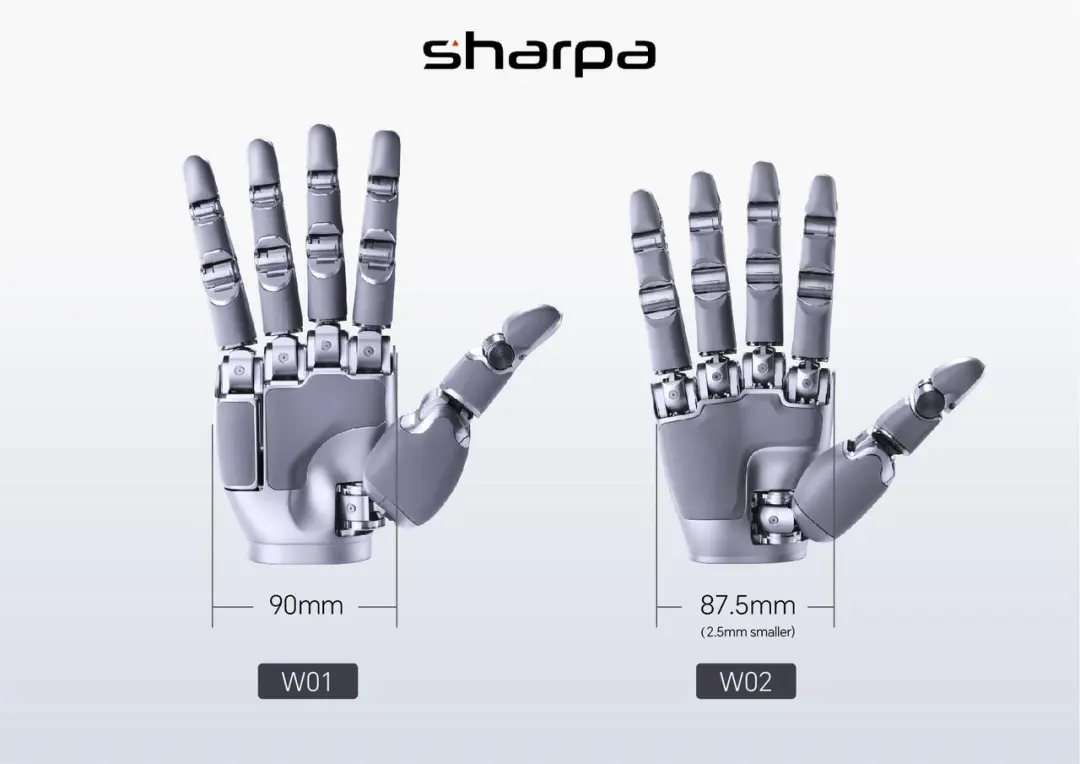
Sharpa's change comes from actual engineering research: the new version eliminates the CMC rotary joint at the base of the thumb. Experiments found that the joint only achieves thumb rotation, with low utilization rates in everyday crawling operating scenarios; removal can simplify the mechanical structure at the base of the thumb, reducing the risk of part failure.
This change is a shift in the logic behind smart hands evaluation. When smart hands are just independent laboratory samples, manufacturers tend to stack freedoms, prioritizing all kinds of demonstration effects, which can be temporarily ignored. Once smart hands are installed as a component in the forearm of a humanoid robot, in the face of long-term operation, collision, dust vapour, etc., evaluation standards shift to stable, low-cost, long-term reliable work.
The rest of the W02 indicators also revolve around practical design. The volume is reduced by 30%, the size is close to a real palm, and can be accessed in small spaces designed for humans; the weight reduction reduces the load on the forearm of the robot, improves the overall machining speed, durability and control pressure; IP54 protection, adapted to real-world continuous operation, and not just for exhibitions. It no longer chases the parameters of paper hardware, but balances the ability to operate integrated under human-sized constraints.
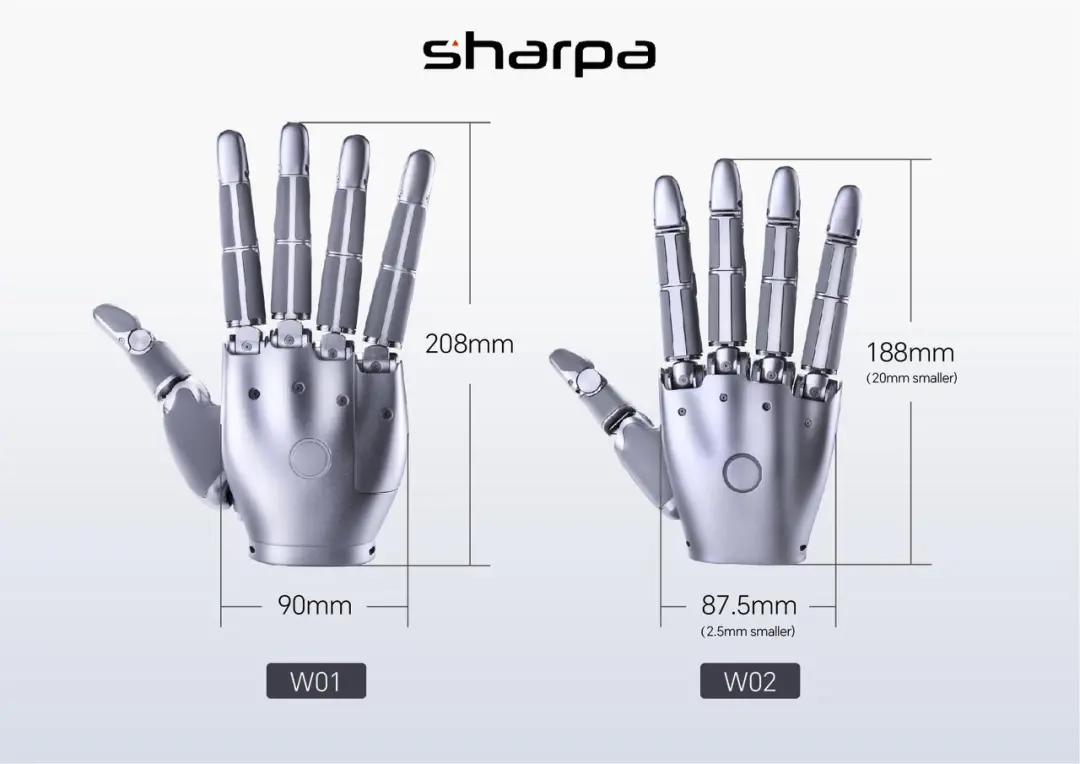
There is an interesting set of hardware alternatives: the input-end AE01 glove retains all 22 individual hand freedoms, complete recording of human hand movements; the executive-end W02 slick hand shrinks to 21 freedoms, streamlining the real-world tasks.
This is not a design contradiction, but a set of clear logic: the data collection link retains human action information as fully as possible, and hardware execution prioritizes engineering reliability. The complete 22 degrees of freedom raw action data can both drive 21 degrees of freedom hands to complete tasks, and in the future can be adapted to other structured robotic hands; if the information is removed during the collection phase, the data loss will be irreversible.
The majority of companies in the industry are still using the frequency parameter, Sharpa is actively reducing the frequency, which means that it has designed products from a systems engineering perspective rather than a simple frequency parameter table. The structural space and reliability residues saved from the frequency are projected towards touch capability.
03.
Why can't we just touch the fingertips?
If W02 is deduced in degrees of freedom, the whole new set is continuously encoded by touch perception.
Over the past decade, industry resources have invested heavily in visual perception, cameras, and depth sensors to solve the problems of object position and shape recognition. However, most of the difficulties in real-world operations occur after contact: how much force is required to pinch crumbs, tighten bottle caps to determine how to stop timing, and pinch the edges of thin paper to prevent slipping.
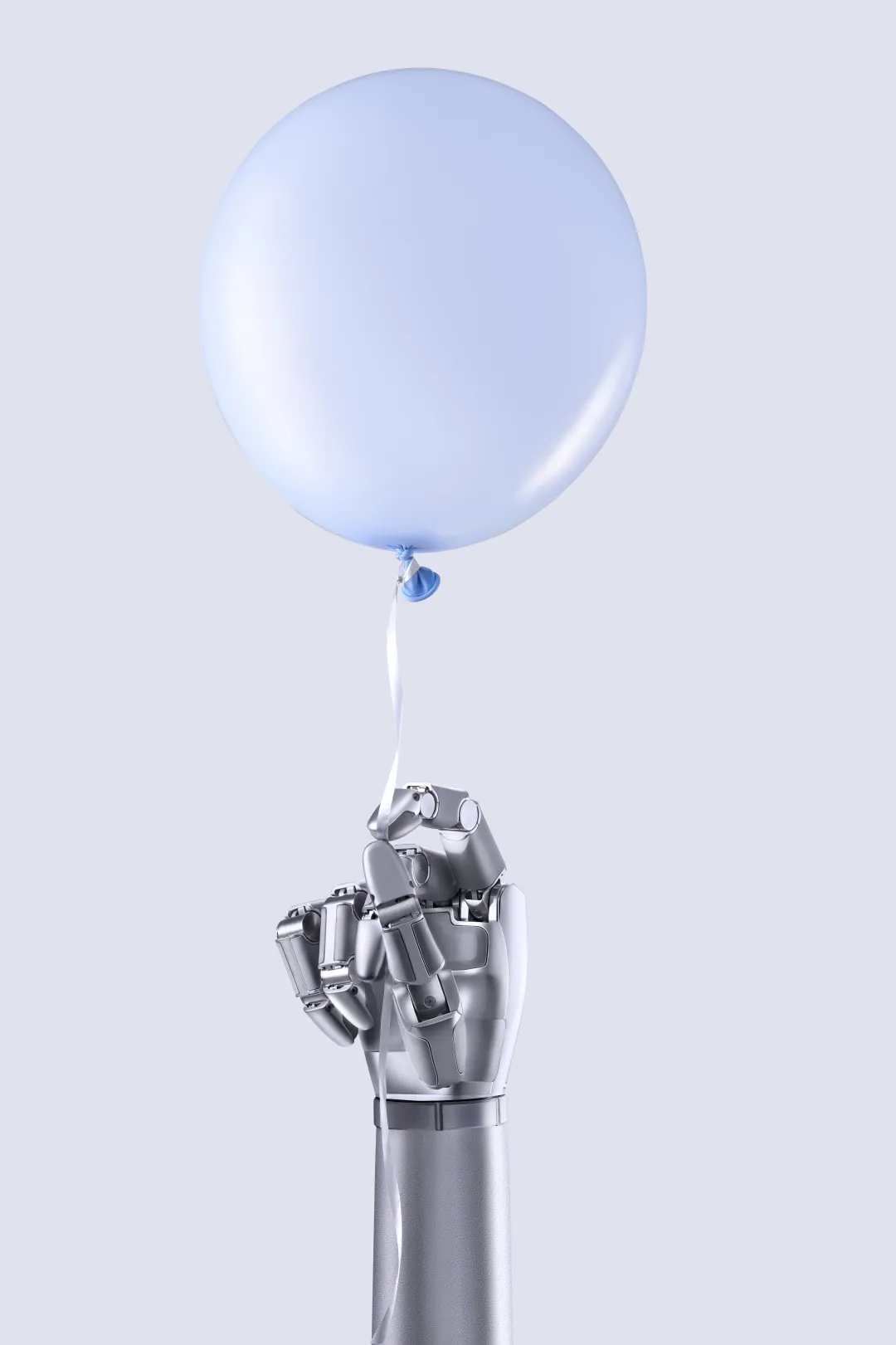
Sharpa has built a layered touch sensing system. The most accurate sensing is concentrated at the W02 tip: visual touch sensors capture a minimum of 5mN of weak contact force, 1mm of spatial resolution, detecting subtle variations in location, providing a hardware base for sliding recognition, soft objects hard judgement, edge scraping.
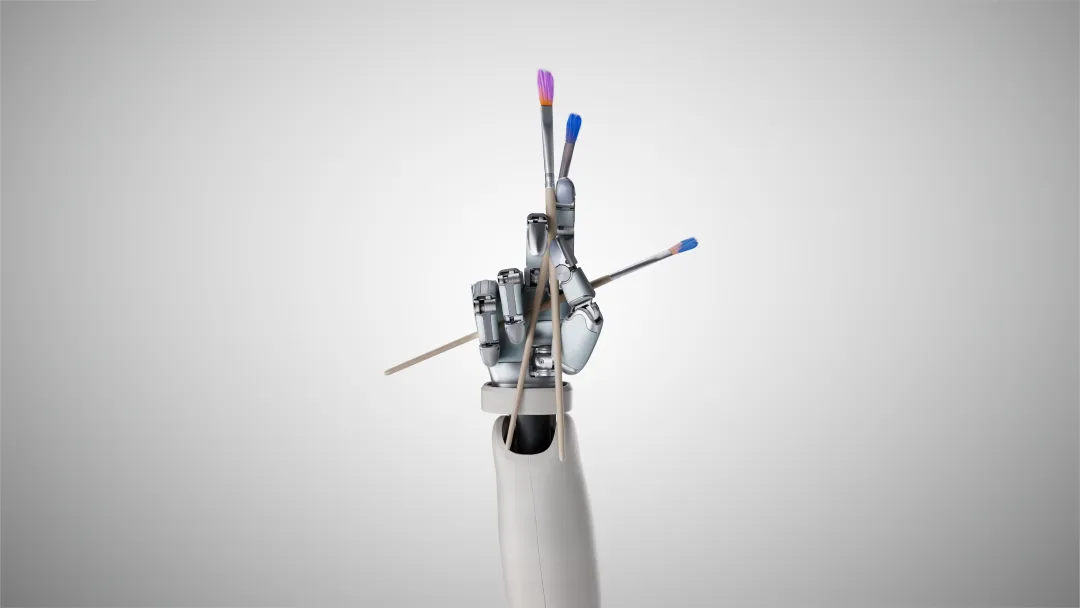
The second layer covers the entire palm of the hand and the fingers, with electronic skin covering the area of the hand beyond the fingertips, the palms and the knuckles are both perceivable, adapted to hand gestures and wrapping such hand contact movements.
The third layer extends to the D01 humanoid robot's entire body, arms, and chest with sensing modules, a sampling rate of 100Hz, a power range of 0.1-20N, a power resolution of 0.2N, a spatial resolution of 10mm. This parameter is not used for high-precision precision control, but for collision sensing: identification of touch objects, contact position and force size.
This is important for the human-robot coexistence scene. In industrial collaboration, service scenarios, people and robots live in close proximity, accidental touching, pushing and pushing belong to high-frequency situations. Only robots with finger-touching have a sense-blind zone in these scenarios; they are equipped with sensing modules that allow robots to distinguish between themselves, humans and the physical boundaries of their environment.
The last layer of the touch loop returns to the operator, and the AE01 glove's 256-degree touch feedback transfers the robot's contact power back to the operator.
In this sense, touch is no longer an isolated fingerprint sensor, but rather a complete pathway: robots perceive physical contact, data input control strategies, and when necessary, operators rely on touch feedback to intervene in judgement.
To touch this density, the next real question arises: how to continue and scale the collection of contact data.
04.
How do two-way remote operations break down the pain points of virtual machine data?
The AE01 is essentially an exoskeleton glove, but its core value lies in its bi-directional interaction.
On the market, one-way motion capture devices are more common, but there are not many products that can transmit robot touch feedback to the operator. 256 degree touch feedback allows the operator to directly perceive the change in grip strength, adjust the hand movements in real time, without having to rely on the power of screen subjective guess. This ability is also the underlying basis of high sensitivity remote operation.
It targets the development of a real-world problem for robots: real physical interaction data is insufficient.
Text, video big data can train models to recognize environments, but can't teach robots to judge the size of the power used, to identify slipping remedy movements. This type of physical interaction information can only come from real-time manipulation, not purely image-driven. Remote operation of power-sensitive touch feedback is still the main means of obtaining high-quality manipulation data. AE01 has non-labeling, anti-interference properties, with the aim of reducing the use threshold, improving collection efficiency, allowing data collection to go out of the lab and into more complex real-world environments.
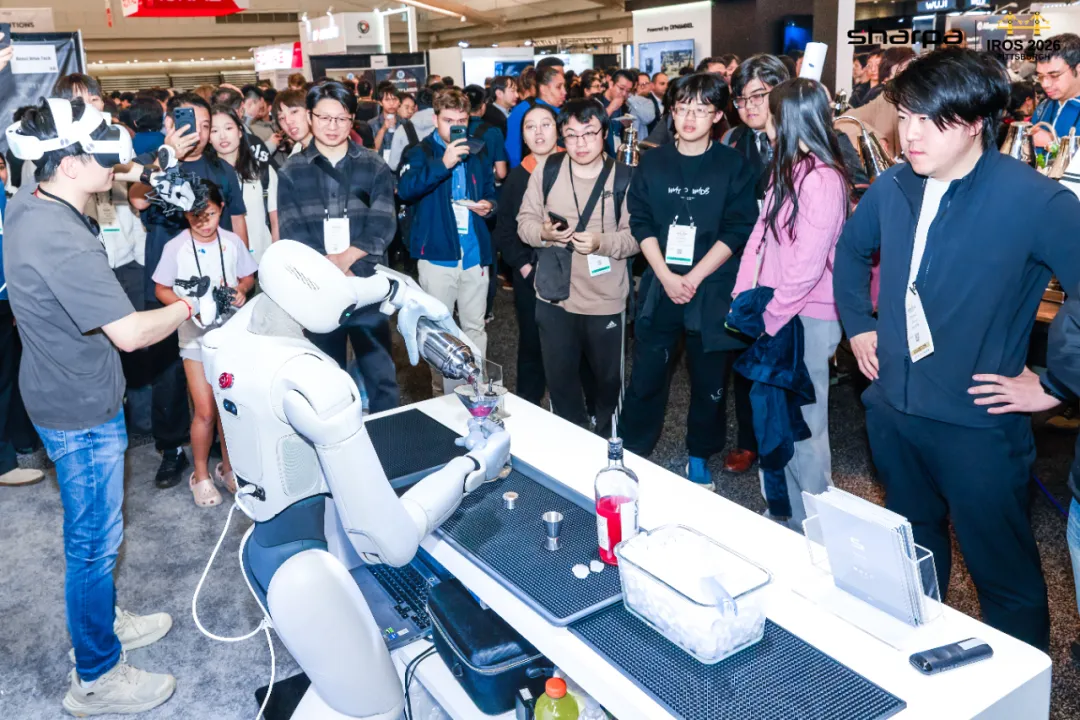
It is widely known in the industry that remote data generation is highly human-consuming. Information density of single data is more critical than the mere expansion of the data set. Similarly, one-minute operation records, data sets with only movement trajectories, as opposed to data sets that simultaneously record joint movements, contact forces, slippage states, training value gaps are huge. Sharpa prioritizes improving single data quality, and then scale, which is currently the practical path to real-world data manipulation.
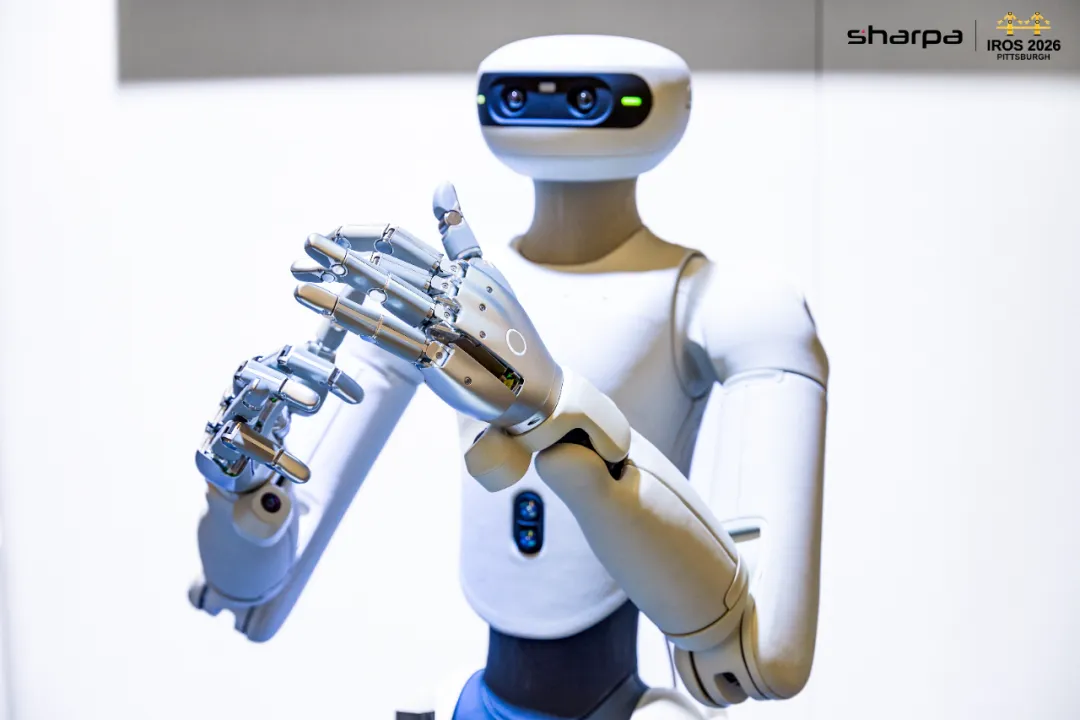
The stability of execution is a prerequisite for continuous production of high-quality real-time data, which is why Sharpa adheres to uninterrupted on-site scene presentations and refuses to clip presentation videos. At CES 2026, its robots completed over 300 folding missions in the open environment; received over 1,300 spectators for four days, completed over 2,000 interactive photos; ping-pong response time to battle was less than 0.02 seconds, the highest on-site continuous battle of 90 turns.
The exhibition site is full of audience interference, continuous demonstrations running for days, and much more convincing than the cutting material. However, the exhibition environment can only verify the stability of the foundation and the distance from the commercial landing, and Sharpa will put a deeper layer of verification in Shanghai's DQ ice cream shop.
05.
What are the real capabilities of the DQ Store project?
The D01, W02, AE01, which comprises Sharpa's entire technology carrier, and Shanghai's DQ Storm Snowshop, are the software hardware tests for landing in real business environments.
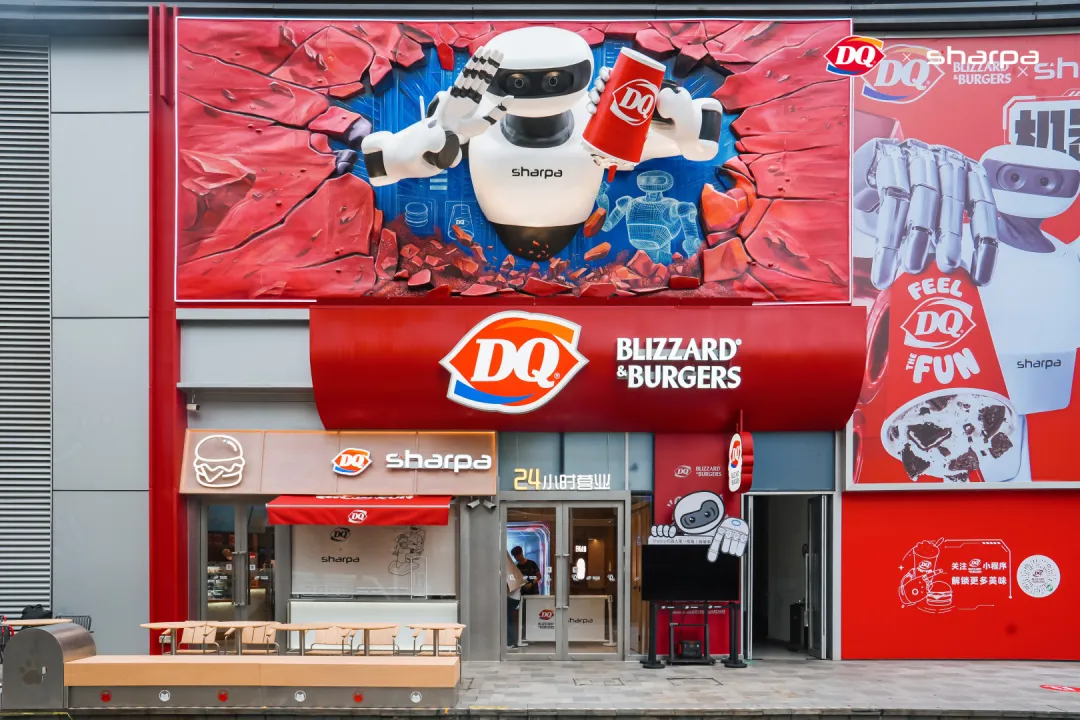
On August 29, 2026, Sharpa Joint CFB Group, in Shanghai's Zhejiang Road DQ online robot manufactures Storm Snow Ice Cream. The robot independently completes all 55 processes from ordering, manufacturing to delivery, operating daily from 10 a.m. to 22 p.m. and continuously serving real customers throughout the year.
The most central feature of the project is the lack of modification of the original equipment: stores along the DQ global standard equipment, raw materials, tools and operating processes, robots directly adapt to the work space originally designed for humans. This program faces several long-term targets in the industry: landing often requires the modification of the on-site environment, it is difficult to continue to complete long sequence tasks, reliability does not meet commercial requirements, run a set of zero modification, fully autonomous, year-round uninterrupted practice samples. The vast majority of tools and processes in today's world are built around humans, robots want to enter doors, factories or homes, cannot require the environment to move robots to stores, and can only adapt to the existing world.
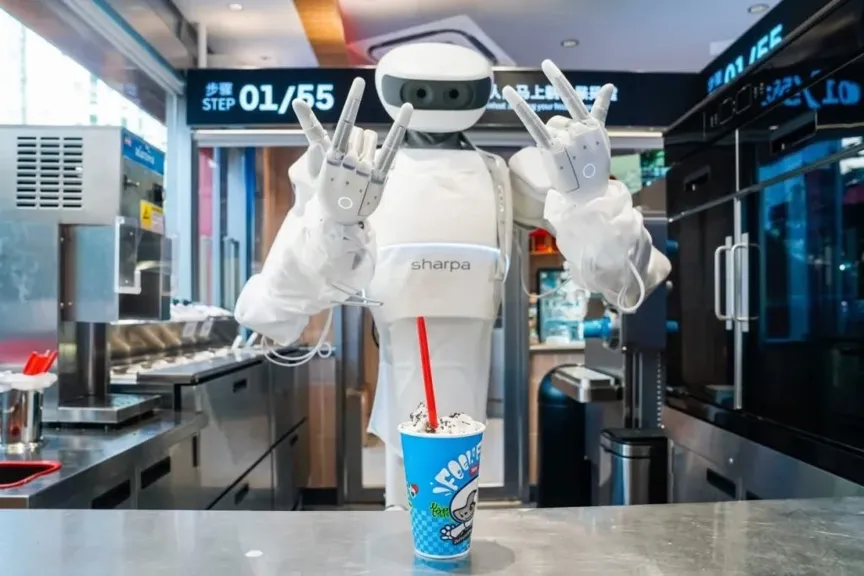
The process of stormy snow production includes movements such as grabbing thin wall paper cups, silicon semiconductor raw materials, and coating cup covers, which are the task types targeted by D01 and W02 hardware designs; long-term stable operation, similar to the use of AE01 to collect machine data, and continuous iteration of operation strategies. The DQ store is not a one-time marketing demonstration, but a long-term demonstration of the complete software hardware shutdown in the business scene.
In the view of the Robotics Workshop, the biggest meaning of this type of shop is to draw the rating standards of robots from laboratory demonstrations to the real dimensions of production. This also redefines the scale of consideration of robot commercialization. The industry has focused more on robots. The ability of robots to complete single tasks; put to the business store, the core test becomes the ability of robots to stabilize the value of sustained real estate. From a single successful demonstration, to long-term stable operation, the test is the reliability, continuity, and adaptability of the entire system to the existing environment.
Since its inception, Sharpa has not been focused on making a handkerchief, but on allowing robots to work it out in real-life scenarios. Human bodies, tactile hands, remotely operated data collection equipment, plus commercial verification already in place in stores, are all aimed at the same goal.
Three products plus one scenario is the most direct way to understand Sharpa: D01 is the entity, W02 is the hand, AE01 is responsible for transforming human experience into trainable data, and the DQ store is the scene where the first three are put into a real workflow for testing.
Simulation data cannot cover contact power and material changes, laboratory data collection cannot be separated from real processes, the only stable data source is real workplaces in the business; and such data is only generated when the robot is actually up and running. Sharpa is self-taught, builds machines and data collection equipment, and directly enters store operations, essentially internalizing this cost.