“ In the next competition, we started to calculate the efficiency of data production.
Two of the hottest lines of intelligence this year are colliding: one is data, the other is touch.
From motion capture, remote operation, to first-person perspective collection, which has been hot for nearly two years, the input of body-intelligent data is expanding; on the other hand, in the past, more touch paths around electronic skin and power sensors have begun to clearly extend to the data and model side.
In the first half of 2026, almost every month, companies have completed the financing of touch sensing racetracks, which include touch data collection equipment, large-scale touch data sets and touch models. By the 2026 World Robot Congress (WRC), touch data collection gloves, full-mode digital accessories and other exhibitions have begun to appear.
Recently, at the intersection of these two lines, the Robotics Workshop noticed an interesting new feature.
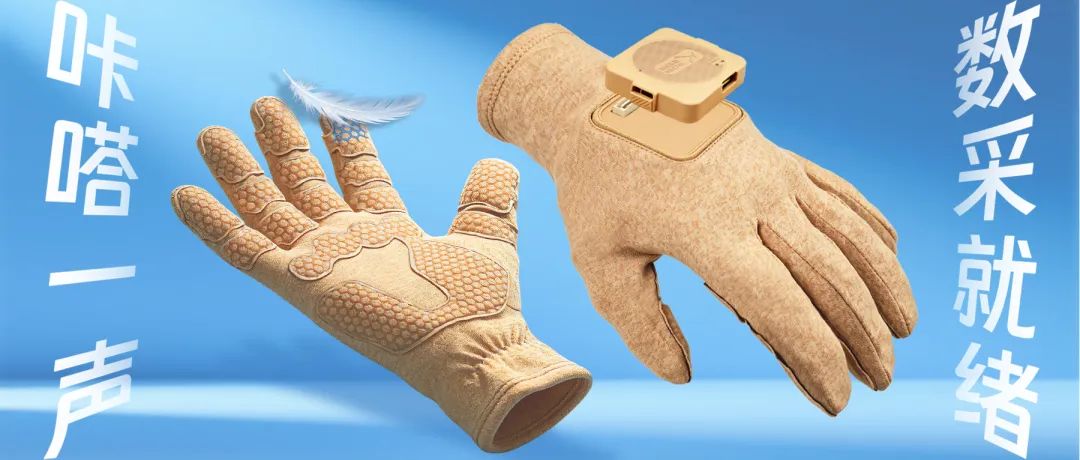
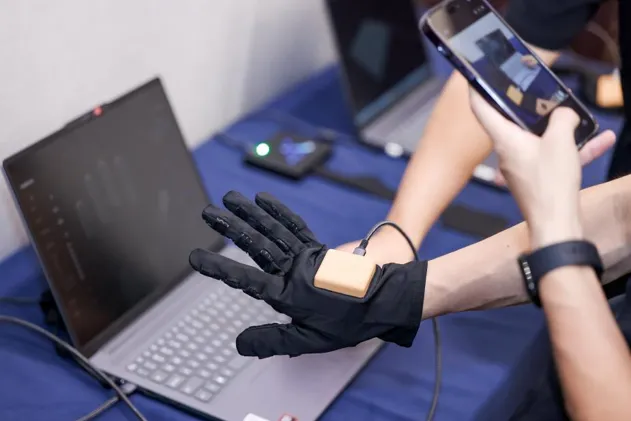
On September 23, TechCrunch launched the latest release of a removable flexible electronic skin tactile data collection handset called TachinGlove Snap.
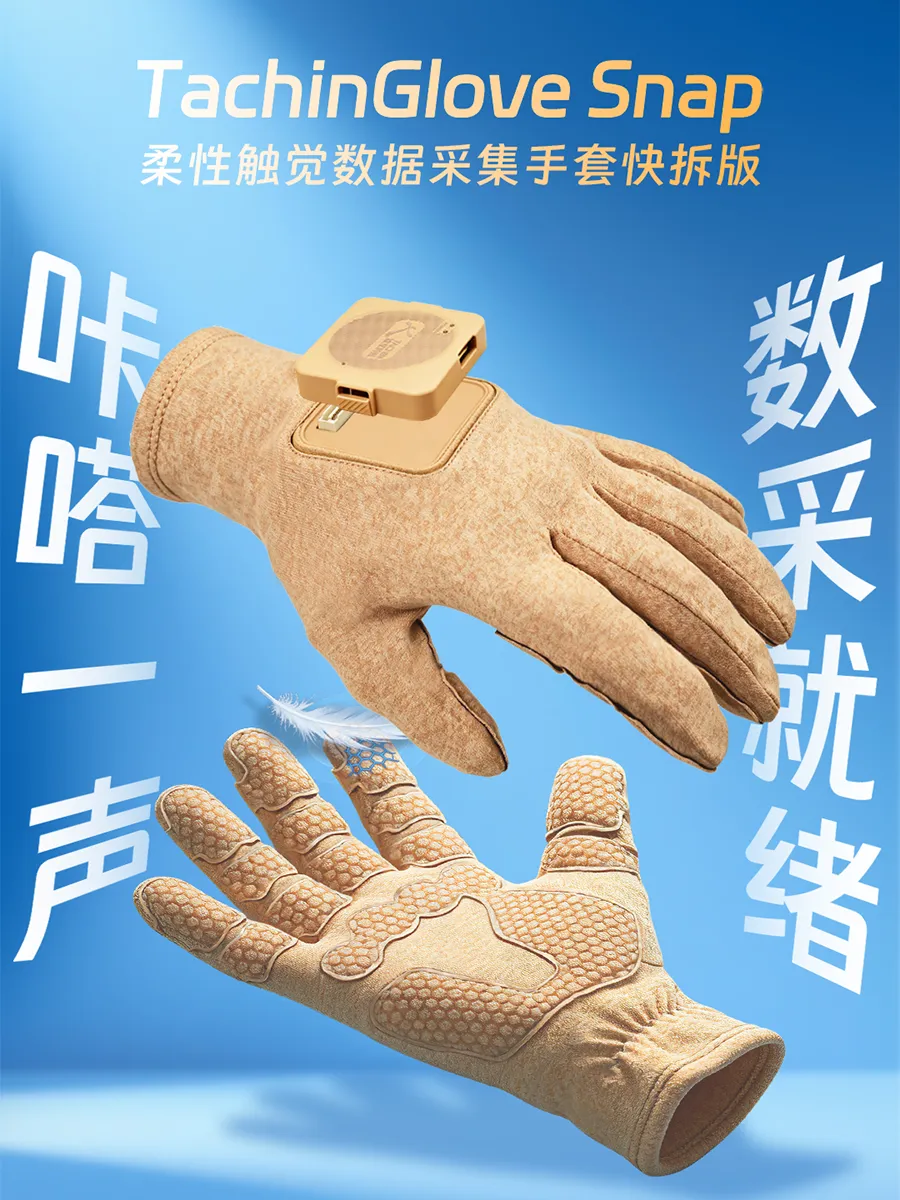
Compared to the usual one-size-fits-all pick-up glove, its most noticeable change is that the collection module can be disassembled directly from the glove body. According to the visual description, the user can quickly pull out the modules by pressing the back of the glove as long as the two-sided buttons are simultaneously picked up by pressing the back of the glove, and then pressing the back of the new glove at the same time the two-sided buttons are heard. The whole process can be repeated for no more than 3 seconds.
This design looks like just an engineering change, but it just happens to show a layer of change that's happening in touch counting. When the industry starts to seriously calculate module replication, device turnover and long-term use costs, the competition is no longer just about whether lithium data can be harvested from lithium, but how can lithium continue to get high-quality data from lithium more efficiently.
This is also a new variable that has begun to emerge in the second half of physical and intelligent touch data.
01.
A touch of competition, a start to more efficiency.
It's really hard to pick up tactile numbers, not when you can't, but after the scale of the collection goes up and down.
Unlike visual data, tactile data naturally depends more on the actual contact of the person with the device. Once grabbed, pressed, and pulled, it often requires the collector to actually complete the entire movement, gloves, sensors, and synchronization of the collection system in order for the data to remain.
This also means that the production of tactile data naturally comes with heavier hardware attributes.
When the collection is still in the small-scale verification phase, the equipment is replaced slowly, the material losses are high, and the impact is unclear. But once you enter high-frequency testing, multiple batches of tasks or even multiple people rotate, the problem is quickly amplified: how long can a set of equipment continue to work continuously? how long will it take to replace the lost parts? how long will a replacement interrupt? can core modules be reused?
These seem to be engineering details, but ultimately they are summarized into the same accounting unit in time to stabilize how much efficient data can be produced. As the amount of data goes up, the utilization of equipment, the efficiency of personnel operation, and the cost of maintenance, the more difficult it is to ignore.
At this point, the turnaround efficiency of computing devices will ultimately affect the production cost of a touch data.
02.
From reducing the sensitivity of the fingers to increasing the efficiency of the fingers
In order to understand why Snap has to be disassembled quickly, we have to go back to the original problem of how the standard version of the handset was used to solve the problem of how the tactile data was completely collected.
At the 2026 World Robotics Congress (WRC) last month, Vision Technologies released the world's first self-developed flexible electronic skin touch data collection handset, TachinGlove (standard edition).
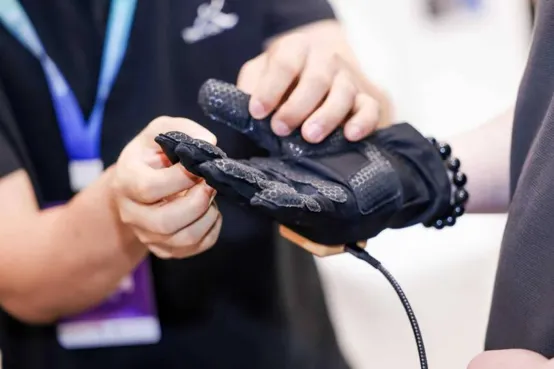
Traditional visual, motion capture and hand posture data, which can record how hands and hands move, makes it difficult to fully record the details of hand-to-object contact. TachinGlove supplements this dimension. The glove uses flexible adhesive and simulated hand-to-hand distribution, integrates a single thousand-degree sensor point position, can record touch information such as pressure, shifting force, and synchronize with visual, hand posture, task text, and more.
In this way, once a real operation is left behind, it is no longer just the trajectory of the movement, but also what is seen, how the hand moves, where it touches, how much force is used.
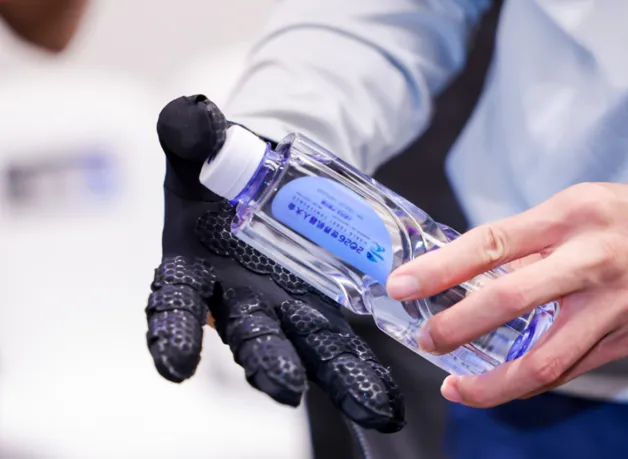
In addition, it also has a critical ability to take a pair of numerical figures to capture dirty data. Simply put, the fingers are twisted, but without any real contact with the object, to avoid creating a false touch signal due to the shape of the glove itself.
Flexible wearable devices can also change shape when the fingers are bent. If this shape change is misidentified as real contact, extra cleaning is required after retrieval. For high-quality retrieval, the source produces less ineffective signals, which in itself reduces post-processing costs.
The standard version of TachinGlove uses an integrated design that is better suited to long-term fixed projects and relatively low frequency collection. In the case of high frequency testing, multi-batch collection and multi-team rotation, the collection of equipment is faced not only with hydrogen that cannot be harvested, but also with hydrogen that cannot be quickly replaced and used continuously.
It separates the core collection module from the glove kernel, so that the core collection module can continue to be used when the glove kernel needs to be replaced.
In terms of performance, the numerical glove is not hydrated due to rapid disassembly. The directional force is also perceived, with a power resolution of 0.05 N/cm2, only 783 sensor points, five fingers with full heart coverage, maximum power range of 30 N/cm2, space resolution of less than 2 mm, Wi-Fi wireless connection, collection of modules not more than 50 g.
These capabilities are suitable for high-frequency laboratories, multi-team collaboration, outdoor recruitment, remote operation training centers, etc. They require module replication, rapid switching and long-term reduction.
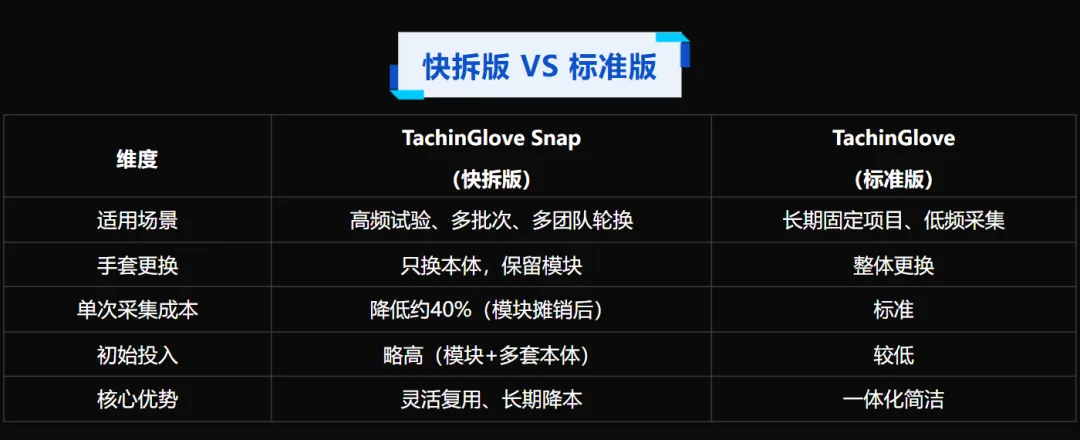
From the standard version to the quick demolition version (Snap), the first problem to be solved is how to keep the actual contact process stable, accurate, and adapted to different data collection needs.
But the data is being collected, and it's only the first step.
03.
After the data is collected, it's going to be a hydrogen-powered data pool.
Touch data has a natural difficulty: it is tightly bound to the underlying sensors.
The original signals generated by different technical routes are not the same, with some output resistance changes, some output capacity changes, and some other signal forms. If these data always remain at the original signal level of the device, replacing a set of sensors will make it difficult to directly replicate the original data.
So really valuable tactile data needs to continue to be labeled, synchronized and standardized, to convert the underlying signals into information of clear physical significance, such as pressure, torque, temperature, contact position, and then put them on the same time axis with the visual, gestural, and task text.
This is another thing we've done in sync with the WRC before. The company has open source the first complete hand-touching body data set, covering 20 types of tasks such as grab, fold, assemble, pull, drop, press, rotate, wipe, and simultaneously include many modeling information such as pressure, torque, hand gestures, vision, and task text.
What we really want to solve is to turn the tactile information from different scenarios into data that can be trained, migrated, and reused as much as possible.
For touch data, the scale is important, of course, but it really determines the long-term value, including whether it can be cross-device, cross-task replication. Otherwise, more data is taken and it is easy to become data islands that are torn apart from each other.
04.
From e-skin to model, the chains are stretched over and over.
If the previous solution is how to make data available, it's more interesting to see why it's able to do it all the way up the chain.
The company was founded in 2020 by its founder and CEO, Rai Jiansheng, who holds a Ph.D. from Nanjing University and post-doctoral experience at Stanford University, and has spent years working in flexible electronics research at Stanford University's Bao Group in the areas of flexible electronic skin materials, devices and system integration. The company's core team spans multiple areas, including materials, chemistry, electronics, integrated circuits, mechanics, automation, and artificial intelligence.
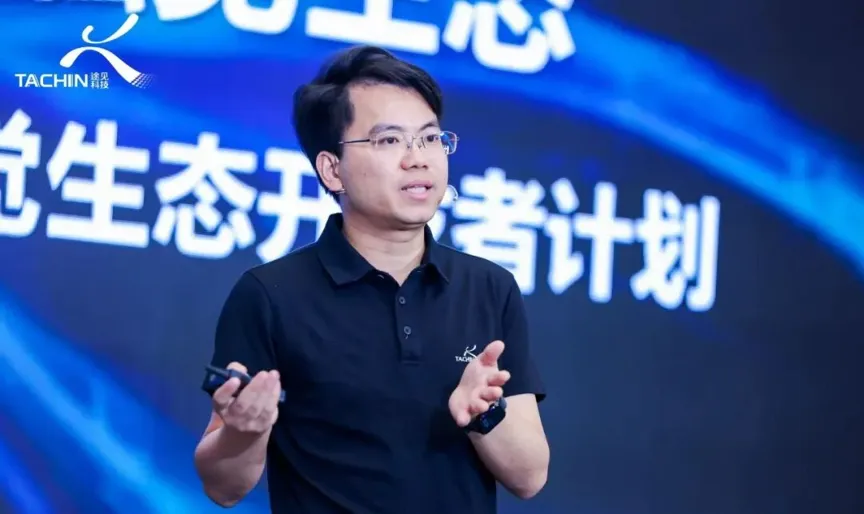
Meet the founder and CEO of Tech Ray Jiangsen
This team structure is almost exactly the same as today's technical layout.
From stretchable materials, flexible sensors, flexible transistors, to multi-mode integration, integrated circuits, and touch sensing algorithms, the company has been extending touch capabilities to the system level. The company has also independently undertaken a national research and development program focused on disruptive technological innovation.
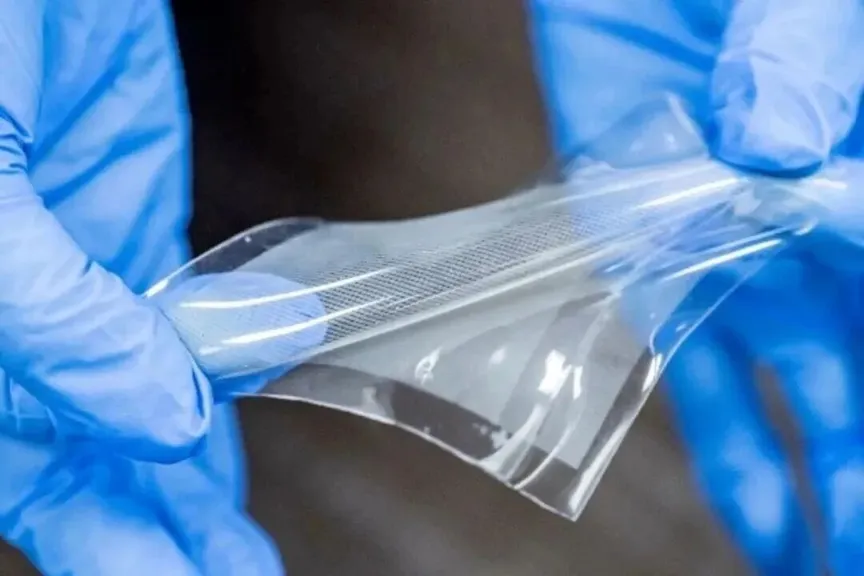
Thus, today's path is not a transition from electronic skin to data, but rather a layered upward movement at the base of the original technology.
Electronic skin is responsible for producing high-quality tactile signals; TachinGlove is responsible for recording actual operating processes; standardization and data sets are responsible for embedding this information into training data; and, back and forth, tactile models.
But as the chain goes up, the research and development links that need to be invested are also increasing. Materials, sensors and electronic skins are a system of research and development, and digital tools and data processing are a set of capabilities to enter the model layer, which also means new algorithms, computing and talent are being invested.
At the same time, the Robotics Conference learned that the company recently completed a multi-billion-dollar Pre-A++ round of financing, jointly financed by Beijing City's AI Industry Investment Fund and Beijing City's New Materials Industry Investment Fund. The funds will focus on underlying core technology research and development, automation of production lines and process generation, and improvement of supply chain support for smart data collection tools and consumer-grade terminals, accelerating the transition of technological achievements to terminal products.
The next thing that really needs to be verified is that this ever-expanding link will not be able to finally pass through. If it can be linked, its value will not fall on an electronic skin or a pair of gloves, but on the ability to synchronize chains from the generation of touch signals, data collection, to the processing of data and the application of models to several key links.
05.
The real challenge is the cost of data and the efficiency of reuse.
Taking a step backwards to see the future of data that is truly worth comparing could be a new cost curve.
A high-quality tactile data from generation to entry into a model has to go through at least three layers of cost.
The first layer is the cost of retrieval. How much time will it take to replace a core and how much maintenance costs after long use.
The second layer is processing costs. How many ineffective signals are in the raw data, how many can't be directly synchronized between multiple modules, and how much cleaning and labeling will be required after retrieval.
The third layer is the cost of replication. The more data one can use with a single sensor, the more the cost is just accumulating. But if the tactile information can be converted into a unified physical quantity and repeatedly called by different tasks, different models, then the data really begins to have asset properties.
Along this path, the rapidly dismantling of the numerical glove is just the cutting edge of the logic. It really wants to reduce the total cost of effective tactile data from collection, processing to entering the model. This is the more comparable ability of tactile data after it really enters the scaling phase.
This also means that in future measurements of tactile computing capabilities may not only look at sensor range, sensitivity, and perceptual dimension, but more at an indicator: the same set of devices, the same collection time, and ultimately how much truly trainable, reproducible data can be left behind.
The company plans to launch two versions of TachinGlove Pro and Lite in October. The Pro version further integrates IMU, EMF technology, supporting dual-eyed and multi-eyed Ego, with a greater emphasis on high-precision hand gesture and multi-mode information acquisition.
One continues to improve the quality and density of data, and one continues to reduce the cost of collection and deployment. At least from this product line, it can be seen that the competition for tactile quantity collection has begun to differentiate itself from the more subtle scenario of whether or not to harvest the data. Both accuracy and full harvesting must also consider whether this data can be produced more efficiently and accumulated at lower cost.
When these issues began to enter product design, competition for intelligent touch, it really shifted from a single sensor to a data production system.