First of all, how do we prove that robots actually do it?
During the conference, the role of Zhang Zhong, Deputy Director of the Center for Information Technology Research at the Institute of Electronic Technology Standards of China, was particularly significant.
He answered a more basic question than other guests who were cut off from technical routes, products or commercialization: How does a skilled man make a potato?
Zhang Zhong explained that the current state of sophisticated operation is in the stage of moving towards real productivity, which requires a set of standard systems capable of verifying capabilities, supporting the landing, for which the National Signaling Commission has sent a national standardized guiding technical document on artificial intelligence. The document presents requirements for a sophisticated operating system, end-to-end execution, environmental interaction and autonomous adaptation.
At the execution level, relevant standards have begun to be standardized around different types of operating objects, experimental methods, tool preparation, capability testing and result recording, as well as related standards such as delivery capabilities, delivery capabilities, security, testing.
The company's founder and CEO, Ray Shi, also mentioned the standard issue. He also believes that many industries are still working on the performance parameters of copper rather than copper, but it is more important to focus on how to achieve copper continuous use.
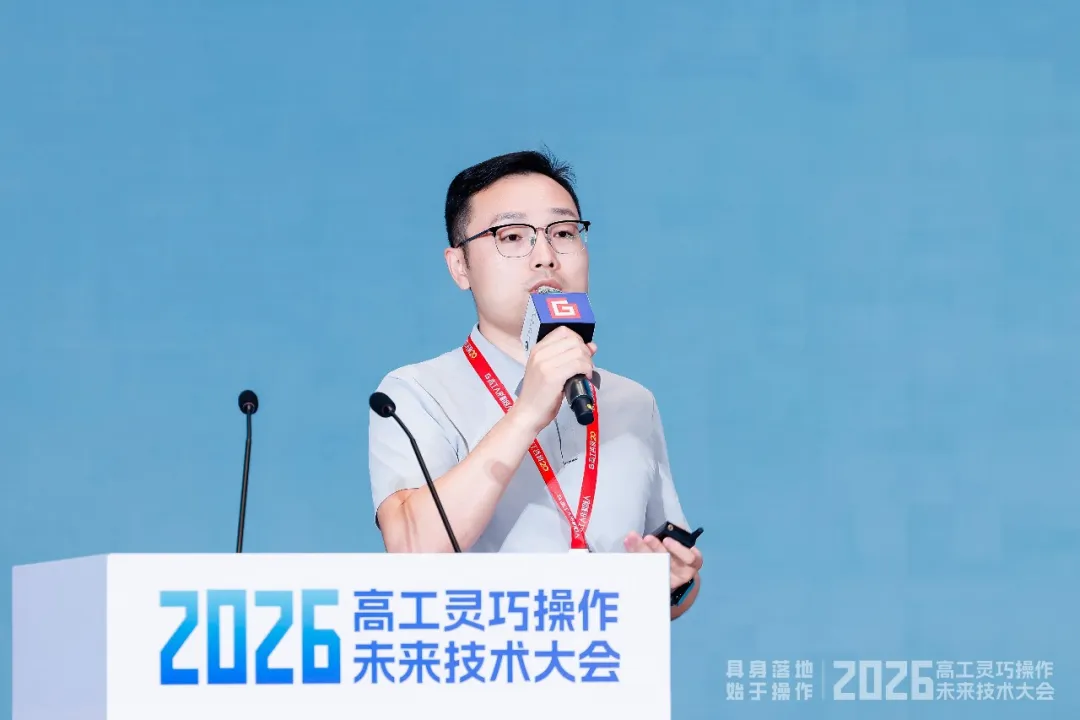
He is also the co-founder and CEO of the company.
Traditional industrial automation, automotive, and consumer electronics all have established standards, such as sensor life, MTBF (average failure-free time) and working temperature zones. However, there is no clear specification for a robot, whether for factory or home use, for its working temperature, lifespan, and consistency, which indicators should be evaluated.
Leixi noted that many Chinese manufacturers claim that their products can do 500,000, 600,000, 800,000 moves, a figure that looks high, but whether they meet the requirements for continuous operation in real-life scenarios is also a question.
He believes that human robots should be positioned between automobiles and consumer electronics. Vehicle standards are the highest in the industry, consumer electronics are another standard. Robots can both continue to operate in the industrial scene like cars, and can enter the home as consumer goods. If robots can meet the vehicle standards, then both the factory scene and the home scene can achieve a stable landing.
The standard solution is how to prove that a robot can do a trick, but what exactly does a robot have to do these tasks with a standard?
If you don't have enough hands, what else do you need?
First of all, the hardware.
In the executive unit with physical intelligence, the arms and hands are inseparable as a whole, the arms are equivalent to the extension of the body, precise to the position, and then complete the precise operation with the hands.
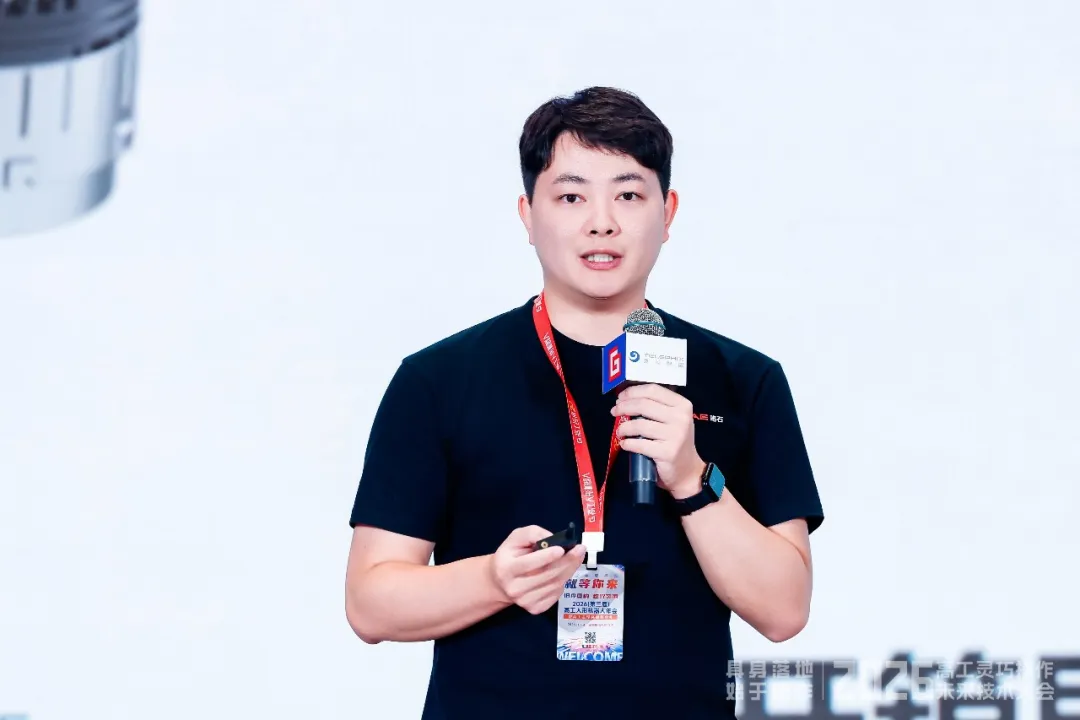
Director of Technology for the Robotics and Human Arms Industry
This is the reason why in the age of traditional industrial robots, where mechanical arm technology is very mature, there is still room for further development in the age of physical intelligence.
Based on this perception, the Stone Robot has built a system with two wheeled arms at its core, including a chassis, joints, two arms, an integral, as well as a more core motion control and power control system.
This is very clear, and emphasizes the importance of vision for the dexterous hand, as well as a very interesting analogy, that humans do not change hands due to the position of their hands, which requires additional cameras on their hands, human natural perception, learning and operation, a kind of cognitive process. If it is necessary to be able to make movements from the point of view of the target to the point of view of the target, the robot needs to support the corresponding vision and control capabilities.
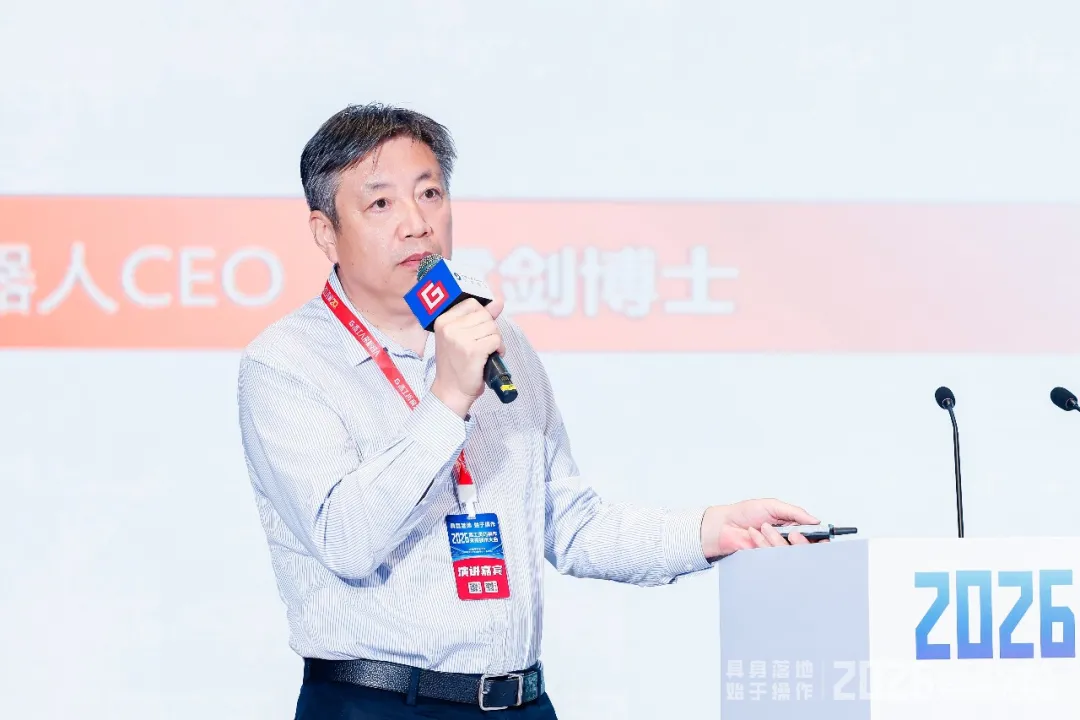
The Chairman of the Board of VYSION ROBOTS
The idea behind the vision was to integrate the human eye into a general solution, using vision as an eye, hands as a hand, and the body of a robot as a body to achieve hand, eye, and limb synergy. It allowed humanoid robots to truly simulate human perception and operating logic, both to perceive the world and to perform actions in real time.
He also acknowledged the importance of vision, but he added that the perceptual schemes of visual vision and language are already relatively mature, that there are many visual schemes for navigation in the field of autonomous driving, and that large language models are more mature.
He also pointed out that the body industry's requirements for touch are higher than in previous areas such as autonomous driving. There are at least three requirements, one is flexibility; the second is high sensitivity; and the third is the perception of three-dimensional force, especially momentum.
In his opinion, it is not useful to judge a tactile system on the application side, and the most important thing is whether the performance can be stable and consistent in the long term under different working conditions. Even if a single sensor performs very well, it will not be able to continue to operate if it fails today and tomorrow.
This also raises another question: how do robots understand the data they collect through touch?
He said that the touch itself is three-dimensional, has X, Y, Z axes, has cross-sectional forces, corresponds to different images at different times. The current practice is to cut it into two-dimensional cuts, then to draw it into one-dimensional, and finally to rationalise the language model to realize the understanding of touch and vision.
But he thought it was strange, and he suggested that using a top-down high-dimensional architecture, unifying all kinds of low-dimensional perceptual information, might lead to better results.
In his view, the future needs to integrate perceptual capabilities such as vision, touch and touch as much as possible into agile hands, forming a complete data loop through multi-module fusion. Because for a physically intelligent enterprise, what is really important in the end is not how high a particular sensor parameter is, but whether it can form a set of robots that evolve autonomously.
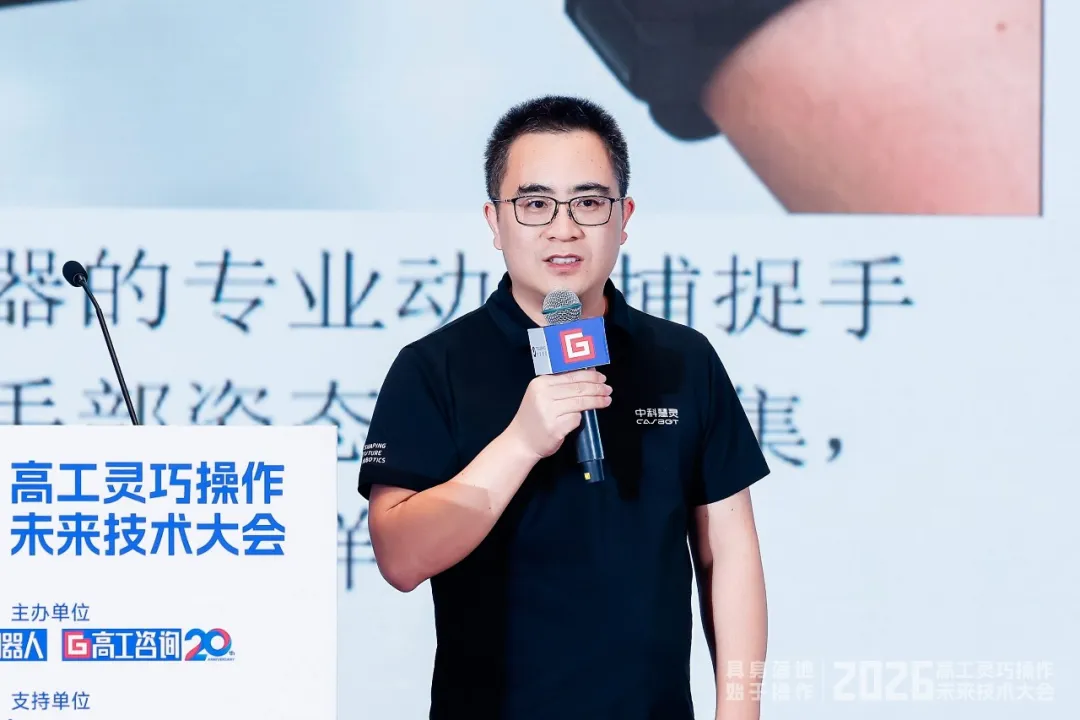
China's chief executive Xi Jinping
It also naturally takes the question to the next level: where does the perception come from, where does the data come from and how does the model learn?
How do you keep up with the data and models?
Smart hands are not only executives, but also important carriers of intelligent data collection.
It is the key physical carrier that connects data to the brain, the physical world. It is the last 5 cm, or 5 mm, of the final operation.
But instead of believing that the more data, the better, the higher-quality data is what the model really needs, but how to define and get high-quality data is probably one of the most central points of modern agility.
At the same time, the model itself is not mature. The plane also describes the current situation in more detail. The current model is shallow, narrower. The so-called shallow shallow shallow means that the model does not understand the world deeply enough. The so-called narrow shallow means that the model is not capable of generalizing, whether it is a base model or a post-training model, the actual landing is more like a very specialized operator, can only complete very limited tasks, and operational efficiency is not high.
Scaling Law, a frequently discussed data problem, was also discussed on the spot by the director of Intelligent Driving Products, Zhang Renyuan. He believes that scaling law is now often understood directly in the industry as: the stronger the performance, the lower the cost, the larger the scale. In his view, this is actually an internal loop, not an automated loop.
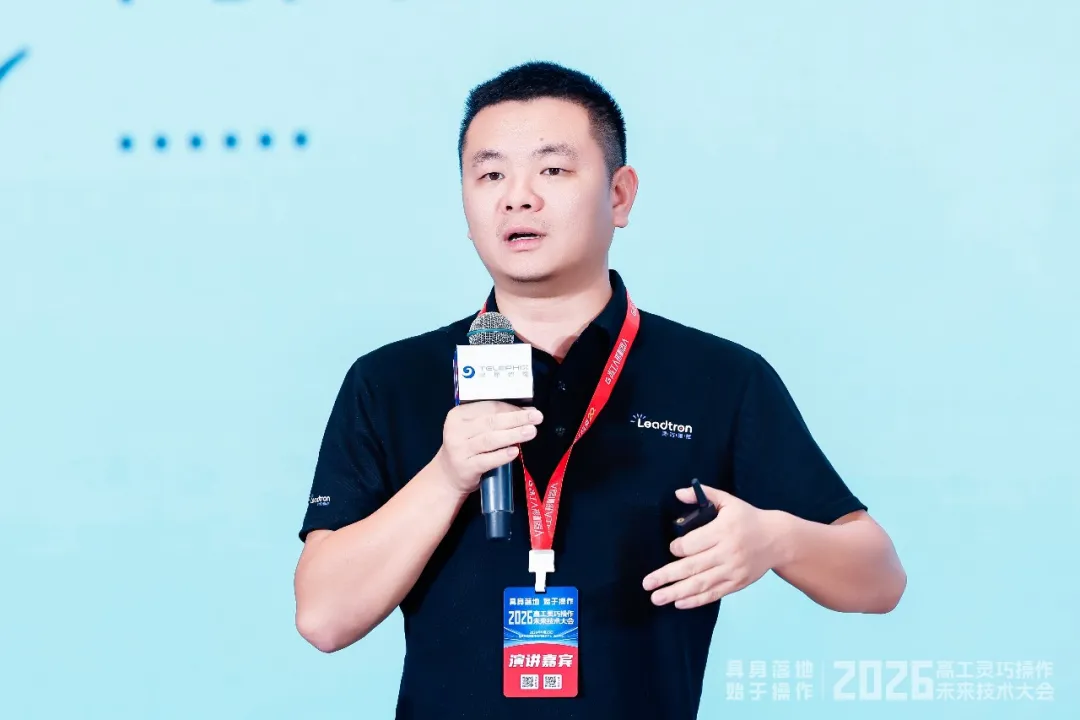
Skilled Driving Product Director Zhang Ren-soo
Therefore, the complexity of operations now faces a series of problems: data is not good enough, models are difficult to learn; models are not strong enough, robots are difficult to access more real-world scenarios; and without enough real-world scenarios, it is difficult to generate enough data.
How do we really start this cycle?
Wang Ming, chief product officer of Lin Wei Intelligent, proposed a very clear idea: the scene is the material factory, the deployment is the data terminal, that is, allowing robots to produce trainable data in real-life scenarios.
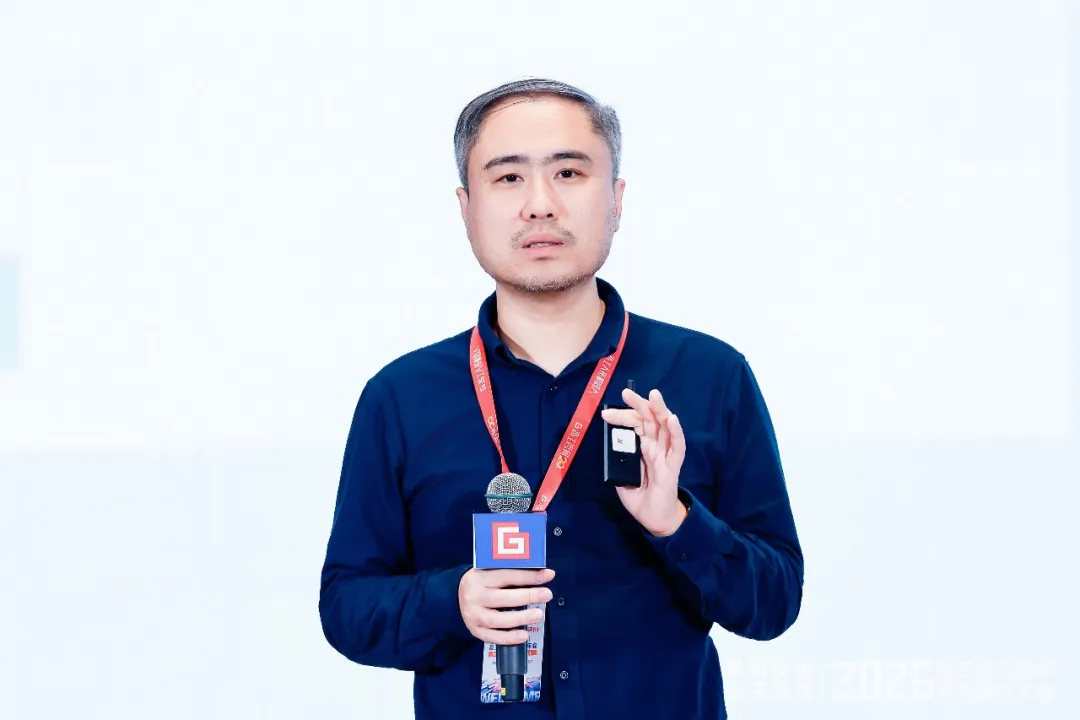
Weng Ming, Chief Product Officer of Jingyi Intelligent
Wang Ming believes that the gap in physical intelligence data is very large, and we have simply statistically estimated that, compared to big-language models, autonomous driving may be eight digits lower.
Based on their landing experience, Wang Ming said that the ideal data collection model should be for users to purchase the equipment themselves, and to collect the data naturally in the process of completing the actual task without paying extra for the collection fee. This idea could indeed be found in Tesla, which at the time delivered a large number of vehicles to ordinary users, while continuing to collect real road data, completing model iterations.
Wang Ming believes that this is the best way to collect data, or even the ultimate form, and is the target direction for spiritual intelligence.
He also proposed a similar idea, arguing that in order to launch the aircraft, it is necessary to find the right entry point. Hardware and algorithms are indispensable, and dependent on each other. This requires some tolerance from the scene end, industry in the early stages, accepting that early models are not smart enough, hardware accuracy is limited, allowing the equipment to operate in real-life pilot scenarios.
Intel wanted to bypass the path of real-machine data and focus on human video data, which is very realistic, because real-machine data is too expensive. Intel's partner in the technology, Zheng Zhen, also said: "If the model develops to rely on real-machine data, it's easy to encounter scaling problems, so it's only converted to human video data".
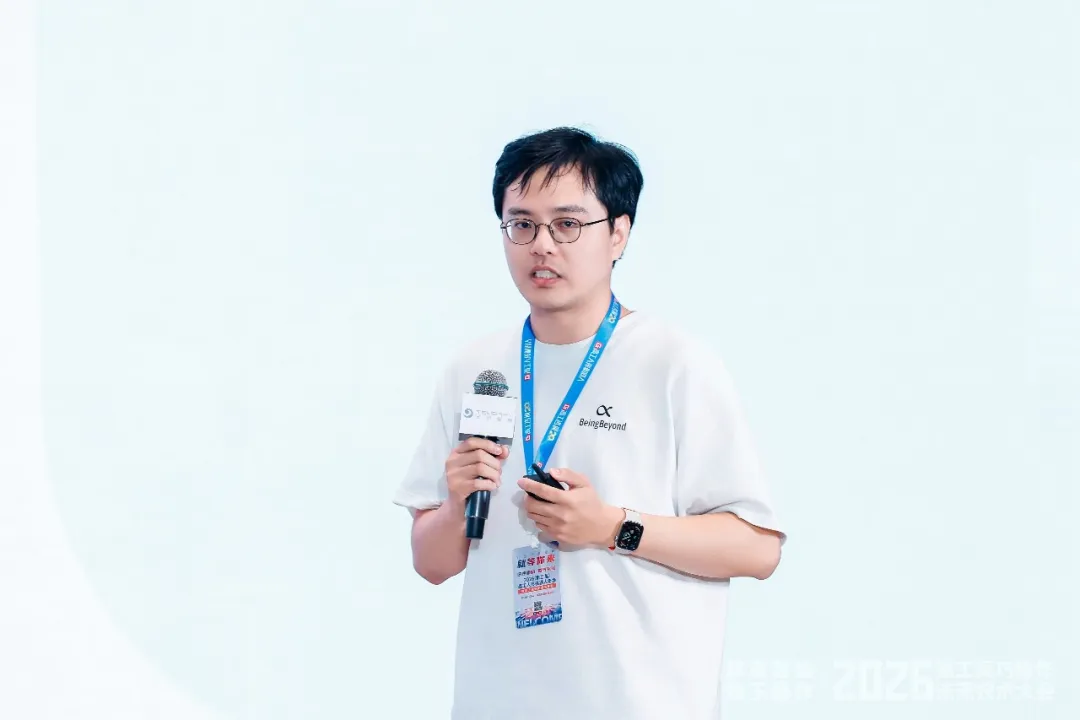
I'm not sure if I'm going to be able to do that.
At the model level, Intel chooses Infinity's Hidden Space World model, which can first be trained at a low cost, according to Lin, statistically, an explicit world model such as Cosmos, with 50 hours of training data, requires about 4,500 hours of GPU computing; this computing scale is difficult to scale outside of major factories such as Great Britain, whereas the cost of training Hidden Space World models is only 1/10 or even less;
Another reason is that arithmetic resources are more focused on the task itself, the model parameters are limited, and apparent world models consume arithmetic to render details of the image, such as skin texture, clothing patches, background photography, which is not substantially helpful in making robot action decisions. Space modeling focuses limited arithmetic on the spatial features associated with the action.
Based on these insights, Intel Infinity introduced the Being-H-Flash, the world's first real-time world-action model that could run on the end-side. Predicting and reasoning costs about 152 yuan per month. Large-scale assessments were carried out on British and domestic chips, compared to the VLA, the Optical World model, which reasoned at close to 20 FPS on 100 TOPS chips, which is 3 to 4 times the Optical solution.
From data to world models, the industry is trying different paths. But no matter which path is taken, the end result is a question: Have you learned that robots can really work in the long run?
Can you continue working after school?
Zhang Ren believes that in order to commercialize, it is not possible to ignore the impossibility of a triangle. Firstly, the appearance of the robot is important, because the appearance determines the first impression of the user. When robots interact, if the appearance is hard, cold, it will lead to a sense of distance.
Second, the performance here is not just a parameter, but reliability and lifespan. Airborne life, load life, long journey, all need to be verified through a large number of industrial installations and test environments. Many product laboratories demonstrate good results, but in real-life scenarios, failures occur in less than a quarter.
After the appearance and performance have been standardized, the last link is the cost. Customers often feed back to the sophistication of the drive, the price of one hand is close to a robot integrated, it is difficult to commercialize.
At the mass production level, Zhubert believes that the most important thing is not merely stack performance, whether the equipment collects efficient data, or the future of intelligent landing plants, going into households, stability and reliability is the eternal core.
The first stage is the ultimate goal of general utility intelligence, but according to current technology, it is still very early, and may take several years.
The second phase is now using imperfect basic models, using toolschains, agents, etc., to achieve initial landings in some specific scenarios.
This is also a path to commercialization with physical intelligence: not necessarily to solve all the problems at first, but to find a viable scenario where models, data and users begin to circulate.
It's not easy.
Returning to the theme of mission-building, today's sophisticated operation is difficult to explain with one hand, one model, or one sensor.
The standard solution is how the mouse proves to be a mouse; the hand, arm, and control solve what the mouse does; the visual and tactile solutions are how the mouse perceives mouse; the data solve where the mouse learns from; the model solves how the mouse makes decisions; the reliability and cost solve how long the mouse does it; and how to scale the mouse.
Skilled hands may already be able to do a crawling in the lab, or they may already be able to complete a set of processes in a specific scenario, but from a demo to actually entering the production environment, there is still a whole set of engineering systems in the middle.
This could also be a problem that needs to be solved in the next phase of sophisticated operation: not to allow the robot to make a move, but to allow it to continue to do its job in a real environment, faced with different objects, different working conditions and different tasks.
These are just some of the things that will be discussed in this high-tech technology conference, which will serve as a mission checkpoint. Around this, there are two more questions to be asked: when will the GPT momentum be coming?