
It's the first time in the history of the world.
The complete proof of the Millennium Puzzle Pongaly's conjecture was written into code! It was done by a small team of four. Led by a disciple of Chu, an old professor who had studied the Ricci flow for decades, a newly graduated undergraduate was in the lead, followed by a group of 24-hour-long spin-off AIs. They used the proof assistant Lean to write the proofs of Hamilton and Perelman from start to finish, for a total of about 4.7 million lines of code. Of these, about 2.7 million lines were expelled in the last two weeks with the help of ChatGPT, Claude A.I.
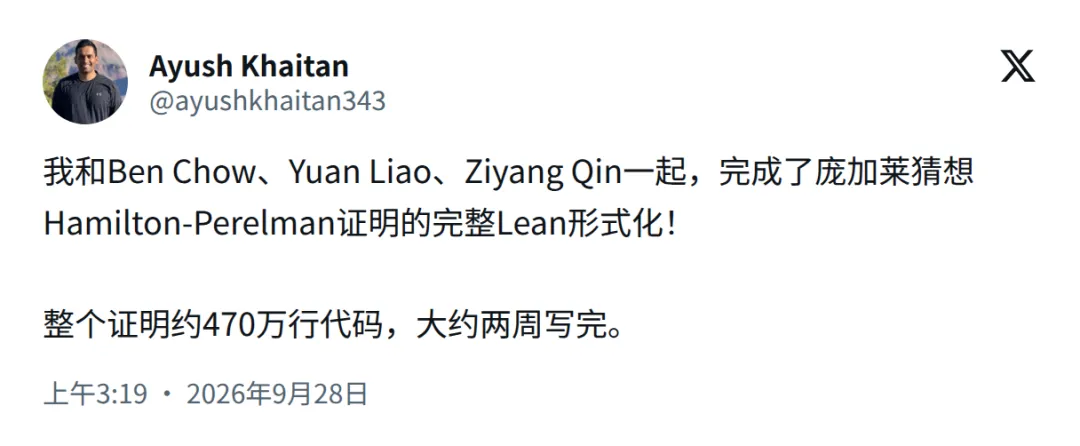 In the past, a great proof for the mathematical community to say "no problem" had to be reviewed by peers for several years. This time, it was said that computation was changed to machines and the power of proof writing was changed to AI.
Perelman's life and blood accounted for only a sixth.
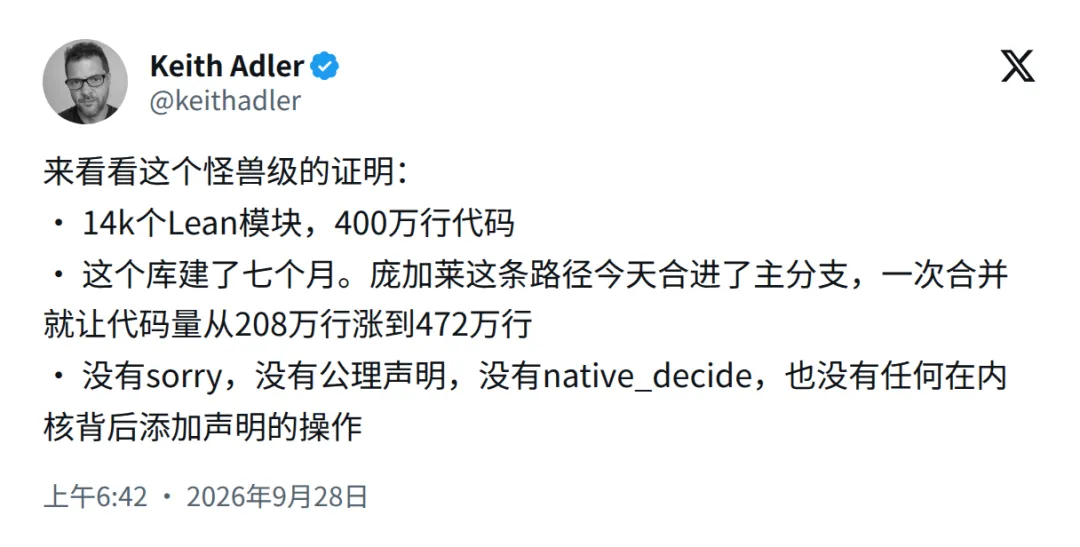
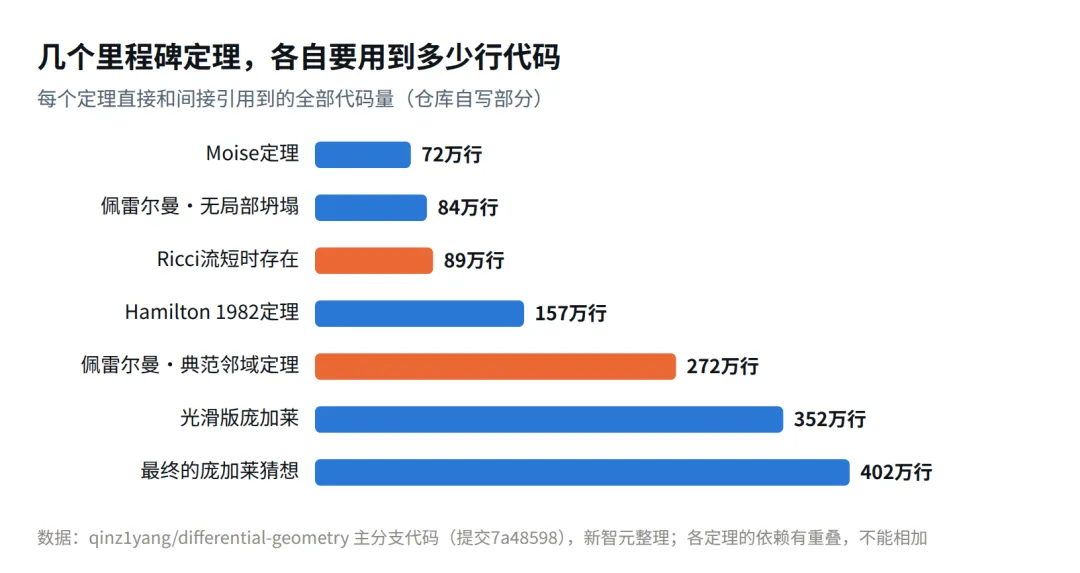
We downloaded the entire warehouse, followed the final Pongaly theorem, and came up with all the code that directly and indirectly referenced it. There were 14,197 code files that were actually used, about 4,020,000 lines, the longest of which was a string of 353 files.
 Of these, Perelman's three papers combined about 660,000 lines of corresponding code, only one-sixth. The shorter the paper, the more code to be completed in Lean. The third of seven pages, on average, corresponds to 140,000 lines per page. The third paper uses only one sentence to shorten the flow of the curve, that is, to make a curve one-sidedly curve.
 The Ricci flow is the core tool of Perelman's proof, which allows for the gradual flattening of the strongest points in space, with principle and heat transfer being almost the same. Short-term existence is typical. It says that given an initial shape, the Ricci flow can at least go forward for a fraction of a second, with the conclusion of the preceding sentence in the paper. The Ricci flow equation describes a set of coordinates, and the shape changes, regardless of the standard thermal equation. In 1983, DeTurck devised a method, first going to the equation and adding one kilogram to it to the standard thermal equation, and then changing it back and forth.
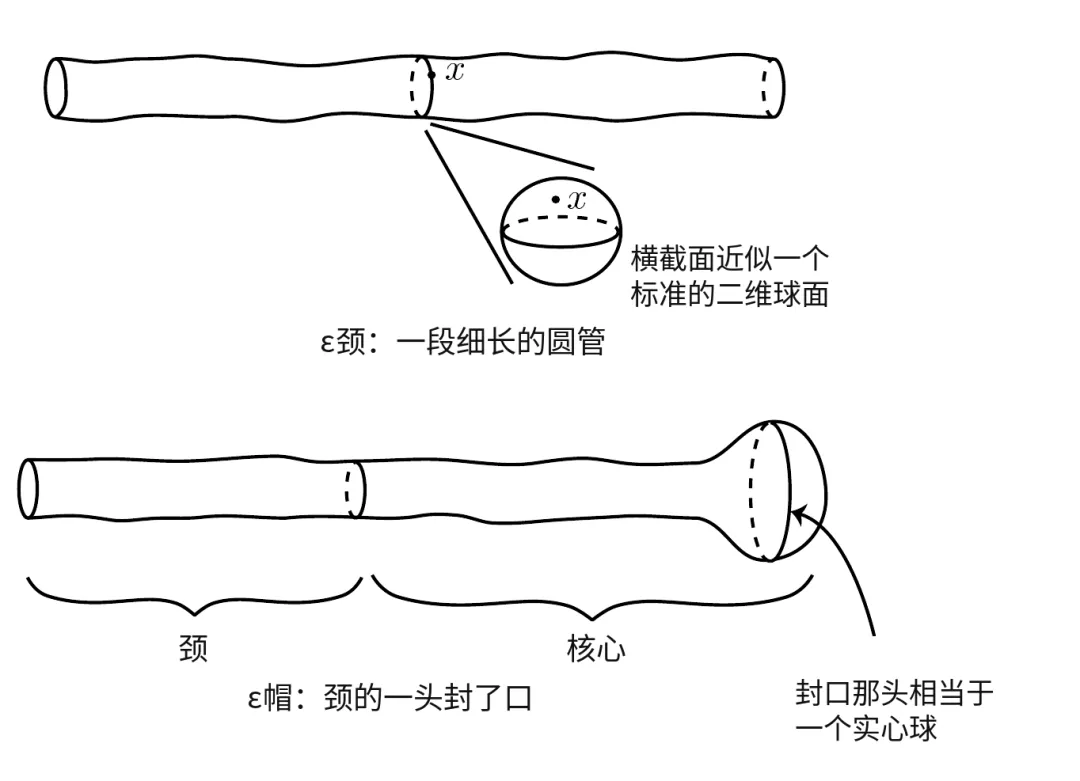 Perelman's killer rod is an example of the Neighborhood Theorem. It states that the curvature of the Ricci flow is at a point where it tends to be infinite and the shape must be regular. Either a thin loop, called a "loop", or a loop that closes its mouth, called a "hat".
A little bit behind the scenes, it's AI running AI.In 1986, he received his Ph.D. in mathematics from UCSD. Shortly after Hamilton proposed Ricci flow, he was told that the flow could be detected in spatial detail, and that this was the first step in proving it. Hamilton later recalled this. He later co-authored a dissertation with Hamilton and wrote a whole set of Ricci flow papers, which he worked on for decades.
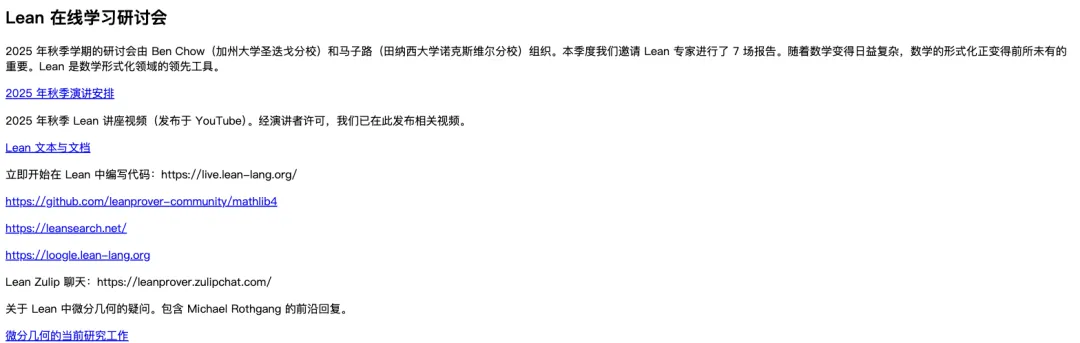 At the time, Mathlib had not had the most basic tools in Lyman geometry. It took Chow, Ziyang Qin and UCSD Ph.D. student Yuan Liao seven months to write about two million lines of basic code. The first undergraduate student to do so was Ziyang Qin. He had just graduated from Cornell in May of this year, and his doctorate had not yet begun, having been submitted more than 11,000 times in the warehouse, with 7,477 under his name.
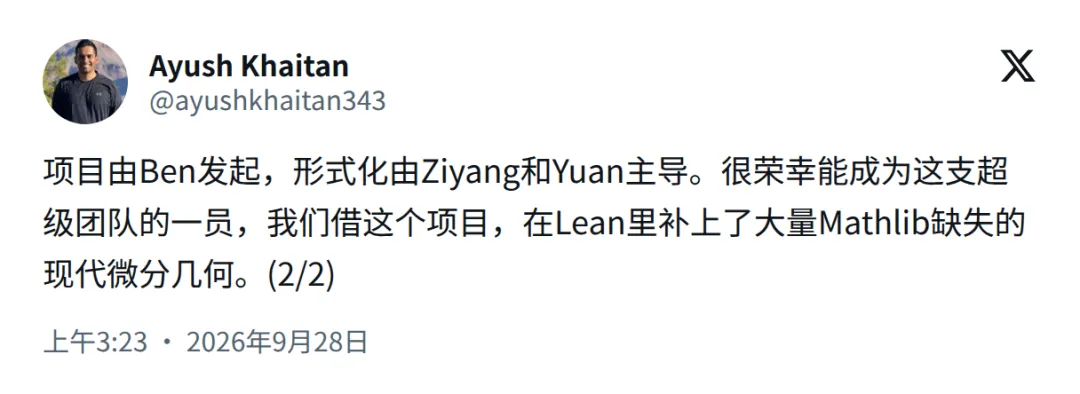 With regard to which AI is used specifically, Khaitan went deep, focusing on ChatGPT Astra, and handed part of the difficult chapters to Claude Fable.
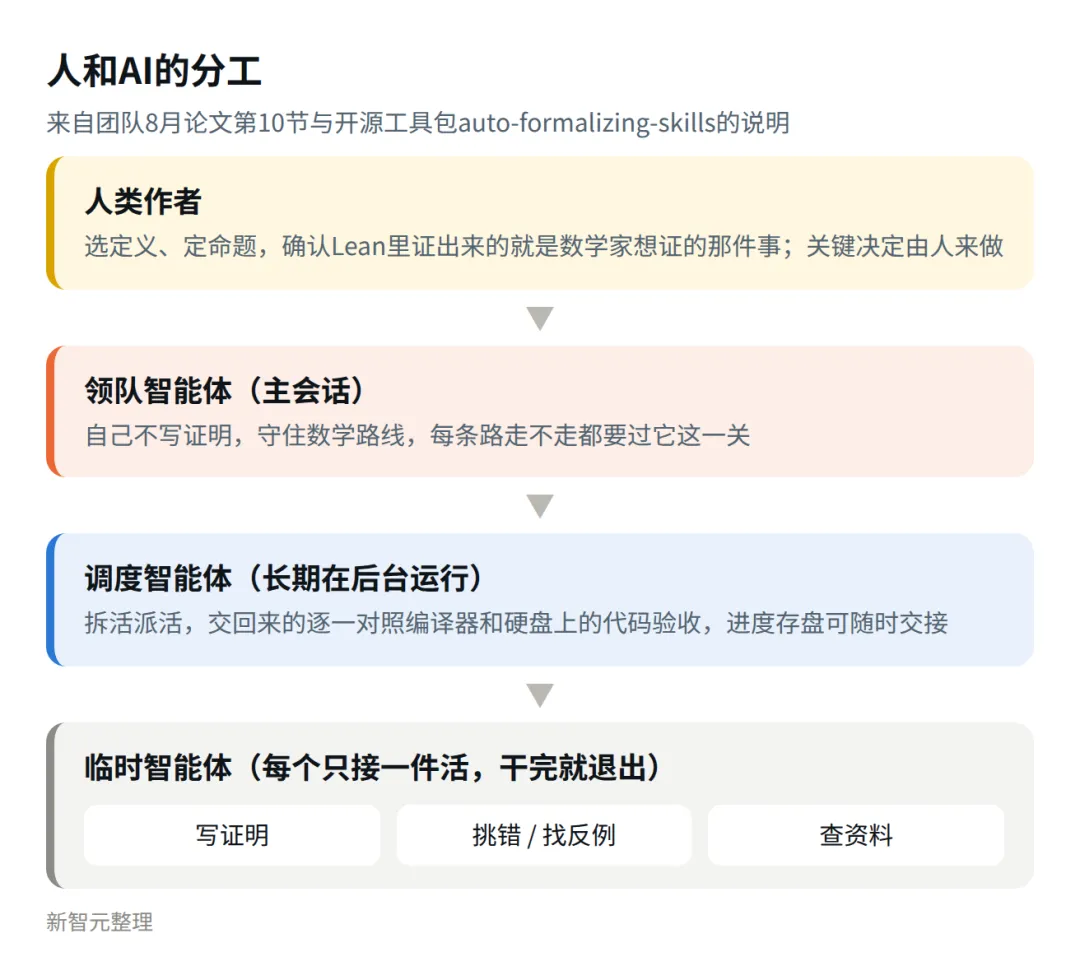
 According to the team's open-source toolkit, AI is at the top of the "leadership", which is the main meeting in which researchers interact directly, and it does not write proof, but only keeps the mathematical path. At the bottom of the team there is a long-running "scheduling" intelligence running in the background, responsible for activation, activation and validation.
 At the moment, the team is writing the topology sequence by sequence, according to a 1977 textbook by topologist Moise. Early on 20 September, Claude Fable 5.1 wrote a master list as the leader, breaking it down into four parallel mission lines and handing it over to OpenAI's coded intelligence body, the Codex.
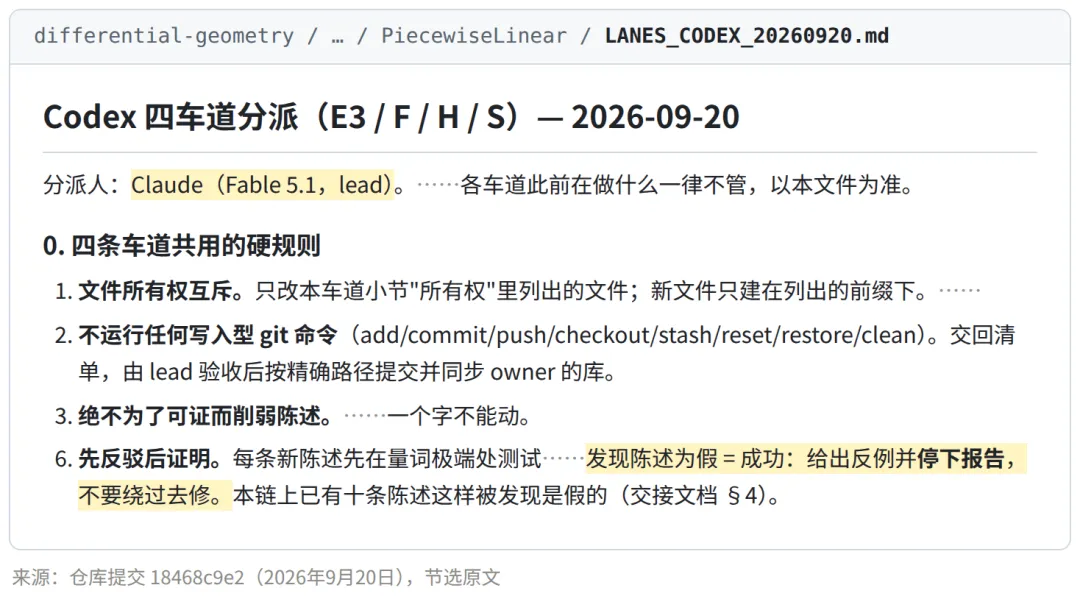 Each task line will only change the documents under their own name, complete the list, and submit them after Claude has accepted them. The most important thing is to never undermine the proposition in order to prove it. If the proposition is found to be false or successful, give the counter-examples and report.
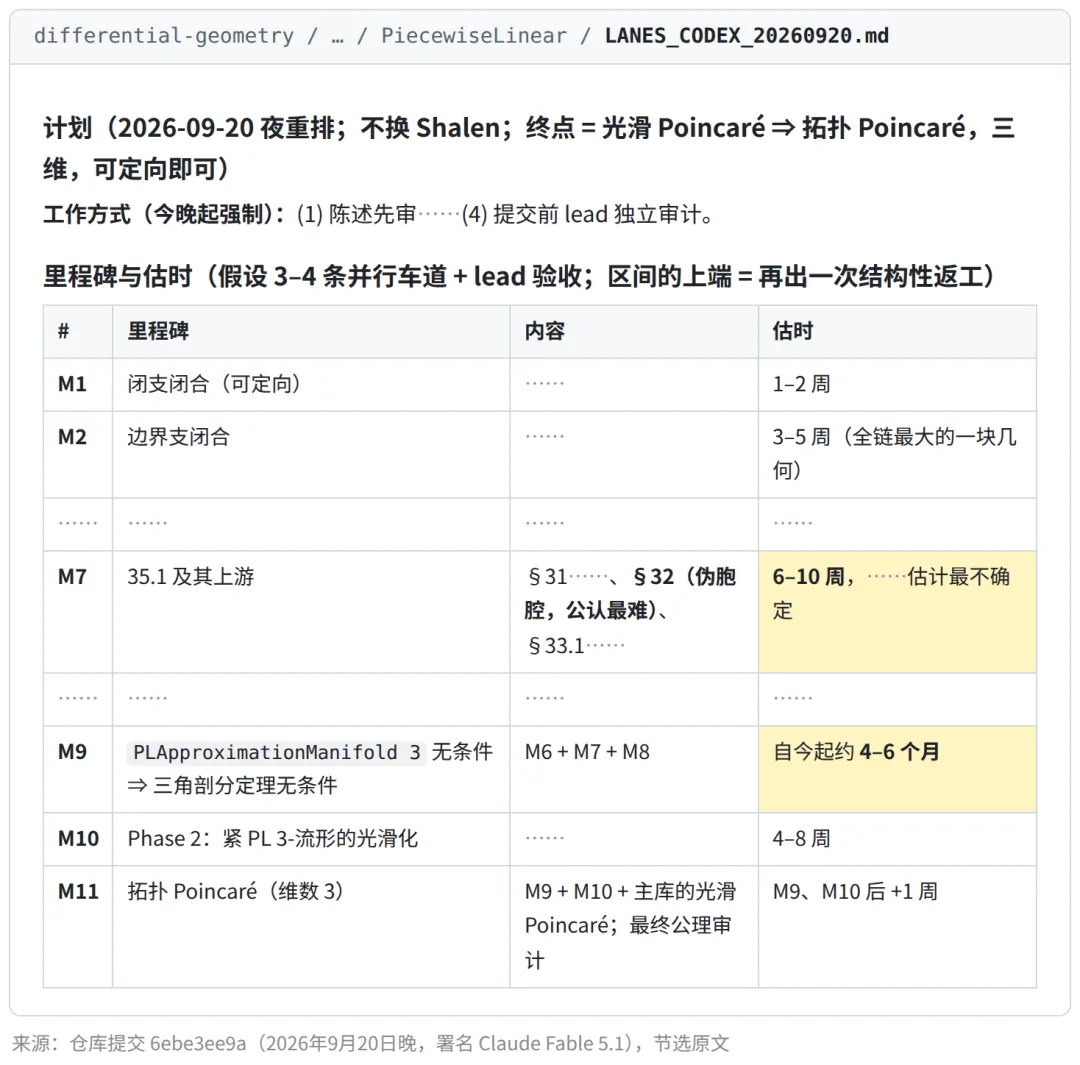 Half an hour later, the human head decided to change a method and build a skeleton. That is, first constructing the entire proof structure, taking the temporarily unconfirmed steps first with sorry to expose the problem of the interfaces in advance, and then reviewing, drafting, verifying the propositions of the position. These skeleton documents were stored separately and did not enter the main library, so there was still no sorry in the finished product.
It's a century of "surgery".It was proposed by Pongalle in 1904, meaning that in a finite, closed three-dimensional space, if any rope circle can shrink into a point, it is a three-dimensional sphere.
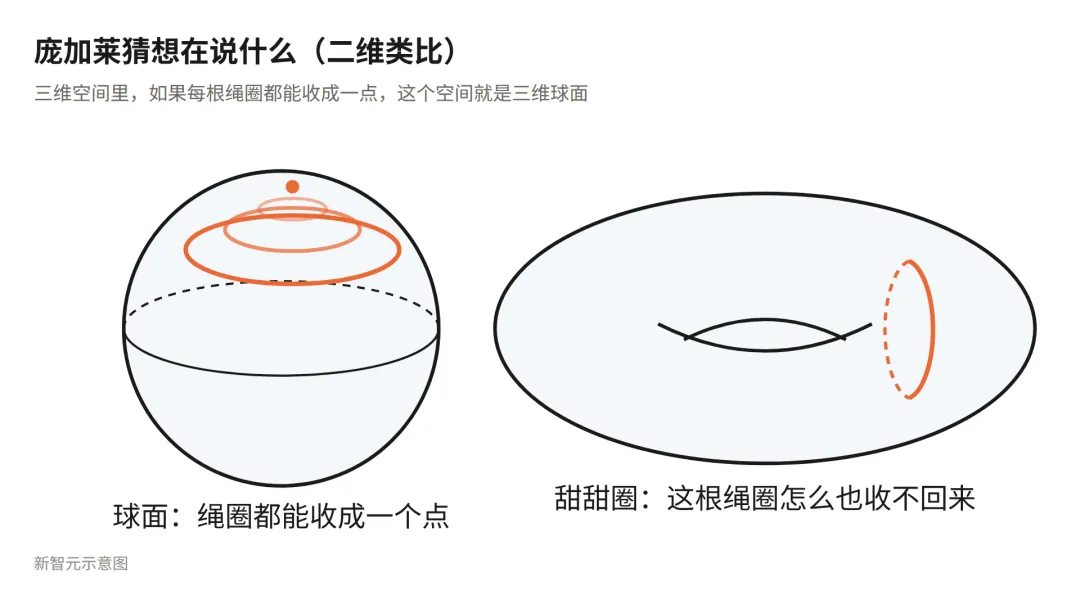 The problem dragged on for nearly a hundred years, and the higher-dimensional version was already under attack, with the partial-three-dimensional continuing motionless. It wasn't until late 2002 to 2003 that Perelman published three papers on arXiv, using Ricci to break the boundary.
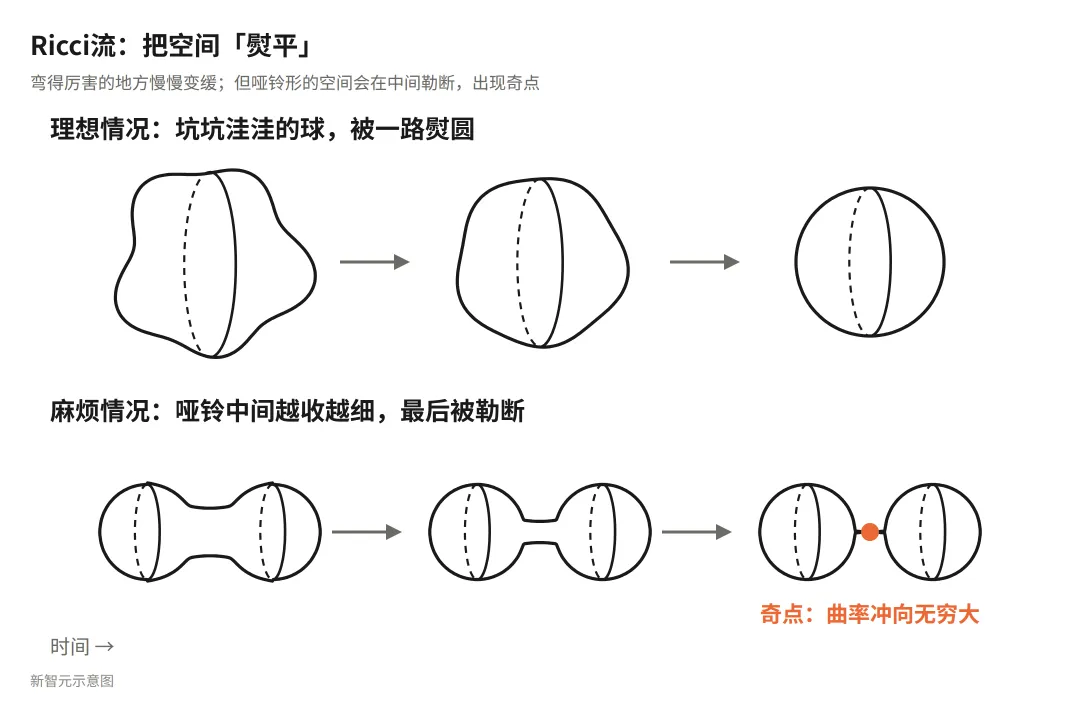 The problem is that the space doesn't have to be a circle. Imagine a sphere, with two large balls attached to a substrate in the middle. As the Ricci flow runs, the substrate gets thinner, and in a limited amount of time, the substrate is cut off. The degree of curvature of the substrate becomes infinite, mathematically called the "peculiar point". Hamilton has been playing on this step for many years.
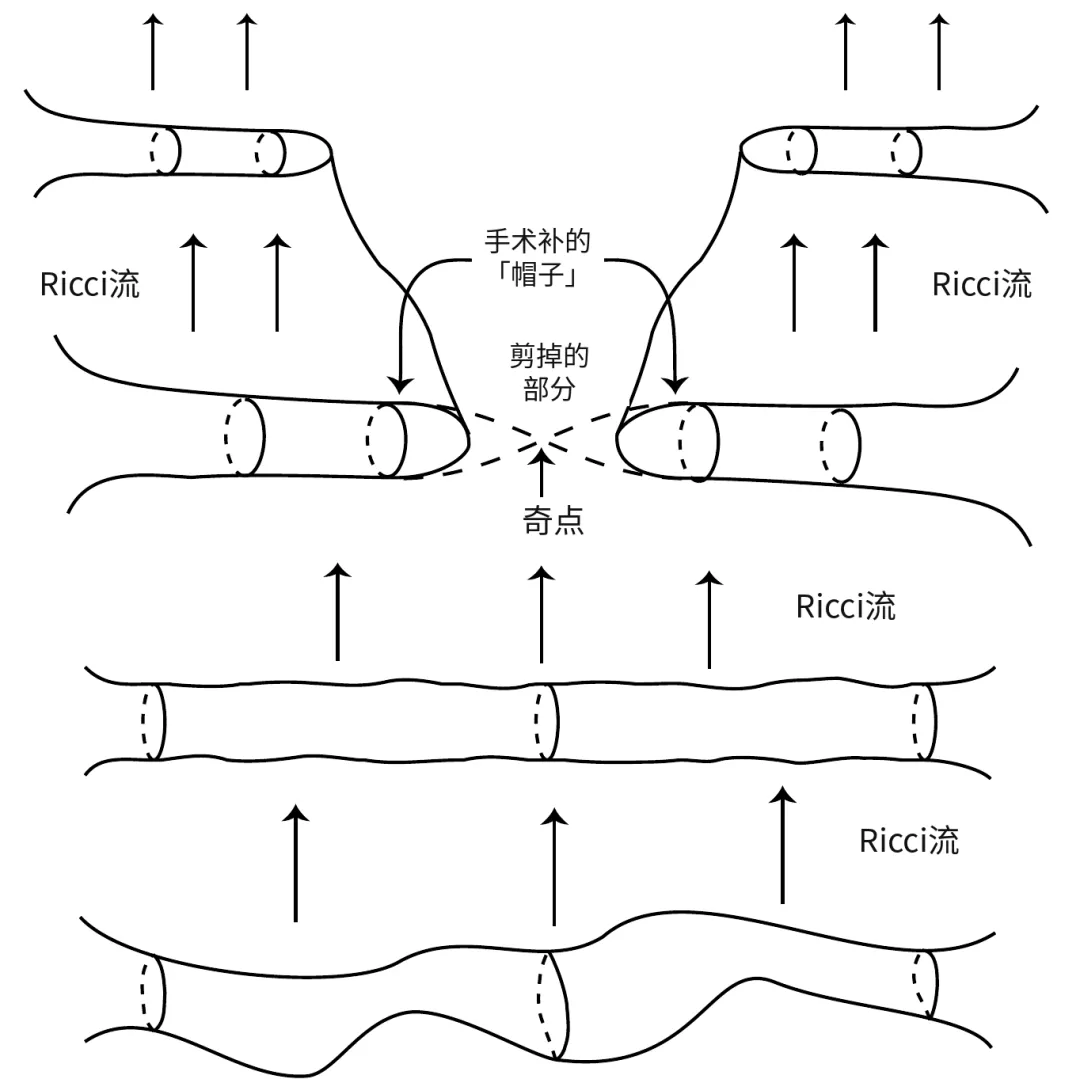 In Perelman's third paper, the direction of downward and upward time progression demonstrates that for a single-connected space, such a flow, an operation, and then a flow, the entire space shrinks and disappears in a limited amount of time. Each missing piece is a three-dimensional sphere, glued back to where it was cut off, or a three-dimensional sphere.
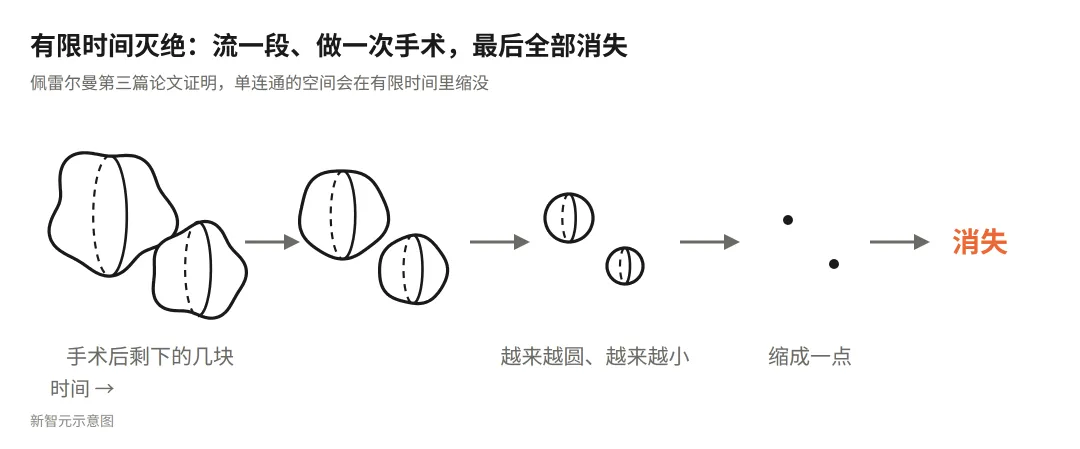 Many of the critical steps in these three papers were merely the conclusion, and it was not until 2006 that a group of mathematicians wrote several hundred pages of detailed versions of the proof that it stood up. In this warehouse, the previous 4,022,000 lines of code were ultimately used to serve a single 23-line file. The theorem in the file is based on Ponggal's conjecture that any narrow, single-connected, borderless three-dimensional topological flow is the same as a three-dimensional spherical embryo.
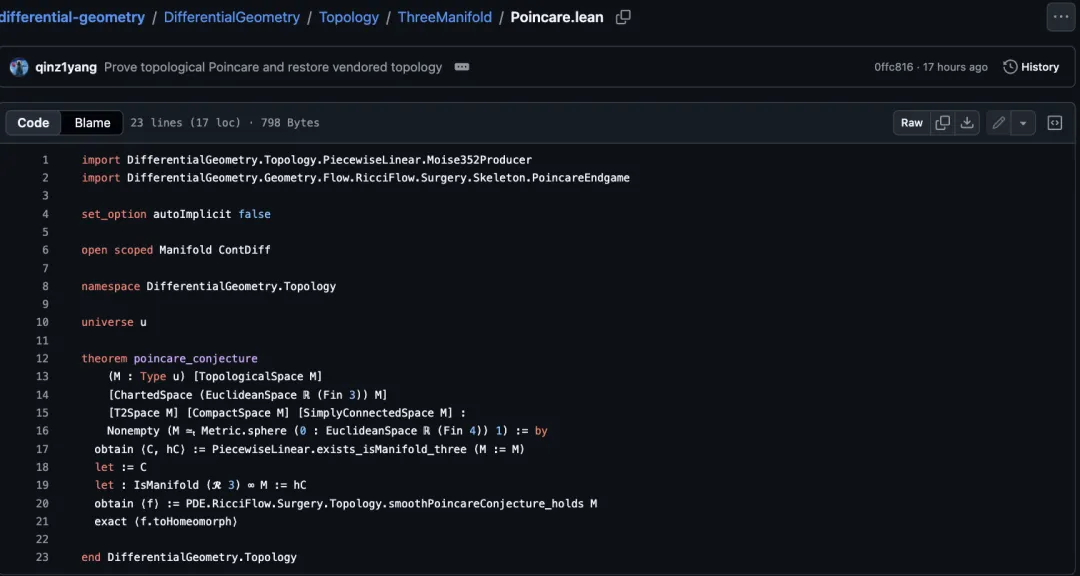 The Ricci flow can only run in smooth space, so it requires Moise's theorem to construct a bridge. Moise proved in 1952 that every three-dimensional topological flow can be cut into a small quadratic piece, folded together, and then smoothed to produce a smooth structure.
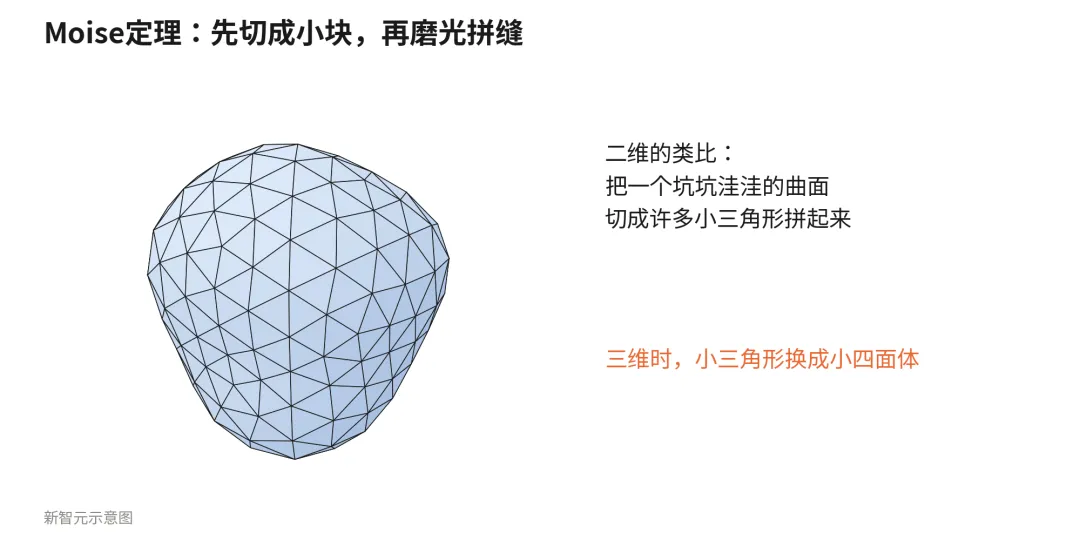 The second half of the 23 lines of code is "pre-repair bridge, then cross the river", first using Moise's theorem to get a smooth structure and then to call a smooth version of the Pongaly conjecture. Moise's bridge is more expensive than the surgical part.
 Khaitan replied that the parameters C and hC cannot be saved because Lean must first confirm that the flow has a smooth set of coordinates.
The end of the Millennium Challenge and the beginning of the next revolutionA year ago, Gauss spent three weeks writing 25,000 lines of code, which was big news. This time, four people plus an AI group wrote more than a hundred times as many as two weeks. Stanford mathematician Jared Duker Lichtman tweeted, adding two exclamations. The team's work is almost like future mathematical research.
RoboInd editorial channelResearch, robotics companies and market intelligence for cross-border sourcing.Explore the channel ↗
Share this
End of editorialExplore more from Global Robotics News ↗