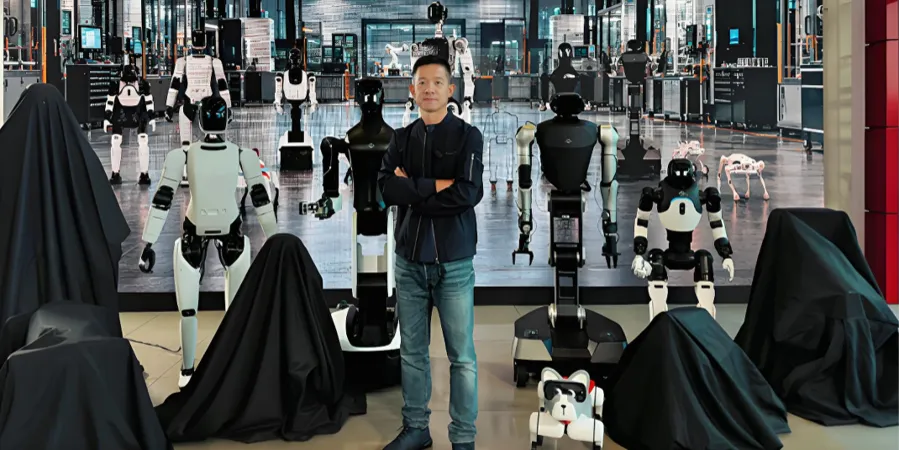
“ Fake it till you make it。
In the first half of 2026, there were 218 publicly disclosed human-to-human-to-human-to-human-to-human-to-human-to-human-to-human-to-human-to-human-to-human-to-human-to-human-to-robot-to-human-to-human-to-human-to-human-to-human-to-human-to-human-to-human-to-human-to-human-to-human-to-human-to-human-to-human-to-human-to-human-to-human-to-human-to-human-to-human-to-human-to-to-human-to-human-to-to-human-to-human-to-to-human-to-to-human-to-human-to-to-human-to-to-human-to-human-to-to-human-to-human-to-human-to-human-to-to-human-to-human-to-human-to-human-to-to-human projects with a total amount of more than US$1.72 billion in the same period.
Money flowed in wildly, and orders barely sounded.
It's not just one company's problem, the industry as a whole seems to have a problem with the definition of the word ordered rice today.
A recent media report gives a fact that few people in the industry recognize: a real robot transaction, from intentions to cooperate, framework agreements, mid-market notices, formal procurement, customer orders, to offline production, shipments, receipts, revenue confirmation, has to go through at least seven or eight links.
The problem is that when companies place orders, any one of these seven or eight links can be packaged as we get the order order.
However, what is the proportion of prepayments? what are the acceptance conditions? how long is the return period? these information are completely absent in the newsletter.
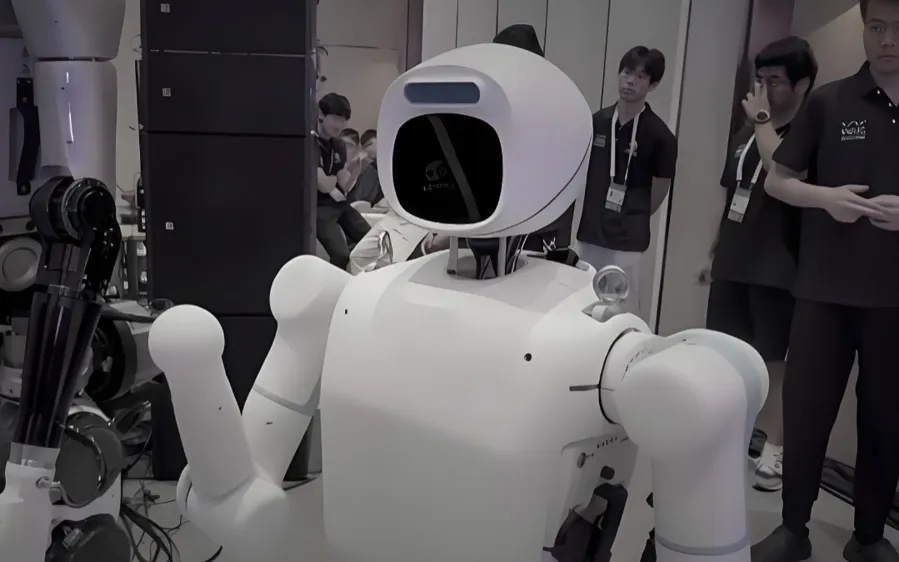
Some media outlets reported in November 2025 that a group of robotic startups, with no R&D centers, no self-building factories, claimed to handle large quantities of orders, packed themselves with prototypes on the front of the line and a series of Xxx headsets, displayed the dolls remotely in the road showroom.
So, which orders are real? Where did the orders of US$1.723 billion come from?
01.
Structure of three types of pump order
Following the survey, the Robotics Workshop probably addressed the three most common types of water, and this type of watering order has also appeared in some domestic and foreign enterprises.
The first category is the local government procurement orders. In many places, procurement orders for the introduction of humanoid robot enterprises, in the name of government halls, tourist attractions, multi-purpose centers for the placement of robots.
The second category is the upstream and downstream mutual insurance agreement. Parts suppliers promise to try and buy more parts in order to retain large customers. Corporate enterprises are bidding on parts manufacturers to buy more parts in order to increase the number of deliveries. Both sides are paying off each other, and revenues are on the rise, but there is no real need for a terminal.
In the third category, overseas pumps intend to place orders. Overseas integrators request a sample machine to test the pumps, saying that the pump test passes on the order. There are no contractual constraints, no prepayments, and even no clear test standards. The word pumps intend to place orders, which are replaced by pumps in compilations, and because they are not verifiable overseas, such orders are often more recognized.
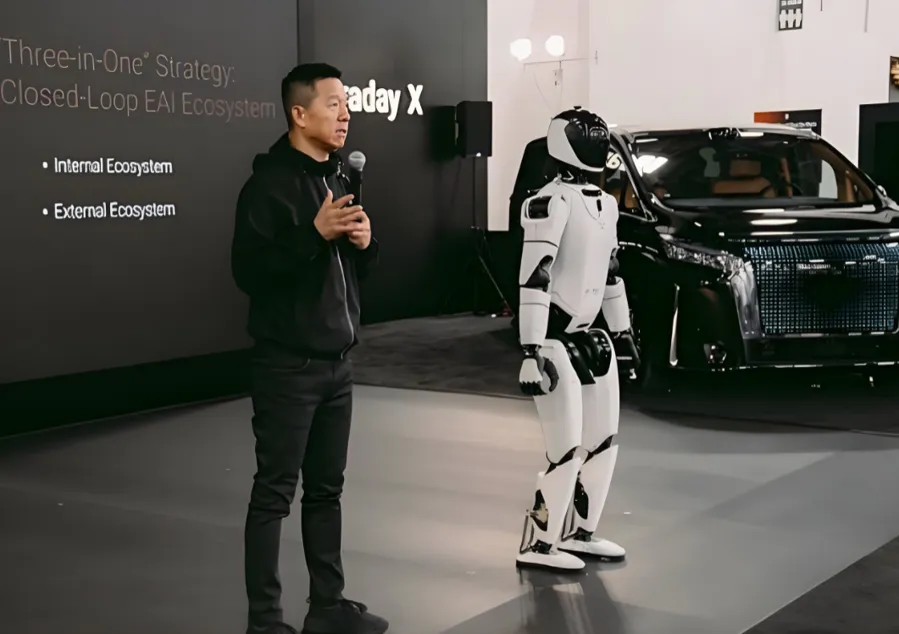
In addition to some of these, pre-orders, delivery cycles that can be very long, such as pre-orders in the automotive industry, are packaged or misread by the media as actual orders, but these are not orders that are delivered directly.
At present, the order structure distribution for the first half of the year illustrates the problem itself. Of the 218 medium-sized projects, education and research institutions accounted for 55.5%, government and state-funded platforms accounted for 20.6%, industrial enterprises accounted for only 21.1%; and 21.1% of industrial orders accounted for most were sample testing, showroom exhibitions, training pilots, not product line normalization for commercial purposes.
Take a look at another set of figures. From the shipping structure of Chinese humanoid robots, the main shipment volume in the first half of the year exceeded 7,000 units, accounting for 31% of its share of the core battlefield is scientific education, not the industrial production line. The largest application scenario of the X2 series is the entertainment show rental market, G2 series production line cooperation is still in the cluster deployment stage.
This also indicates that there are still very few people who actually buy robots and use robots to generate actual production value.
02.
Refunds, more concealed issues than pump orders
Refunds are two things. Revenue confirmation and cash flow are two things. Accounting guidelines allow businesses to confirm revenue when they send out a package of goods or complete a receipt package, but customers may have to wait three to six months or even longer to actually withdraw.
In industrial goods and services orders, this kind of cash flow has been confirmed, and the window of time in which cash is not due is usually called the cash receivable period. A company can have a good balance at the same time, the cash flow is tight, and the accounts are held together until the rate of customer payments changes, and the receivables begin to accumulate into the sea of clutter.
In the past two years, local governments and state-funded platforms have been the largest source of customers for smart enterprises. Procurement for procurement, demonstration of government scenarios, and the construction of multi-purchase centers have given many companies "looking great contracts". But the accounting period for these orders has been extended from six months to twelve months or even longer.
The more the bills roll, the more the so-called orders, which in the sense of cash flow are fake orders, are difficult to show in the actual financial statements.
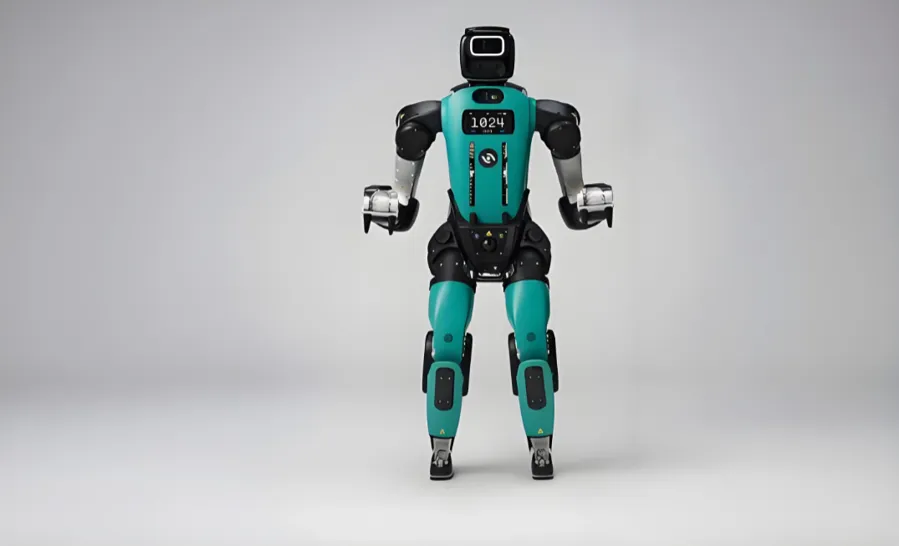
In the financial data, for example, X Company's IPO shows that receipts and receivables should be increased from ¥53.74 million to ¥170 million, and the turnover date from ¥61 to ¥111 days.
Putting the two cases together, you'll see an unconventional picture. Local bidding orders are often known for their quick signing and easy publicity, but landing on reimbursement becomes a high-risk asset with slow audits and slow payments.
Some of the listed companies are required to disclose their receivables in accordance with the regulations, so this is an industry-specific figure. However, there are still many unlisted companies, no consistent disclosure obligations, the pressure of refunds imposed by non-reported framework agreements and the intention to absorb orders that have not entered the public domain, which is the real inventory of fake orders.
Revenues have been confirmed, but no money has come in, which is a structural problem that is currently deeper in the smart industry than order watering. Because R&D is a real money-burning, cash-free company, it's a dead end.
03.
What is the difference between the two sides of the conflict?
Not long ago, after the founders of M Companies had completed the IPO, they sent a circle of friends directly to some of the smart startups that relied on various related transactions to generate false, unsustainable income, without PMF, only publishing big news hoaxes, two or three years to be put on the market, the wording is rare, frankly illegal, immoral, unintelligent.
The names of the companies were immediately denied, and reportedly reported. A recent public shooting of counterparts, a clash of counterparts with the police, brought to the stage what has been unreported in the industry. The gap between order hype and real commercial landings reflects the problem of pricing logic in the industry.
This conflict is not isolated. There are also differences on the institutional side.
At the end of 2025, Goldman Sachs' supply chain research gave a fairly conservative judgement that in 2027, the global shipment of humanoid robots, or only 76,000 units, had not reached a clear turning point.
However, the Bernstein Simultaneous Report gives the exact opposite prediction, which it believes that the current intentions for orders are precisely a sign of a massive drop in the industry, according to the corporate POC rhythm, with one million units expected to be shipped in 2031, and 50 million in 2050.
The core of the differences, rather than a dispute over market volume, is the substitution of the two paths of bridging the bridging speed of bridging order certainty and bridging technology.
The logic of the investor end also followed the split. Some early investors still gave high valuation to the logic of the button technology turning point + team backdrop, believing that artificial intelligence is the entrance to a new round of AI infrastructure revolution; while other mid-to-late-term funds began to reverse-adjust the valuation calibre, requiring companies to provide tangible repurchase rates + tangible cash flow.
Under both logics, the financial behaviour of the invested enterprise is not the same. The former is still brushing up on orders, and the latter is beginning to deliberately reduce the proportion of orders in the revenue structure.
This split was the first in the industry to signal a disparity in valuation qualities. This split became more acute after the firebombing of the founders of M.
04.
The regulation has been tightened, but the entrance exams for genuine income have not yet been delivered.
In June, the Securities and Exchange Commission revised the rules for the listing of startups, clarifying that access to the market must be strictly based on financial realism. The Chairman of the Securities and Exchange Commission (SEC) also proposed that the fifth set of standards be extended to the field of artificial intelligence while supporting the listing of high-quality companies.
The fourth set of standards for non-profit enterprises has two paths: one that requires an expected market value of not less than 3 billion yuan, a revenue of not less than 200 million yuan in the last year, a three-year compound growth rate of not less than 30 percent; the other that requires a market value of not less than 4 billion yuan, and three years of cumulative R&D investment of not less than 100 million yuan and not less than 15 percent.
Some of the companies that were previously declared according to the fourth set of standards are being affected, such as L Company's revenue of 258 million yuan in 2025, three-year compound growth rate of 118.68%, post-investment valuation of 4327 million yuan, and various indicators reached the mark.
One of the purposes of the inspection was to try to clean up the bottlenecks of the pipeline framework agreement and the intention of the pipeline in order to see which revenues were sustainable and which were only exchanged for phased subsidies or industrial tenders.
Under this pressure, a number of publicly traded companies began to actively squeeze in the proportion of bids in the bidding process, re-pressing sales resources back into the real industrial scene.
This is the first time in the industry that there is a reverse operation in which the company actively abandons the order line. This means that the logic of the revenue-sharing market is failing.
In June, the Commission amended the temporary provision for the listing of cryptocurrencies, explicitly supporting the listing of hard tech startups in more areas such as physical intelligence, while emphasizing the need to strictly adhere to the bottom line of financial authenticity.
The Chairman of the Securities and Exchange Commission (SEC) said that the fifth set of standards should be extended to the field of artificial intelligence to support high-quality enterprises in the market.
05.
When can the bubbles squeeze out?
Whether the current industry with physical intelligence is overheating, whether orders have been overvalued, we think the three main indicators might need to be focused on if we are to judge such a future industry using the logic of traditional manufacturing.
The first is the repurchase rate of industrial enterprises. For example, in 218 medium-sized projects, how many customers made the second round in the second year? The repurchase rate is the only honest indicator. The second is the due date of the billing cycle, and the 111 days of the X company's financial statements are the lead signal. This figure is clearly disclosed in the tender book, indicating that regulators have begun to crawl this indicator.
There is a clear chain between the three indicators. The buy-back rate does not run out, which means that revenues depend only on one-time bidding orders + government subsidies; an increase in the number of days of billing rounds, which means that the pace of returns on these one-time orders is out of control; and the increase in local fiscal payment cycles, which means that the government is also spending its purchasing power to support purchasing data.
At the same time, the three indicators are weakening, which is the signal that the industry bubble is entering the hydrogen phase. At the current stage, at least two of the three indicators are already sounding alarms.
In fact, in the second half of 2026, the industry has already seen two signals of reversal. First, many publicly traded companies are actively compressing the bidding share to re-pressure sales resources into the industrial scene, rather than short-term revenue declines to maintain the health of the reporting.
The two moves point to the same thing: the two words of the order are about to be redefined, while the process of redefining is the process of the bubble being squeezed out.
In the context of the Chinese-American bubble, technology investments are the only scarce and promising exports, which means that the financing of physical intelligence will continue. The change is that when the industry as a whole has less money, it will not start to be worth the money when orders are placed; companies are forced to take real repurchase orders and cash flow to run smoothly.
The really dangerous signal is not that financing is shrinking, but that financing is continuing to increase, repurchases are continuing to be absent, which means that the scratch gap between cheating orders and cheating is still widening. 17.23 billion against 90 billion, 52 times the deficit is not the problem of a domestic company.
This judgment is not unique in the history of the industry, and we don't have to feel cold in the industry.
At the time, the global new energy vehicle industry was experiencing a difficult period after 2014, when government procurement, demonstration operations, and local tender orders accounted for more than half of the revenue. A number of players ran out of good reports based on this policy order, but after the decline of subsidies in 2018, the number of billing rounds increased from the industry average of 80 days to more than 160 days.
The difference is that it took New Energy Cars four years to complete the switch from policy orders to private orders. If the switch could be completed in less time, it would decide whether 2027 was the year of the industry's split or the year of the bubble.
It's not a matter of financial skill, but whether the end user has picked up his wallet a second time. The next step in the industry is not to make orders bigger, but more authentic.