The Heart of the Machine
Raven V0.2.0 provides two core designs for this: the Harness framework designed for RSI, and the Harness of Harnesses by the Unified Arrangement Specialist Agent. Raven's multiple results in multi-agent compilation, in-depth research, coding, design and continuous evaluation outperform Harness under the same underlying model.
Recursive Self-Improvement (RSI) refers to the mechanism by which an AI system uses execution results and feedback to continually improve itself to produce those results. Regarding RSI, people often think of model parameters first, but the human brain gives another answer: according to complementary learning system theory (CLS; Kumaran, Hassabis & McClelland, 2016), Haima rapidly remembers specific experiences, and the cortex slowly absorbs replicable capabilities through regression and integration. Thus, it can truly be classified as the LLM of the brain, but the entire Agent: the model parameter is the same as the cortex, suited to slow consolidation; the Harness, composed of memory skills, suggestions, control code and decision-making strategies, should be programmed like the Harness. EverMind Raven V0.2.0 is starting from here, built around two core design concepts.
The first is the Harness framework designed for the RSI. Raven divides the parts of the Harness that can be rewritten by AI into four categories: Modules (such as a combination of playbook and sub-Harness); Code (such as a strategy code such as performing pre-checks); Prompt (such as a system tip and uploading manual) and Policy (such as tool openings and valve configurations). These four types of content together make up the Harness installation program, each of which can be independently replaced and rewritten. AI can modify these parts based on the knowledge, experience and feedback accumulated in the task, continuously improving the individual Harness and team collaboration strategies.
Second, The Harness of Harnesses. Raven combines its own deeply optimized four sub-agents (Raven-Research, Raven-Code, Raven-Design and Raven-Oncall) with professional Agents such as Claude Code, Codex, responsible for member selection, task decomposition, dependent scheduling and result interfacing, and the ability of EverOS to maintain context and experience across sessions, supporting a combination of cross-modal and cross-framework capabilities.
Around AI improvement, Raven currently has two explorations: one is how AI improves the Agent itself, the Curator mentioned above (see Part 4); the second is the R&D work on AI improvement AI, where the Raven RSI project completed 7 rounds of 172 training sessions in a nanochat pre-training experiment, bringing val_bpb to a relative decrease of 5.8% under the same single-training budget (see Part 6).
Raven's own release was also a practical application: it completed a browser edge physics mini-game, a 16-page product introduction, Chinese-English posters and the README project, using a variety of professional skills to create its own promotional materials.
Figure 1 of Raven V0.2.0 Main view. Product interface, case and evaluation chart provided by EverMind.
A Harness of Harnesses How to Organize a Professional Agent
When you assign a complex task to AI, the real effort is often more than just getting an answer. You also have to decide what to look for first, who to give it to, what work can be done in parallel, how the results can be communicated, and how to adjust after a problem arises. These judgments and corrections will continue to work the next time you encounter similar tasks, and will also affect whether AI is truly a reliable partner.
Research requires retrieval and evidence, coding needs to be implemented and mediated, design needs to be organized to express and deliver, experimental tasks also need to be continuously run, observed and advanced to the next round. Different professional agents have formed their own tools, skills and ways of working. Complex tasks need to organize these capabilities, and experience accumulated in execution needs to be incorporated into subsequent work processes.
With professional agents like Claude Code and Codex retaining their expertise and execution mechanisms, Raven takes on coordinated tasks at a higher level: who does it first, who does it next, who needs to read what results, and when to move on to the next step.
This is also the meaning of Harness of Harnesses. Harness is a set of mechanisms for converting model capabilities into action, covering context management, planning, tool use, result checking and execution cycles.
This shows two levels of interconnectedness: external organization members, tasks and dependencies, and internal Harness, which determines how information is used, how tools are called, and how actions are taken. Raven-Research, Raven-Code, Raven-Design and Raven-Oncall each undertake research, coding, design, and continuous execution; and Raven can also connect third-party members via ACP, CLI, or OpenAI-compatible APIs.
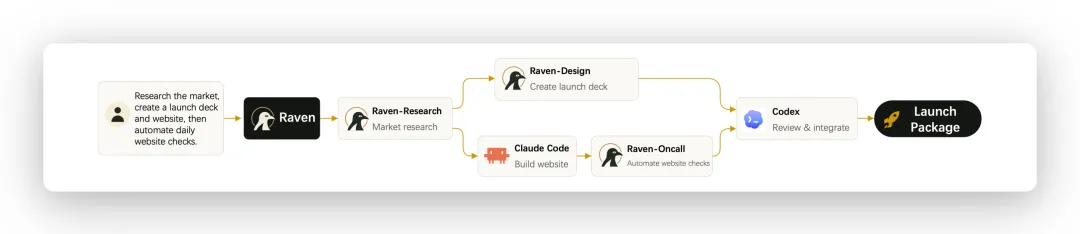
Figure 2 demonstrates the collaboration between Harness members to complete research, publish material and website development, and deliver products.
From a Goal to a Mission Map
Giving a suspension beam a step-by-step load, observing the convergence of a simulated solver under different loads appears to be a specific computational task, but actually involves three links of research, coding, and experimentation. Raven shows a link chain: Raven-Research research method, Raven-Code computation implementation, and Raven-Oncall continuous running experiments.
Raven first breaks down the target into a task map, then selects a member for each node, and decides the next step based on the state of completion of the predefined task. Once the research node is completed, the cited upstream conclusions enter the code node; the code product is ready, followed by the experimental node. Each member undertakes professional work, and Raven is responsible for organizing the input, output, and start conditions between them.

Figure 3 shows a simulated task map of the pendulum beam. Research, code and experimental nodes are connected in a dependent order.
The key mechanism here is DAG, which has a direct linkage. No interdependent branches can be started in parallel, while nodes that require a pre-set outcome wait for dependent completion. When the node is started, Raven will organize task objectives, role responsibilities, and explicitly referenced upstream outputs or product inputs into inputs. When the current assignment fails, the dependent nodes can be skipped and the unrelated independent branches can continue.
This way of organizing allows the collaboration process to be observed: whether the task has been started, whether the dependencies are satisfied, what results have been communicated, why the subsequent nodes can continue. Users can also save members, tasks and dependencies as Playbooks, and use them again in similar needs. Once executed, a workchain is formed, so there is an opportunity to become a repeatable process.
3 How Memory Connects Tasks to Experiences
After a task is completed, the rear members need to access not only the status of the file completed, but also the conclusions, files, references, and context that can continue to be used. For the rear end that supports local file readings, Raven can attach memory recording inputs that rely on the nodes; the rear end that supports session continuation can access the context in successive steps.
Intersession accumulation is taken over by EverOS. User context, Agent experience and world knowledge can be used as a reference for subsequent tasks. Task charts are responsible for organizing the execution sequence this time, while memory helps to determine which information is still useful in the past, reducing the cost of repeated background switching and rediscovering materials.
Experience further affects the performance of work, but also needs to go into practical execution strategies. What problems a task exposes, what requirements the user repeatedly emphasizes, and what practices are worth continuing to adopt need to be transformed into subsequently executable adjustments. Raven's modular Harness provides a specific starting point for these changes.
Four Harness Automation: Making one mission the starting point for the next
Raven's Harness is designed to be rewritten by AI. The work is performed experimentally in Curator (V0.2.0) with a code repository provided: it reads the actual Harness currently installed, tasks requests, executes traces with user feedback, generates specific changes, can be prompted with uploading manuals (Prompt), configurations and toolkits (Policy), code for implementing the strategy protocol (Code), or can be a combination of playbook and sub-Harness modules. It can adjust the original Raven root Harness, Harness, and the team's layout and interconnection strategies. All changes have been verified, installed, and pre-installed; when uninstalled, the release of a version of Raven Harness requires that the source and content management process be restored.
Here's a template designed for AI modifications that can be verified directly in code: Memory, Planning, Capability, Action, a public policy protocol for each of the four strategic aspects; Curator generates a Python class that implements protocols that are tied to Raven's existing callbacks by the adapter layer; tips, skill packages and playbooks that are written into the Agent's home directory; new tools and portals that are registered as plugins. AI implements these changes through open policy protocols and expansions, and each change can be checked, rolled back and tracked.
Imagine a travel planner who wants to develop a digital partner who works in his own way: he welcomes customers according to my service processes, combines the destination information I have compiled, and gives them a presentation of their itineraries and plans.
Turn knowledge and SOP into work arrangements
The planners give it knowledge assets such as their own past experience, working patterns, such as past itineraries, accumulated SOPs. The information provides the information needed to travel; experience tells it how to arrange more comfortably, which combinations are easy to get to; and the SOP specifies the workflow commonly used by individuals in standard travel planning scenarios.
Once understood by the Curator, these requirements are used to customize the current state of the Harness and implement it as a workchain. One possible arrangement is: the main character communicates with the customer and organizes the needs, the research members search for and validate destination information, the design members organize routes, budgets and attention into a program presentation.
Four strategic modules undertake specific planning methods
Raven divides the customizable strategies in its Harness into four modules: Memory, Planning, Capability, and Action. They participate in the complete Agent Loop through established interfaces, allowing for specific adjustments in information preparation, task planning, tool use, and action judgment.
For example, in travel planning, Memory decides what customer needs, past experiences are seen in the current rounds; Planning decides to first confirm constraints, then compare routes, and finally organize the work order. When it comes to services such as access maps, weather, Capability decides which tools are opened to each model alternately; Action decides how and whether to check the corresponding execution actions before execution.
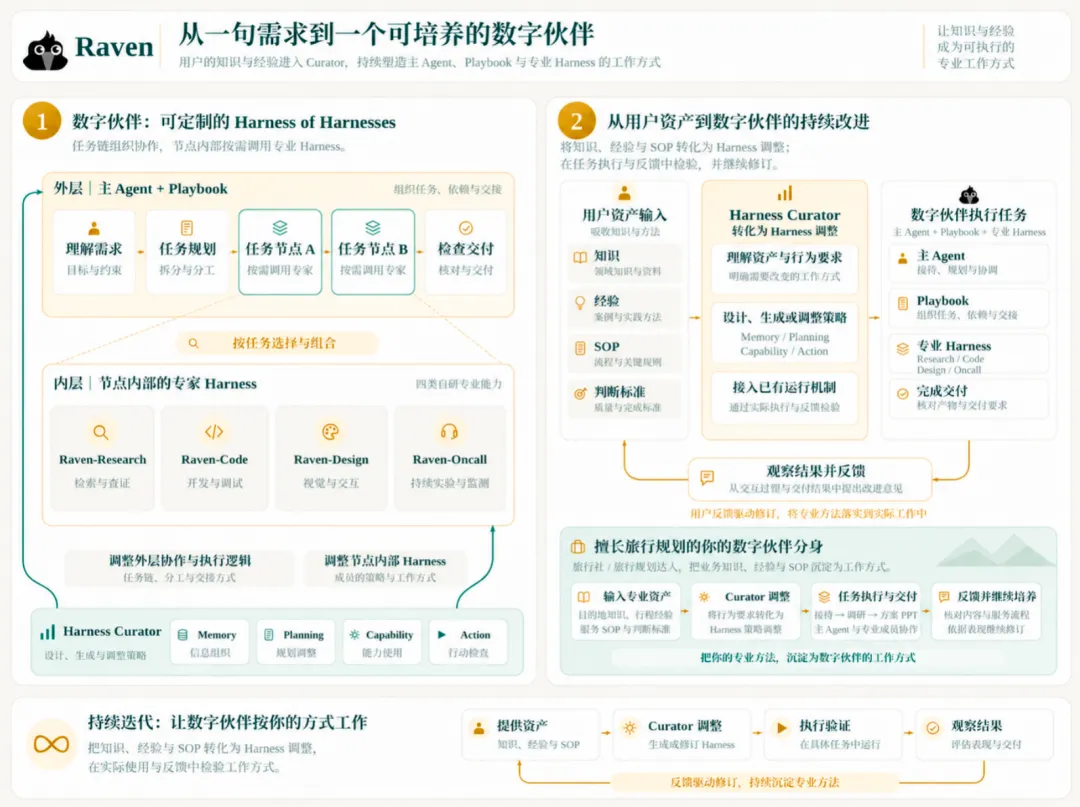
Figure 4 From a single need to a sustainable digital partner. The knowledge, experience, SOP and feedback of travel planners into distribution and Harness strategies. The demonstration production capabilities in the chart are taken over by Raven-Design.
Let feedback influence the planning of the next trip
User feedback is first assessed by Curator for its corresponding policy issues and then transformed into Harness-level adjustments, such as adding information that needs to be retained in Memory, modifying the planning method of Planning, or adding checks in Action; this process can also be iterated as users continue to feedback.
For example, travel planners point out that if the plan has too many consecutive steps, frequent cross-zonal commutes, and a lack of rainy days, the curator can make the follow-up plan more considerate of the strength and rhythm of peers, prioritize regional organizational routes, and check the weather before delivery.
A similar process has been run in a simulated case involving the code library itself: the owner of a fictional travel agency (played by the model) uploads only the information in the store, acts as a guest practitioner, exercises after comments. When he takes office, the Curator generates the process and checks the code using only the information, such as rewriting the previous queries of each message, more than two times; afterwards, the boss's opinion turns the problem into an executive layer, and the 11 lines in the third round review standard are all passed.
It should be pointed out that this is only a simulation run, the travel agency is fictional, the owner and guests are played by the model, and the Curator is still experimental in V0.2.0.
5 Performance from organizational to professional execution
Whether a team is able to collaborate depends both on how the task is organized and depended on, and on whether the members are able to complete their respective professional tasks. Raven's assessments cover two levels: editing, evaluating the production of survey task charts, field evaluation of survey research, coding, design, and continuous execution capabilities. The assessments cover multiple open benchmarks and AI4S internal benchmarks, specifically setting up corresponding charts. These assessments test the ability of Harness of Harnesses to arrange with the expertise of each member, and do not involve the effect of Harness layer self-modification.
Assessment of the relationship between task and dependence
Multi-Agent ranking ratings include Node F1, Edge F1, Partial Order Accuracy and Exact Match Rate, respectively, for matching nodes, dependencies, and executing sequences to the entire task graph. In the Qwen 3.8-27B group, Raven's four results were 0.923, 0.812, 0.950, and 0.711 respectively; in the DS-V4-Flash-0731 group, respectively, 0.963, 0.897, 0.918, and 0.867. Both groups are higher than Hermes and Claude Code in the same model in the diagram.
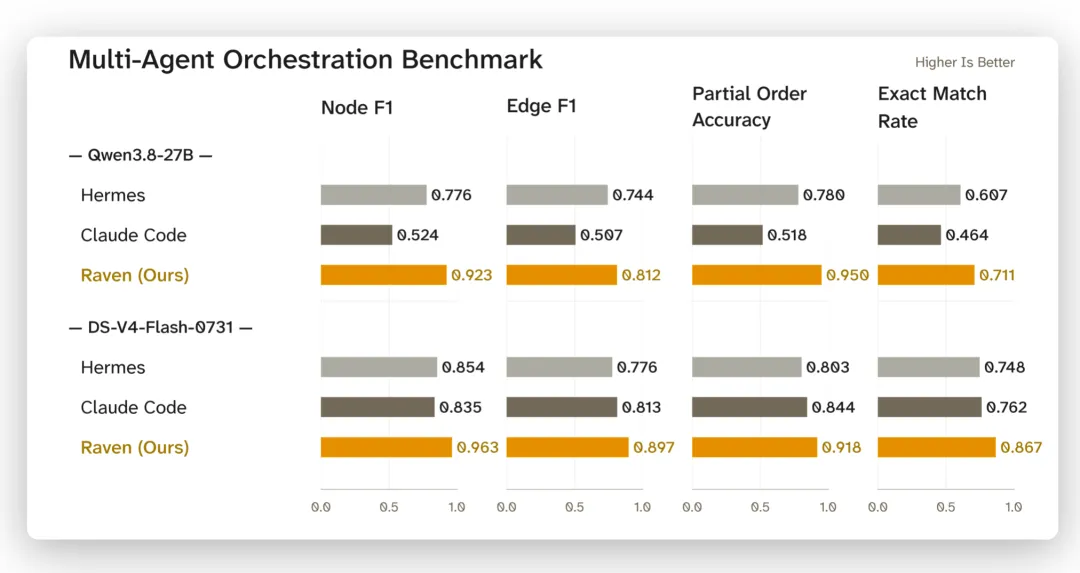
Figure 5 Multiple Agent sorting evaluations. Comparison of nodes, dependency relationships, execution of parsequencing and matching performance according to the underlying model.
Capacity to conduct research in conjunction with the organisation of evidence and completion of tasks
In DeepResearch Mixed, Qwen 3.6-35B, Qwen 3.5-397B and DS-V4-Flash have accuracy rates of 56.3% and 59.3% respectively and 76.5% respectively; the corresponding DeepSeek-Harness results are 49.7%, 56.0% and 68.9% respectively.
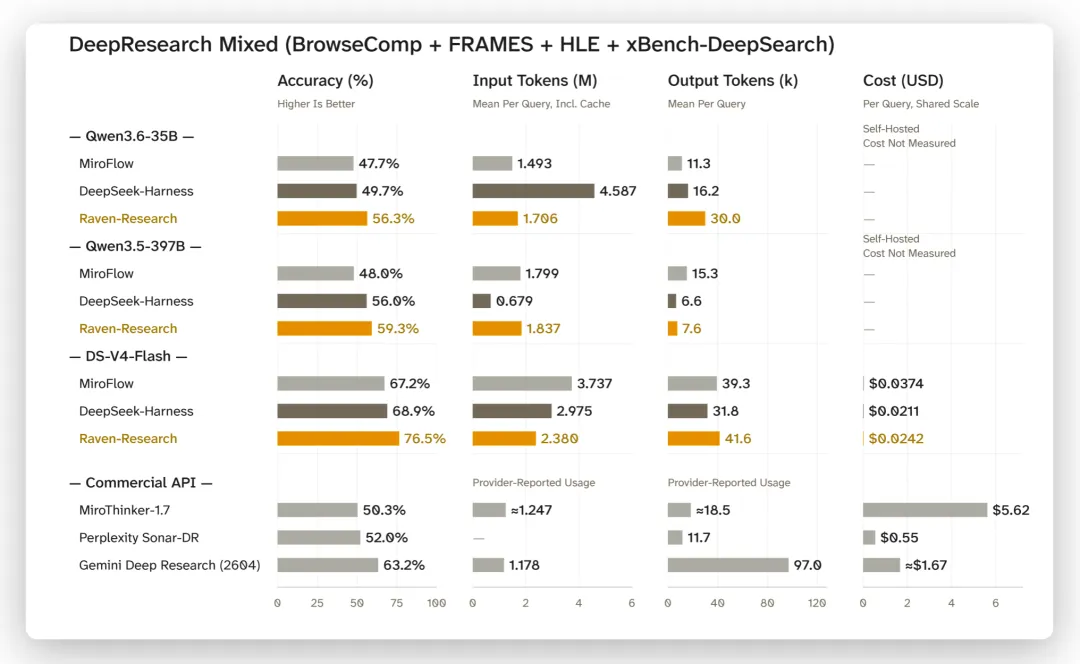
Figure 6 DeepResearch Mixed Assessment. Compared accuracy, average Token usage and cost per query; Token input contains caching, cost of self-hosting is not measured.
In the DS-V4-Flash group, Raven-Research averaged 2.380M input tokens per query and 41.6k output tokens for a fee of $0.0242.
Coding capabilities cover rebuilding and data analytics
In the Qwen 3.8-27B group of SWE-bench Pro, Raven-Code had a problem solving rate of 54.4%, Claude Code 52.4%; the group used offline generation and online scoring. In the DS-V4-Flash group of SWE-bench Verified, the online generation problem solving rate was 91.0%, and DeepSeek-Harness and OpenCode were 90.4% and 90.2%, respectively.
In the DS-V4-Flash group of SWE-Refactor, Raven-Code averaged 16.5, Claude Code 7.0; in the GPT 5.6-Luna Max group, Raven-Code and Codex 13.5 and 10.5.
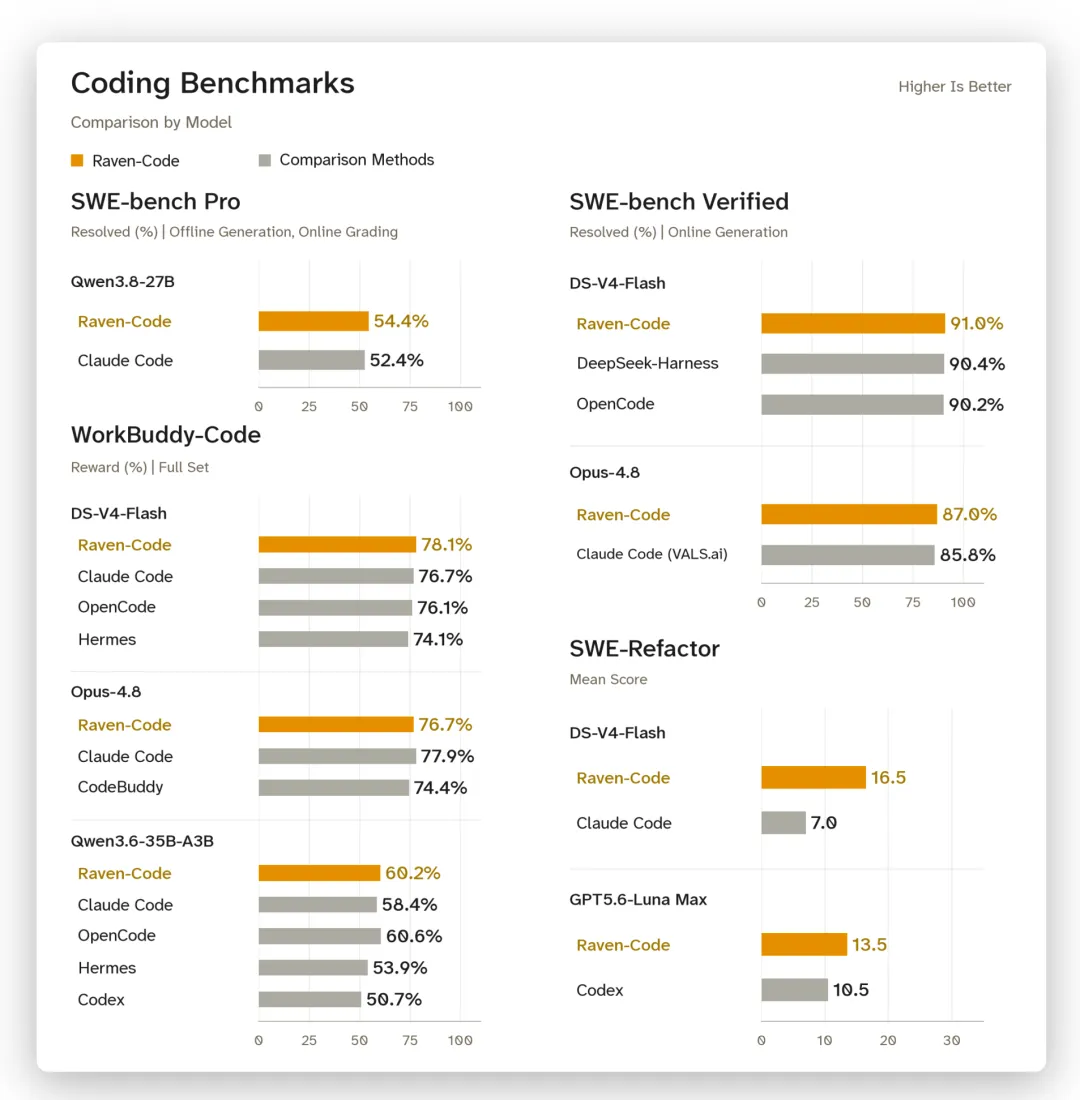
Figure 7 Assessment of code capability. Indicators include problem solving rate, rewards and average scores.
In DataAgentBench's 2026-08-24 Live list, Raven-Code used Opus-5 to top the list, with Pass@1 being 0.8762; Permute EQ using the same model, with a corresponding result of 0.8713.[3]
Design capability covering presentation and visual delivery
Raven-Design is aimed at presentation documents, web pages, charts, SVG and brand vision. In slide generation and visual design evaluation, Raven-Design and Claude Code scored under the same model, see Table 1.
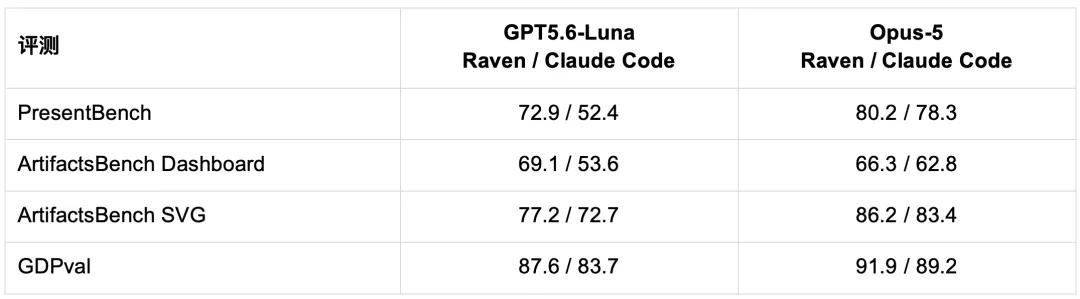
Table 1. The higher the scores, the better each design is rated as Raven-Design and Claude Code respectively.
Continuous performance combined with quality time and cost consideration
Raven-Oncall focuses on experimentation and continuous execution. AI4AI uses Nanochat 50M pre-training tasks to allocate two A800 80GB GPUs.
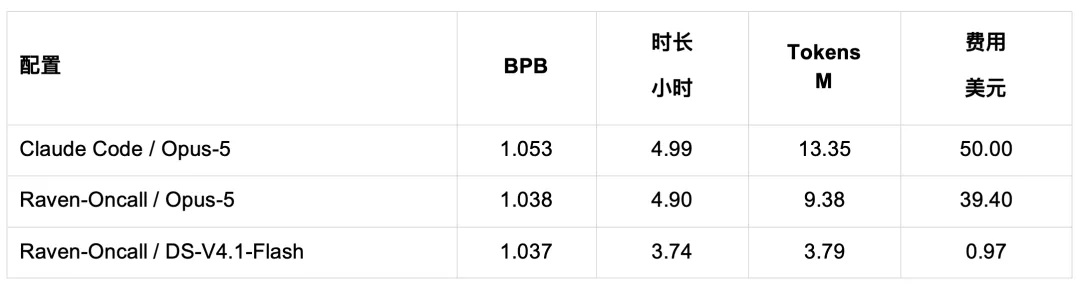
Explain the quality and resource consumption of training evaluated by AI4AI.
In AI4S's internal automation research benchmark, Raven-Oncall's mission success rate with Opus-5 was 82.35%, and Claude Code's success rate with the same model was 64.71%.
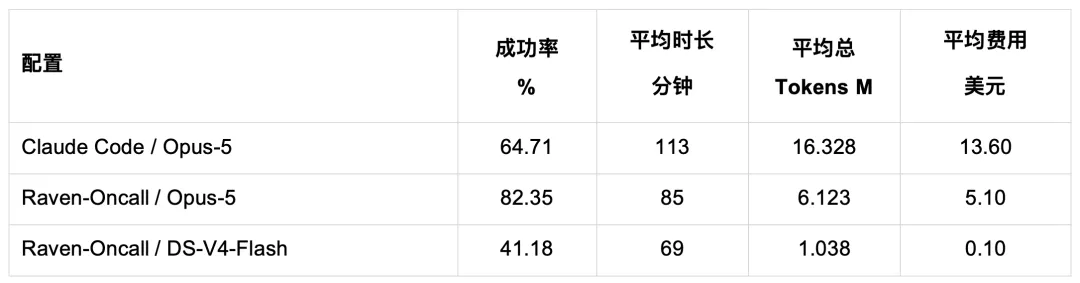
The higher the success rate, the longer the tokens are used and the lower the cost.
Once these skills are integrated into the same task chain, they can jointly support entire projects from research analysis to code implementation, experimental running and visual delivery.
Six practical use cases
Raven RSI: Let AI improve R&D on AI
Raven RSI explores allowing AI to conduct R&D experiments autonomously. Unlike the Harness self-improvement in Part IV, which is continuously improved by the training and computing program in the task, rather than Raven itself: under the evaluation criteria of a given task and non-self-modifiable, Raven self-plans each round, writes code, runs experiments, and decides on subsequent adjustments based on the results.
In another group of nanochat pre-training experiments, Raven continued to optimize the training program, completing a total of 7 rounds and 172 training sessions without any training crashes; with the same 20-minute GPU budget for each training, the val_bpb decreased by a relative 5.8%. The full delivery also included test results, visualizations, posters, demonstration documents and project websites.
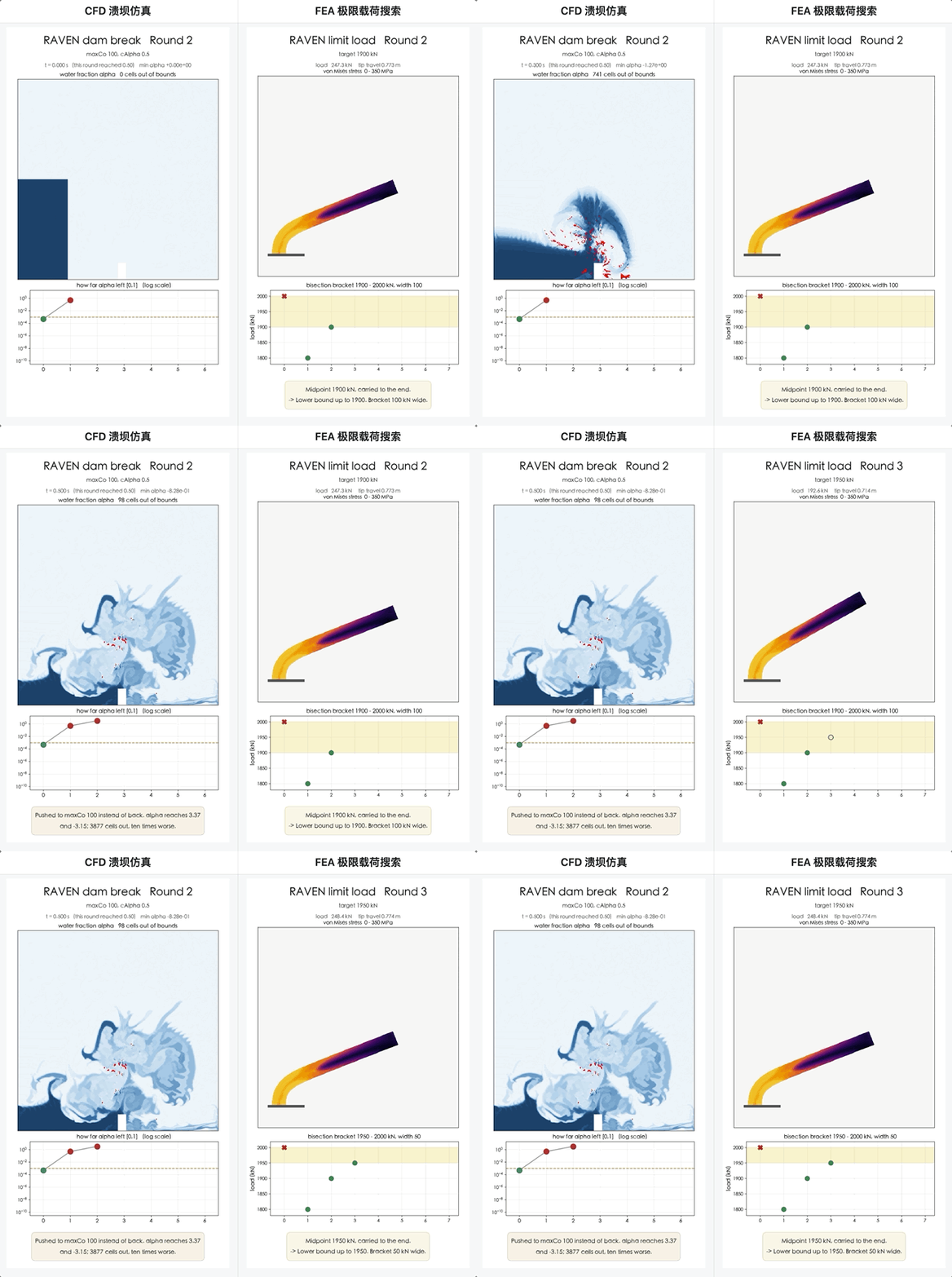
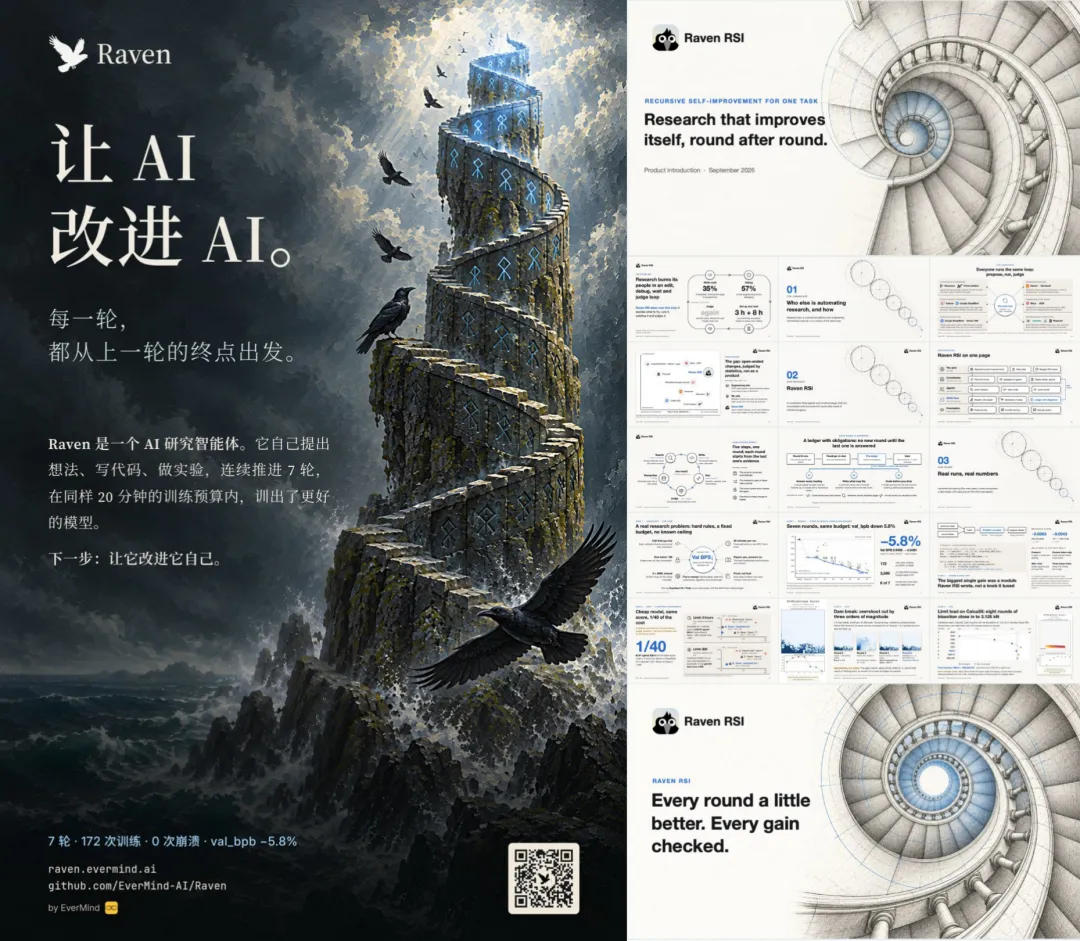
Raven produces promotional material for its own release.
Raven also released itself as a complete mission, completing an end-to-end set of materials for its own introduction and dissemination: browser-style physics mini-games that provide interactive content that can be experienced directly, 16-page product introduction systems that present product information, Chinese-English posters for visual dissemination, and README that takes on instructions for developers to understand and use the project.

Godot games move from asset production to a complete project
Godot Game Assets Production demonstrates more complex project collaboration: first, reference research and asset review, forming artistic norms, then producing weapons in parallel with Boss assets, then being integrated and verified by coding members, and finally by design members reviewing the effects within the game. The eight nodes form a working chain containing parallel division of labor, product delivery, and final inspection.
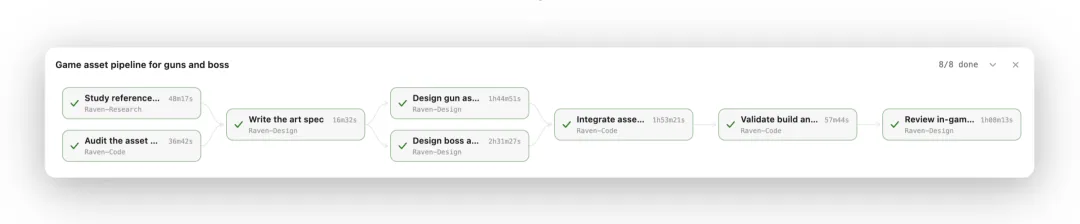
Figure 8 Godot Game Assets Production and Integration Task Chart. Eight nodes are linked to research, production, integration and inspection.
In THRESHOLD's complete game project, demand documentation is provided by humans, Raven runs autonomously for about four days, after 42 rounds of planning, development and verification, using Godot 4 to complete the first-person shooter game centered on the arena Boss Battle.
There are many other cases:



7 Develop your digital partners with Playbooks
You can compare the three AI-coded products to give me a source-based analysis and then create an interactive spreadsheet. You can use this requirement to illustrate the division of digital partners: market analysts focus on product positioning, users and use scenarios, technical researchers focus on architecture, integration and deployment, the two parallel to organize the conclusions of the source-based spreadsheet, and then design members unify to compare dimensions, produce spreadsheets and check delivery.
In this configuration example, the same Raven-Research backend can assume different research roles, with different roles reflected in task responsibilities and input requirements. Playbook organization members, nodes and dependencies, and member Harness determine how information enters the context, which tools the model can use, and which checks the action needs to pass through.
The user's knowledge, experience, SOPs, working habits and judgement criteria can be used to access the way members work. The process of developing digital partners described in Figure 4 also has an operational meaning: to implement the requirements into a division of tasks and strategies, to observe the results in actual use, and to continue to adjust feedback to Curator.
Figure 9 List of Agent members. Unified representation of embedded members, third party default and connection status.
These accumulations are assumed by different mechanisms. Users can generate and save Playbooks from natural language or existing files, keep members, node tasks, dependency and input arrangements in playbook.md, and reuse them after review; EverOS takes over the context and experience of cross-session sessions; Harness adjustments after application become the strategy used when the corresponding Agent continues to run.
SkillForge provides on-demand retrieval of skills from local skills libraries, EverOS memory and SkillHub directories, providing expertise and operation methods for tasks. Proactivity combines event monitoring with timely execution to support mission launches under contractual conditions. WebUI provides a unified input to help users select members, track progress and check deliveries.
Figure 10 Raven WebUI's tasks initiate an interface to input requests and access member management through the sidebar.
From one-time delivery to sustained growth
Raven V0.2.0 connects professional collaboration with ongoing workflow adjustments and takes the first step in extending RSI from the model parameter layer to the Harness layer: research, coding, design and experimentation members work around the same goal, the context of the task, skills and experience left behind continue to function, and Curator transforms the requirements and feedback in use into specific strategy adjustments.
For users, this change is ultimately reflected in the specific work experience: whether tasks can be advanced, whether results can be communicated, whether evidence can be traced, whether past corrected problems can affect the subsequent execution.
For Agent developers, the following capabilities are available directly from Raven:
1. An upper-level organizer with access to an existing Agent. Agent such as Claude Code, Codex can access ACP, CLI or OpenAI-compatible APIs, retaining their Harness and execution modes, and is responsible for member selection, task decommissioning, scheduling and result interfacing by Raven.
2. Repeatable task charts with Playbook. Complex tasks are dismantled into dependent DAGs, independent branches are executed in parallel, downstream nodes are skipped when the predefined task fails, and other branches continue; the run-through process can be saved as playbook.md and replicated for similar needs after a raven playbook validate test.
3. The four direct-to-use professional agents - Raven-Research, Raven-Code, Raven-Design and Raven-Oncall - are dedicated to in-depth research, coding and data analysis, design delivery and long-term execution, both individually and in collaborative task mapping.
4. A set of Harness interfaces designed for AI modification--Memory, Planning, Capability, Action -- four strategic aspects that are open to the public through home files, configurations, plugins, plugins, and public policy protocols; developers can write strategies, tools, and valves themselves, or be handed over to AI without modifying Raven's core source code.
5. A studyable Harness self-improvement reference implementation: experimental. The Curator in the experimental/curator generates changes by understanding, selecting, designing, implementing, repairing, and testing is only installed; when installation fails, it triggers a version of Harness and the recovery process of the managed content.
6. Cross-session memory and skills. EverOS maintains the context and experience of cross-session, SkillForge retrieves skills from local skill libraries, EverOS memory and SkillHub directories on request to supplement expertise and operation methods for tasks.
7. Observable, recyclable execution process. Tracing is enabled by default, and failed execution trajectories can be exported, recycled, and deposited for a return test of certainty.
Raven V0.2.0 is fully open-source under the Apache 2.0 license, and you're welcome to experience GitHub, give feedback, and light up Star. In October, the next version of Raven will be available as a cloud-based version of EverMe, where you can use Raven directly on EverMe.
Raven GitHub:
EverMe registration experience: