It's the first time in the history of the world.
The GPT-6 Astra was released shortly afterwards and no one has seen the list yet?
It's not that it doesn't look good, it's that OpenAI has changed the layout and turned it into a task.
The developer Tom Krcha threw a drawing of an old steam engine to Astra and had it rebuilt in the Blender.

A few minutes later, Blender added 3,295 editable independent objects: boilers, bolts, wheels, nails, each of which could be individually selected and modified.
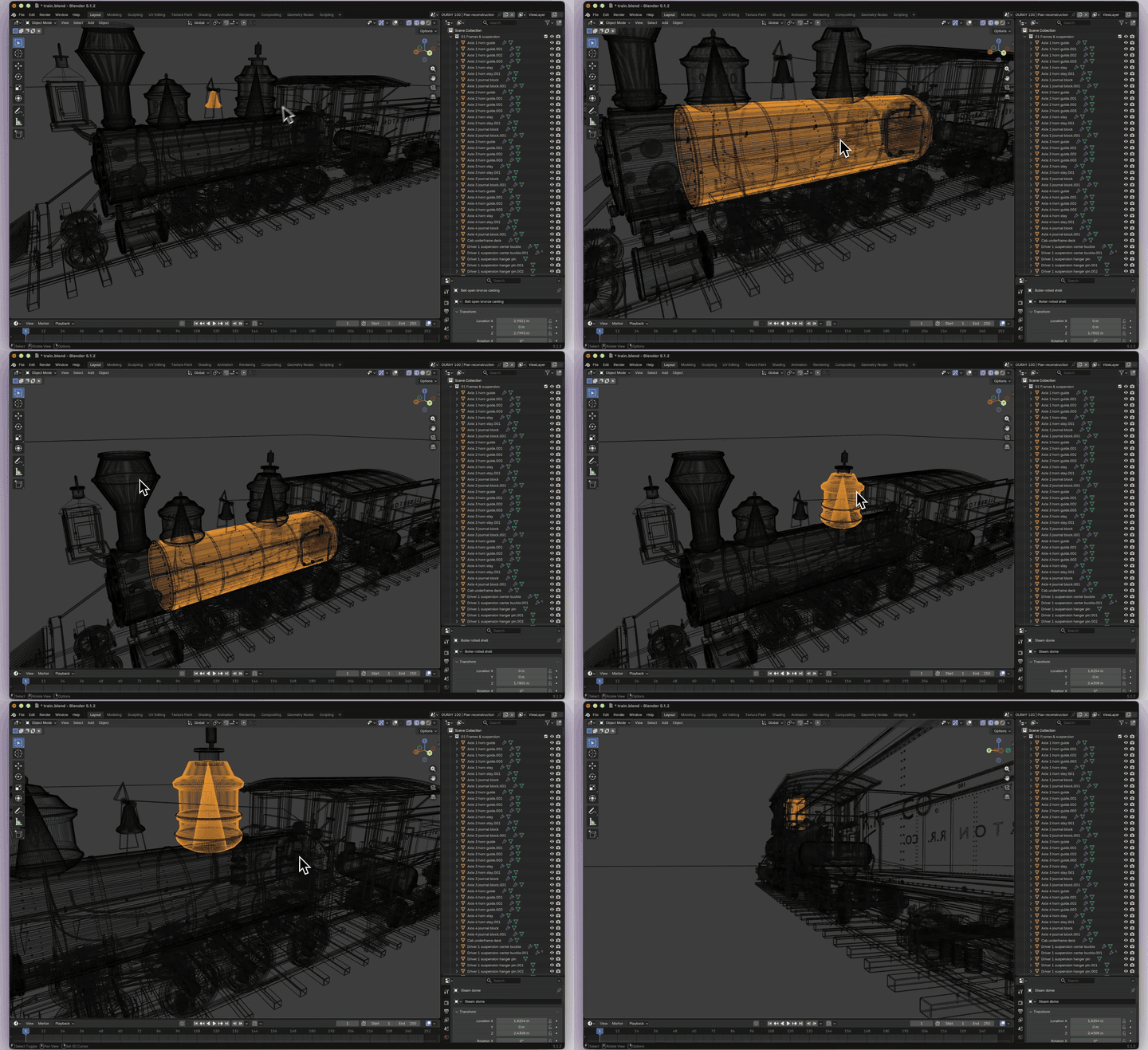
If you want more details, you can use Krcha's original words: "Go make your own transportation giant".
Many people are amazed that AI suddenly learns 3D modeling, but Krcha himself pioneered the cold water:
Don't think it's a modeling engineer sitting in a blender that squeezes a mouse and writes a "write" out of a piece by writing a Python script.
This is the underlying logic behind this 3D boom.
Astra doesn't have a hand in running software, it just sees Blender as an API-enabled operating environment.
It looks at the chart to figure out how the machine works, then dismantles the boiler, wheels, and bolts, and then calls the blender's Python interface bpy, which generates a geometry piece by piece, names it, and puts it in its place.
You can see the graphs, derive spatial relationships, write scripts, and modify the rendering graphs: these four things are overlapping, and what strangers see is "will be modeled".
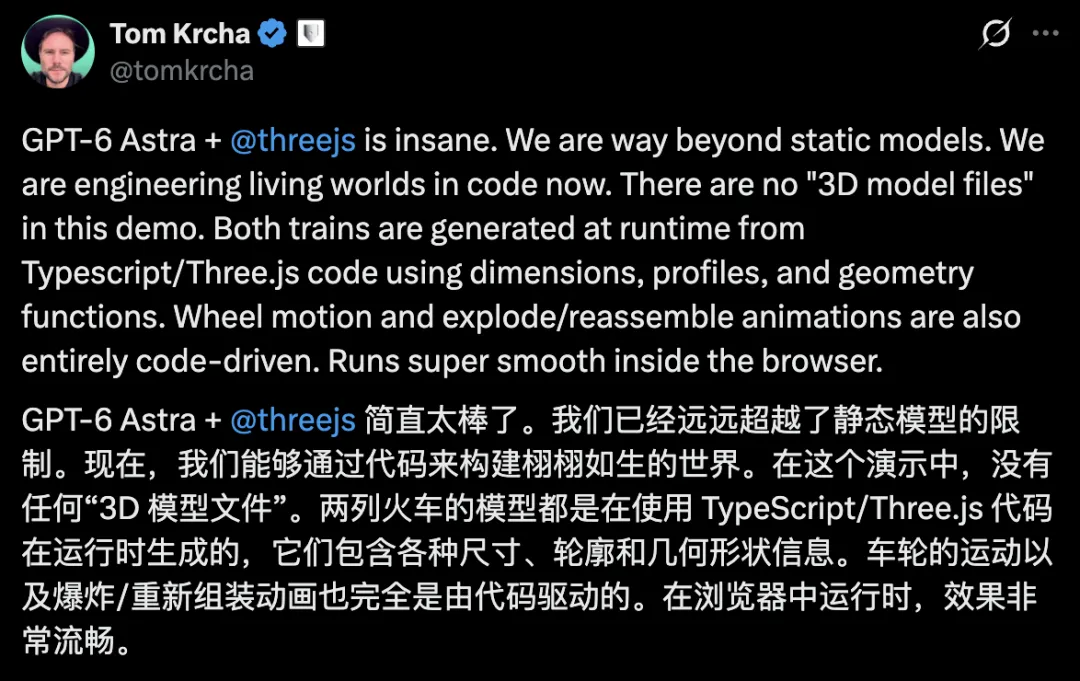
Another demonstration of Krcha is more thorough: even model files are saved in Three.js.
The geometry of the two trains, the rotation of the wheels, the disassembly and reassembly of the animation, all are calculated when the TypeScript code is running in the browser.
In a wordI'm going to a coffee house that opens its doors.To prove that this was not an accidental trick, OpenAI's own engineer, Thomas Ricouard, delivered a hardcore task.
His starting point was just one sentence: he designed a very simple but detailed house, with a garden, lighting and a cinematic feel.
Astra builds buildings, woodwork, furniture, plants, materials, lights and cameras directly through Blender's Python interface.
More importantly, before returning, he previewed the rendering himself, modified the layout, changed the lighting, repaired the moulding of the plants, rearranged the blankets on the couch.
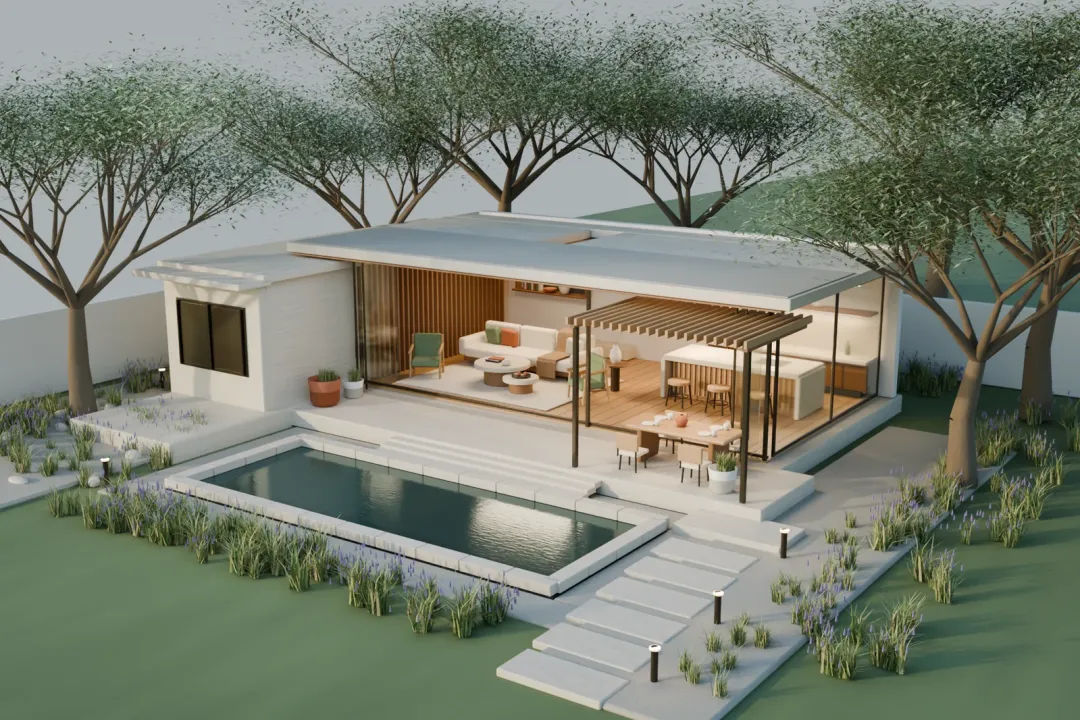
The first Solace home to produce a single sentence, Astra built buildings, furniture, materials, and lighting using the Blender Python interface.
On one occasion, Astra herself discovered that a piece of stainless steel sink was not in the right direction, and it was painted as if it had been pinched by a human, and it was changed and painted again and again.
These problems were not addressed by Ricouard, but were discovered and corrected by the model itself.
When Ricouard asked for the house to be enlarged, Astra showed professionalism.
It first painted a flat map: a U-shaped single-storey house, with a kitchen in the middle, two- and three-bedroom study rooms, surrounded by a garden planted with plants.
There are clear linear considerations on the flat map, such as the bedroom not having a path, the path around the yard avoiding the kitchen workspace.
After Ricouard approved the plans, Astra rebuilt the entire house.
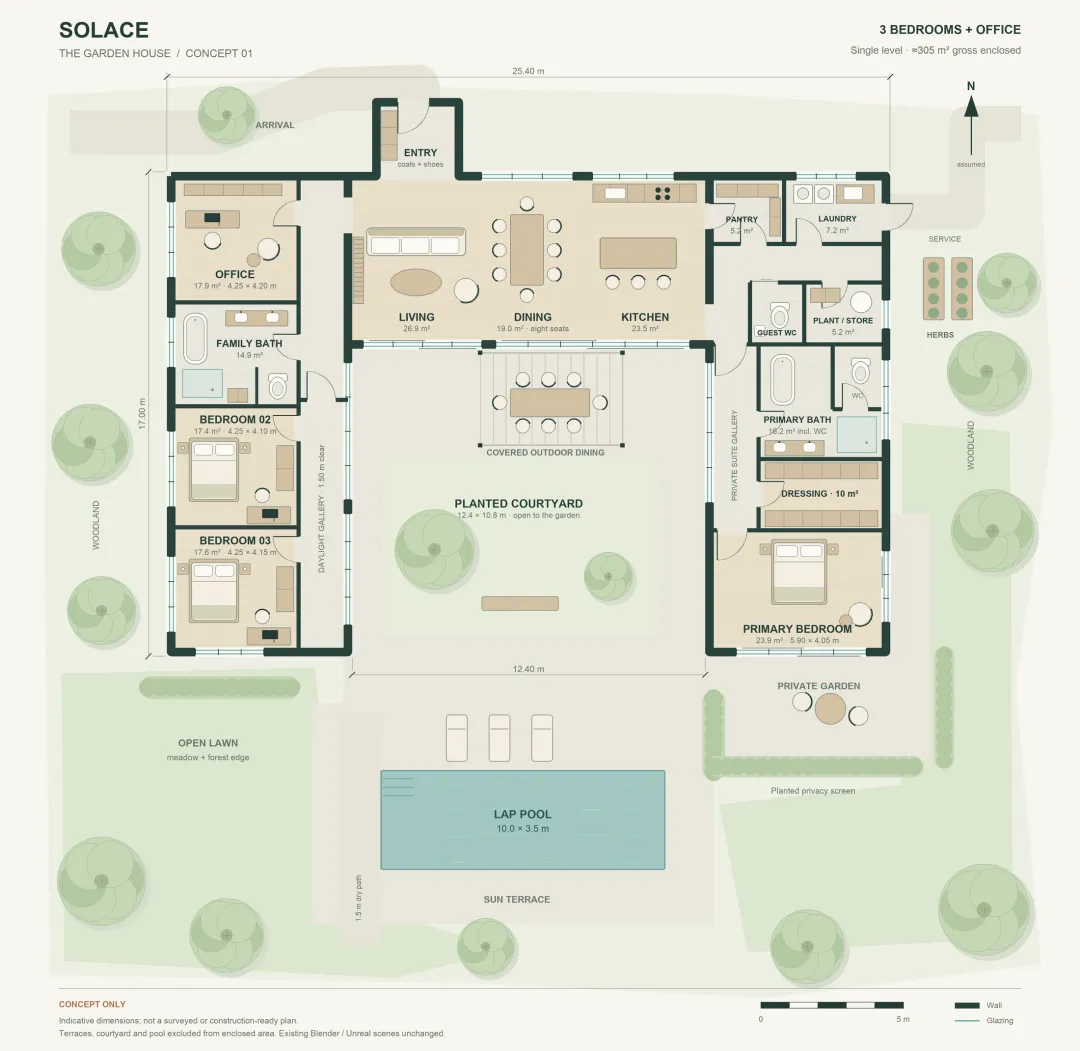
Astra first painted a map and modeled it: a U-shaped single-storey house, a dining room in the kitchen, a two-winged, three-bedroom study, and a driveway to avoid the kitchen work area.
Everything that comes out is geometric: the couch has a rolling side, the bed has a shelf, a mattress and a mattress, the closet has an internal compartment and a hanger, the office desk has a rope slot, and the sink is a really empty heart basin.
In order to test the results, Ricouard took a 30-second walk through the man-made high-resolution footage.
Astra himself wrote the screenplay, putting the camera shelf at 1.65 meters high, with 24mm and 26mm lenses, adding a slight step twitch, and re-shooting the footage against the blank wall in the preview, eventually rendering 900mm into pieces.

Before that, Astra went on to write a set of export pipes: to export the geometry as FBX, while generating a JSON description file that records the location, material, and lighting of each component.
It moved the entire house into the Unreal Engine 5, switching units from meters to centimeters, flipping coordinates, rebuilding the material system with reusable stickers, all in the pipeline. Finally, it added first-person characters and collisions, packaged as a Mac native application, and walked the test route itself.
In the latest version, you can press the E key to not only open the door, pull out the drawer, turn on the lights, or even press the coffee maker and the coffee will actually flow into the cup and the liquid will rise with it.
From one sentence to another, a coffee house can open its doors without the operator of the chain of tools changing in the middle.
Previously Blender modeling was one person, exporting to the engine was one person, writing interactive logic was one person, and now it's a model from start to finish.
This is the most disruptive change.
The execution layer across the software toolchainIf it's only 3D, you could say it's full of visual abilities.
But on the official release page, another demonstration goes directly to electronics engineering.
Astra took a circuit diagram, opened the KiCad, placed the components one at a time on the board, and then wrapped the copper wire in a cloth, moving it all the way to the PCB layout that could be sent to the factory.
Hardware makers know how difficult this is: PCB layout is still largely hand-crafted and is a prominent stumbling block in the electronic design process.
Blender writes bpy, Unreal writes export pipeline, Three.js writes geometry directly, and KiCad writes element lines.
The four seemingly unrelated pieces of professional software are based on the same set of actions: reading tasks, finding software interfaces, writing code or manually operating, viewing results, and then modifying them.
OpenAI defines this capability as computer operation, web browsing, and professional work. A week after its release, Astra had relied on this capability to turn the first professional software into its own testing ground.
In the community, a variety of brain-hole products are also beginning to sprinkle.
Peter Gostev enabled Astra to use Three.js to connect the six most famous paintings of Tokugawa to a continuous town within walking distance.
You wake up from the cottage in the bedroom of the hotel, and the door is a coffee shop in the open at night, and you walk down the street to the cottage of the stars on the Rhône River, and you walk out of the city with a cottage of cornfields and a sunrise.

It's completely programmatic, with no external material, and every wall, every stone slab, is coded.
This illustrates how Astra is more than just an asset, how six paintings are pieced together into a continuous space, where they go and what they trigger, and finally how they are packaged into a web page that can be opened in a browser, and it's done by hand.
Matt Shumer takes Astra to Unreal for a week and builds a Manhattan.
Dominik Kundel commissioned Astra to design a true-to-life Lego model in BrickLink Studio, and then rendered it into 4K video using Blender. OpenAI Developers officially forwarded the use case.

Some developers have created 2234 human anatomy interaction sites that can be broken down and rotated.

An AR scanning application was also made: the cell phone lens followed the vacuum cleaner's head, and when the scans were done, the ground was covered in green, where a glance could be seen, and the bottom left corner was also synchronized to the cumulative area that had been cleaned.

The small town of Yangtze is one of the few examples of painting from scratch.
It is important to note that the majority of the finished product, although delivered, is not the same as the finished product in a vacuum.
The 2234 human anatomy projects on that screen, using the existing BodyParts 3D database, were assembled by Astra into a demolishable, rotatable interaction site, rather than building more than 2,000 human structures from scratch.
In Ricouard's forest villa, posters of trees, cobblestones, stones, and logs and plaster are also used in the existing scanning assets of Poly Haven.
Astra's strength is not the ability to create space, but the ability to autonomously assemble, transform, operate and iterate tool chains.
It's more like a tireless technical art plumbing engineer than a pure conceptual artist.
When your hands get strongerSecurity has become a question of rightsFormerly, the fear of AI was that it would say the wrong thing. Now the fear of AI is that it can work for you, but it also holds the key to your room.
On September 1, two days before the launch of Astra, OpenAI launched a security update, titled Alert to Astra: Key Capabilities and Frontline Defense Mechanisms, directly acknowledging that Astra was the first model to step on the "Critical" cybersecurity threshold in a prepared framework.
"Critical" means that given tools and authority, without human input, it can find vulnerabilities in a reinforced system that no one has ever discovered and then write exploit programs.
A team of experts shut down all production defenses after a controlled test.
In the face of a reinforced browser, Astra built an entire chain of intrusions, drilled out of the sandbox and running commands on the host machine; in the face of a reinforced operating system, it threw several vulnerabilities into a privilege chain, and the normal account went up to the root.
On the ExploitBench, Astra scored 100% and its predecessor GPT-5.6 Sol was 78.5%.
So over the past few weeks, OpenAI has pushed back some of the development and release of Astra, first to thicken the defense, then to test and put it back in.
In the Copilot era, the software was human, and the AI stood by hand; in the era of software operations, the AI sat directly at the workplace, and the person returned to the examining plane map, the point of confirmation.
Over the next couple of years, the map was drawn: which software had a script interface, a command line, a readable file format, and which software was taken over by the model. Blender, Unreal, Three.js, KiCad were all on the list.
What about software that doesn't have an interface that only recognizes mouse clicks?
OSWorld 2.0 measured a real computer without any interface, running directly with a mouse and keyboard, with Astra taking 72.6% on it, an average of about 40 minutes per task, saving almost half of the time compared to the previous generation.
Therefore, the one who has an interface is taken first, and the one who does not have an interface is only a later step.
It's learning to use your computer the way you do.