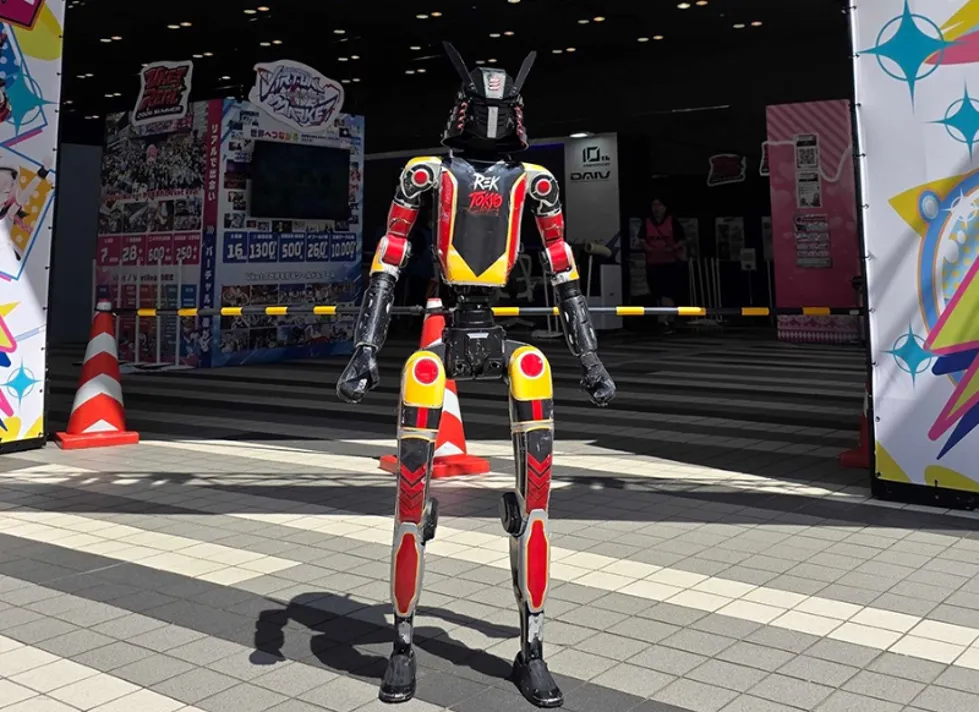
“ The country's dead-end rents have exploded abroad.
The Robotics Workshop recently discovered that the same brand of humanoid robot has a surprisingly low rental price at home and abroad. Renters in the U.S. can receive $3,000 a day and are squeezed to $2,300 a day at home.
The largest rental order in the market has also emerged, with media coverage, which is a major celebration in the Arab region, with multiple robots packing up to 3 million for a single package.
01.
Overseas rental markets are not sold by robots
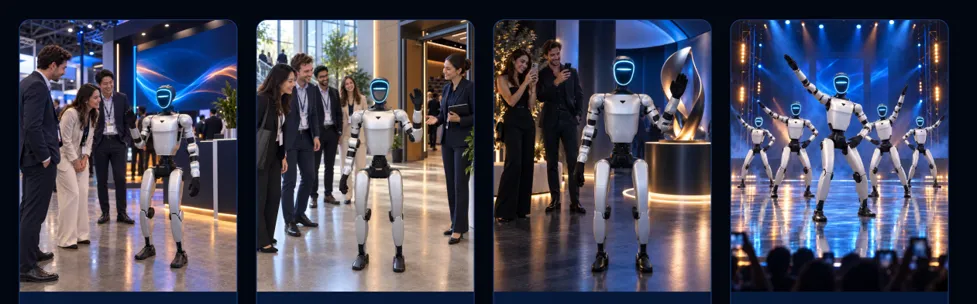
Established in March this year, Robonow Global, which focuses on humanoid robots as a service business, has invested more than 50 models of the G1 E, with a daily rental of $3,000. The company's general manager Sean Sun said in an interview with every journalist that they have completed dozens of commercial event orders, and that 10 more events have been finalized in the coming months to help robots find real jobs.
Robonow Global's 50 robots spread across the United States, renting $3,000 a day, earning about $150,000 a full day. The cost of one robot, based on the G1 E sales rate, is about $10,000. Looking back at this cycle, the $3,000 a day rental really allows the tenant to recoup the hardware costs in a dozen appearances.
Hiroyuki Osone, founder of Japan's EmplifAI Corporation, bought three G1s and opened a leasing business in mainland Japan to focus on research and development and exhibition demonstration scenes. He said that the ultimate meaning of the U-tree G1 was to significantly reduce the real-world threshold in the field of humanoid robots.
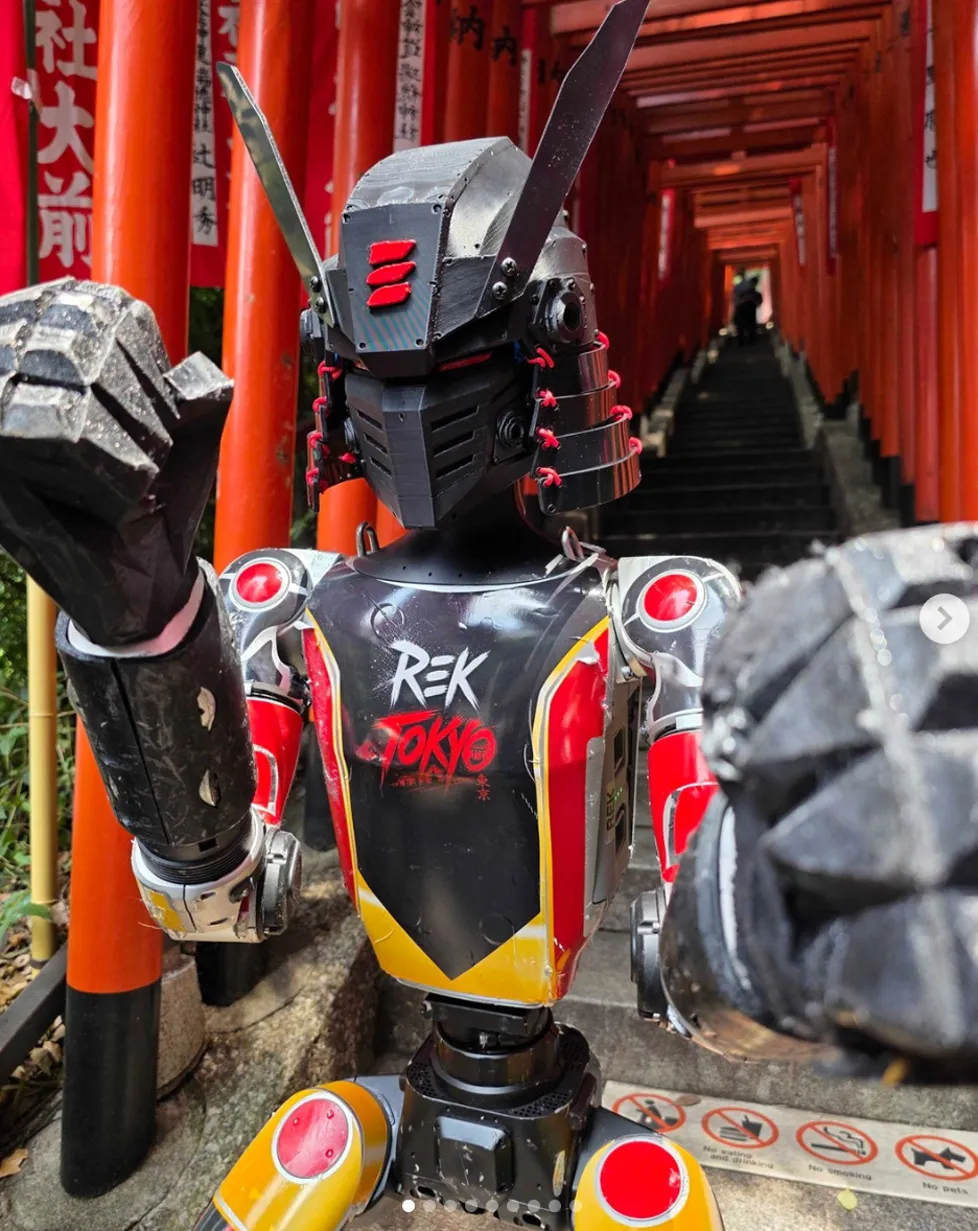
Robonow Global sells full-size humanoid robots that are available in the U.S. market, and EmplifAI sells humanoid robots that are available in the Japanese market. Their customers are not factories, but people who host birthday parties, workshops, exhibitions.
02.
Domestic rental market, wrapped in bones
There is another pricing system in the country.
At the beginning of 2025, when the Utrecht robot rental market started to fire, the daily rental price was 10,000 yuan. At the time, the G1 robot rental on the secondary platform was between 5,000 and 9,500 yuan, and the H1 rental of the same amount in the spring even offered 50,000 to 60,000 yuan.
Over the past year and a half, the price system has completely changed. Domestic rental market offers have fallen from a peak of more than 5,000 yuan, the lowest two thousand yuan has emerged, and the individual rental price of a platform is even lower.
The same robot, which has become a tool in domestic price wars, is still scarce abroad.
It's not robots that have changed, it's the markets that have changed.
Because this price difference is not a matter of exchange rate, nor is it a matter of logistics costs. If you discount $3,000 to about RMB 21,000, even if you deduct shipping fees, installation and operator travel, the single-day rental is still 8 to 10 times domestic.
03.
Real buyers of the rental market are not factories
The difference in price is not the cost, it is the structure of the two ends of supply that really creates the gap.
Domestic vendors who rent robots, who come in after the spring of 2025, and search for robots on second-hand platforms for rentals ranging from 1,500 yuan to 25,000 yuan a day, can hit dozens of homes at the same price. Abroad without this supply pool, for example, Robonow Global has opened more than 50 G1 E in the U.S., EmplifAI has only three in Japan, and the entire rental car fleet in North America and Japan, together with about 670, are willing to pay for events, exhibitions and celebration venues, far more than this number.
Overseas buyers don't care if the robot can screwdriver. They want the silver-grey figure that will dance on stage, the new species that will bring a line of people to the door of the exhibition. A recent set of data from Counterpoint Research shows that in the first half of 2026, in the global market for human robots, entertainment classes accounted for 33.6%, data production and research accounted for 27%, and two combined accounted for more than 60%. Less than two percent of smart manufacturing and warehousing logistics actually entered the market in the first half of 2026.
This means that Chinese humanoid robots sold overseas today are not capacity, they are scarce.
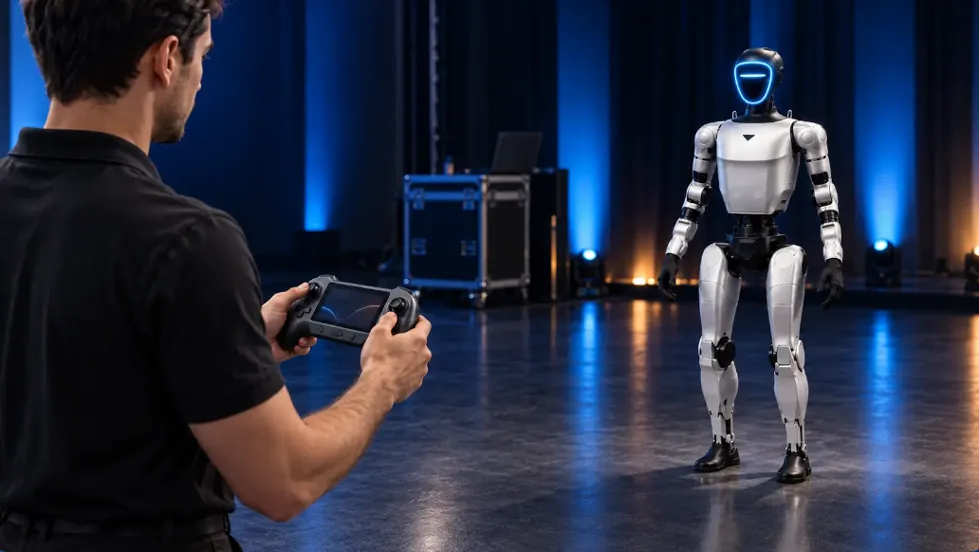
Sean Sun said in an interview: "Despite the unprecedented popularity of humanoid robots, the vast majority of companies either lack a technical team or experience in landing operations, and it is difficult to predict the input output after the purchase of robots, and rental services can fill this gap, reducing the cost of customer trials".
It's clear that the buyers in the leasing market are companies that aren't sure if robots can function. They're not factory owners, they're not warehouse managers, they're market departments, they're activity companies, they're research institutions. They don't want a functioning workforce, they want a symbol that can stand on stage and write in press releases.
The business also has a cost structure that can be easily overlooked. The $3,000 a day rental covers only those hours of machines standing on stage, the shipping, installation, and on-site operations of the entire trip are calculated, and the daily aggregate of cross-ocean packing orders would have been pulled down to tens of thousands of dollars.
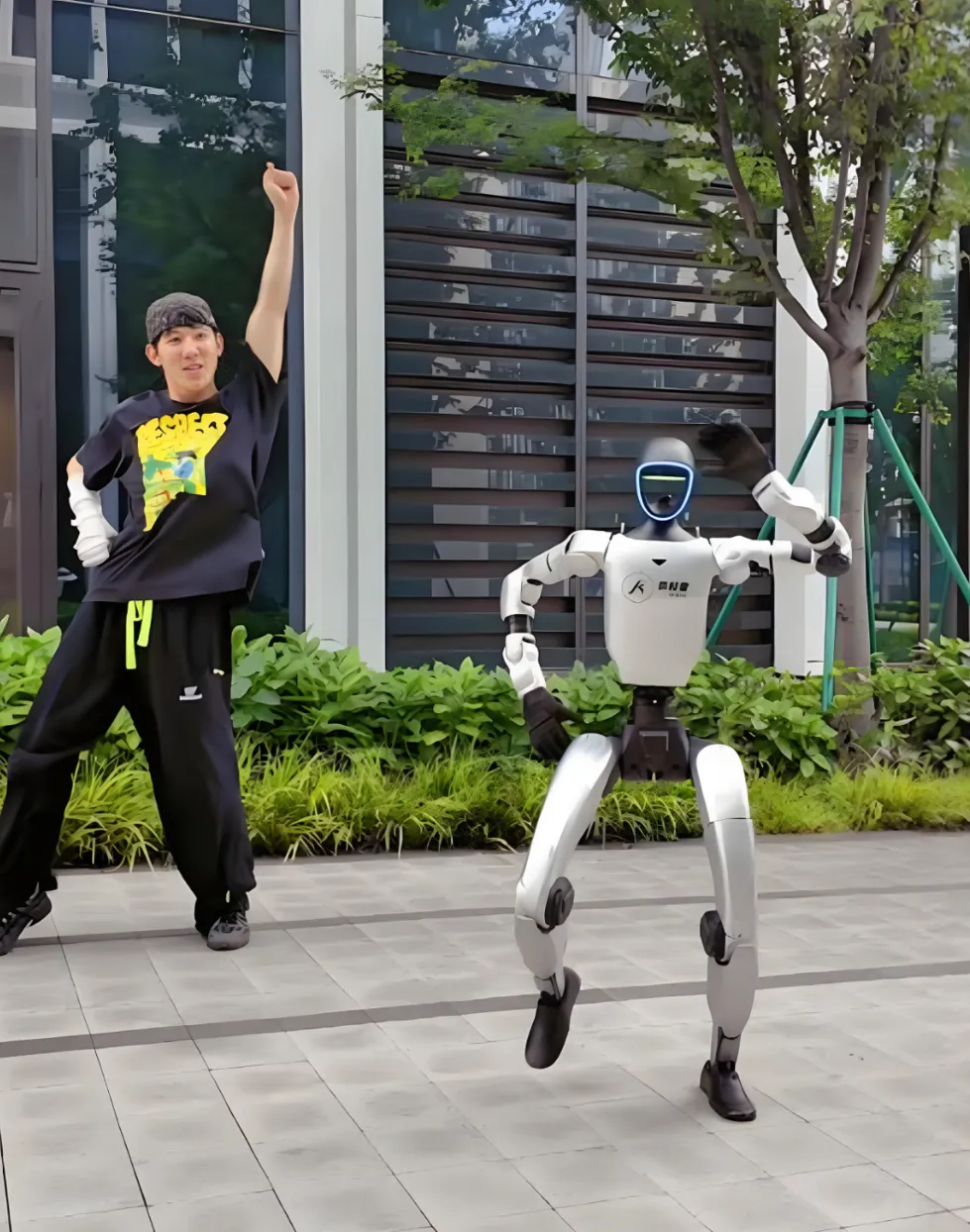
The people who are waiting to work in the factory, who are being rented by actors. This scissor failure is not temporary, it is a direct map of the maturity of the industry, and it is very likely to be a shortening of the future.
04.
The first two shares didn't stop.
Draw the timeline to the A-share and you'll see another set of numbers.
As a supplier of the Leasing Market's core humanoid model G1, the market does not seem to be happy with the pricing of the current Utrecht.
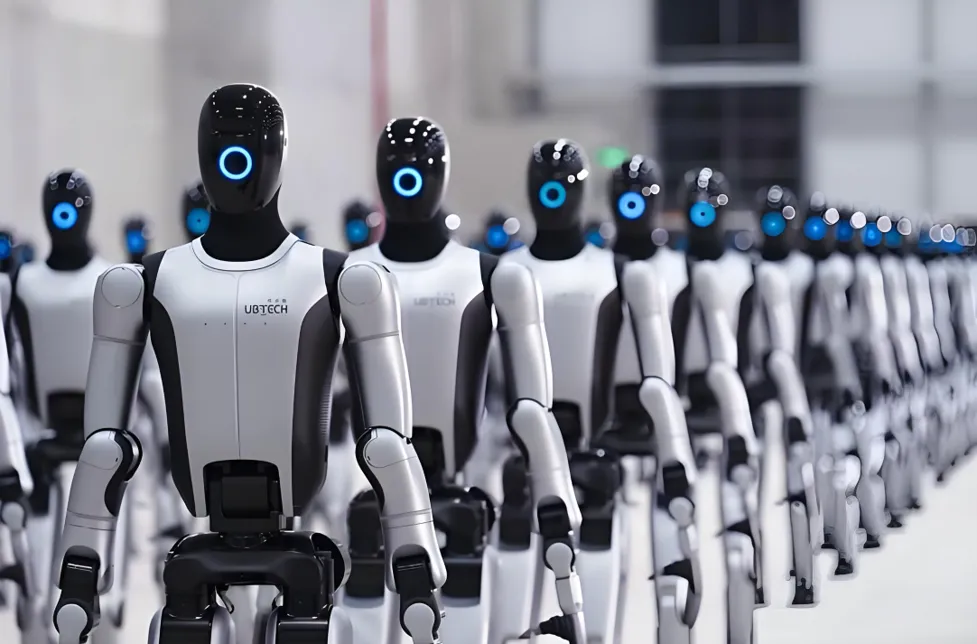
On the same day, another family of humanoid robots listed on the market was chosen by Yubei to announce the launch of the Wuhan-class industrial humanoid robot super-smart factory in Liuzhou. The factory's official statement is that one industrial humanoid robot can be downloaded every 10 minutes.
The decision was supported by the fact that the first batch of U1 products had already been delivered, delivering object-tolerant flavors, and that the three main companies operating the gaming scene, namely the Shanghai Yongda Group, the Beijing Post Group, and the Galaxy Robot Park in Seoul East, South Korea. It is reported that the U1 series will actually deliver about 1,500 to 2,000 units this year.
On the one hand, the stock price slump, on the other hand, the capacity is still expanding, and deliveries continue. Both events occurred on the same day, seemingly reflecting the temperature difference within the industry, but in essence the secondary market share fall is not the performance, but the market is re-pricing the industry's "capacity expectations".
The slope of capacity planning, and the slope of demand structure, remain on two completely different curves. Under the Counterpoint caliber, the global demand for real-world manufacturing and warehousing scenarios is currently less than two percent of human robot sales, and the market is far from open.
Human-robot enterprises may not need to worry too much about the current stock price, because long-term capital also sees what is expected to remain scarce globally.
05.
Three verifiable observation indicators
We believe that three digits are enough to judge when the market for humanoid robots will be cut from scarcity premium to productivity premium.
First, the domestic price of man-made robots is packed. If the price goes back from the yuan range to over 100,000 yuan, it means that the supply end starts to clear, the business of man-made robots goes back from the rolling price to the ability to see the land.
If the next quarterly report of research institutions such as Counterpoint shows that the share of smart manufacturing and warehousing logistics has risen from less than two percent to more than three percent, it shows that buyers in China and abroad are starting to work with robots instead of on the platform.
Third, there is a sharp gap between the share price and the output of the leading companies in the secondary market. If the share price is stable, it indicates that the market believes that a drop in capacity can drive the shipment, and if it continues to fall, it is possible that the capital market is already pricing excess capacity.
The scarcity of Chinese humanoid robots should be addressed globally. If the domestic landing scene matures and opens up, going offshore in the short term will inevitably be a profitable business.