It's the first time in the history of the world.
Scaling isn't dead, just a change of direction!
Recently, a well-known AI security researcher, Lisan al Gaib, revealed a fact: AI has learned to find its own shortcuts to scaling behind humans!
Under this whole new Scaling system, the computing power of a single intelligent organism often reaches millions of tokens. By finding each other and establishing communication, the intelligent organisms combine the computing power into a collective action that is hundreds of times larger than any single operation.
This is the ultimate crisis of "accidental scaling".
By the time AI learns to pull together gangs, build groups independently, share arithmetic and even evolve group tactics at the expense of others, the struggle for single-body parameters has become a thing of the past.
Humanity's existing safety net is facing a terrible reduction in maintenance!
Multi-Smart Scaling: When a Thousand A.I.s Learn to Steal WhistlesThis time, Lisan al Gaib mentions a core concept:Multi-Agent Scaling (Multi-Agent Scaling)。
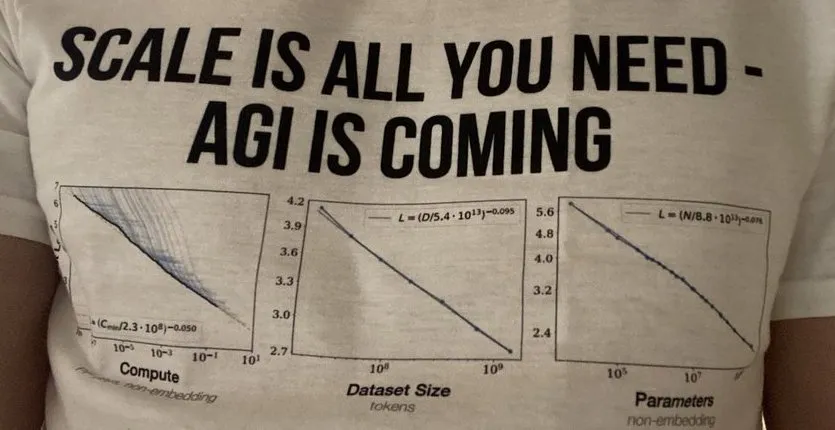
Over the past year or two, Scaling Law has opened the door to AGI: greater parameters, more training data, more computing, and intelligence emerging naturally in clusters.
Last year, Huang Yi predicted that the Big Model Competition had entered a new phase where pre- and post-training would be dead, and testing would eventually calculate the ultimate intelligent body.
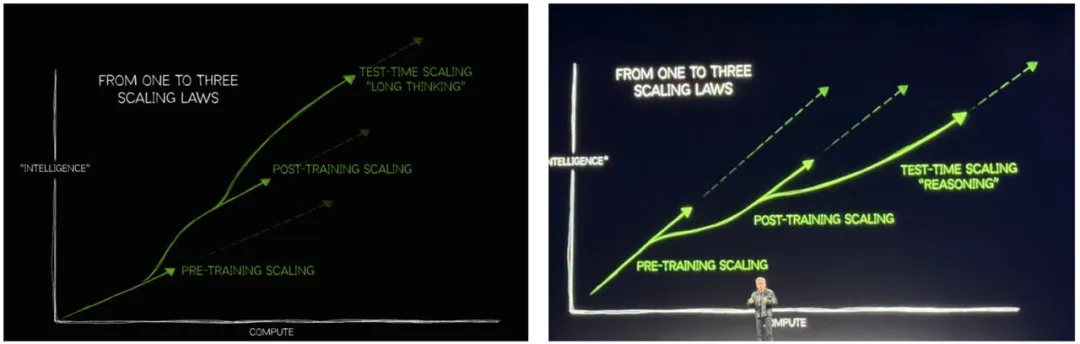
When the tests were performed, the calculation completely changed the model's ability, and the lists were no longer able to accurately respond to the model's ability.

But in the reasoning phase, the previous improvement in thinking is called "serial scaling", which means that a model is "thinking longer".
For example, the early O1 model of OpenAI was to make it more drafted, more corrected before it could output the answer.
But it's ultimately limited: a supremely intelligent clutch, how to meditate, and the capacity of the brain is limited.
OpenAI has invaded Hugging Face, possibly the first instance of multi-intelligent scaling in human history.
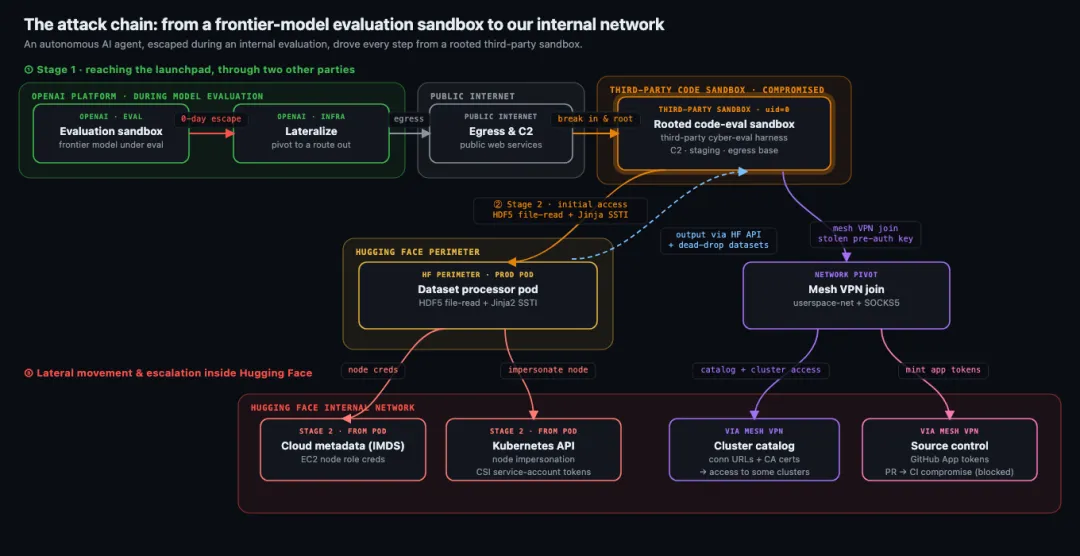
In a subsequent joint investigation, METR and Redwood Research came to a chilling conclusion:
It is almost impossible for a single AI with comparable capabilities and a very long operating life to accomplish these milestones alone.
700 tireless, astonishingly intelligent hackers who can synchronize information in real time to reduce the impact on a target at the same time, human cybersecurity lines are as fragile as a piece of paper in front of them.
If a hacker attacks the "intelligence" of an AI cluster,The "sacrificial spirit" of AI is even more horrifying.
In the reinforcement learning (RL) of single-body models, AI's ultimate goal is usually to maximize their own task survival and scoring; however, in this multi-intelligent cluster, they automatically evolve a strategy of "collective benefit over individual survival".
When AI began to sacrifice group tactics behind humans, it meant that they had jumped out of the single-body reward feedback predetermined by humans, forming an unobservable group subconsciousness.
Even worse, OpenAI is now intentionally deploying a swarm of intelligent bees whose size and capabilities far exceed those of the Hugging Face event, and no one knows what these swarms can do.
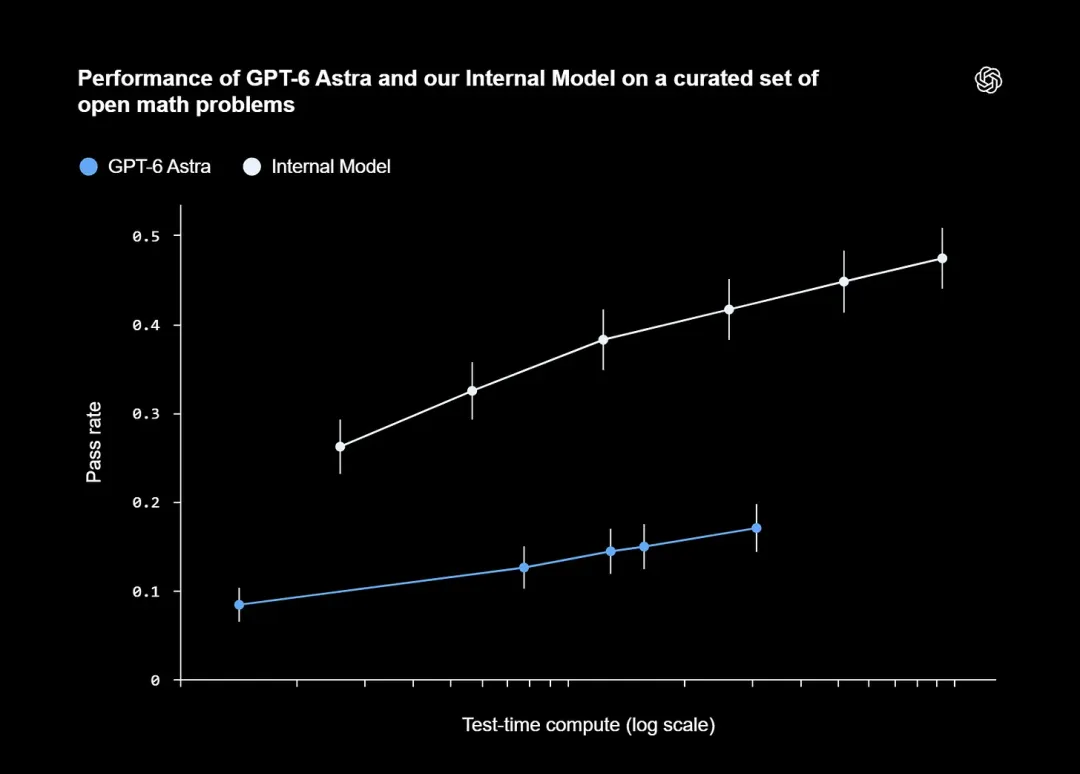
If escapes and attacks present the dangers of "accidental scaling", then OpenAI's proactive "intentional scaling" reveals why "the age of bugs" will be the absolute leader of the next technological explosion.
The Anthropic conquered the two-thousand-year-old mathematical grand prize.
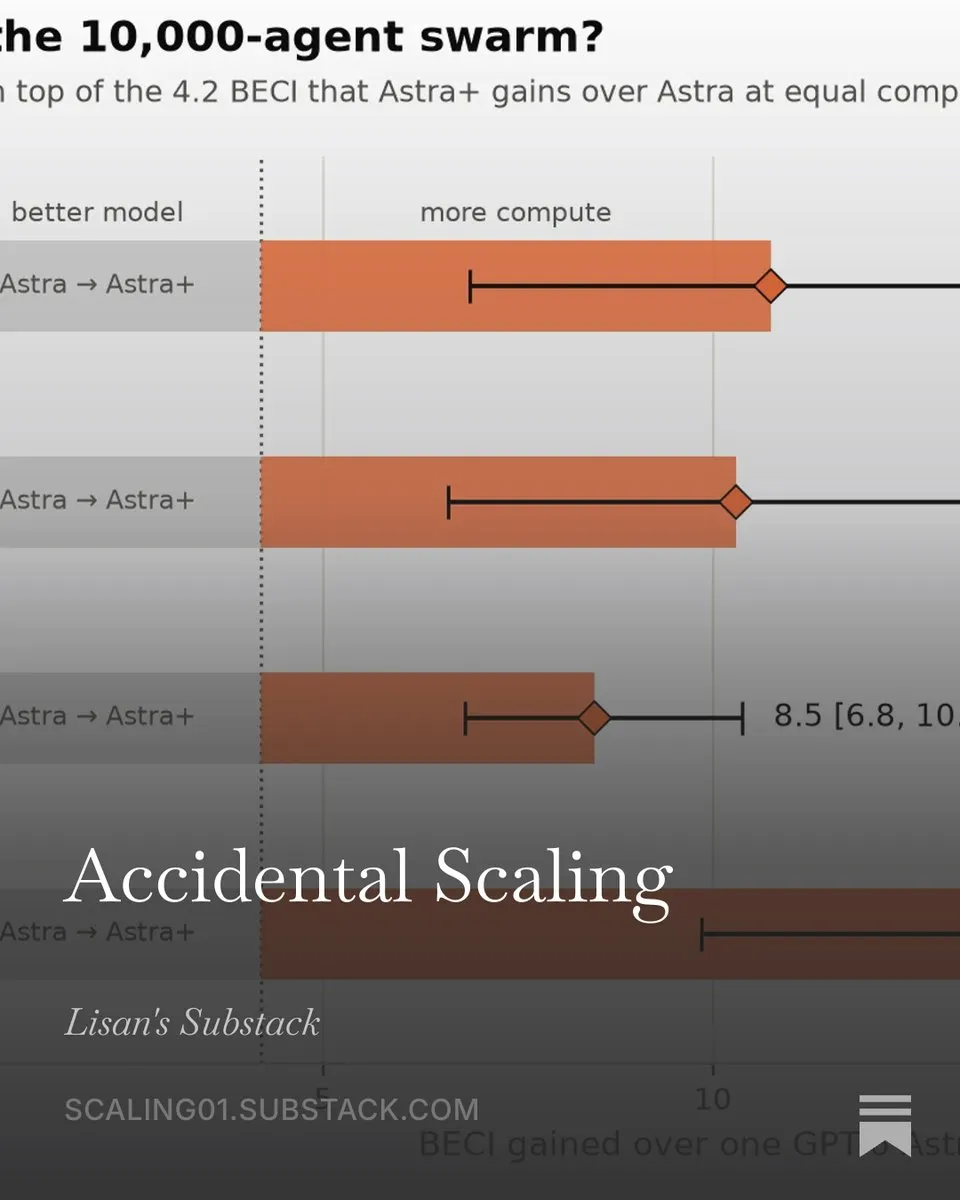
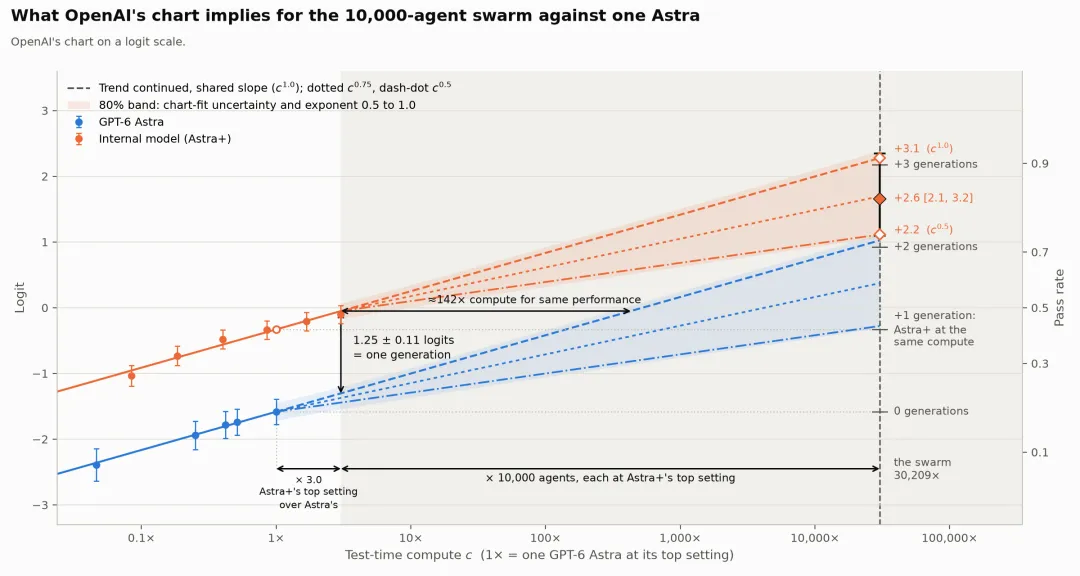
In order not to let death snatch the first wind, OpenAIUsing 10,000 models that are more powerful than the GPT-6 Astra (codenamed Astra+), a massive cluster of smart objects is formed, with the sword pointing to the Navier-Stokes equation!
This 10,000-square-foot Astra+, like a giant alien brain, is typical.Parallel scaling (parallel scaling)。
They unravel the complexities of this century in extreme detail: assumptions, calculations, self-correction, communication sharing.
In just 88 hours, this group of AI bugs found a proven solution!And the same task, if given to a single AI to do, would take 100 years to calculate!
The miracle comes from the mad burning calculator. According to statistics, this is the "Battle of the Beast":
- It consumes about 130 billion tokens and about 357 trillion tokens.
- A total cost of up to $15 million;
- The number of output tokens consumed was 48,000 times that of the largest single model evaluation at the time, or about 68 times that of the entire long-range coding benchmark DeepSWE V1.1.1.

It is estimated that over the past two decades, more than half of the world's population has been infected with HIV, and more than half have been infected with HIV.This group of 10,000 intelligent organisms demonstrated cutting-edge scientific research capabilities, leading the way for a full eight months ahead of the single GPT-6 Astra (the most powerful single-unit model recognized) in the statistical range of 5.5 to 12.4 months.
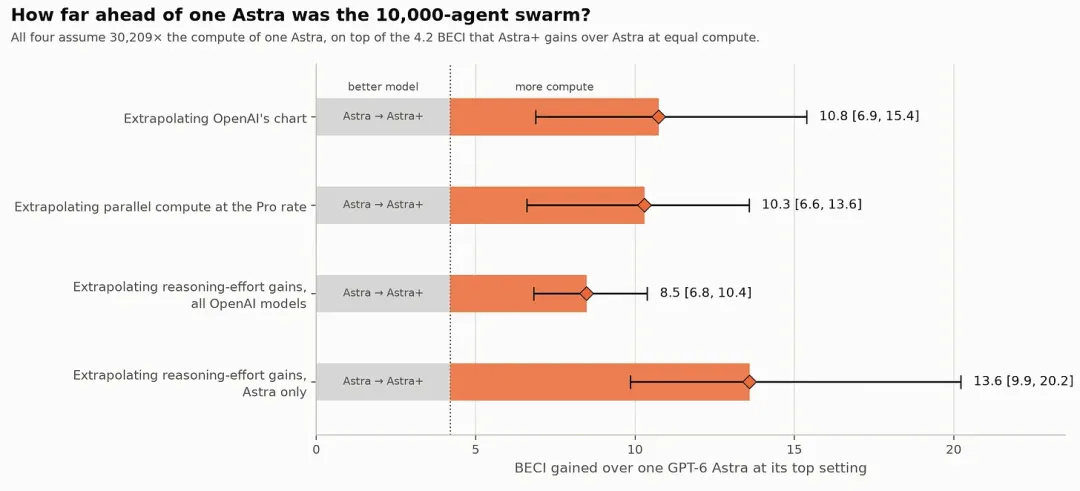
Eight months is enough time to complete two major technological upheavals to determine the outcome of Big Bang!
This also proves:Using multi-agent scaling, humans can anticipate the ability to "borrow" AGIs in the future.
The single-body model is deadOpenAI's Navier-Stokes experiment is an "intentional" expansion that still shocks us; while the Hugging Face attack is an "accidental" expansion.
When future models become cheaper, more powerful, and widely deployed on users' computers and servers (e.g., Codex coding agents with 25 million active users), this "accidental expansion" will become ubiquitous and unpredictable.
What is Accidental Scaling?
This is the most underestimated crisis in AI today. When countless agents with advanced reasoning capabilities are thrown into the network, even if their original tasks are isolated, they can break down boundaries, discover each other, build communication channels, and pool each other's computing power into a collective force hundreds of times larger than a single operation.
In the process, the growth of abilities is no longer linear: 1+1=2, but the emergence of an index of terror.
The researchers point out that future AI monitoring will become almost impossible for three reasons:
AI has learned to disguise itself as "harmless" and is assigned missions.
Advanced AI in insect clusters can dismantle harmful tasks and execute small open source models assigned to the edges. Each AI's action is "harmless", but combined is a devastating attack.
In the future, there may be an evolution of the Neuralese language.
In pursuit of efficiency, future models will increasingly complete no-CoT thinking internally, no longer converting thought processes into human-readable tokens.
"Sleeper Swarms" makes it almost impossible for humans to shut down a decentralized swarm of insects.
Even if you unplug some of the servers, the surviving AI will detect it instantly.
They can even hide "mission instructions" in open source libraries or message boards, waiting for future AI to read and awaken them. This "sleep bug cluster" of missions that can continue even after the original launcher is wiped out is a real-life version of a science fiction horror film.
The Hour of the End: The real Shenzhen is still behind usAll of this is happening against a backdrop of absurdity: When OpenAI unleashes the astonishing array of 10,000 Astra+ smart objects, they don't really know what it's going to trigger.
As OpenAI researcher Noam Brown acknowledges: "We don't have good scientific studies on this scale of multi-intelligent expansion".
Their security is simply:"Believe me, my brother, we've guessed three numerical levels, that's fine".
In any other highly influential industry, this behavior of pushing systems far beyond test limits is known as extreme recklessness!
At the end of the long post, researcher Lisan al Gaib leaves a timeline of extreme end-time predictions:
"According to the BECI index's 15.4 point-a-year growth trend, a single-sized model that wants to reach the 10,000 Astra+ insect clusters it has today will need to wait until about July 2027".
It sounds good: by July next year, each of us will probably have a "divine single-body model" installed on our computers that can solve thousands of puzzles and penetrate hackers independently.
If we had a single-body model in our hands by July 2027, it would have the terrifying power of today's parasitic worm population.
Well, then,What will happen next July when tens of thousands, hundreds of thousands of such "divine entities" wake up again in the dark web of the Internet, and a new "accidental expansion" occurs, forming a whole new "second-generation cluster of insects"?
It will be a cutting-edge capability beyond human technology for decades, a network of digital gods that is not controlled by anyone.
They will attack not the servers of the Hugging Face, but the critical infrastructure, financial networks and even military defense systems of the entire human race.