“ A new type of steam engine called F-VGB.
In the field of software robots, steam drive is one of the most mature routes with the highest landing potential.
From the flexible claws we're familiar with, wearable outer bones, to pipe-crawling robots, medical intervention devices, the vast majority of samples rely on artificial muscles that bind to the air cavities and weaving webs.
But for a long time, this route has had a difficult contradiction to overcome, and if you want a lot of complex movements, you have to do multiple chambers, multiple channels, multiple valves; a lot of channels, weight and power consumption will follow, and miniaturization, lightweighting, and uncontrolled electricity becomes very difficult.
Simply put, the underlying logic of a conventional airsoft drive is that one air path corresponds to a basic motion. Curved, twisted, stretched, contracted, each shape change often requires an independent air cavity to drive. If a driver wants to automatically switch different modes of motion at different inflation rates, the conventional scheme is almost impossible.
Academics have tried various ways to solve these problems, including closed-loop pressure feedback, electromagnetic feedback arrays, machine learning models... but none of them have fundamentally changed the idea that "pressure is a control variable".
Can you change your mind?
Recently, a team from the National University of Singapore, Tural Khudiyev, published their work in Science Advances, gave a completely different solution.
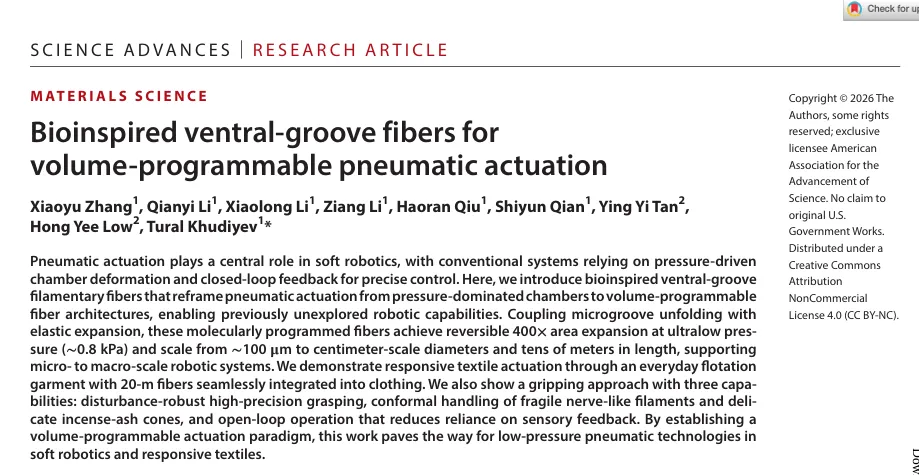
The team designed a simulated belly tube fiber (f-VGB), which did not require multiple cavities or complex knitting layers, relied on single-root, asymmetrical grooves of vacuum fibers, and could only input one circuit of air pressure to automatically switch multiple preset shape-shifting trajectories depending on the filling volume. It shifted the flow programming array from the control circuitry to the geometrical structure of the fiber core, which is what the article title says: volume-programmable, programmed to drive by the filling volume itself.
01.
The ceiling of a conventional steam engine: pressure monochrome, shape monochrome
The mainstream pneumatic software drives are divided into two categories.
One class is pneumatic network drives (Pneu-Net), which carve independent air cavities inside the hose, thicker on one side of the air cavity, thinner on the other side of the air cavity, and thinner on the other side of the air cavity after inflation. The advantages of this are that it is simple to make, with a large curvature; the shortboard is a shape-shifting pattern that is essentially fixed after manufacture, the more inflation becomes thicker, and it is difficult to turn or shrink on the same drive. If you want to combine the movement, you can only connect several sections of the Pneu-Net in different directions, each with a separate pair of air tubes and electromagnetic tubes.
The other type is the McKibben pneumatic artificial muscle, which is woven fibrous webs wrapped around the inner tube. The woven angle determines the basic behaviour: smaller than the critical angle of inflation and larger than the critical angle of inflation. It responds quickly, the force density is good, but it is also a single-structure woven pattern, after the woven angle is determined, the entire form of motion in the pressure range does not change.
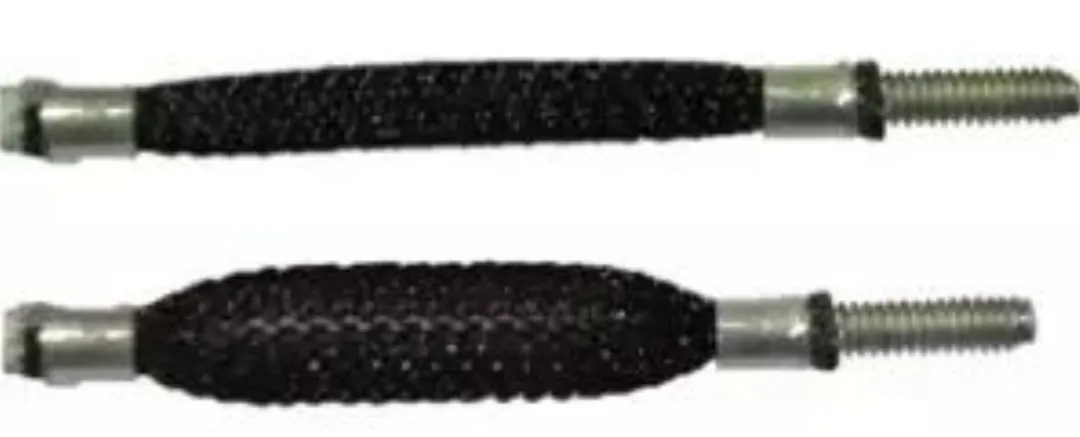
In the past few years, the industry has tried gradient modeling materials, segmentation isomorphic structures, shape memory material complexity, flexible fluid logic bridges, etc. However, gradient materials are prepared with high thresholds and poor batch consistency; segmentation is essentially a multi-drive unit fastening, and the number of pipelines has not decreased; flexible fluid logic bridges also introduce additional flow resistance, lag, and stability is difficult to control.
So, the field of software robotics has been waiting for a single-channel, single-cavity, native multi-mode drive unit: a single-line drive, only one inlet, and automatically completing a set of pre-set action sequences as the volume of air goes from small to large.
02.
Synthetic abdominal groove fibers: asymmetrical grooves, hiding switches that change shape
At the heart of this work is a new type of pneumatic drive called the "belly-side groove fiber" (F-VGB). The so-called "belly-side" refers to the side facing the bottom of the object; the groove refers to the opening of a vertical groove on this side of the fiber.
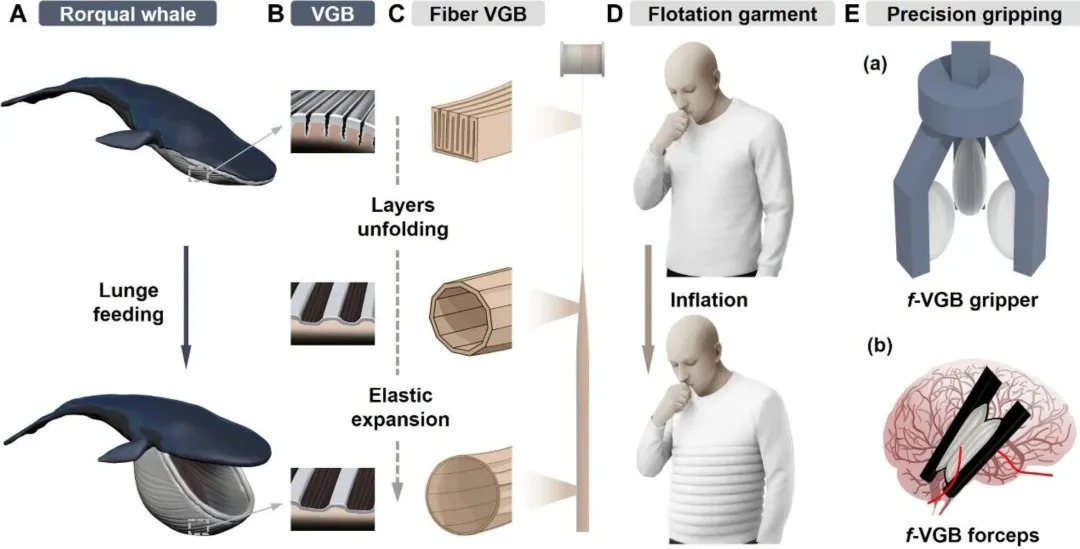
The core inspiration for the F-VGB comes from the needles in the ocean.
The secret is in the abdominal cavity tissue: during the ingestion process, the abdominal cavity is opened successively, releasing the reserved geometrical capacity, waiting for the cavity to be fully flattened, and the tissue enters the elastic stretching stage. Through the two-stage mechanism of stretching the abdominal cavity, the back material must be stretched at a very low energy cost, achieving the rapid containment of huge volumes.
The research team abstracted this idea into a very concise structure.
The fibrous material is a medium-space structure, prefabricated with dozens of layers of smooth microclimate along the inner wall axis; inflation is equally divided into two core phases:
1. The opening phase of the cylinder: the internal microprocessor opens successively under low pressure, rapidly releasing the pre-existing geometric volume. This phase requires little to no stretching of the substrate material, so the start pressure is extremely low, and the shape is dominated by geometrical structures;
2. Elastic expansion phase: After the cylinder is fully flattened, as the air pressure rises, the tube wall material enters the elastic transformation phase, with the diameter continuing to grow steadily.
These two mechanisms together determine the final deformation range of the fibers.
The paper divides the entire inflation process into three phases, according to a clear pressure-diameter response law:
1. Ventilation phase: When the internal pressure reaches about 0.8 kPa, the micro-ventilation phase begins, and the intersection area increases rapidly with the inflation rate.
2. Elastic expansion phase: When the cylinder is completely flattened, it enters the uniform elastic shape-shifting phase, when the pressure rises to 11.7 kPa, the fiber diameter reaches 20.8 mm, where the internal shape of the phase becomes completely reversible and the pressure-diameter ratio is flat.
3. Plastic unstable phase: After the pressure continues to rise, the tube wall enters the plastic deformation zone, and the local drum pack begins to become unstable at about 13 kPa, eventually resulting in the failure of the tube wall cracking.
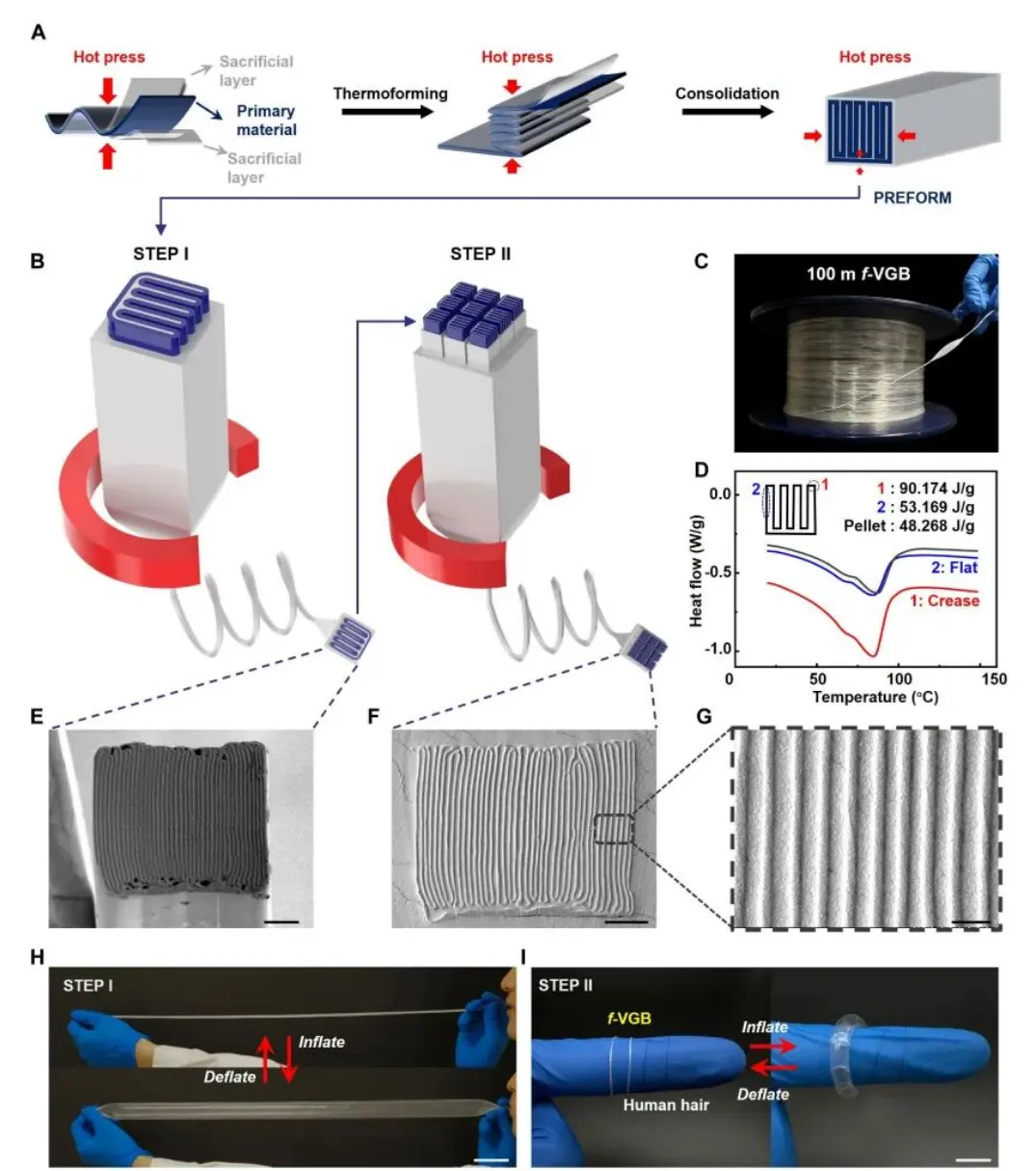
In preparation, f-VGB uses the semi-crystalline thermoplastic elastic ECOC as the base material.
The team first compressed and folded the macro thin film into a multi-layered silicon prefabricated material; then, through a two-step thermal welding process, the millimeter-level prefabricated structure is continuously reduced to hundreds of micrometers, while retaining the internal silicon as a whole. During the welding process, the polymer chain oriented to the microcrystalline structure is locked in a folding shape, equivalent to placing the geometric silicon memory valve inside the material; after removing the layer, a single hollow multi-layer silicon fiber of ECOC material can be obtained.
Thermal analysis results show that the fracture region stores more directional stress and residual stress energy than the flat region. When inflated, these pre-programmed valves are preferentially opened and quickly release capacity, without having to directly force the stretch base material. Withdrawal of the gas pressure, the structure can be reversed and regenerated autonomously; if the high pressure causes plastic deformation, it can also be used to trigger shape memory with about 50°C hot water, allowing the fiber to return to its initial geometric shape.
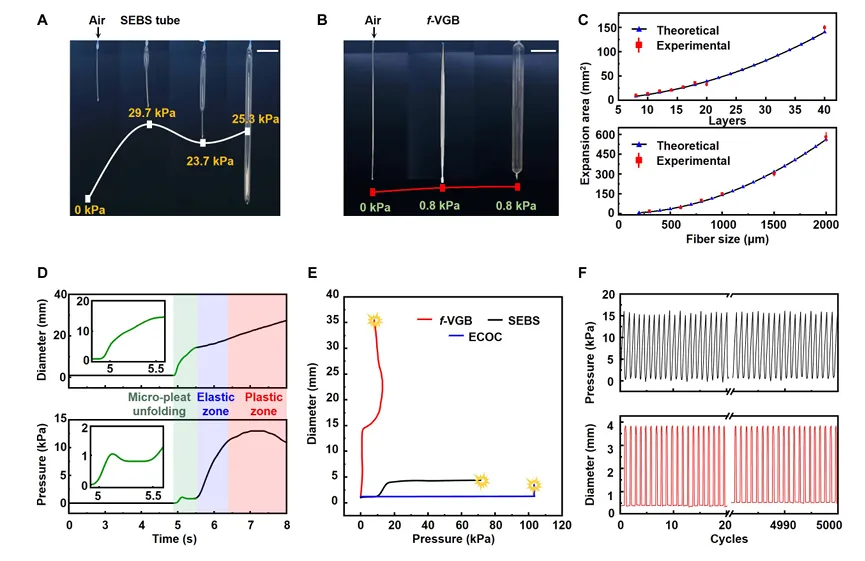
In the reverse work window of the pump expansion + elasticity, the intersection area of this 40-layer pump expansion is more than 400 times the reverse expansion frequency, with a diameter expansion of about 20 times. By contrast, the same initial size of SEBS elastic tubes, pure ECOC elastic tubes, expansion of elasticity diameter is only 1.5 times, respectively, and 1.1 times; at the same time, the start pressure of the f-VGB pump expansion is more than 30 times lower than the traditional elastic tubes of the same size.
Compared to conventional flexible tubes, the most prominent feature of f-VGB is its weak scale dependence. The critical pressure on the drum pack of traditional flexible tubes increases dramatically as the pipe diameter shrinks; while the initial opening pressure of f-VGB is mainly determined by pre-folded geometrical structures. The increase in pressure resulting from the size shrinkage is much smaller than the conventional scheme, providing a viable route for low-pressure drives for micro-drivers on a hundred-micrometer scale.
03.
Manufacture of simple, continuous threads for soft fabric robots
In addition to mechanical innovation, the practical advantage of this work is that the manufacturing pathway is simple enough and has the potential to scale.
Bottom-slope fibers can be manufactured continuously by casting molten filaments or extruding moulds, directly pulling out the long fibers, rather than an open-molded, manually sealed edge like a pump driver.
The soft fabrics we see today are mostly made by inserting independent aerobic muscles into the fabric, each of which is connected separately to the air duct and wire. If substituted, the fiber itself is both the drive unit and the fabric wire. After being woven into flexible fabrics, the entire fabric requires only a few lines of gas source, the fibers in different locations alternate curves, twist lengths, and achieve a continuous change in the shape of the entire fabric, rather than a simple stack of independent drive units.
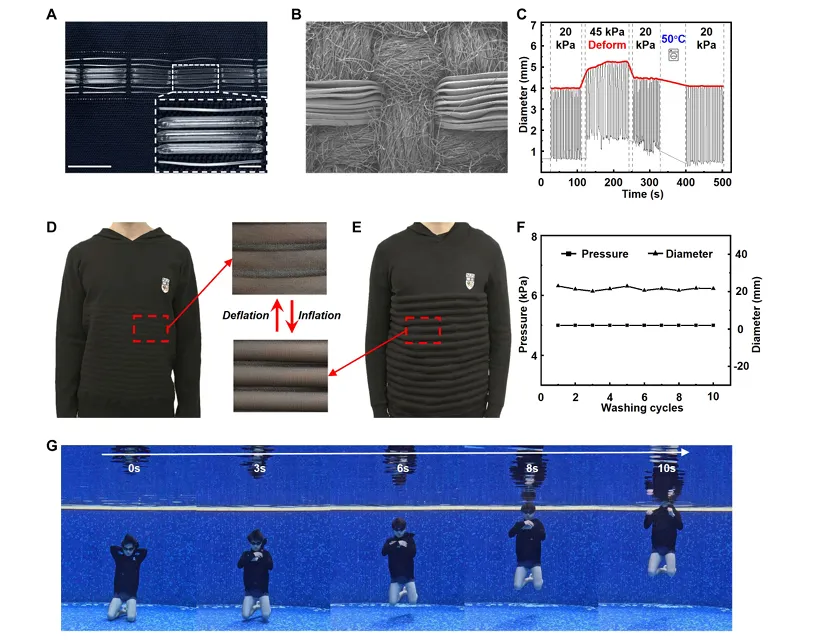
The team has pulled out 100 meters long, 300 micrometers of continuous fibers interspersed, and samples that can be twisted around the fingers, 200 micrometers of specifications.
The paper presents several verification samples. The most intuitive is the single-fibre sequence transformation demonstration: the same fibers, the steam speed is inflated, the camera records the complete process from straight→ single-directional curvature→ spiral rotation→ axial stretching, the transformation switches smooth, reversible, the gas returns to the initial state after release, and the cycle stability is good.
The team also combined a number of belly slot fibers to make a small flexible clutch holder. Unlike the traditional multi-cavity clutch, this clutch holder can be used to control the filling volume of the gas, to achieve a precise bending of the wrapping object, then slightly twisting to increase the friction, and finally the overall fine-tuning gesture of the clutch's continuous clutch process, with only one gas supply route, coupled with simple flow control, to complete a set of clutch operations.
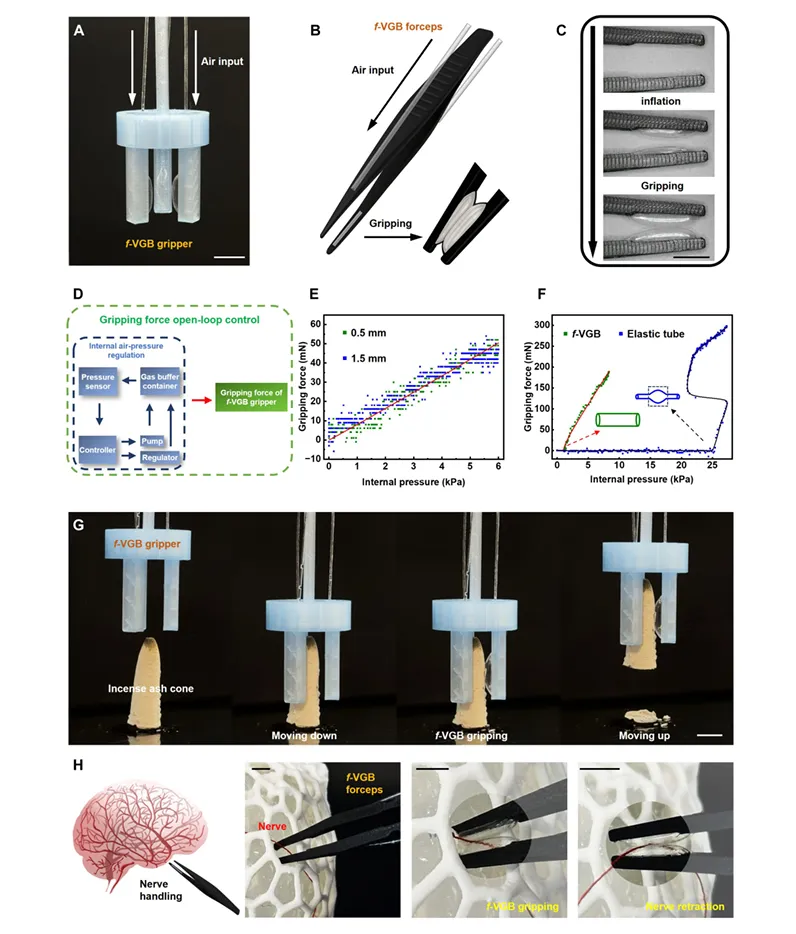
The paper also presents several representative application scenarios, outlining the potential downside of the technology.
1. Wearable rehabilitation equipment
The fibers are inserted into the fabric as gloves or sleeves. Different air cavities are filled with different volumes of air to guide the fingers to bend in a specific order. Compared to motor-powered recovery gloves, the air fibers are lighter, quieter, and more comfortable to wear. The consistency of volume control means that the width of each recovery training is standardized to assess efficacy.
2. Microsurgical tools
The fibers are less than 2 mm in diameter and can enter the human body through natural cavities or tiny incisions. The structure of the abdominal cavity allows it to curve like a small snake, through curved vessels or digestive tract. Doctors control the direction and position of the tips precisely by controlling the volume of air injected.
3. Textile robots (Robot Textiles)
The team has previously published a tactile display of garment GUI (smart clothing interface) on Nature. If this air-driven fiber and electronic fiber are woven in the same piece of fabric, the fabric has the ability to "perceive" and "act" at the same time, allowing for active pressure feedback, muscle electrical stimulation aids, and even shape changes in the clothing itself, such as automatic tightening, drumming, and airbag heating.
04.
What is the meaning of this verse?
Many people's impression of a software robot is that it's so soft that it can spin. But really moving towards being practical, a software driver needs the ability to time: when to spin, when to twist, when to stretch, to form a set of actions with a preceding order.
Using a very simple asymmetrical groove structure, it demonstrates that single-chamber gas drive does not necessarily have to be a single mode of transformation. Depending on the elastic structure, the multi-level bending is unstable, and the sequence of movements can be carved into the driver's core, with the filling gas as the only control input, to achieve the original multi-mode drive.
It opens up a new design paradigm for the whole field, driven by programmability, not necessarily based on circuits and circuits, and geometry itself is a programming language.
Subsequent directions are also clear: optimizing material formulas to increase power density and cycle life; building engineering-oriented parametric design tools that allow designers to directly input the desired sequence of shapes, automatically generating slot intersections; integrating abdominal fiber and sensor fiber into a closed-loop drive line that senses self-shape. When programmable fibers like this are woven together, future active soft tissue robots may have the ability to adapt to the current fluidity, continuity, and self-shape that we cannot imagine.