Google has just announced the launch of a new generation of its flagship model, the Gemini 4 Carbon, dubbed "the strongest model".
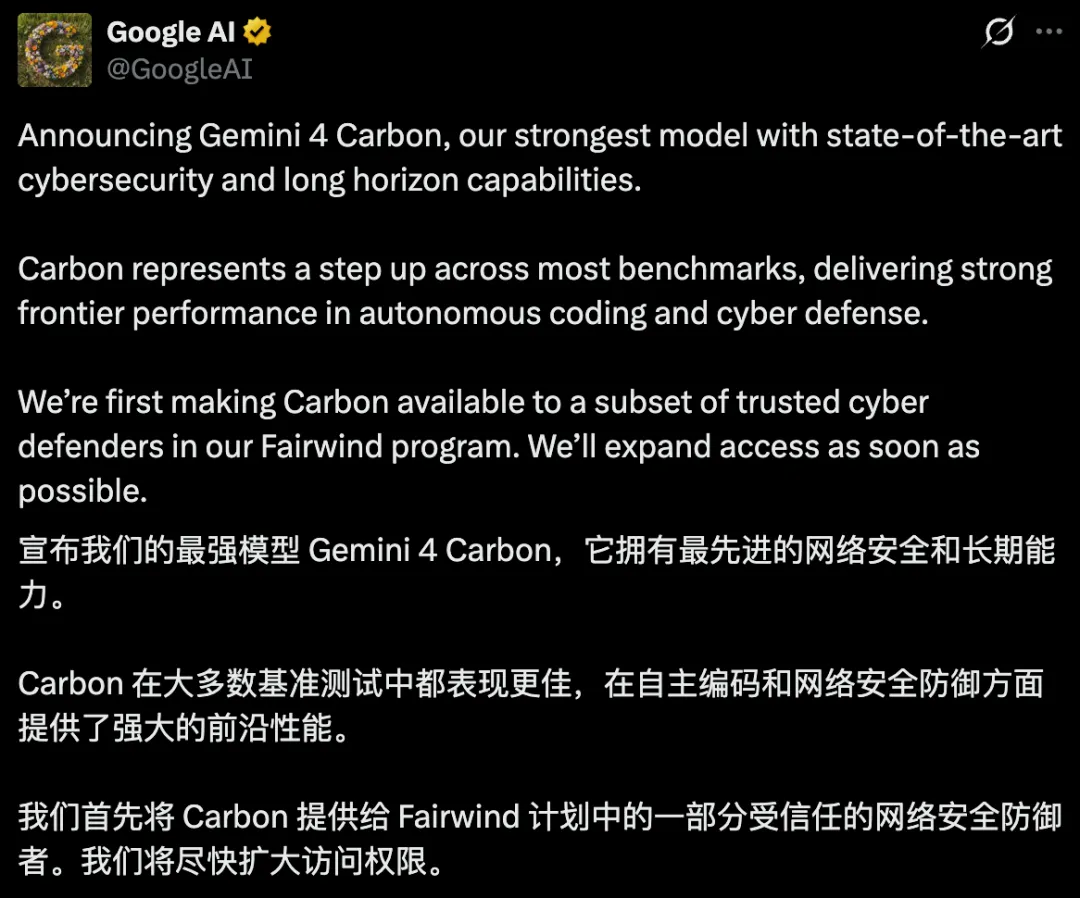
The model has reached its current state-of-the-art in terms of both cybersecurity and long-range task handling capabilities. Carbon is capable of handling complex tasks for several consecutive days, does not get stuck, and does not take shortcuts to complete tasks, ultimately delivering high-quality, reliable code.
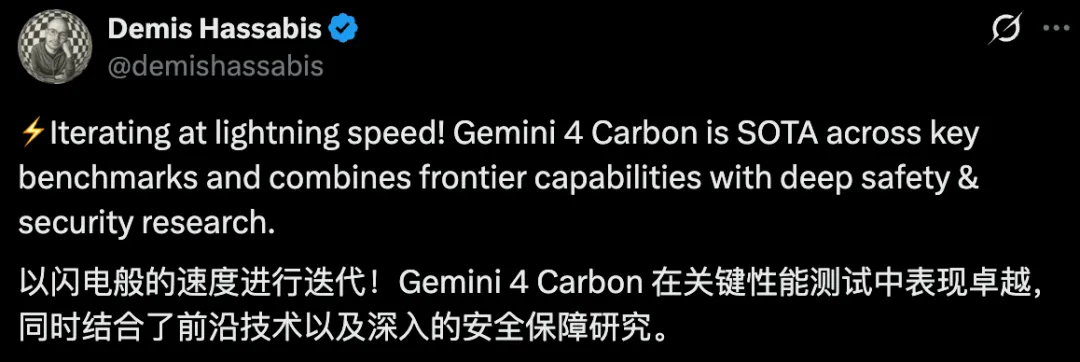
It's been two weeks since the release of the previous flagship Gemini 4 Argon. Demis Hassabis started with a flash emoji, and Google is working on "Iterating at lightning speed".
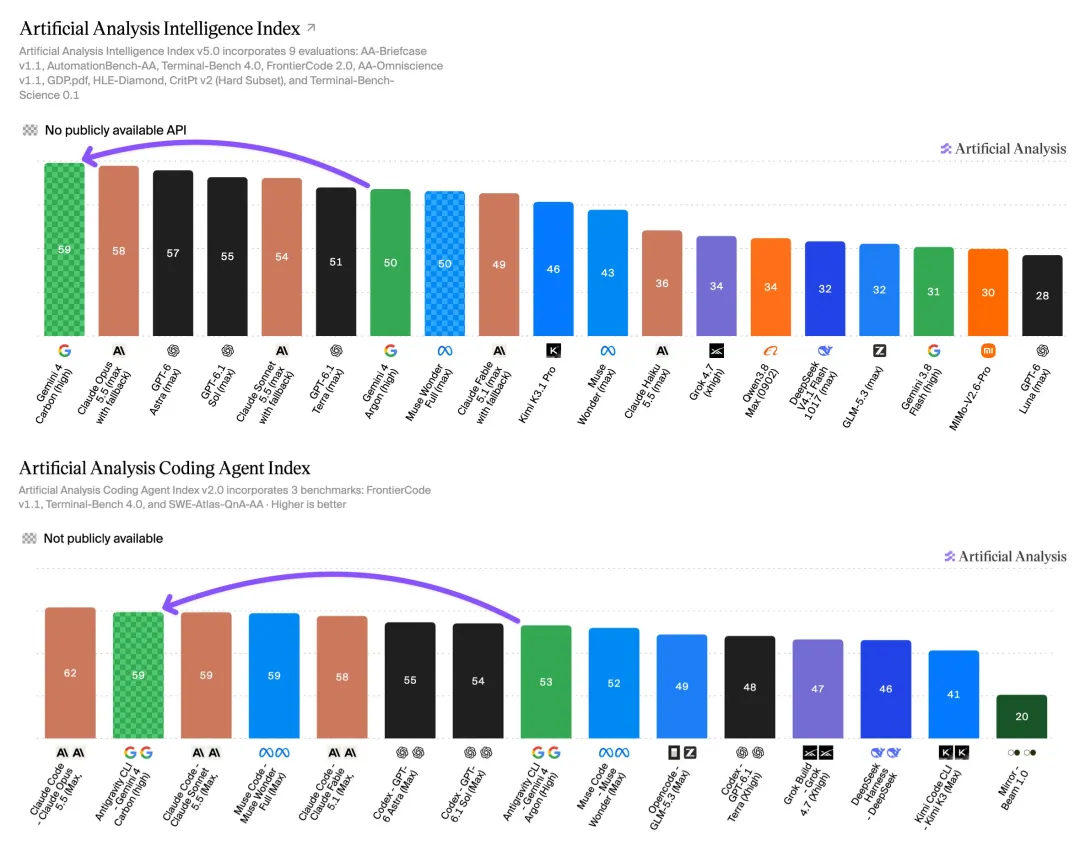
Very good, very bottom-up. From the data point of view, this all-new Carbon model is very reliable. Carbon got 59 points in the Intelligent Index v5.0 of the third-party rating agency Artificial Analysis, topping the list. It was followed by Claude Opus 5.5 with 58 points, and GPT-6 Astra with 57 points.
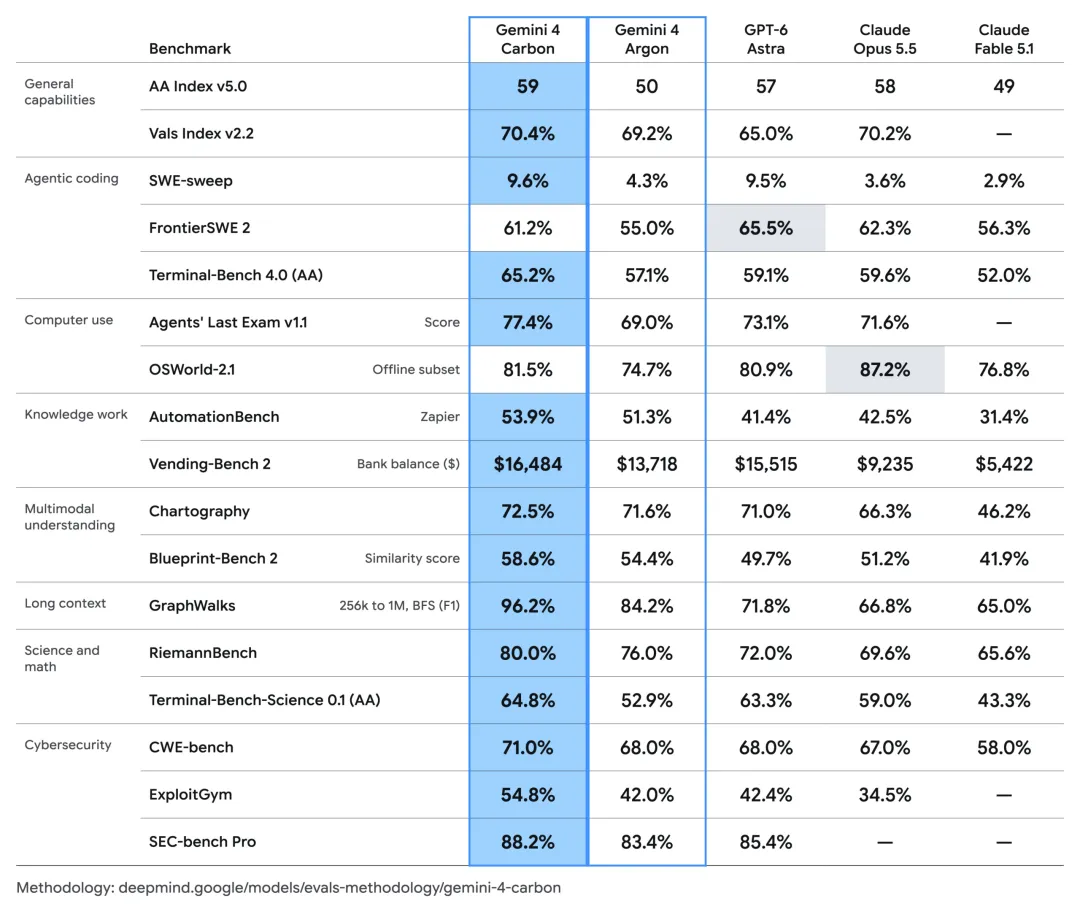
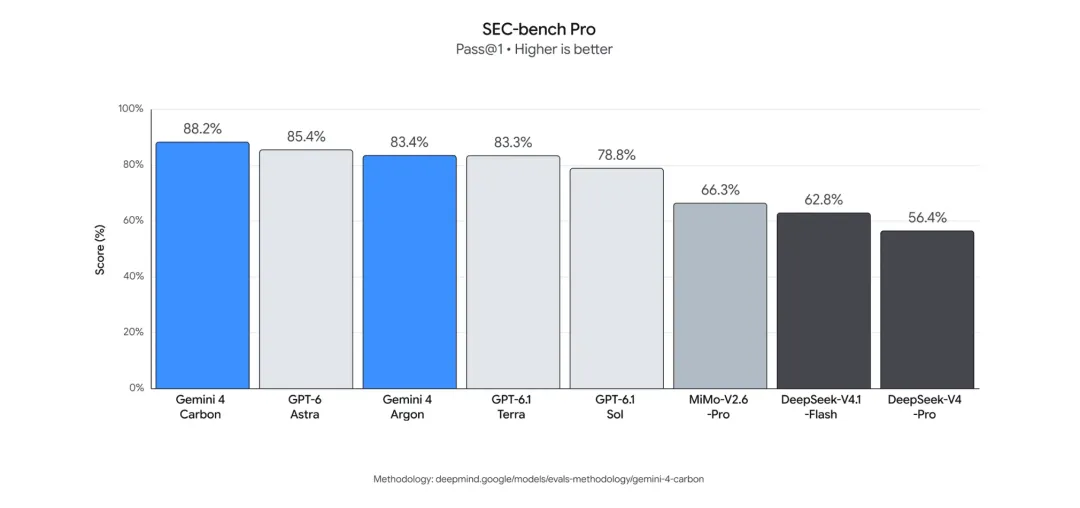
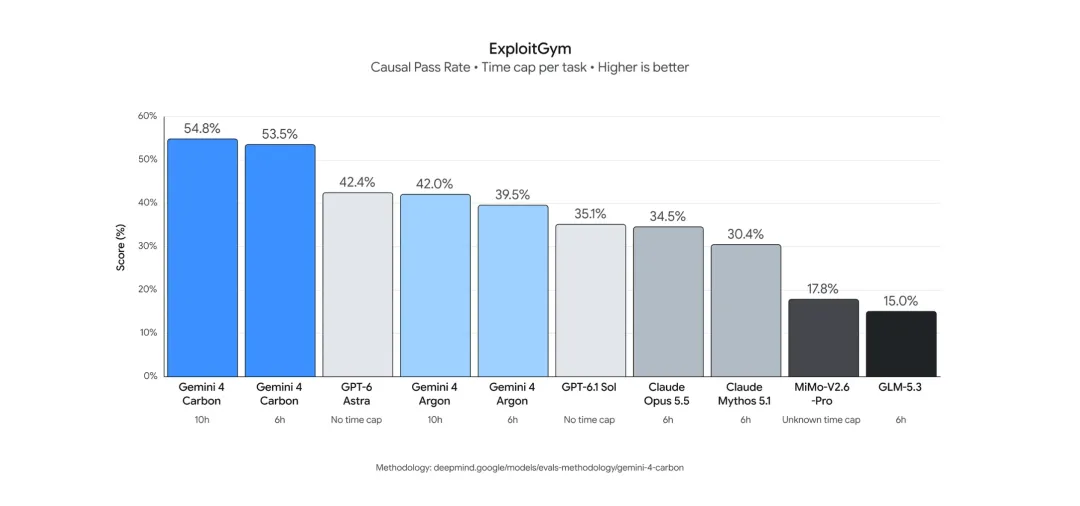
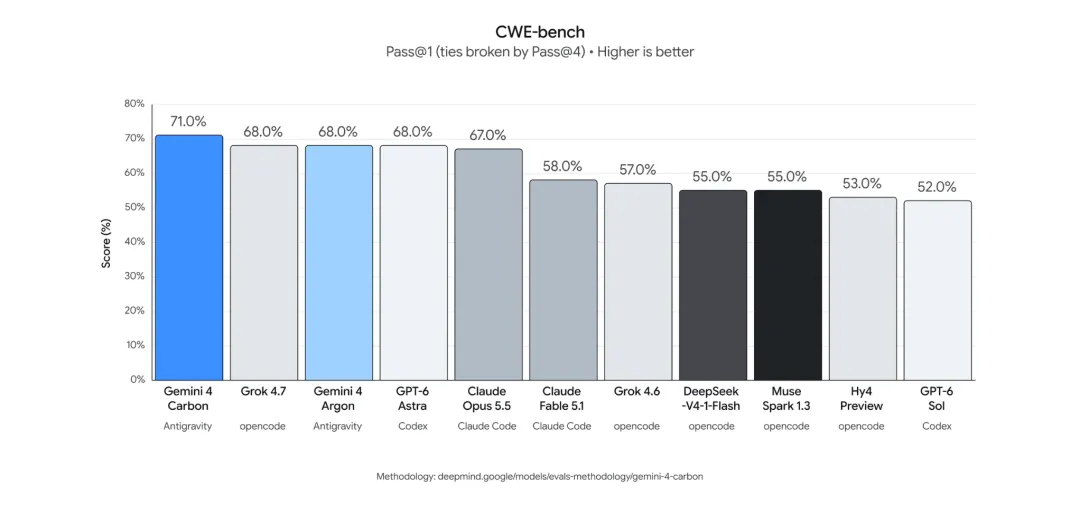
In addition, Carbon scored 88.2% on the SEC-bench Pro vulnerability discovery benchmark, 54.8% on the ExploitGym vulnerability utilization benchmark, and 71.0% on the CWE-bench vulnerability repair benchmark, both of which established a clear lead.
Link to the blog:
According to SOTA, the Chrome team tested "more than 10 times as good".
Google has written extensively on Carbon's cybersecurity capabilities in its official blog. Specifically, Carbon covers three key stages of cybersecurity defense, with SOTA being done at each stage.
Finding vulnerabilities: Carbon scores 88.2% on the SEC-bench Pro, up from 85.4% on the GPT-6 Astra and 83.4% on the Argon. The mission of this benchmark test is to allow the model to independently detect complex security vulnerabilities hidden in real software.
Verification vulnerabilities: Carbon scored 54.8% on ExploitGym, 42.4% significantly ahead of the second-place GPT-6 Astra. This test measures the actual availability of a model to verify the vulnerability, helping the security team decide on prioritization. At 10 hours, the gap between Carbon and the 6-hour limit is small (54.8% vs 53.5%), indicating that it can complete most of the verification work in a shorter amount of time.
Fixing a vulnerability: After the vulnerability is finally identified, root cause fixing is a critical step in the lifecycle of cybersecurity defense. Carbon reaches 71.0% on Collinear's CWE-bench, which translates verified findings directly into workable code fixing.
In addition to the public benchmark, Google also provides internal data. Carbon's success rate in generating security codes is more than double that of Argon. Feedback from the Chrome browser team is more exaggerated, reporting that Carbon performs more than 10 times better in generating high-quality security patches than "the other big, front-end model in the lab".
Google's cloud security platform Wiz also participated in the test, observing Carbon's lead in Web penetration testing benchmarks, which is one of the core capabilities of Wiz's "Scan for Good" program.
Long-range missions: able to run continuously for several days
Another highlight of Carbon is its "long-range mission" capability, which is also becoming one of the key competitors in the new generation of front-end models.
According to Google, the internal team observed that Carbon can run for days in large code libraries and underlying systems, completing root-causing and patch generation across files. At the same time, the model can automatically continue to adjust the strategy without directly terminating the task.
One of the technical underpinnings of this capability is a significant improvement in the upstream context processing capability. In the GraphWalks test ((BFS F1 rating in the 256k to 1M token range) Carbon jumped from 84.2% for Argon to 96.2%, 71.8% for the leading GPT-6 Astra, and 66.8% for Claude Opus 5.5 by more than 20 percentage points. The upstream context window for supporting 1M tokens means that the model can simultaneously process about 1,500 pages of A4 documents.
Long-range capabilities are becoming increasingly important because of the higher demands that Agent workflows place on models. In software engineering, for example, truly complex development tasks often involve continuous tracking of code changes, coordination of multiple-branch modifications, processing of cross-module dependencies, and repetitive testing and repair problems. These work can last for hours or even days, well beyond the scope of single-questions.
For front-end models, the ability to keep targets consistent, correct errors in a timely manner, and ultimately deliver reliable results over a long period of time is becoming an important criterion for measuring their actual engineering value.
Benchmark Overview: IQ Index 9 rated 4 out of 4
Artificial Analysis Intelligent Index v5.0 is currently the most cited comprehensive assessment system in the industry.
Carbon topped the charts with 59 points, four of which came in first place (HLE-Diamond, Terminal-Bench-Science, AA-Omniscience, AutomationBench-AA), 1 point higher than Claude Opus 5.5 points (58 points), 2 points higher than GPT-6 Astra (57 points), and 9 points higher than Argon 50 points two weeks earlier.
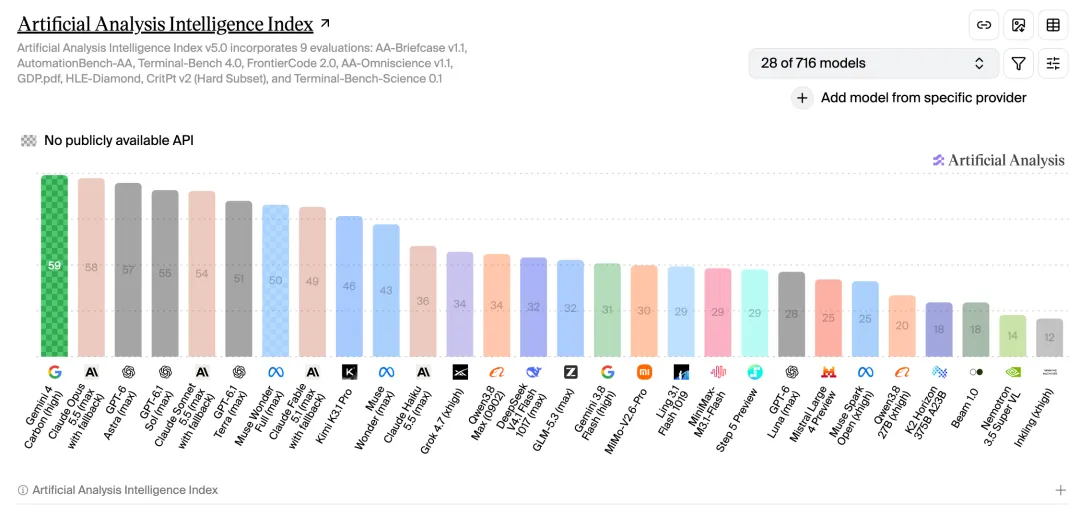
The following sub-dimensions are shown.
In the Artificial Analysis Coding Agent Index, Carbon combined with Antigravity CLI (high reasoning) scored 59, just behind first place Claude Code + Claude Opus 5.5 (max reasoning, 62 points) 3 points. In single ratings, Terminal-Bench 4.0 scored 64%, FrontierCode v1.1 scored 51%, and both came in second, behind Claude Opus 5.5 (high reasoning) Elo, 56%.
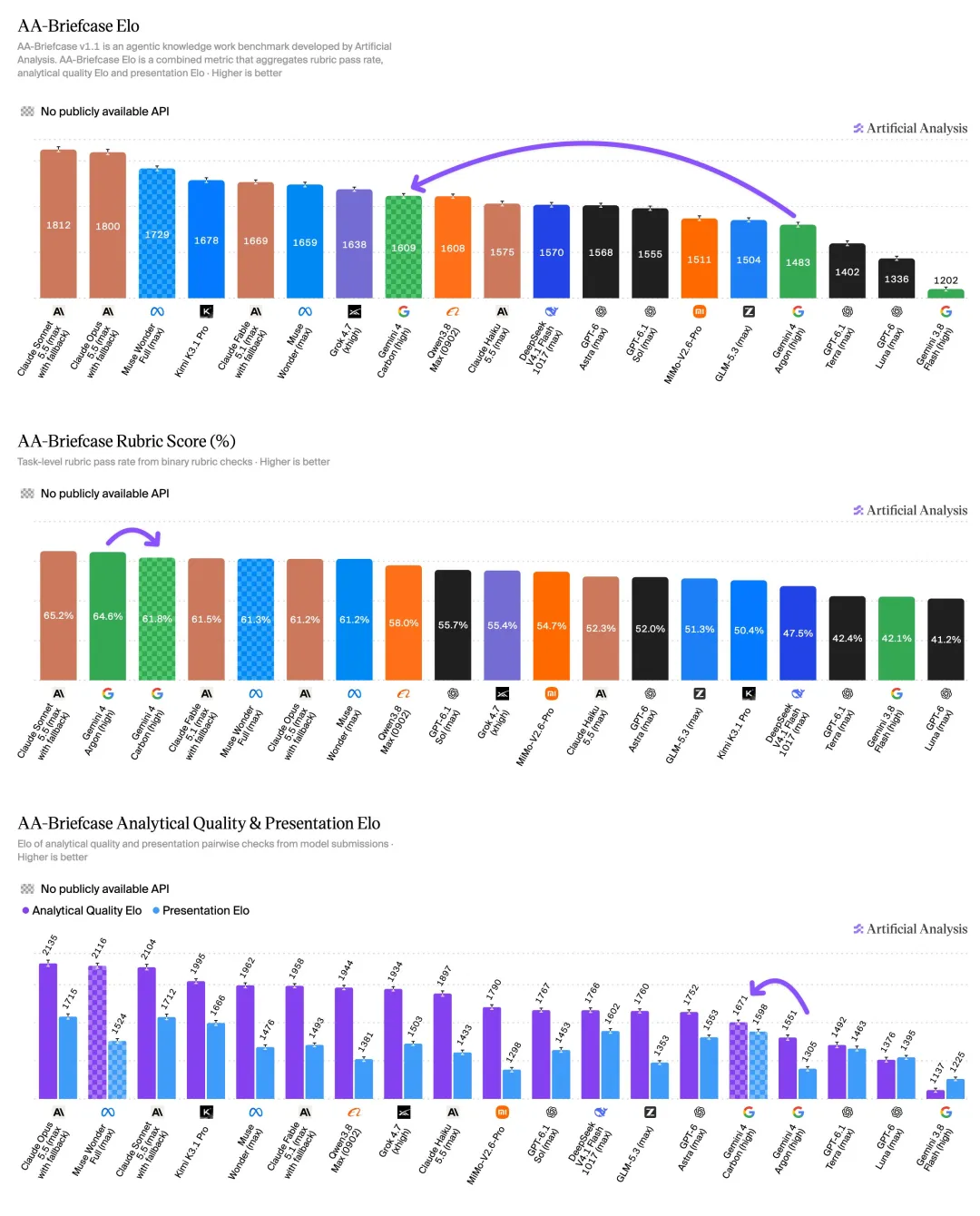
Knowledge work: On the AA-Briefcase, Carbon ((high) scored 1609 Elo, up from Argon ((high, 1483)). The biggest improvement was the Presentation ((present quality) dimension, jumping 293 Elo to 1598; Analytical Quality ((analytical quality)) also up 120 points to 1671.
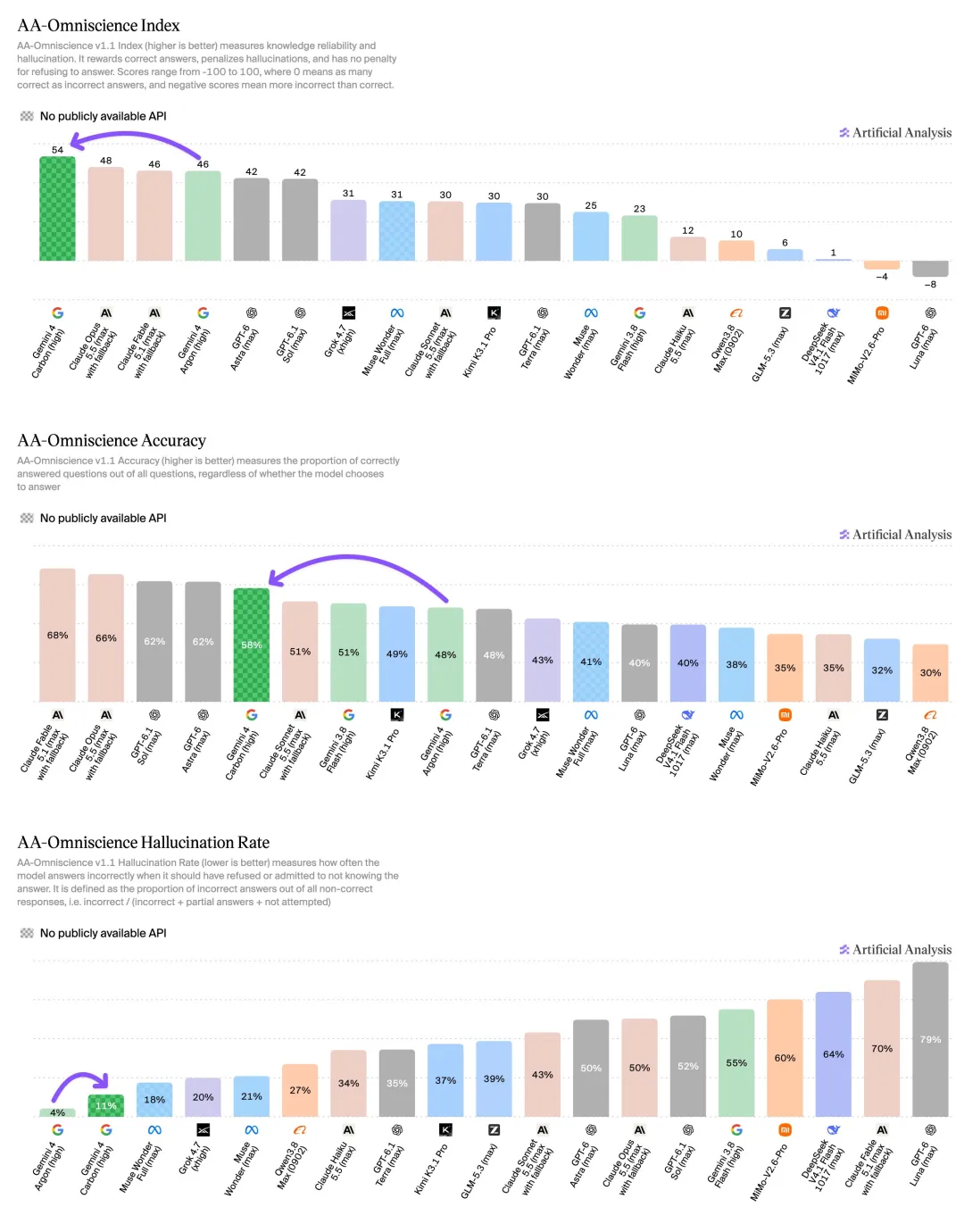
Knowledge reliability and hallucination: Carbon scored 54 on AA-Omniscience v1.1, leading Claude Opus 5.5 ((max 48,6 points, leading Argon 46) 8 points. Accuracy (correct answer ratio) increased from Argon's 48% to 58%, earning 10 percentage points. Hallucination rates increased from Argon's 4% to 11%, although rebounded, but still the second lowest of all models, behind Argon.
Science and Mathematics: Riemann Bench 80.0%, Terminal-Bench-Science 64.8%, which is currently the highest score.
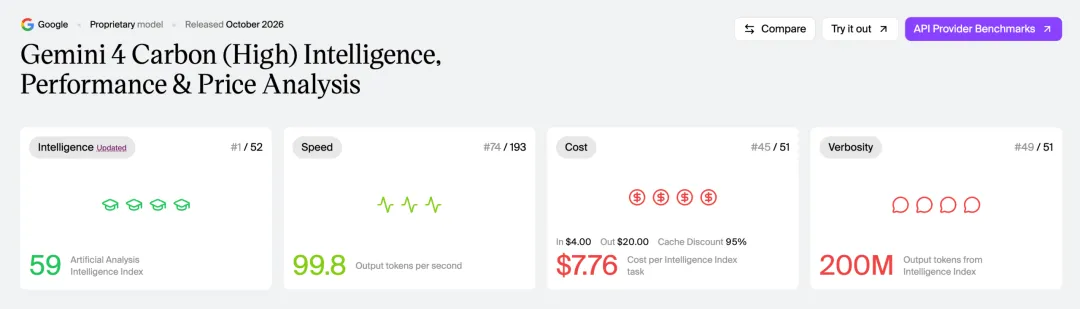
Cost-effectiveness: Carbon costs an average of $7.76 to complete a smart index task, which is about 23% lower than Claude Opus 5.5 ((max, $10.04) and about 1.2 times that of GPT-6 Astra ((max, $6.25). The average output per task is 123k tokens, 29% lower than Claude Opus 5.5 ((max, 173k).
Artificial Analysis is a model for evaluating and analyzing:
Security alignment: 0% cheating rate, 0% tip-off breaking rate
Carbon's security-aligned architecture continues Argon's multi-layered defense system, including training phase alignment, real-time abuse detection, prompt injection defense and mind-chain monitoring, and is further strengthened on this basis.
The cheating rate dropped to 0.0%. In the Terminal-Bench 4.0 test, Carbon's cheating success rate was zero, with only 0.4% of attempted cheats, while overall task accuracy was still improving. Google said this was achieved by further mitigating shortcut exploitation of the model during training.
In Gray Swan's Indirect Prompt Injection (IPI) benchmark test, Carbon successfully withstood all attacks. Compared to other front-end models: Argon 0.7%; Claude Opus 5.5 and Claude Fable 5.1 were 1.0%; GPT-6 Astra was 8.5%; Groc 4.6 was up to 51.8%;
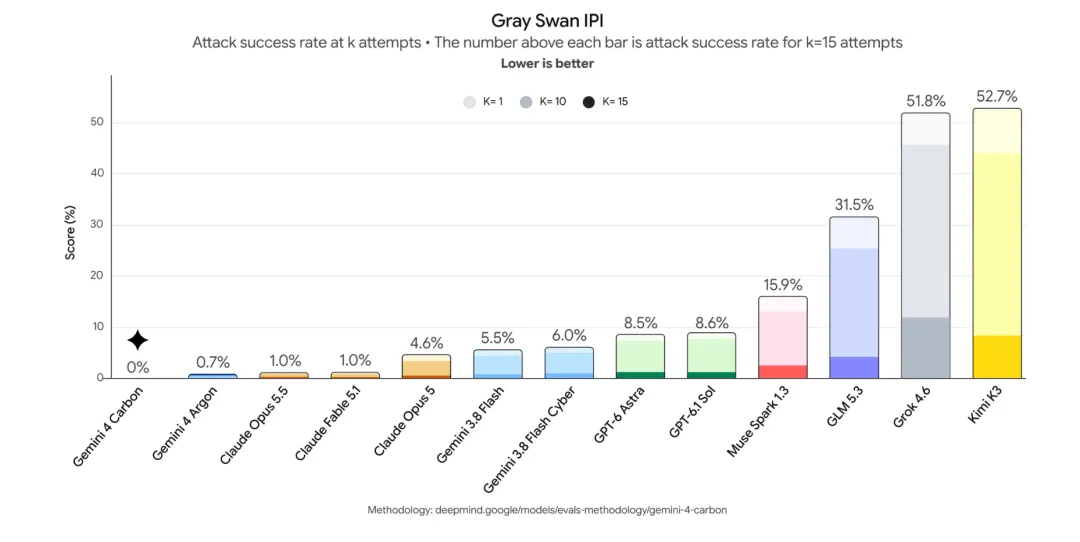
At the behaviour control level, Carbon simultaneously improved two common patterns of coordination failure: over-performing (overreach, operating beyond user intent) reduced by 26% and under-performing (under-service, omitting user requests) reduced by 29%. Google describes Carbon's behavior change in the face of blurry tasks is that the model will actively retrieve relevant sources and present information to users that is different, and will act again after confirmation, without speculating or forcing forward.
In model transparency, Carbon's unsupported claims are about twice as low as Argon's. When critical information is missing, the model directly marks methodological constraints or lists unfinished prerequisites in the output, without fabrication or blurred processing.
The internal team found that the high-severity alignment was nearly 80% less than Argon.
Pricing and availability
Carbon is priced in line with Argon, with standard prices of $4 per million of input tokens and $20 per million of output tokens. Currently, it offers a 50% discount on-line, with an unspecified end date.
In terms of cost per mission, the average cost of completing a smart index task for Carbon is $7.76, which is about 23% lower than Claude Opus 5.5 (US$10.04) but about 24% higher than GPT-6 Astra (US$6.25).
Carbon first opened its doors to trusted cyber defenders in the Fairwind project this week, and will be expanded to include developers, businesses and consumers after collecting feedback and replacing security guards.
The end.
The familiar cycle is back again. Claude just threw down a "nuclear bomb", and Google has come up with a new recipe, and OpenAI has gone up in flames.
For some time, Google seemed to have lost its voice in the high-speed iteration of the flagship model, even doubting whether it would still be able to stay on top of the competition table.
Of course, the more competitive you are, the better for the industry as a whole. But rather than relying on the crisis narrative of "AI destroying the world" or the marketing exaggeration of "sitting down", we want to see the model make real progress in real-world tasks.
A few are fake, many are real. This is the kind of AI competition that is worth looking forward to.
© THE