On September 22, 2026, the CEO of Alibaba Group, Xiangping Ming, gave a speech at the Hangzhou Yunnan Conference, explaining the thinking of the era of "machine intelligence": machines are becoming the main force of thought, intelligence is becoming a commodity of scale, and the total amount of machine thinking in the future will reach more than 1000 times that of humans.
In line with the evolution of the technology underpinning, the R&D approaches of AI technicians are also accelerating the transition to AI Native: Agents are no longer just used to generate code, but are gradually entering the demand, development, testing, release, and operation sectors.
On 23 September, the AI Native Research and Development Practice Forum of Alibaba Group was held in Yunnan.
The co-founder of Machine Heart, Lee Asia, head of R&D infrastructure at Alibaba, Xu Xiaojing, a leading technology expert at the Ministry of Mining, Lee Ying-Koh, chief architect of the platform technology business group at Xi'an Group, Huang Dong, CTO Pyongyang, and Xi Jinping, associate dean of the School of Computing and Intelligent Innovation at the University of Tianjin, started with content production, business R&D, infrastructure and software engineering research, respectively, and interacted with real-world technicians in their respective AI Native practices.
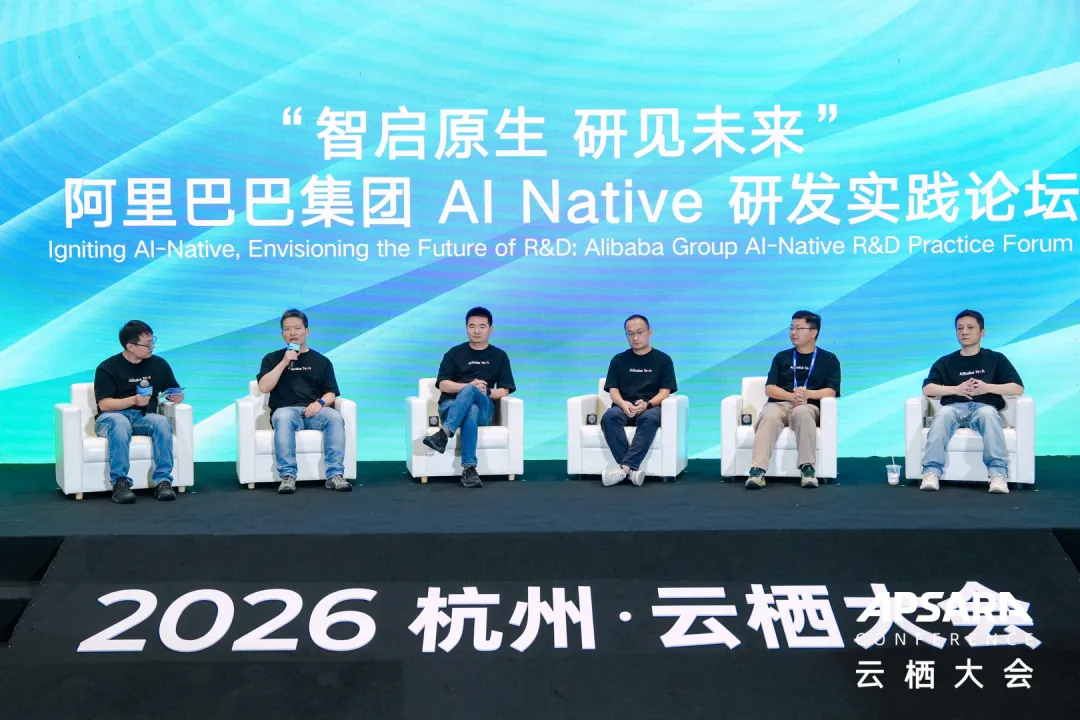
These practices together point to a more reliable engineering question: Where does the real bottleneck of software delivery go when code is generated faster and faster?
NOTE: In-text efficiency, scale and business indicators are derived from guest site sharing and presentation materials. The statistical objects and qualities of each team are different and should not be directly compared horizontally.
He said:
Agent enters production and requires a complete engineering system
Alibaba's head of R&D infrastructure, Xu Xiaojun, broke into the internal practice and discussed how the Agent enters the real production chain. The first thing he encountered was not the problem of generating code, but where it operates and how to verify the results. Ali's open source OpenSandbox, which has more than ten million levels of creation per week internally, serves the operation, training and evaluation of the Agent. Another set of environments has supported about two to three thousand applications that are fully integrated in independent environments, and plans to soon expand to ten thousand applications. The environment is no longer just pre-development preparations, but the infrastructure for whether the Agent can continue to perform tasks.
As the operating environment gradually matured, production operations began to be handed over to Agent. Guardrail has been used for gray release and operation in dozens of applications, in teams of about a hundred, with the goal of having half of the production system released by the Agent self-confirmed within six months.
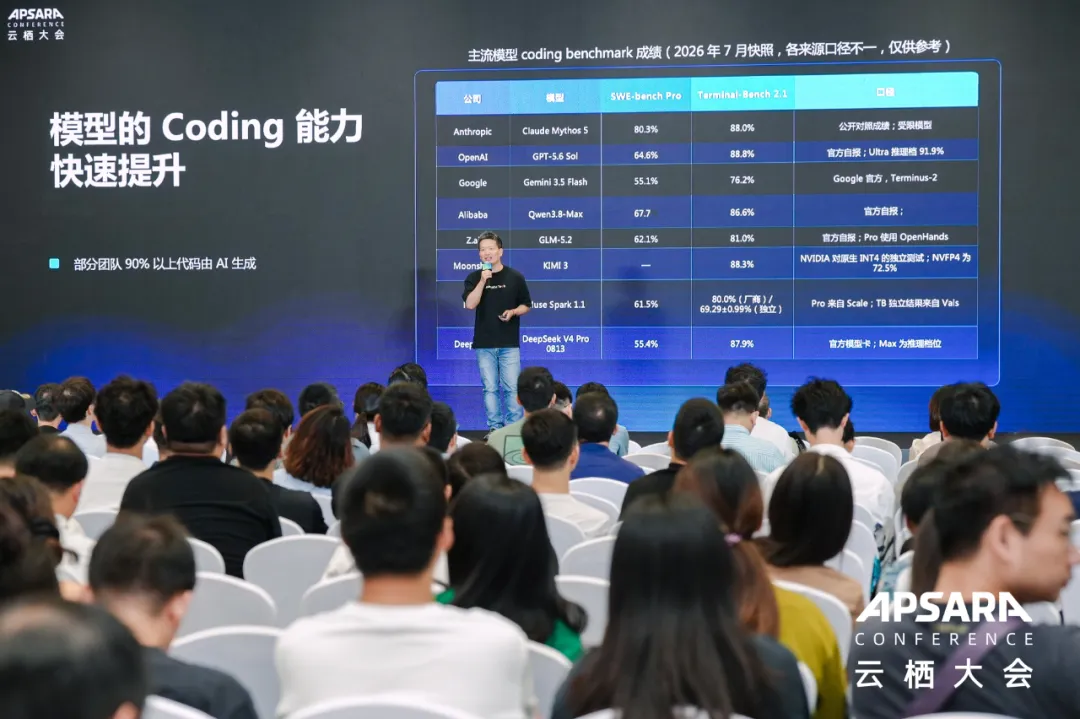
T / Alibaba's head of research and development infrastructure, Xu Xiaoping
Why does coding speed not directly translate into delivery speed? Xu Xiaoming gives a set of time structures: in Alibaba, coding typically accounts for only 20% to 30% of total software delivery time. He also shows an extreme link used to illustrate the problem: coding is not enough to do the overall work, about 1%, but it takes about 1 hour, but it takes about 21 days from demand to final delivery, and the time is mainly spent on links such as analytics, environmental preparation, coordinated approval, graying, and shutdown. This case is not real project data, but clearly shows the speed and overall speed gap between local offices.
Along the entire supply chain, Xu Xiaoxun breaks down AI Native's research and development into several interrelated parts of demand, context, environment, identity, and evidence. Human engineers can replenish implicit information from meetings, chat logs, and experiences, which Agent does not have by default. Demands must go from a vague description to a complete, accurate, operational and verifiable task expression; demand sources must also be preserved so that subsequent code changes can match the original design.
He summarizes this organizational approach as "one need, a set of facts". Product documentation, technical programming, design drawings, front-end engineering, test cases and verification evidence are no longer scattered across different systems, but are continuously shaped around the same need. Code warehouses are just part of the soft stuff, and the configuration, dependence, operating environment, data base lines, and acceptance standards also need to be read by the Agent.
Once the needs are cleared, the task will actually run. Agents need to know how the toolchain is installed, where the service is dependent, how the network boundaries are set up, how to run the results. Sandbox provides an executable, restricted, disposable space; the application environment replication principle allows the Agent to complete development and verification under conditions close to the real system. This also explains why OpenSandbox and the application environment system will be the premise of Agent's scale-down.
As the agent moves from the development environment to production, the system must also respond to who it represents and what it can do. The combined identity of User Identity, Agent Identity and Workload Identity is used for authorization, strategic judgement, auditing and high-risk operations.
Graph / Forum site
Li Ying-jeong said:
Reducing delivery costs with a unified context and verification mechanism
Li Ying, a leading technical expert in the field of AI, is concerned about the gap between the efficiency of individual coding and the efficiency of team delivery. AI coding has significantly improved and has not led to the same overall delivery speed. Long links, incomplete context caused by cross-character collaboration, and heavy pre-online acceptance work still consume a large amount of costs.
To address this issue, Li Ing proposed the Context & Verifier Driven Developer. Products, designs, R&D and tests work on the same workstation, helping to improve PRD quality by assessing the requirements of the Agent; R&D is responsible for the architecture and program constraints, and as the first person responsible for the quality of the code, the verification mechanism in the coding Loop is integrated into the context.
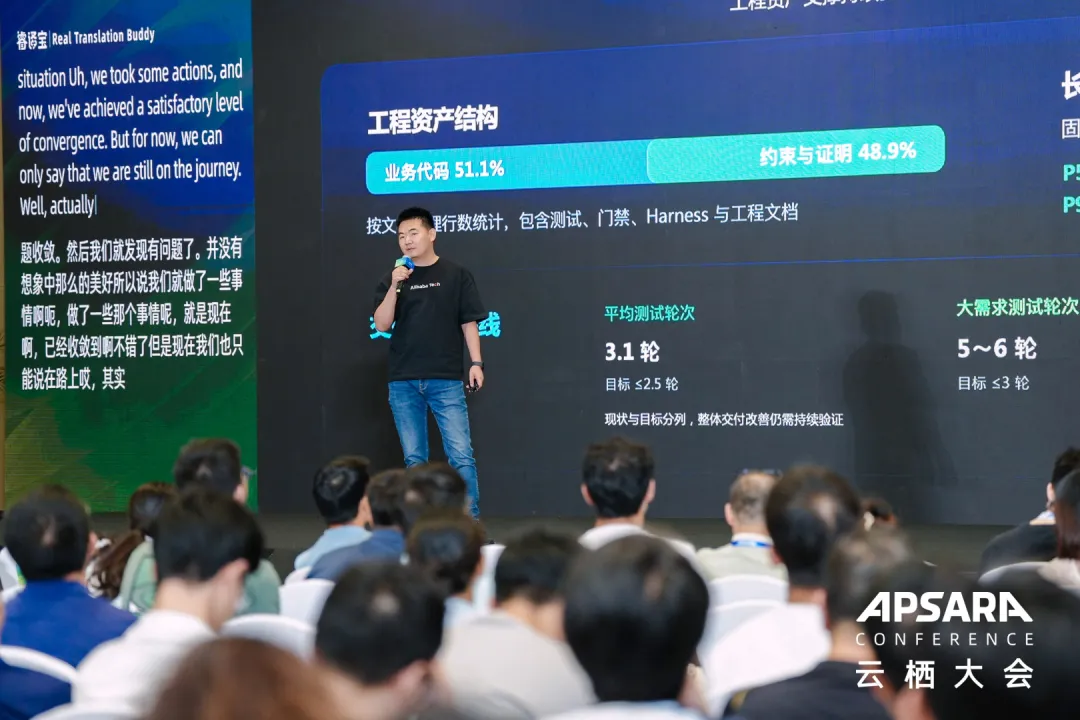
A distinguished technical expert at the Ministry of Foreign Affairs, Li Yingko
The QT team summarizes the problems in practice as "one discovery, one overestimation, two underestimations": individual efficiency does not automatically translate into team ingestion; teams overestimate the speed of coding and the quality of free code generation, while underestimating the complexity of cross-role communication, return costs and verification work.
In an organizational way, Q&A is making products, designs, R&D and testing work around the same goals, the same contexts and the same set of qualitative evidence, and shortening cross-character links through more integrated virtual teams. What tools individuals use is no longer the only issue, whether information can flow continuously within the team, whether the results can be collectively verified and begin to determine overall throughput.
What are you doing here?
When infrastructure users go from engineers to agents
It is the practice of the general architect of the ZTE Group platform business group Yellow to change the infrastructure after solving problems online with Agent. ZTE divides the problem, distributes the Agent on the cloud, isolates the evaluation and manually releases the confirmation into a series of Badcase repair links.
The ARCA isolation sandbox, which supports this link, includes 200 milliseconds of cold start containers, 8MB of storage expenses for single sandbox, 800 creation throughput per second and more than 600,000 creation per day.
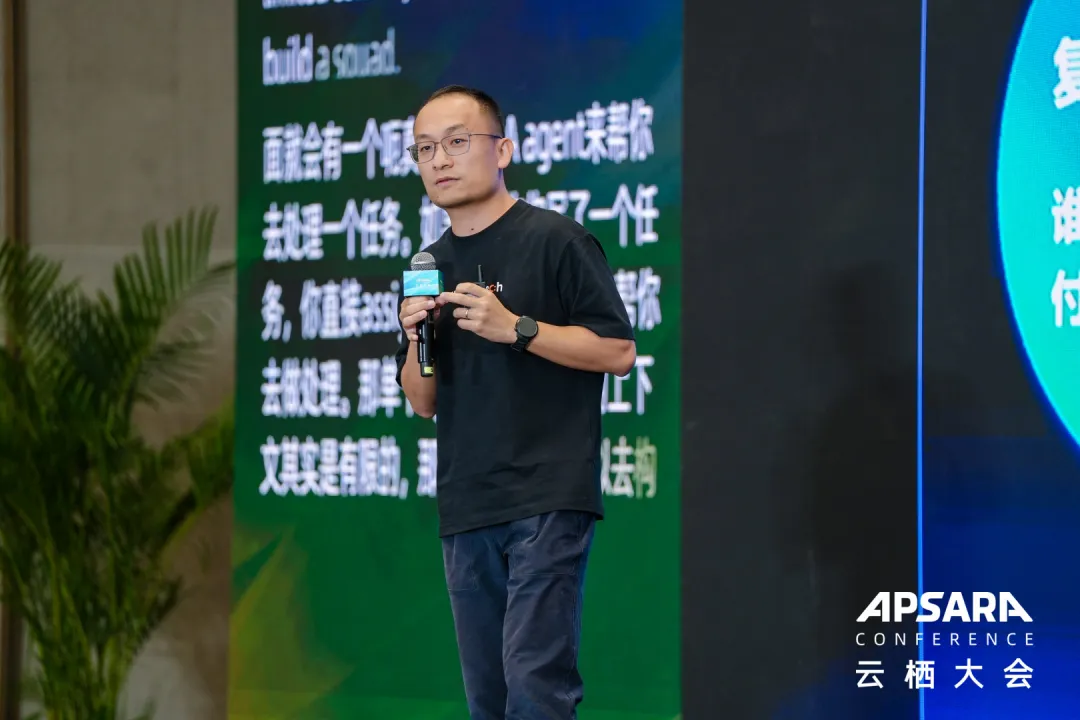
Graphic design and construction of the platforms of the Zhengzhou Group
In the past, the default operator of the R&D platform was a human being. People would read the tips and stop before high-risk operations to perceive the potential impact of the change; the agent would revolve around targeted continuous calling tools, modifying files and triggering processes. The previously reliant on human experience and carefully maintained boundaries would need to be transformed into standard interfaces, authorization layers, isolation environments, limit flow and audit capabilities.
What are you doing here?
Putting AI into demand inputs and redesigning R&D processes
From the business R&D link, CTO Chen Chang put AI into the demand input. Through the field knowledge base and PRD Gate, Flight Pig checks whether the demand is self-sustaining, which systems will be affected, which resources will be needed, and then the subsequent R&D process is streamlined, standardized. The platform technology team shortened the demand from the review to the upstream end-to-end average cycle from 2 to 4 weeks. Over the past year, more than 30% of the business demand for platform technology has been supported by AI processes, more than 60% of the applications in the housing business have accessed AI R&D processes, and the component productivity in the commercial business has improved by more than 70%.
Chen Chang used Amdal's law to explain the gap between coding efficiency and overall efficiency. Assuming that writing code accounts for half of all work, even if AI increases the coding speed by 100 times, overall efficiency will only approach twice. The faster the local link, the easier it is for previously inconspicuous waiting, communication and sequencing processes to become new bottlenecks.
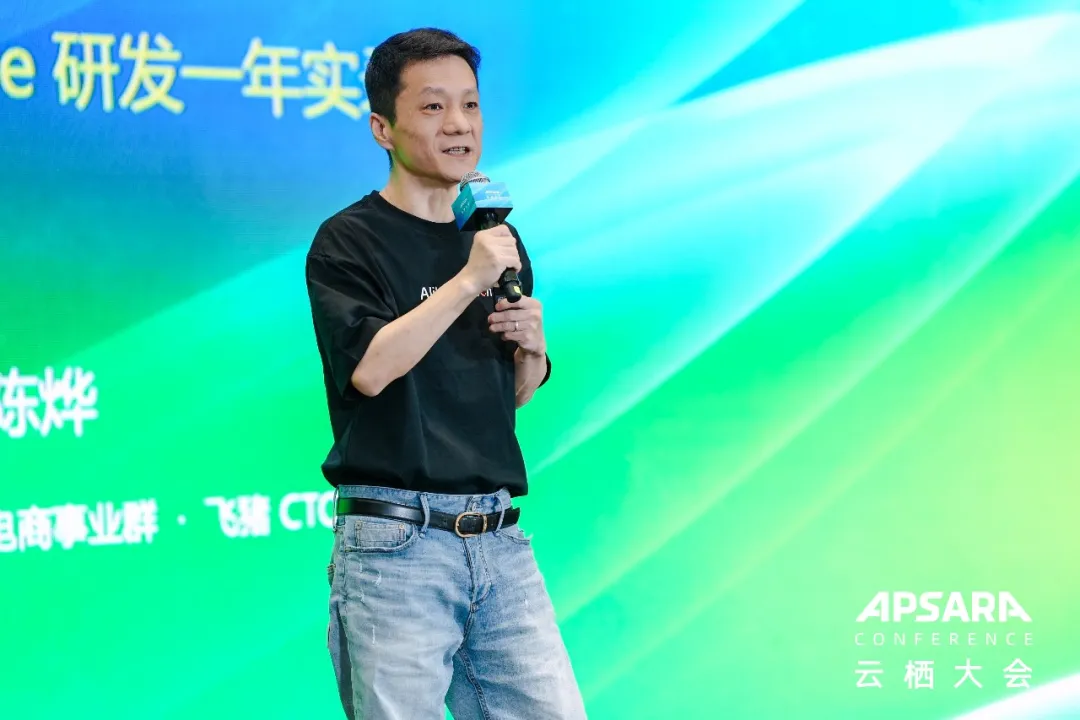
Chart: Flying Pig CTO Chen Liu
In Chen's divisions, AI research and development goes through three stages: the Copilot stage, where AI is an auxiliary tool; the Agent stage, where AI begins to dominate execution; and the AI Native stage, where the Agent becomes a team member and the process itself needs to be redesigned around it.
Chen Liu divided the process into three: figuring out what to do, judging what is wrong, and writing down the knowledge. He concluded: "AI Native is not a technical choice, it is an organizational choice".
What are you doing?
Using "drivability" to judge the limits of AI's role
Reorganization does not mean that all tasks should be assigned to AI. One-time schemes, process-specific tool applications and complex systems that require long-term operation do not have the same requirements for AI.
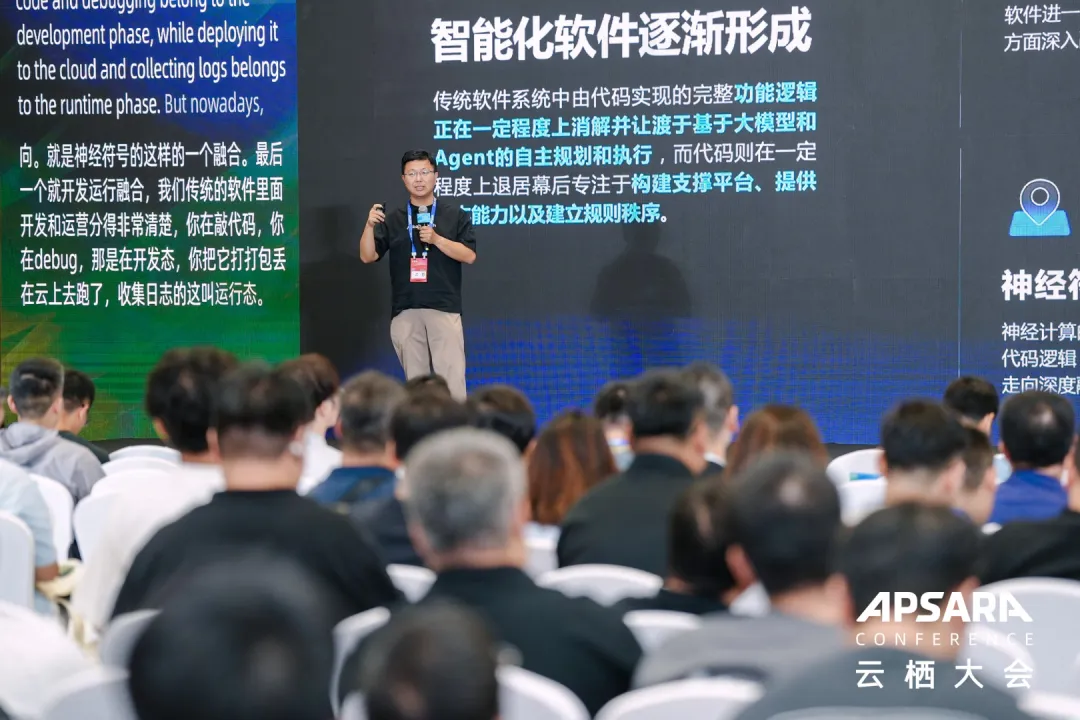
Photo: Deputy Dean of the Faculty of Computing and Intelligent Innovation at the University of Penang
Using "drivability" to judge the boundaries of the role of AI: whether tasks can be clearly defined, whether results can be objectively verified, whether the environment can be understood, navigated and controlled by the Agent. Faced with complex systems, it is also necessary to continuously record the needs, architecture, decision-making and evolutionary history, forming a "digital cradle" that corresponds to the code.
What is the meaning of life?
After personal efficiency improvements, workflows will continue to evolve.
Machine Heart's co-founder and editor-in-chief, Lee Asia, provides a different perspective from the content production scene. Machine Heart's editorial department previously reported a paper that usually required two editors to complete translation, integration, editing, editing and publishing in one morning; now, an editor can do it with Agent, which takes more than an hour.
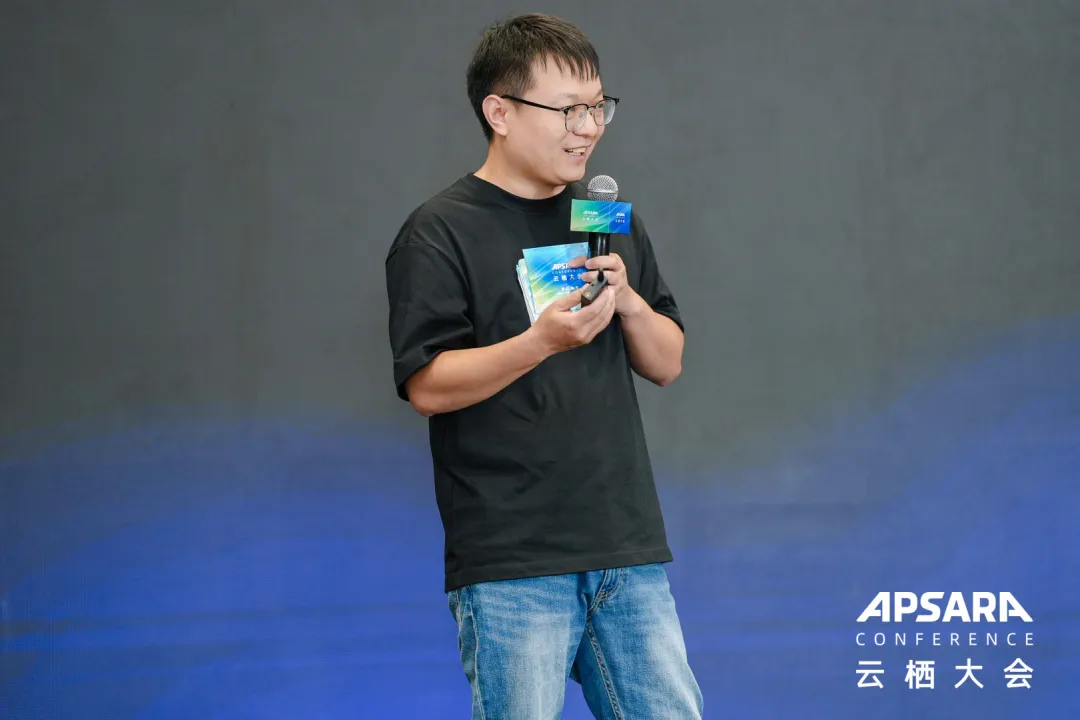
Image / Heart of the Machine Co-Founder & Director Lee Asia
At the same time, different editors are still using different tools and Prompt. Individual output has improved and a unified workflow has not yet been formed. This case, although not in software development, also shows that individual efficiency does not naturally translate into stable team processes.
A common direction for AI Native research and development from six practice groups
The six guests, ranging from content production, demand management, team collaboration, infrastructure, production governance and software engineering research, presented the same pathway that Agent takes from assisted coding to real production. As it enters into demand, development, testing, release and operation, R&D focuses also shift from production speed to verifiable delivery.
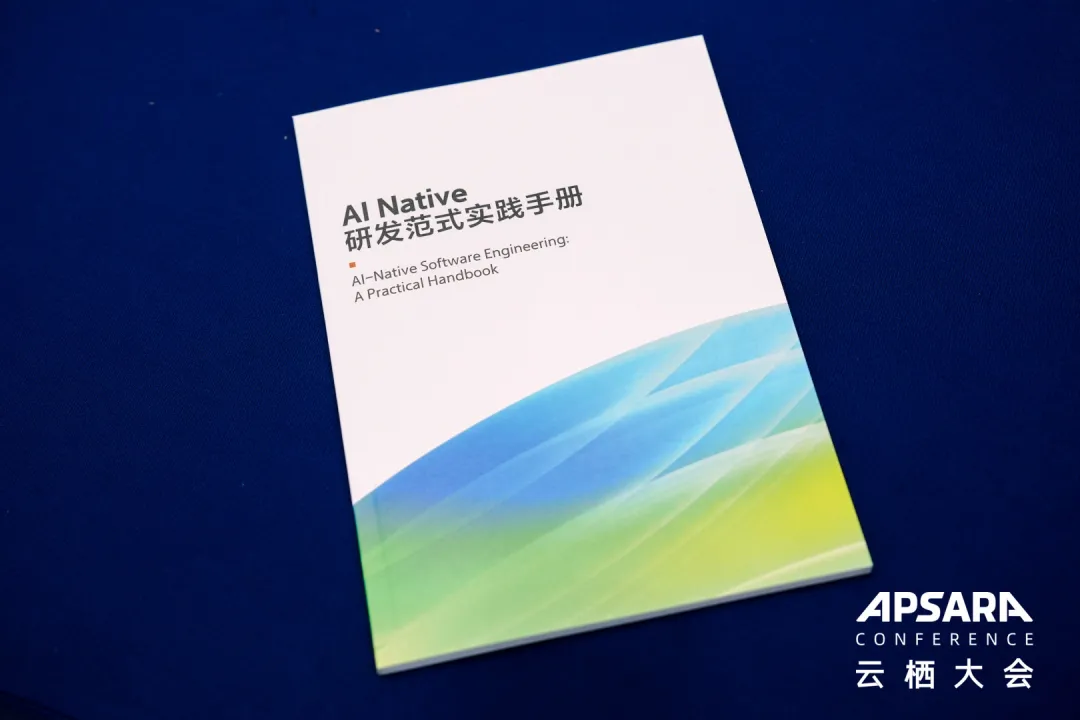
On the site of the forum, the AI Native R&D Model Practice Handbook was officially released. The handbook, a collaborative contribution by more than a dozen Alibaba engineers and practitioners from different roles, brings together the experience of infrastructure, open source projects and business lines as a replicable method and provides a vehicle for further on-site discussions.
Returning to the forum's question, software does not accelerate synchronously with code generation and is synthesized throughout the entire supply chain. Whether the demand is clear, whether the context is continuous, whether the environment can be reproduced, whether the results can be verified, whether production operations can be governed, and together determine the final speed.
The six guests shared practices from different points of view to show the direction in which the AI Native R&D paradigm is forming: technological systems, delivery processes and organizational processes need to change simultaneously in order for Agents to truly enter production.