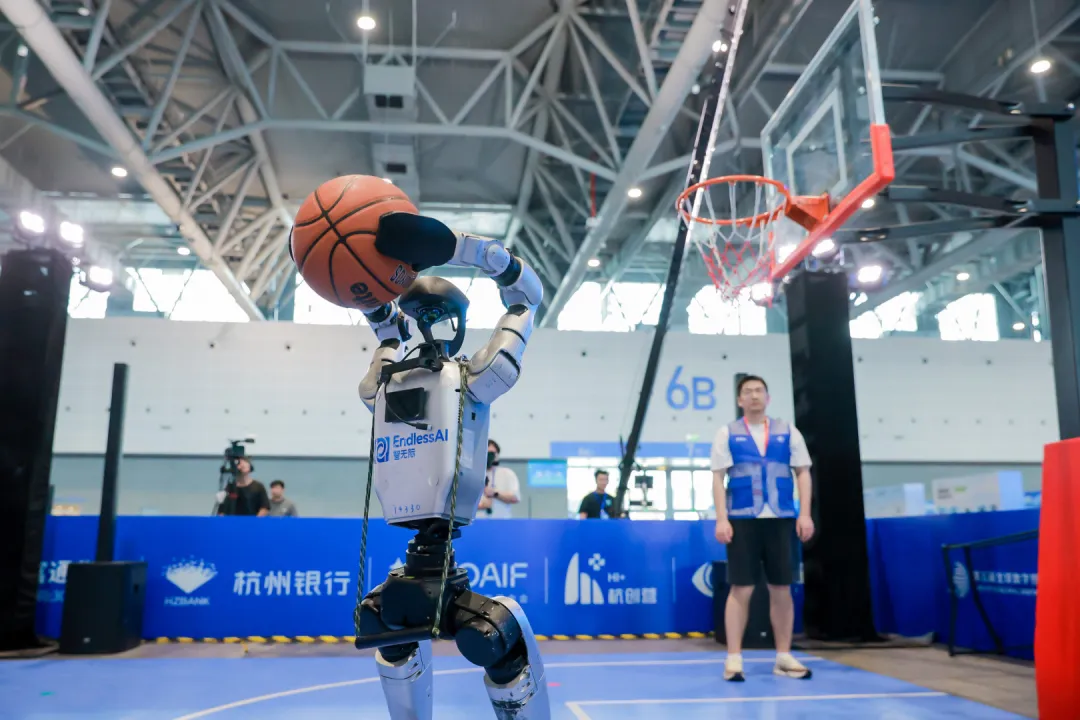
“ From the first day of the race, I saw a corner of being physically intelligent.
On September 23, 2026, at the Hangzhou Convention and Exhibition Centre, Hall 6B.
Following the opening of the fifth edition of the Global Digital Trade Fair, the 2026 Global Digital Trade Innovation Challenge (GTT) has officially entered the competition's schedule.
As a concurrent event of the fifth Global Digital Trade Fair, the challenge brought together more than 100 teams, multiple competitions for smart robot products, covering a total of 14 competitions in the two disciplines of speed and competition, as well as supporting events such as enterprise product innovation demonstrations and smart innovation workshops.
From the first day's performance, the event was not the same as the previous Pan-African Robot Games, as it continued the overall atmosphere of competitive competition, while bringing with it vibrant industry-verified colours.
01.
6 Hours of Endurance Race: When the industry switches from brushstroke logic to brushstroke continuity logic
The most notable event of the first day was undoubtedly the 6-hour 100-meter backstroke endurance race.
One-way 100m return, six hours of uninterrupted time, tested by long duration, mobility stability, autonomous environmental perception and failure self-recovery. As a race that needs to slow down, it may lack a dramatic, but straightforward, core proposition of industrialization.
The design logic of this race is very much in line with current industry trends. In recent years, the smart industry has gone from being powerless to powerless, and as robots have begun to enter real-world scenarios such as patrol, logistics, and emergencies, power speeds have gradually replaced power speeds.
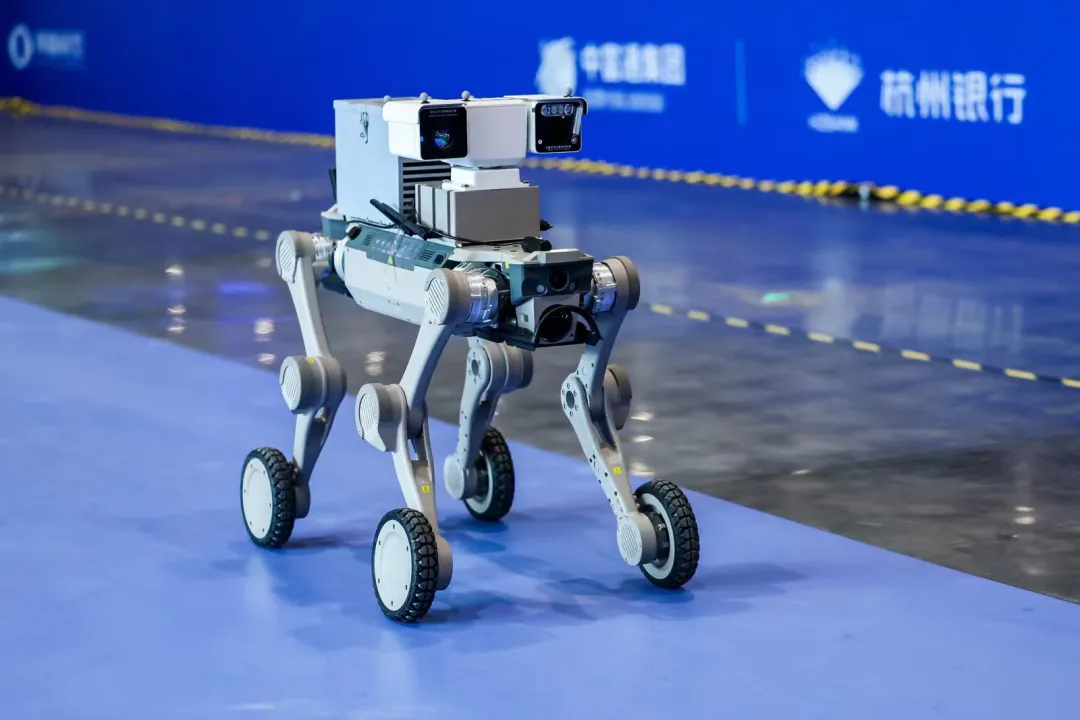
These events have generated widespread attention because they are simultaneously testing explosive power and durability. While the challenge directly extends the duration to 6 hours, its testing dimensions are more thorough, including long duration, mobility stability, autonomous environmental perception, fault self-recovery, continuous pace optimization.
From an industry point of view, the maturity of hardware essentials is no longer the main bottleneck. Related reports point out that the single hardware itself does not have high technical barriers, and the real competitive barrier lies in the capabilities of software such as operating control algorithms. The 6-hour endurance race test is not only the durability of the machines and joints, but also the stability and adaptability of the algorithms in long-term operation, which is the core proposition of the next stage of the industry.
02.
Race to the top: 100m not just speed
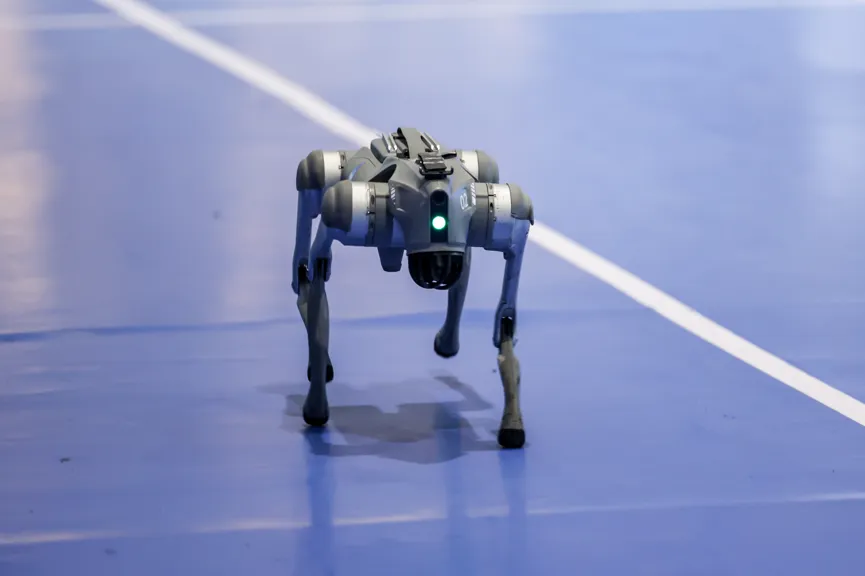
On Monday morning, the first leg of the robotic speed race took place. 100 meters of speed, 60 meters of speed, back-and-forth were held.
It was the most densely contested area of the day and the most technically sophisticated. The 100m race and the 60m race focused on the short-distance sprint, testing the speed limit, walking ability and balance control; turning required a single lap of 30m, four turns, total distance of 90m, testing the flexibility to turn, speed control accuracy and route planning capabilities; obstacle racing placed obstacle, climb, balance control and avoidance on the same exam.
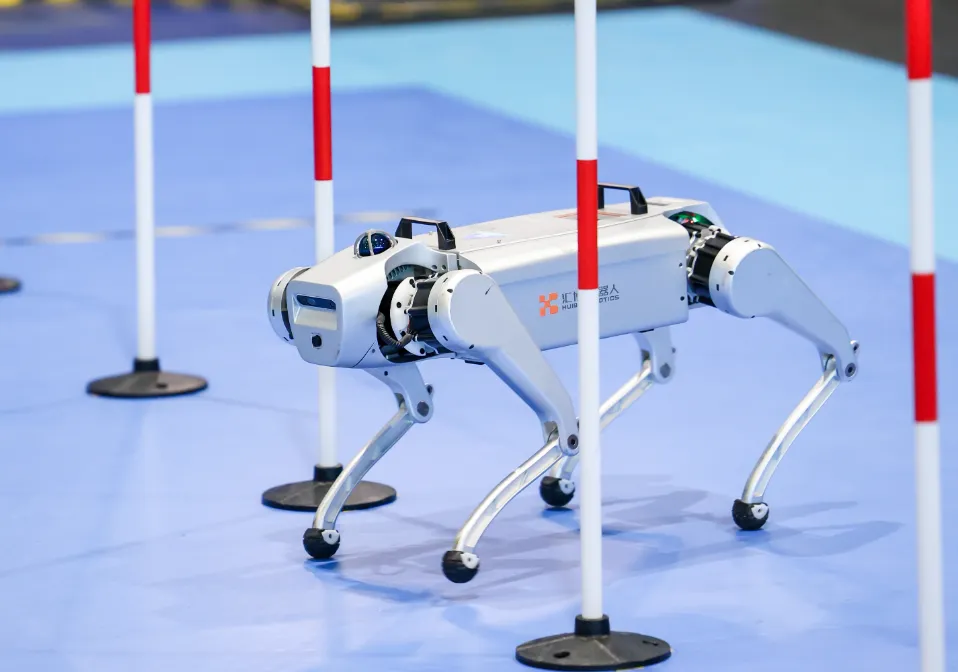
For outdoor spectators, it's a hot spot; for the industry, it's a doorstep spot. Every indicator of sports control (smart-body-smart-brain spot) will be publicly quantified on the track.
Racing has historically been the most intuitive measure of a robot's ability to control movement. In the past two years, the robot's speed has increased dramatically. This crossing is behind the rapid maturation of algorithmic pathways such as reinforcement learning and full dynamic control.
In addition, racing is evolving from remote-controlled racing to autonomous racing. Every run on the course today is accumulating test data for future robots to move at high speeds and make autonomous decisions in real environments.
100m track gauge has never been limited to speed, but is an industrial chain of combined proficiency in motor, decelerator, controller, algorithm and structural design.
03.
The first day of the competition: Opening of match-fixing and match-fixing matches
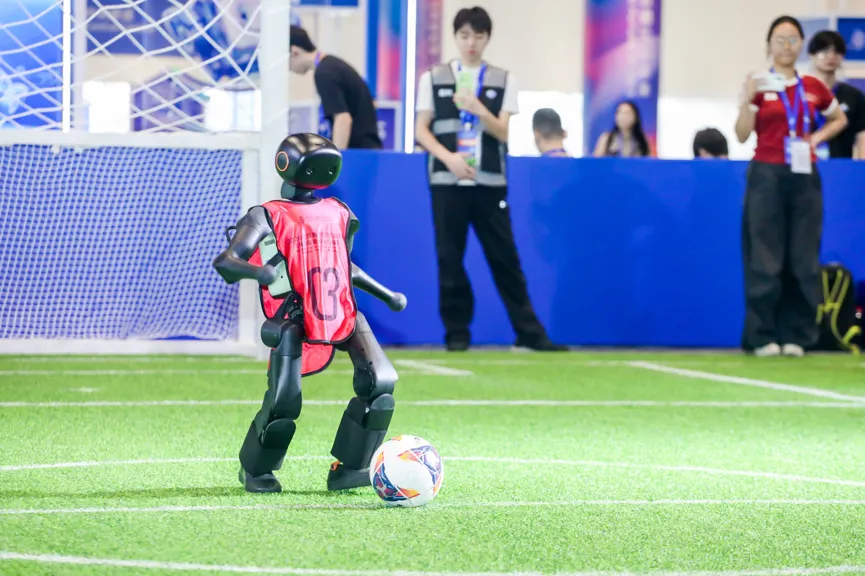
On the same day, at the humanoid robot track, the goal-scoring heat and football team competitions led the way in the test of resistance.
Unlike competitive racing, these two events put more stringent tests on the dynamic balance of robots, hand-eye coordination and multi-machine collaboration capabilities.
The point-and-shoot warm-up will place autonomous navigation and precision execution in the same scenario, with robots having to complete autonomous navigation, movement and precision shooting within the specified time, with the core consideration being decision-making and execution capability in dynamic environments. The football team competition begins at 9:30 a.m. and takes the form of a 3V3 match, with teams having to complete the catch, chase and shoot within the specified time, testing multi-intelligent body coordination, implementing decision-making and posture recovery in dynamic confrontation.
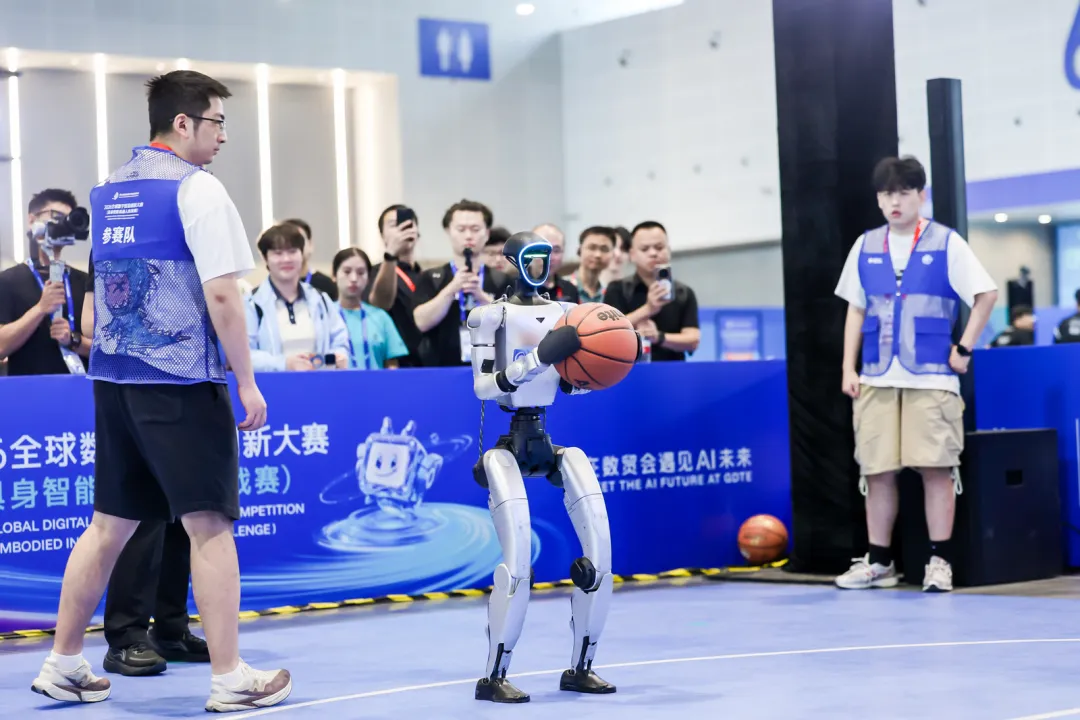
Comprehensive mission capabilities of robots are becoming a new focus in the spotlight, and shooting and football games are the emblematic vehicle of this trend. They are no longer limited to single-dimensional performance displays, but instead place core technology modules such as perception, decision-making, and control on full-link stress testing in real-world scenarios of high dynamics and strong opposition.
Multi-machine collaboration, real-time decision-making, spatial positioning, precision execution, all of which meet the real needs of robots in industrial installations, logistics sorting, and service scenarios. These competitions provide not only a testing ground for technical verification that is closer to real-world scenarios, but also valuable test samples for future service robots' security interactions in crowded scenarios.
After all, to maintain balance in the confrontation, to complete precise operations in the movement, is to talk from the sample to the work.
04.
In addition to the racetrack, industrial chains are also running at the same time
As far as the field of view is concerned, it is no coincidence that the event took place in Hangzhou.
Hangzhou has top open-source infrastructure models such as Ali Q, DeepSeek, and has brought together corporate leaders such as U Tree Technology, Cloud Deep, and the core AI industry revenue has reached 46 billion yuan. On May 1, 2019, the Hangzhou City Promotion of Intelligent Robotics Industry Development Ordinance officially entered into force, becoming the first local regulation in the country to focus on the field of Intelligent Robotics.
In this context, the organization of the 2026 Global Digital Trade Innovation Contest ("Smart Robot Challenge") is essentially multi-functional, both as an arena for technical competition and as a connector for industrial pairing.
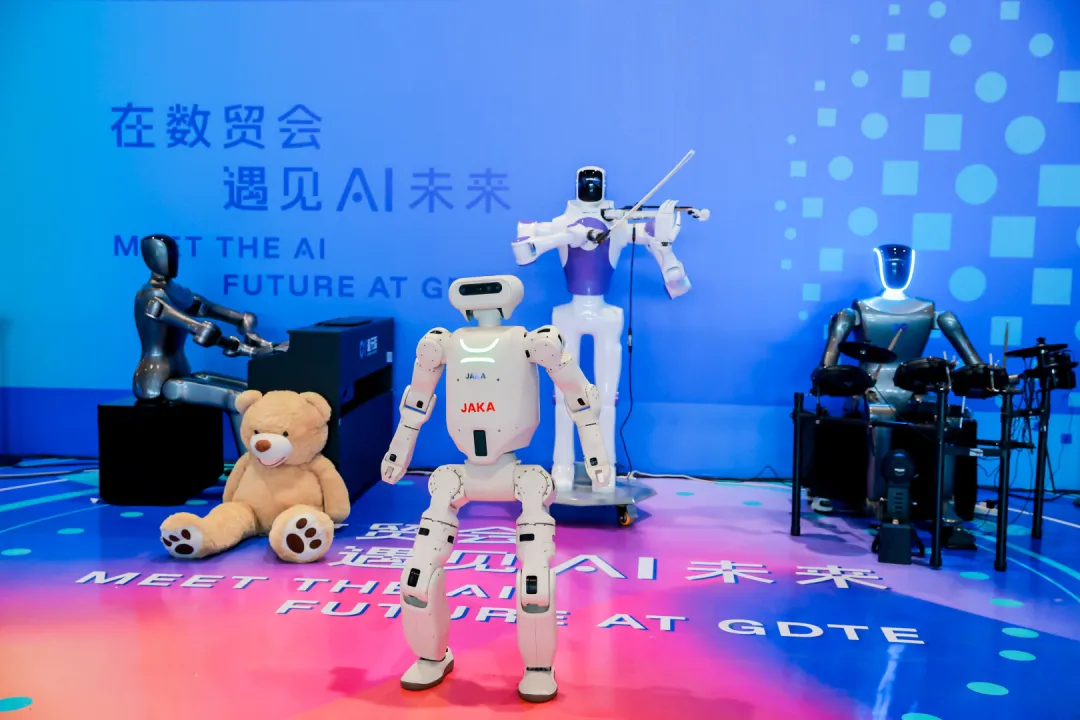
During the simultaneous launch of the Intelligent Innovation Workshop in the afternoon, six enterprises, including Scented Intelligent, Black Magic Technology, and China's Koh-Hwing, held a project demonstration covering various aspects from core sensors to Intelligent Solutions.
The enterprise product innovation exhibition area was also opened simultaneously on the same day, with more than a dozen enterprises bringing upstream-to-application pieces: six-dimensional sensors, torque sensors, optical motion capture systems, planetary accelerators, and scenic products such as massaging robots and ice cream robots.
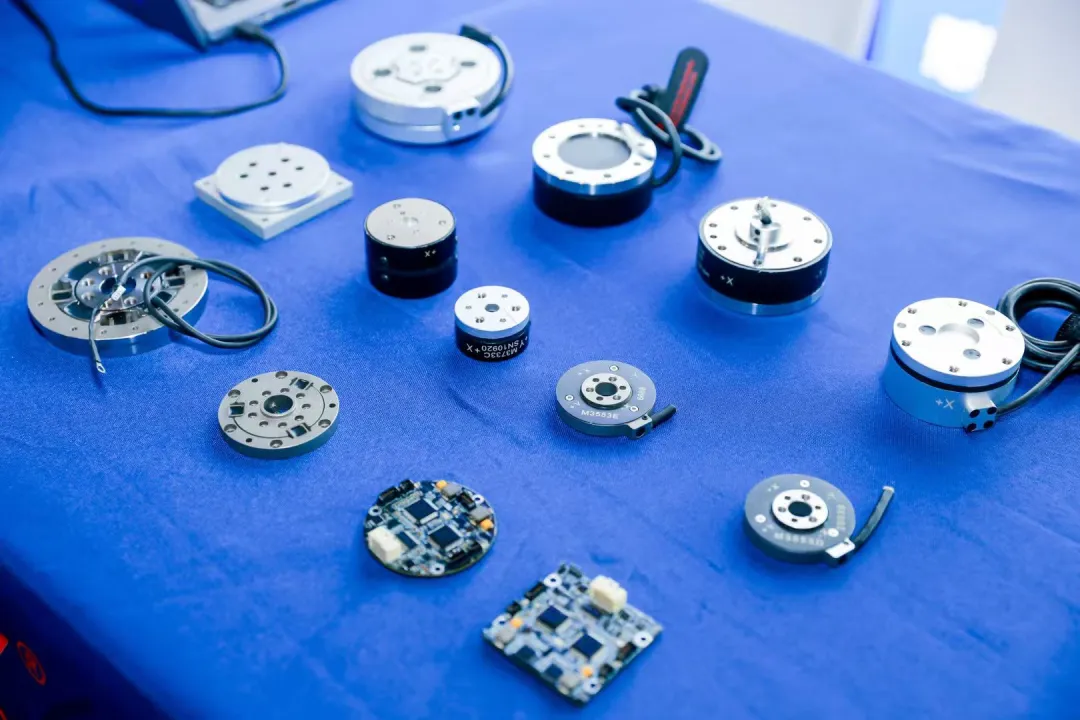
This racing + road performance + showcases the three-dimensional architecture of racing, linking the competition results directly to industrial resources, helping to accelerate technological achievements from the racetrack to the industrial scene.
05.
An athletic, physically intelligent, adult-friendly event
During the first day of the race, perhaps the most memorable was not the performance of a team, but the structural significance of the race itself. It set a benchmark for physical intelligence in an open, comparable and replicable way. Racing has played a similar role in the automotive industry, athletics and sports science.
The competition is both a magnifying glass and a sharpening knife.
After the end of the first round, the final will be held on September 24-25. On the afternoon of September 24, the 100m race, the 60m race, the back-and-forth and the six-hour endurance race will continue. On the morning of September 25, the 100m race, the 60m race, and the final of the shot put, football, and target throwing events will also be held.
Starting on the afternoon of September 25, the human-computer interaction experience will be fully open to the public, including interactive projects such as the 60-meter human-computer race, the point-shooting challenge, the football challenge, the crossing of machine-dog obstacles and robotic boxing.
The race will continue to be measured in the following races.