At present, AI has begun to engage in data generation, training optimization, tool mutation and result verification, but participation in R&D does not mean that it already has the ability to continuously improve itself. What links can it accomplish on its own, and how to connect local optimization to a continuous, reliable improvement loop?
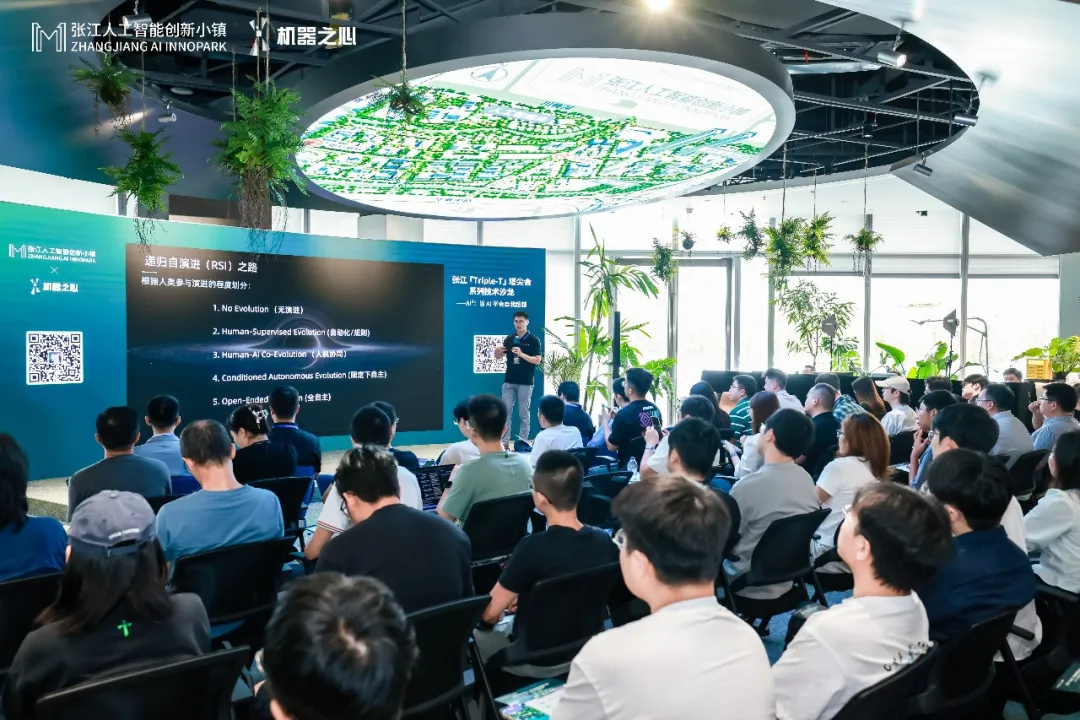
On September 23, the "Triple T" Zhangjiang Tower Summit series technology salon was successfully held in Zhangjiang AI Innovation Township, jointly organized by Machine Heart and Zhangjiang AI Innovation Township Ecology Company, with the theme "AI2: When AI Learns to Transcend Itself", focusing on cutting edge research and practice advances in AI evolution, through six thematic sharing and a roundtable dialogue, exploring the directions of R&D automation, code models, intelligent body systems, personalized intelligence and scientific discovery, technological pathways, key bottlenecks and breakthrough conditions, and building a platform for research exchange and industrial collaboration on AI evolution.
Frontline insights
Dismantling the practical path of AI evolution
AI is not the breakthrough of a single model capability, but the result of a collaboration between the intelligent body, environment, data and model. Vice-professor Chen Sheng, at Shanghai Transport University's School of Artificial Intelligence, pointed out that in the sharing of the "Smart Body-Environment-Data-Model" retrograde evolutionary hypothesis along with Liu's previous research, the core of the retrograde evolutionary hypothesis is to allow AI to gradually reduce its dependence on humans, achieve autonomous transformation and capacity leaps. He proposed the "Smart Body-Environment-Data-Model" collaborative evolutionary pathway, which is currently focused on continuing scientific research alongside AI, continuously producing, filtering and absorbing high-quality data, then replicating models, forming closed rings.
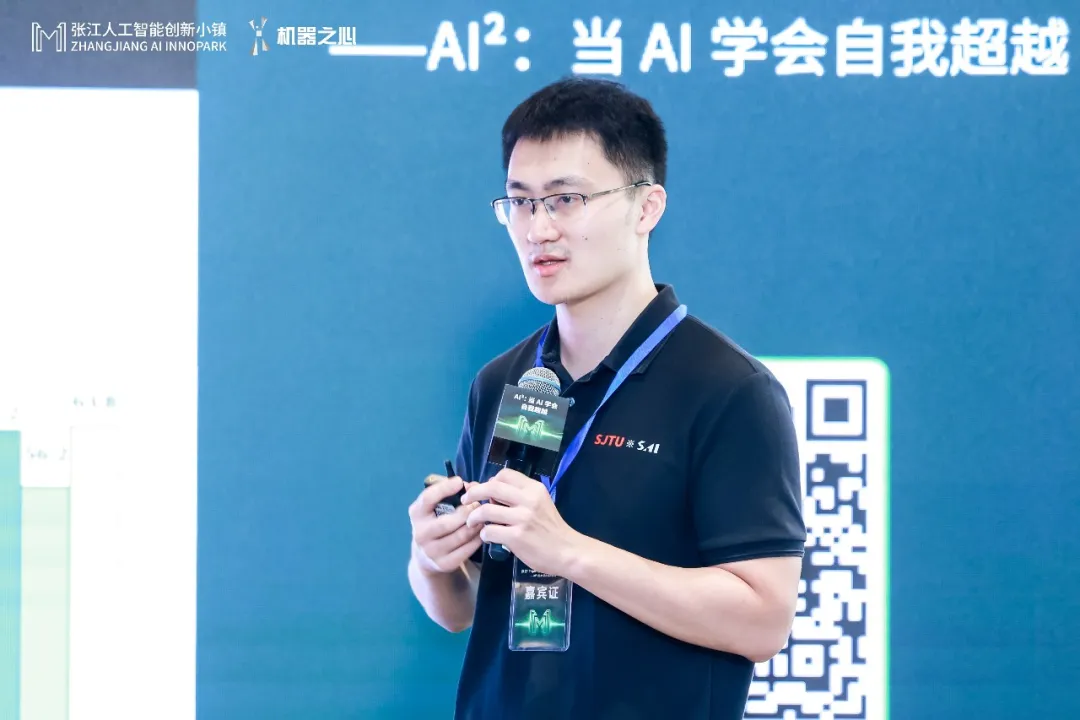
Chen Sheng, Associate Professor at the School of Artificial Intelligence at Shanghai Transport University
The code provides a clearer execution environment and feedback signal for this cycle. As a senior adjunct professor at Beijing Aerospace University, and a distinguished young aviation scholar at the Northeastern University, Dr. Kenyan said in his autobiographical "Code Large Model" column, the Code Large Model is a more localized RSI scenario, centered not only on optimizing Agent Harness, but also on realising Model RSI, allowing the model to execute, verify, and correct itself continuously. The code mission has a closed-loop environment and objective verification mechanism, suitable for long-term Agentic RL. The future can be evolved through a three-tier collaboration of tasks, Harness, Model, and the full loop of elements of the data environment, and the model, and from subsequent training extends further to evaluation, deployment, driving AI research and development processes towards automation and automation.
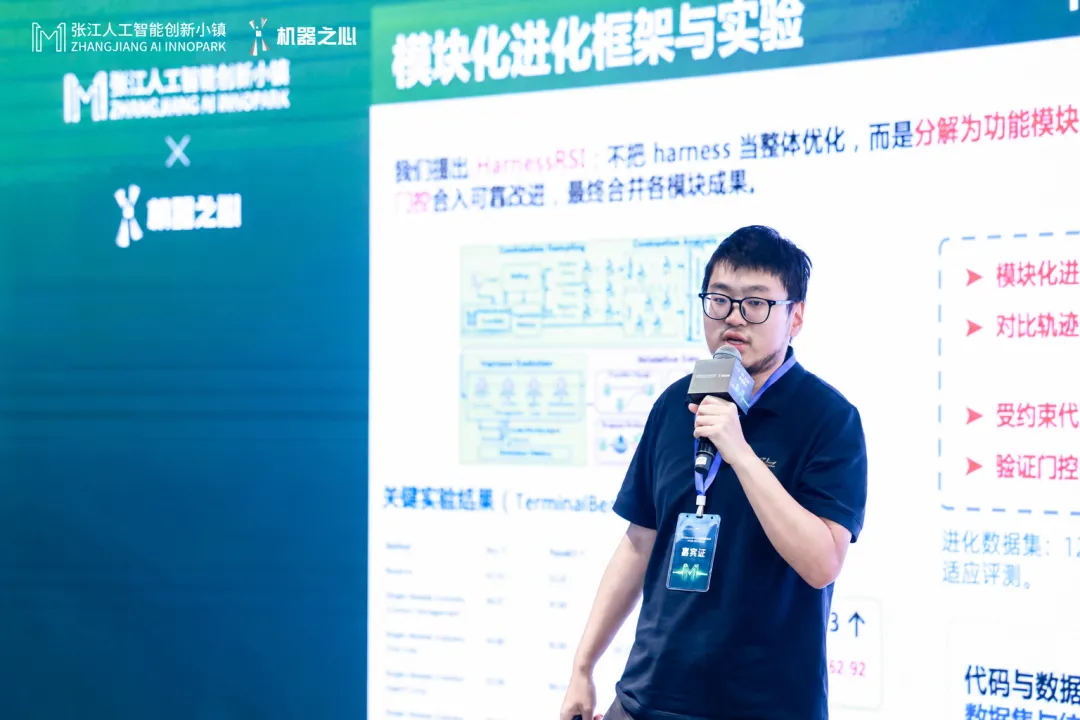
Adjunct Professor at the Beijing University of Aerospace, Distinguished Youth Scholar at Northeast
As feedback moves from explicit test results to evidence in the open world, automation also moves from mission execution to scientific discovery. Assistant professor at Peking University, postdoctoral researcher at Princeton University's AI Lab, co-founder of PhAI Labs, Ding Jing, with the title From RSI to Discovery Intelligence, shared the evolution of learning from code RSI, Agent interaction to scientific discovery intelligence. He believes that scientific research with long-range executable, verifiable, and real-world feedback is an important stage in the exploration of AI's continuous learning and self-improvement.
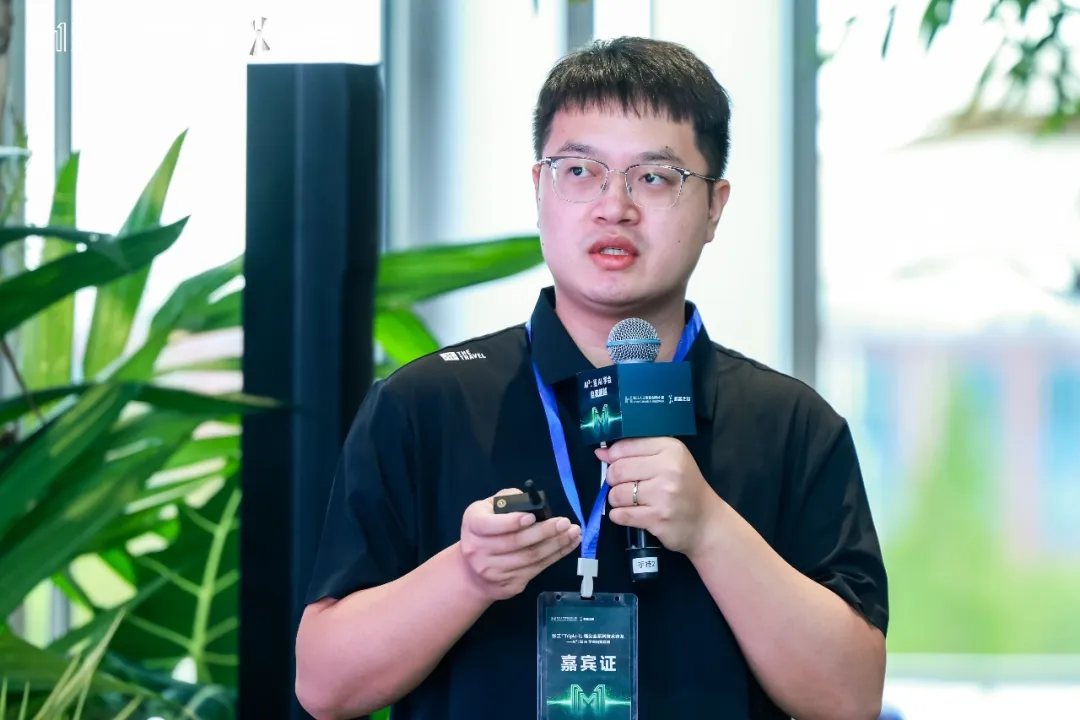
An assistant professor at Beijing University, a postdoctoral researcher at the Princeton AI Lab, and co-founder of PhAI Labs, Ling
When more and more systems claim to have the ability to evolve, what the RSI industry really lacks is not concepts, but judgments of standards. Chief Traffic Assistant Professor at Shanghai Transport University, dual-hire assistant researcher at Shanghai Artificial Intelligence Laboratory, intelligent young scholar Zhou Hong, in conjunction with Theseus Labs' recently released RSI analysis report The Last AI Built by Humans: Toward Genuine Recursive Self-Improvement, shares the core judgment that real RSI should not be limited to localized optimization of models in established tasks, but to form higher-level "external cycles".
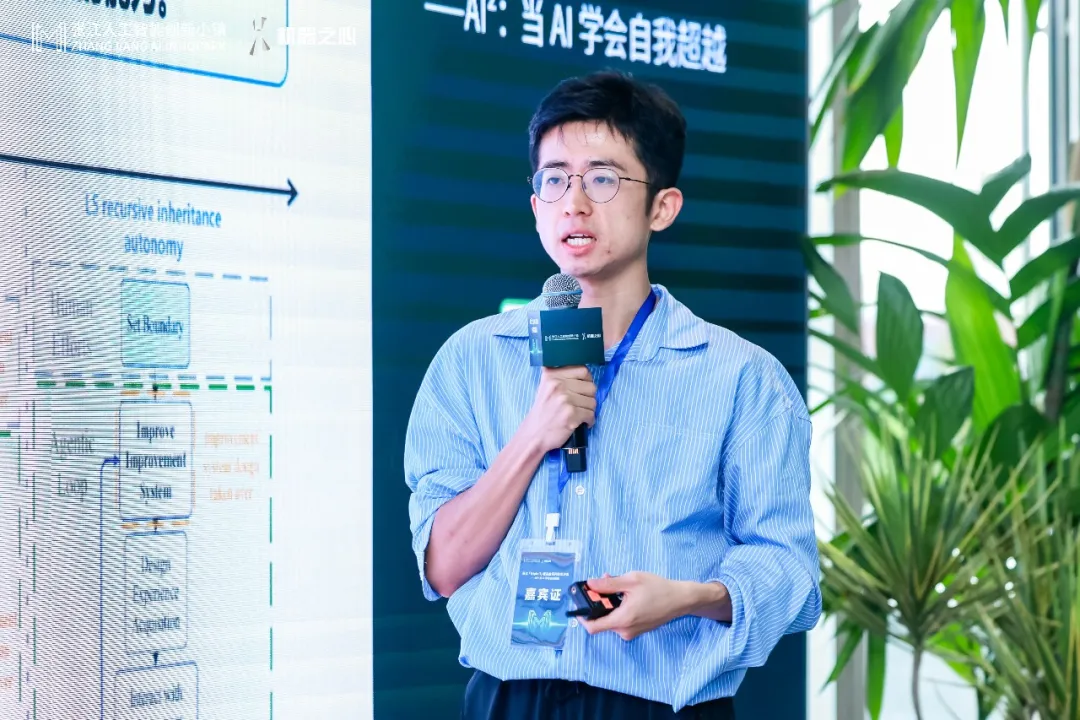
Director of the Shanghai University of Transportation, Assistant Professor of Traffic, Research Associate at the Shanghai Artificial Intelligence Laboratory, Senior Youth Scholar
To enter the physical world, real interaction with environmental feedback poses new requirements for evolution. Researchers at Shanghai University of Technology, assistant professors, PhD students, heads of the YesAI laboratory, Immediate Technology founder Jiao Yi, brings the evolution of artificial intelligence: world models, strategic learning and executable experiences. He believes that the evolution of artificial intelligence faces unique challenges such as data scarcity, real environment complexity, and difficulty in obtaining feedback. Its core is not how to pursue general generalization as big models, but how to give robots the ability to quickly adapt to new environments, new tasks and continuous learning.
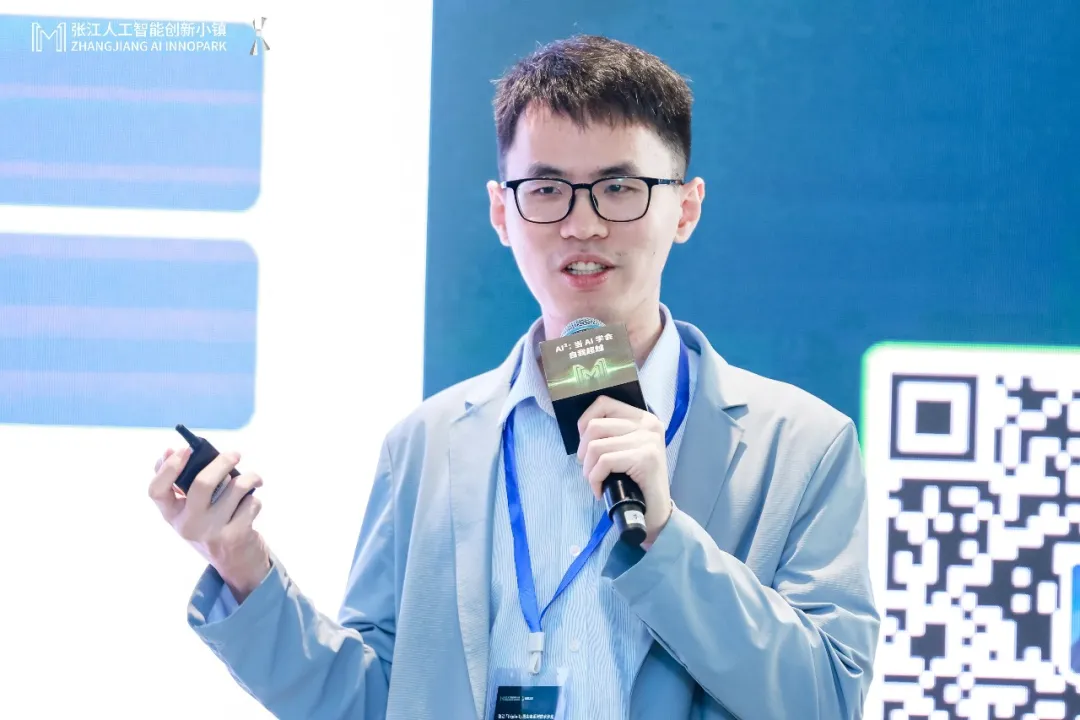
Researchers at the Shanghai University of Technology, assistant professor, PhD student, head of the YesAI laboratory, founder of instant technology, Shino
Towards a more specific life science mission, the founder and CEO of Ingling Temple Technology, Zhang Chen, shares the theme of AI for AI4Science: The AI4Science Model of Evolution, exploring AI for Science from "AI-assisted scientific research" to "AI-trained AI". He believes that AI for Science is moving from "AI-assisted scientific research" to "AI-trained AI", the core of which is to allow AI to complete autonomous scientific research tasks such as diagnostics, hypothesis generation, experimental evidence and evidence deposition.
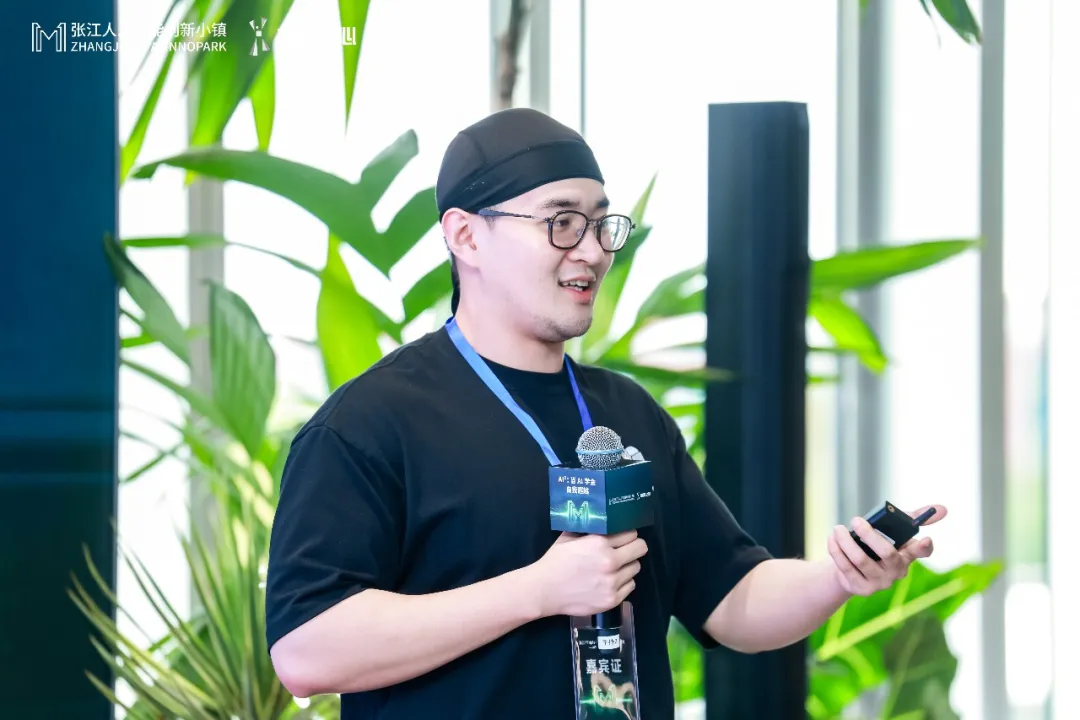
Zhang Chen, founder and CEO of Ingle Temple Technology
Differences of opinion
How far away is the real RSI?
From the development of code to the discovery of physical intelligence and science, the exploration of different paths ultimately leads to a common question: how to improve mission performance and transform it further into sustained self-evolution?
Visitors will go from defining and judging standards of evolution to exploring how the synergies between models, data, agents, environments, and the challenges of data scarcity, feedback retrieval, long-range tasks, experimental verification and experience replication in scenarios such as the digital world, physical intelligence, AI for Science, and the judgement, environmental adaptation, and model self-improvement capabilities required to truly transition autonomously, and look at the possible paths for RSI to move from local optimization to higher levels of autonomous evolution.
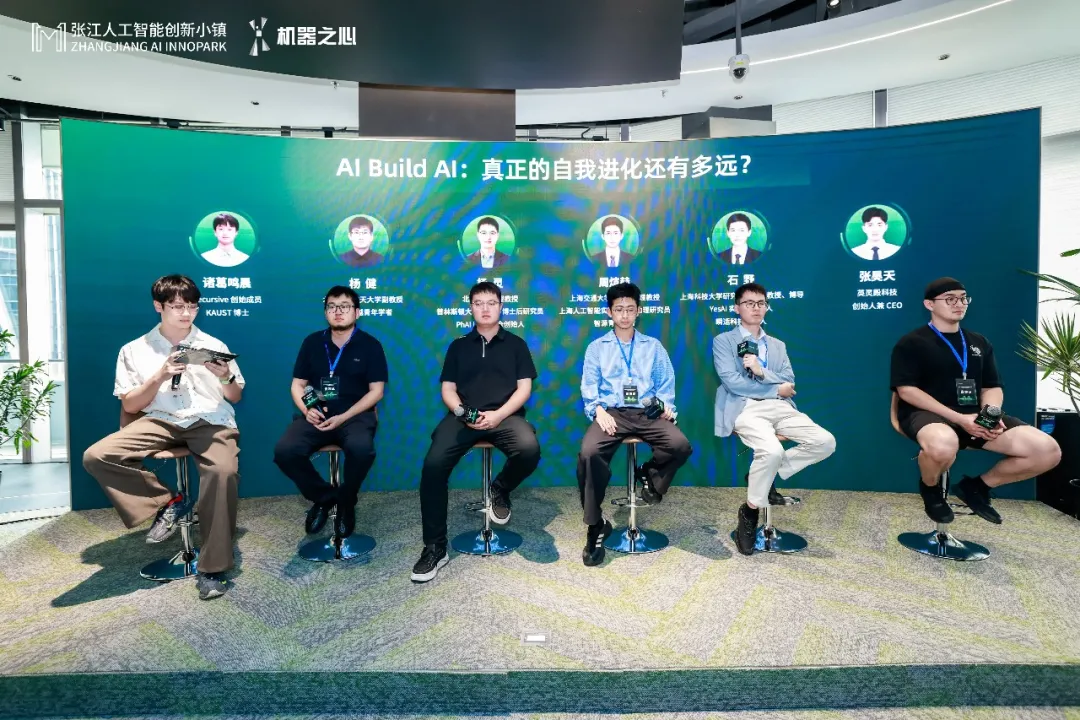
He stressed that AI Coding is the most likely scenario to lead the way in achieving RSI, but real model automation is not only Harness-level optimization, but also the need to open up models, data, infra and tool calls. The next key step is to give the model stronger long-range tasks, problem detection and autonomous resolution capabilities, and gradually reduce human involvement.
He believes that true automation should not only be better at solving established problems, but should have the ability to discover, define, and innovate. In AI for Science, it is also necessary to solve problems such as the disproportionate speed of dry experiments, the scarcity of feedback, and the construction of data and environments in order to form a complete scientific automation loop.
The core of RSI is to allow AI to move from completing established tasks to self-exploration and self-improvement, and ultimately form its own judgment with "quality".
At the heart of RSI with physical intelligence is the ability to transform real-world failures into replicable experiences. Rather than relying solely on large model adoption, it is more important to combine VLA, Action Model, small model with Harness to accelerate robot learning and decision-making through limited real-world interaction.
Zhang Chen stressed that further breakthroughs in AI for Science require a shift from "AI-assisted scientific research" to "AI-training AI". Multimodal models can mitigate the problem of scientific data scarcity, while the real RSI key for the future is whether AI can form judgments beyond expert experience and optimize models and scientific research processes on its own.
What is the meaning of this verse?
Zhangjiang Group's Deputy General Manager, Professors-Level Craftsman Chen Cheng said in a summary exchange that he hopes to bring together young scientists and industrial innovation forces through Zhangjiang "Tower Summit" to allow for a full exchange of ideas and technology. In the future, Zhangjiang AI Innovation Town will continue to build high-quality exchange platforms, pushing Zhangjiang Twin Towers from architectural landmarks to industrial and technological landmarks further.
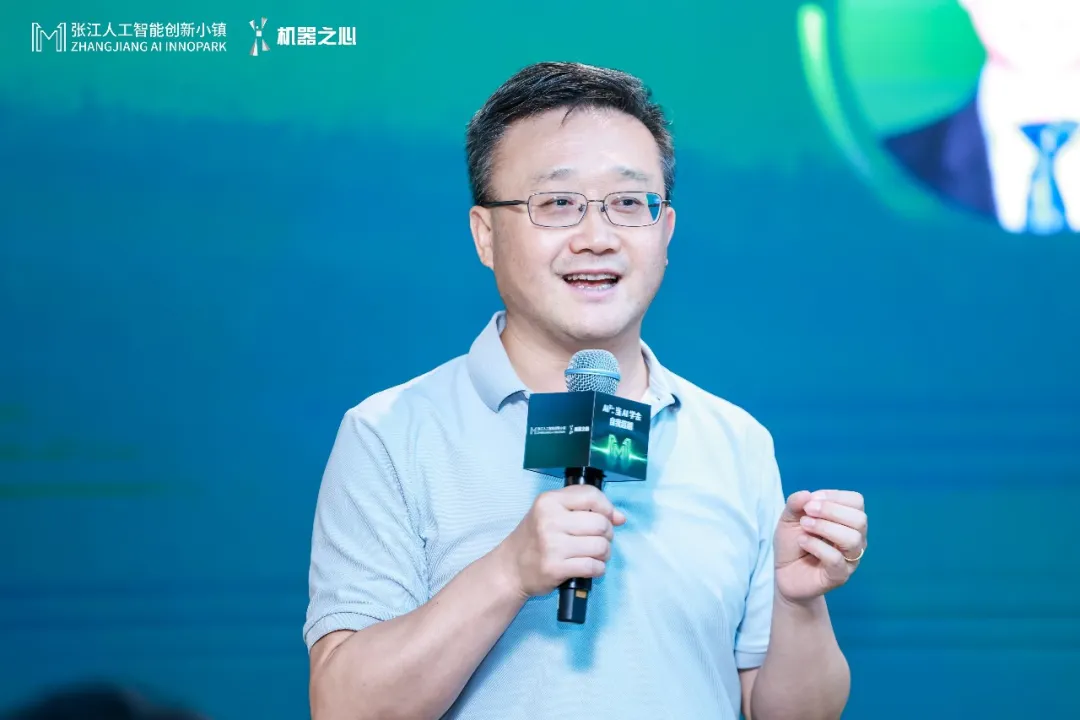
Deputy General Manager of Zhangjiang Group, Senior Professors
From "can AI self-evolve" to "how to make self-improvement continue to happen", technological exploration is moving towards more specific mechanisms and verification. The "Triple T" Zhangjiang Tower Summit series of technology salons will bring together research and practice in different fields to make the advances of AI self-evolve more fully present, disagreements and problems to be solved, and to look for breakthroughs for the next stage.
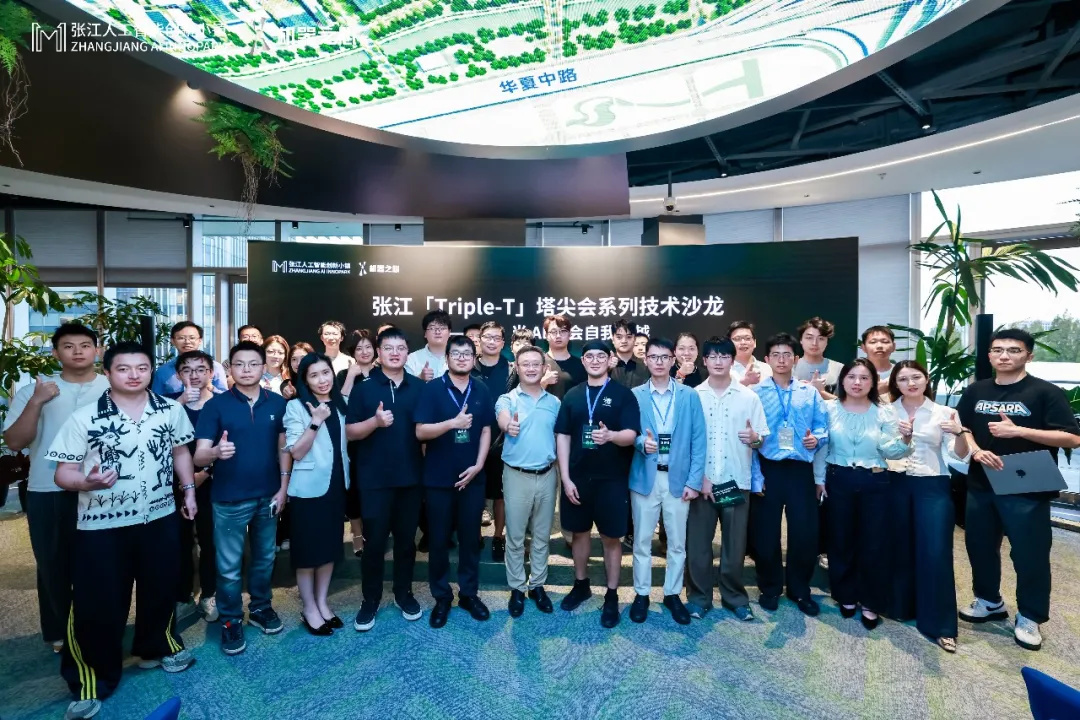
The advancement of frontier issues also requires a continuous exchange between research and industry. With this, Zhangjiang AI innovation town gathers as a starting point for collaboration around data, tools, experimental environments and real needs, hoping to expand thinking in the field to new research and practice, driving AI evolution from local exploration to a more robust capacity building.