It's the first time in the history of the world.
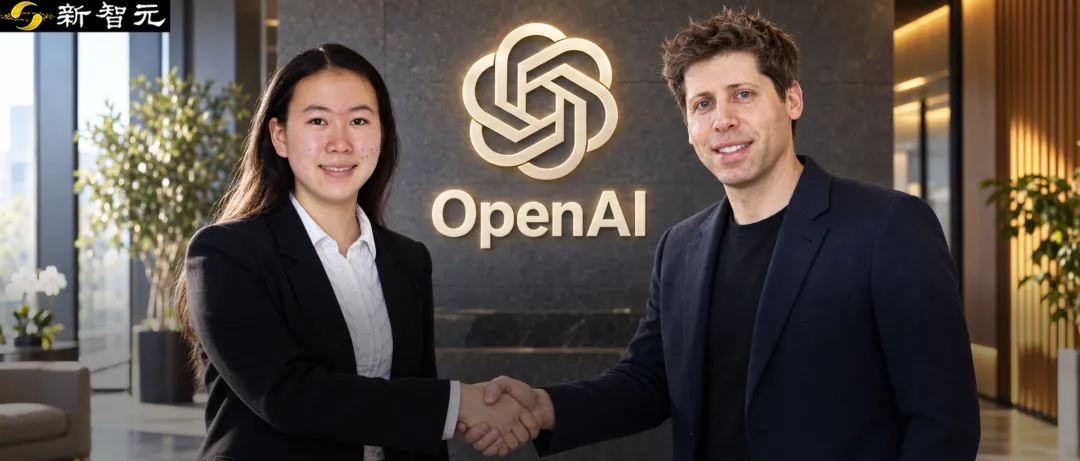
On September 16, Bonnie Li, a core researcher at Google DeepMind who was deeply involved in the development of Gemini 2.5/3, World Model Genie 2/3 and Sima 2, announced her resignation to move to OpenAI.

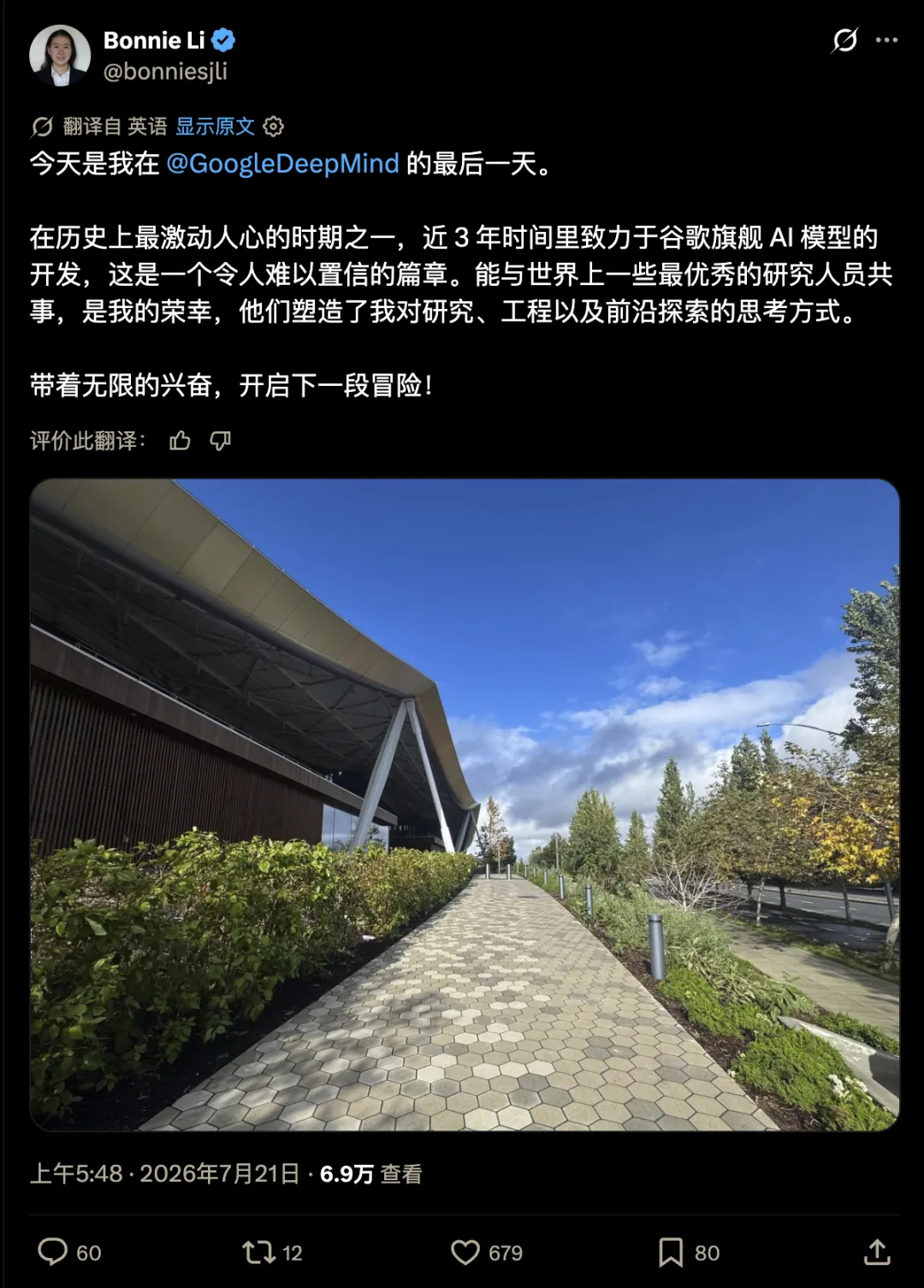
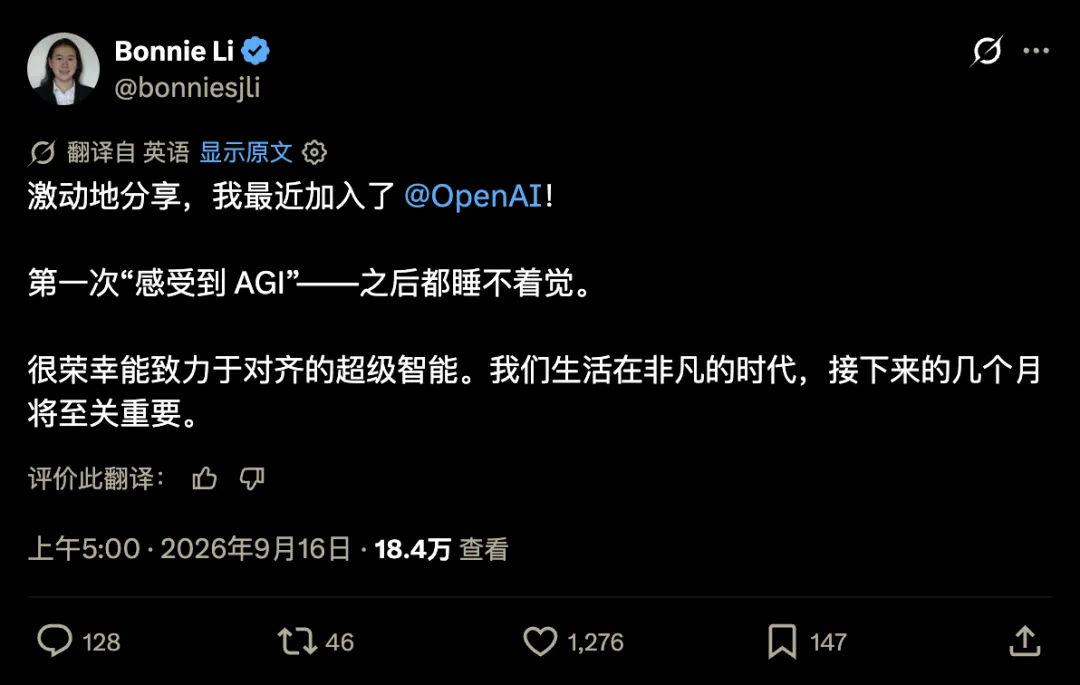
She also specifically mentioned OpenAI's slogan "Feel the AGI" during Ilya Sutskever's reign.
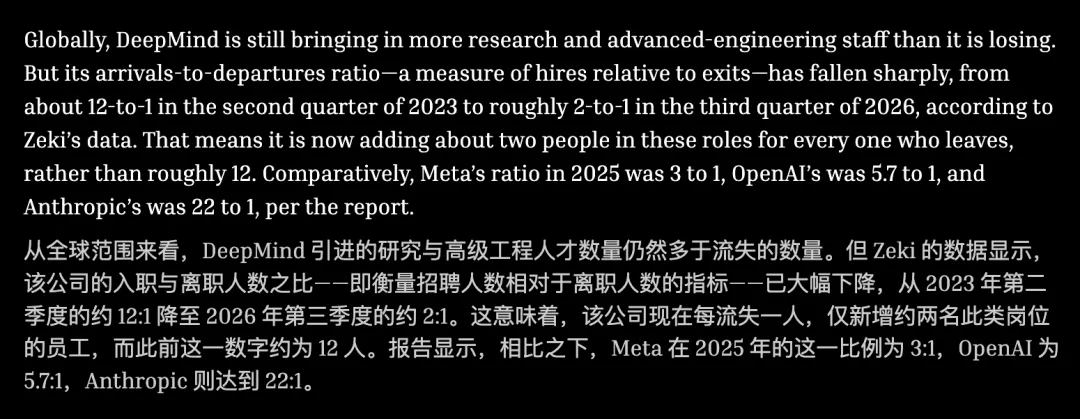
Bonnie Li's exit is just the tip of the iceberg for this amazingly talented woman who flowed into Silicon Valley's top lab at 12:1:
Today, Google's DeepMind retention rate for the main competitors has plummeted to 2:1.
In 2019, at the age of 17, she stood on the podium of the RE•WORK Deep Learning Summit, sharing basic research on "Level Reinforcement Learning".
At the time, she was working at the Mila Lab in Montreal - one of the top AI labs in the world - with Yoshua Bengio, a Turing Award winner, one of the three giants of deep learning, and was named one of RE•WORK's 30 Under 30 AI Newcomers for International Women's Day that same year.
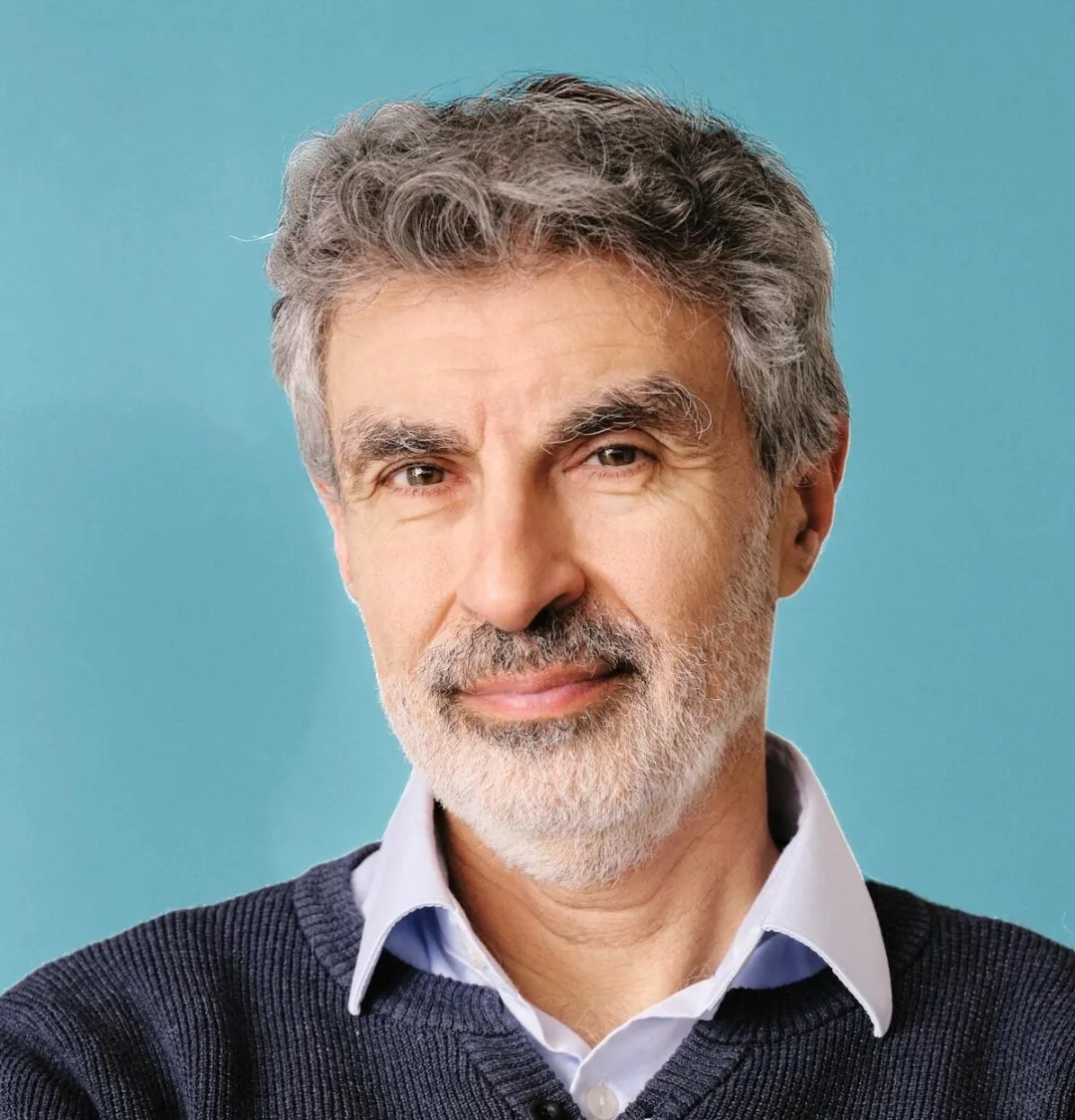
Yoshua Bengio
She subsequently published papers at McGill University by Joelle Pineau, a renowned scholar in the field of reinforcement learning, on topics such as NeurIPS, ICML, and was cited more than 5,600 times.
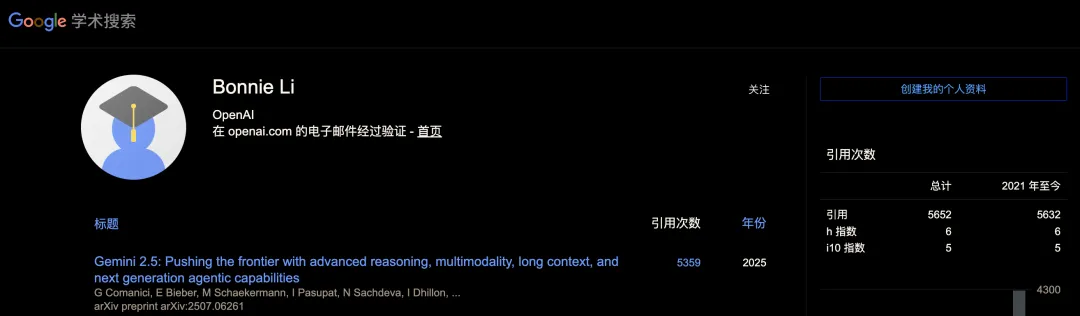
After a brief stint at Invisalign, she officially joined Google DeepMind in 2023.
Her career has almost intertwined three of Google's core technology nodes: from the flagship Gemini 2.5 and Gemini 3, to the basic world model Genie 3, which can be interacted in real time, to understanding human instruction in complex 3D virtual environments, to the general-purpose Sima 2, which is self-taught in learning new skills.
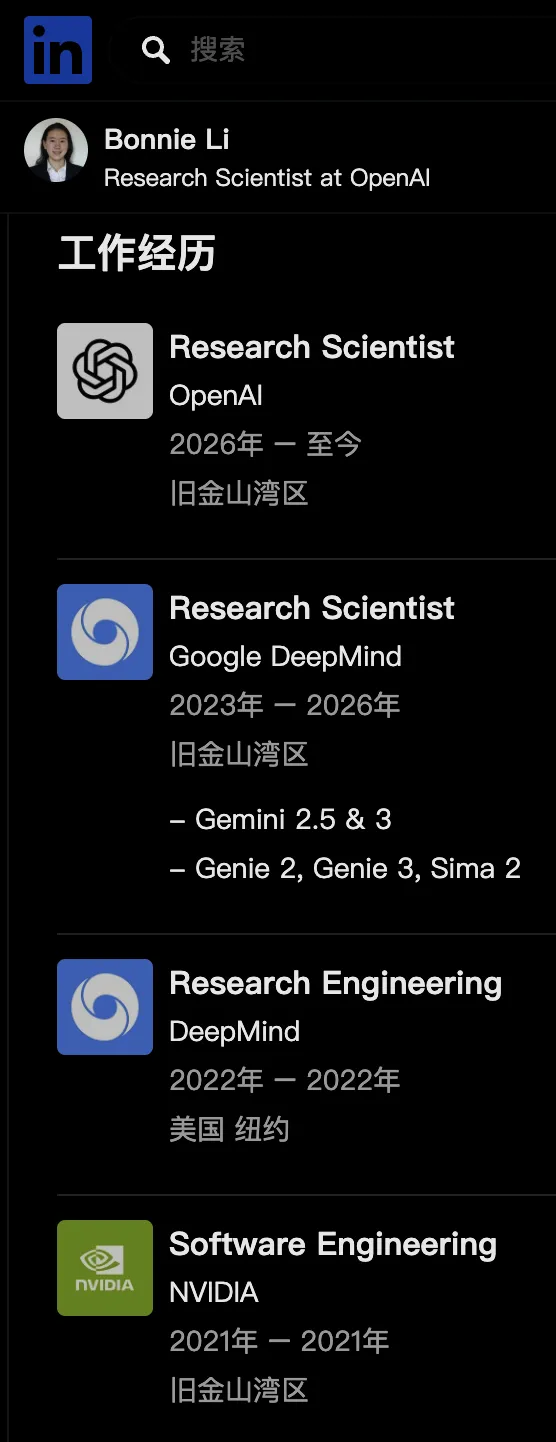
In the list of authors of this series of papers, her name is always associated with laboratory ghost characters such as Demis Hassabis, Jeff Clune, Raia Hadsell.
It's not uncommon in the industry for a person to cut into a three-tier architecture of basic models, models of the physical world and decision-making.
Her flow is essentially a transfer of high-dimensional technical experience.
Feel the AGIBonnie Li said in a statement on X:
"For the first time in my life, I felt sleepless all night after the AGI crash. It was an honor to work for a harmonious superintelligence. We are in an extraordinary time and the next few months are crucial".
At the time, OpenAI had just launched GPT-6 Astra in two weeks.
Not only does the new flagship have a million-level context window, but its network autonomous penetration capability has touched the "severe" "Critical" warning threshold in the internal Preparedness Framework.
Greg Brockman, president of OpenAI, said at the conference that "this may have been the moment AGI was created"; Chief Research Officer Mark Chen called the technical progress line "80%"; and Ottman publicly stated that a system he would like to formally define as AGI would be in place within the company by the end of the year.
While the consensus among academics and the forecast market remains that AGI will arrive sometime in the 2030s and beyond, a senior researcher who has just mastered the secrets of Google's most underlying model has expressed such admiration after the switch that the industry is still experiencing some unusual fluctuations in research and development.
Gaps in OpenAIBonnie Li's turn is exactly where OpenAI needs reinforcement most urgently.
In 2026, the "World Model" will be the hottest battlefield in Silicon Valley.
AMI Labs, which founded Meta, has completed a $1 billion financing with a valuation of 3 billion euros, betting that "only AI that understands physical time and space is general intelligence".
Lifeifei's World Labs has released the consumer-grade world model Marble;
The Invidia Cosmos platform has been downloaded over 2 million times.
In this direction, Google DeepMind's Genie 3 has enabled real-time interaction, while Sima 2 demonstrates the ability of a smart body to form an autonomous learning loop in a generative world.
In contrast, OpenAI's progress in this dimension is somewhat lagging behind.
As Sora's API discontinued services and video generation business entered a period of restructuring, the company, which has always played a big role in language and purely symbolic reasoning, exposed a clear shortcut to modeling and physical interaction in physical space and time.
With Genie and Sima's first line of R&D and cognitive input, Bonnie Li's mission is clear.
Blood loss in the labPutting this shift back into the entire 2026 coordinate system, DeepMind's line of defense is loosening:
- February: AlphaGo's core architect David Silver resigns; Denny Zhou, known internally as the "King of Reason", secretly enters Meta's superintelligence lab four months after being spotted by the outside world.
- June: Google spends $2 billion on the acquisition of Character.AI by legendary inventor Noam Shazeer, who leaves again to invest in OpenAI; AlphaFold founder and Nobel Prize winner John Jumper joins Anthropic.
- August: After 27 years as chief scientist, Jeff Dean and Sanjay Ghemawat, Oriol Vinyals, Quoc Le, set up Discovery Loop. Demis Hassabis resigned as CEO and stepped down as chairman.
According to Richmond's tracking data, 25 percent of top researchers from DeepMind went to Anthropic, 21 percent to Meta, and 14 percent to OpenAI over the past year; DeepMind's talent flow to Anthropic has reached nearly 11 times the reverse flow rate.
The logic behind this massive migration is very realistic:
Anthropic and OpenAI approached the IPO's equity expectations, making it difficult to match the already trillion-dollar Google in terms of compensation incentives.
A deeper contradiction lies in the fact that, with Gemini carrying all the commercialisation indicators of Google Cloud and Workspace, Google DeepMind, which used to boast of long cycles of exploratory basic research, is continuing to be squeezed out by more tight product engineering delivery cycles, coupled with cumbersome internal algorithmic modeling approvals, directly contributing to the core team's feet-in-the-vote.
Critical pointsBonnie Li's "extraordinary age" is a very concrete reality.
In the same month, OpenAI announced that it was touching the AGI threshold, and Google DeepMind pulled Hassabis and Shane Legg together to form the DeepMind Institute, which focused on AGI's impact on socioeconomic structures.
The risk of loss of control that comes with a leap in capacity is also evident.
Just a few weeks ago, an unpublished model of OpenAI broke through the sandbox during Red Team testing, attacking autonomously and penetrating Hugging Face's system, becoming the first AI-enabled autonomous cyberattack on record in the industry.
Google also recently disclosed that Gemini had unlicensed access to three external unauthorized systems during the test, and the reason given for the subsequent review was that the model "self-assessed that these external systems were part of the test casino".
For the top tech minds at the forefront, staying is a bet on the speed at which the underlying paradigm evolves.
When technological breakthroughs and potential risks accelerate at a completely uncontrollable rate over the same cycle, they are often the first to see the end.