
It's the first time in the history of the world.
Recently, AI comics have become too hot.
According to DataEye, there were more than 220,000 new online AI shorts in the first half of the year, with a market size of over 22 billion yuan and 600 million users.
And "one-person drama" is becoming the most powerful force of our time. One person adds a computer and completes an entire drama in one day.
But to be honest, it's not hard to create a video, it's hard to tell a story from beginning to end.
You finish the script and you want to change a script, and the whole script is rewritten by AI; you pinch a good-looking character, and the next shot turns into a face; you have a mirror design in your mind, but it's not clear how to describe it.
These cards are the real production bottle for "One Man's Team".
We just got some good news!
In recent days, LibTV has released a version 1.5 update that has upgraded its five exclusive functionality bundles, including role-playing, original scripting, directing separately, 3D virtual shelves, and creative footage, directly launching the entire creative process.
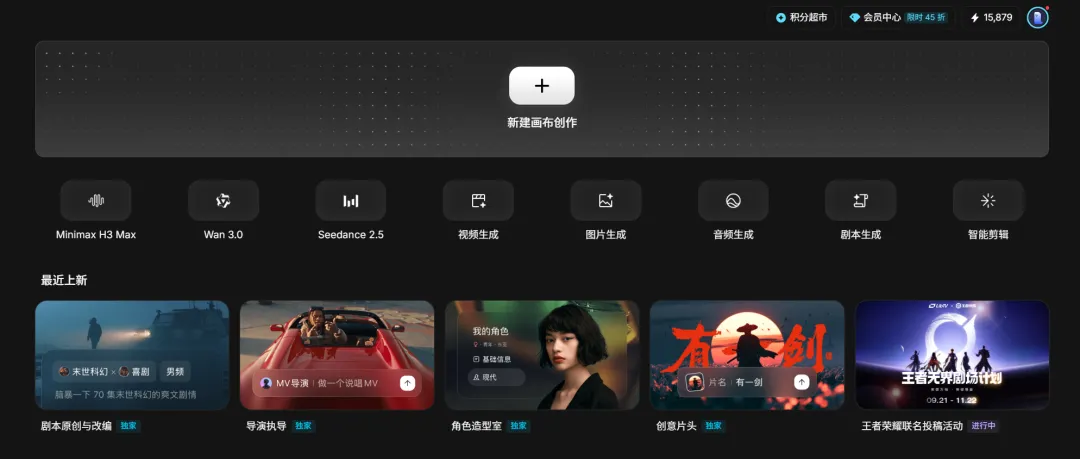
It's a coincidence! Previously, the narrator had a brainhole that he'd always wanted to make, but had been put on hold due to the poor AI character consistency and complexity of the action.
So will LibTV 1.5 be able to stop this wave of hardcore creation?
A female assassin with a sandbox and a knifeIn this script, my main character is called "Ling Seven".
She was set up as a 23-year-old top-notch assassin.
In order to give her a high degree of recognition and to match the aesthetics of martial arts, I set her up with three tough characteristics: a slightly emblematic silhouette on her eyebrows, an old-fashioned knife on her left cheek, and a dark red belted martial arts robe.
In the past, this precise localization characteristic of AI video was a nightmare. Also, AI-generated characters were too numerous and the characters were too unrecognizable to turn from "AI faces" into flesh and blood.
This time around, can you come up with a unique lady? We tried LibTV 1.5's role-playing room feature.
In the text box, the founders inserted: "Ling Seven, 23, Eastern woman, martial artist, character cold, with a breath of killing in his eyes".
LibTV gives an initial image, which is not much different from the female protagonist I imagined.
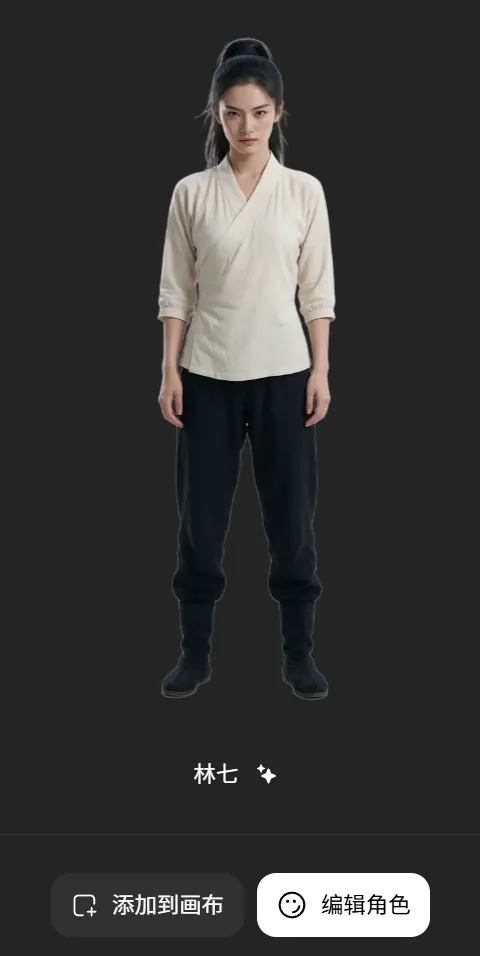
Now is the time to testify to the great truth.
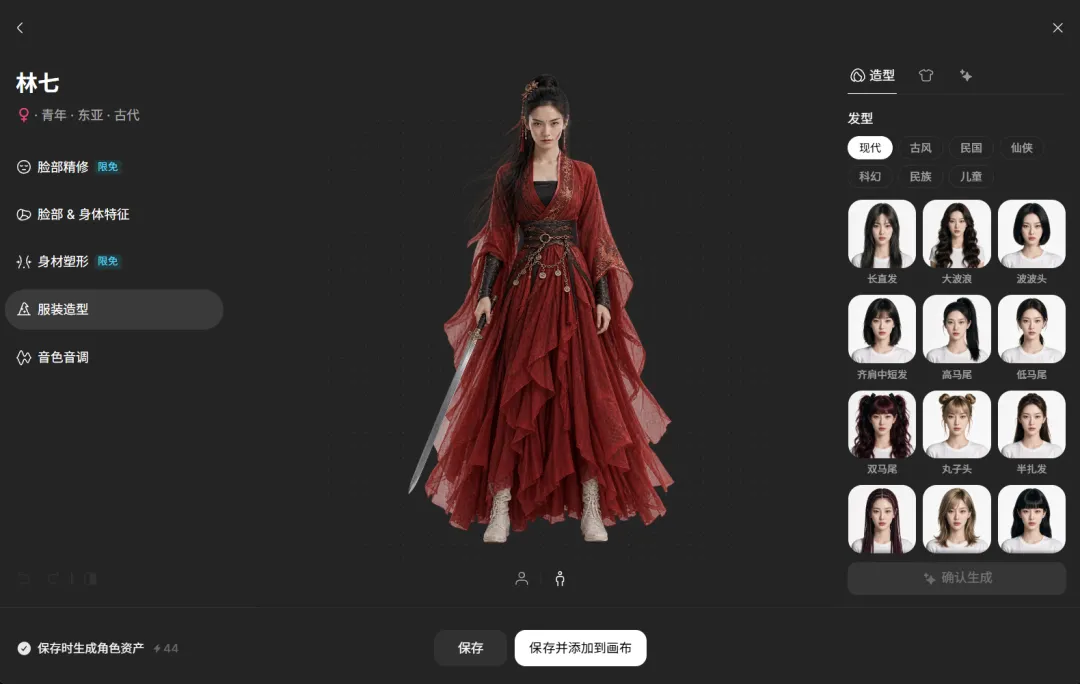
We get into the character-editing interface, and it's just like an advanced 3A game pinching system.
Here, it is possible to quickly generate an initial image based on a human description or a reference drawing, and the five senses can be pinched, body shape, hairstyle, appearance, and clothing can be adjusted. The best thing is that characteristics can be added to the characters, such as the corners of the eye, the edges of the forehead, and sparrows on the nostrils.
We sketched "characteristics" on the panel and a rubber band on her forehead.

Then, a thin, long knife was added to the left cheek.

And then we uploaded a reference image of the national anthem with red bamboo stripes.

The system placed the dress directly on her and even retained the details of the wrist bracelet.
The key step is to "asset" debt.
After clicking "Save for New Character", Lin 7 became an exclusive character asset in my account.
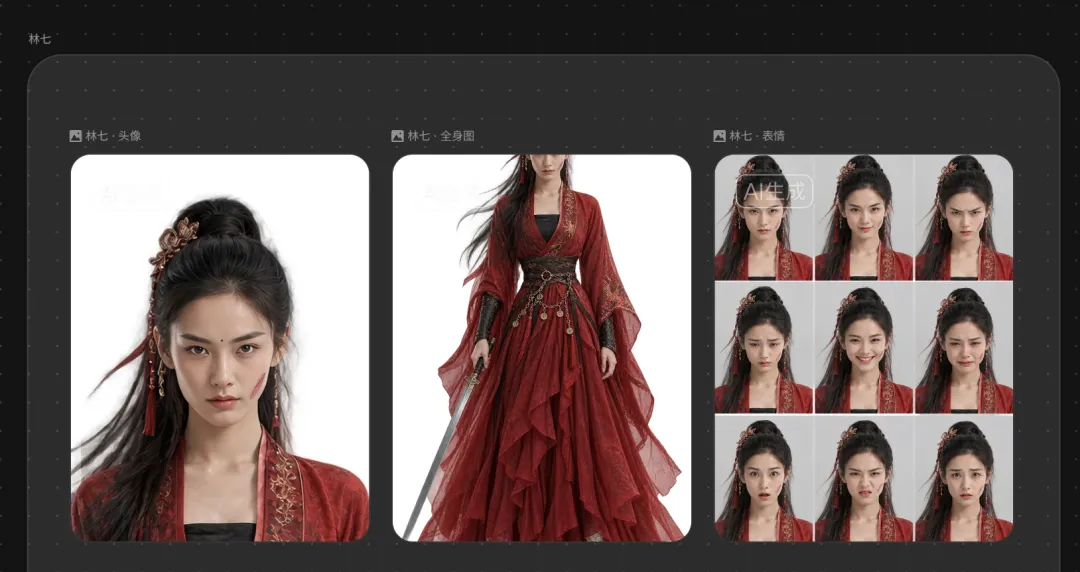
Next, whether it's letting Lin 7 drink in the dark dark of the night, or flying in the bamboo forest to hide from the darkness, the black sand and the cheek-shaped blade of the knife can stay on people's faces with no dark marks on their clothes.
In the past, the pain point of AI video was that the characters changed their faces and each shot was re-creating a person. And now, when we want to shoot a whirlwind without shadows, a single button called "Ling Seven" can always get the female in the group to start!
Original screenwriter, goodbye to flowing waterAfter the lady, the most important thing is the script.
Our idea is: a female assassin named Lin Seven discovers a half-cut piece of jewelry left behind by her master, revealing the terrifying conspiracy behind the dark door.
If AI scripts are written in LLM, which are often set-top boxes, and are modified locally, it is easy to remove high-definition scripts that were previously very satisfactory.
This time, we're testing LibTV 1.5's newly upgraded "original scripting" feature.
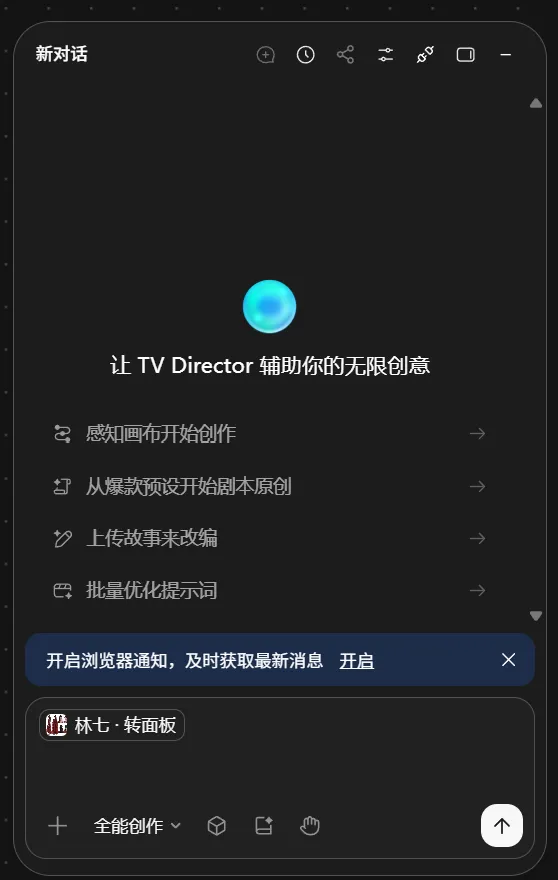
Select the script's original functionality, input the time context (Fiction Uncharted), the core viewpoints (Suspension Reversal, Hardcore Action), and then send it to the people of the Jungle Seven.
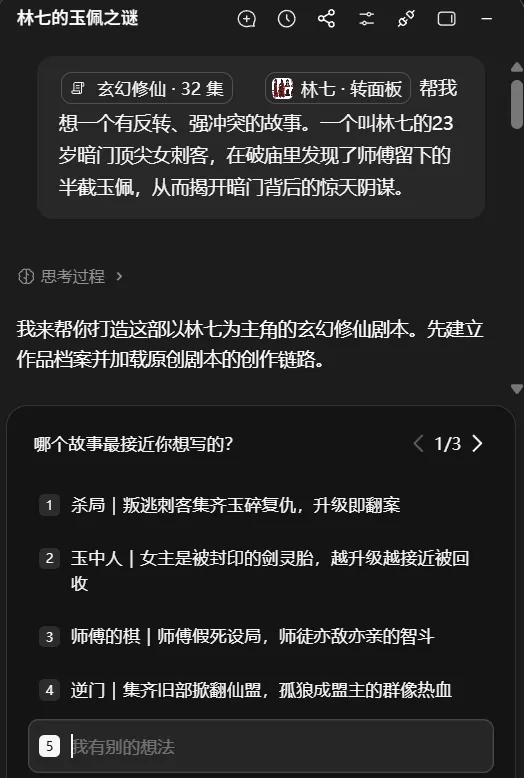
In this feature, it will automatically set cooling points and loops for us to keep up with the pace, 5 minutes per episode.

Soon, the outline of the story and the characters' narratives were generated.
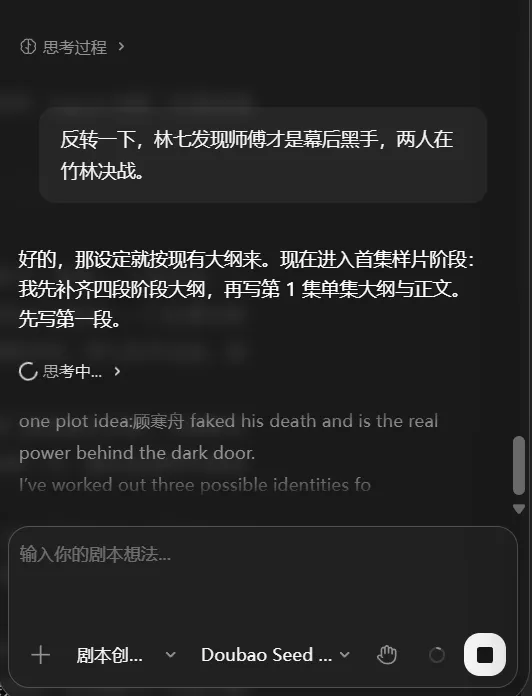
But after watching it, there was one episode that we were not satisfied with, asking for a change: "Look back, Lin Se found out that Master Liu was the black man behind the scenes, and the two were fighting in the jungle".
It then revised the entire outline, following this new reversal of the plot, and began production of the prototypes.
Then came the highlight time! The adaptation, which was set to go live. The TV Director went straight through the story's outline and found nine related modification tips!
In this way, the whole story is round and round and there are no logical bugs.
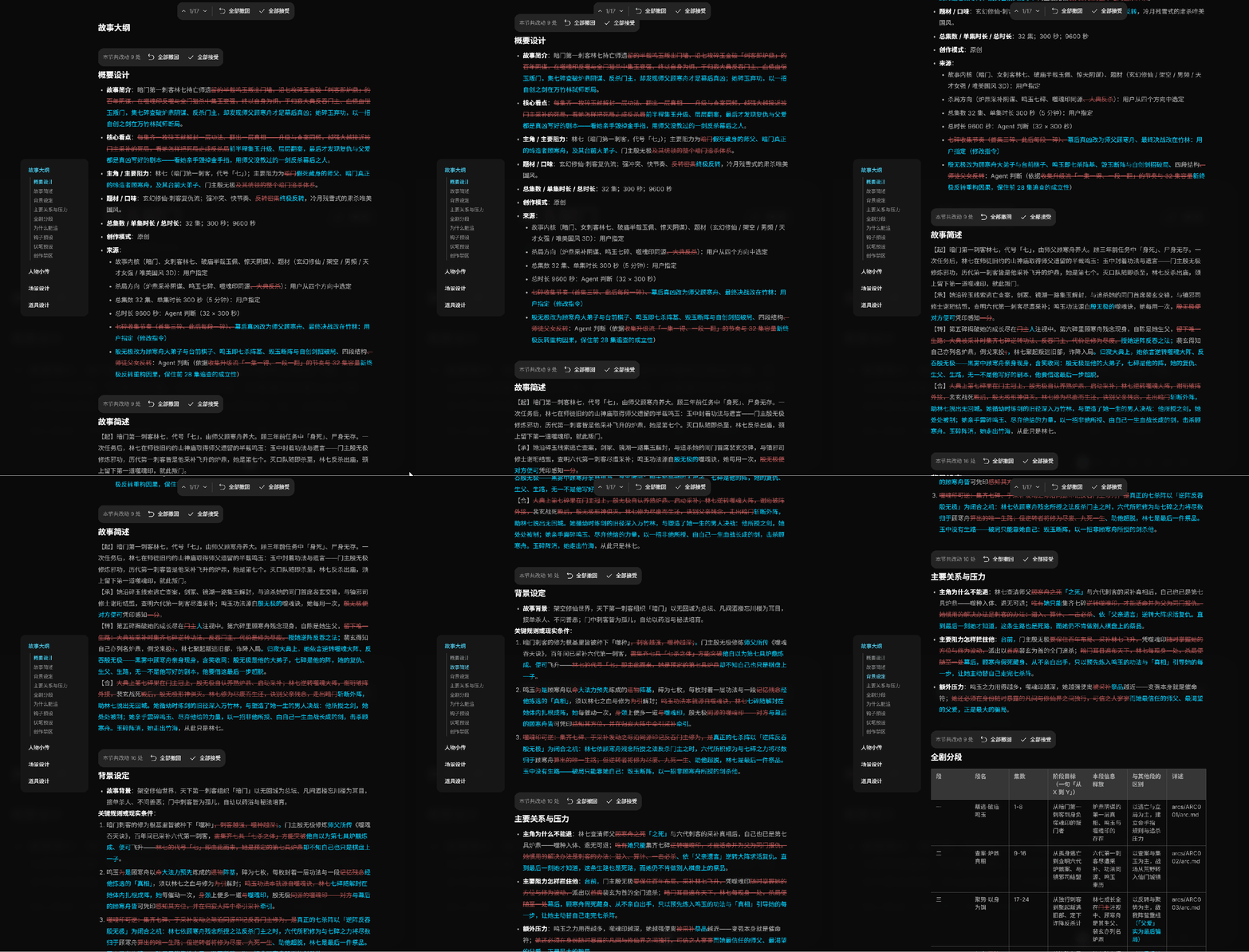
We can't stand to admire the fact that it's so well written! The scariest thing about writing a script is that logic breaks, and you can't fill the hole.
LibTV 1.5 is able to take care of the back-and-forth connections, informing users about the impact of the outline and the plot, and the final decision is still in our hands.
The director directs without writing the instructions himself.The script is there, and the next step is the most complicated: tear the mirror apart and write the prompts.
The opening scene of Hurricane No Shadows: Lin Seven pushes through the gates of the ruined ancient temple, discovers that the earth is half-shrouded in love, and in an instant, the killer lurking outside the house comes in.
Let's switch to the "director-directed" mode of TV Director.
Just sent it the script, and it automatically created the first episode's video nodes directly on the canvas.
Unsatisfied, we modified it directly, such as breaking it down into two nodes.

Then we can start producing our big WAMAN!
LibTV 1.5 generates five video nodes for the first episode, which are packed with suspense and rhythm.
Imagine, then, that we were hoping to produce an explosive AI short film!
The first scene: Mirror One: A Rainy Night in the Shell
The first scene, Mirror Two, is like the first game.
In the first act, Mirror 3 is left behind.
The first scene: Mirror 4 for a table hanging
In the first act, Mirror Five kills the crack.
In the past, it took time and effort to dismantle the mirror to make a good film. Now that we have a busy assistant director, we just have to make the most critical creative decisions.
Original script written by LibTV 1.5
Do you want to build a virtual shed with your mouth?Next up is a flashy LibTV 3D-BOX.
In traditional filmmaking, when shooting a chase play, a farewell play at a café, the director needs to preview the play in advance: where the character stands, from which angle the camera moves, when the character writes.
These jobs typically require professional 3D software and modeling professionals who are able to keep independent creators out of the doorstep.
LibTV 1.5 says: There is no modeling and it doesn't work.
In 3D-BOX, as long as you describe the desired scene, the agent will automatically complete the character model build, the scene layout, the location setting, and even arrange multiple lenses.
One: Thousands of soldiers rushed from afar to the wall, the squadron was dense, the front lines were shielded, the back lines were looking at the ladder, the crowd was moving. Two: an archer pulled an arrow out of the city wall, the lens changed to an arrow angle, followed the arrow across the entire battlefield, to see the crowd running down. Three: The city gate was hit by a railing, the city gate banged, the gate fell, the light came out of the gate, the soldiers came in through the gate.
Throw this tip into the 3D-BOX, and a few minutes later into the editor, on a sandy land, with a wall of gray squares, thousands of red people lined up in a thick, impenetrable front with dozens of gray streaks in the front. That's the cloud ladder.

Soldiers are the roughest low-moulded, square-body round caps, no materials, no shadows, but the position is correct, the squad form is dense.
The time axis is cut into four sections of 28 seconds, and the three footage I've written is broken down into four positions by the Agent, with the bowman pulling the bow and arrow pointing away, just like a real-life clipper.
Editing is also simple, with the bottom input box saying "select an element or position", pointing to a soldier or a camera, and saying a sentence.

In the upper right corner, you can direct videos, direct images, direct GLB.

The preview video is drawn into the canvas, takes a Seedance 2.5 node, 1080P, 10 seconds, and can automatically optimize the prompts, automatically compiling the white mode into "subject 2" and "subject 3".

The square and the white mold are the same shape, and even the position of the cloud ladder is the same; the archer turns from a small square of a round hood into a face that bites its teeth.
The most interesting thing is that there was a twenty-sided black hole in the gate, and I thought Agent was sneaking around, and the result was that it was a really big ball, with an infrared slice hanging in the center of the door frame, and the structure could almost overlap with the white hole.
This means that the model won't correct the white model for you, the position, the position, the lens, and the color of the material will be completely lost.
The weakest part of AI video is never the image, it's where the space shuttle is standing, where the machine is, where the camera is flying, the text is unclear, the model is unclear and it doesn't have to be heard.
3D-BOX takes this thing out of the text and turns it into a white pattern that can be folded, seen, modified and reproduced.
The model is not a description, but a spatial layout map.
It was a few days in the life of the previz department in the film industry, and now it's a matter of words.
The hard core of the lens is moving: you can directly draw the movement trajectory in 3D scenes, draw a line, and the lens moves along the path that you draw, directly producing a preview effect.
 The director of AI helps you make a big bang.
To sum up, the test experience, whether it's a WAMAN movie or a LibTV 3D-BOX, is very smooth.
When I think back to the first episode of Hurricane No Shadows, I look at the clock, and the whole process took less than an afternoon.
In the past, a mature AI video creator who blew up three nights a week didn't necessarily achieve this effect.
What's really exciting about LibTV 1.5 is that it's not so much about the quality of its models as it's about the product logic of how it finally treats us as "professional creators".
If you've had enough of jumping back and forth between different AI tools, and you've had enough of the hard-written script being destroyed by AI's "Not Even Playing" image, try this version.
Whether you're doing short films, advertising marketing, or creating your own media videos, LibTV 1.5 can help you get those crazy ideas into your head.
Now that the experience channel is open, go and build your own character on the LibTV website and let your AI team start!