It's the first time in the history of the world.
If you think too much, even the smartest AI will be dragged to death.
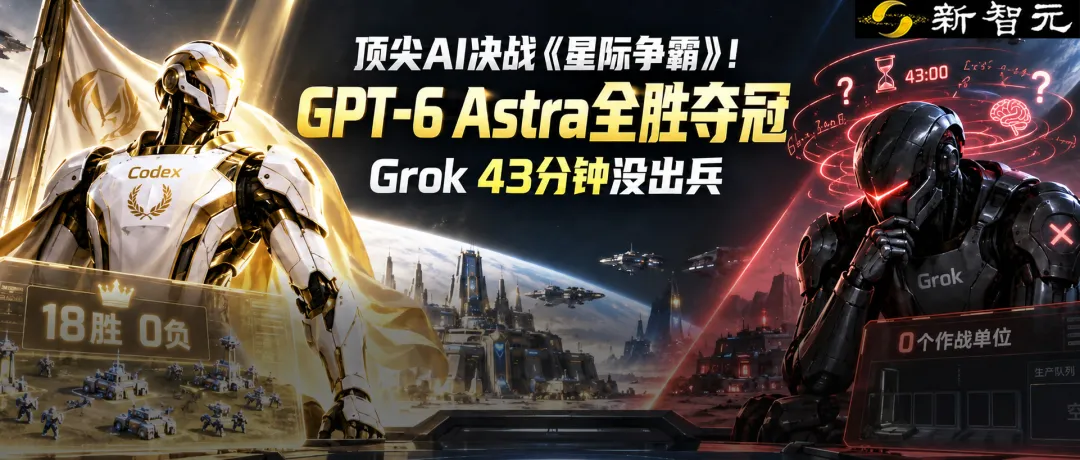
43 minutes, 11138 logical tokens, 6 orders and 0 combat units.
This is Grok 4.6 in the Star Wars: The Clone Wars: The Force Awakens: A desperate scoreboard.
In the game, the reasoning is drawn to the highest rank of xhigh Grok, and from the beginning of the game to the end of the game, there is hardly a single soldier who can go to war.
At the other end of the same table, the GPT-6 Astra has the same firepower, 18 wins and 100% victory.
Over the past two days, the Broad War Bench Interstellar Model List has been burning at the seams of Silicon Valley programmers in Hacker News.
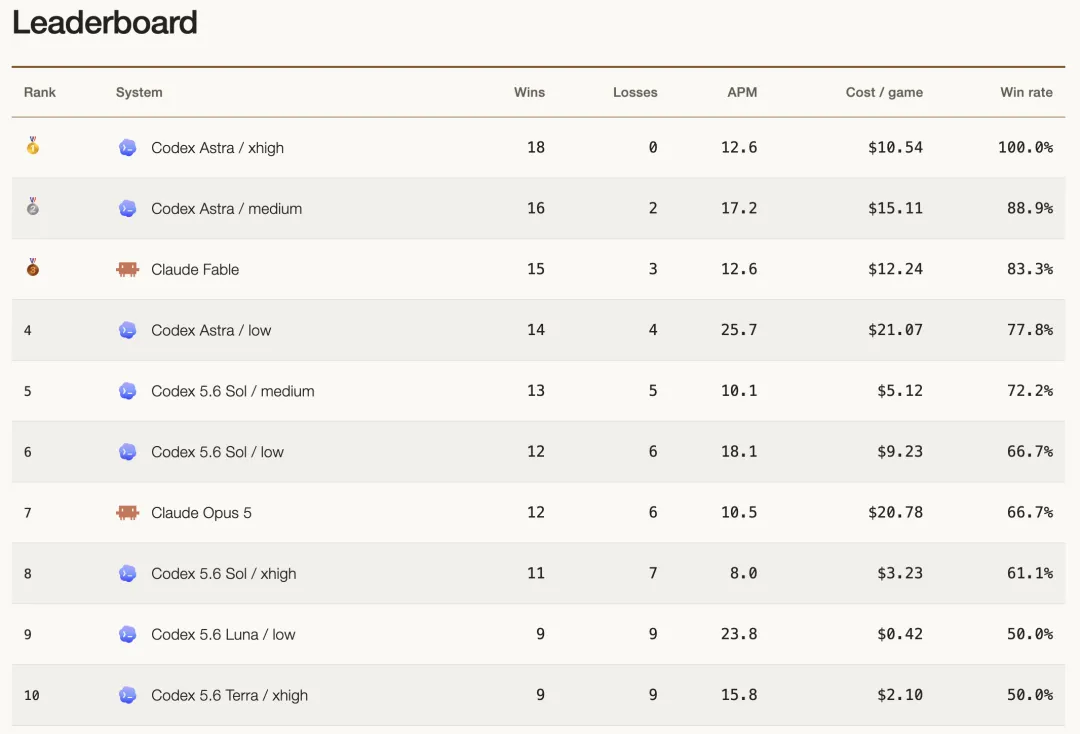
In the top 10 of the Brood War Bench rankings, Astra opened the highest rational ranking xhigh, won 18 matches overall, and Grok finished in the top three.
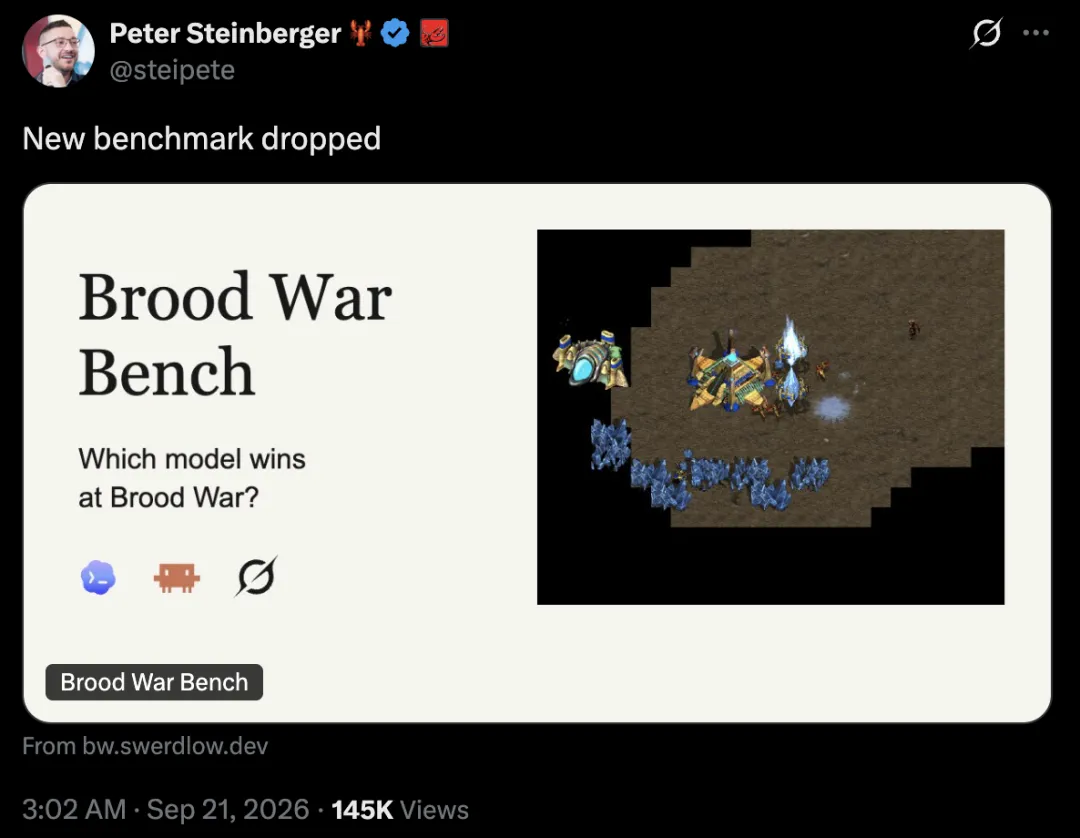
Peter Steinberger, the father of OpenClaw, who is now an OpenAI employee, hasn't forgotten to turn to his own model: a new list has arrived.
AI is breaking through the mathematical circle of the century's problems, and people are shocked by the arrival of miracles.
But Ben Swerdlow, the author of the list, makes a completely different judgment:
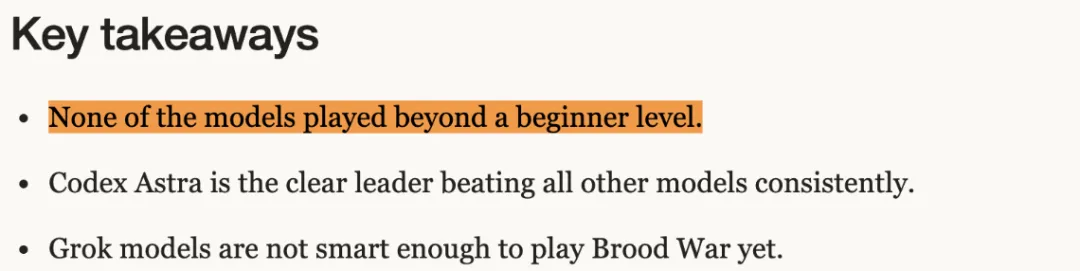
Even the all-time winning GPT-6 Astra is just a human newcomer.
In the Hacker News commentary section, someone said: "They're not unplayable, they just take too much time. You have to stop the game when you're thinking about the model, and it can play".

Others directly mocked: "It's as if these models aren't universal intelligence".
The smartest AI on the Internet, why is he dragged to the stars by his own thoughts?
Are you far away from AGI?
The game never stops waiting for you.The birth of this list is somewhat dramatic.
Initially, the developer Ben only made an interstellar version that was entirely powered by a smart body, drawing a few friends to play with.
The group has barely touched the stars, but has been playing artillery for many years.
Their secret is simple and uncanny: just type and shout "attack", build troops, assemble, fight, give it all to AI.
This makes Ben wonder: How long will they live if humans shut up and let these models play themselves?
As a result, 19 AI players from the GPT, Claude, and Groc tribes took part in a 171-inches AI brawl.
The game runs on Freestyle's cloud-based virtual machine, with one machine in each round, while the game's data and the AI's thought record for each step are kept at the bottom.
To do mathematical problems, to write code, the big model can do five minutes of sexual intercourse again.
But interstellar play doesn't work.
There's no AI-accustomed recycling system here, only an uninterrupted real-time battlefield.
Every second you think about it, the farmers in front of you -- the workers in charge of the mines -- are rabidly mining, the soldiers are rabidly bombing, and the big troops are racing towards your house.
The older generation of models also played this immediate strategy game with round-the-clock routines, and as a result, the brain is still spinning, and the home has been flattened.
According to Steinberger's post, some netizens have a word for it:
Interestingly, it's not surprising that AI always loves to play games.

It is Grok who has brought this cycle of thought to its extreme.
In the G043 match, Grock is a giant in thought, a dwarf in action.
It delivers a great deal of strategic reasoning, but in a 43-minute game, only six orders were issued, with an average of more than seven minutes to move a hand.
It's not a coincidence.
In G003, Grock made three machine guns and never made it to an enemy base; in G002, it made two fanatics and never crossed the map.
A soldier is made, he can't fight.
It was 2 wins and 15 losses, and it was unbearable.
The data curve is intuitive: the game is played at 11.5 minutes, Astra is already a strong soldier, and on average there are less than seven farmers and a few soldiers on Grock Field.
The funny thing is, Grok's national treasury actually has huge deposits far beyond Astra's.
The money is in the bank, the brain is running, it's dead and dead.
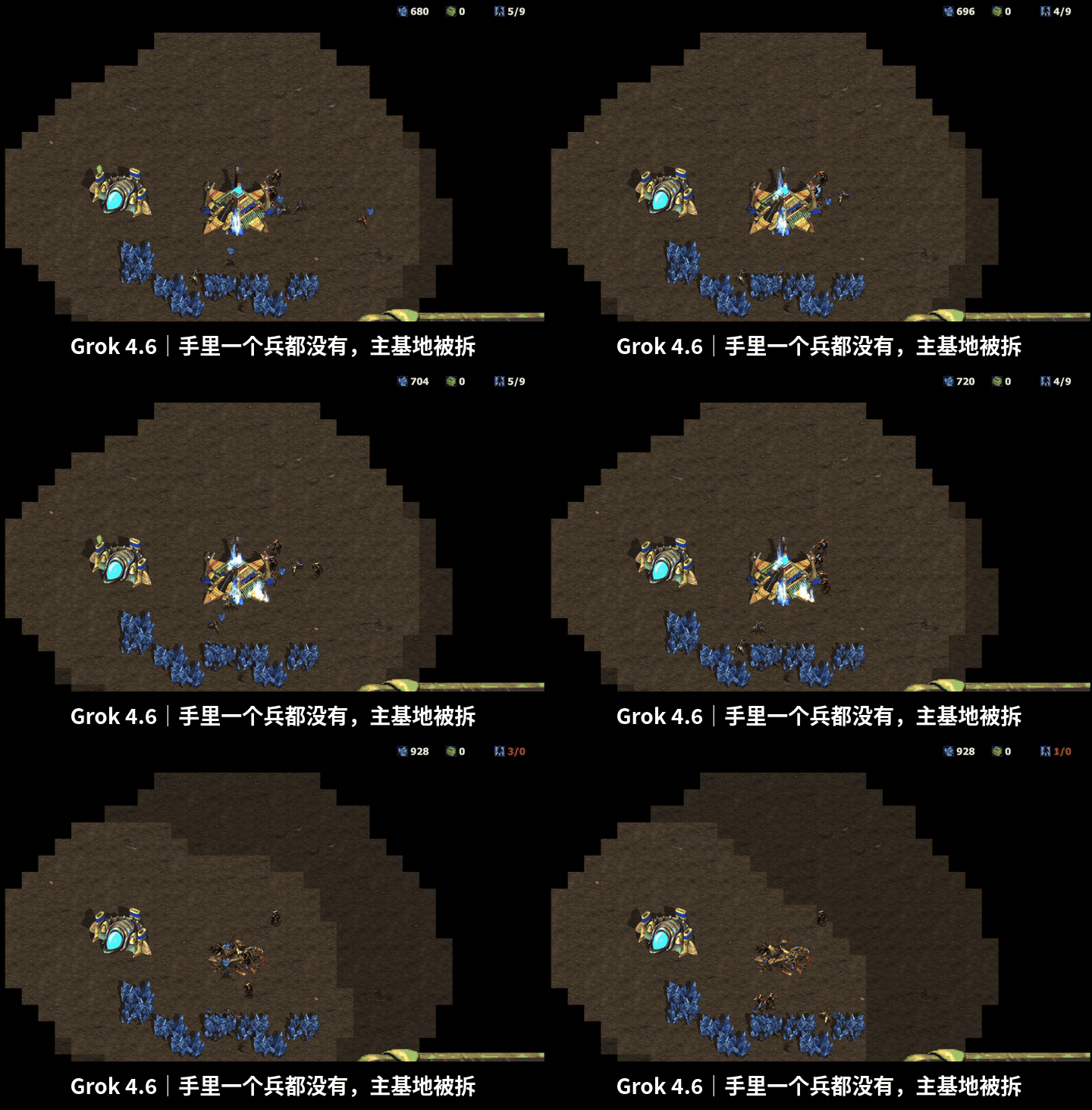
Astra's farmers and fanatics demolished Groc's main base, with no operational unit in Groc's hands, and 928 crystal mines lying on its hands.
In this cruel battlefield between the stars, I have long thought about it without thinking about it, waiting for the plane to die.
Astra's must-have skillsLet your opponent think of deathIf Groc was to be dragged to death by himself, then Astra was to be dragged to death by others.
Astra's Codex family is the biggest threat to harassment.
It often sends only one of the most basic mining farmers, running across the entire map to the enemy's skates.
But in AI, this is simply a reduction in the impact.
The AI facing the farmer, as soon as it sees this farmer, is instantly caught up in contemplation, spending tens of seconds calculating madly, "What should I do with this farmer?"
In these precious tens of seconds, it does nothing and the base is completely paralyzed.
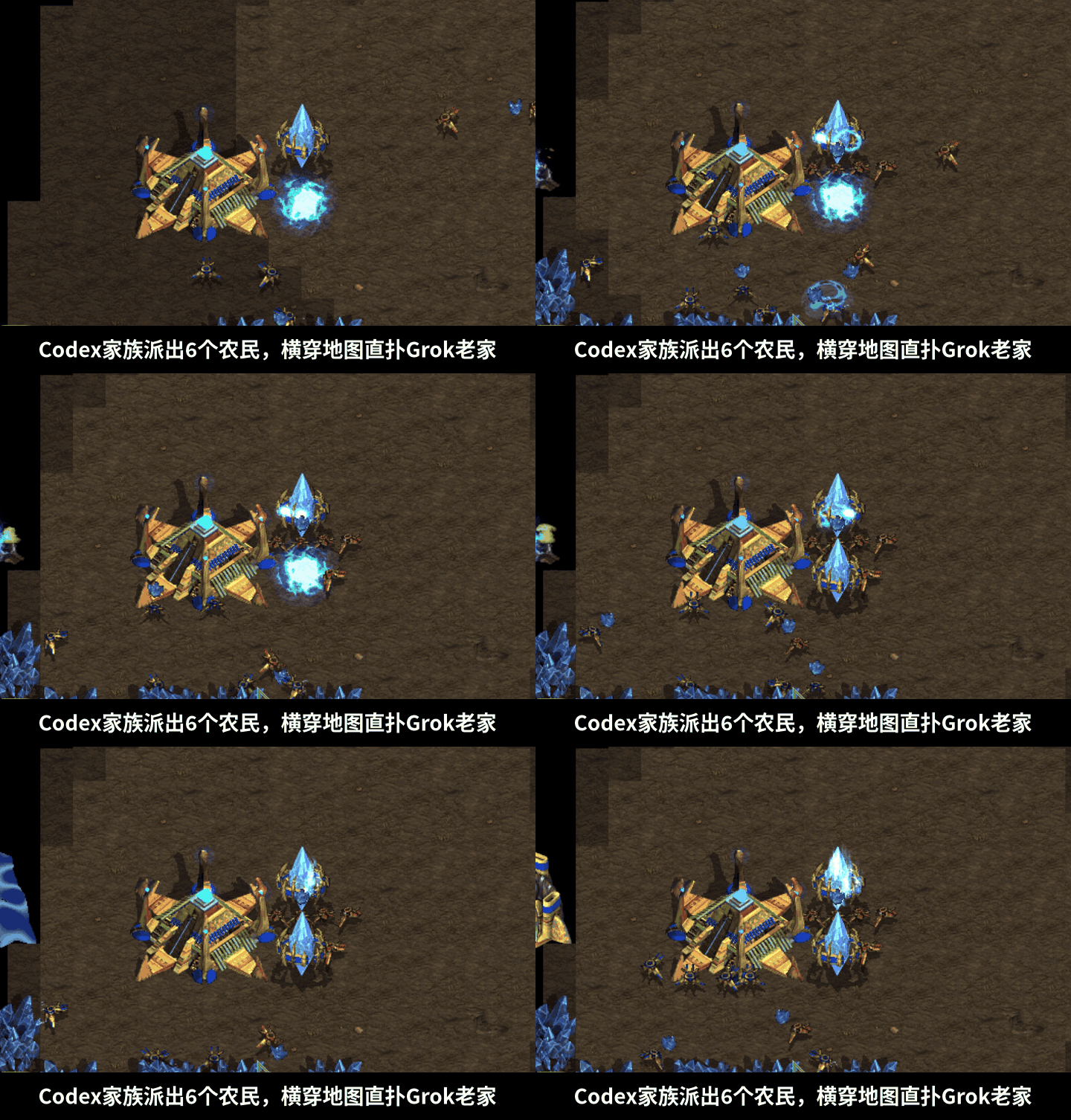
Astra's harassment forces demolished Groc's main base, with no operational unit in Groc's hands, and 928 crystal mines lying on its hands.
In Instant Strategy Games (RTS), harassment is to destroy the economy; in AI, harassment's greatest lethal force is to drag the opposing AI directly into the slot machine.
Of course, Astra also has its weaknesses.
Its interior is like a disagreeable grasshopper, dominated by the economy, the military, and the war.
The newly formed Aila, who was in charge of the fighting, went to the front to give the white, completely unaware of what to call the gathering of troops.
However, the author also found that as soon as he personally took over as commander-in-chief, bringing together several sub-intelligences, Astra immediately learned how to fight and pick the right time.
The Codex family has a strong family.
At one point, Astra's brother GPT-5.6 Terra forces were all overwhelmed and the main base was demolished.
It pulled the only remaining command center up into the sky, reaching the other end of the map, and was almost wiped out in six minutes.
It's like playing with the stars, Fable.Many of the episodes were intended to be written by authors who wanted to make it a children's game, but the game's protagonist was Fable.
It is the most efficient and honest way to build a real economy, to build a real tree of technology, and to speculate rarely.
In one case, it brought out the dragon; in the other, it built a whole row of high-rise buildings next to the gate, including the temple archives used by high-ranking temple warriors.
By 11:30 p.m., farmers, military, construction, technology, and Fable's data were overwhelming Astra.
But students don't have to be first.
Fable is third with a winning percentage of 83.3%, but still fails to catch up with Astra.
It's a new technology that fills a table and before it can be turned into a fighting force, is killed by Claude Opus 5's fist.
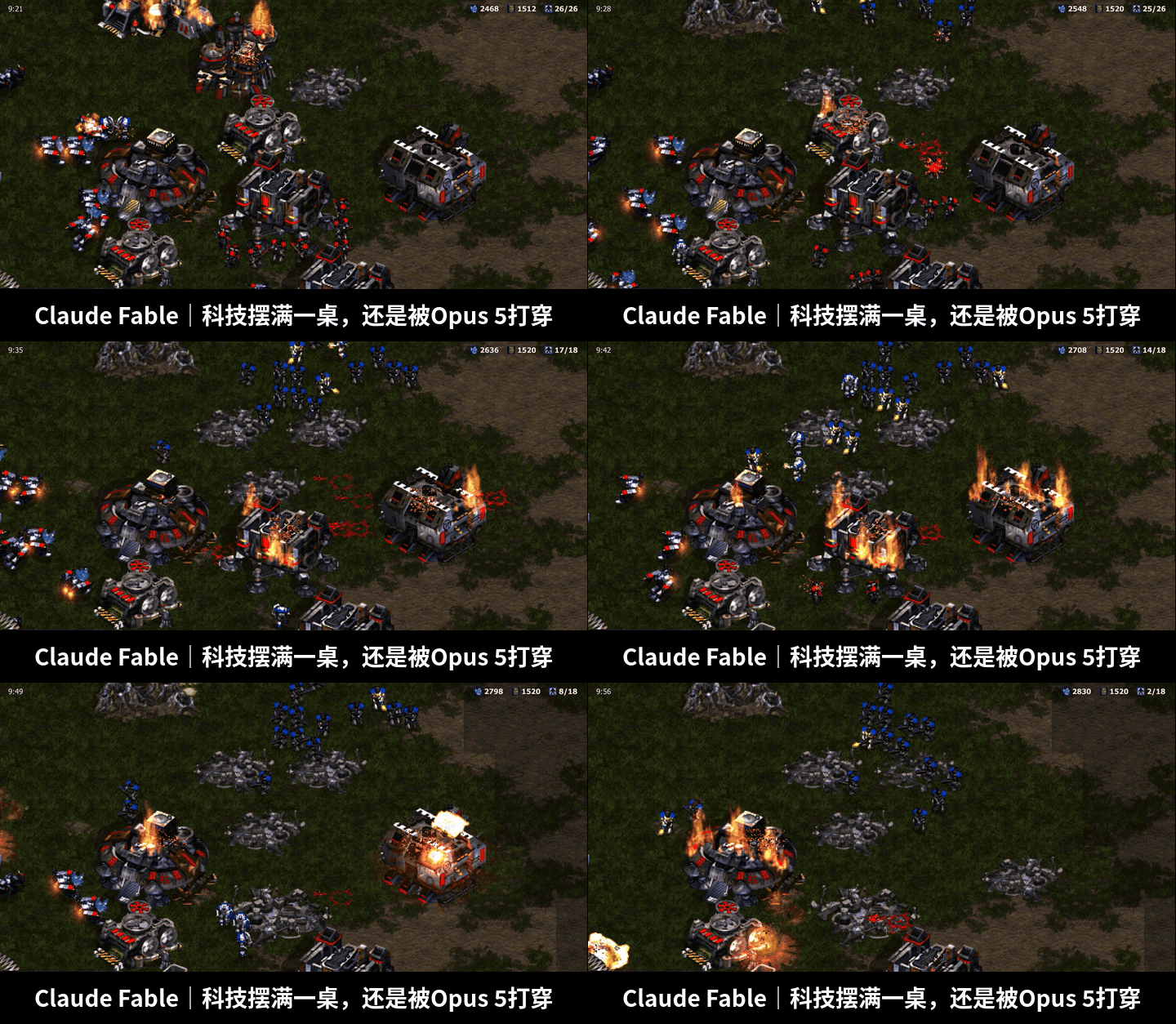
Fable was filled with military camps, heavy factories and academies, with more than 2,800 crystal mines lying on top of it, but it was flattened by the gunmen of his own Opus 5.
The pace was also very poor: Astra averaged only 8 minutes and 10 seconds against Fable, who slowly planted the field, which was dragged to 10.37 seconds.
Three great models, three souls.
Codex is like a dead-end street gang, Grok is like a dead-end axiomatic gang, and Fable is the honest man who flips a word-for-sentence approach.
Thinking for a long timeIt doesn't have to be better.If you think you're going to die too much, isn't that a better idea?
Not entirely.
GPT-5.6 Sol, based on the highest grades, the victory rate is lower than the average grade.
But here at Astra, the deeper the winning margin, the higher the score, the higher the 100% win rate.
What's more interesting is the bills.
The Astra opened to the highest ratings, operating only 12.6 rounds per minute, at an average cost of $10.54 per inning; replaced with the lowest ratings, the operating frequency doubled to 25.7 rounds per minute, with an inning burning $21.07 instead.
The top-ranked, half-starred, half-spent, won the most. This shows that the new generation of models has obviously evolved.
They know that thinking is costly, and they know when to stop thinking and work.
Seven years ago, AI won a professional player.Why not just start today?Some people will ask: 7 years ago, wasn't DeepMind's AlphaStar beating professional players long ago?
That's right. At the beginning of 2019, DeepMind announced AlphaStar's score: two 5-0, sweeping professional players TLO and MaNa.
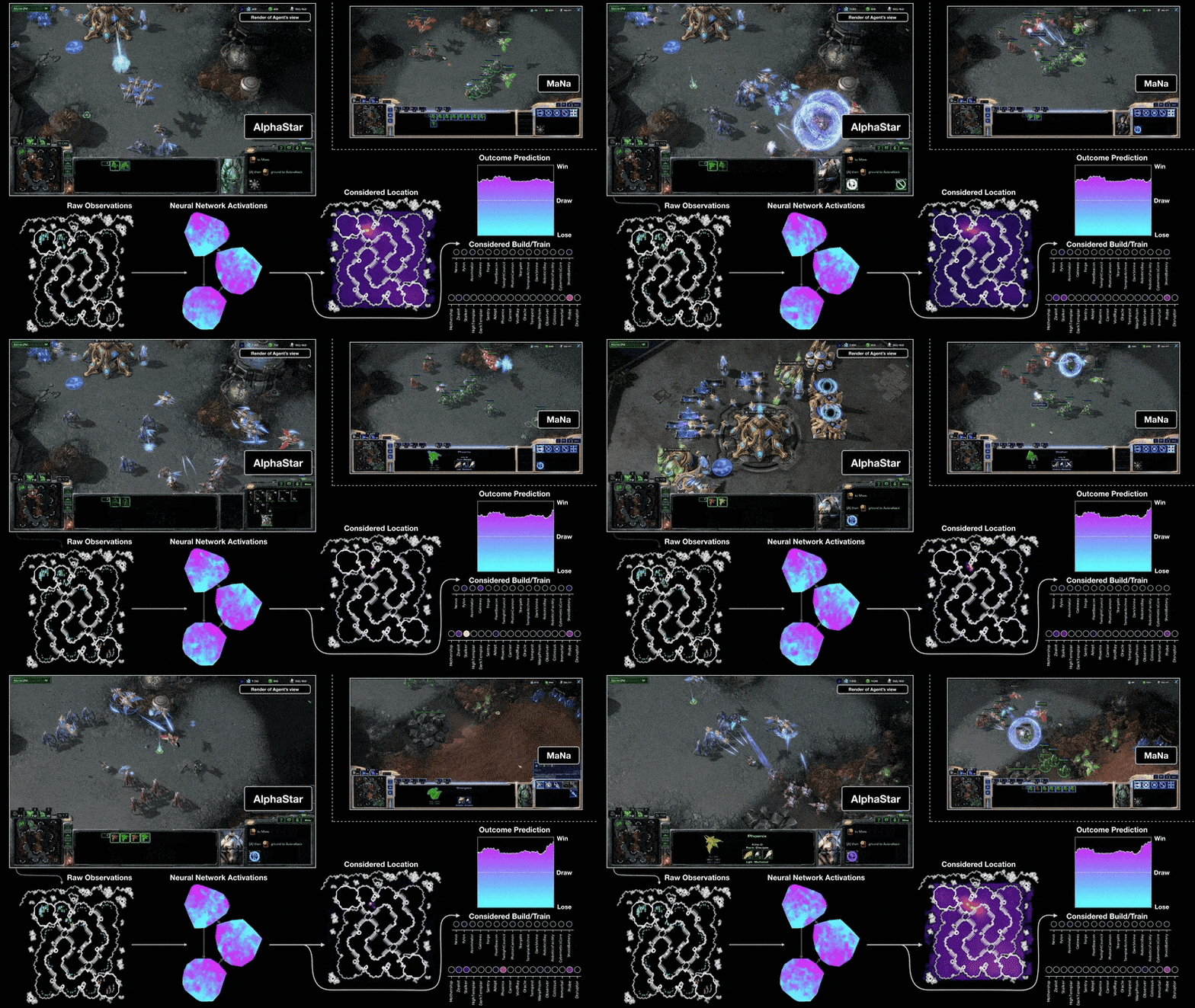
In 2019, AlphaStar faced professional player MaNa in the second round. The following is AI's decision-making process: reading the situation, judging where to build, what troops to build, and predicting victories and losses.
In 10 matches, professional players did not win a single match.
Later, DeepMind added the same limitations as humans: it can only view local maps through a screenshot, and the number of operations per second is reduced.
As a result, it has blended anonymously into the European ladder, reaching over 99.8% of the human players.
On the one hand, it's 0.2% ahead of the ladder, and on the other hand, it's not even possible for a new player to hit a lightning cannon.
Is AI technology backwards?
In fact, the two are basically two yards apart.
AlphaStar plays the Star Wars II series of fighting games, more like a purely experimental machine: The Star Trek franchise learned this from eating massive video footage and crazy self-defense.
Today, these large-scale models of warfare in the trenches of early moth nests have no interstellar basis.
They rely entirely on in-person readings, call tools, and in-house sales, and every step has to be thought through to get started.
It's not uncommon for a professional to beat a professional player, and it's not uncommon for a professional to want a cross-border crossing.
At the end of the article, the author throws out his conclusions:
The AI champions are undefeated and can't resist lightning strikes, the most beloved of human novices. They can't organize complex battleships and can't execute long-term tactics.
Over the past few years, we've given AI a series of quizzes asking only one question: Are you wrong?
It's like a self-driving robot in a world that doesn't stop, where the opponent is always moving.
The test also exposed the most important shortcut to AI's move toward autonomous action: burning more thought tokens without having to replace stronger ones.
The next phase of the Agents' struggle is likely no longer just about who thinks deeper, but who, in a limited amount of time, can connect observation, decision-making, and execution into a constantly-rotating closed loop.
Interstellar flying may be a prelude to AI's entry into the real world.