In the last two years, the main melody of physical intelligence has been the curve-brain, the parameters are rising, the world model, the VLA rotary brush screen. But after a few days on the production line, we see another picture: most of the tasks that can be run are structured, allowing for large space; once it involves pulling out, tightening, flexible grasping, the success rate drops cliff-like.
Consensus is actually forming. At this year's WAIC, AI smart hands were paired with humanoid robots for the first time and were officially named as a major new product category; multiple industry reports summarize the shift in the focus of competition: from hydrogen-powered pumps to hydrogen-powered pumps.
The signal for terminal demand is more direct. More and more voices in the industry call this year the Millennium of Touch Touch: the proportion of smart hands equipped with touch schemes, climbed from around two percent in early 2025 to around sixty percent in Q4 last year; some enterprises have made a comparison: axle hole installation tasks, pure vision program success rate of only a few tenths of a percent, after the introduction of touch up to more than 80 percent.
These signals come from different branches of the industrial chain, from different camps, without colluding with each other, but pointing to the same judgment: the landing card point, is shrinking to the end of execution.
There are two things that are really worth considering: why is the card bias at the end? and, how to break it?
Customer acceptance is not about freedom, it's about success rates
In order to answer the question "why" and "why", we need to understand what the industrial landscape really is.It's all about the media.There are only three simple questions that are asked repeatedly on the customer's site.
Can it work?It's not Demo that can do it, it's this process, this batch of stuff that can't do it under this working condition.
Is it reliable?The industrial landscape does not believe in one surprise, only believes ten thousand times that it doesn't work. One hundred times you can't build trust, one breakdown is clean enough.
Do you have a budget?Equipment input, beating, efficiency, maintenance costs, all of which are eventually discounted as man-made replacement costs for each workpiece.
These three questions can be answered with high-precision filters + visual positioning + repetitive filters. But today manufacturing is another scenario: the life cycle of consumer electronics is compressed from 18 months to 6-12 months, orders for bulk filters = 1000 pieces of filters become common, and the production line has to respond to dozens of product switches a year, and the shape, location, and particle materials of the filters will change.Multi-variety, small-scale flexible manufacturing has shifted from marginal demand to the new normal of manufacturing.
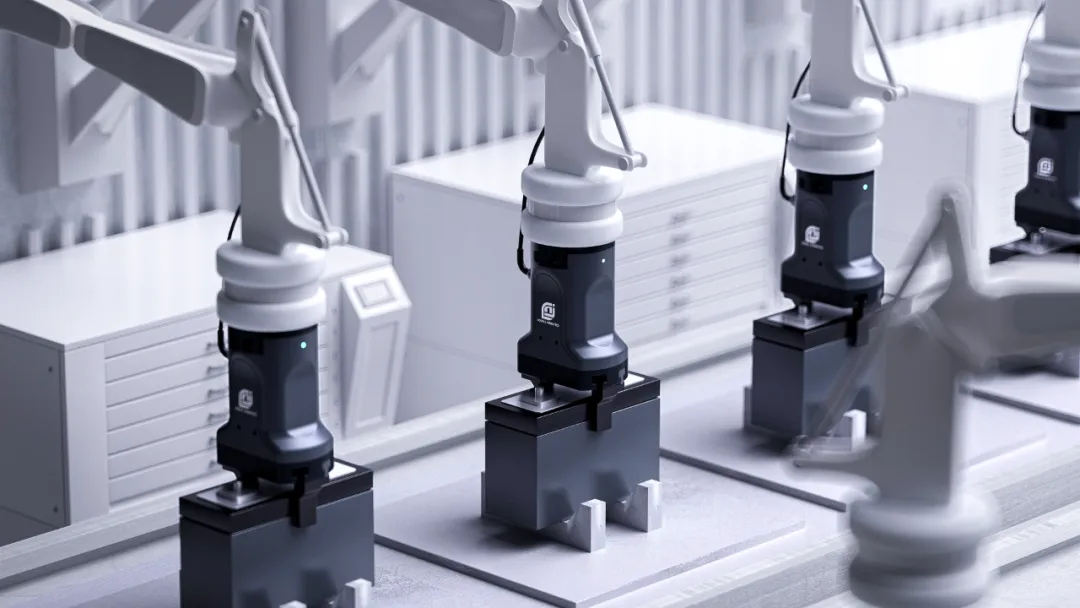
This is an almost exacting requirement for the end: each contact may be faced with an unseen material. The visual can tell you where the object is, but can't answer how slippery the plastic plug is, how brittle the metal needle foot is, and how the power of the plug suddenly increases at which angles. This information only exists at the moment of contact.
The essence of flexible manufacturing is that each touch is an unknown.Touch is the only sensory channel that can tell you what the mouse has touched at the moment of contact, what to do with the mouse.
After the last centimetre, there's the last kilogram.
The industry's mainstream interpretation of landing card points is the monopoly fallacy: the brain plans quite well, the hand does not execute it, and the solution is to replenish the fallacy. However, Yang of the Meiji Party believes that the premise itself is not valid.
This traditional logic sees the workflow as a linear chain: brain planning, hand execution, completion. In this chain, execution is the end, and execution is over.
But the real cause of physical interaction is: contact generates information→ judgment→ execution→ re-perception→ re-judgment, this is a closed loop, not a straight line.
To execute the end loop is to cut the closed loop into the open loop. The power signal generated during the contact, the sliding signal, the correction movement of the failed retest, the whole thing was not collected, was not recycled, was not used to train the model.
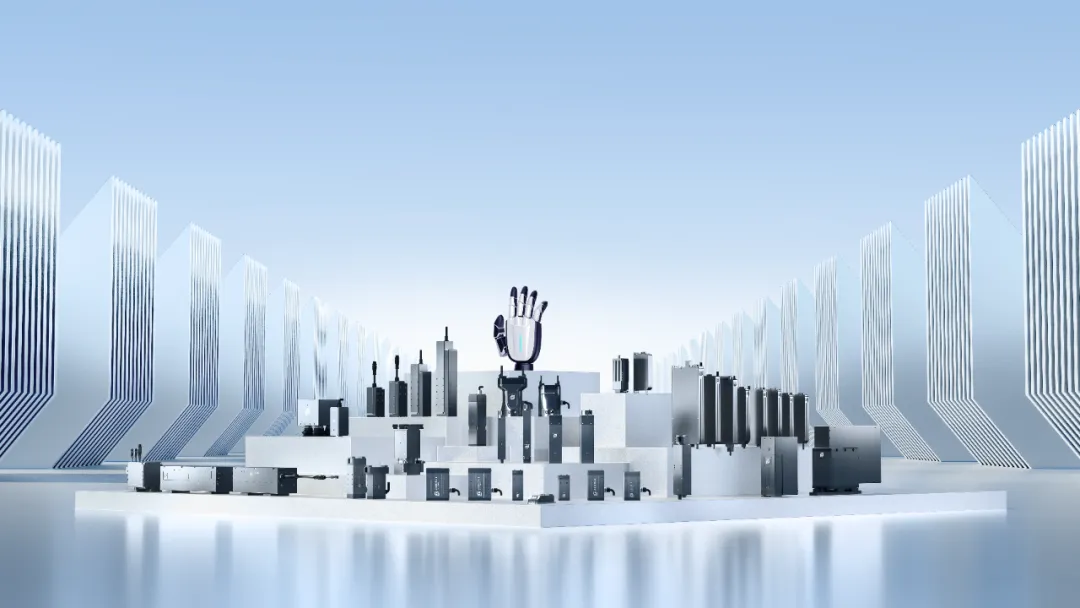
In addition to the link error, there are four other mismatches that resulted in the end execution.
Wrong number one: VLA's V-Visual Right to Control
The current mainstream VLA's architectural logic is: Image+Language instruction→Action Token sequence. It can only look for rules in the visual, but it also defaults on what a mouse can see to infer how a mouse touches a mouse. This assumption is established in non-contact tasks and is ineffective in contact-intensive tasks.
A more fundamental problem is that the VLA does not have the ability to handle the signals that the thumbs are sliding in this state. The tactile signal slips in, instead becoming noise, interfering with the original visual-action association. That's why in Li Fye's experiment, the tactile signal was directly inserted into the pre-training VLA model, and the mission success rate dropped from 17 percent to 6 percent.
From this point of view, VLA is not a silicon-industrial brain tumor, it is more like a silicon vision predictor tumor.
Mistake 2: The sensing signal is not reliable enough
Current mainstream magnetic touch and visual touch schemes, which are essentially algorithmically interpreted to translate a touch signal, are estimated to be a cube value cube after a multi-step algorithm conversion, rather than a cube original value cube produced by direct physical contact.
What is even more troubling is that there are widespread delays, drift and non-linear problems with touch sensors, where calibration parameters are prone to change over time and the environment and require repeated labelling. For multiple varieties, small batches of flexible production lines, each change of material may mean a relabelling.
If the signal is generated by a spark, or is it generated by a spark? This is the real divide behind the battle of the touch line.
Mismatch 3: The dimensional slope of the data is missing slope
As of early 2026, the total amount of high-quality real-physical interaction data in the country is only about 500,000 hours. Of the 2 million hours the industry expects to need, the most scarce is precisely 15% to 25% failure with recovery data.
There are three inherent flaws in data from mining plants: the number of employees is much slower than the actual production line workers; there is a lack of raw material bias and equipment vibration in the real scene; and more importantly, the tactile data is structurally neglected at the mining link.
A model that completed 500,000 training sessions in a simulation, scoring 99.8 percent, in the real world, either slides on the smooth curve of the bottle or touches the bottle cap at the wrong angle, causing the torque to not pass through the bottle.
The real value of the industrial landscape is not the data about how humans operate pumps, but the data about how pumps succeed and fail in the real industrial environment. The former can be collected and the latter can only grow.
Error four: Curve parameter curve and curve matching curve error
There are more than 20 or even more than 30 degrees of freedom on the stand, but there is a lot of movement on the production line, which is a product of reduced freedom. High freedom is brought about by high failure rates and high costs. First make the most spectacular handkerchief, and then think about what it can do, rather than what it needs to start from the production line, what the pushback should be like.
In the age of the parameter table, the supplier is the strongest in the ring; in the age of the scenario, the customer only realizes that the chain cannot be adapted to the demands of the production line.
Four incorrectly pointed to the same source. The industry gave the visual blind zone a name, which is called the last centimetre of wax. But it only replied that wax has not touched wax.
Centimeters are space and cents are dimensions.He who holds these procedures is never invisible, and in his hands there is no measurement.
When the hand doesn't fit, the result is ridiculous: the brain says the instruction is correct, the hand says it moves according to the instruction, the sensor says the data is transmitted, and every link in the chain is unblemished, but in the end the screw is broken.
So it's not a breakdown, it's a misplacement of the principle of primacy. The laws of physics dictate that careful execution of judgments must occur at the end.The hand should have its own judgement, not wait for the next token of the brain.
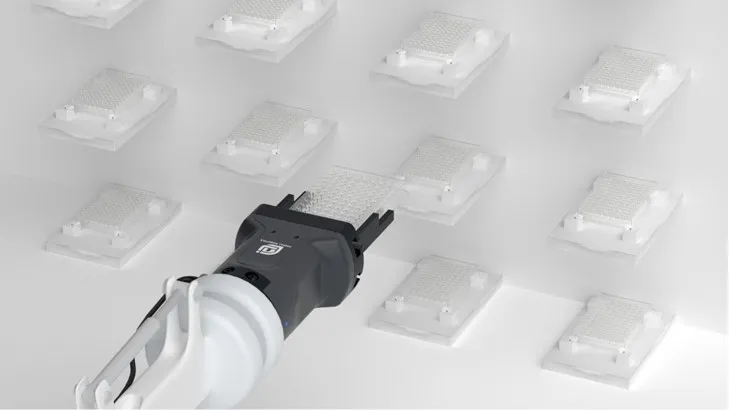 Re-defined end execution:Let's get to the point where we have the ability to think.
In the past, the industry has discussed end-user executors, and it is customary to include them in the hardware components of the plug-in: clutch, clever hand, suction disk, frequency, load, precision classification, and decelerator, server motors are placed on the same shelf.
But this sort of classification is no longer enough in the age of physical intelligence.
Meishan Yang believes that the industry needs to redefine end-to-end execution.
End execution is not a hardware terminal that executes brain instructions, it is a two-way interface between intelligence and the physical world, and it is a smart node that needs to have local real-time power control capabilities.
The first is:End execution is the only way to understand physical movement.The brain produces intentions, strategies, coordinates, trajectories, but the physical world produces only focus, position, friction, shape change, slippage. The end executor is the translator. The translation is inaccurate and directly determines whether the brain's instructions can be turned into effective action.
Second, it is a two-way bridge, not a one-way accessory.Downward, it transforms AI cognition into physical movements; upward, it transmits touch, sensation, motion, and shape-shifting contact data back to the brain and brain. Without this upward pathway, the brain can only send instructions and never learn the physical laws of the real world.
Thirdly,It directly determines the proportion of brain function.The brain's capabilities are stronger, and the actual performance is limited to the execution layer. The end is powerless, the brain does not know the contact state; the end is untouched, motion is unnoticed, the model is unable to fine tune; the end interface is not open, data does not flow back, and the brain cannot continue to evolve from real interaction.
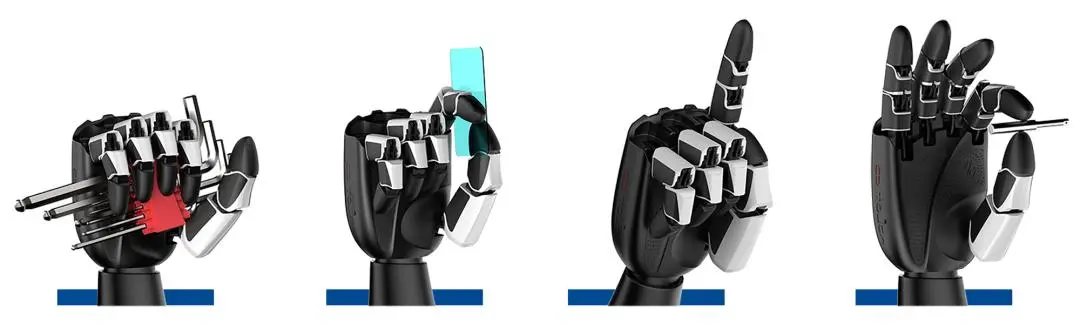
When the input, output, and backflow connects to each other, the end-user is no longer the same.Hardware carriersIt's an ecosystem of execution capabilities.
Thus, the last centimetre of zinc has three layers of meaning: physically, it is the contact distance of the end to the object; in information, it is the entrance to sensory-sensory data; and systemically, it is the key bridge between AI cognition and physical movement.
In the realm of contact with the physical world, self-perception, self-judgment, self-direction, self-realization, self-realization, self-realization, self-realization, self-realization, self-realization, self-realization, self-realization, self-realization, self-realization, self-realization, self-realization, self-realization, self-realization, self-realization, self-realization, self-realization and self-realization.Let the executive level have its ownThinking on the ground is a brain tumor.Instead of continuing to serve as the executive end of the VLA,It's a way to make physical intelligence a real force for productivity.And that's what robots do:I'm not sure if I'm going to be able to do that.。
Just like you start a cup of paper that's pouring water, you don't have to show the brain: the glass wall slides, the pressure on the fingers automatically increases, the closure occurs in the spinal cord and the muscles of the hand, in milliseconds, and the brain is only responsible for stirring up the water.It's not a claw that robots are trying to replicate.andIt's the ability to think right.
Intelligent peopleHow to land: three-tiered closing ring, one value scale switchingIt's the executive layer that has the power to think, and it's the three-tiered closed loop that goes into engineering.However, the first principle remains the need to adapt to the needs of the situation, landing safely and reliably, and cost verifiable ROI.
The first layer is the nerve endings of touch, perception, and thinking.There is no perception that thinking is a sourceless water. This is also the reason why the cooking industry has voted for orders from the selection of coatings within a year.
It's hard to tell if the robot is touching a single path.It's not.From the Scene DemandFitting inThat's right.TechnologyThe route.
Human touch (BioTac) solves strong electromagnetic interference, frequently switches the output signal: the rigid core outsole fills the conductive liquid with elastic silicon skin, the perception of force is directly generated from the physical structure, the way the fluid is transmitted does not change with the electromagnetic environment, and there is no need to re-label algorithms when changing materials.
Visual touch solutions address the need for high geometric resolution for precision assembly: a combination of block modules, different tip shapes, rapid assembly of different coverage densities, and the cost of a touch screen pressed to a level that can be deployed on a large scale.
In the eyes of the Meiji Party Yang:With one.TechnologyThe routing of all the scenarios is an underestimation of the complexity of industry itself.”
The second layer is the collection of data, the source of experience for thinking.The current industry-wide solution is to build a number harvesting plant that allows operators to manipulate robots to repeatedly execute tasks. The embarrassment is that: number harvesters are much slower than real production line workers, and there is a lack of feed bias, equipment vibration and abnormal processing in repeat scenarios, while touch data is structurally ignored in the harvesting link.
Of the 2 million hours of human-operated data the industry expects to require, the most scarce is the 15% and 25% failures and recovery data: slipped, twisted, and tuned. This is precisely what the simulation engine is not the best at generating.
The robot industry has taken a different path: working side-by-side on real production lines, collecting side-by-side.The end-user itself is a data source, and the power signals, sliding signals, and vibration signals generated by each contact naturally grow in real-world operations.How machines succeed and fail in real industrial environments”The former can be collected, the latter can only grow.
On the third floor, the circle of work flows and the value of thinking is reflected.Perception and data ultimately have to be closed to the process: how much of this scene succeeds, how much of this scene is shot, what the default pattern is, how the bias is corrected. Closed rings also mean that someone is responsible for the final result. The brain says the instructions are right, the hand says the instructions are moving, and every loop in the chain is innocent.
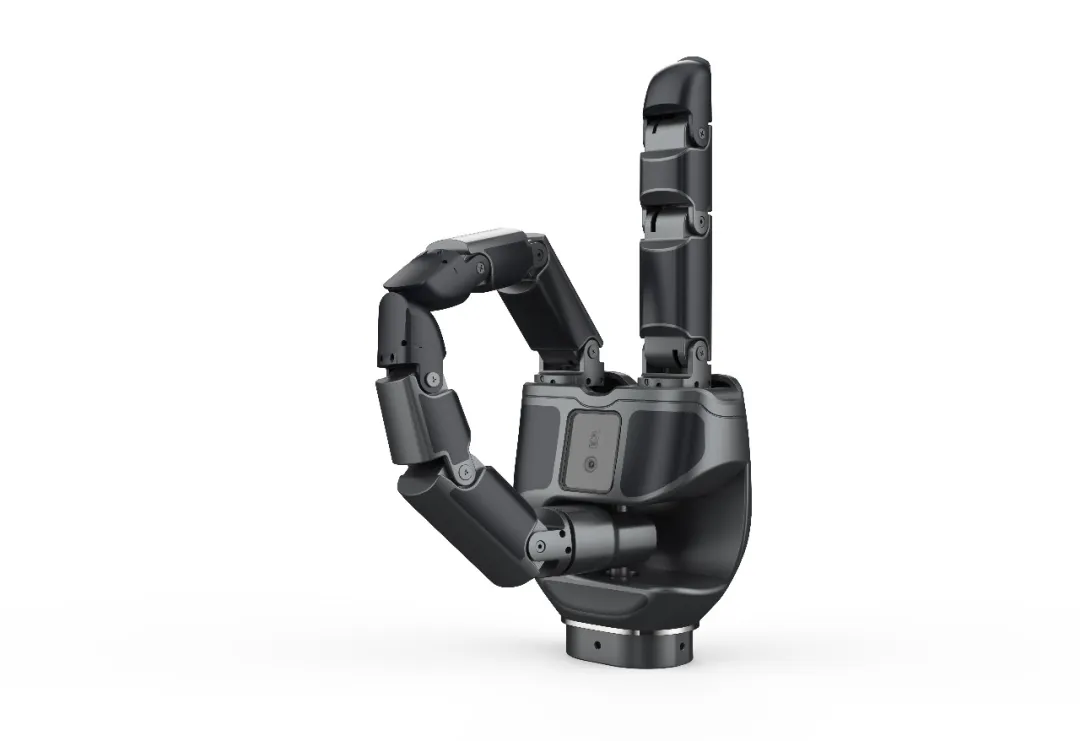
It's a way to respond to the logic of the product, one way or another.Changing the value scaleIn future acceptance charts, the degrees of freedom and the resolution will give the space to three words: success rate, beat rate, and failure.。
IndustryIn the second half, no more than anyone.Hurry up.Who's got it?SteadyFinally, Meiji Yang shared his three judgments about the industry.
One、In the end, intelligence will be the next main battlefield.The pattern of brain competition is initialized, marginal returns are declining, value is sinking towards the end, orders and capital have been double-confirmed. In the next two or three years, the question of whether the hydrogen execution layer will be able to think like the hydrogen model parametric pump today will become the first question to be asked in the evaluation of the program.
Two、The industry is going through a credit crisis.This year, there's a huge gap between the amount of smart finance and the number of devices running on the production line. The end result is the closest to the end result, and it's an industry-wide guarantee of credit: the companies that are responsible for the final outcome of the scenario stay behind, and only the companies that are responsible for the parameters.
Three、It's a win-win situation for ecology.Touch perception, data collection, workflow, no company can do all three things at the same time with single-point products, and no customer is willing to take the risk of integrating suppliers that don't form a three-point closed loop. At the end of the day, the end of this path belongs to an ecosystem that can provide full execution capabilities.
On October 12, the trade fair opened in Shanghai. Touch the end of the year, the end value of the decline has just been confirmed, and all the clues will meet in that exhibition hall.
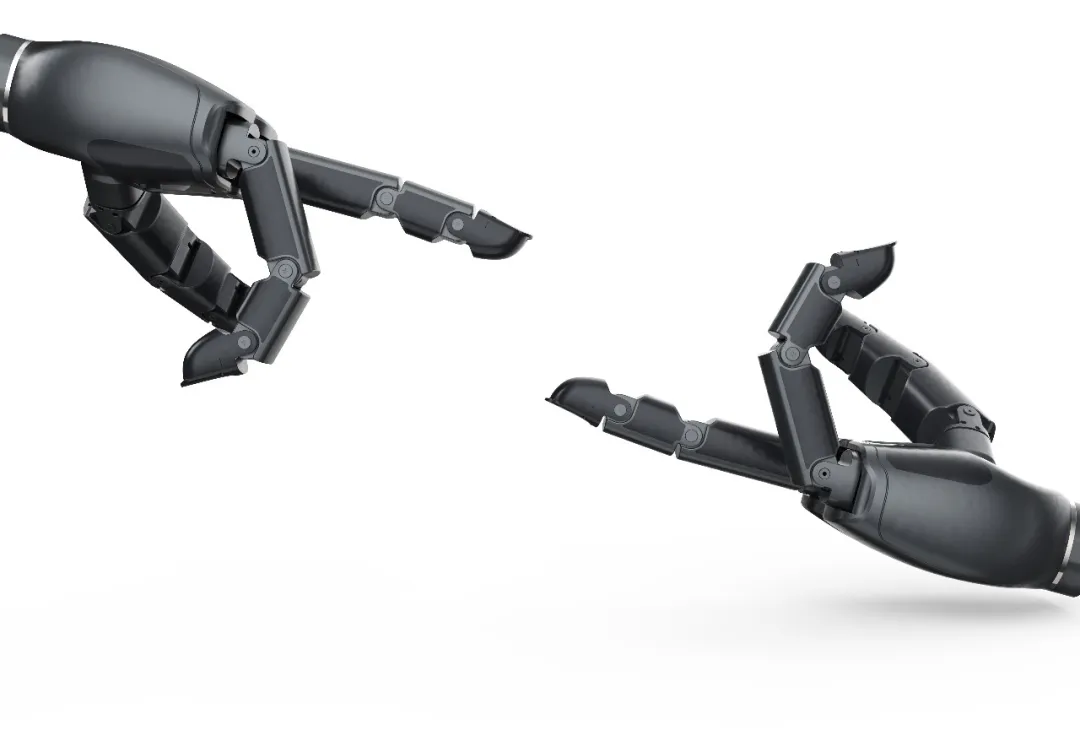
High-tech robots believe that the second half of the body's intelligence is not in the demo on the screen, but in the propeller on the production line that is precisely tightened. The moment that the propeller is turned off is the moment the thinking power is displayed.