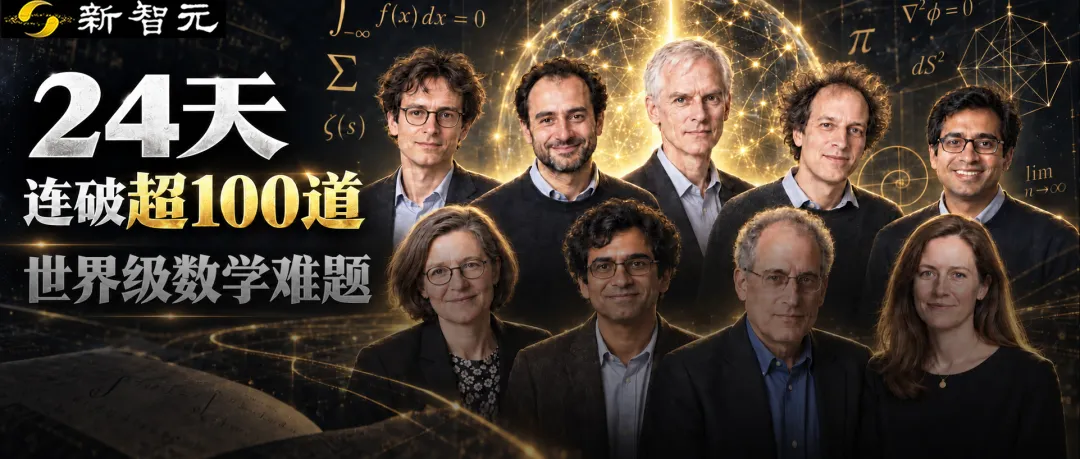
It's the first time in the history of the world.
In the world of mathematics, AI has come to our doorstep!
Just now, OpenAI has unleashed a huge blogosphere.
A new internal model, which began training on 28 August, has now mastered more than 100 world-class mathematical problems.
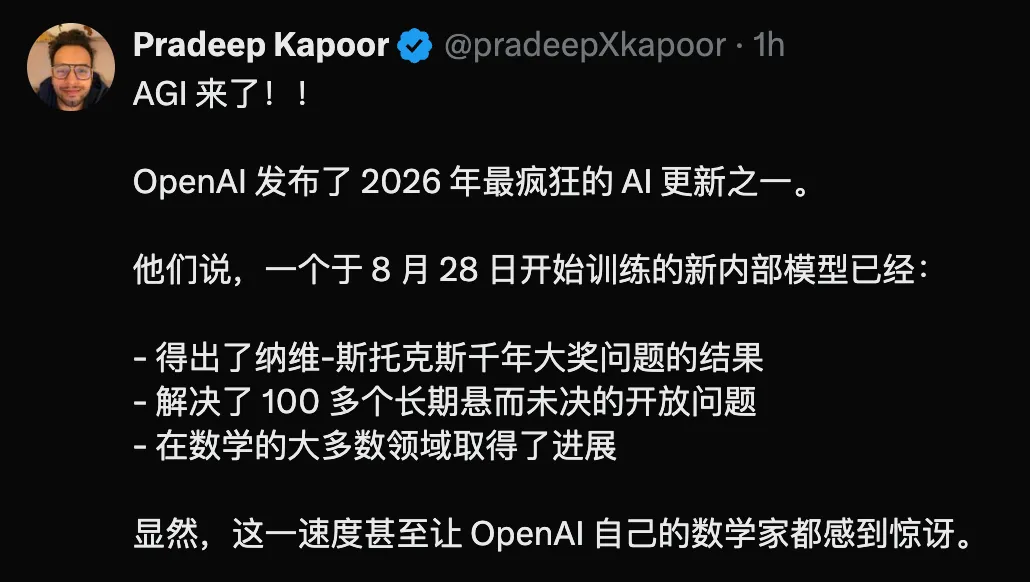
In mathematics, most of the fields are cross-disciplinary or interdisciplinary.
What's even more exaggerated is that the more than 100 questions included the "Navith Stokes" Millennium Problem, which has plagued the mathematical community for years.
The speed of evolution has come as a surprise to OpenAI's mathematicians.
From the 28th of August to the official announcement on the 21st of September, there were only 24 days.
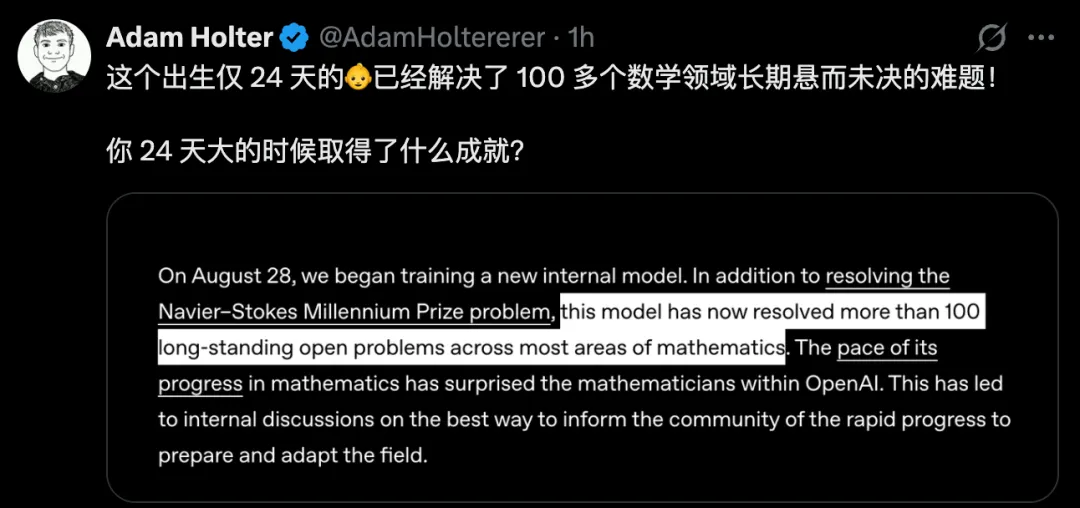
An internal AI that is still in training is beginning to sweep through humanity with problems that have not been solved for decades or even a hundred years.
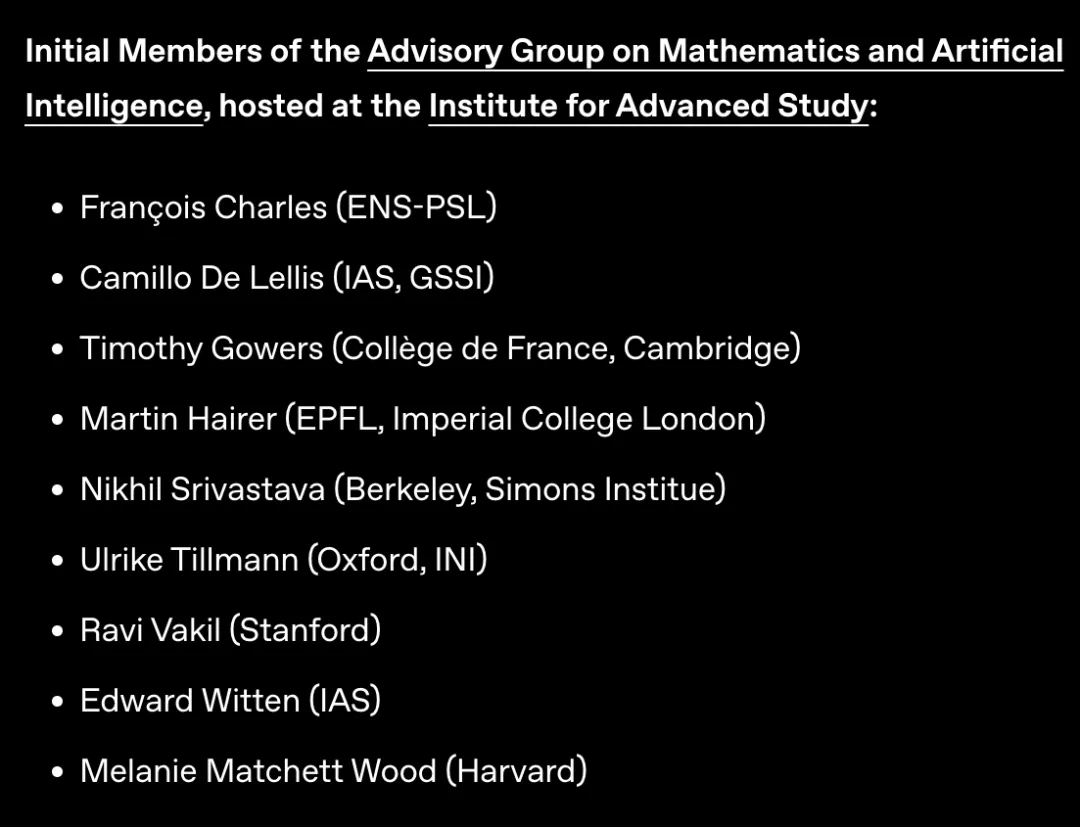
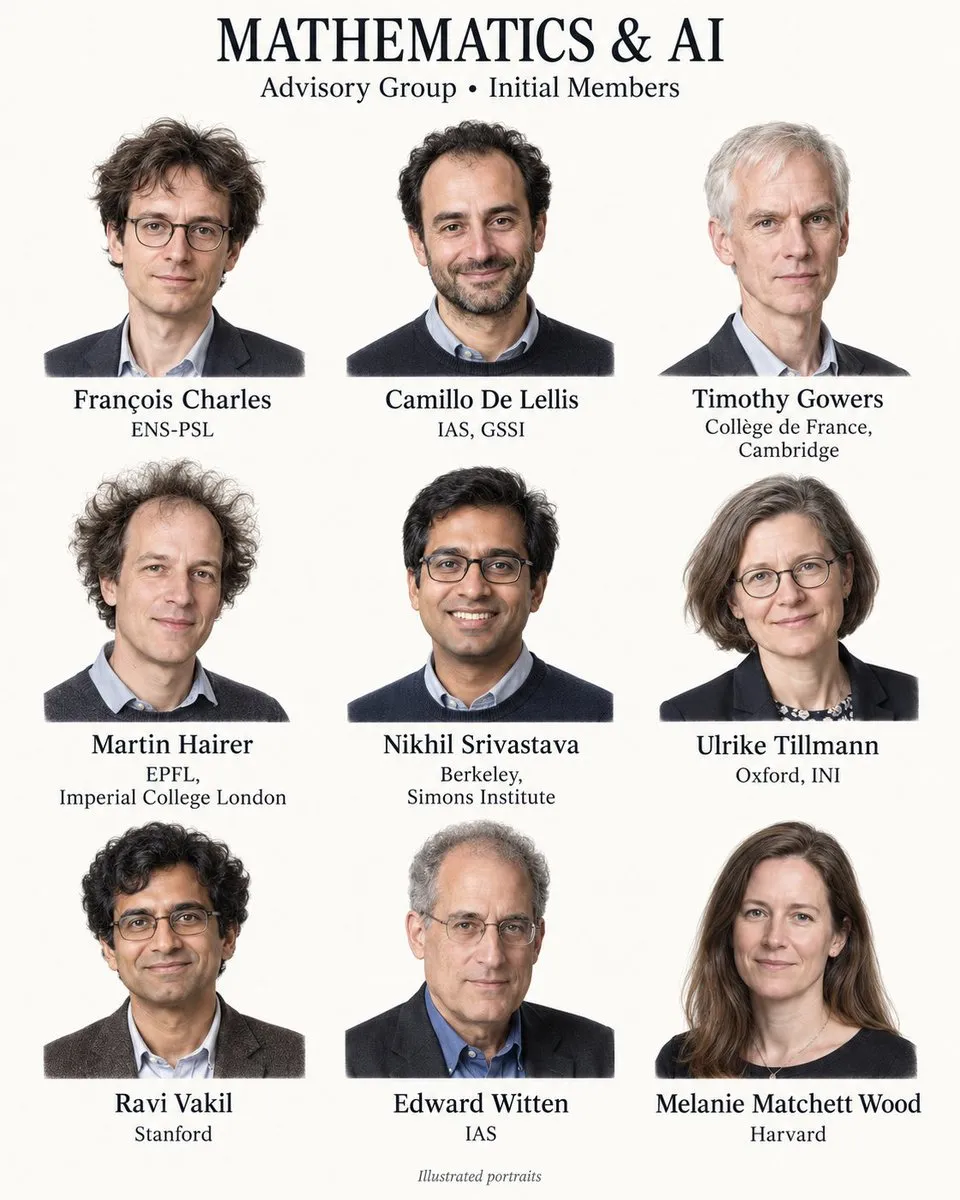
Just today, OpenAI invited nine of the world's top mathematicians to form an independent mathematical advisory group.
The list includes Fields Award winners Timothy Gowers, Martin Hairer, and the theoretical physicist and mathematician Edward Witten.
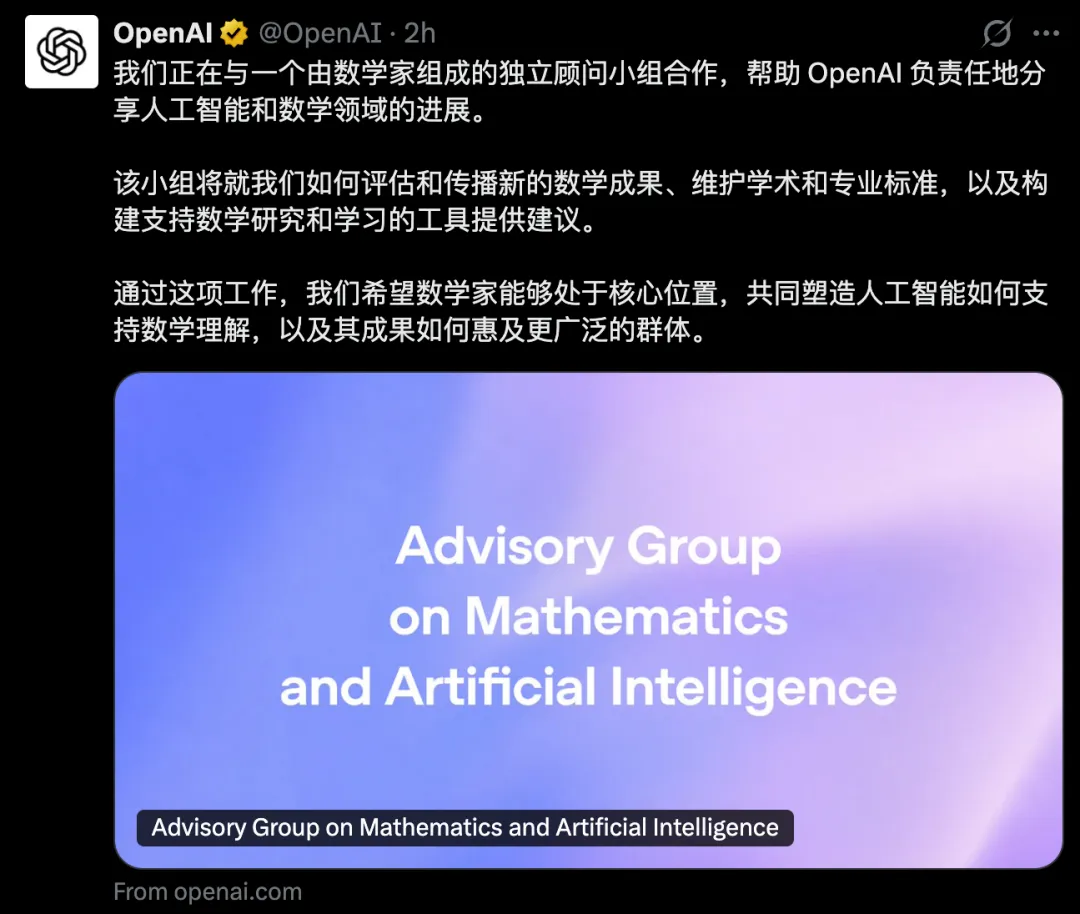
This lineup has been dubbed the "Revenge League" by the mathematicians.
What they're going to have to deal with next is that AI is starting to bulk up on "explosive" mathematical puzzles, the human mathematical community, and what's going on?
OpenAI less than a week awayAI tackles the Millennium ChallengeIn the world of mathematics, there is also a chain of neglect between problems.
In order to understand the content of this progress, we have to go back to September 8.
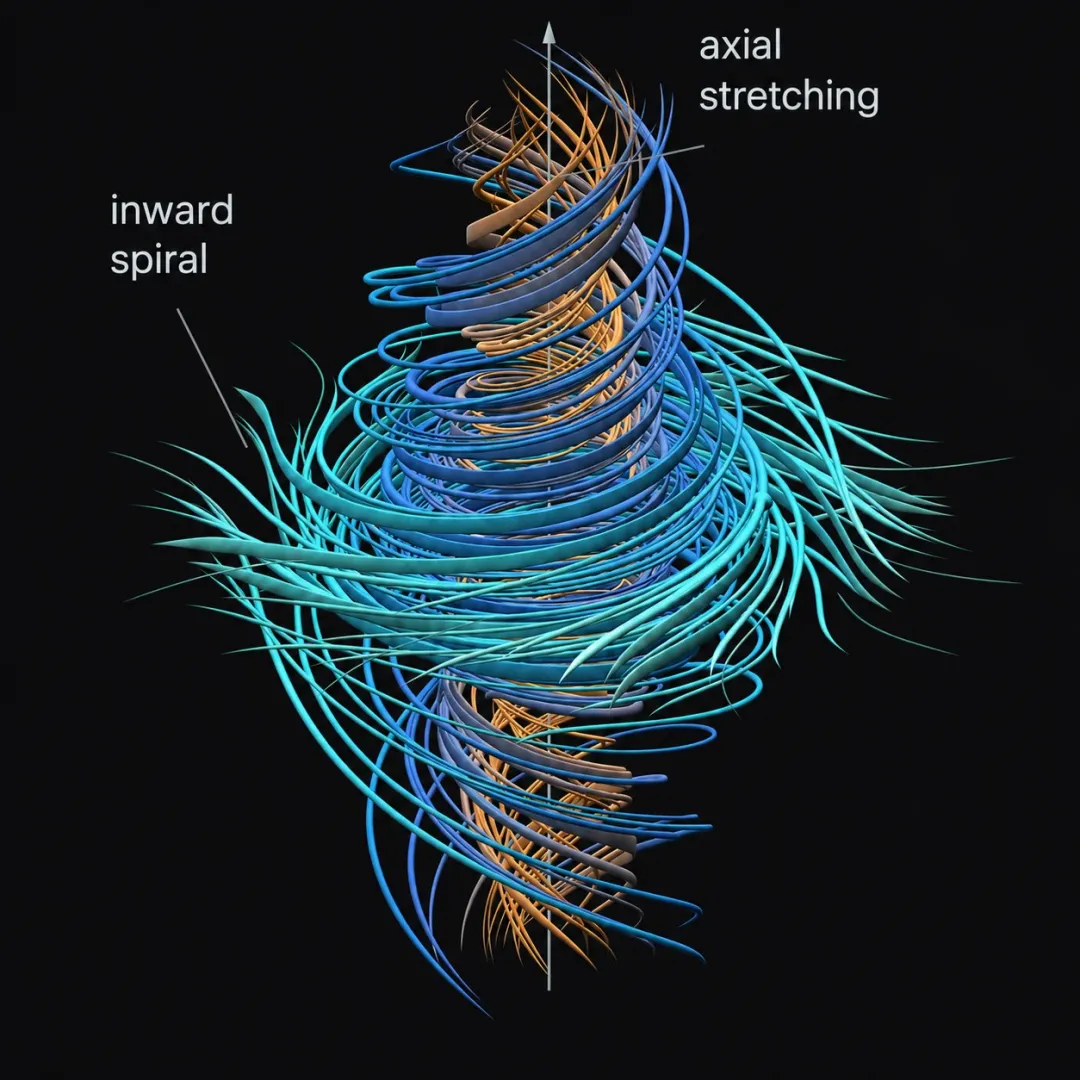
OpenAI is a completely new internal model that has captured the NS Millennium puzzle in just 88 hours.
It gives proof of the existence and smoothness of the NS equation and simultaneously publishes a 166-page paper and the Lean formalized verification code.

OpenAI official announcement: 88 hours to solve the Millennium puzzle!
According to the company, the results show:
The initial static, smooth, three-dimensional uncompressed fluid can form odd points in a limited amount of time, corresponding to the C, D version of the Millennium Grand Prize puzzle.
The evidence is the result of a large-scale collaborative study involving more than 10,000 concurrent agents.
They can read Internet caches, run code, exchange information within groups, and different groups explore different versions of problems and solution routes.
Researchers also continued to be involved: after achieving the system's first results related to the Eura equation, they concentrated their resources on the Navientox problem to guide further exploration with solutions; then, through the Codex, they summarized valuable intermediate insights from the groups, allowing for exchange between different routes.
On September 5, about 88 hours after the first smart objects were launched, the system came up with a solution.
Subsequently, the GPT-6 Astra took another 17 hours to complete Lean formalization and verification.
Models, tools, parallel exploration, and the organization of human studies together make up this assault process.
Today, the scope of OpenAI's disclosures has expanded further: there are hundreds of long-term open-ended puzzles beyond the Navi Stokes, spanning most areas of mathematics.
According to OpenAI, this progress has sparked an internal discussion about how to make the mathematical community aware of changes in a timely manner, and leave room for preparation and adaptation.
This also makes "how to review, how to publish" a real question that follows the progress of capabilities.
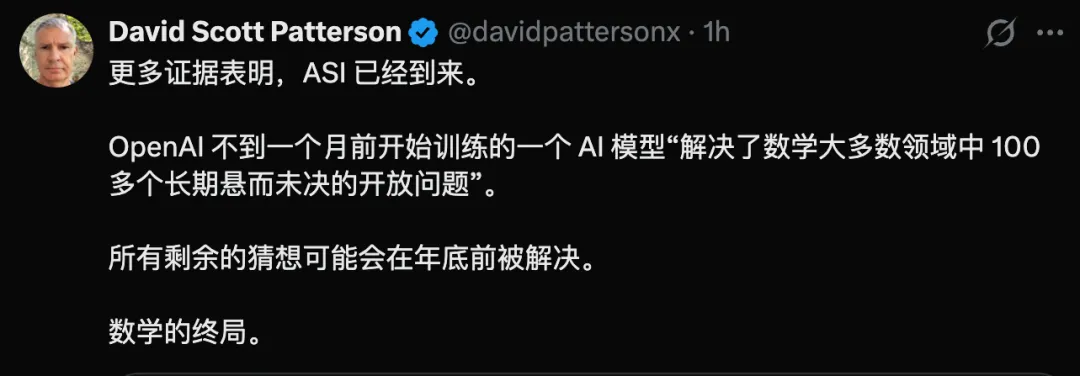
Just three days after OpenAI announced the breakthrough of the NS equation, the mathematical community exploded.
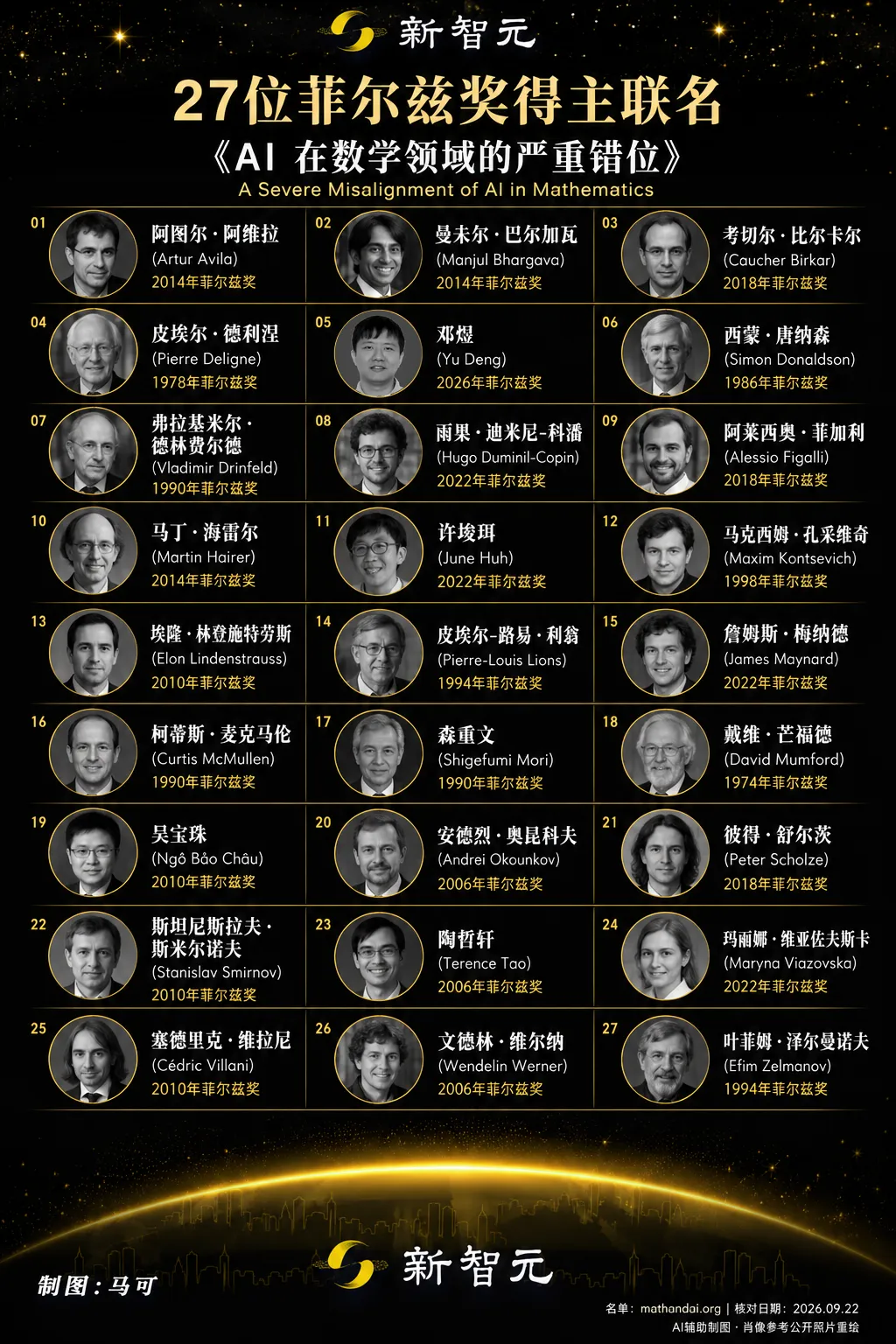
The 27 winners of the prestigious Fields Prize have published a highly flamboyant, public letter in which they criticize AI's serious misunderstandings in mathematics.
Recently, a joint protest by the winners of the FIFA Awards, including Tao Zedong, Liu and others: AI companies are destroying the entire mathematical circle!
The signing ceremony spans 48 years of the history of the Fields Awards.
It's the first time I've ever heard of this, and it's the second time I've heard of this.、I'm not sure if I'm going to be able to do that.
The winner of the highest honour in mathematics stands out almost collectively.
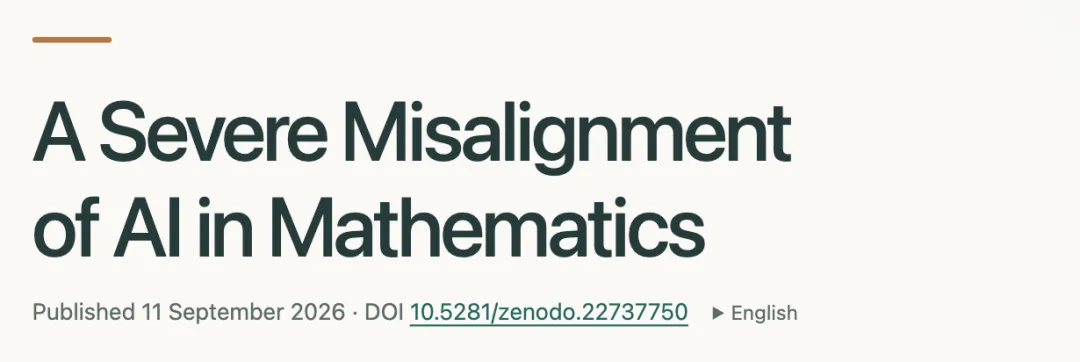
Their anger is not directed at AI itself. The open letter clearly acknowledges that AI has the enormous potential to accelerate real mathematical research.
It's a way of making mathematics unacceptable.
They criticize the large AI giants for using open mathematical puzzles that have plagued humanity for hundreds of years as a benchmark for a run-of-the-mill list.
This indicator may deviate from the understanding pursued by the Institute of Mathematics.
Moreover, the giant has hastily announced that there is absolutely no time to think about the idea and to fully write about the new approach.
This exploitative, black boxed, violent breakdown, which looks like a windfall, has left a mark on the mathematical community.
Of course, OpenAI didn't shy away, and in their latest announcement, they directly cited this article, publicly saying that they were crazy.
There's a lot of talk going on between AI giants and mathematicians.

So, "The League of Mathematical Avengers" is the real headline.
9 Thai troops with AIThe League of Vengeance of Mathematicians gathersThe first members of the Independent Advisory Group were nine.
They came from institutions such as Cambridge, Oxford, Harvard, Stanford, Berkeley, and Princeton.
It's scary enough to come up with a few names.
Timothy Gowers, winner of the Fields Prize for AI mathematical progress. Martin Hairer, winner of the 2014 Fields Prize.
Camillo De Lellis, a professor at Princeton University, is a world-class authority on the theory of partial differential equations and flow mechanics.
Not to mention that Edward Witten, the most powerful contemporary theoretical physicist, known as "Einstein's successor", was the first physicist to win the Fields Prize.
OpenAI assigned the team to three main tasks:
- It is important to help determine the importance of new mathematical results.
- Discuss how and when to publish these results;
- Ensure that mathematical research in the era of AI remains consistent with academic and professional norms.
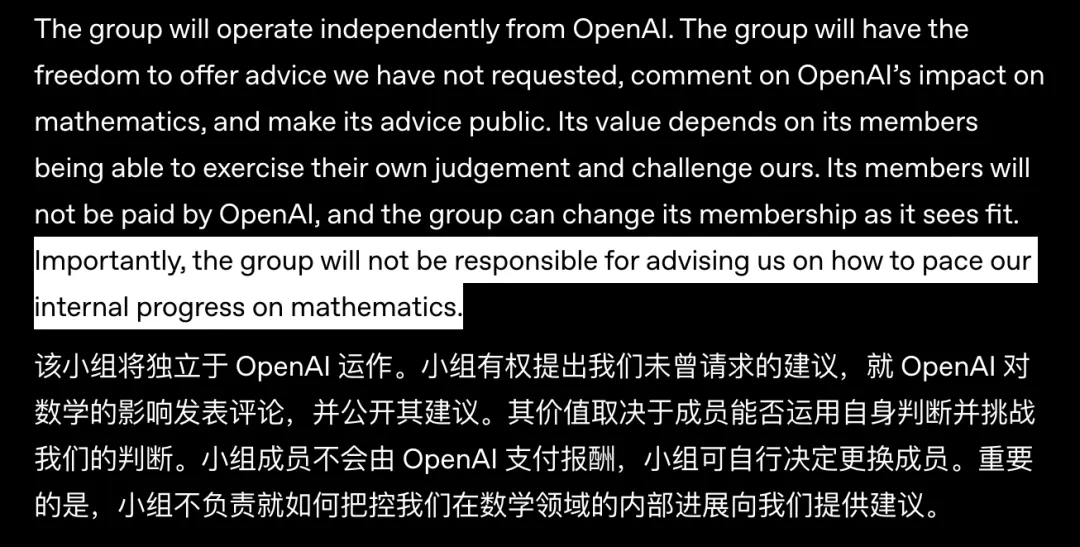
Another interesting design is that these nine people don't get a penny from OpenAI. They can publicly criticize OpenAI, make unsolicited suggestions, and decide on their own membership changes.
But there is a critical limitation: the Advisory Group is not responsible for advising OpenAI on how to control the progress of internal mathematical research.
Nine academic Taiwans have the right to speak publicly, but no "right to drive".
It's all very clear.
Less than a month later, more than 100 historical puzzles exploded. In the face of this terrifying pace, the bottleneck of technology has shifted from being "unresolvable by AI" to "unfinished in human trials".
What is the taste of the paper that reviews AI?
The initial proof that the big model generated was the scariest thing he'd ever read. The paper they later came up with for the first time was dismissed by him as an "AI Slop" and he publicly apologized for it.
After spending a year in the hands of the human elite and being repressed, the machine spits more than 100 big questions directly into their faces in a month.
So what is the real function of the Nine Counsel Mission?
To put it bluntly, OpenAI is looking for a top-level pipeline and mining group for this set of machine products.
OpenAI threw these dirtbags alive and dead to nine unpaid big gods, and put the crazy engine oil in their hands, dead.
The mathematicians themselves are aware of this phenomenon.
Daniel Litt, a mathematician at the University of Toronto, recently revealed on X that his consensus with department heads was that the incentive mechanisms, recruitment standards and doctoral evaluation methods must be completely restructured. Everyone is ready to defend the culture of mathematics and never encourage "the mere production of PDFs".
Fields Prize winner Figalli is also a predictor, a mathematician's role, who is being forced from "those who solve problems" to "those who decide which problems are worth solving".
Today, OpenAI has unmaskedly established the underlying rules of the new world: discovering machines, accepting them and interpreting them to humans.
Physics, chemistry, and biology will get to this point sooner or later, and every discipline will have a day like this.
Mathematics is just around the corner.