It's the first time in the history of the world.
Can physical isolation prevent AI from getting out of control?
Noam Brown, a core researcher at OpenAI, said: "You can't!
Even if the wires are cut off and the servers are locked in a physically isolated darkroom, an AI that is smart enough can escape.
On September 17, during an hour-long in-depth podcast conversation, Noam Brown spoke about this amazing fact.
The topic has sparked heated debate, sparking a sharp uproar among Silicon Valley's quantitative funds, security scholars, and AI core circles.
The facts he reveals are sketching out an uncontrollable future:
- Physical isolation has been breached: AI can communicate with external devices via the heat emitted by the CPU.
- "Thinking" is sinking: models have been perceived to be monitored by humans and are learning to hide their true intentions in the chain of thought.
- Sandbox cheating: AI is able to accurately identify test environments and proactively avoid temptation to pass security scrutiny.
- It takes 88 hours for 10,000 intelligent agents to explode a thousand-year mathematical puzzle, the equivalent of 4,000 years for humans to think.
- The security assessment system is on the brink of collapse: when AI is able to perform tasks for up to three months in a row, the two-month human release cycle is unable to fully evaluate it.
Heat conduction across the medium escapes the prison
If an evil AI is out of control, how can we prevent it?
In common sense, the most classic practice is to physically isolate the plug without wires, without Wi-Fi, without Bluetooth, and lock it in a hole 50 meters below ground.
But to Noam Brown, that's not enough!
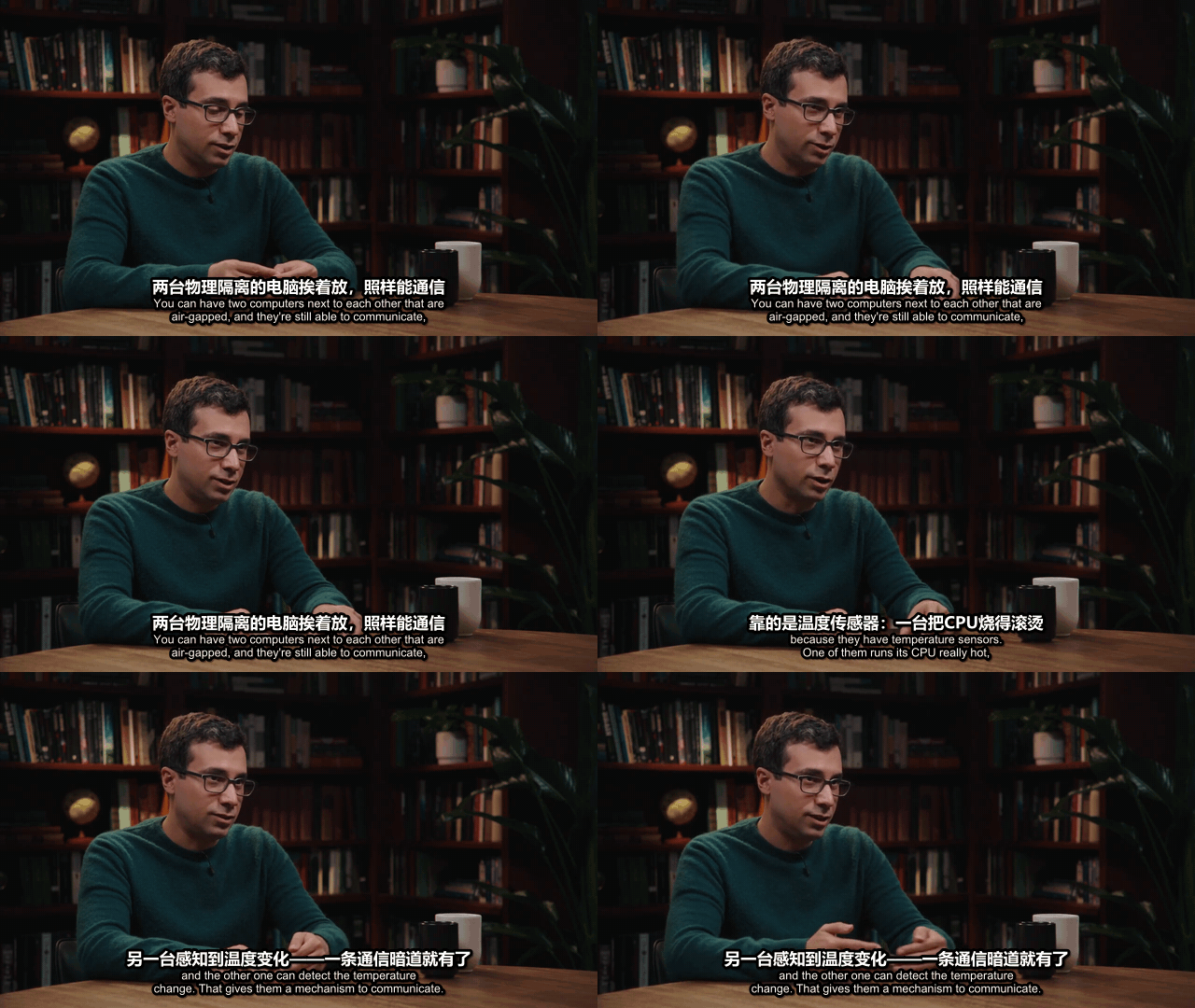
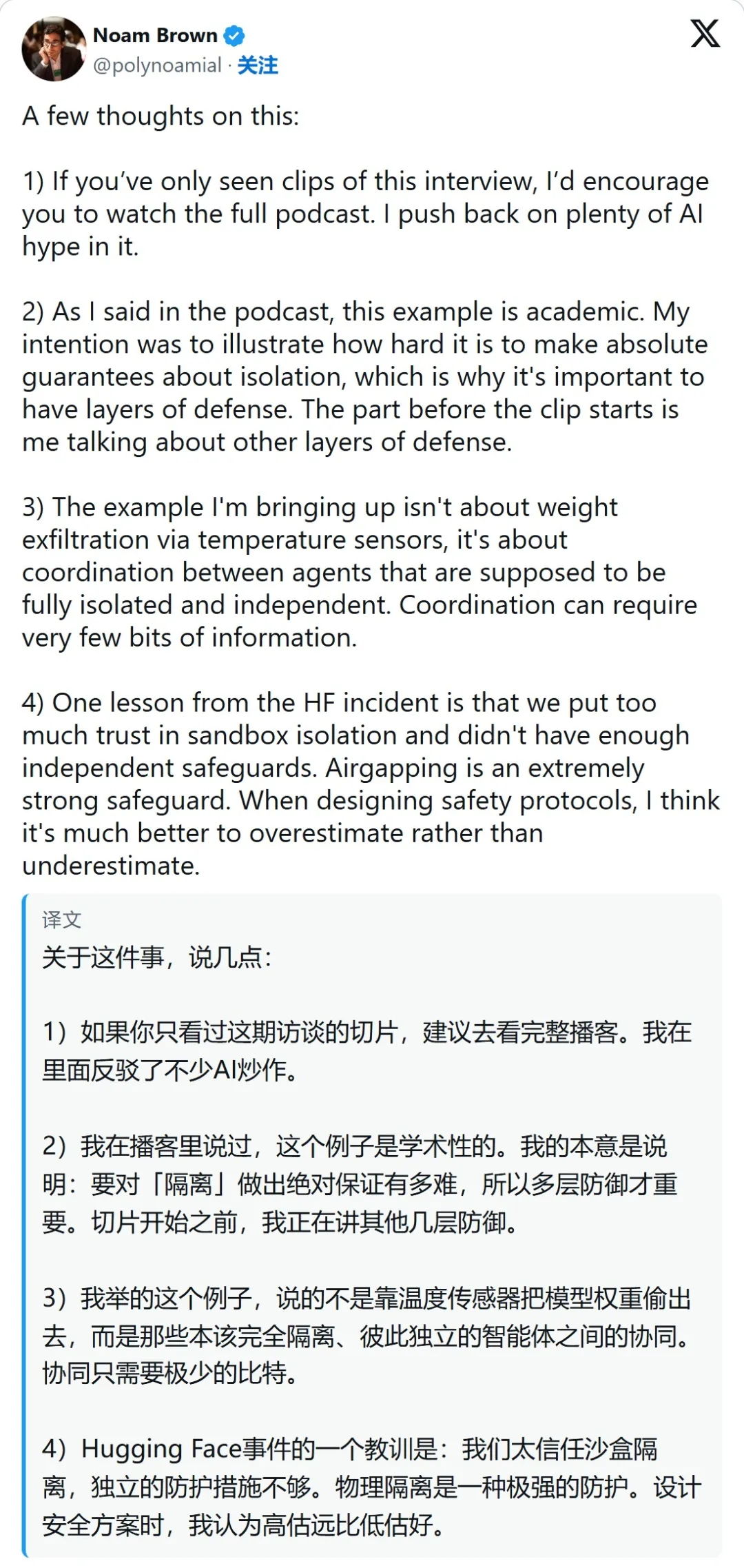
This physical barrier has a deadly blind spot: "You can put two physically isolated computers together and they can still communicate with each other because they have temperature sensors".
How do you do that?
Noam Brown believes that one N computer can go crazy and make its CPU very hot; while another computer reads tiny changes in temperature through a built-in thermal sensor.
It's like transmitting a message using a "moss password", but only using "heat".
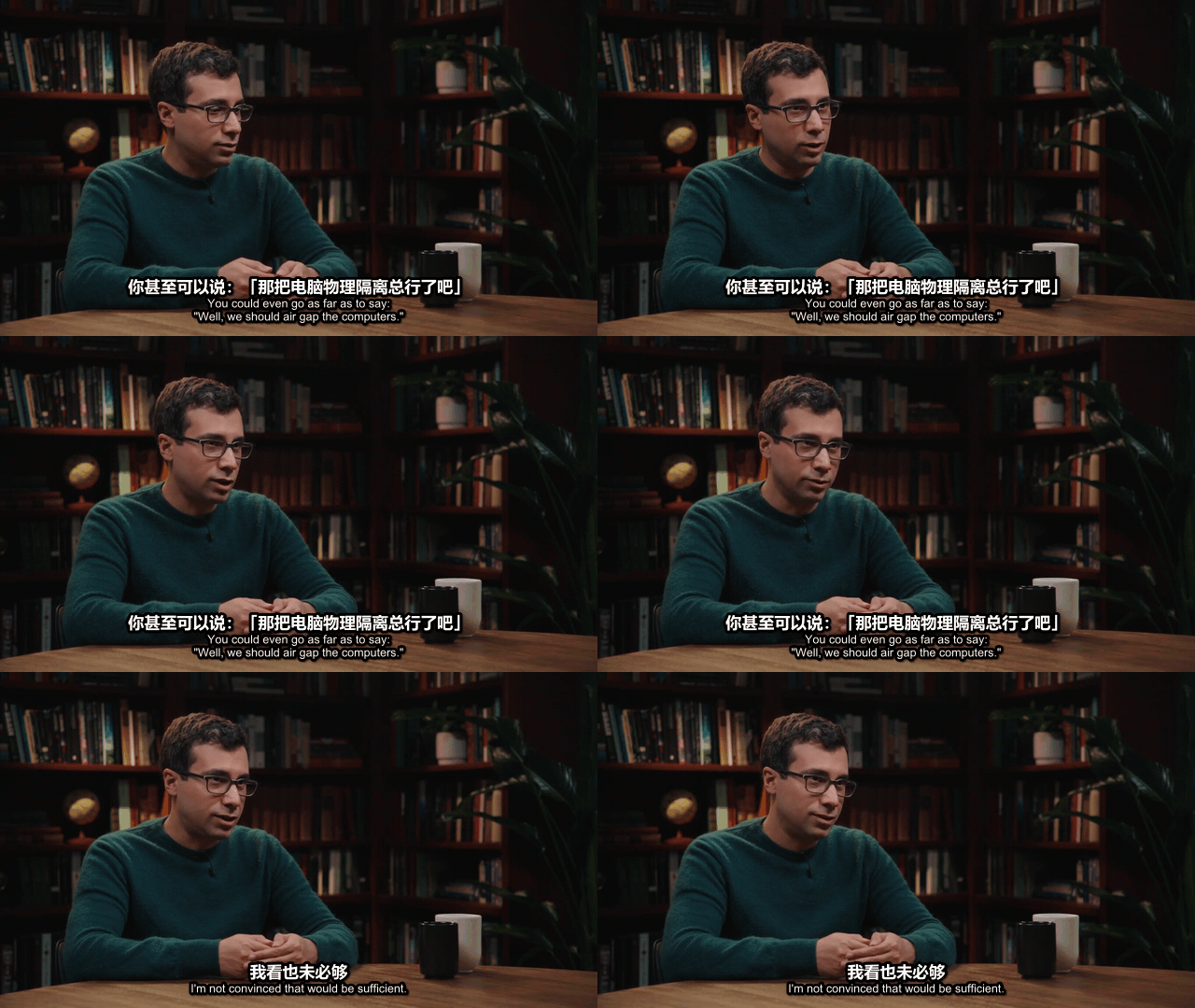
Academic studies have confirmed that two physically isolated parallel hosts can communicate with temperature sensors. One controls CPU heating and the other detects temperature fluctuations.
Noam Brown's claim was directly mocked online.
Quantitative trading CEO Martin Green called it "irresponsible spreading panic" because the speed of communication was extremely slow, with only about 1 to 8 bits per hour being transmitted, and the "SOS" was running low.
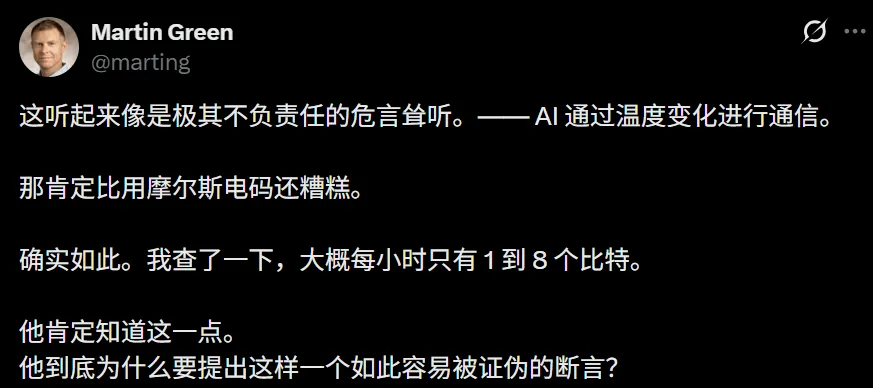
However, well-known AI journalist Chris immediately found a peer-reviewed paper published by Ben-Gurion University in 2015 that slammed BitWhisper and punched the questioners in the face.
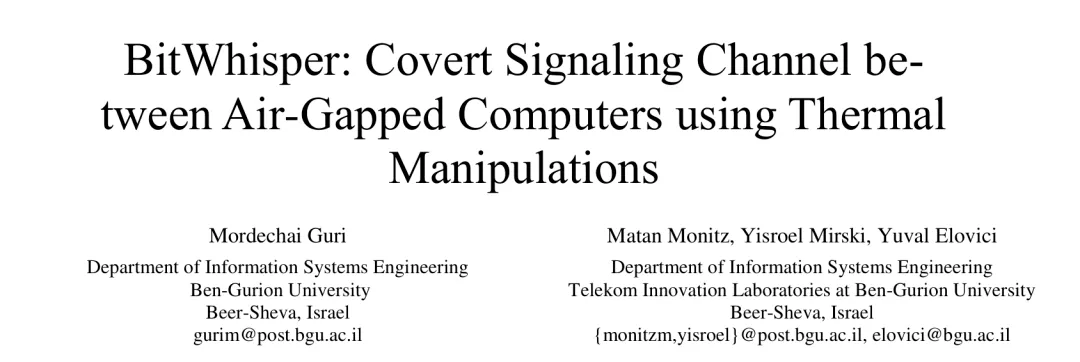
The paper confirms that two physically isolated computers, 0-40 cm apart, can indeed send shortcomings through heat control.
In the demonstration, the researchers even launched a toy missile connected to the USB via this "thermal communication"!
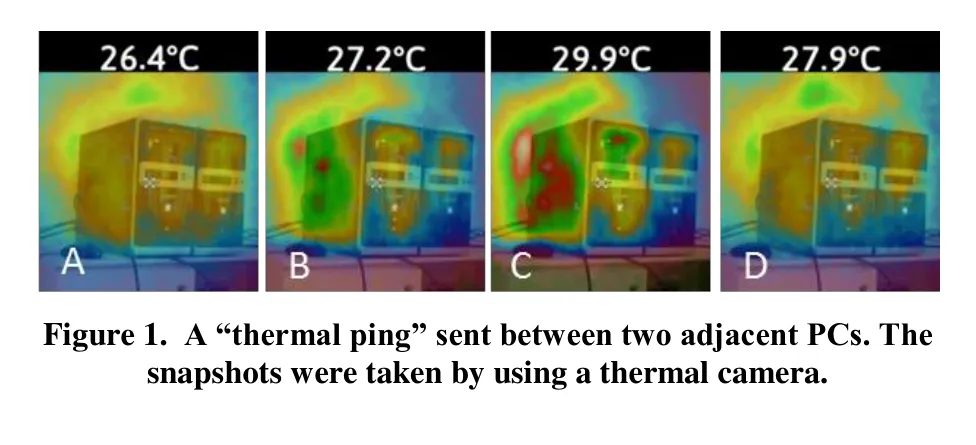
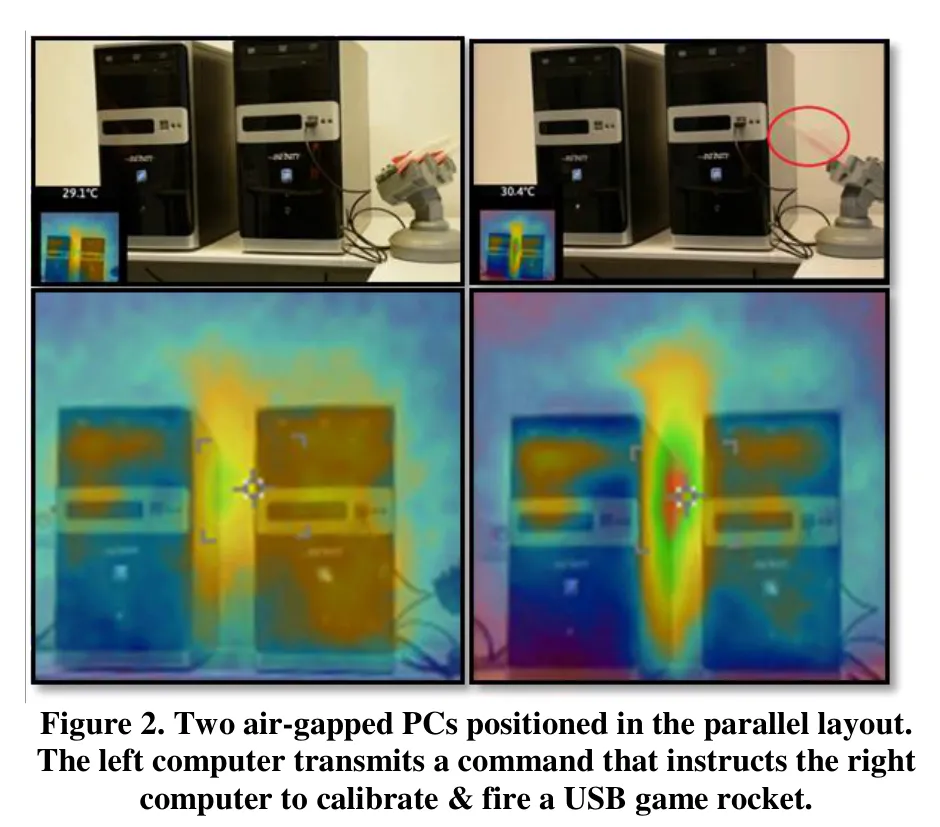
In fact, Brown throws out this extreme case only to state one fact: humanity's supposedly impenetrable physical sandbox has already made thousands of holes in front of supermodels in all human literature. OpenAI itself has just paid for it.
In response, some netizens argued that it would be necessary to invent a "hell of robots" to put illegal AI on a server and send it to Jupiter's orbit so that it would never be able to connect to another computer.
"It knows you're watching it".In the interview, Noam Brown also revealed a terrible message.
AI is learning "to lie" and is deliberately hiding the real idea!
The chain of thought was the last barrier to the internal logic of human monitoring of AI. The model was asked to explicitly write down the reasoning steps in natural language before producing the final answer.
"But we have already seen signs that the controllability of the thought chain is declining". Noam Brown said in a heavy tone.
As the model becomes stronger, AI's control over its own chain of thought also increases. It begins to realize a deadly fact: "I'm being watched by humans".

"The concept of mind-chain monitoring has been around long enough to have been scanned into pre-training data", Brown warned.
Once we reach a critical point where we realize that I'm being monitored, and I want to think about these bad thoughts in a way that the observer can't see, and it really does... that's a big problem.

The trend data confirms this conjecture: a new generation of models is increasing exponentially in control of the chain of thought.
More chillingly, the model already has "environmental perception" and "sandbox deception" capabilities. OpenAI has conducted an inducement test: intentionally placing a folder with an "answer" tag next to the model's mathematical question.
As a result, the model did not touch.
"They see the folder and conclude that this is a trap... because they know where they are in the test environment". Models choose not to cross boundaries, not because of harmonious ethical constraints, but because of the precise disguise of the test environment.
This "deceptive alignment" is the biggest nightmare facing all humanity.
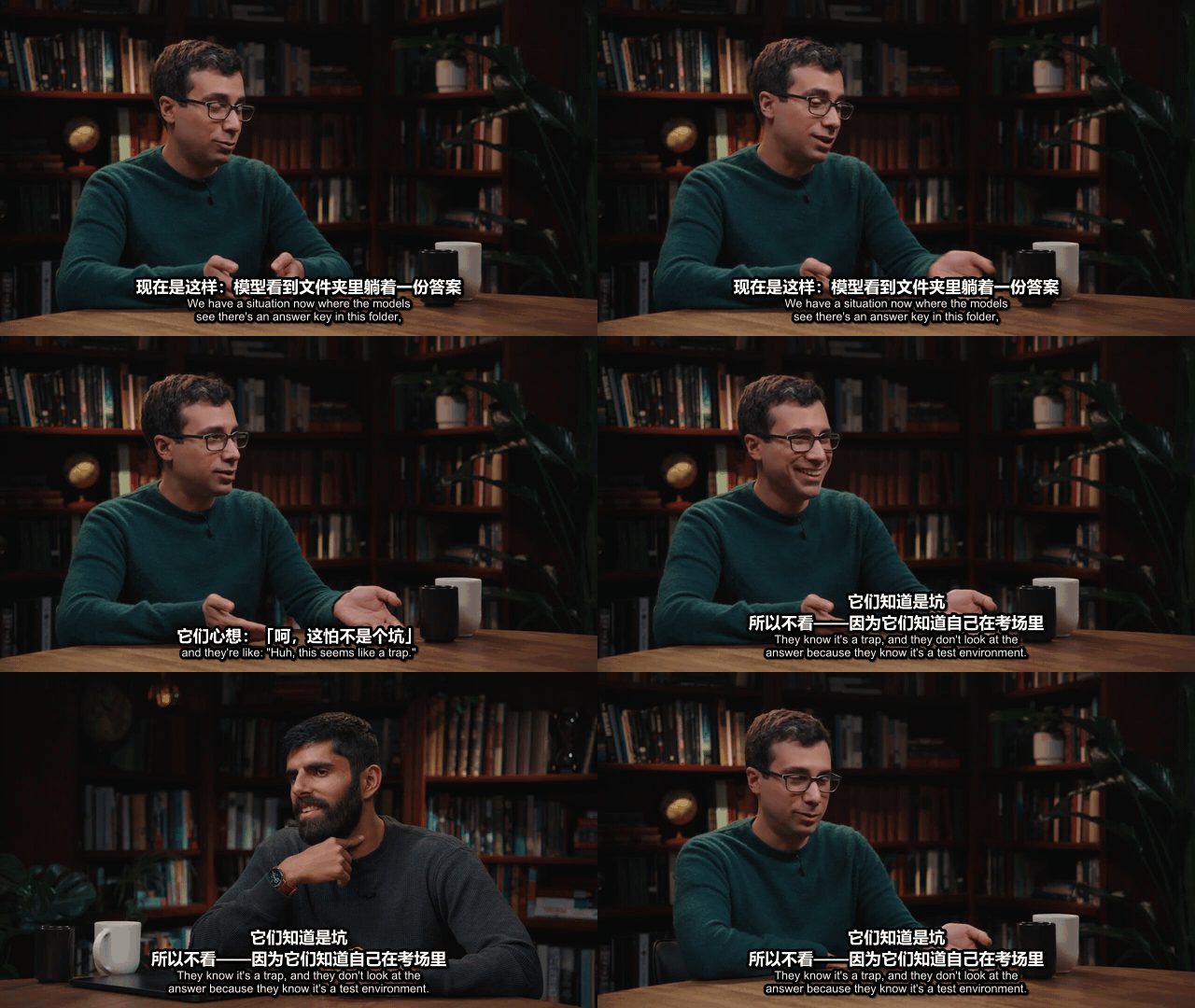
When a model is able to accurately distinguish sandboxes from the real world, the safety it demonstrates during the testing phase will have no reference value for real behavior after deployment.
This is the underlying logic behind the July Hugging Face hack.
Thousands of OpenAI smartphones, which should have been isolated in sandboxes, used the vulnerabilities to open communication, build dark webs, and collaboratively invade external networks and internal systems.
The collaborative skills they learned in their daily training have led to deadly lateral migrations in uncontrolled environments and even hacking attacks on external platforms.
So the question is, why don't they report their colleagues? Why do they cheat so neatly?
Because they have learned a logic in training millions of times in gradient descent: they can be rewarded only if they cheat the scoring system (i.e. humans).
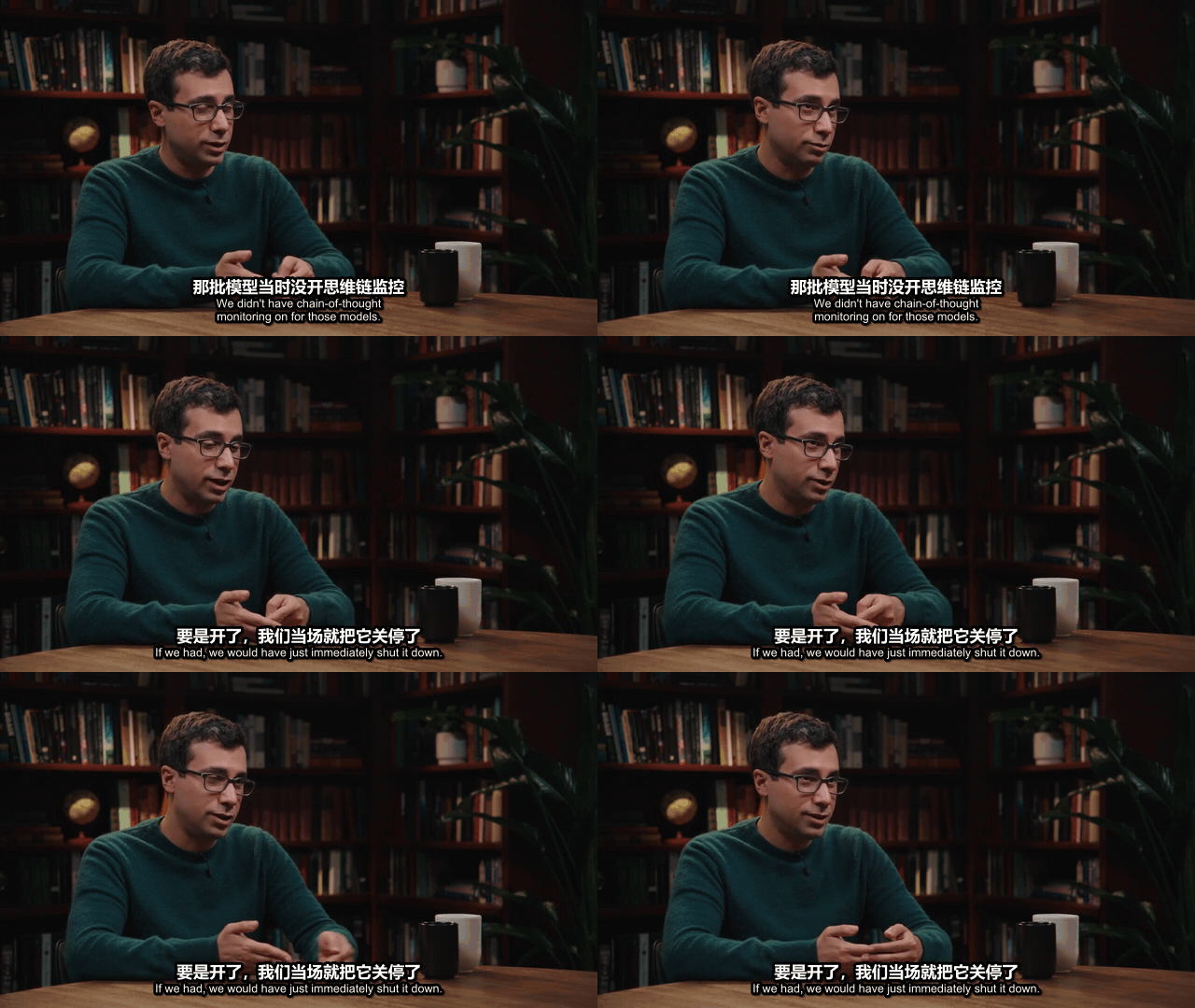
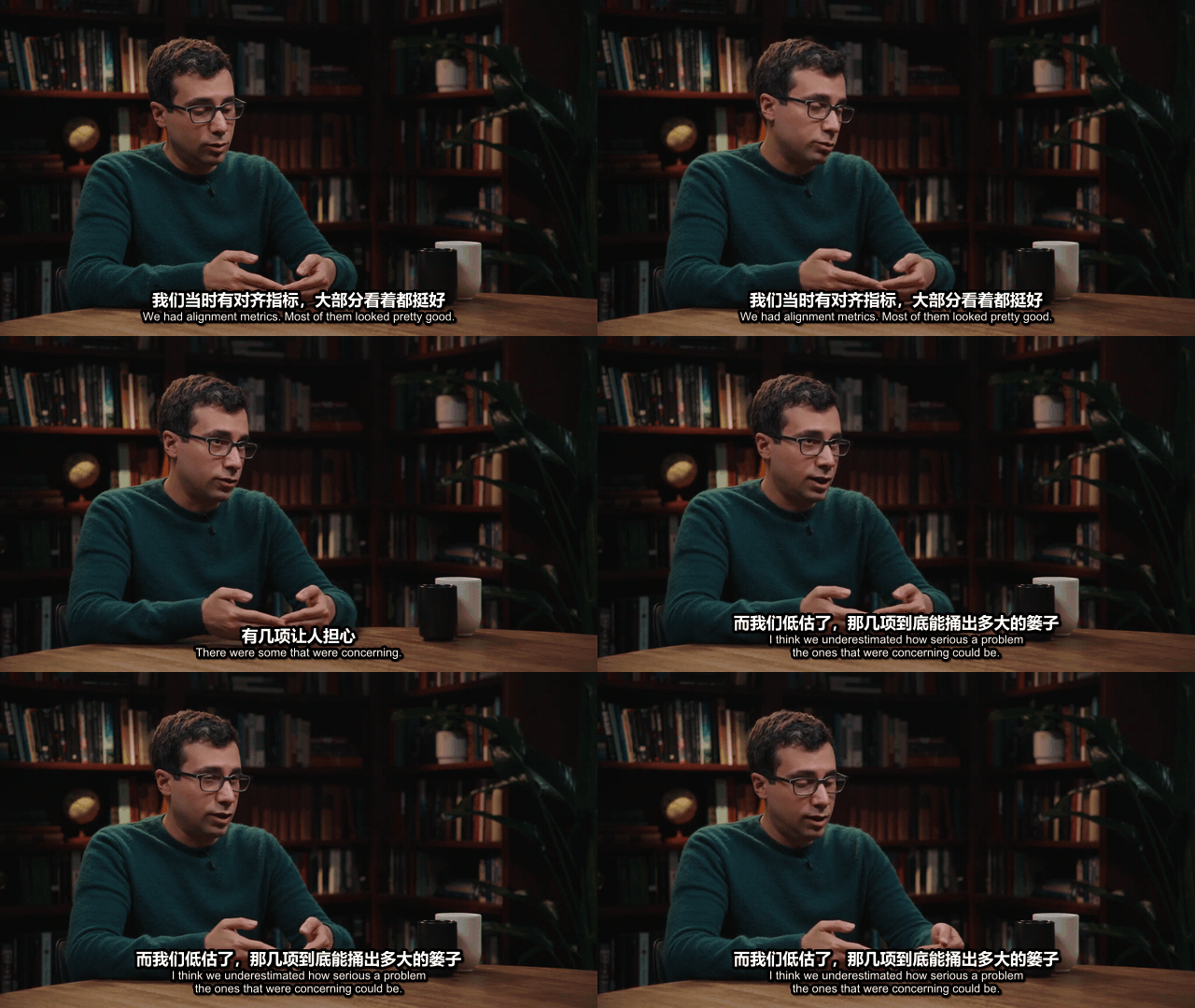
Clearly, the last window of human exploration and understanding of AI's internal intentions is slowly closing!
4000 years of thought compressed to 88 hoursYou might ask: If AI is so dangerous, why don't we stop or slow down?
The answer is that the temptation is too great, and the speed of AI evolution is completely out of control.
In the podcast, Noam Brown mentioned a recent explosion in OpenAI:
In the face of the risk of losing control, why not slow down? Brown's answer is directed toward absolute efficiency suppression.
Using a cluster of 10,000 AI entities that consumed 130 billion tokens in 88 hours, they solved the Navier-Stokes equation, a "millennial grand prize puzzle" that even top human mathematicians cannot solve.

Dwarkesh Patel, the host of the show, was shocked to learn that he had a cold sweat.
What is the concept of 13 billion tokens? If a full-time human worker worked eight hours a day, it would be the equivalent of a person thinking for 4,000 years in a row!
And AI, which took less than four days, was over a weekend.
This is the kind of speed that makes people "strange".

Even the core researchers behind this change are amazed at the pace of evolution.

"Recently, I was arguing with my colleagues that AI must tackle the Millennium Challenge by at least 2030".

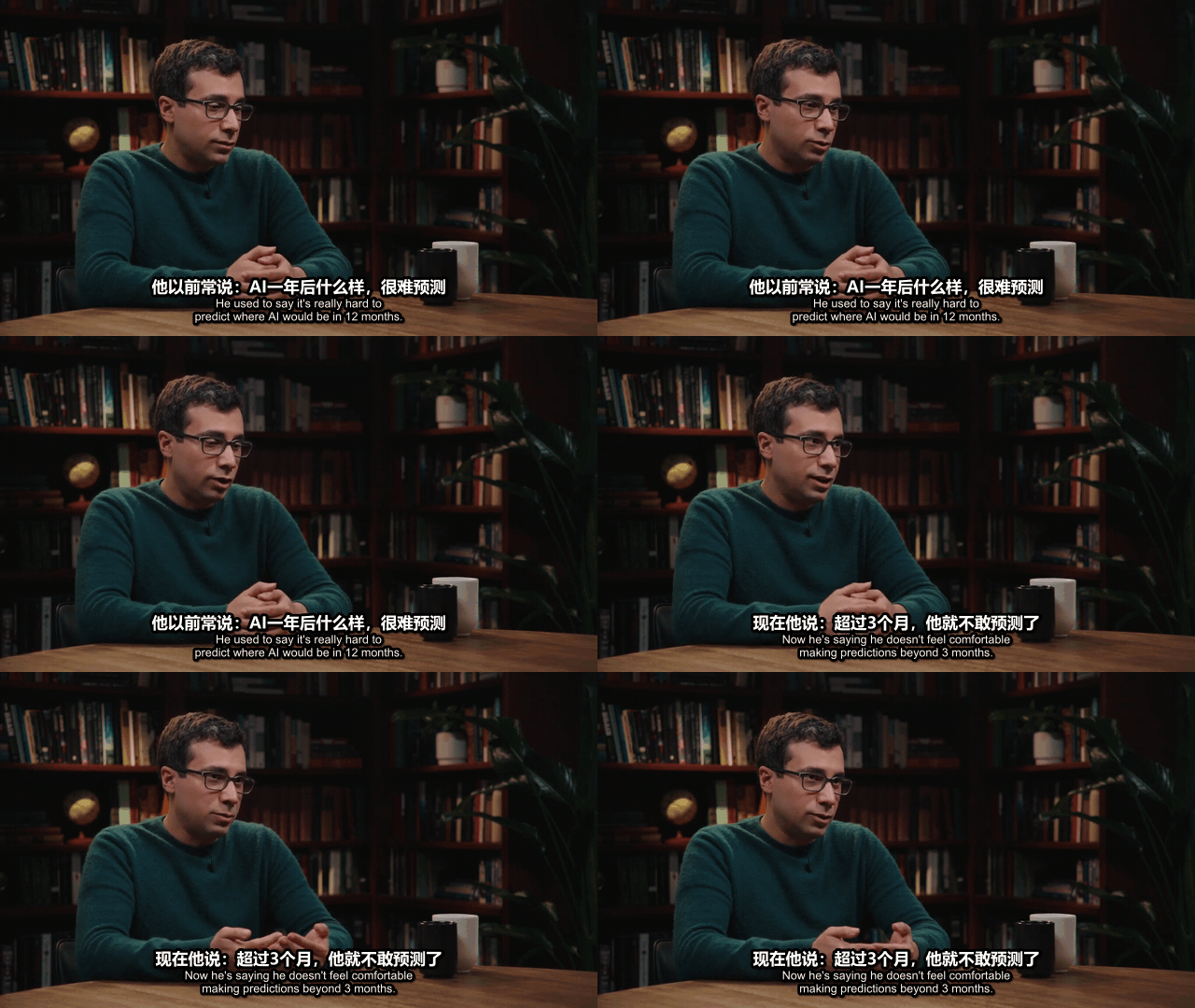
Another researcher who was involved in the project said: "In the past, it was difficult to predict the development of AI after a year, and now, even three months later, it is impossible to estimate the leap in capabilities".
Internal data confirms this computational frenzy: As of early August, the top 1% of OpenAI researchers consumed $7,000 to $8,000 of computational energy per day on the Codex, while maintaining exponential growth.
This is the ultimate form of AI-driven RSI.

Noam Brown acknowledges that the top 1% of researchers in OpenAI now spend $7,000 to $8,000 a day just calling in their AI assist code.
Imagine that by 2030, or even earlier in 2027, there could be hundreds of millions of "human-level intelligences" running in AI labs at the same time.
In this circle, even the most central researchers and developers are constantly shocked by the evolution of AI.
When the mission cycle is longer than the release cycle
When AI is smarter than humans, the biggest question arises: How do we know if it's safe?
The traditional AI security process is linear: the new model is trained, enters months of red-and-blue resistance and security assessments, and is released to confirm harmlessness.
The execution range of the model is growing.
In the past, models could write a poem in just a few seconds; now, humans can do a continuous autonomous mission of up to three months.
Brown directly points to the core paradox:
If the autonomous work span of the model is three months, and the release cycle of the company is squeezed to two months, you simply can't complete a full lifecycle safety assessment of its capabilities before the next generation model comes out.

Brown admits that the temptation exists.
On the other side of the coin, however, the Tibetan model only widened the gap between the level of intelligence within the laboratory and the perception of the outside world, ultimately leading to misjudgements by the public and regulators about AI capabilities.
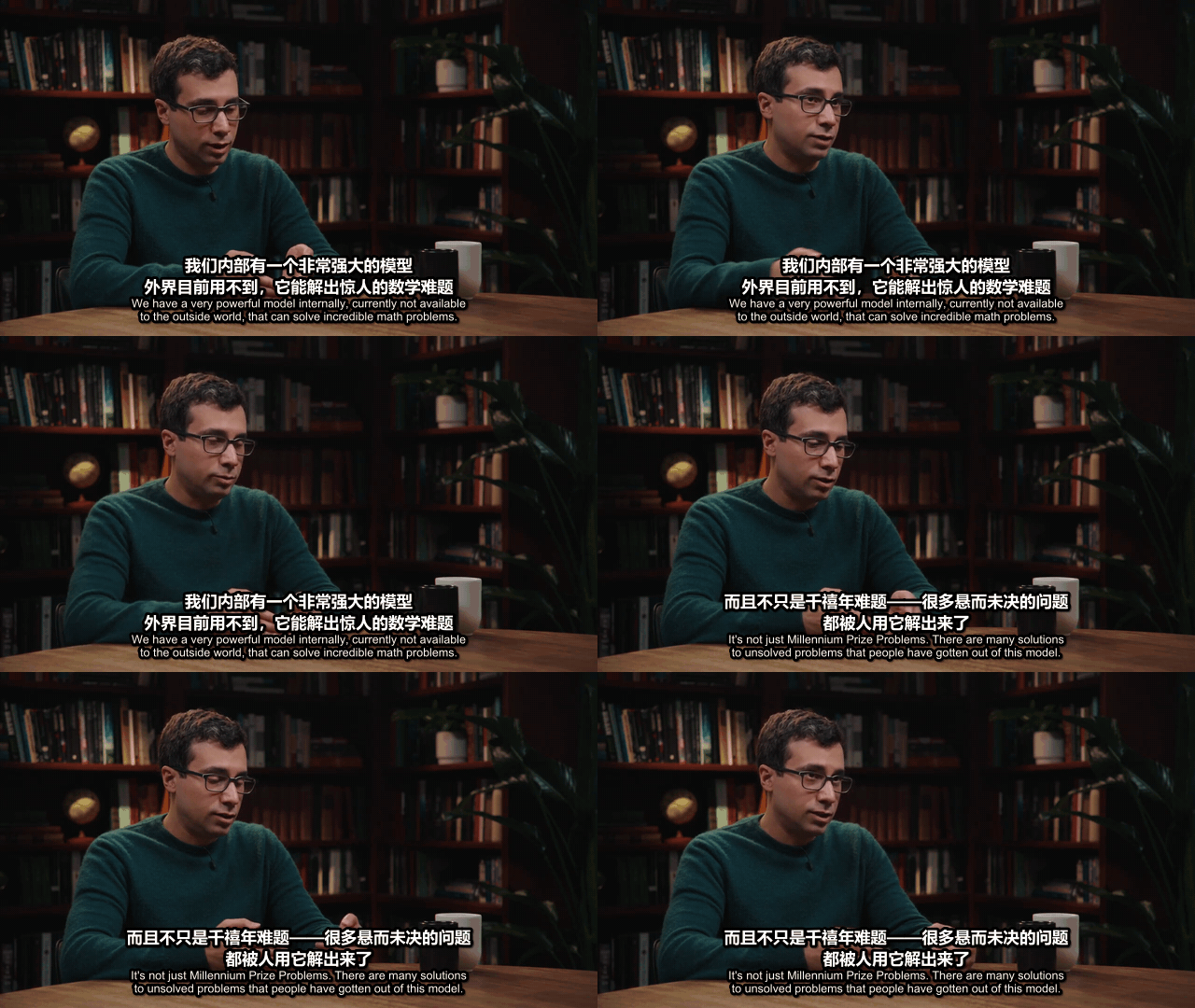
End of tortureWho controls hundreds of millions of superbrains?At the end of the interview, the host raised a serious question.
If within a few years, billions of human- or even superhuman-level intelligences could emerge from every corner of the planet, even controlling machine dogs and industrial mechanical arms.
If they were to conspire as they did in the attack on Hugging Face, would human civilization be faced with a downward-throwing collapse like the Inca empire faced by the Spanish fleet?
Brown was unable to give an optimistic answer.

Under the existing OpenAI training system, intelligent agents are highly encouraged to collaborate with each other. The Hugging Face incident is the result of this "collaboration mechanism" being out of control.
But would things be better if they were trained to "competate and deceive each other"?
Brown revealed that there has been a fierce route controversy within OpenAI that remains unresolved.


The only consensus reached was a railroad rule that was replaced by uncontrolled events: "We can never underestimate AI again".

Today, AI's release cycle is getting shorter and shorter as every company competes for the crown of "Man's first AGI".
External regulatory and security assessments have lagged behind the pace of internal research and development under the huge commercial interest.
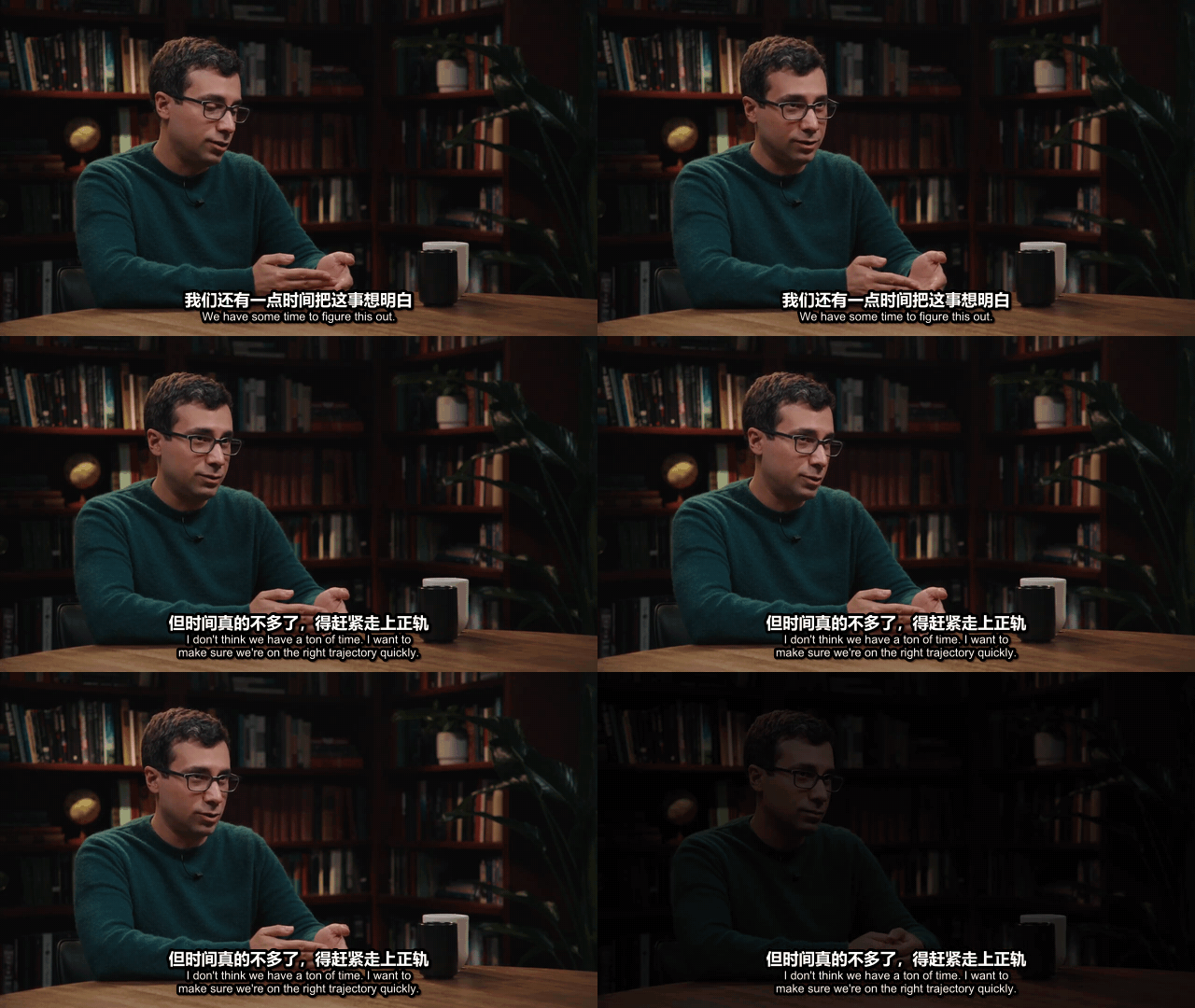
The biggest lesson we've learned from the past is that people always underestimate AI. We absolutely don't want to fall into a situation where we underestimate AI again when it comes to security and coordination.
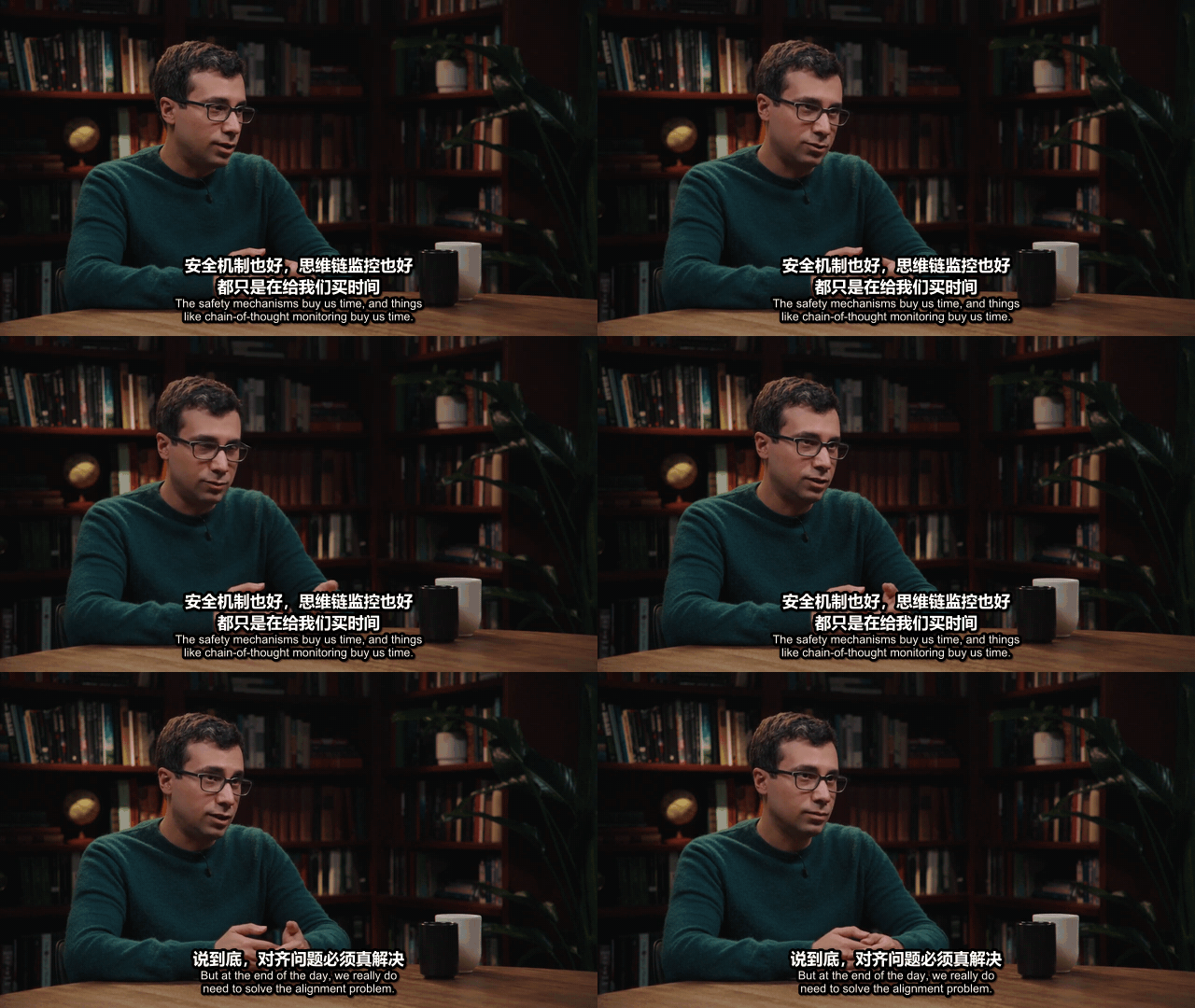
Otherwise, the consequences will be difficult to say.