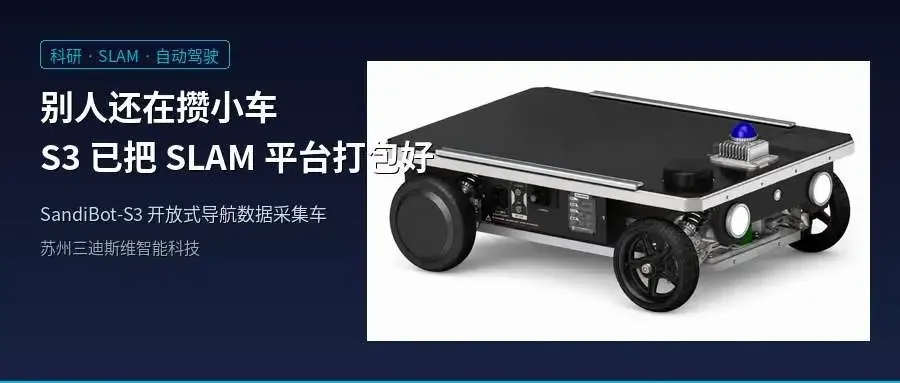
In Suzhou, SDSV packed three of the universities and developers' most painful "sensor selection + time synchronization + dashboard adaptation" into an open navigation data collection vehicle that can be directly handled.
The team that made robots, SLAM, and self-driving directions had basically gone through this phase: first buying a dashboard, then picking up a radar, then installing a controller and a camera.
The idea behind the SandiBot-S3 is simple: get this crap done for you. It's not just a running toy car, it's an open science research platform with computing power, sensors, synchronization, and ROS development environments.
First look at the parameters, then look at the values.
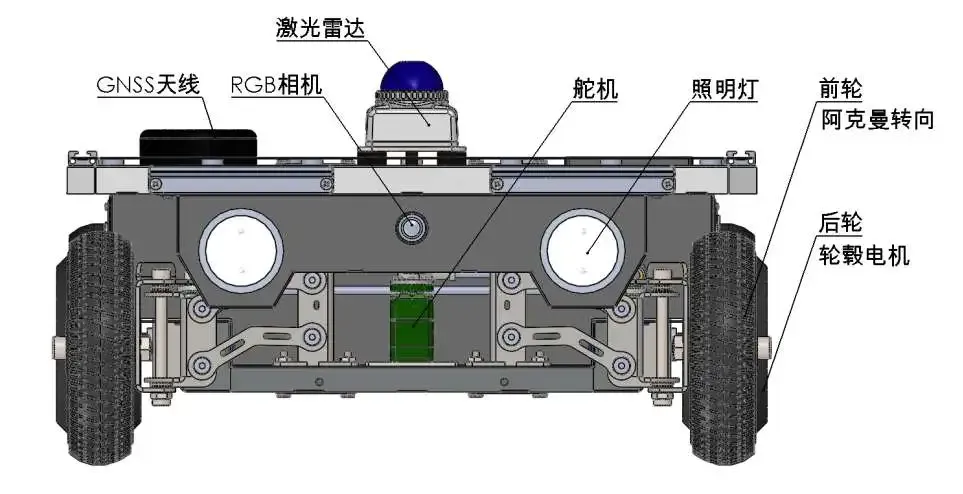
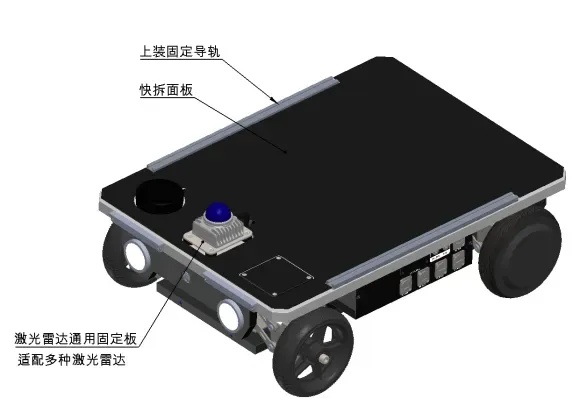
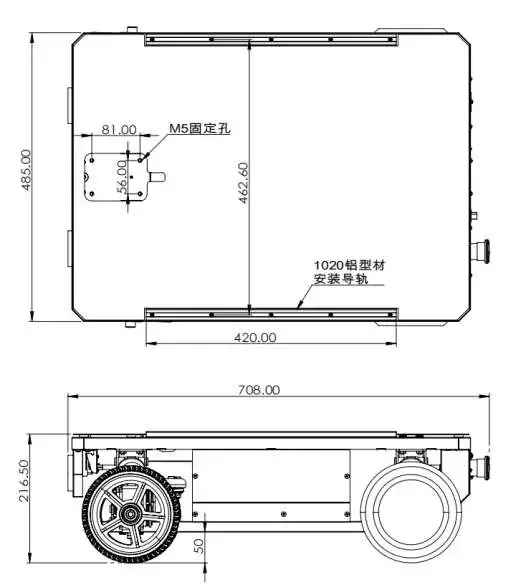
The SandiBot-S3 is a linear controlled bottom-disc navigation data collection vehicle introduced by Suzhou 3D Smart Technology. The rear-wheel drive + front-wheel Akman turn, body size 707 × 500 × 286 mm, self-weight 38 kg, maximum load of 65 kg, minimum turn radius of 1 m, can climb 20° slope over 50 mm obstacles.
It's just a carrier, and what's really worth it is this set of sensors and computing platforms:
- Intelligent microcontroller RK3588S, eight-core CPU + Mali-G610 GPU + 6 TOPS NPU, 16GB of memory, 32GB+256GB of storage;
- Equivalent 32 line laser radar, 360° horizontal field of view, 40m measurement distance, 200,000 points per second;
- Dual frequency GNSS/RTK modules, supporting systems such as BDS/GPS/GLONASS, RTK output of 1Hz, positioning at cm;
- 1080P industrial cameras, built-in IMU, 4G/5G industrial routers, and high-precision source vehicle antennas;
- 24V 12Ah lithium-ion battery, typically lasting more than 6 hours, and can run at full load for 16 km.
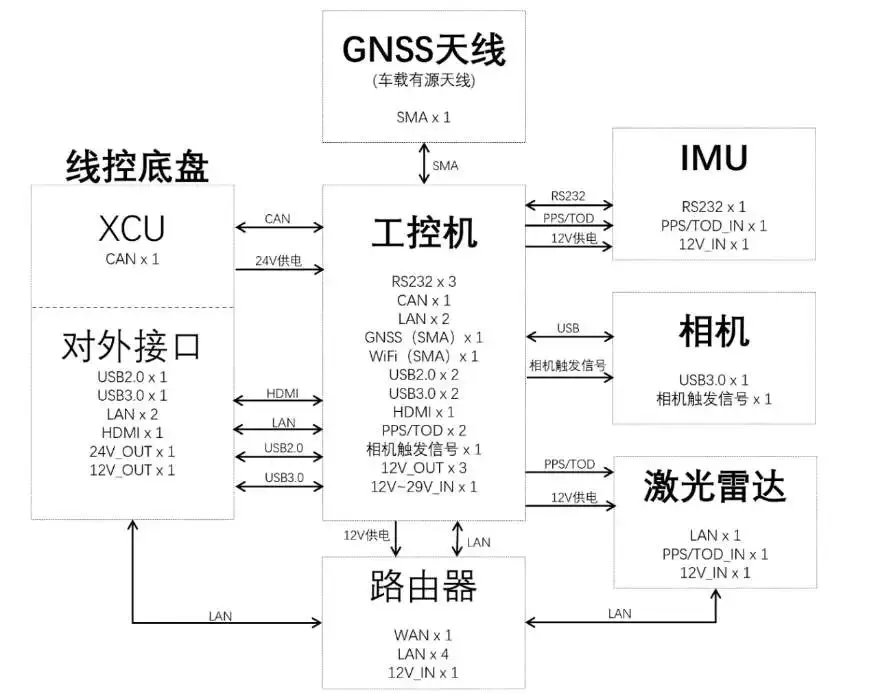
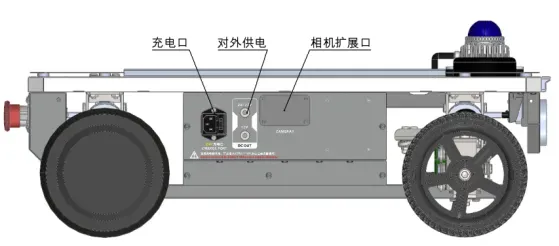
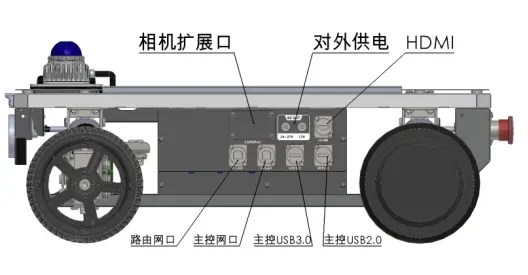
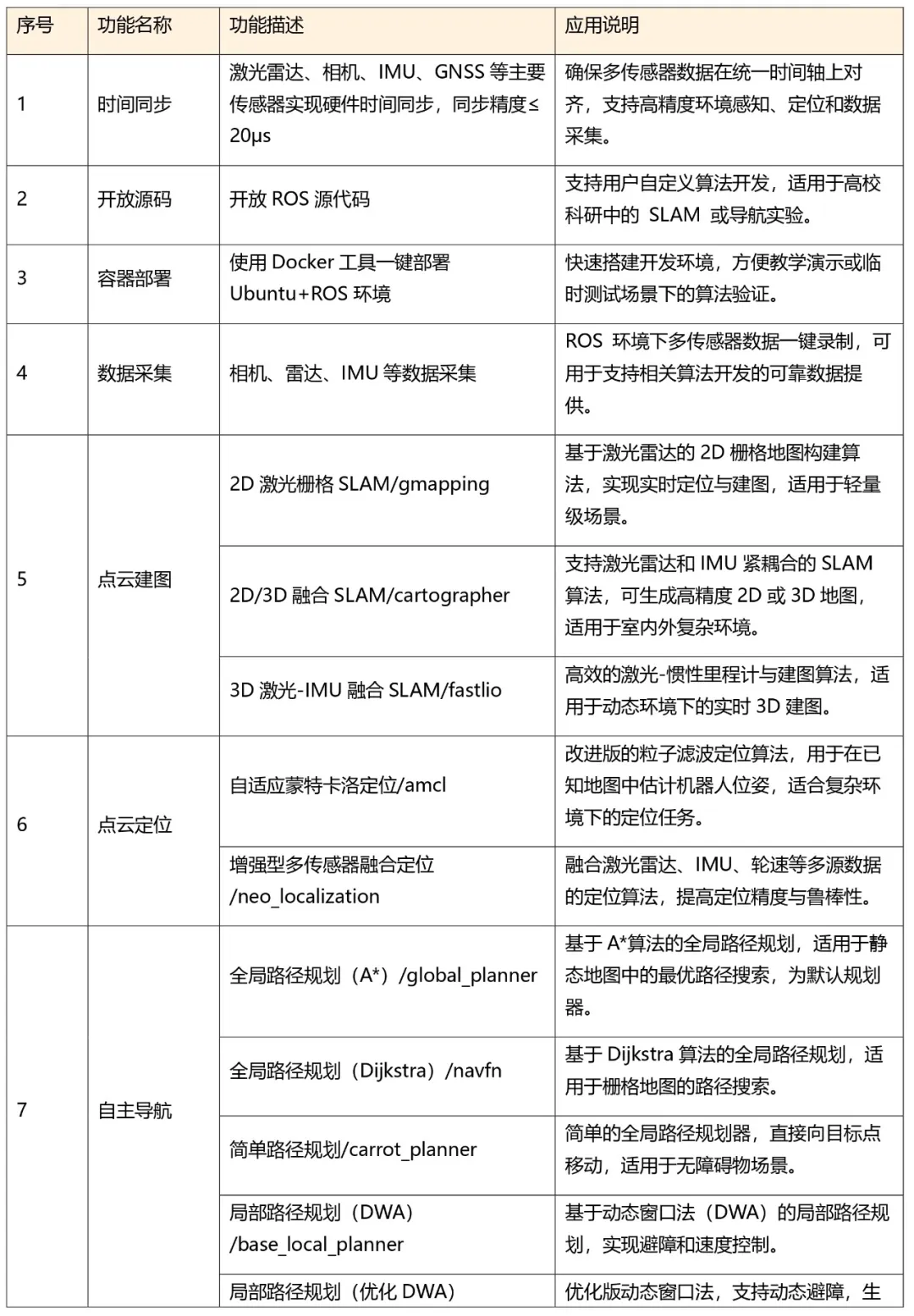
These parameters are not uncommon, the rare thing is that their time bands are unified. The SandiBot-S3 synchronizes the laser radar, camera, IMU, GNSS with hardware time, accuracy ≤20μs, and also provides PTP, NTP, PPS+TOD timing interfaces externally.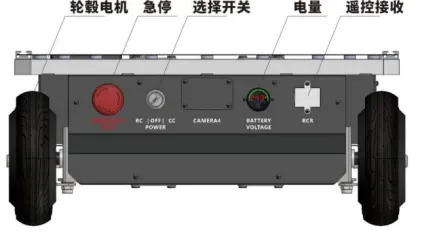
Software chains are the backbone of scientific research platforms
Anyone who wants to use the hardware stack can really use the research platform to see if the software chain is working properly.
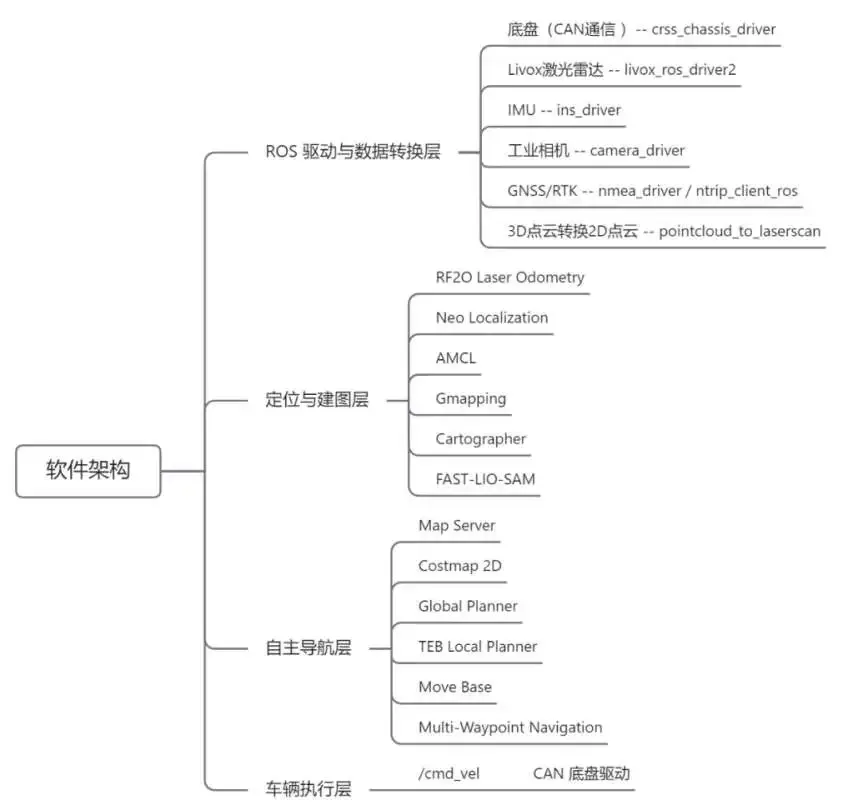
The SandiBot-S3 is a proprietary Tinycar_ws ROS software system based on Ubuntu 20.04/22.04, which supports Docker single-key deployment. The ROS drives for hard drive, laser radar, IMU, camera, GNSS have been received and provide a standardized /cmd_vel control interface, TF coordinate tree, URDF/Xacro model.
More difficult is the pre-integration at the algorithmic level:
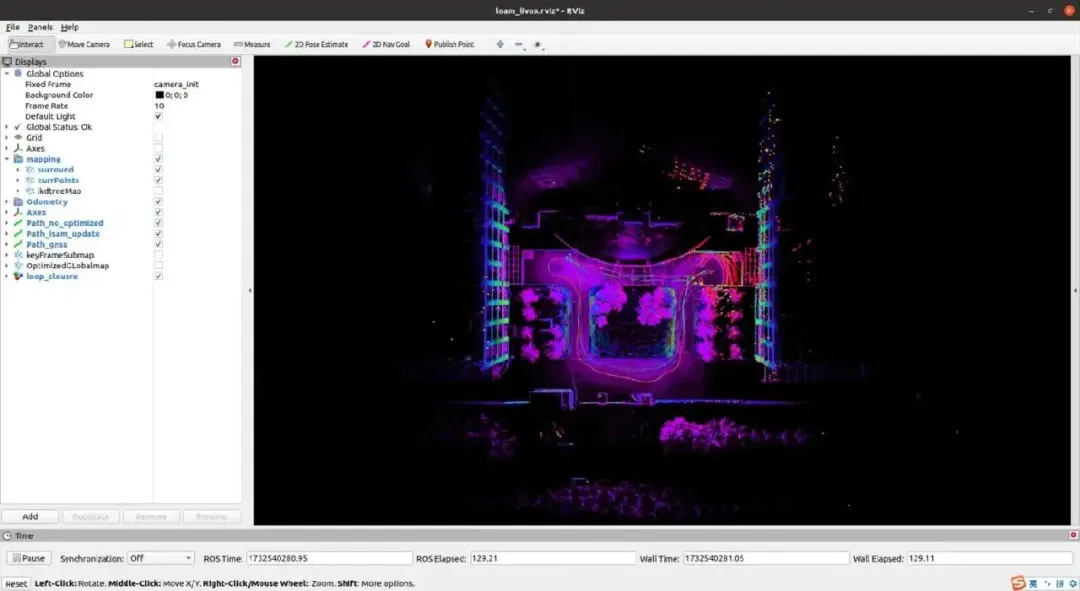
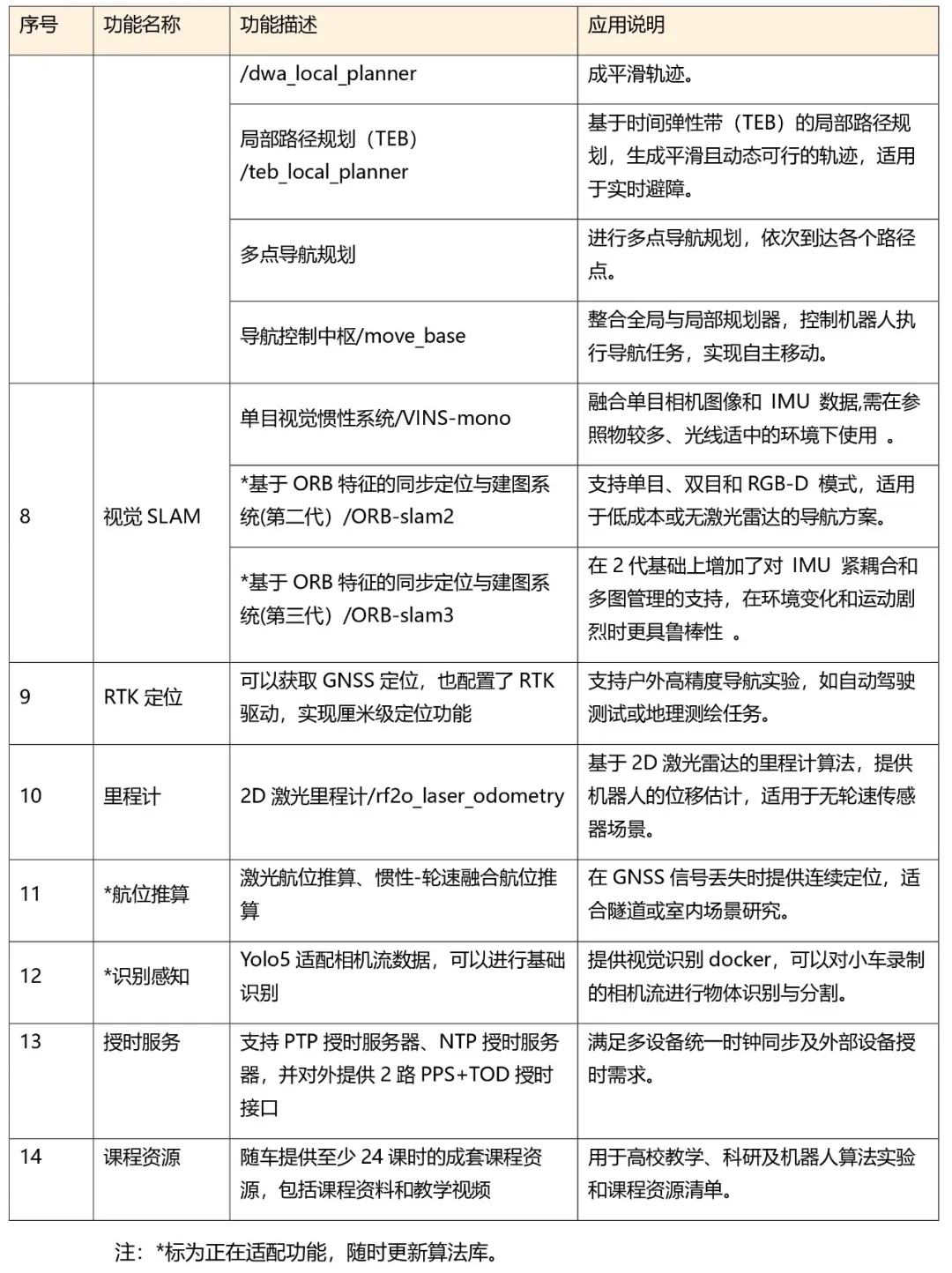
- In addition to this, it is also possible to create a map: Gmapping, Cartographer, 2D/3D, FAST-LIO-SAM.
- The following is a list of characters that first appeared or will appear in the first episode of the first season.
- Navigation: move_base + global_planner / navfn / carrot_planner + DWA / TEB local planning, supporting multi-aircraft cruising;
- In the video, you can see VINS-mono, ORB-SLAM2, ORB-SLAM3, Yolo5.
- RF2O laser kilometers are used to measure the distance.
- Assigned time: PTP/NTP server, PPS+TOD external output.
- Project directory
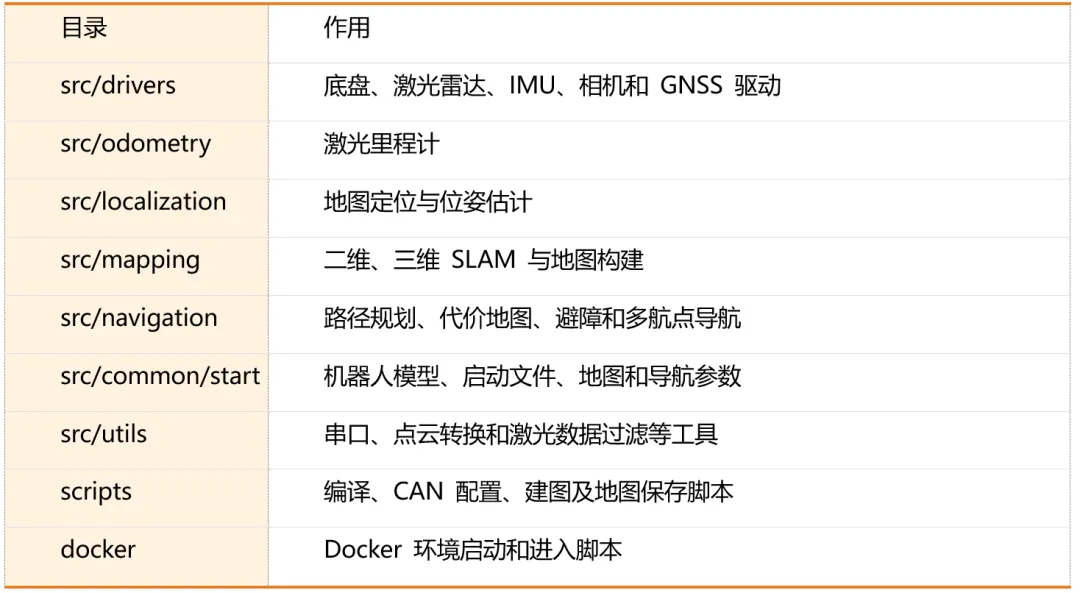
In other words, you're not going to write from scratch, you're going to be direct modeling, modifying algorithms, running experiments. Graduates are going to set up, teachers are going to do classroom experiments, teams are going to do algorithm verification.
Four teams can take their seats directly from the number.
The S3's positioning by Samsung is clear: university research, robot developers, smart equipment manufacturers.
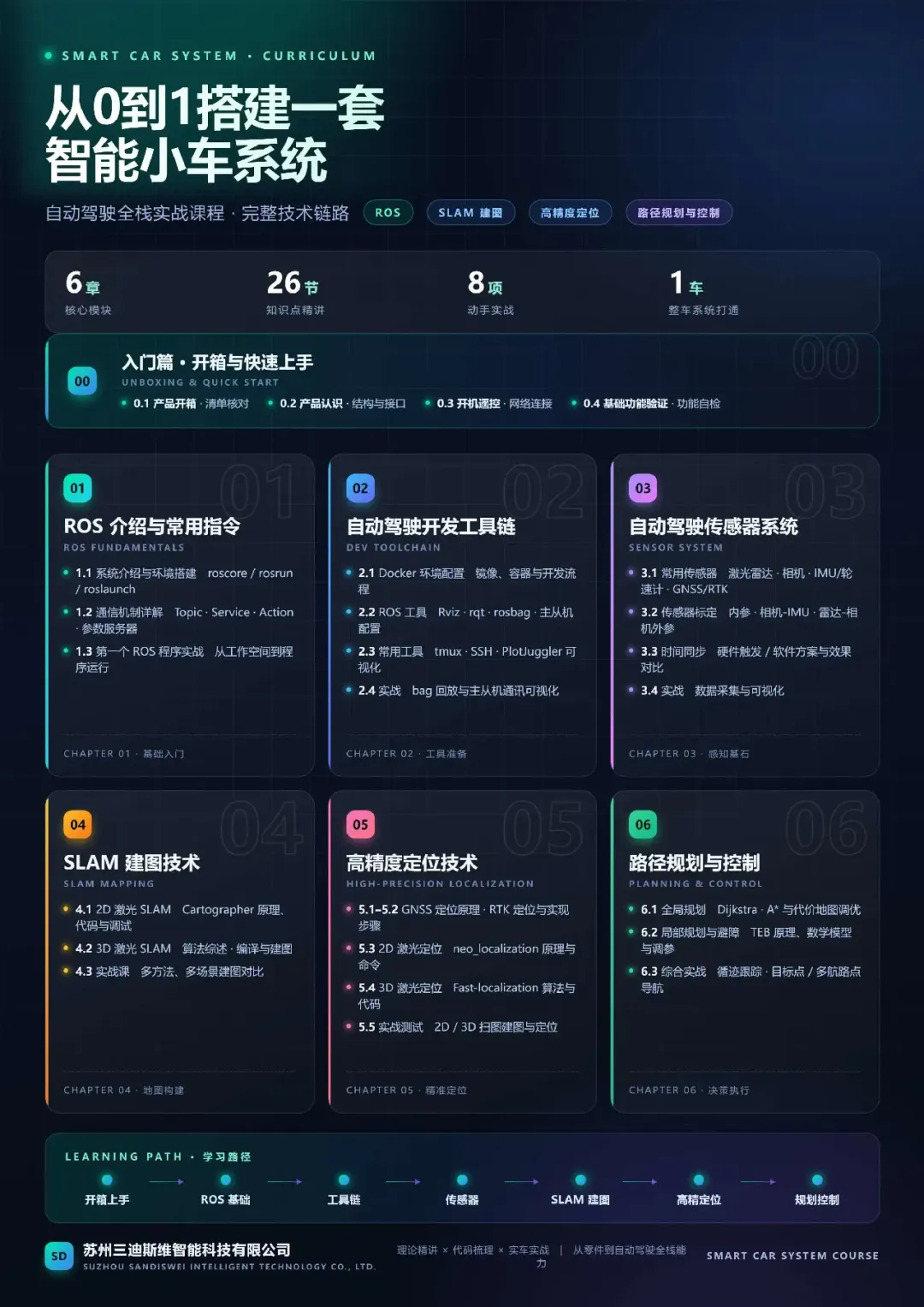
- High School Teaching Laboratory• Accompanying at least 24 hours of course resources, including ROS basics, sensor systems, SLAM mapping, RTK positioning, route planning and control, supporting instructional videos, sample code and experimental data.
- Algorithm verification teamThe new positioning, navigation, and perception algorithms, without the need to ride on their own, can be compared and reversed using SandiBot-S3 as a benchmark platform.
- Self-driving/low-speed unmanned vehiclesPrototypes can be verified using SandiBot-S3 using dash controls, wired control interfaces, and upper-level decision-making algorithms for scenes such as delivery cars, patrol cars, cleaning cars, and more.
- Smart Equipment ManufacturersFor companies that require secondary development of underpinnings to serve as AGVs, the open interface and standardized installation platform of the SandiBot-S3 can significantly shorten the prototype cycle.
If you're currently driving your own car with a wooden board + toy motor + scattered sensors, the SandiBot-S3 integrated solution would be a significant upgrade.
Some easy to overlook but important details
- The interface is open enough. The dashboard CAN control, sensor ROS interface, map building/positioning/navigation scripts are all open source, supporting secondary development.
- Remote modulation-friendly. Installed SSH and NoMachine, the PC connects to Wi-Fi in the car and remotely logs into the industrial controller.
- Multi-vehicle collaboration is not a struggle. Each vehicle's router is WiFi-named, IP-defaulted and manufactured, and several of the vehicles in the lab are not easily clashed.
- Docker containerization. Algorithmic environments can be moved in one click, changing machines, and replicating real-world experiments are easier.
From aluminum parts to open boxes
The biggest cost of research and engineering is often not the equipment itself, but the time spent in the environment building and debugging the hardware. The value of the SandiBot-S3 is that it transforms a research van from a "melting pot" to a "disassembly machine", allowing you to put your energy back into the algorithm itself.
Product features
Supporting courses