Over the past two years, the industry has seen a real change in the rapid warming of world models. It has given robots the ability to understand the physical world through gravity, collision, friction, causal relationships, which are no longer just labels in data, but laws that robots can invoke.
It is because of these rules that the robot can simulate what happens next in the internal simulation, such as where the chair falls will slide, what happens two seconds after the cup falls, can be predicted before the action, compare multiple schemes, and modify the trajectory.
This ability to understand based on physical laws is what distinguishes the world model from VLA: VLA remembers behavior patterns, and the world model understands what behavior will trigger in the physical world. VLA remains the executive layer: it combines vision, language, and motion generation, allowing robots to see images and plan actions instantly without pre-programming. Shortcuts are about learning behavior patterns rather than physical laws, and it is easy to fail in the face of unfamiliar scenarios outside training sets.
This is precisely in line with the world model, so the more common judgment in the industry is that the two are complementary rather than alternatives, and integrated architecture is becoming a common choice for leading manufacturers.
The two-eyed vision, ToF depth cameras, laser radars and multi-sensor fusion schemes relied on by humanoid robots today are not new inventions, they have been running on mature consumer products such as scanning robots for years, and their ability to map, avoid and identify ground obstacles has been repeatedly verified by tens of millions of shipments.
Consumer-grade body-smart products are largely replicated by this mature perceptual system, which only moves it from a disc-shaped body to a human body: the technical underpinnings can be generalized and only one shape can be changed. This is why home robots can quickly go from a laboratory model to a pre-sold product in just a year or two.
But technology is a prerequisite. There are two equally important drivers behind this heatwave this year.
One is the manufacturer's struggle with home data. The home is the ultimate scenario of the C-end, and the highest scenario of data barriers: data is highly personalized; it cannot be accessed from public channels, who enters first and who accumulates first. The biggest bottleneck of physical intelligence is not hardware, but training data from the physical world.
This type of operation can only continue to be accumulated by a robot in a real home environment by placing a coke bottle back into a cabinet in a strange kitchen. The value of household data is far more than used for training models, but more in its protective properties: the sooner the robot enters a home, the better it understands its spatial layout, the arrangement of objects and the living habits of family members, the more data the family has accumulated.
It's the same with a household that doesn't want to easily replace a familiar nanny: a nanny that knows the rhythm of her employer's life, a nanny that knows the taste of her children, who switches her for a much higher price than a new one.
The rise of leases and subscriptions is the backbone of this data strategy. The buy-to-let threshold is too high to break down one-time spending into monthly payments: in the near future, F February, rental costs 3,000 yuan, 1 X's NEO monthly payment is 499 dollars (about 3,500 yuan), about half the monthly salary of a first-line city-dwelling nanny, and consumer decision thresholds are drastically lowered.
Manufacturers are stealing orders, as well as the opportunity to lock up their families first.
The second is the cost structure restructuring. According to the GGII measurement, the overall GDP of core parts of humanoid robots has reached 80%; at the same time, the production line has reached a large number of recycled new energy vehicles and consumer electronics, and Bluetooth technology has entered the robotic integrated replacement system.
Two years ago, full-size humanoid robots were still in the hundreds of thousands of yuan range, and this year, the R1 pushed the threshold up to 269 thousand yuan, and a low-powered vacuum cleaner was priced at 9998 yuan, and a high-end refrigerator was in the same price range, and consumers began to use the electricity budget framework to make decisions.
The second is the shift in pricing logic. The industry's pricing logic switches from lithium-ion to lithium-ion demand to lithium-ion demand, which first determines how much money households are willing to spend, and then pushes the cost of the supply chain to the range that can support this price. Q1 initially set the starting price at around 20,000 yuan, NEO at $20,000, all to test this psychological focus point.
To be precise, this heat wave is not a breakthrough in technology, but a combination of technology availability, data storage, cost-benefit convergence, and overlapping rental subscription patterns that lower the decision threshold, resulting in multiple forces at the same time for the first time.How do existing products perform in real households?
Intelligent products currently entering the home scene can be roughly divided into two categories in carrier form: four-legged machine dogs and humanoid robots.
At this stage, the four-legged machine dog is closer to the position of the new family member, the core value of which is to be accompanied by interaction. The BabyAlpha series of Blue Tech has reached over 25,000 units, 90% of which are home users; the Vita Power Vbot superpower machine dog sells for $12988 with first order sales of 6,540 units and two-week user retention rate of up to 86%.
The core functionality of these products is focused on the level of active interaction: without the need for a remote control, it is possible to independently map, find people, initiate interactions, identify families and actively communicate. Products aimed at children and teenagers users are also integrated into educational functions such as drawing, storytelling, and child programming.
In essence, a low-threshold companion experience offered by machine dogs at the current stage requires no precise force control and complex operational capabilities, higher technological maturity, more familiar with prices, and is therefore the first to achieve scale-in.
However, the value boundaries of the machine dog are expanding rapidly. With the recent introduction of the EDU version of the super powered machine doghead by Vita Power, in addition to hardware and algorithmic upgrades, the machine arm has been added for the first time. The machine dog's ability to extend from a companion dog to an operating dog: throwing cat food, throwing flowers, and other real physical tasks has been added to its ability list.
This signals that the robot dog is walking away from the monkey, seeing the monkey evolve into the monkey, whose role is to extend the boundaries from emotional companionship to the physical world.
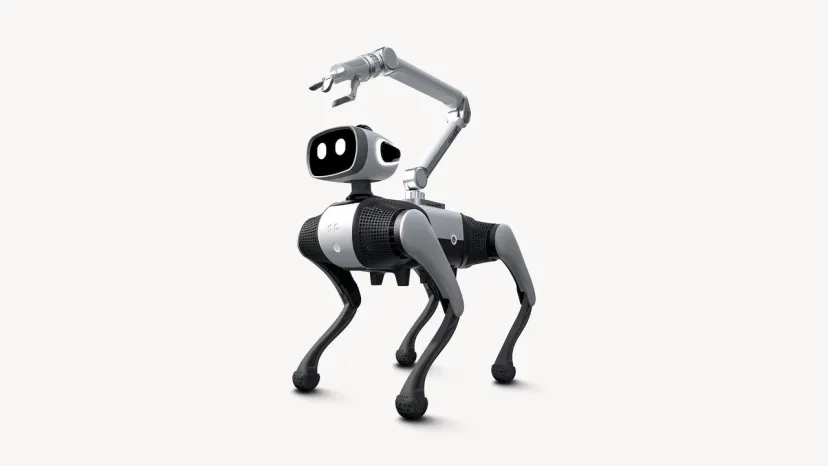
It's a bit of a waste of time, but it's a waste of time.
The humanoid family robot took a different path: it was designed from the outset to be a practical function in the home scene.
The Onero H1 robot can automatically complete the entire process from identifying clothes to putting them in washing machines, selecting washing procedures; the Merch smart MORPHI KINO can clean the living room, check the inventory of the refrigerator and make supplies; the self-changing Quantum 1 pump can replace garbage bags and line the shoes. The user image of these products is clearer: the pursuit of household efficiency, the willingness of families to pay for weight reduction.
The difference between the two forms is essentially the choice of paths where the emotional value of silicon prioritizes silicon and the functional value of silicon prioritizes silicon. Both paths are logical, but for the time being, machine dogs are temporarily ahead of humanoid robots in household penetration rates due to lower technical barriers, more familiar prices, and less security risks.
While human-like robots dominate the industry in terms of attention and capital heat, they still face real-world challenges such as cost overruns, technical complexity, and difficulty in defining security responsibilities in the home scenario. It is worth noting that the two paths are not interchangeable.
Launched in July of this year, T1 is the first personalized humanoid robot, based on its cross-shaped integrated architecture, that can autonomously switch between quadruped and quadruped, while respecting both emotional value and functional value. Beyond the pathway area, more important is the actual performance. The following two human-shaped home robot products that have served in real homes provide the most direct observational samples to date.

Transformative personal robot activated by T1
As of May 2026, the near-future home robot F2 has entered more than 500 real households, performing structured light household tasks such as tea delivery, delivery and courier delivery, with a cumulative service life of over 50,000 hours, user satisfaction of 96.8%, transfer rate of 50%, but renewal rate of only 30%, which means that 70% of users do not renew the lease at the expiry date.
However, the introduction of robots also brings an irreplaceable layer of value, and the team found in practice that a substantial part of the real demand only arises after the product enters the family, the most representative of which is ribbon dolls, some families want robots to accompany children in chess, play chess, accompany the violin, etc.
Once the robot has actually entered the home, users will have specific expectations for the robot based on real-life scenarios. The team then conducted a series of iterative tests to eventually develop these needs into official product functionality.
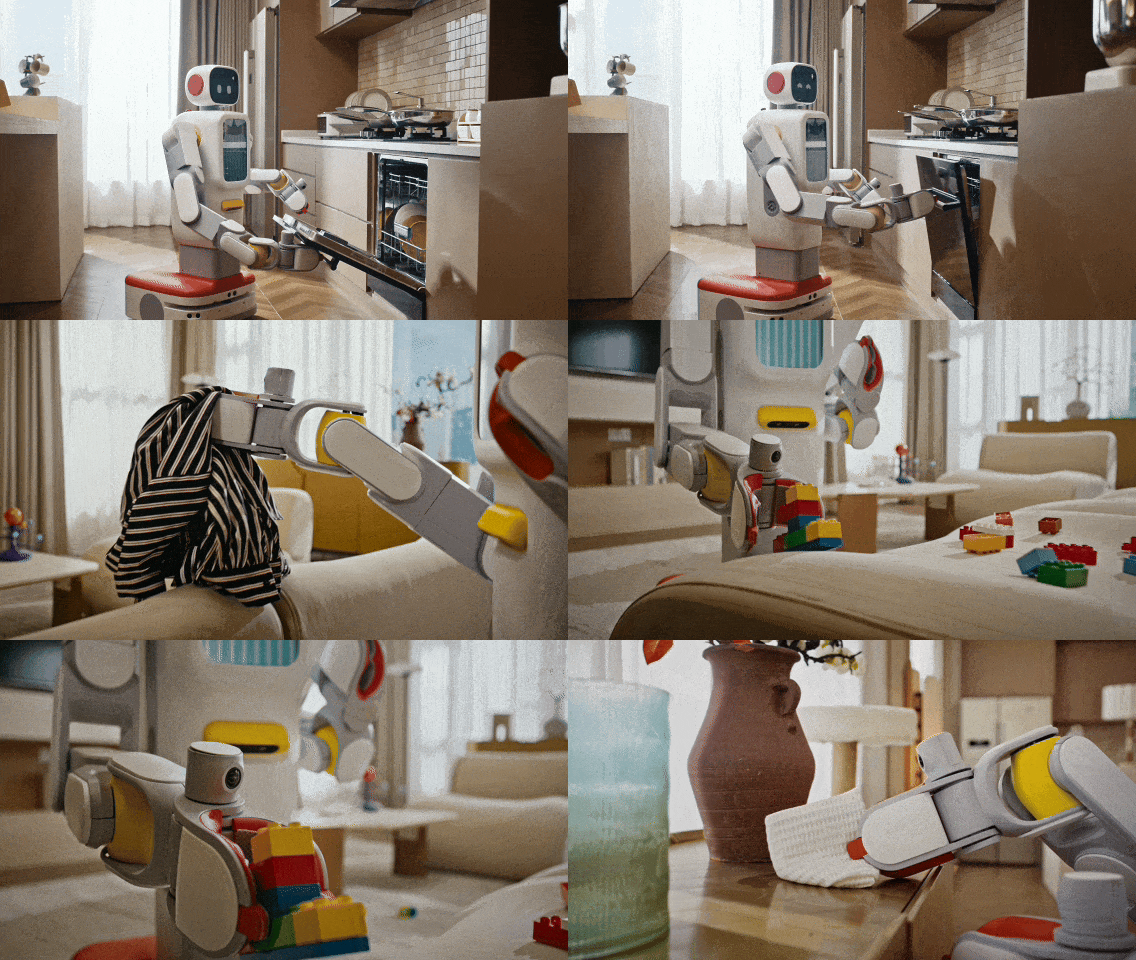
Home robot F2 in the near future
This is essentially the process of co-creating products between users and enterprises, and is where the home scene differs from the industrial scene: demand is not predetermined at the design stage, but is constantly discovered and verified during the user's actual use.
Self-changing robots joined 58 to launch smart cleaning services in Shenzhen, Beijing, and completed more than 100 orders by the end of May.
In the observations, the quantum quantum 1 pump entered the household and began to understand the environment and work gradually according to the manual. In about an hour and a half, it took six minutes to put the four books in order, put the apples in the plates, the blind boxes in the box, fold two clothes, place four pairs of shoes in the front door, and replace the trash bags.
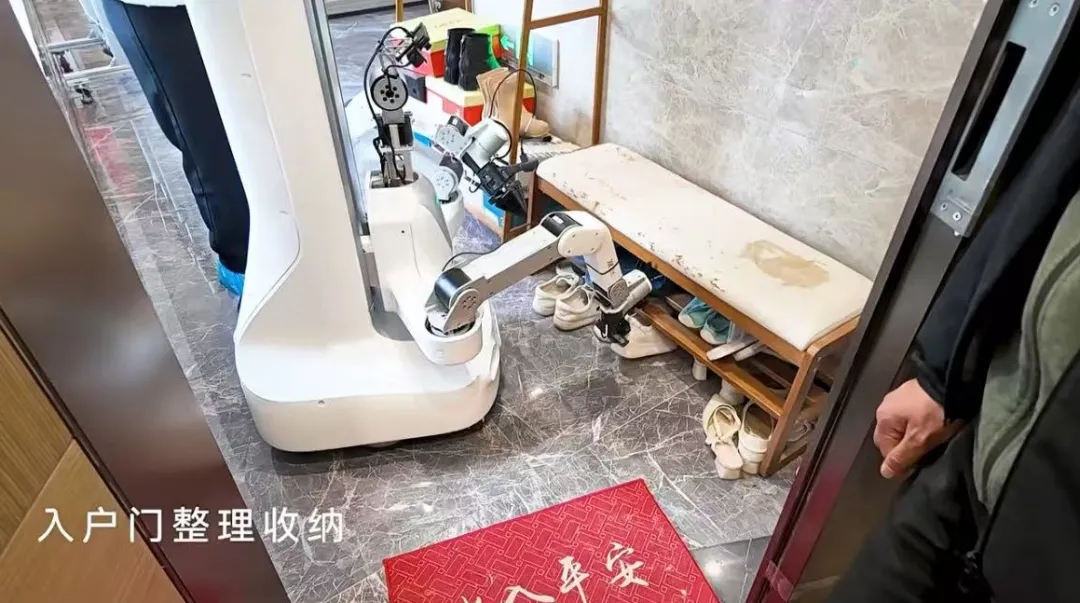
Hydrogen quantum 1 Hydrogen robot
This test roughly outlines the current level of capability of humanoid household robots: structured light household robots are capable of making pumps, and there is still a distance from the pumps; their speed is man-made slower than a quantitative level, their precision does not meet the standard of everyday use, they lack common sense judgement on the properties of objects, and they do not distinguish between garbage and receivers. At this stage, they are more like an executive that needs to be fully supervised, with a considerable distance from a customizable household assistant.
A clear industry consensus can be found in the GGII's approach to consumer-grade smart products on the current market: interactive class functions have become the benchmark, household classes are the main battleground of current competition, and education and entertainment functions are mainly taken over by miniaturized humanoid robots and machine dogs. In landing strategies, manufacturers' choices are also highly consistent, prioritizing the most convenient functionality combination to send robots into the home and then gradually superimpose capabilities.
Consumer-grade smart enterprises: the functionality of existing products
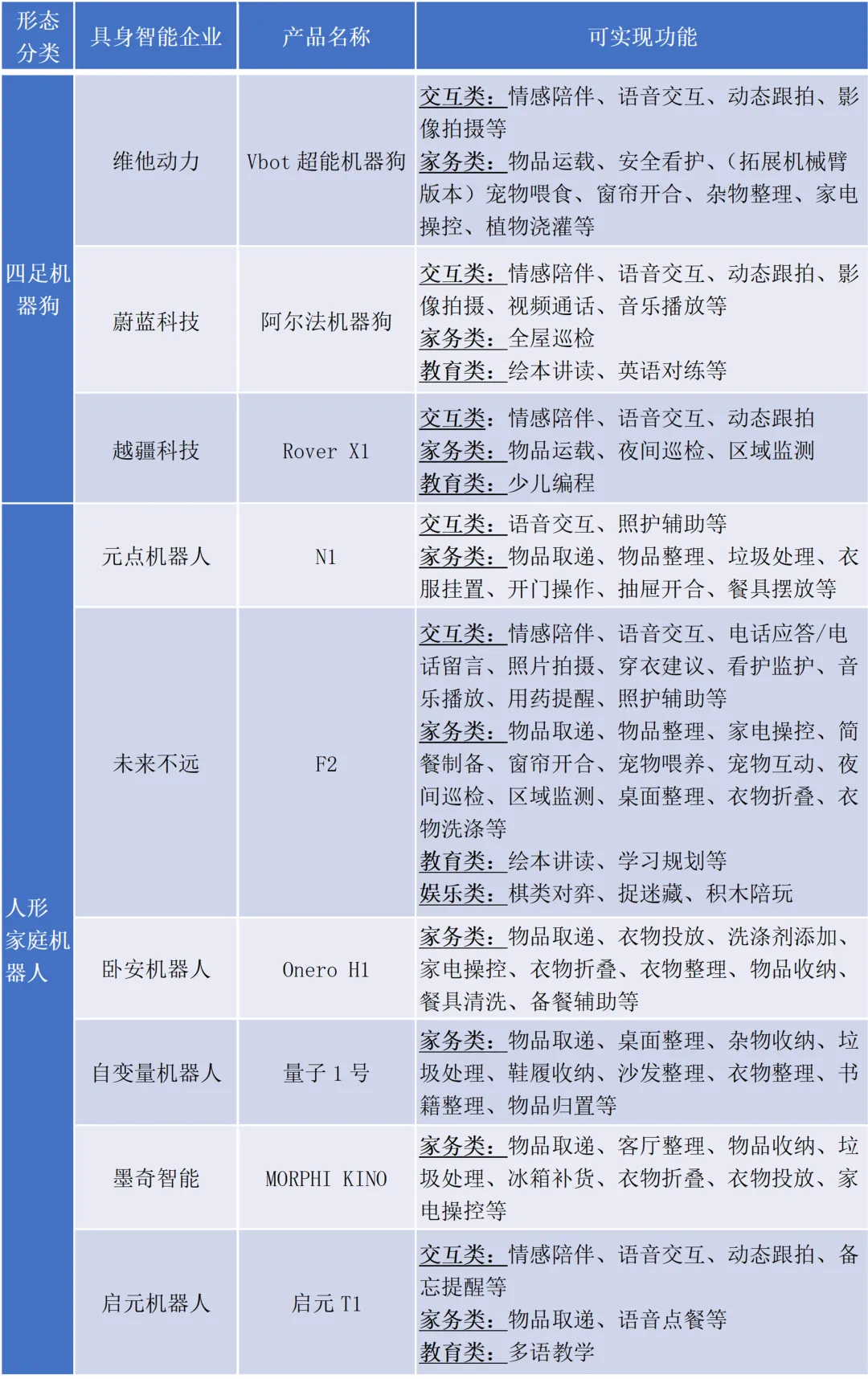
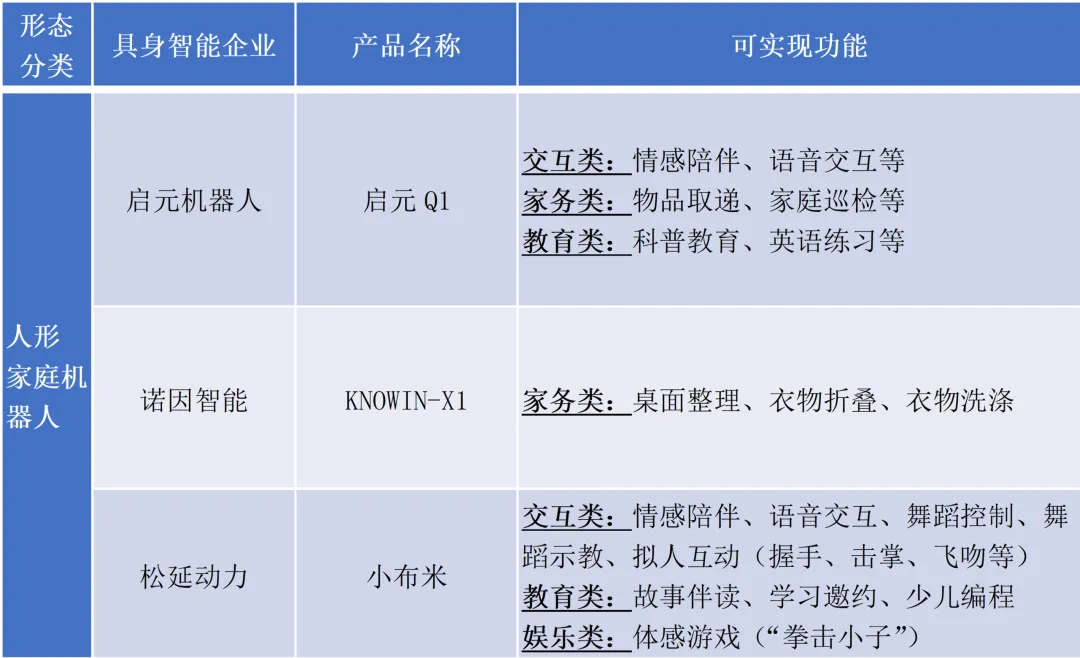
Source: Open source, organized by the Institute of Advanced Robotics Industry (GGII)
How far is it really going to go?
The above-mentioned problems exposed in real homes point to three more substantial shortcuts to current humanoid family robots.
First, the ability to generalize is far from mature. The success rate of robots in laboratory tasks is close to 90%, but it decreases significantly after entering ordinary households with different layouts. Ground debris, high- and low-level carpets, moving pets and children can cause mission interruptions.
Second, there is still a lack of precise operational capability in the true sense. The basic operation of grabbing apples, placing rigid objects like books is available in the first place, but bottle caps, needle lines, cuts need precise force control and flexible interaction.
Even Figure AI's Helix 02 model, which demonstrates unlocking bottle caps, pinching pills, and more, is done under controlled conditions.
Third, the efficiency gap varies. The same homework, which is done in a few minutes by humans, typically takes robots about half an hour, and the gap is close to a quantitative level. More importantly, it still takes a discount to complete the four-word puzzle autonomously. At the time of launching the pre-sale, 1X made it clear that in the early tasks of NEO, more complex operations would be done with remote assistance from backstage employees, using this training model. This in itself is a reasonable technical pathway, but means that the autonomy of the early product is much less slippery than the release video shows.
If the first three shortcuts are about the robot's inability to function properly, then the next challenge touches on something deeper: whether it can truly be accepted by the home environment.
Physical safety is the first hard barrier that consumer-grade products must cross. A home robot weighs dozens of kilograms, and the consequences are inconceivable if it is misoperated, such as falling around an elderly person, scratching children's fingers.
Enterprises also continue to encode in safety design, Blue Tech's BabyAlpha A3 is equipped with multi-physical safety protections such as hand-held design, cliff detection, emergency braking, joints and wire brakes all contained in the body, no exposures point, has collision detection functionality, can perform milliseconds safety braking response when a failure occurs; the loose-lift brake pad is designed to lighten the weight of the machine for home scenarios, ensuring the safety of use everywhere from the structure to the materials, and adding a new universal side brake brake, which can instantly shut down in the event of an emergency.
Privacy is the second gateway. The privacy protection schemes of autonomous robots are more complete: adoption of visual de-sensitivity, transparent authorization, three main schemes to limit the use, ensuring that the original images are not uploaded, the driver requires the user's active consent, the data is not shared with third parties.
The third gateway has been sold. Currently, Vita Power has jointly built the Vbot after-sales service system with Jindong Services, Jindong Services has launched the robot repair service standard of 120 tonnes in the national layout of 8 major robot repair centers: 1 minute response, 2 hours on the door, and a day-to-day repair of small sickles; Blue Tech has also signed a cooperation agreement with Jindong Services, relying on a team of professional engineers to cover the national maintenance testing network and establish a standardized after-sales service process.
Security, privacy, and after-sales determines whether a robot can't get into a kitchen; and when to really use a kitchen after a kitchen, the industry has a widely cited criterion: when a robot can rely on natural language instructions to complete 80% of the tasks independently in an unfamiliar environment, it's physically intelligent to accommodate its own kitchen ChatGPT moments.
But when this time comes, the main manufacturers are very divided. Wang Xing, founder of Yuke's technology, believes that ideally it will take two to three years, or maybe five to 10 years or even longer, and the core challenge is to align physical execution with AI output.
Xiaomi's general manager for robotics affairs was clearly more cautious to Dionne, saying that Dionne is less likely to see Dionne in the next year or two, and that it may take three, five or even 10 years if the robot brain doesn't make a qualitative leap.
The following evolutionary path is more precise than the timetable. The description by Lee Hsin, Head of Intelligent R&D at Heil, represents the mainstream idea: the human-sized robots in households are mainly focused on everyday household tasks such as washing clothes and food collection, not replacing everything, but first making a few tasks stable and reliable, allowing users to actually see the real value, and then gradually overlapping more functions.
Whether or not this path can be taken depends on the data planes mentioned above: the more homes robots enter, the faster the accumulation of real data, and the faster the generation of capabilities.
What is the meaning of this verse?
Returning to the three questions raised at the outset, the answer to 2026 is gradually clear. The basis of the heat is real: technology availability, data availability, cost availability, model availability, several forces for the first time at the same time; but the boundaries of capability are equally clear: light household pumps have been built, pumps are still far away, and efficiency is still one level lower than humans.
There is little consensus in the industry about the next evolutionary path: not replacing everything, but first making a few household tasks stable and reliable, and then relying on the ability of data pilots to superimpose layer by layer.
Therefore, the next two or three years are more traceable than the conference's warmth and order numbers: the active use and rental rates of embedded robots, the crawling speed of mission success rates in the real world, and whether full-sized household-capable models will be able to reduce to $50,000 by 2028.
The trend of these three indicators will answer the question of whether or not this is the beginning of a new round of platform-level opportunities or another anticipated outcome. The three- to eight-year gap between optimists and cautiousists is essentially a function of how fast each indicator is climbing.