“ For the past three years, the price curve of humanoid robots has been like a slippery slope.
In the industry, humanoid robots are no longer news.
Prices have fluctuated, but there's an embarrassing fact behind the heat pump. The vast majority of products are still a full-size machine that can be bought out of hand and bought back in three years or so.
Data from Counterpoint Research shows that in the first half of 2026, global shipments of humanoid robots exceeded 220,000 units, an increase of almost 300% in comparison. At the same time, shipments are still uncomfortable, with more than 60% of the world's sales of human robots combined with the number of courses, about 19% of the world's guides, 13% of the world's smart manufacturing, and only 5% of the world's warehouse logistics.
This means that the boundary between a humanoid robot and a large toy is not as clear as imagined, even if some of the prices have dropped to the barrier acceptable to the average consumer.
For robots, crankshaft and landing gear are still the most valuable capabilities, and micro-robots rarely do this.
This is the story that the Blue Beetle has to tell.
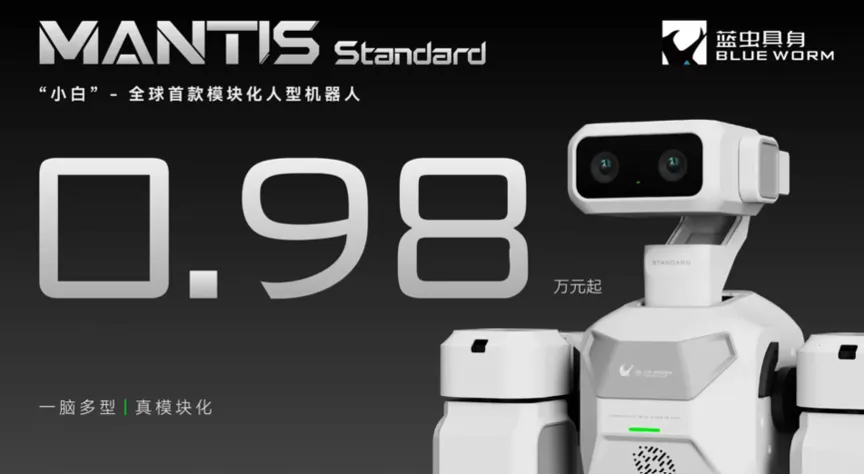
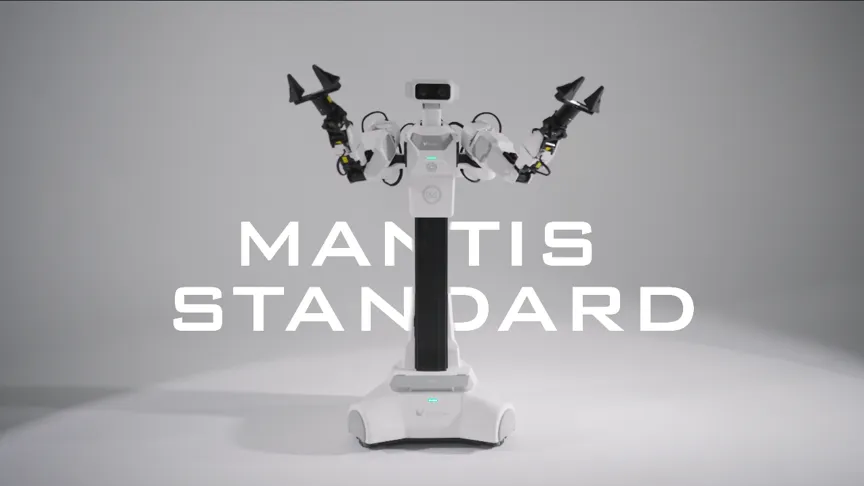
On September 14, the company released the first modular wheeled humanoid robot called Mantis Standard.
This humanoid robot, with a starting price of 0.98 million yuan, incorporates an all-wheel-drive undercarriage, a seven-degree mechanical arm, and a 4K60 twin-eye vision system into the price belt of a hydrogen-powered tool.
More importantly, the new blue-eyed product is not essentially a discount, but a redefinition.
01.
Why is it wheeled? Because it doesn't really need to be worked.
Over the past two years, the human-robot stage has largely been a two-legged one - a back-and-forth, a dance, and a marathon - with spectacular performances that make the public remember what a human-robot looks like.
But in factory workshops and logistics warehouses, where there really is a need for pumps to work, the sex ratio of the two-legged shape is being tortured.
The judgement of blue-collar robots is straightforward: wheeled humanoid robots are better suited to functioning. Two-legged humanoids are better at running and jumping, so more are used for performance. Wheeled humanoid robots cost less, are more stable, and are more reliable. The design goals of Mantis Standard are clear.
The 2026 White Paper on the development of the smart robot industry, published by PwC, gives the same conclusions: wheeled robots relying on efficient mobility and geographical adaptation, large-scale landing site warehouse inspections, catering delivery, etc., are the main driving forces behind short-term commercial landings.
Haighton's securities research gives a more intuitive contrast: under the same height conditions, a two-legged robot's BOM costs about ten times as much as a wheelchair robot. These are the costs of pure gold and silver for factories with good rates.
Industry data also corroborate this judgment. Since 2025, wheeled and bipedal shapes have developed in parallel, with most companies incorporating both shapes into their product matrix. Wheeled robots stand out in the service and light industry due to their high stability and deployment flexibility.
With physical intelligence, there is a formalistic fascination taking place, with the wheel-shaped human being expected to move from a hybrid transition scheme to a hybrid practical choice model.
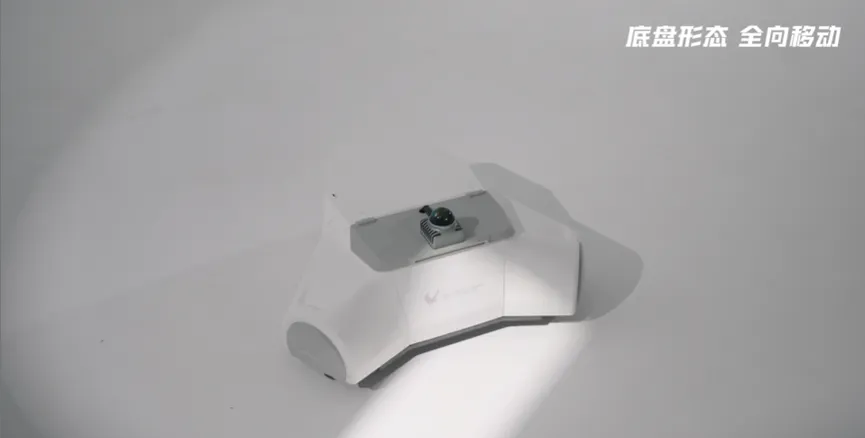
The parameters of the new blue-collar product are also worth playing with. The small white bottom has an all-wheel-drive design, 633 mm long and 552 mm wide, moving at a speed of 3.0 m/s, and can achieve 360 degrees of movement. This means that in actual operation, the robot does not need to turn, move, and rotate like a traditional differential bottom plate, it can, like a skilled worker, move sideways, slope inward, and fine-tune the ground.
02.
A multi-dimensional, truly modular brain: dismantling the robot into a high-tech robot
The real revolution lies in the re-construction of the nucleus, which is a polymorphic, truly modular brain.
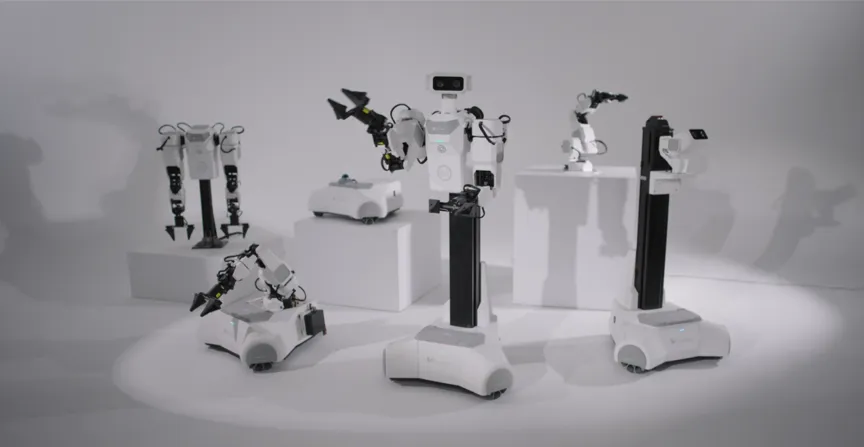
There has been some inflation in the robotics industry. Products listed in this list are not uncommon on the market, but most of them are simply removable silicon.
At Mantis Standard, the mechanical arm, bottom, body, slide, and head, each of which is an independent and complete functional module, complete the mechanical and electrical connection through a quick-mounted interface.
Each module is fully functional and can be disassembled independently when products are used, such as organs.
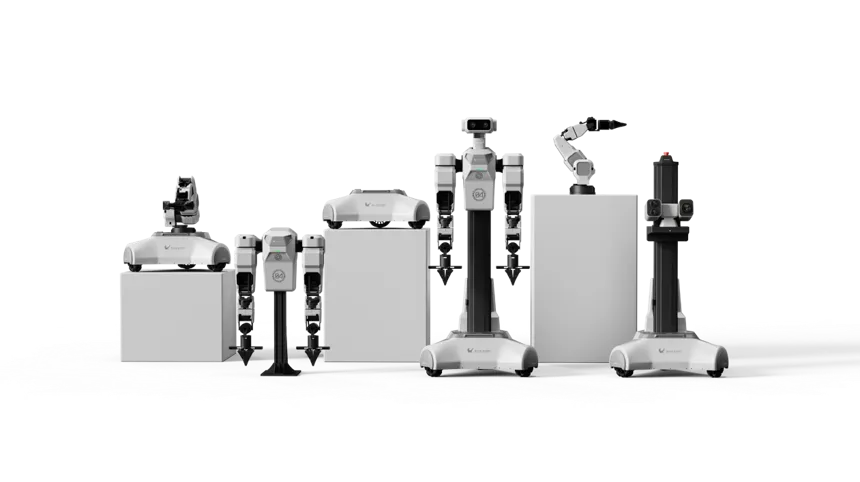
Putting one arm on the table, it's a very short-winded desktop collaboration robot; pulling out a substrate separately, it's an AMR mobile robot; putting one arm on a substrate, it's an engineering robot that can both grab and move at the same time.
The complete shape, the two-armed shape, the disc shape, the patrol shape, the single-armed shape of the desktop, the Mantis Standard is like a roller coaster in the physical world.
More importantly, the Blue Beetle body was modulated to a more radical price tag of $0.98 million, which bought a growing robot system.
It is a polymorphic molecule of the brain that is interacting with the silicon molecule.
The self-developed brain mouse BW-Brain mouse, featuring an intelligent base model of the mouse-hole mouse series, is the common brain mouse of all module shapes.
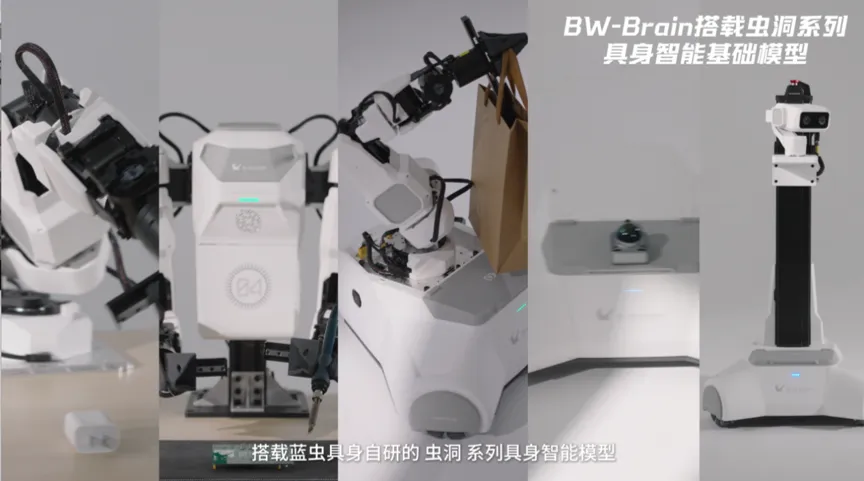
Regardless of how the modules are combined, the same brain can adapt quickly and drive independently without the need to re-develop a control system. The brain uses the VLA+DRL+WAM framework to use real data, simulate data, synthesize data triad training methods, with greater universality and generalization capabilities through real data, simulate data, synthesize data triad training patterns; while encapsulating advanced technologies in the field of robotics into standardized Skills, the brain develops strong Agent skill sequencing capabilities that enable robots of all shapes to quickly perform all kinds of tasks.
In terms of data sources, the Blue Beetle is equipped with a self-developed pump quantum remote operating system, covering vision, hearing, power, and controlled five-dimensional full sensory control capabilities, allowing remote control via the Internet with a minimum delay of 10ms.
The system also has an ingenious design: while the user remotely operates the robot in real-life scenarios, the data collection is done in sync, without the need for additional configuring of the collection equipment or specially arranging the numbering process. For research users, this means that robots working in the laboratory are the process of producing the data themselves.
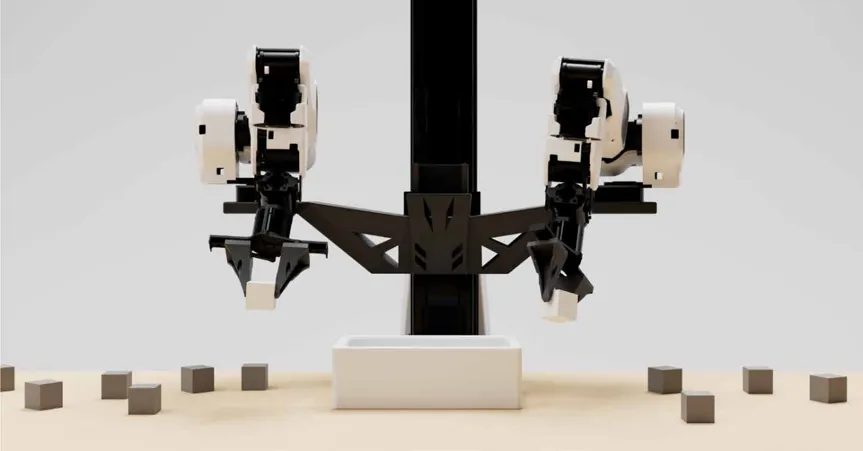
At the secondary development level, this unified brain architecture provides a complete start-up mode. It supports the ROS 2 and BlueWorm SDK control interfaces, is compatible with the Isaac Sim, Genesis simulation development environment, is compatible with the LeRobot framework, and mainstream embedded models such as π0.5, ACT, SmolVLA.
More importantly, the blue-bellied body will tie a brain to a multi-mode chip and a modular chip. The same brain, capable of driving different forms of independent work. Hardware can be reorganized, and the brain does not need to be repurchased, retrained, or re-educated.
It's the only silicon module in the world that can be disassembled and smashed without intelligence.
03.
Upper limbs prioritized, head grabbed mirrors: What little white body proportions hide
In terms of performance advantages, every design of the Mantis Standard can be rotated. The Mantis Standard is 1.4 meters high, 633 mm long, 552 mm wide, 22 degrees of freedom, has a total running time of 3 hours, and has a delay of less than 10 ms. The official manual indicates the forward speed of up to 3 m/s, the waist lift range of 550 mm.
But the most playful aspect is its body proportions, which are thicker than the legs. This is the intention of the bluebell body. The core value of the wheel-shaped doll is in the upper limb, so it focuses on the upper limb capabilities.
Each arm has 7 degrees of freedom, a single-arm load of 7 kg, repeated positioning accuracy of ±1 mm, and an arm span of 663 mm. These parameters are not surprising in industrial collaboration robots, but in a multi-millionth-grade humanoid robot, which means that the tiny white dwarf can do most of the Pick and Place tasks, can screw, can sort, can take off, can do fine-tuning operations in the lab.
It's a robot that's got its upper limbs on top of it. It's got its legs on top of it, and it's all in its hands.
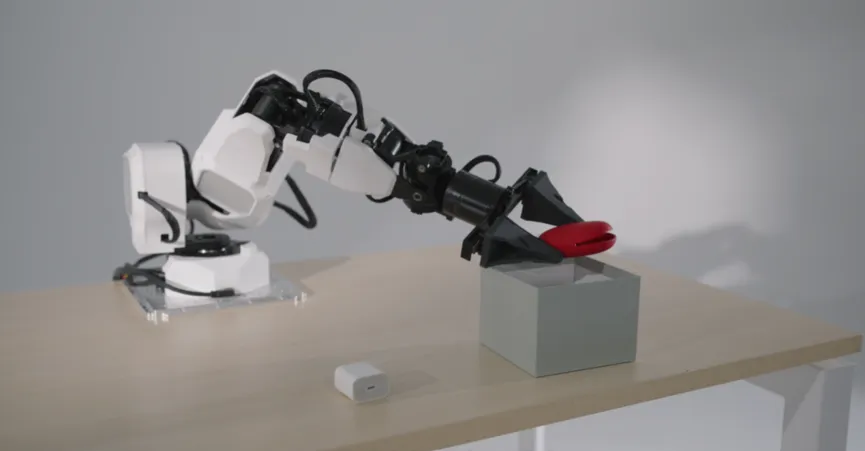
In addition to the visual characteristics of the arm, Mantis Standard's head design is equally distinctive, which stems from the company's unique understanding of humanoid robot design.
Blue Beetle has stated that it hopes robots will not simply mimic humans, but in a structure similar to humans, giving them a unique appearance and soul.
So the little white guy has a sense of candy tech + a lovely wind + an electric candy trio to design according to the basic abilities of a 14-year-old, smart, vibrant, cute.
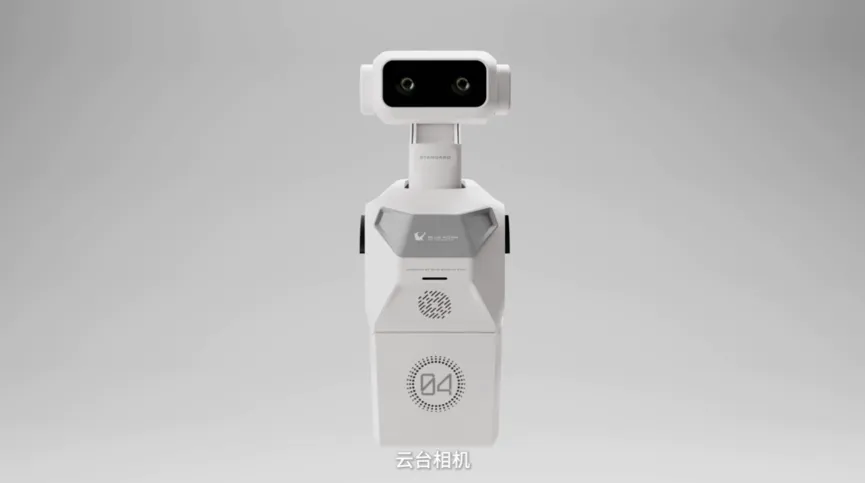
Among them, the head design best represents the IP image of the robot. The appearance of a handheld cloud-based camera gives the company inspiration. According to the Blue Beetle body, this is the first time in the industry that the three-axis cloud structure has been used in the head of a robot.
Of course, apart from the sensory factors, the rational choice of appearance design lies in the three-axis cloud platform itself. It can stabilize the image in the rapid movement of the robot on the ground, allowing the robot to maintain a stable and clear field of view.
04.
0.98 million, open to research and ease of doing business
With its modular design and high-quality pricing, Mantis Standard has achieved comprehensive coverage of many scenarios in R&D education, secondary development, commercial services, light industry, and can serve as a benchmark for high-school laboratories as well as a benchmark for small and medium-sized enterprises.
In the field of research and education, the value of Mantis Standard is particularly prominent. For a long time, university laboratories have been faced with the difficulty of purchasing robotic platforms with limited budgets, inadequate numbers, difficulty in developing a robot, a robot worth tens of thousands of yuan that can only be used by a few teams, and difficult to support large-scale teaching and group research.
At a price of ¥0.98 million, the cost of purchasing an integrated system can now be attributed to more than a dozen robotic platforms, which can both build multi-intelligent cluster experimental environments and be used in bulk for undergraduate and graduate teaching lessons. With complete open-ended, simulation tools and model adaptations, it can support the entire process of research from data collection, model minimization to real machine verification, and become a truly versatile infrastructure in the field of physical intelligence.
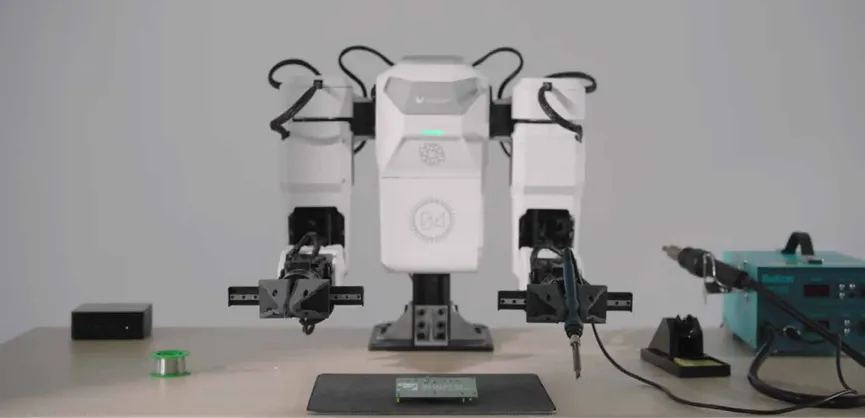
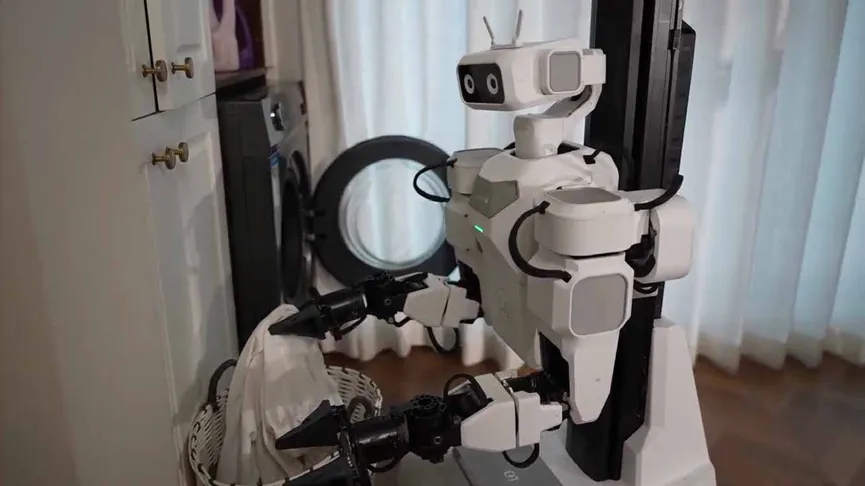
In commercial services and light industrial scenarios, the modularity of Mantis Standard greatly reduces the cost of robot landing trials and errors. The user does not need to purchase the entire machine in one go, and can start up the corresponding set of modules according to the needs of the current set of scenarios.
For the first time ever, a large number of small and medium-sized businesses and factories that could not afford to invest in robots have the feasibility of a commercial landing.
05.
The hardcore player who ran Xi'an
If you take a closer look, you'll find that the team behind Mantis Standard isn't making new faces.
Established in 2025 by the technological achievements of Xi'an Transportation University, the founding team consists of a team of robotics experts and senior engineers in the industry. Public reports show that the post-00 powered team took 45 days to move a robot from 1.0 generation to 2.0 based on a unique VR 3D vision remote control technology.
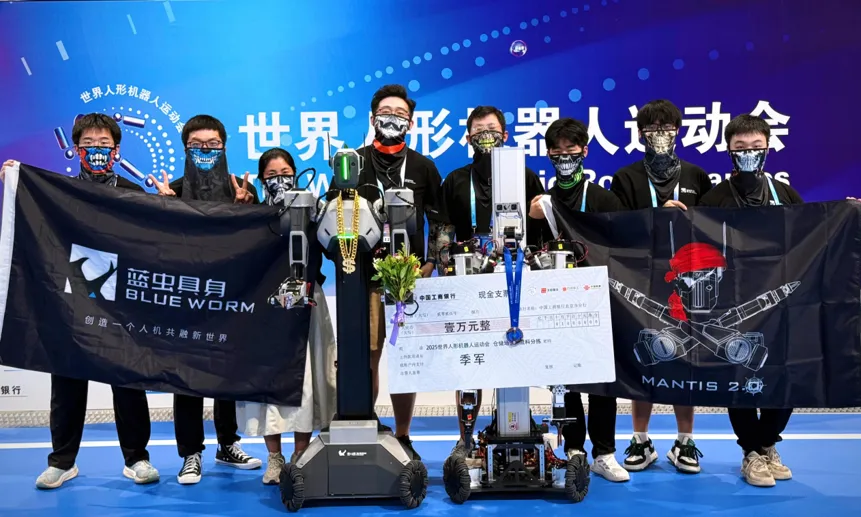
The prize-winning robot, Mantis Pro, is the younger brother of the Mantis series. It returns to the racetrack and completes its first commercial delivery; a year later today, Mantis is testing the technical underpinnings of the filter, compressing the racetrack into a wheel-shaped mannequin aimed at science, technology and commerce.
Standard and Pro use a dual-track parallel strategy: the former focuses on research and light commercial scenarios, responsible for opening the market; the latter covers high-performance demand scenarios, responsible for raising product technical limits.
06.
Link to the Future
0.98 million is a price point and an industry signal. As human robots explore the price of mobile phones, the competitive logic of the industry is shifting from who can make better robots to who can make more useful robots.
The answer given by the Blue Beetle is that the brain is polymorphic and modular.
The show had applause, the act had orders. This time, the Blue Worm placed a bet on the latter.