Recently, Nanjing Inks Intelligent Technology Limited (abbreviated as "Inks") announced that it has completed a B round of over RMB 300 million. Investors in this round include China Goldstone, NASS, SWIFT, Huawei Investments, Nanjing Delivery, Huawei Investments, while the company continues to pursue venture capital, deep-investment, China Control Fund, Jingqi Fund, and Powa Capital as long-term exclusive financial advisors.
Capital investment parts have become a major trend in the industry since 2026, but the industry signal behind the news is more worthy of attention than funding.
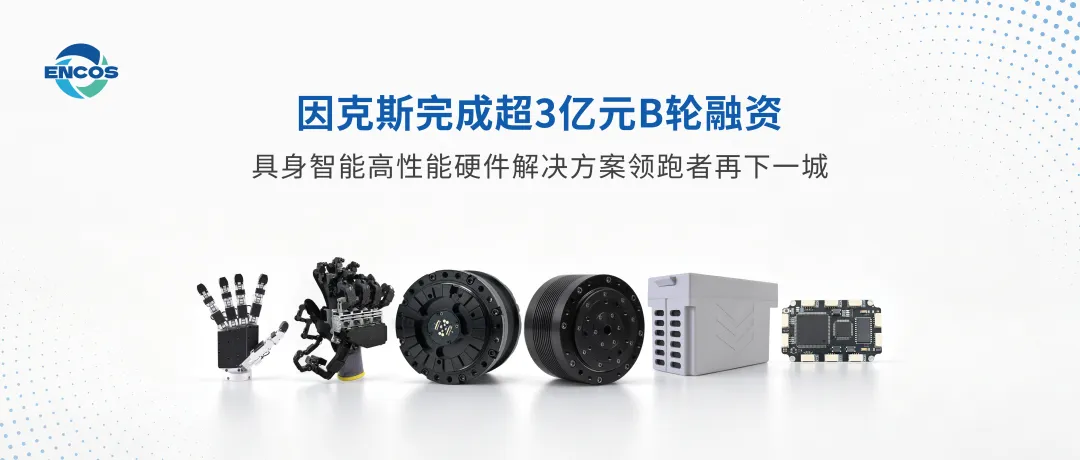
At present, joint modules have been shown to account for 40 to 60 percent of the total BOM cost of humanoid robots, making them the most difficult to replace and most lock-in-effective core systems in an assembly plant. With the next phase of physical intelligence, the core proposition is that hydrogen cannot be deployed on a large scale, which is ultimately challenging the industrial capacity of joint modules.
The company, founded in 2022, has grown over the past four years to become a leader in the field of smart joint modules and is completing the strategic shift from a component supplier to an integrated hardware solution platform. This shift is not a simple product line expansion, but a preview of the needs for the next phase of the industry.
Because when robots move from lab demos to bulk deployments, customers' attention will be focused not only on how high the parameters are, but also on whether they are easy to install, maintain, replace, and reduce long-term use costs. It can be found that Inx's product planning always reflects a sense of rhythm, putting R&D into investments before the real outbreak of problems.
01.
Quick dismantling of joints: an underestimated aluminum industry interface
In June 2026, INXS pioneered the launch of the industry's first second-generation joint module supporting rapid demolition.
To understand the value of rapid disassembly, one must first understand a structural contradiction faced by robotic joints. As humanoid robots move from the lab to the production line, the number of fixed points in a single unit is much higher than that of conventional machines of the same size, and almost all of them are concentrated in space-restricted joints that need to be repeatedly disassembled and maintained.
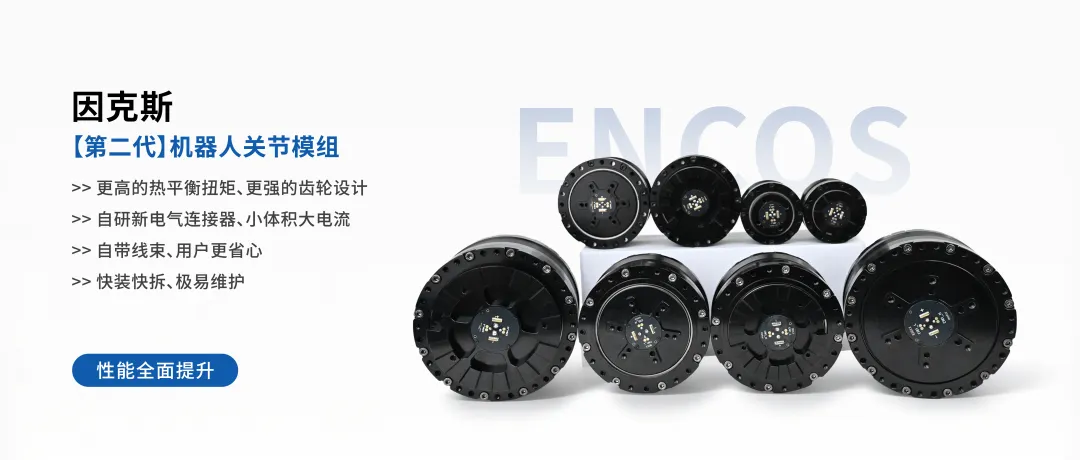
This determines that joint modules are not ordinary parts, but rather the intersection of the overall cost structure, maintenance structure and supply chain structure. Who can build standardized capacity and scale delivery capabilities in this connection can occupy a position closer to the value distribution center in the smart industrial chain.
Inks' rapid demolition design reduced joint maintenance time to the minute level. This was not just an improvement in efficiency, but a reversal in industrial logic. Because when the joints could be quickly replaced, the maintenance model of the robotic integrated system actually went from pump repair to pump replacement, from pump engineer operation to pump user operation.
It is known that some body development engineers have publicly shared a lesson: in the early stages of static-intensity selection, the sampler repeatedly modified the part several times, and the screw was removed; it was not until later that it was written into the specification book that the clay can be repeatedly disassembled multiple times. This detail reveals the real threshold of rapid disassembly design.
In the product logic of the Inks program, the rapid disassembly design was closer to a cork interface standard. When more and more assembly plants adopted the same joint interface specifications, the joint modules became common parts from custom components, and the scale effect of the supply chain could truly be released. This was the reason why the consumer electronics industry in that year moved from a charging pad for each phone to the logic of the Type-C unified standard. The rapid disassembly of the Inks was the basis for the standardized supply chain for the intelligent industry.
02.
Liquid-cooled technology pushes heat flow paths around the inside of the assembly
If rapid demolition design solves the problem of deployment efficiency, then liquid-cooled technology solves the problem of performance ceiling.
Industry data shows that about 90 percent of the energy in robotic joints is ultimately converted into waste heat. In continuous marathon-level movements, traditional wind-cooled schemes cause the engine to overheat rapidly, severely affecting the engine's performance. Inks' technological breakthrough is that the coolant is sent directly into the engine and the assembly is cooled directly.
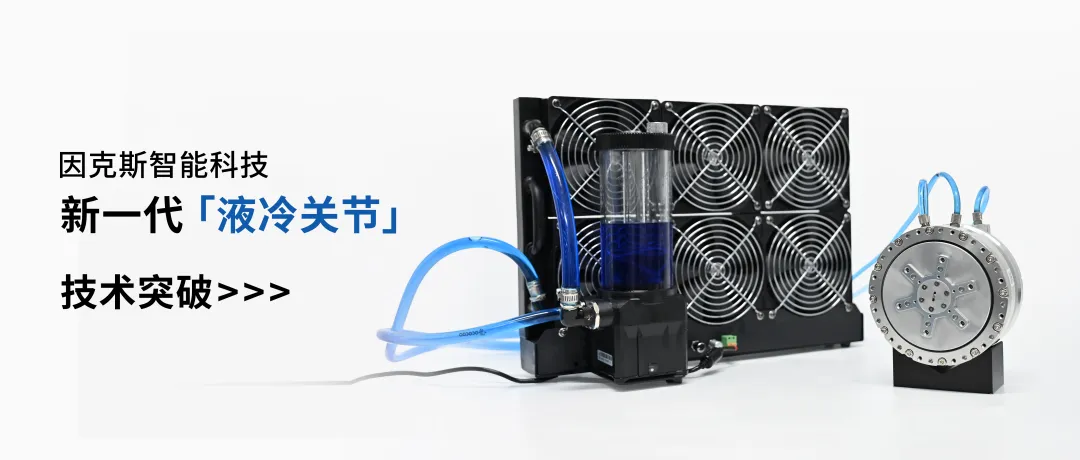
There are irreconcilable internal and external thermal control contradictions. The power density of the ceiling is extremely low. Liquid cooling, although it is more efficient in thermal dissipation, has a fundamental flaw in the commonly used hydrophobic water cooling system in the industry, and the thermal resistance to contact between the unbroken motor and the cooling system greatly weakens the thermal dissipation effect. Inks' direct cooling bypass system bypasses this physical bottleneck, allowing the cooling fluid to directly contact the heat source, achieving a mass leap from the thermal pathway. This is not a simple thermal dissipation upgrading, which is essentially a redefinition of the thermal management paradigm of the motor.
Practical evidence of this technology is equally convincing. The Robotics Workshop learned that at the 2nd World Robotics Championships, customers running at a peak speed of 10 m/s in a 1500 m running race with Inks liquid cold joints ran at a peak speed of 10 m/s. This data is iconic in the spectrum of human robotic mobility, which approaches the speed limit range of human sprinters and is achieved in continuous sporting scenarios rather than in a laboratory instant peak.
10 m/s is not about running fast, but that it demonstrates that a liquid-cooled system can keep joints from decreasing in frequency and decreasing in continuous high-power output. This is the real need for future robots with a body-smart robot that will need to work for more than 8 hours in a factory continuously. Inks improves the overall performance of joints through liquid-cooled technology, moving from peak parameters to sustained capacity, from lab indicators to line reliability.
03.
Self-processing with complete process control, secure delivery of substrate
Leadership in performance parameters, consistency in mass production, stability in delivery, good rate levels, cost control capability are not enough, and joint modules are difficult to cross in competition.
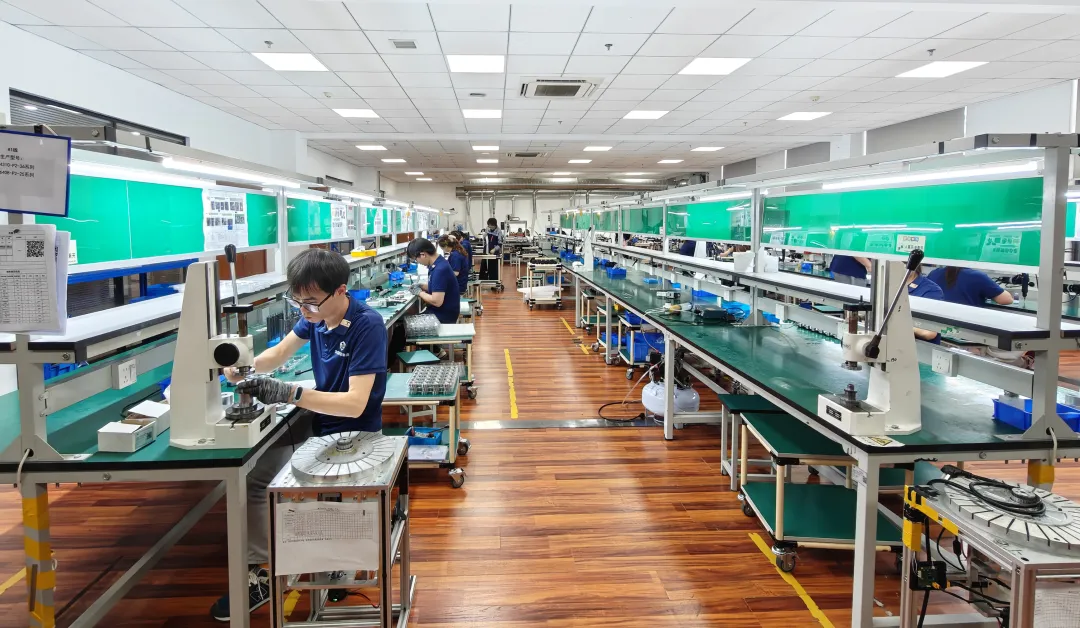
Inks's layout in this dimension dates back to the beginning of the company. Since 2022, the company has been continuously building joint module autonomous machining capabilities, equipped with numerical control machines, machining centers, plugging machines, rolling mills, wire cutting machines, and other specialized equipment to realize the full automation capabilities of joint module parts. The company has achieved the full core components of drivers, accelerators, motors, encoders self-development, and has accumulated unique technologies in the design of accelerator structures, engine design and processes, and drive control algorithms.
The advantages of this R&D and manufacturing quality integration system are multi-dimensional.
At the product generation level, autonomous control of the entire process means that the cycle from design change to mass production landing is significantly compressed. At the quality control level, autonomous processing avoids the risk of good-rate fluctuations in the outsourced batch.
At the cost control level, self-development of core subcomponents opens up the space for further reductions. Industry data show that the joint model composition continues to decline by about 10% per year, and companies with core manufacturing capabilities will undoubtedly have a significant advantage in this trend.
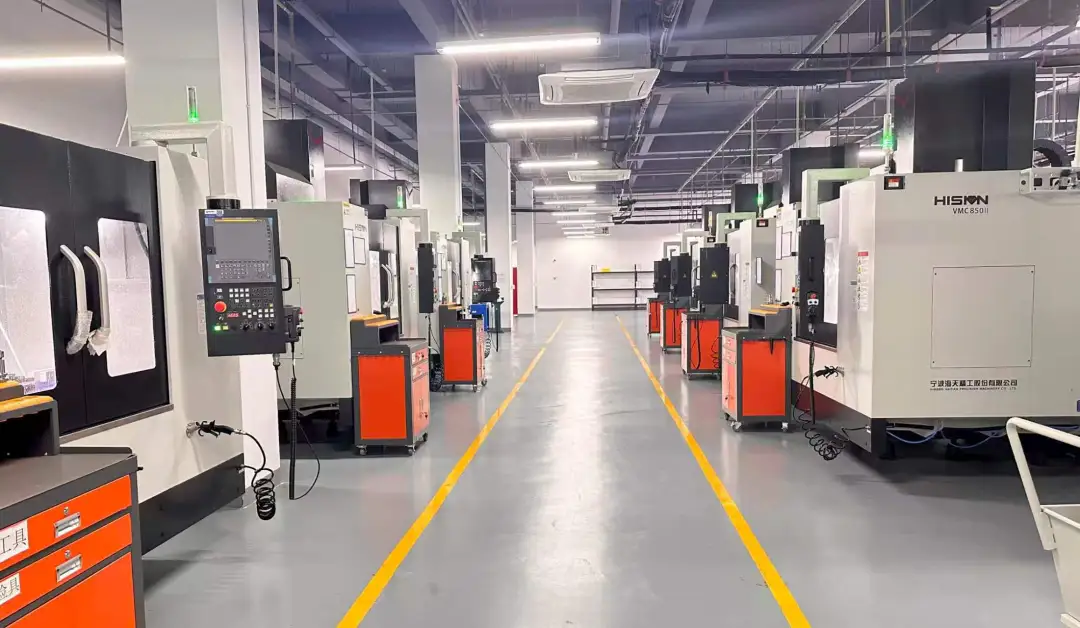
The Robotics Workshop learned that by 2025, INXS's joint module shipments had surpassed 100,000 units, was the first joint module company in the industry to deliver 100,000 units per year in the field of physical intelligence, and currently has a capacity of one million units in reserve to prepare for the fast-growing order demand in 2026 and the next turning point in the industry that could occur in the next two years.
This figure has validated INX's consistent control capabilities in mass production. Because of the transition from 10,000 to hundreds of thousands to millions of units, testing is often not the technology itself, but whether the manufacturing system can maintain quality without slippage in scale expansion.
This R&D and mass-production integration capability is becoming an important foundation for INX's continuous improvement in product reliability and scale delivery capability for the phase of moving from physical intelligence to mass-production of samples. In selecting joint module suppliers, integrated factories look not only at sample performance, but also at whether the parties can keep up-to-date, good-quality and cost curves in order volumes.
Incx's self-processing system gives it a stronger delivery certainty when faced with bulk orders. This certainty is scarce resources in the early years of the industry and access to the door during the industrial maturity period. The completion of round B financing will further accelerate Incx's input into the manufacturing system, making its delivery backbone more stable.
04.
Platform and online selection of reshaping hardware development
Perhaps the most important strategic move for INXS is not a product, but the overall positioning of the company as it moves towards platform-level upgrades.
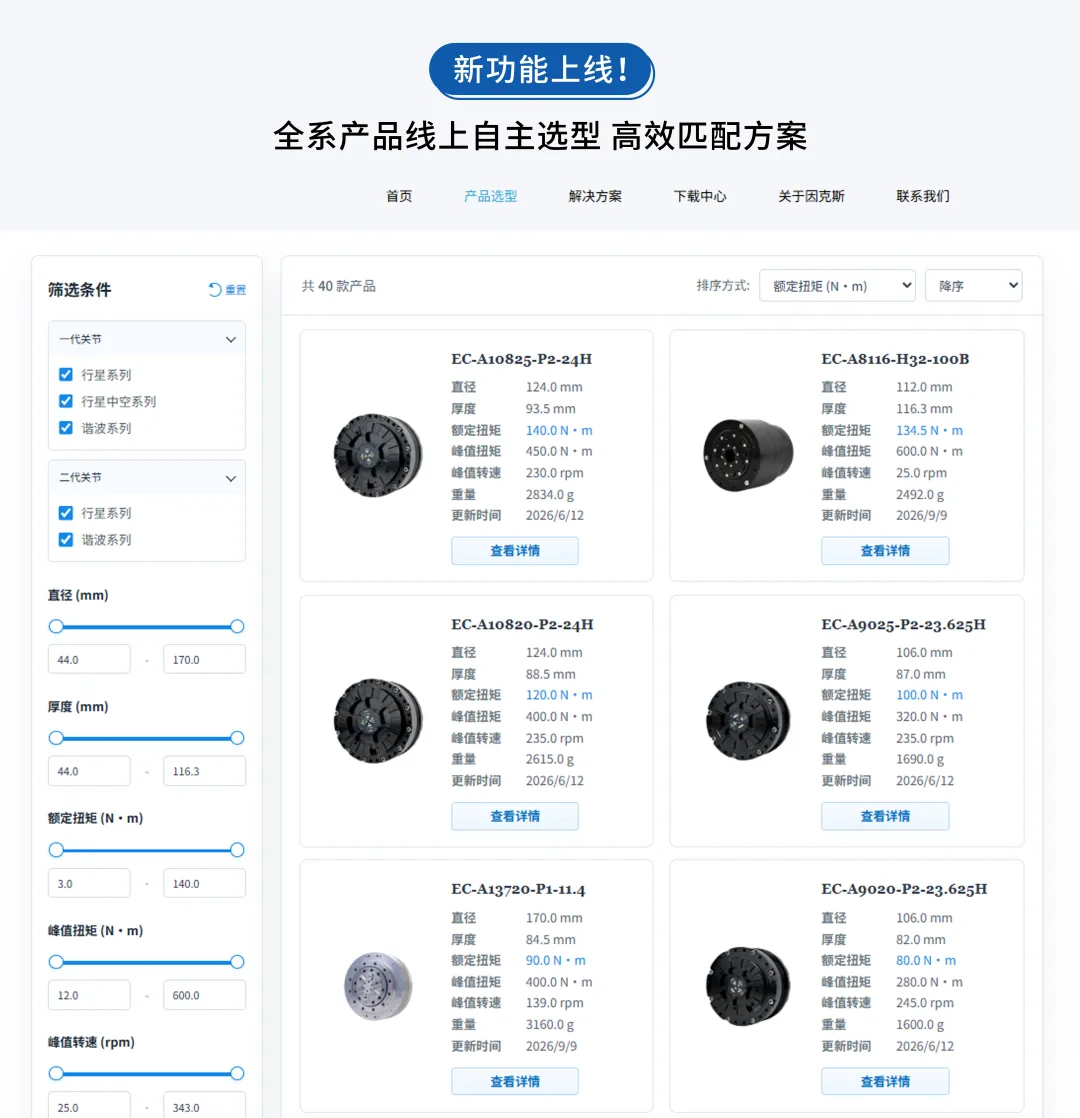
In conjunction with the launch of a number of breakthrough innovative products, INXS also plans to launch an online option platform in the coming year to further integrate the choice and configuration capabilities of the robot's core components, reducing the barriers to customer hardware development and system integration.
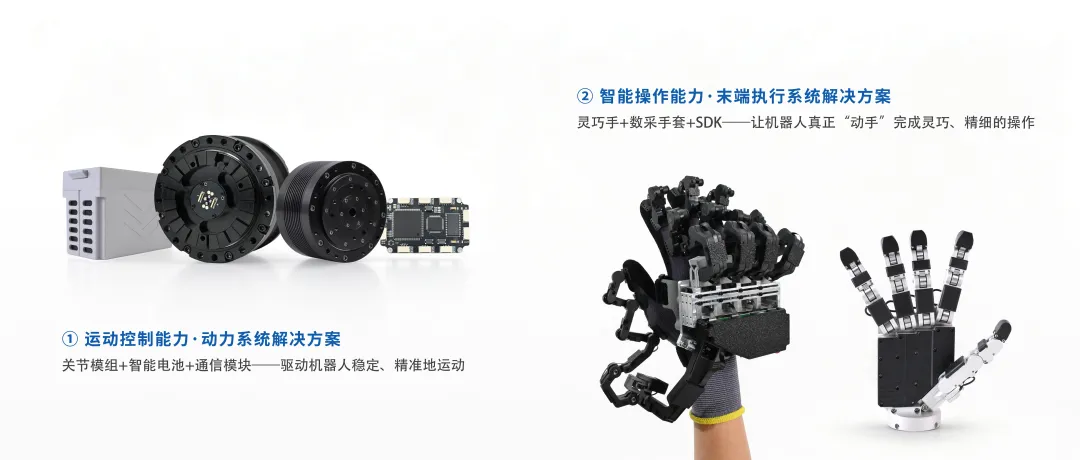
Combining the company's existing product matrix, integrated joints covering multiple technologies such as planetary, fluorescent, oscillating lines, the agile EC-DexHand-5F achieving 20 dynamic degrees of freedom and 0.85kg of extreme lightweightness, the communication modules and battery systems complementing the system-level hardware puzzle, and INXS is building a joint modules, agile hands, communications and battery one-stop hardware development platform.
The deep logic behind this platforming strategy is that there are a large number of newly entering enterprises in the smart industry, which have algorithmic capabilities and scenarios, but lack hardware engineering accumulation. If every enterprise needs to start from scratch with connector selection, interface definition, and communication protocol adaptation, the entire industry's transition rate will be seriously slowed down.
The standardised product portfolio provided by INX enables automakers to integrate systems directly based on existing solutions, focusing their research and development efforts on the algorithm and application layer. This means that INX is more than a supplier of robot core components, but a platform to provide integrated hardware solutions.
In addition, the Robotics Workshop also learned that INX's plans also include a combination of AI design tools and standardized hardware systems, which means that future customers may only need to input kinetic parameters and load requirements, the system will automatically recommend the best combinations of joint modules, and hardware selection from artificial engineering to intelligent recommendations.
The purpose of platforming and online platform selection is not only to reduce customer thresholds, but also to redistribute industrial segments. The assembly plant is responsible for scenarios, algorithms and data closures, and INX is responsible for hardware infrastructure and interface standards. When this division is stabilized, INX will move from component suppliers to hardware development platforms, from product delivery to capability delivery.
05.
Link to the Future
Looking back at INX's four-year development trajectory, we can clearly see an evolutionary trajectory from making products to setting standards.
The first-generation joint module solves the problem of not being able to use it, the second-generation rapid disassembly and liquid-cooled technology solves the problem of not being able to use it, the problem of not being able to continue using it, the problem of who defines the industry interface standards for platforming strategies and online selection systems.
Throughout the history of the automotive industry, Tier 1 suppliers such as Bosch, Zhejiang and others have long dominated the industry, not because of the technological leadership of a particular product, but because they define interface specifications and delivery standards for the entire industry.
The smart industry is undergoing a similar paradigm shift. The fact that joint modules account for the overall BOM cost ratio means that whoever has the right to define the joint modules has the right to distribute value for the entire industry to a large extent.
The over $300 million round of financing completed by INX, which is essentially the capital market's vote on this decision. The introduction of industrial capital such as China's Goldstone, also suggests that a longer cycle of industrial cooperation is in the pipeline.
In the first half of the joint modulation race, it's more about who can make the best product. In the second half, it's more about who can define the best standards.