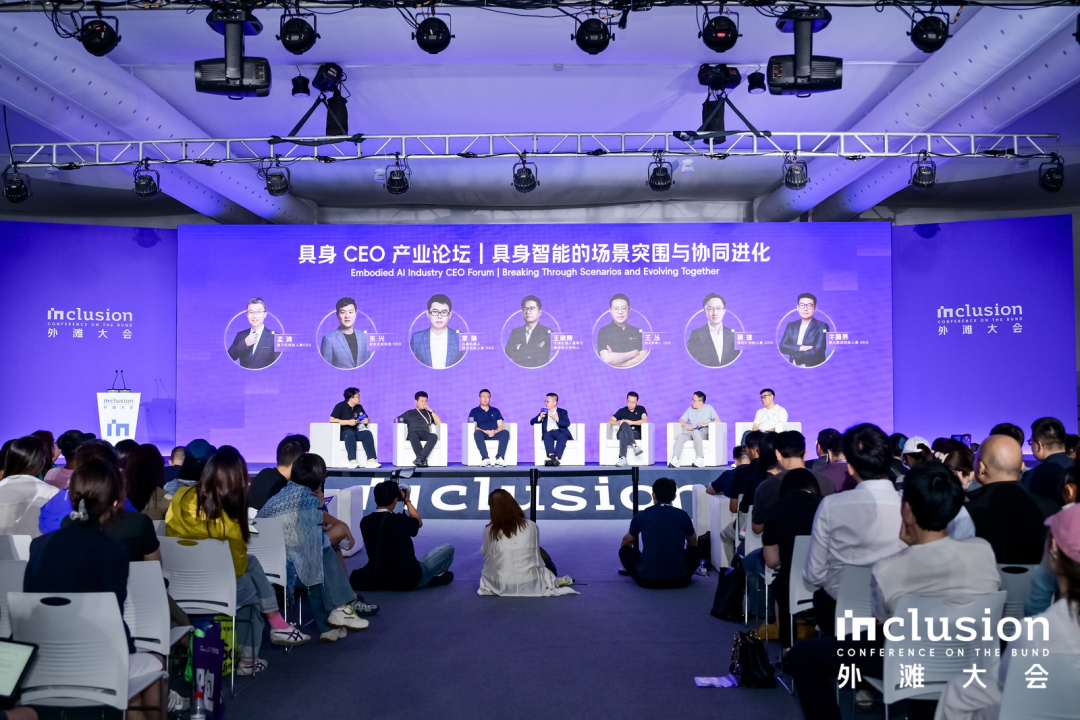
This judgment also provides a traceable clue for the three roundtables: Where exactly are we to simplify the idea of physical intelligence when existing models enter the physical world, when data needs to be transformed into modeling capabilities, when robots are really facing customers?
Do you think a general model will swallow up a large model?
Anxiety among smart practitioners sometimes comes from advances outside the field.
Recently, the GPT-6 Astra has completed the task of capturing and placing in real-world environments after being accessed by a mechanical arm control interface. A question becomes more straightforward: what else would be needed if the general-purpose model increasingly controlled robots, companies that specialize in the development of body models?
The news is really troubling, perhaps not how many tasks GPT-6 has already accomplished, but it suggests an uncertain future for the industry:
Every leap in the capabilities of a general model could redraw the technical boundaries of a body model company. Yesterday, special research and development capabilities were needed, and tomorrow they may become the default capabilities of a base model.
So the model of the digital world is progressing again, is there anything in it that doesn't matter?
Sheng Yu-jun, chief scientist at Pyongyang Wave Technology, reiterated the remarks on the spot, expressing some concerns among practitioners.
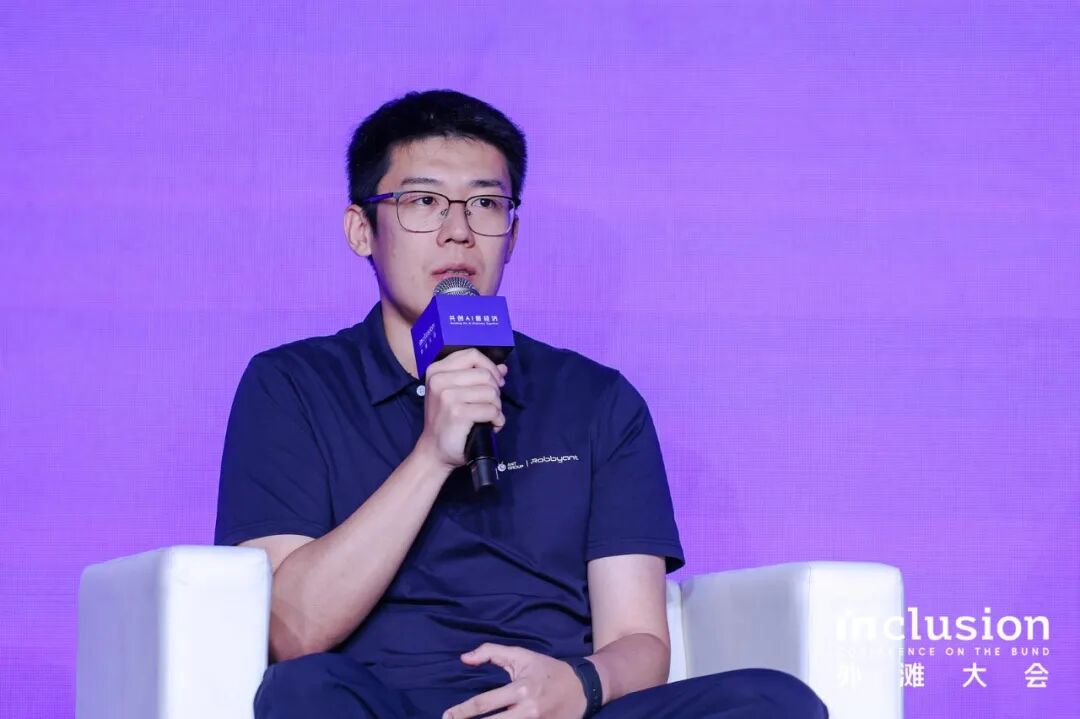
Shen Yu-jun, chief scientist at Pyongyang Wave Technology
In his analysis, if a company's work is primarily based on large models, then a leap in base capacity is likely to result in all previous efforts being made to be meaningless.
This is a reflection on his struggle for the first half of the year. When the industry repeatedly debates whether VLA or WAM, many schemes still extend outward along existing tools: a visual language model in hand tries to make it output action; a video generation model in hand lets it predict what the robot will do next.
According to Shen Yun, the question that needs to be answered is: What capabilities would it need to develop a robot model from scratch?
Shen Yu describes it as three things: first, extracting effective tokens that can express vision, space, force, and touch from continuous sensor signals; then, placing different patterns of information into the same model to complete alignment and fusion; and finally, generating actions that can be performed based on these observations.
Unlike digital models, robots are faced with a continuous flow of vision, touch, sensation and their own state, where the environment changes immediately after the action occurs and new observations are generated.
In Spirit Wave's view, large generic models can improve understanding and planning starting points, while physical models still need to complement the distance from digital intelligence to physical action.
This is not the answer that Linbo was determined from the beginning. In an interview, Linbo's CEO, Zhu Jing, explained that the team had previously minimized the model based on general video generation to adapt it to robotic tasks. However, as research and development progressed, capacity improvement was gradually limited, and further adjustments could also harm the prior knowledge of the original model, affecting generalization.
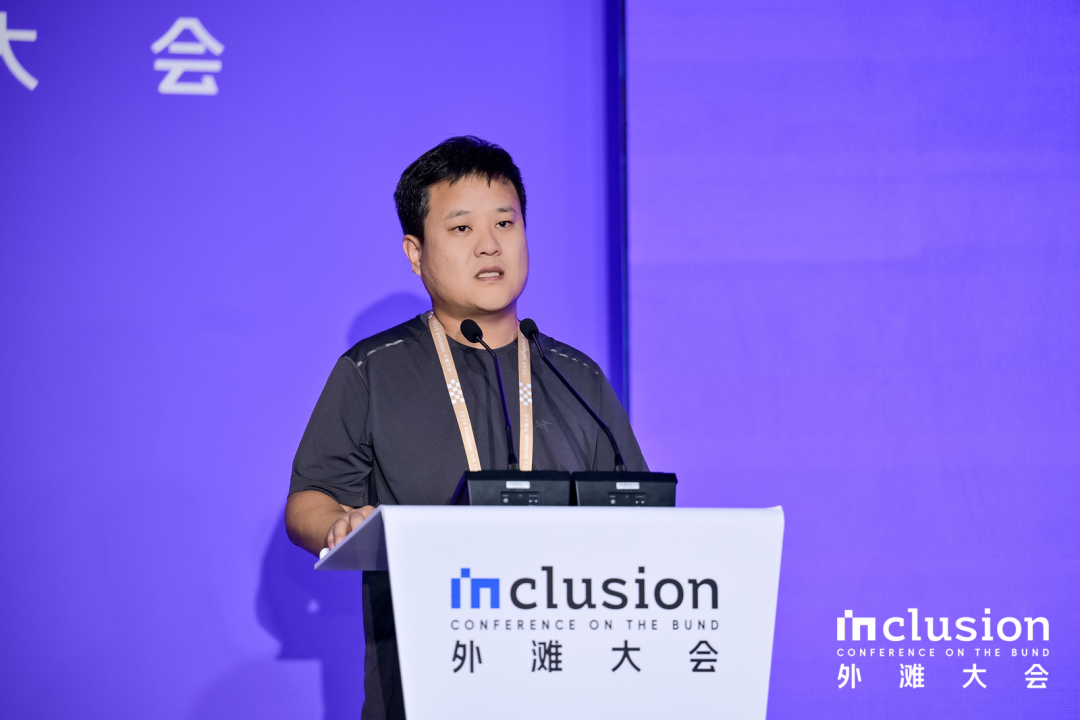
Zhu Jing, CEO of Pyongyang
We really hit the South Wall on the way to the end.
The encounter also propelled Spirit Waves to shift to more original research: generating a video base from zero-training to robotic missions, and adding a large amount of real robot data to pre-training.
For example, a mineral water bottle can be a good-looking video after dancing in the air; the robot needs to predict movements that conform to physical laws and handle continuous input in a timely manner, otherwise it is impossible to generate the robot's next move, which is the goal of the model.
However, Hong Kong's assistant professor of Chinese at the Chinese University of Hong Kong, Tian Shan, raised further doubts about the question: Even if physical intelligence can benefit from the growth in scale, will it expand along the same lines as language models?
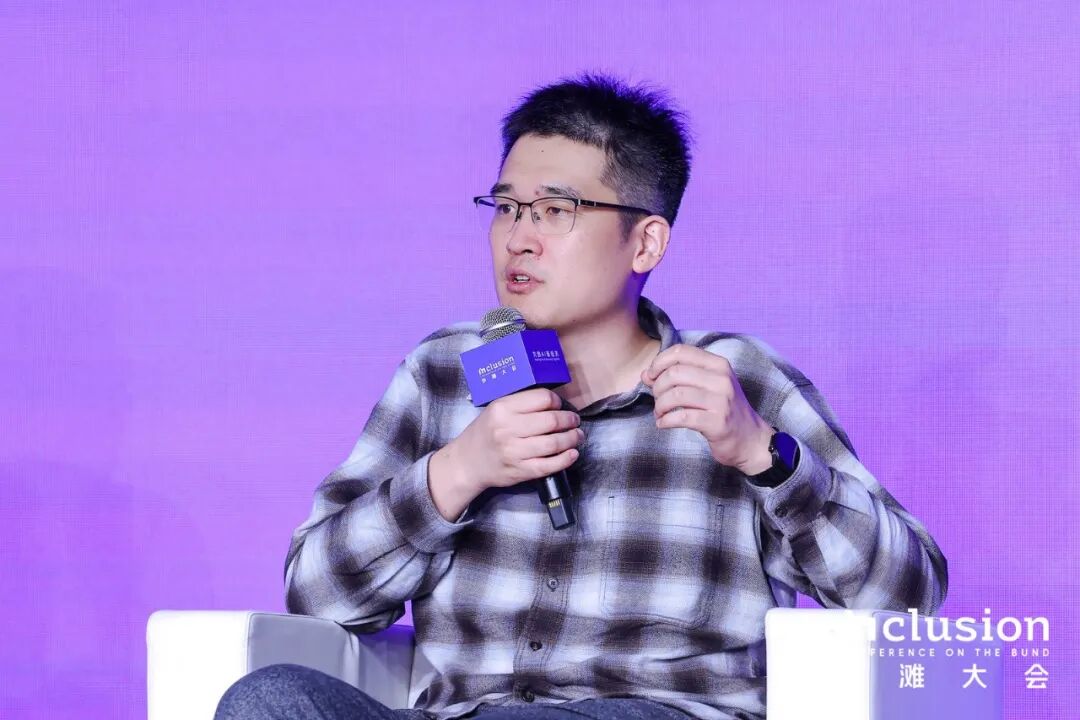
Chinese University of Hong Kong assistant professor Tian Sean
The development of the last round of large models has largely benefited from the Internet. Text, images and videos can be shared online and organized into a relatively uniform form of training. Robot data is highly correlated with the body: the number of joints, structural design, sensor configuration changes, and the way the same movement is expressed changes with it.
It is difficult for children to learn to walk by reading or watching alone, and they need to act personally and develop the ability to do so at a time of imbalance and adjustment. Whether physical learning requires more interactive experience from the body itself, and what models and data patterns can be formed from this, remains a myriad of questions to be answered.
He also acknowledged that using existing models such as VLA, WAM and others is a reasonable and realistic choice at this stage. These models have been trained in bulk data to provide a starting point for capability tasks. However, it is difficult to conclude how far this path depends.
Li Yong-lu, associate professor at the Shanghai University of Transportation's School of Artificial Intelligence, pushes the question to the training goal: what exactly is a model required to learn?

Li Yonglu, Associate Professor at the School of Artificial Intelligence at Shanghai Transport University
Currently, the most common method is to record the expert's operational trajectory, allowing the model to mimic completing tasks. However, when the training goal is focused on reproducing the finite trajectory, the model's ability to obtain is also limited.
Li Yong-ru used the use of junk food and junk food to describe the current physical model: real machine data is limited and expensive, and there is a lot of video and images on the Internet that have not been fully exploited. In addition to obtaining trajectories by mission, robots may also need to learn broader physical experiences through free interaction and proxy objectives. Whether the model can use these data is as important as the amount of data.
The judgments of the three scientists also clarified the technical choice of the Spirit Wave: to absorb knowledge and training experience from general models, while building models, data and pre-training capabilities for the physical world.
He believes that scale expansion will still lead to improved capabilities, but enterprises with capabilities need to master the ability to train large models from scratch; he emphasizes that there is a significant difference between developing large models from scratch and modeling them based on existing models. The real threshold also lies in engineering capabilities: whether to complete large-scale pre-training from scratch, deny the data needed by robots, and organize data, computing and training infrastructure into an effective system.
Faced with the question of whether or not there is only one or two years left for the enterprise after the entry of the giant model company, Zhujing acknowledged that companies such as OpenAI, Anthropic have strong training technology, and that GPT-6 can also improve the efficiency of part of the research and development of the enterprise. But he believes that what data is effective, how to process the data, what data to replenish after problems arise, still needs to be gradually formed in real tasks, which is the key to the future of competitive enterprises with a physical intelligence.
General big models are raising the starting point of body intelligence and are also compressing the simplistic subtle living space. The value they want to create is the accumulation of native body data, pre-training ability from zero, and the ability to allow models to continue to perceive and function in the physical world.
The question then came to the industry's biggest concerns today: What exactly is in the church's robots with the ever-expanding amount of data?
The more data, the smarter robots don't have to be.
If model capabilities are increasingly dependent on data, a natural intuition is that the more they are, the better.
At the data roundtable, the answers given by the three guests are not the same.
In his opinion, high-quality data must at least pass through several layers of testing: whether the data itself is complete, whether distribution and labeling are reasonable, whether the model can be improved through evaluation after training to prove that it is true, and finally to enter real-world verification.
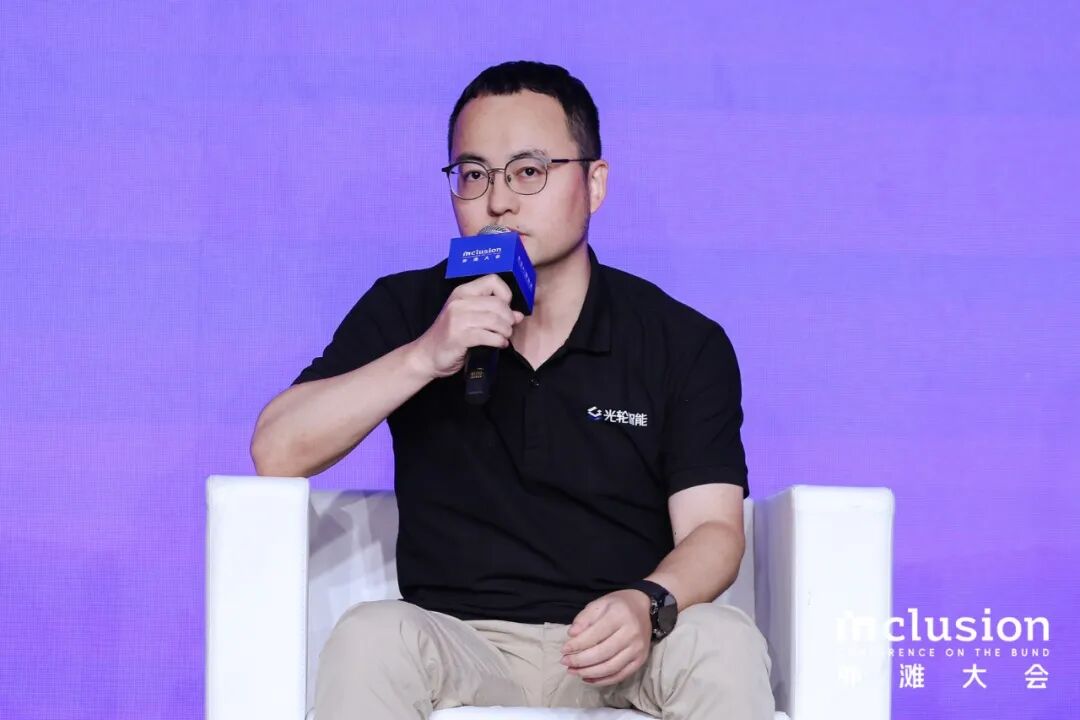
Zhang Xiaowei, Vice President of Lightning Intelligent
Data imaging instructional materials, assessment imaging exams, only providing instructional materials without examination, and the closed loop is not formed. Simulation thus plays an important role: low cost, limits on the ability of large-scale models to be exposed, then guides direct extraction; and machine deployments continue to detect the missing Corner case in the experimental environment.
Lee Mao-ping, Vice President of Honey Bee Technology, emphasizes the diversity of scenarios and missions. He summarizes the current bottleneck as a wall of data: real interactive data is still scarce and expensive. As non-essential collection schemes such as Ego, Human-centric and others mature, collection equipment is opening up, and the next step is more importantly to get these devices into enough real scenarios.
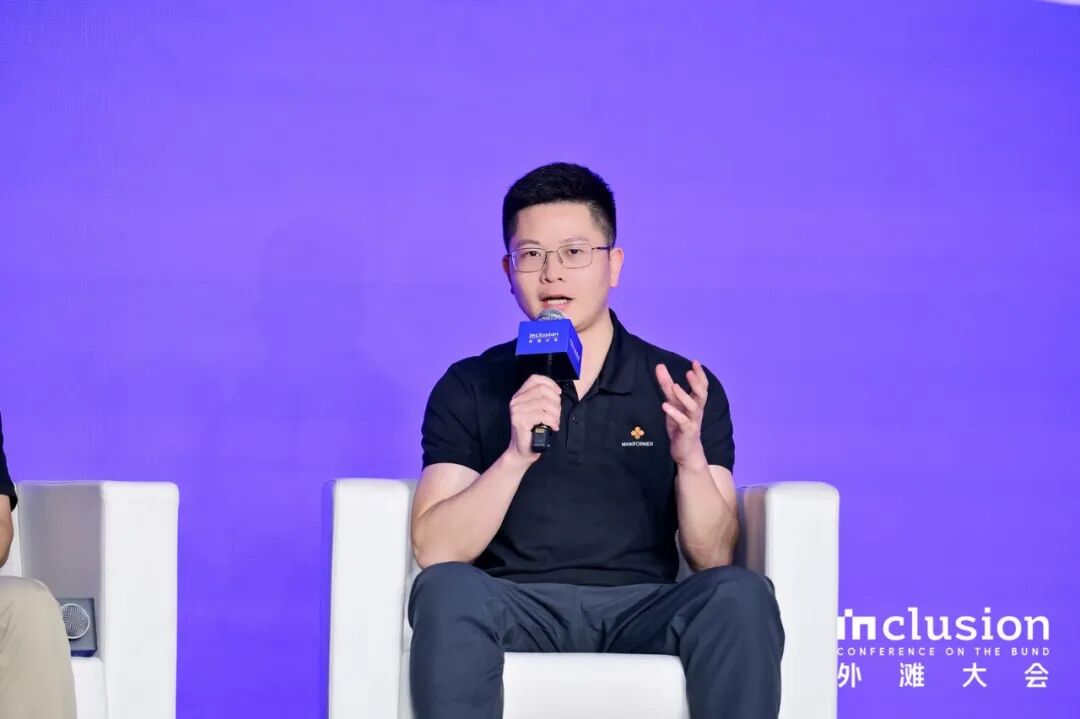
Lee Mao, Vice President of Beekeeping and Technology
For Li, high-quality metrics are not the only criteria: high-precision data can serve to mimic learning, semantics and scenarios. Richer data can help to learn world phenomena, and different data needs to be graded. He attaches more importance to multimodal, high fidelity and time-uniformity than to a single pursuit of precision, and whether it can cover a richer task distribution.
Huang, chief data scientist at Boeing Wave, focuses on the other half of the aircraft: today there are too few robots that actually enter the production and service scene, and large amounts of data are still coming from customized collection and lack of ongoing feedback after deployment.

The chief data scientist of Penguin Wave, Yellow, uses silicon
The three judgments point to the same change: the data competition is far from a rough number of hours, but rather a collection of useful data.
This also means that what is high-quality data is difficult to define separately from the model.
Zhujing explained that Liangbo would first use model training to determine what data is needed, including scenarios, tasks, and distributions; for the collection of data of higher difficulty, small-scale trials form SOPs and then give them to suppliers at scale. Over the past year, Liangbo said that the availability of raw data into model training has increased from about 15% to more than 90%.
In this set of logic, data is just a raw material that really determines the model's capability, and how the company selects, combines, and processes it. The same amount of data enters different models and can produce completely different results.
The bigger problem is that today's robots don't really form a continuous data source.
Zhujing describes the current stage as a number-based compulsory drill, whereas the ideal data plane should be an anomaly and failure that flows back and forth from robots entering real work. In theory, everyone's daily work and life are in the data-producing world of biology, but today's robots are not yet able to make full use of it.
According to Hawking's logic, the real starting point for the data plane is to eventually go back to the robot and start working. This also pushes the question to the next step: when exactly will the robot actually go in and work?
It's time for robots to go and play child labor.
If real-world scenarios were to produce really valuable data, a somewhat paradoxical question would arise: Are robots not yet mature enough to continue to train in the laboratory or to enter the scene first?
At the third CEO roundtable, Zhu Jing gave a straightforward answer: even if you're still a child, you should be working.
It's a shift in the focus that is taking place behind these words, which is a shift in the focus of physical intelligence.
For a long time, the industry has been accustomed to training models stronger and then to finding landing tasks. But the industry is slowly accepting a reality: robots need to work first, failures and anomalies have the opportunity to turn data into the next round of training.
The real question immediately becomes: What are today's robots capable of?
Zhujing gave two conditions: first, capacity, where the environment for landing cannot be too open at this stage, and task cannot be too long, otherwise the anomalies will increase rapidly; second, cost, even if technology can complete the task, if the value created cannot cover the cost of robots and deployment, the business model cannot continue.
This also explains why the first landing mission may not be sexy.
Zheng Lin, CEO of Robotics, explains that robots are actually relatively mature and are still focused on tasks such as taking and placing parts in factories. For example, removing car parts, disassembling cartons in production logistics, the task itself is not complicated, but has been able to solve some of the labor and flexibility needs in real production.

The CEO of RoboCop, Shen Lin
He believes that today's generalization takes place more in a single scenario, single task or even within a single endpoint, and the cross-tasking capabilities are still limited. Such a program has been able to create value, but often still, like the upgraded version of the previous generation of special machines, there is a significant distance from the universal capabilities of truly cross-tasking.
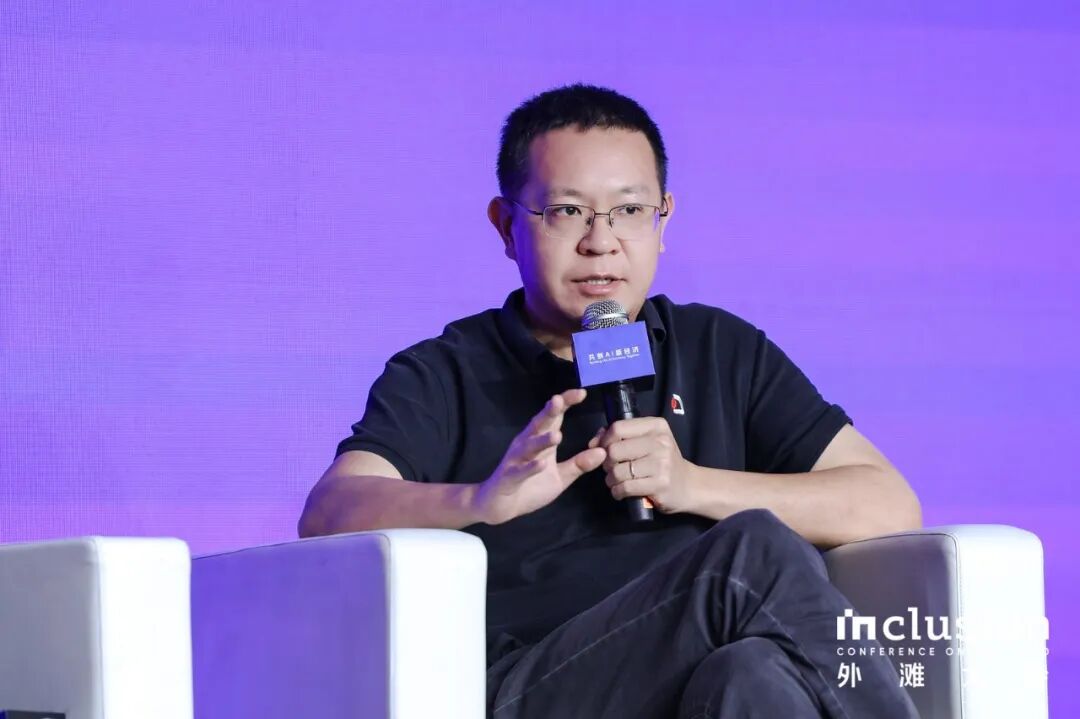
He's the CEO of a stupid robot.
Commercialization also gives another set of more realistic evaluation criteria.
What Wang Xiaong, chairman of Wang Xiaong, wants to see is that robots can form thousands of scales in a single scenario, and customers can actually calculate and achieve a profit-and-loss balance.
Lin Wa's own scenario selection also follows a similar logic. In the pharmacy scene shown at the Exhibition, robots have entered real retail pharmacy stores to share overnight sorting; instead of being a more elaborate demo, Zhuang focuses more on real applications, whether to continue to expose insufficient models and generate data that can be retransmitted.
For model companies, commercialization is therefore a more brutal test: customers will not tolerate failure because of technological advances, and real scenarios will bring success rates, abnormal processing, deployment costs and hardware stability to the table.
This test is also difficult to do by the model company alone.
Zhujing believes that the robot itself is still a highly non-standard product that needs to be completed jointly by different enterprises, from the core, models, post-training to integrated delivery and post-maintenance.
The synergistic evolution of the industry is another consensus that has repeatedly emerged at the third roundtable.
Wang Xiaoyang describes physical intelligence as the four elements of hardware, models, data, and scenarios, and it's difficult to develop any of them in isolation to create a close R&D cycle fast enough.

Wang Xiaogang, chairman of the board of directors of Wang Xiaogang
For today's physical intelligence, the value of industrial collaboration must ultimately be proven by landing efficiency.
He said he hopes to see two changes a year from now: a significant increase in the number of robots that are really model-driven, working in scenarios such as industrial and logistics; and a significant decrease in the post-training costs of the same real task, especially data costs.
From this point of view, there may not be a dramatic ChatGPT moment with physical intelligence. It is more likely to happen in a typical warehouse, pharmacy or factory: robots start long-term work for the first time, and each failure becomes a training material for the next version of the model.
By then, robots had begun to create not only productivity, but also more advanced selves.
What is the meaning of this verse?
Looking back at the three discussions, an increasingly clear fact is that physical intelligence is saying goodbye to the overly simple answers.
Larger models do not automatically solve the physical world faced by robots; more data does not naturally translate into stronger capabilities; a successful demo does not prove that robots can function.
The really difficult parts lie behind these answers: how models understand a constantly changing world, how businesses know what the next data should be collected, how robots continue to work in real-world scenarios, how to expose problems, and how to turn failures back into learning materials.
Over the past year, it has gained an unprecedented amount of capital, talent and attention and has been subjected to unprecedented scrutiny.
The industry still needs new models, new technological routes and new stories, but it's the hard, subtle, and even dirty work that really determines the death of startups: collecting high-quality data over and over again, solving every anomaly and failure one by one in real life scenarios.
Great industries often grow slowly in these not-so-flattering jobs.
It's the same with being physically intelligent. The real turning point may happen on some ordinary day: a robot turns on electricity, enters the real world, is autonomous in the face of change, failure and accident, and finally works safely into the dark.
Then we can say: The age of physical intelligence is really here.