“ Why would a global automobile giant want to build anything of its own give the real product lines and physical data to a startup company?
The robot industry never lacks surprising presentations. It will walk, dance, roll over, it's best to have another cup of coffee as long as the lens is cut fast enough, and a robot will always look smarter than it actually is. But the factory doesn't eat this set.
So when BYD is self-developing humanoid robots, investing in Pasini, and moving the two sides' relationship further from equity to production lines and data collaboration, it's really worth asking: why choose Pasini, a company known for vertical integration, for the habit of holding its core technology in its hands, for making chips and repairing cars from batteries?
Perhaps it's because BiDi is going to build something that's clearer: it's not hard to build a robot, it's hard to make a robot have stable, accurate, scalable touch sensors; it's hard to unlock high-precision multi-dimensional touch, real-world data, model training, and production line verification to form a closed loop that goes from touch sensing to complex operation.
01.
You can't create anything by yourself, and you can't create anything from scratch.
Biadi is probably one of the companies in China that doesn't need to prove to the outside world that it is capable of producing lithium. It started with batteries and then went into cars, incorporating batteries, motors, electrical controls, power semiconductors, complete car manufacturing and even some electronics in its industrial system. By 2025, Biadi was the world's number one selling new energy vehicles for four consecutive years. In the first half of 2026, its R&D investment amounted to about R$28.9 billion, with a cumulative R&D investment of over R$270 billion.
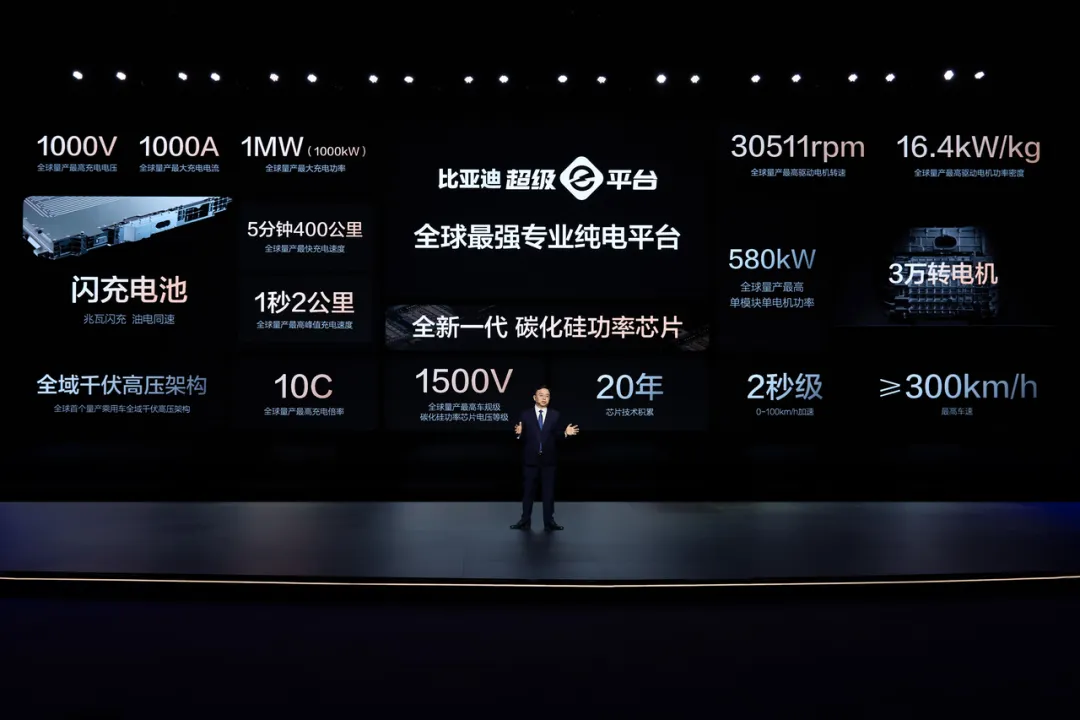
What these giant companies are good at is not a pretty concept: putting expensive technology in the pipeline, lowering costs and dragging competitors into price wars on a scale is their true industrial magic.
New energy vehicles have proven the effectiveness of the strategy.
So when BYD entered the robotics industry, it meant that they were once again planning to turn an expensive, fragile technology that stayed in the lab into an industrial product that could be mass-produced and used.
In May, BYD's executive vice president, Li Keo, publicly confirmed that BYD is pushing forward the development of humanoid robots. She also left behind an easy-to-neglect statement: BYD doesn't have to shut down all robots to do it itself, it can be self-developed, or it can work with outside companies.
Biadi is not in a hurry to choose between cooking and cooking. It can go both ways: it understands the underlying technology itself, binds scarcity capabilities through investments, and throws the candidate into a real factory to get the production line to complete the screening for itself.
02.
Biaddy chooses to use Chiyo as a body massage, and Pasini as a neural massage.
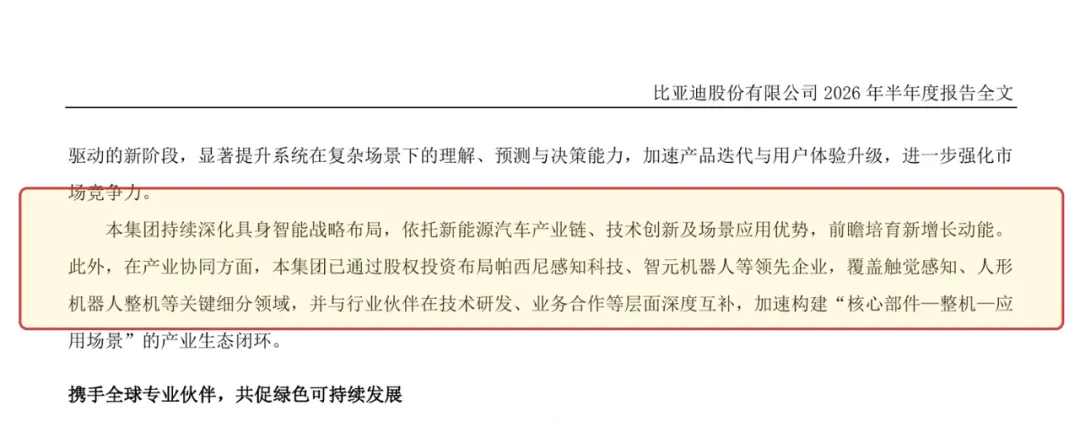
In September 2026, BYD announced for the first time in its investor exchange records that its robotics industry map was fairly straightforward. BYD said that the intelligent robot with the new energy automotive industry chain is highly synchronous, with a large number of technologies, components and production line capabilities that can be relocated and replicated; in terms of industrial collaboration, the company has invested equity in companies such as Pasini, Intelligent Robotics, and others, covering key sectors such as touch sensing and robotics integration.
This also explains why Bidy still chose Pasini in addition to the self-developed robot. The robot will walk the road, solving how the foam reaches the workpiece; the robot sees, solving where the foam objects are stuck; but after entering the assembly, precision assembly and flexible manufacturing, it really decides if it can't work, often in the last few millimeters.
The resistance, friction, vibration and distortion transmitted by the fingers could be used by the production line workers to correct the movement in a few hundred milliseconds. The gesture in the teacher's mouth, which may not be correct, may not have a formula, supports the last flexible line of defense in modern manufacturing.
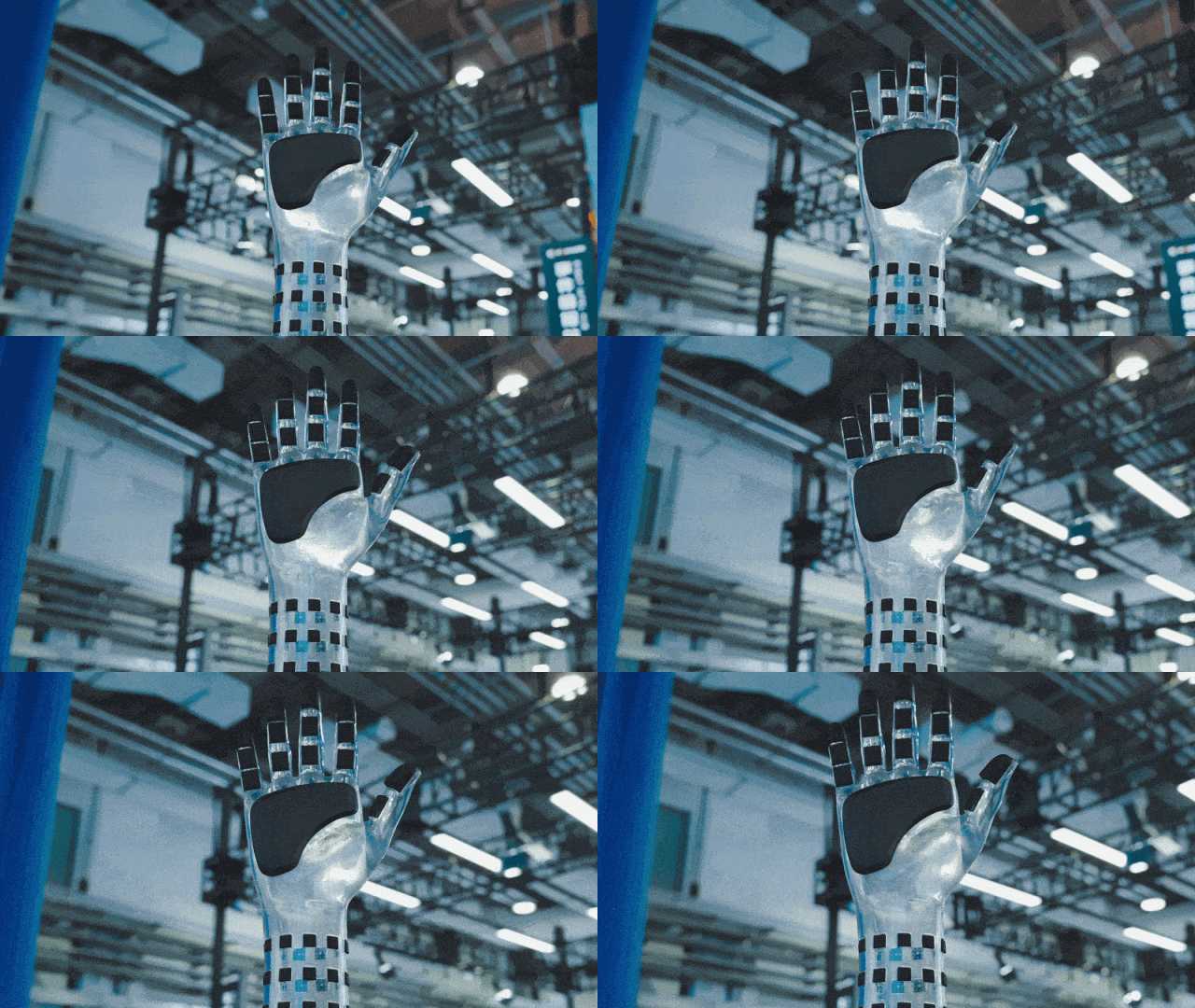
What Pacini is doing is turning this precious sense of touch and experience into a machine that can collect, understand and replicate data.
03.
More expensive than investing is BYD's production line.
In 2025, BYD made a strategic investment in Pasini. The real change was the upgrading of the relationship thereafter.
On August 25, 2026, the two sides signed a strategic cooperation agreement at BYD Global Headquarters, which explicitly proposed deep collaboration in the field of data acquisition and robotics to drive substantial breakthroughs in the industrial manufacturing landscape.
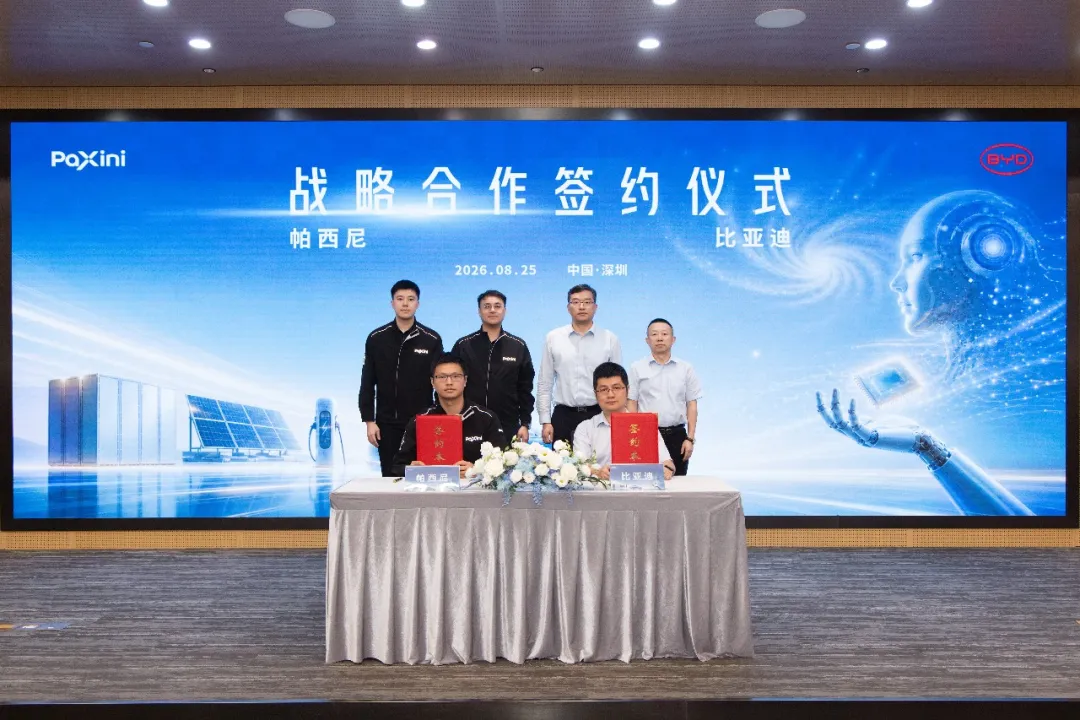
The list of attendees was more long-lasting than collaboration. Vice President of the BYD Group, General Manager of the Fifteenth Department of Business, General Manager of the Department of Commercial Vehicles, Ro Chonglian, Secretary of the Board of Directors and General Manager of the Investment Department of BYD, Li Jing, attended; Vice President of the BYD Group, Vice President of the Fifteenth Department of Business, General Manager of the Department of Commercial Vehicles and General Manager of the Department of Investment, Li Jing, attended.
Recently disclosed information shows that cooperation between the two sides has pointed to a real production scenario: the complex artificial processes surrounding automotive manufacturing promote the collection, governance and application of industrial physical data, and push multi-dimensional touch sensing capabilities into the production chain. This is worth paying more attention to than the investment itself. Money is the easiest resource for large companies.
A car company allows an external team into a real manufacturing process, which means that it is no longer a standard solution in the lab that the other company faces, but noise, errors, material biases, equipment vibration, model switching and long tail issues that keep coming up. The lab encourages innovation, and the production line is responsible for making mistakes happen.
For this reason, BIDDY is not just a backlog of money or brands, but also an industrial pressure test site: technology cannot mass-produce, equipment cannot stabilize, data collected cannot really train robots to enter the production line once it is exposed. Equity investment is a bet on future value; production line cooperation is a test of current capabilities; data co-creation can form the basis of long-term co-evolution between the two parties.
04.
Pasini's real value may not be a sensor
For a long time, the outside world has been accustomed to putting Pasini in the box of a robotic touch sensor company. This label is not wrong, but it is obviously too narrow.

With the introduction of 6D fusion sensing technology, the product gradually extends to multi-dimensional touch sensors, handhelds, data collection systems, body models and robotic bodies. If you only look at the first layer, it's hardware business. The market is concerned about shipment volume, price, cost and gross interest rate. But if the sensor is just a probe that Pasini extends into the physical world, then more valuable is the physical interaction data that is continuously generated behind the probe.
Visual data can be obtained in large quantities from cameras and the Internet, and language data can be obtained from web pages, books, and conversations. Touch data must be generated in real contact. Rebound when a button is pressed, resistance when a string is bent, frictional changes in a flexible material that are about to slip, must be generated in real contact. What's more troublesome is that these data must be consistent with the visual, postural, and operational outcomes in real time. Otherwise, robots only know what they're doing, but don't know why they're succeeding, or even why they're failing.
Biaddy has exactly what Pacini needs most: real industrial tasks of high density, high standards, continuous change. Pacini has the other half of what Pacini needs: to capture the process of touch, rhythm and movement and further transform it into a tool for training data and operational capabilities. If the two sides really open up, it will form a more complete loop: Pacini proposes real tasks, Pacini collects multimodal data; data training models, models drive robots; robots return to production lines, failures and end-to-end processes continue to return.
In this set of logic, the sensor is just an input. What Pasini really wants to compete for is the physical interaction data layer of the Physical AI era. Hardware is usually only sold once, and data, models, and tool chains can be continuously iterated. This is also the underlying logic behind Pasini's attempt to jump from component suppliers to rigged smart infrastructure. Byde's addition, this position has a sufficiently heavy industrial footprint for the first time.
05.
Why doesn't Biadi do it all by himself?
The answer is not complicated: because time is also a cost. Large companies have a lot of resources, but organizations are not naturally suited to tackle all frontier problems. Especially when humanoid robots are still in the technological path of confusion, internal self-development can ensure control, and investing in companies such as Pasini, the leader in the field of touch perception with advanced technology and industrial landing capabilities, can bypass long trial and error cycles.
Biadi needs Pasini to have at least three layers of real value.
First, full touch and agility.
Automotive, battery and electronics manufacturing have accumulated motor, power control, chip, mechanical design and supply chain capabilities, but high-density multi-dimensional touch, full-module number adoption, and cross-body data duplication remain a highly specialized subfield.
Second, getting real data faster.
While Biadi has a scene, it doesn't have to have all the tools to fully transform workers' operations into machine-training data. Pacini has perceptual and computational tools, but lacks top-notch industrial capabilities that no lab can afford. The two are not simply complementary, but they each have half of each other's hardest-to-replace data planes.
Third, the right of strategic selection is preserved.
If the future of BYD's self-development of robots is accelerated, Pasini can become a bottom-up perception, computational and model partner; if BYD adopts an open ecosystem, Pasini can also serve different robot entities and production scenarios. Pasini also takes advantage of BYD. One of the hardest problems for a startup is often not laboratory equipment, but the real problem of top industrial customers. BYD can help Pasini compress the customer education cycle, complete industry-level verification, and turn its technology from lithium-ion indicators to lithium-ion, reliable, and replicable lithium.
Biaddy used Pacini to buy into the touch-age; Pacini used Biaddy to complete the adult coupons from smart tech companies to industrial infrastructure companies.
06.
Automobile factories are the real test site for physical intelligence
In the past, automotive factories were one of the biggest buyers of industrial robots; in the future, they may be the most important training ground for humanoid robots, the first large-scale customer base and a large-scale manufacturing base.
Traditional industrial robots are good at structured environments: job-fixed, trajectory-fixed, motion-fixed. The real long-term tasks left to man, precisely those that require manual handling, soft materials, location changes, unusually frequent processes.
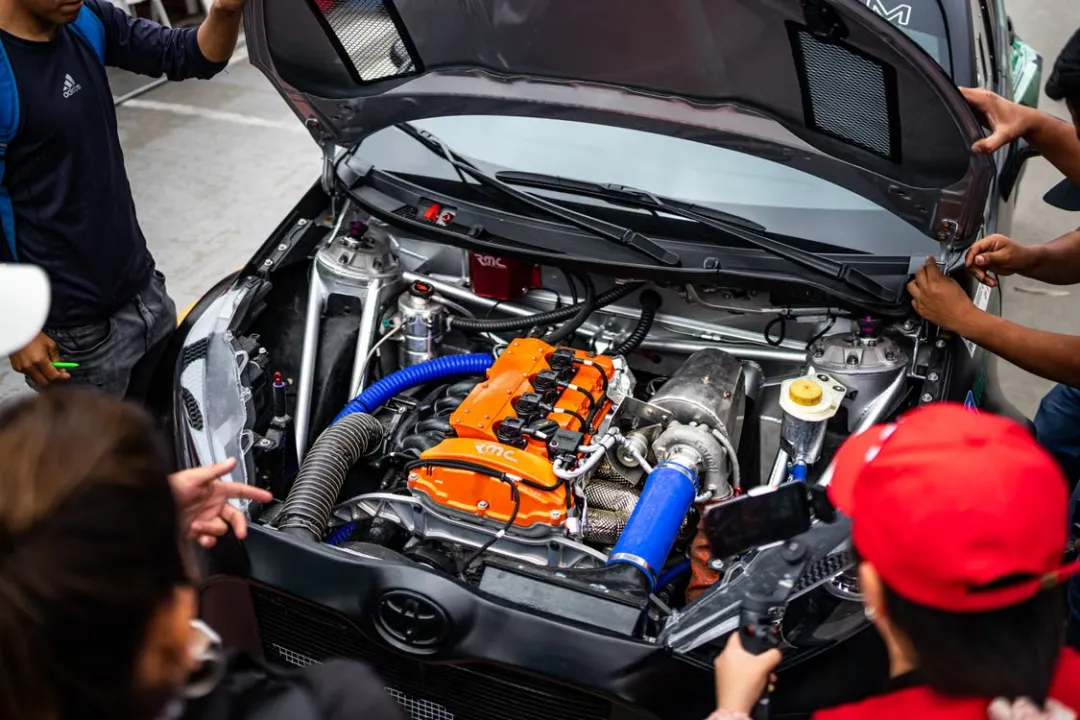
This is also the most realistic logic for automakers to enter a physically intelligent world: they don't have to look for an application scenario out of nowhere, their factories are the market; they don't have to wait for the first big customers, they are the first big customers; they don't have to assume demand in the laboratory, the production line is being challenged every day.
This is especially true of Biadi. It is both a potential developer, manufacturer, and large-scale user of robots. More importantly, it has the ability to drag robotics into its most familiar battlegrounds of cost, efficiency, supply chain, and mass production. While the value of Pasini lies in complementing a long-neglected link in the battlefield: touch and real physical data. Flexible processes that cannot be solved by traditional automation.
After all, in the robotics industry, after-hours flipping can only win applause. Being able to talk about the productivity of the next generation on BYD's production line, translating the words of the teacher's unclear handshake into data that machines can understand, learn and copy.