The Milwaukee Owl always flies at dusk.
When the week of the WAIC ended, the heat and noise gradually dissipated, and perhaps it was time to revisit the exhibition again. From the crowded booths, the video of the demonstrations and the heavily released new material began to appear, some of which were overshadowed by the heat of the venue.
For two consecutive years, entering the WAIC, the atmosphere of 2026 has formed a kind of noticeable rupture compared to last year or even two years earlier.
In 2024, humanoid robots will be on the stage largely in static presentation, capable of completing basic walking demonstrations, which is bright enough to catch a glimpse. In 2025, dynamic capabilities will be unlocked one by one, robots will start to drum, box, dance, and even roll over after completion.
At the H3 exhibition hall in Shanghai in 2026, this astonishment clearly gives way to another mood, a calmness that is closer to the reality of the industry.
This year, for the first time in its history, more than 200 enterprises in the furniture industry with more than 300 machines have been featured. But the numbers themselves are not at the heart of our observations, and it's really worth noting that as robots move from the technical verification stage to the industrial delivery stage where silicon can continue to function, the atmosphere, customer expectations, technical priorities and industrial chain segmentation are changing.
Make-up shows and a mature buyer's market
If you use a word to summarize the overall atmosphere of this year's WAIC Smart Show, it's probably a make-up show.
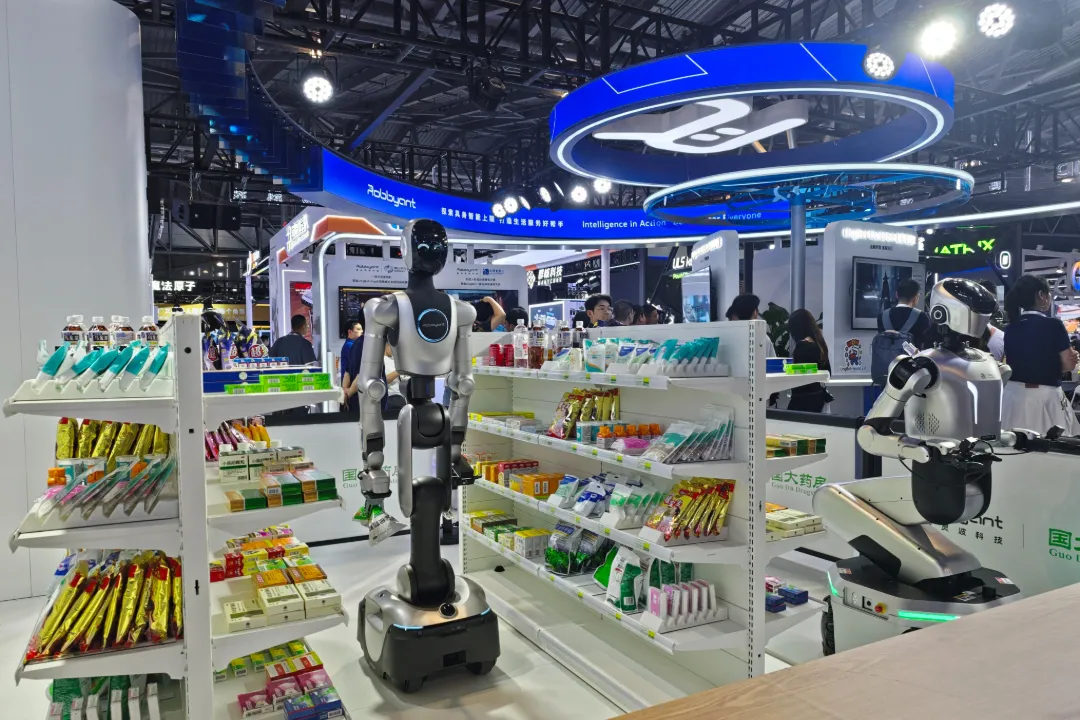
Dynamic demonstrations, such as rear-end flipping, mechanical dancing, wrestling, etc., which occupied C-seat in previous years, are no longer the center of traffic this year. Instead, humanoid robots complete the sorting and intersection of car line beams on the simulated production line, grab medicines and packaging in smart pharmacies, dismantle and transport in storage environments, and perform precision component assembly in industrial settings.
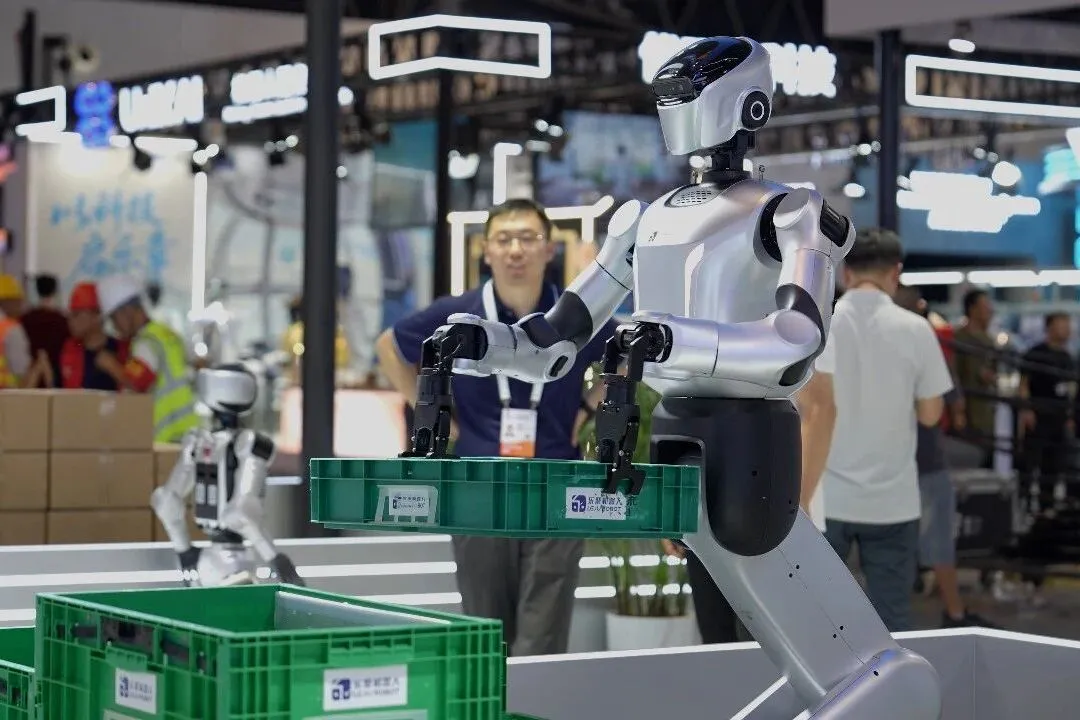
Wang Zhengjie, co-founder of Noin Intelligent, also observed this change. He said: "Last year, people may still be showing single desktop-level demos, and this year it's closing in on the scene.
This shift in thinking is very clear, and industry testing standards are shifting from single-action completion to continuous operation reliability. In the past, a retrofit could define the technical height of a robot, but now customers are more concerned with the continuous operation of the robot on the actual product line, maintenance cycles, and so on.
After this change, we can see that the buyer market is maturing.
Early buyers of humanoid robots were mostly pioneering customers seeking technical verification, focused on silicon being unable to make silicon, but this year's potential customer base has expanded to more specific industries such as manufacturing, logistics, healthcare, and more. Their demands are whether silicon can be made stable, predictable, and economically viable.
Prof. Li Qingdao, the founder of excellent robotics, summarizes the criteria for commercialization more directly: ROI can be calculated. Robots need to really get on the field, help customers reduce production costs, improve production efficiency, and ultimately win the race to get into production. Relying on government orders, demonstration projects, capital outflows or valuation increases cannot prove that the industry is running out.
A more remarkable signal is that this year's showcase of mid-test lines and mass-production lines has begun to emerge.
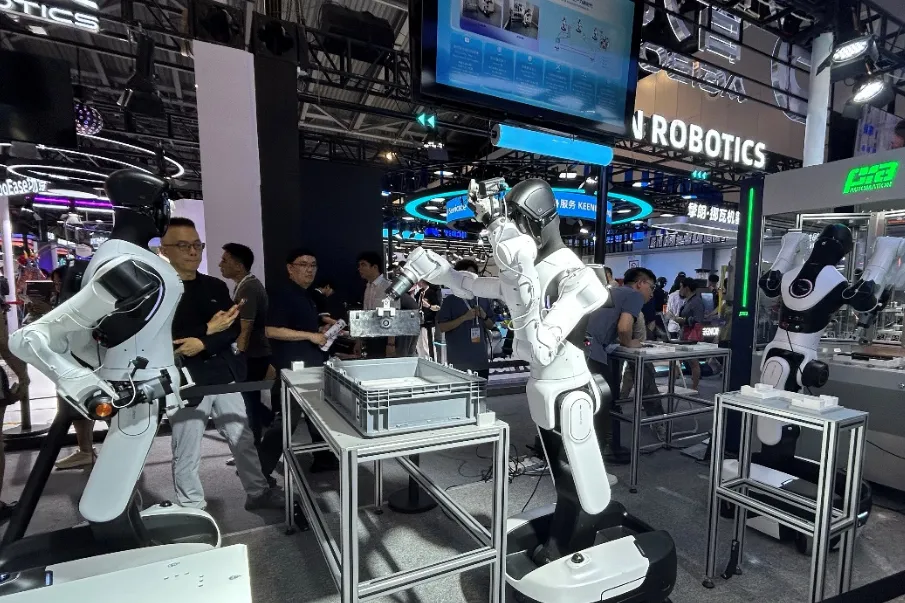
For example, Huawei Smart demonstrated the world's first multi-robot collaborative BMS (New Energy Vehicle Battery Management System) test production line in precision assembly and volume production; it demonstrated a 1:1 repeat production line in the real flow waterline of an automobile-beam factory, and demonstrated autonomous operation of the production line through a cluster of robots on site.
These figures, which have become the most persuasive names on the podium this year, clearly show that industry competition has really entered a phase of full delivery.
Layers of Applied Scenes
Apart from being a spatial expansion, it reflects a change in the integrity of the industrial chain. However, more important than the maturity of the industrial chain is the layering that the application scene is experiencing.
The presentation of the industrial scene is still the mainstream of this year's stand. The standardized industrial scene, such as 3C electronics, storage logistics, automotive parts, has become the centerpiece of human robots. These scenes focus on clear mission boundaries, relatively controllable environments, and quantifiable return on investment.
Second, the display of commercial services and consumer-level scenarios has increased significantly compared to last year. In terms of commercial services, especially catering retail, hotel reception, robots have almost completed small-scale landings, and market competition seems to be entering a phase of cost optimization.
However, the industry has shown some restraint when it comes to highly complex human-machine interactions in commercial scenarios such as retirement, community, and others. These scenarios involve multiple constraints such as security, ethics, emotional computing, and long-term reliability that make it difficult to achieve a complete product shutdown in the short term.
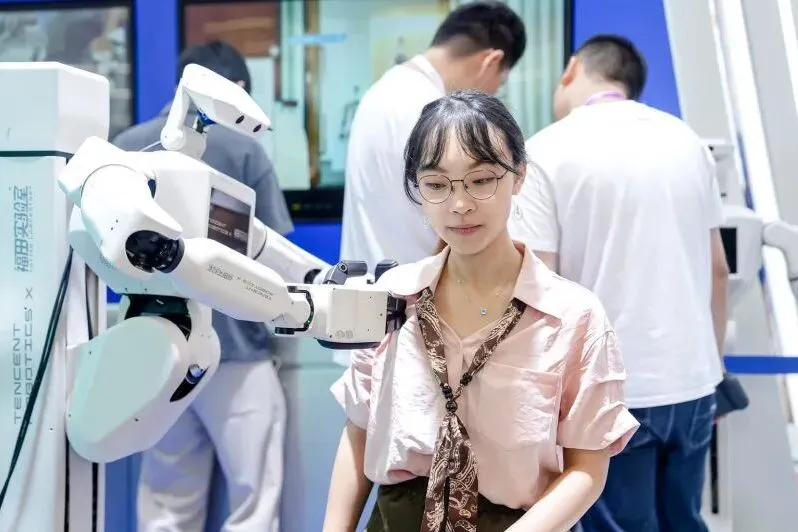
At the consumer level, many companies have shown products for individual consumers this year, with mainstream family accompaniment and teaching experiences, some exploring the home services of robotics managers, and others trying to accommodate indoor and outdoor mobility in a transformative form.
Wang Jie believes that consumer-grade robots are starting to get more attention this year, but there are still significant differences in target users, product formats and task boundaries even when they are targeted at households, different enterprises choose.
This differentiation has already been reflected in product definitions: some are more like caterpillars, focusing on emotional interaction and enjoyment experiences; some are more like housekeepers, focused pick-ups, delivery, and other specific household chores; and some products are at the same time accompanied and operated, hoping to find a balance between emotional value and practical functionality.
Noin's first generation of smart products chose a more precise cut-off, with reception, laundry and indoor running legs as their core tasks, and were aimed primarily at tech enthusiasts and hobbyists. Wang said that such users are more willing to learn and adapt to new products, and more able to embrace the process of generating early products, to verify functional boundaries and ways of using them together with enterprises.
Consumer-grade robots are not a sudden race track, but a long-term technological pathway that is beginning to emerge from the water. But emerging from the water does not mean that it has matured. From the point of view of the field, most of these household intelligent products are at an early exploration stage, with different populations, shapes and functions that have not yet formed a unified product pathway.
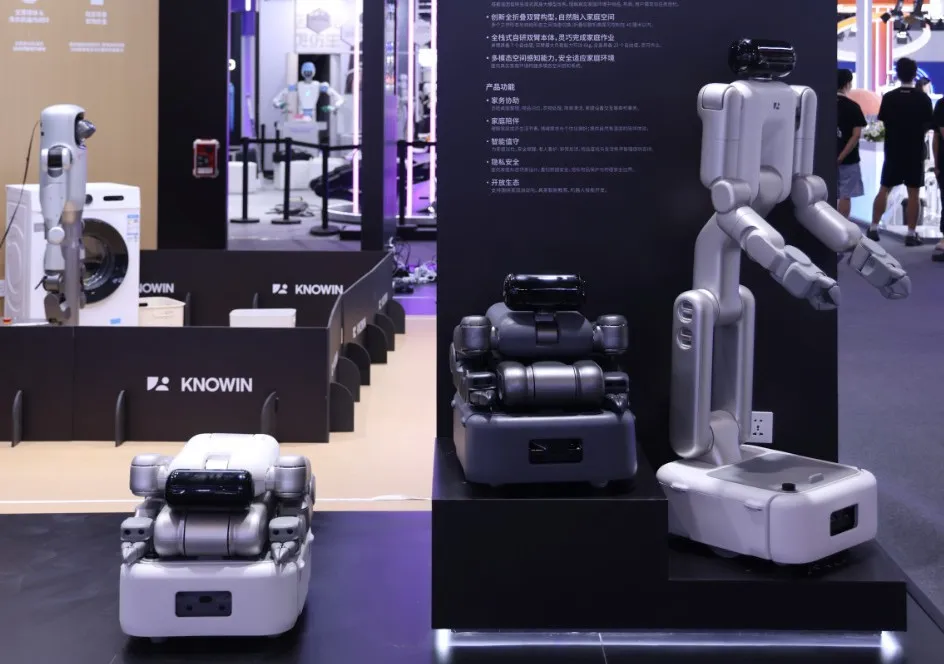
For first-generation consumer-grade humanoid robots, the more realistic path may be to first serve those early users who are willing to try and adapt to new technologies, make a few high-frequency scenarios available, and then gradually push the boundaries of capability, rather than pursuing the vision of an all-powerful household robot.
Product homogenization and differentiation in homogenization
As we've seen on the ground, from upstream touch sensors, joint modules, accelerators, to upstream agile hands, visual systems, motion control algorithms, downstream intrinsic integration, and downstream industry solutions, H3 is basically covering the entire industry chain of smart phones.
The degree of refinement of the division of labor has been significantly improved over the years, with some companies doing high-power density integration joint modules, others focusing on quadrupeds or humanoids, others building cross-body general data infrastructure, and companies exploring landing scenarios in specific industries.
But the other side of the industry chain is a gradual maturation of the high homogenization of the product level. If you look horizontally at the humanoid robots on display this year, you will find that they are strikingly similar in their outline, joint layout, sensor configuration and even in the description of the application scenarios.
He also believes that human-robot technology is not yet in its infancy. There is still no clear answer as to what shape a robot's hand should take, how it should be modeled, how it should be designed, how sensors are arranged, and how to construct an algorithmic system.
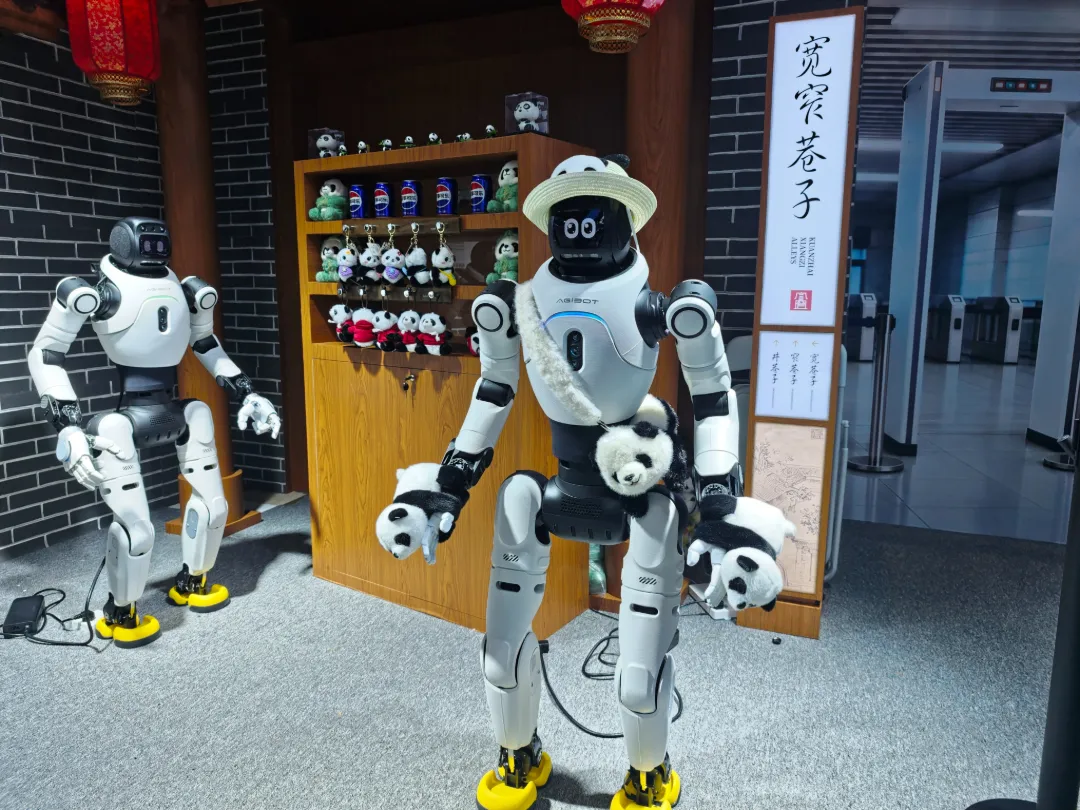
According to Li, this convergence is not the result of a technological convergence. Furthermore, it is the result of a concentrated influx of capital, policies and industrial heat. Simply put, the vast majority of companies choose one of the least risky and most knowledgeable forms of products when the market is in need of a humanoid robot.
However, under the surface homogenization, differentiation is also occurring.
Some enterprises are beginning to lower the barriers to competition from a single technological parameter to the real-world capability of deployment, the level of construction of data infrastructure and the delivery capacity of large-scale mass production. Capacity, reliability, supply chain management and standardized delivery capabilities are becoming the new core competitors.
At the same time, other companies have fallen into the trap of stacking parameters, continuing to code on a single indicator such as frequency, walking speed, and have not yet found a clear path to commercialization.
Behind this homogenization, we believe that the momentum of over 200 companies competing on the same platform is likely to be a short window before industrial integration. With the technological routes closing and customer procurement standards becoming clearer, it is difficult to accommodate too many players in the same segment of the race track.
Under the booming landscape of an independent smart industrial chain, the industry's pressure to refurbish is already building.
Another dimension to note is that this year's progress at the software and model levels is significantly faster than innovation at the hardware level. World models and large-scale models have become high-frequency terminology on the platform, with many companies demonstrating self-developed general-scale models that emphasize cross-bodies, cross-scenarios, and cross-task generalization capabilities.
The leap in AI capabilities from interpersonal agility to long-range mission planning based on world models is one of the highlights of the exhibition. The presentation also shifted from the previous single desktop task to a closed loop built around a complete application process, such as a complete process demonstration in smart pharmacies from order to packaging, showing the industry's ability to build end-to-end around real-world scenarios.
In contrast to this, changes at the hardware level are relatively limited. Significant innovations, such as joint modules and mechanical structures, are rare, but are more reflected in improvements in reliability.
The same is true of Li Chengdu: advances at the AI software level have brought new imagination to the entire robotics industry. In his view, hardware-level evolution is still reflected in reliability and maturity.
This lack of pace at the soft-hard level means that the industry's progress is mainly driven by the high-speed evolution of big models and algorithms, while hardware is entering a new stage of maturation and standardization.
Intuitive technologies such as touch and interaction
From behind the scenes to the stage
Under the watchful eye of WAIC, some hidden technologies that have not yet been fully understood by the general public are gradually moving from behind the scenes to the forefront, and they are likely to be the dominant players in determining the next stage of industry competition.
In the context of physical intelligence, touch is no longer a hardware in our traditional cognition that provides easy-to-reach feedback, but a continuous flow of data that needs to be understood and summoned by models.
Tech CEO Rai Jiansheng believes that the so-called touch of many robots' current configurations is essentially still close to a switch between On and Off: touching to execute one move and not touching to execute another.
The requirements for environmental perception changed as robots began to process fine-grained operations such as automotive wiring, drug sorting, and flexible material assembly. Simple visual recognition and position controls were no longer sufficient to meet the challenges of complex objects or flexible materials.
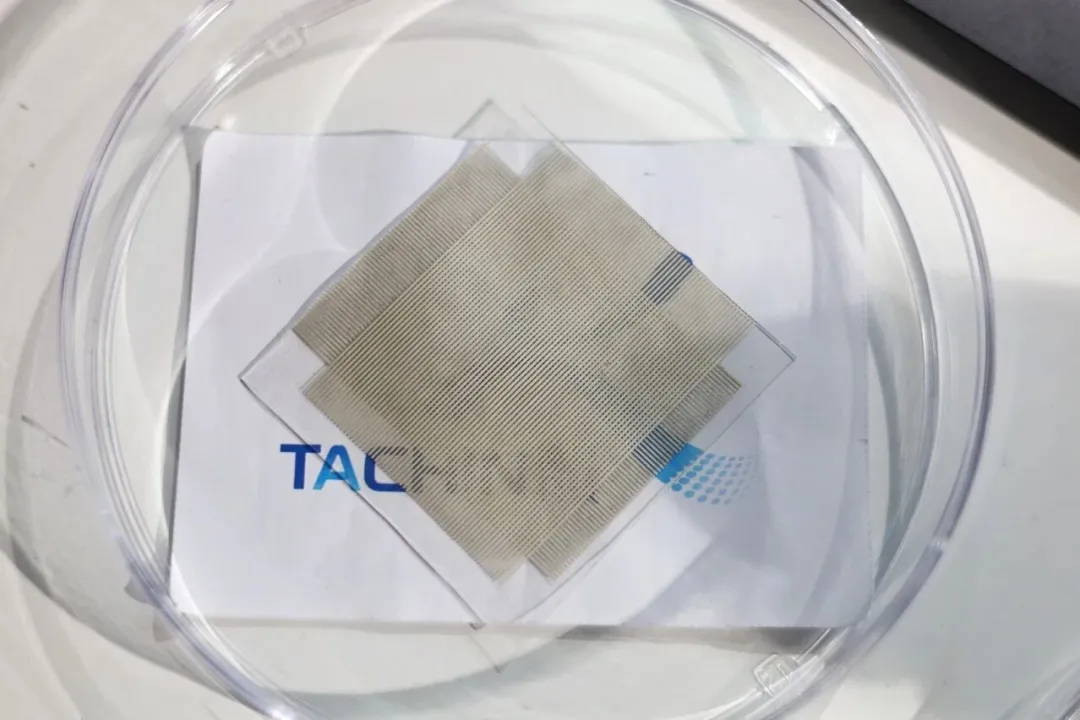
The stability of the sensors, the uniformity between the different units, full-curvature coverage capability, long service life, etc. are crucial when robots input touch data models and adjust their movements accordingly. In the WAIC field this year, there has been a significant increase in the display of touch sensors, but most of these displays remain at the level of the silicon sensing tube, the distance from which silicon can be understood by the model and adjusted accordingly to the action tube.
There is still a gap in the middle of touch from display to use. There is a very direct generalization of the current dilemma: first, there is no data, second, there is no model support.
On the one hand, many sensors are unable to stabilize and accurately capture real contact data; on the other hand, robotic models lack the ability to understand and call touch data. Even if the sensors are installed, the model does not know what the data means, let alone adjust the movements based on the received data.
Currently, the industry's pursuit of this type of sensor is to ensure that products can produce reliable data in a stable and long-term manner with reasonable accuracy.
In contrast, the industry needs not only the accuracy of hundreds of sensing units per square centimeter, but also the long-term reliable data output of sensors.
This is why the true value of touch may not be fully realized until the robot enters the production chain. Rai Jiang believes that demonstration tasks can be bypassed by touch through vision, machinery and rules; once robots become the productivity of long-term work, complex object operations will ultimately require touch involvement.
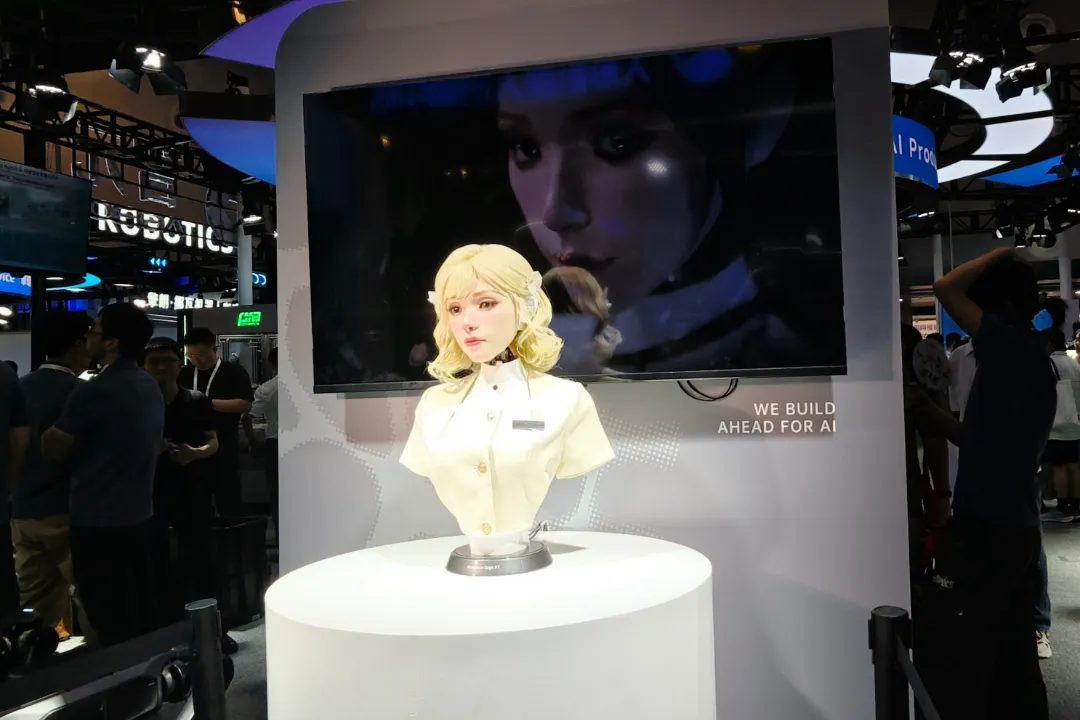
This year, the WAIC has a limited number of high-frequency life simulation exhibits, most of which are still focused on high-value scenes such as performances, museums, etc.

Li Qingdao pointed out that this is because the simulation of human faces is still in its very early stages. The high-frequency simulation head contains dozens to dozens of modules, and the mechanical complexity, failure rate and life pressure increase exponentially with the frequency.
Of these, the mouth is currently the most difficult to solve. The human mouth relies on complex muscles to achieve continuous, flexible shapeshifting, while robots typically use motors and connectors to drive, and can only perform relatively simple movements such as opening the mouth, closing the mouth. Drumming, biting lips and complex mouth types are currently lacking in mature engineering programs.
Under current reliability and cost constraints, they have a more realistic landing advantage in scenarios such as showrooms, banks and business halls.
But in the long run, simulation interaction represents an inevitable technological direction.
The ways in which human societies interact are highly dependent on expressions such as expression, eyes, body language, and so forth. To provide real companionship and emotional value, robots ultimately need to have the ability to express themselves in a multi-modal way that is close to humans.
In this regard, the collection, marking and model training of interactive data will be an independent and complex track, while the scarcity of high-quality interactive data will also be a key bottleneck in this direction.
Security issues are more fundamental than touch and interaction, but less discussed.
When human robots weighing tens of kilograms are capable of autonomous movement and physical operation and plan to enter homes, nursing homes and public spaces, the consequences of safety accidents are far higher than those of ordinary consumer electronics.
Li Qing's stance on this is very clear: security is a vote of no confidence. He believes that security should be a prerequisite for robots to enter the home and the public space.
Landing industrial humanoid robots, which typically operate in relatively closed and controllable environments, may have problems that remain unclear. While human robots in domestic and public spaces need to cope with unpredictable environmental changes in children, the elderly, and traditional electrical standards and industrial robot standards that are difficult to fully cover.
If a robot still needs a security guard and an operator to always accompany it, then its business model is not inherently established. Li Qing believes that service-like humanoid robots are still in their early stages of commercial deployment and need to continue to breakthrough in core capabilities such as perception, decision-making and execution.
Safety must be a prerequisite for a scale-up. But what we saw on WAIC's stand this year is that there is a clear lack of security-related presentation and discussion, and this underestimation of the industry as a whole is itself a warning sign.
About data and its bottlenecks
All of the above technical dimensions are shared by a common constraint, data.
The general cognitive deficit that exists in the field of physical intelligence is that the pace of progress of AI and software capabilities is significantly faster than the quality of data and the ability to understand scenarios. Models can become smarter, but the reliability of output results can be greatly reduced if the input data itself is unstable or lacks scene coverage.
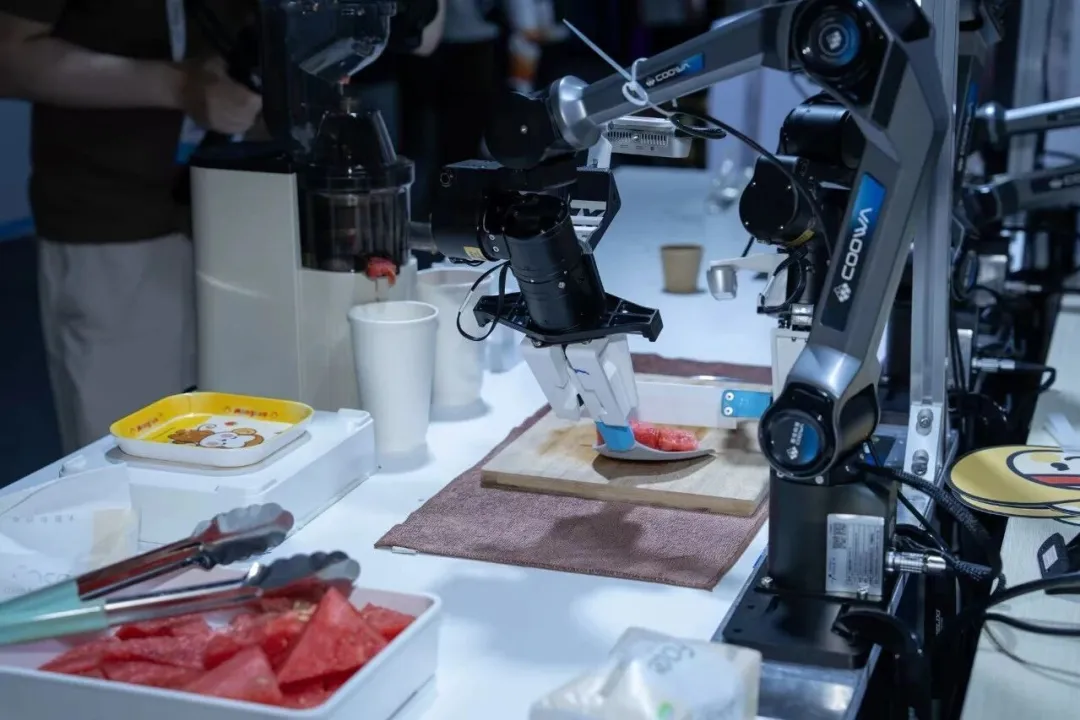
One change this year at WAIC is that companies specializing in data collection, synthetic data generation and world model development are starting to set up independent standings on a large scale. We can see that data is becoming an independent industry link and is no longer the internal affairs of individual manufacturers.
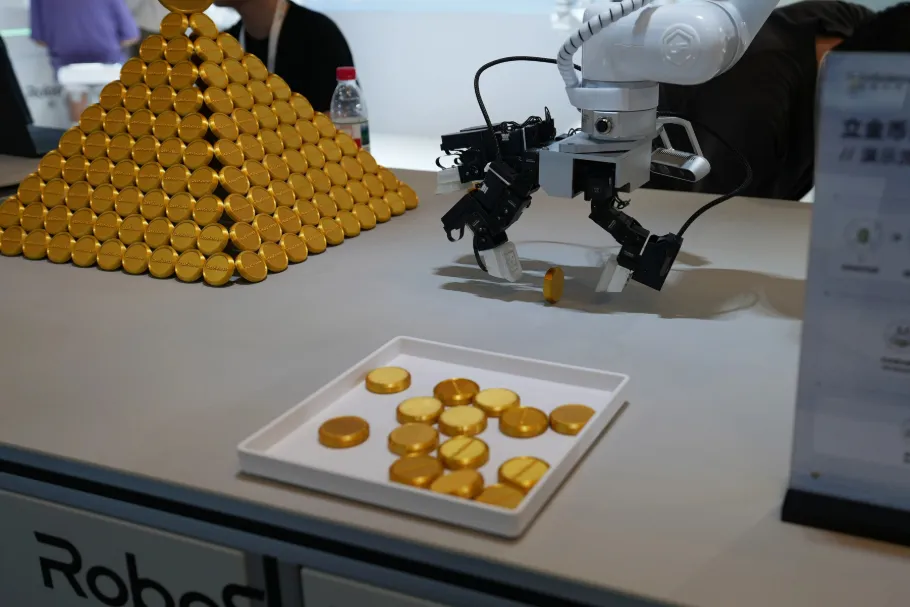
For example, at WAIC 2026, RoboScience demonstrated a self-developed high-precision general physical simulation platform, RoboMirage, that combines a dual-data flyer with a digital simulation + video simulation, to provide massive low-cost data for general-purpose models, Visics, to break the bottleneck of data size and cost. According to Mir, on the basis of Roboage, the cost of single data can be reduced to one-tenth or even less of the traditional program.
Obviously, in a context where real data collection is costly and difficult to cover in all scenarios, simulation/synthesis data is becoming an important way to break through the data bottleneck. However, there is still a gap between them and the best quality real data, and there is a significant difference in the ability of companies to effectively generate, filter and exploit this data.
Industry competition depends not only on how much data each company has, but also on how well each company can use lower-cost data.
In addition, industry experts point out that there are already huge patterns of emotion and behavior in the field of interactive data, including movies, TV series, novels, shorts and real-life interactions, and the industry's difficulty is not in the scarcity of data, but in how to extract, tag and convert it so that robots can truly understand and use it.
The collection of this type of high-quality data requires collaboration with professional performing schools, actors, and the continuous accumulation of the company's internal labels and real customer scenarios to form a layered data system.
It also shows that as technology moves into the real world, the focus of competition will shift from algorithmic innovation to the ability to build data infrastructure.
When the WAIC lights go out
From a static presentation in 2024, to a sporting ability contest in 2025, to a concentrated presentation in 2026 of real-life scenarios, complete processes and continuous operations, the WAIC records are not an improvement in robotics, but rather a cognitive shift in China's physically intelligent industry.
The industry is beginning to discuss more frequently the issues of ROI, success rates, data quality and product costs. Whether touch can be called on by models, whether interaction can build long-term trust, and how efficiently data can be collected.
Of course, it goes without saying that there is still a long way to go from physical intelligence to scale deployment. Large numbers of demonstrations are still taking place in well-developed environments, and modeling capabilities are not yet available; technological routes are still being explored, and security standards and data infrastructures need to be upgraded.
But we believe that no company that is truly committed to it will put the end to dance and performance, and everyone's dream is AGI. And the signals released in the first half of 2026 are clear enough: physical intelligence is moving from a phase of trust-building based on technology to a cycle of collaborative testing by customers, users and the real world.
After the lights go out, we will continue to focus on robots that remain in factories, homes and commercial spaces. Whether they can do the same normal thing over and over again in the next few days will determine what industry this excitement will eventually sink.
This is also a question that physically intelligent people really need to answer after WAIC.
—END—
 KELDA's net profit grew more than 10 times in the first half of the year, and China's largest shipping company is launching a four-legged autonomous mobile welding robot.