“ It's hard to break a ball with a needle. It's hard to break a ball with a needle.
The fingertips of the mechanical arm pinch a needle and attach it to a tight balloon at a speed almost untraceable to the naked eye. The moment the needle touches the surface of the balloon, the balloon is completely intact.
This human action is rare and normal, and the mechanical arm thrust sensor can of course perform a similar demonstration, but things are completely different if the sensation is placed on the fingertips and the instant of contact is triggered by a tactile signal.
For the mechanical arm, all of its judgments are based on a touch sensor the size of a fingernail cap. In the process of approaching the arc of the balloon at high speeds, the sensor needs to capture the signal within the first millisecond of contact and re-enact the instructions to stop the ignition.
This is particularly important for visual touch pathways. While the mainstream visual touch sensors on the market have advantages such as sensitivity, information richness, and good integration, there are still bottlenecks in key indicator dimensions such as response speed, sensitivity and sensitivity.
Although the reaction cycle is only a few tens of milliseconds (the typical delay of conventional visual touch sensors), it is far from sufficient for this task.
A millisecond later, almost a millimeter later, the balloon broke down.
Imprint X, the next generation of visual touch sensors aimed at robotic operation, has done just that. From underlying perception to materials, structures and algorithms, the Imprint X revolves around robotic precision operating scenarios, allowing fast response, low latency, low power consumption, and high-performance visual touch to truly reach the robot's fingertips.
01.
Physical ceilings that were locked up
As one of the most advanced technologies in the field of touch, visual touch is naturally good at producing high-dimensional spatial information. The principle is not complicated, as the surface of the elastic body undergoes deformation, which is captured by a camera and then computed by the algorithm for multi-modal information such as power distribution and contact states. This idea has been running for decades since its inception by the Edward Adelson team at MIT CSAIL in 2009 and has been rapidly gaining momentum in both skilled and industrial settings due to its high spatial resolution.
Tens of thousands of sensing points per square centimetre can identify texture, power distribution and sliding trends, which are the strengths of compressive resistance, capacitance, and hole paths that are hard to see behind their backs.
However, the scheme has two physical bottlenecks that are difficult to overcome, as mentioned above, firstly that it is not fast enough.
Current visual touch sensors are almost entirely equipped with CMOS cameras. Its mechanism of operation is a step-by-step flash drive, which produces a complete image on a cyclical frequency of 30-120 Hz.
In a 100fps camera, 10 milliseconds between the two frames are absolute blind spots. When contact occurs, the material is undergoing maximum transformation, the slide is just starting, and these critical moments are permanently lost in the physical sense if they fall into the blind spots.
The delay of tens of milliseconds depends on the success of the mission.
It's like shooting a bullet through an apple with a camera that takes 30 frames per second. Even if you set the shutter speed to the limit, if the camera only presses the shutter at a fixed time per second, you're missing.
(Imprint X can also capture contact details in milliseconds under high-frequency dynamic shocks.)
There is a back-and-forth alternative to the ultra-high-speed CMOS camera, 2,000 tons or higher. But the problem is that there is a complete imbalance in volume, power consumption, data volume, and cost.
The architecture of the cameras itself has become a self-contained ceiling.
In an interview with Intelligent Systems, the chief scientist, Liu Wei, pointed out this explicitly. As early as 5-6 years ago, when it was aware of the problem of traditional CMOS visual touch, it also proposed other ideas, but factors such as hardware costs and supply chain maturity prevented it from going directly to commercialization.
Today, this problem has been solved. In anticipation of the catalysis of the consumer electronics industry and the explosion of smart industries, the customization thresholds that were once high due to the demands of small businesses, with more supply chain partners entering, allow the single price of core modules to enter commercially acceptable ranges. This is the inevitable result not only of the deflation of hardware costs, but also of an increase in the maturity of the industrial chain.
After five or six years of waiting, it was time for technology to move from the laboratory to the industrial chain.
02.
Event Cameras: Translating information flow into tactile language
The core solution to Imprint X is to replace traditional CMOS cameras with a customized micro-event camera module.
This route bypasses the concept of a mirror in the underlying logic of imagery.
The event camera does not take the whole picture step by step, but, like an organism's retina, only tracks the pixel points where the brightness changes in the image. When the brightness of a pixel changes, it immediately produces a signal of this change.
The difference in parameters resulting from this transformation is quantitative: Imprint X has a time resolution of less than 1 millisecond and a torque rate of more than 1000 Hz. For tasks such as rapid contact, dynamic grappling, slippage detection, the robot can almost instantly detect sensory changes in real time.
(Full-directional, composite pressurized contact, both Imprint X detectable)
More subtle changes have occurred at the data level. Another system bottleneck of traditional visual touch is integration. The five fingers in the robot's hand are integrated into a five-way video stream, each of which continues to output a complete image, with huge bandwidth pressures and increasing demand for controlled computing. This pain point has been repeatedly mentioned in industry reports in the field of touch.
In contrast, event drives only output change information, and large amounts of static background data are automatically filtered. This allows the Imprint X to maintain a lower data bandwidth under high-speed perception, without the need for external computing equipment, and without the need for additional heat dissipation structures.
The Imprint X has been running for six consecutive days with little noticeable temperature change.
The two main physical bottlenecks of traditional CMOS visual touch: time resolution and integrated pressure, solved simultaneously by the event camera.
Of course, the incident camera also brought new problems.
Its output is essentially a fluid-changing information loop, which creates a serious logical gap in tactile interpretation: if a contact is slow, stable, and the pixel brightness changes very slightly, the event camera may not even emit any signal, and the tactile information will be lost.
In real operations, both steady contact and extremely slow contact need to be perceived.
This is the most central algorithmic challenge of event-driven touch. To solve this bottleneck, Intel has developed its own global state tracking module. The answer is: how to reconstruct a complete, stable state of contact in a flow of information that only captures change.
(Self-developed 3D mapping marking system to achieve 3D spatial transformation perception)
From the original event stream to the robot-available tactile information, the module constitutes a complete processing chain: the event stream is first encoded and credited as the available image information, then image characteristics are extracted, and then two-dimensional tracking is done to locate, and finally upgraded to a three-dimensional tactile deformation cloud and distribution power.
Each layer has to be redesigned, because each link is almost unprecedented, and the algorithms in the paper are not mature. The analogy that Liu Wei himself gave is this: to do traditional CMOS visual touch, our own experienced PhD students can run a complete demo in 1-2 months; and to do event-driven visual touch, the entire chain takes at least a year, and a lot of logic needs to be rethinked.
The combination of the materials is equally important. Imprint X does not use the classic gel gel of the GelSight series, but instead develops high rechargeable silicon materials. The reason is directly related to the core demand for the accelerator: the recharge of the silicon gel is too slow, the hammer leaves, the material will slowly return to the silicon, and several hundred tonnes of images may be the same.
If the contact material itself does not keep pace with thousands of Hz, a faster camera makes no sense. The rebound speed, wear resistance and mechanical stability of the foam are the prerequisites for the entire system to actually run at the kHz scale.
Algorithms interact with materials, and when the fingertips of a robot touch an object, the material changes shape, the micro-event camera captures changes in the marking point, and then rebuilds the shape and dynamic state of the contact area through the algorithm. Implemented to specific parameters, the point cloud space resolution of the Imprint X reaches 0.5 mm, magnitude 025 N, sensing resolution 0.02 N, marking point density, and force perception accuracy.
From microscopic transformations to displacements, to three-dimensional transformations and dynamic states, robots achieve a complete process of contact evolution, rather than just a result of contact.
This is the key point of view of understanding Imprint X. It is a system that needs to be designed in sync from materials, optics, electronics, and algorithms.
03.
A scene is better than a page of arguments
What sets Imprint X apart as a new product is the fact that it enters the production line of the leading 3C manufacturers as soon as it is released for real-world scenario verification.
This pace is quite rare in hardware startups, and even more so in March 2026 when the company was officially founded. Of course, according to Fujifilm, the team had already accumulated 7 years of relevant tech startups before the company was founded, representing the starting point of product and commercialization, rather than the starting point of technological research and development.
This timeless clarification explains why a Young Cheese company has been able to move so quickly to the leading customer verification stage.
More importantly, the ability of the machine to do this is closely related to the design concept of its products. Touch sensors, as part of the upstream industrial chain, will inevitably enter the body of the robot, becoming an important support for its perception and operational capabilities, playing a role in real scenarios, rather than in the laboratory alone.
Initially, the Imprint X was a mission-oriented design around robotic precision operating scenarios designed to bring high-performance visual touch that responds quickly, low latency and low power consumption to the fingertips of the robot.
Non-core technical indicators such as volume, power consumption, data volume, maintenance costs are often important thresholds for determining whether a technology will land, and Imprint X incorporates these into consideration.
The thinnest of the sensors is only 3 to 4 mm, which can be integrated into the fingertips or claws of the robot; the enclosed structure reduces the perceptual impact of external factors such as ambient light, dust, water vapor; low power consumption, which means no additional heat dissipation structure, reducing heat from the source, reducing the impact of heat gain on elastic material, optical structure and electronic devices, creating conditions for heat drift control and long-term perceptual consistency.
More importantly, the Imprint X contact material uses a modular rapid replacement design. Elasticity as a contact component can lead to wear and aging in real production lines. Modularity means that only the contact layer needs to be replaced after wear, no need to replace the entire sensor, and no need to be re-labeled after replacement. This detail does not look remarkable, but it is directly related to the full lifecycle cost of the sensor in an industrial environment.
Of course, entry-line verification is just the beginning for the body of the machine, and it does not mean that reliability has been fully proven. The company maintains a cautious engineering attitude, saying that it will not use the ideal conditions for the next successful welding as the verification standard, but that it will cover the real working conditions, such as continuous operation, repeated contact, different loads, temperature, vibration, and other elements, the problems found will be reflected at the design end.
When the verification of the production line has a definite result, mass production delivery has the basis for realization.
04.
At the last millisecond, the robot's fingertips stopped at the last millisecond.
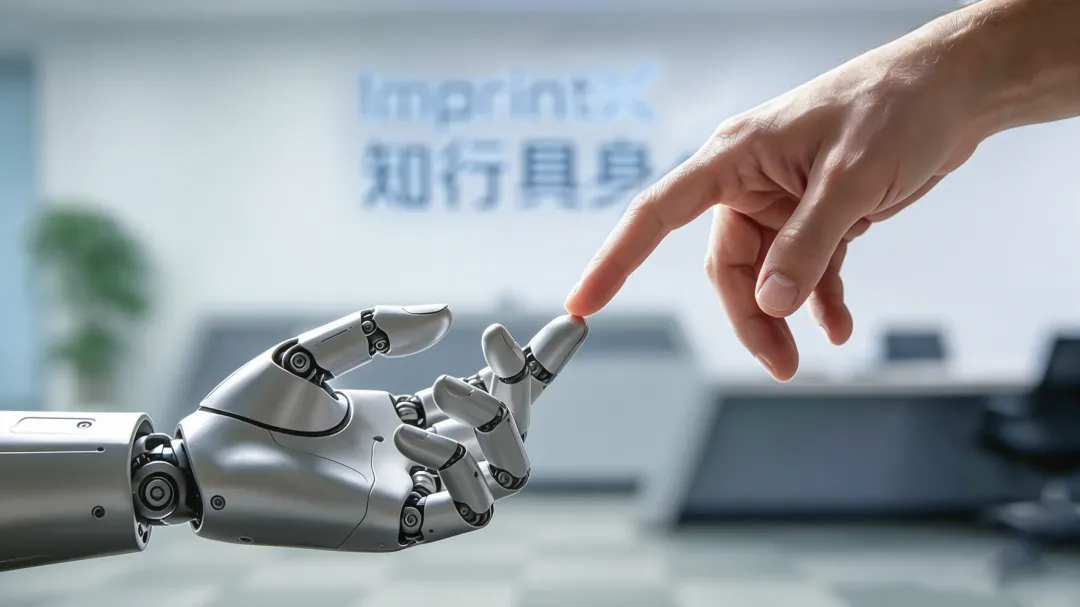
In 2026, the touch track is increasingly crowded, with pressure resistance, capacity, halls, and visual touch points on both sides, with the first being the Raptors and the second being the chases.
At the heart of the competition is: whose touch sensors are capable of meeting robots' demands for speed, accuracy, integration and cost in real-world scenarios?
In the face of this question, the Intelligent Touch has responded with a different technological route to the release of the new Imprint X product. Although it is late in the game, the team's accumulation is actually longer than most players. So why is it that the event-driven visual touch is the Intelligent Touch, and not the mainstream manufacturers of visual touch?
With the help of technology and industry insights, the user can think a little bit more and take a step further on the path of visual touch. Go back to the original needleball.
Of course, the launch of the Imprint X is just the beginning for the Intelligent Machine, and the company is just touching it as a key entry point, and what it really wants to do is to provide different robot entities with perception, data and model capabilities to push robots into the real physical world.
The faster, the higher the dimensions, the higher the quality of the data collected; the better the data, the stronger the model; the stronger the model, the better the next generation of sensors knows what they should perceive. The three form an intergenerational cycle.
A millimetre of delay is almost negligible in the Internet world; a millimetre of distance is also negligible in the physical world.
But the moment the point of the needle hits the balloon, both are the total remainder of the thumb and forefinger.
In the world of milliseconds, distance is not just a performance parameter, it is itself a physical law of perception and control.
The robot is destined to interact more and more physically with the world, so it must first learn to perceive the world at the right time and space scale.