Recently, RoboPapers, a popular podcast program, updated a series of interviews with Dr. Shechen, founder and CEO of Optical Intelligence. This series was hosted by RoboPapers podcast co-host Michael Cho and National University of Singapore (NUS) assistant professor Jiafei Duan, who is the author of the MolmoAct series of robot models.
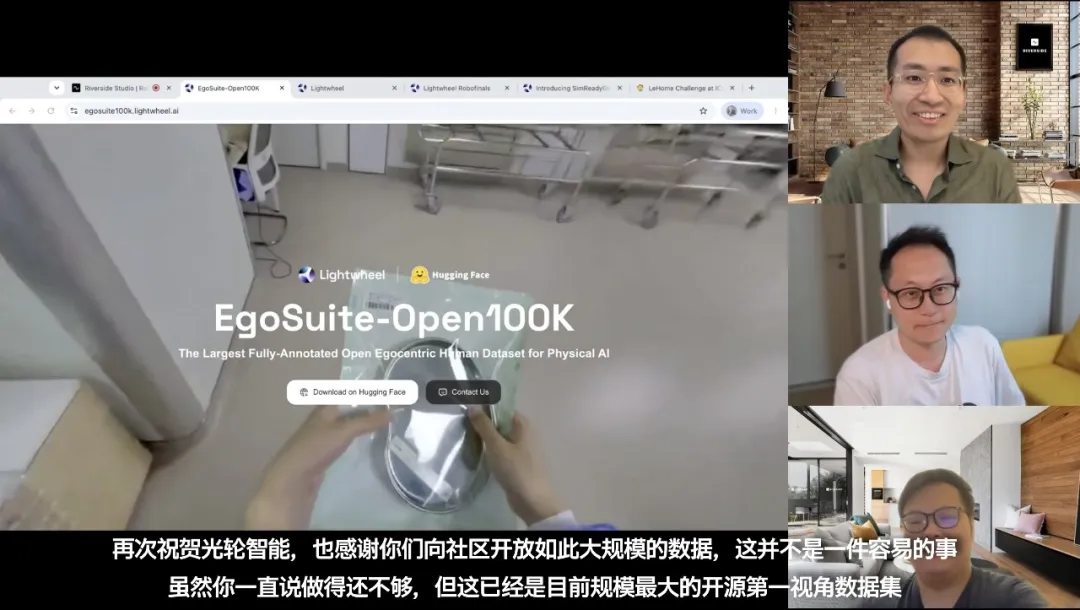
Hosted by robotics researchers, this in-depth technical interview with the authors of the invited papers explaining the work in person has become a global trendsetter for the robotics industry. The program invites guests mostly from leading-edge laboratories such as Stanford, Berkeley, U.S.A., and Dyna. In recent months, the program has revolved around the three phases of robotics learning summarized by 1X World Model, NVIDIA DreamZero, Ted Xiao, and the millions of hours of Dyna-2 experiments, which also address some of the industry's most forward-thinking achievements: world models, human data, and scalability.
This in-depth interview focused on three topics: how to become the world's first corporate data unicorn, how to build data pipelines, how to scale up high-quality data, how to open-source 100,000 hours of high-quality data, how to achieve business value, and how to stay at the top of the industry.
The interview also gave a new judgement: Scaling Law requires training and evaluation of two pyramids, the base of the training pyramid is human data, and the base of the evaluation pyramid is simulation.
One, robots are starting to look for scaling laws from human experience.
On August 10, Dyna Robotics, based in Redwood City, California, released DYNA-2, a pre-trained robot base model using fully human first-person video, with over 1 million hours of pre-training data.
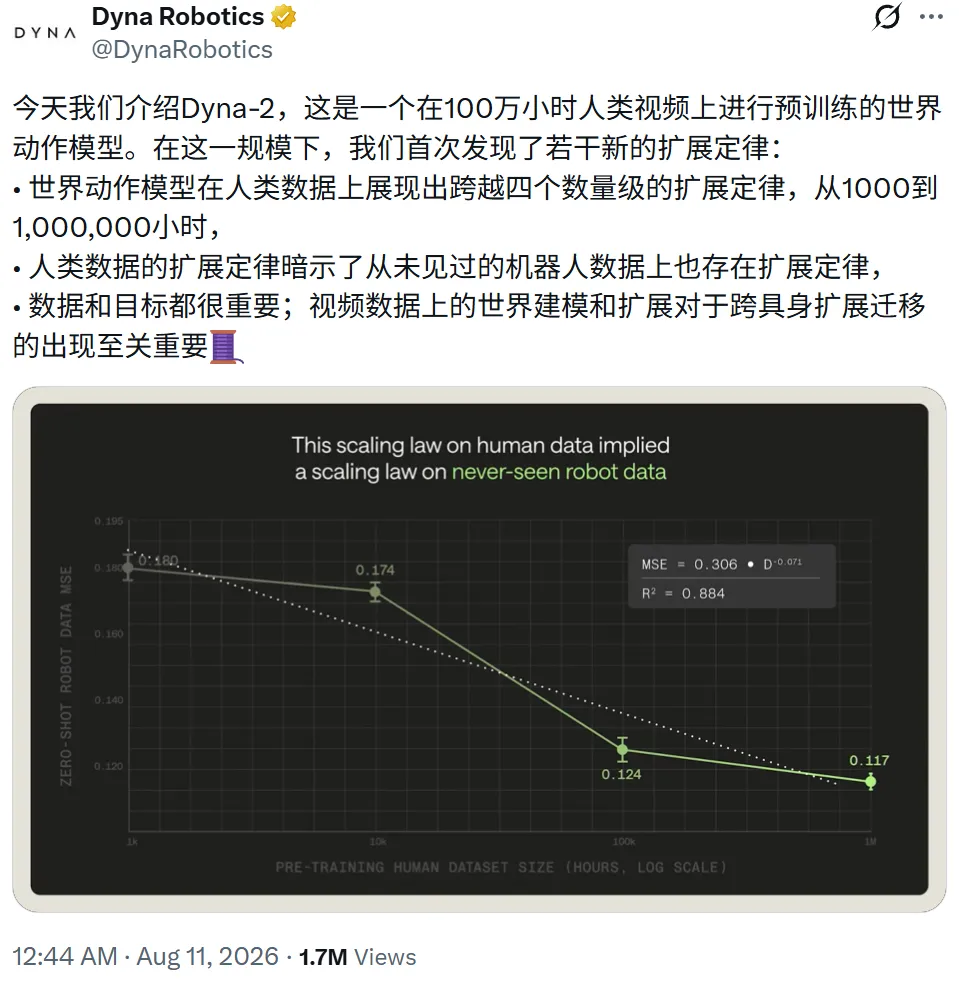
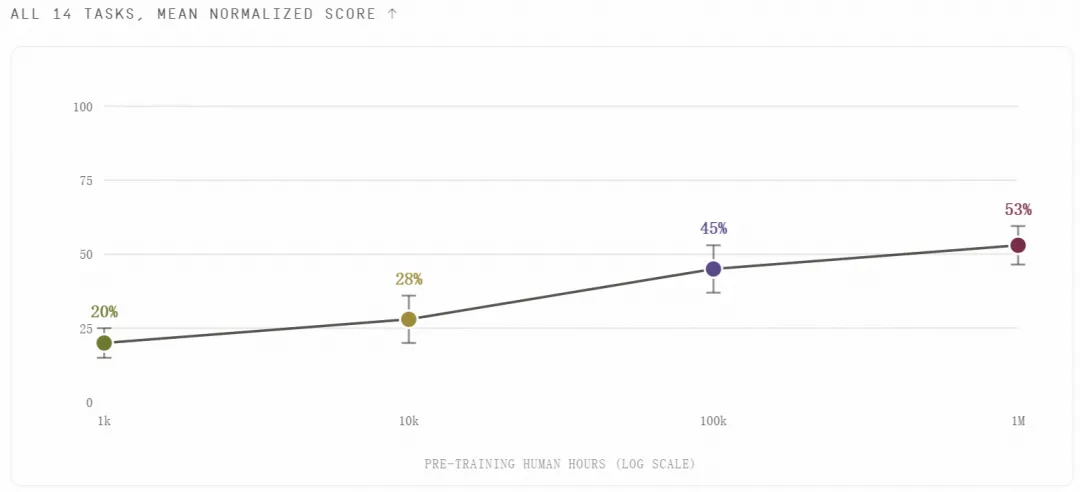
Dyna scaled up the amount of pre-training data by 1,000 hours, 10,000 hours, 100,000 hours, and 1 million hours, and measured it in stages on 14 missions using the same set of post-training formulas. The integration score rose from 20% to 53%; the success rate for one of the unlocked missions under 100,000 hours was always 0.0 to 1 million hours, rising to 90%.
However, Scaling Law doesn't just happen on the side of training data. When training data starts to scale, evaluation capabilities must also scale simultaneously. Therefore, robots need two pyramids: the core of the training pyramid is scalable human data, the core of the evaluation pyramid is scalable simulation. The former solves the robot "where did it learn" and the latter solves "how does it know what it has learned and what it lacks".
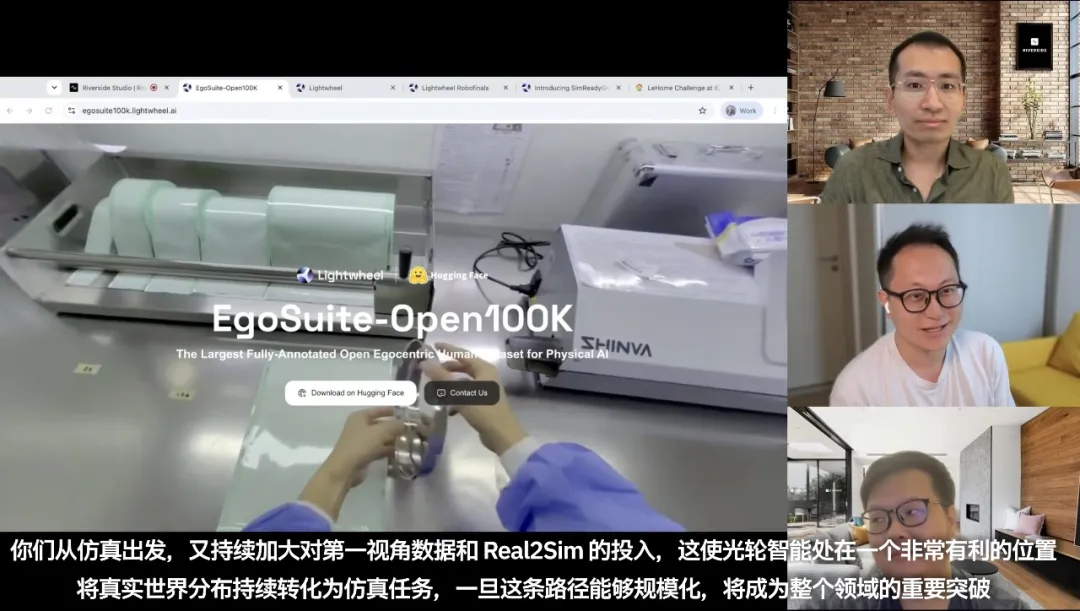
It is in this context that RoboPapers is focusing its attention on the world's first-ever delivery of human data by lightning-powered smartphones, and has just released the world's largest collection of high-quality multimodal human video data, EgoSuite-Open100K.
At the 2026 World Robotics Congress, Light Wheel Intelligence opened the EgoSuite-Open100K. It is a 100,000-hour full-modal human behavior data set covering more than 15,000+ scenarios, including 15,000+ tasks, head-to-wrist double-views, hand-to-hand and full-body postures, semantic markings, and depth information. The first data was opened with Hugging Face and AtomGit, a project synchronously donated to the Open Source Foundation for Nuclear Science.
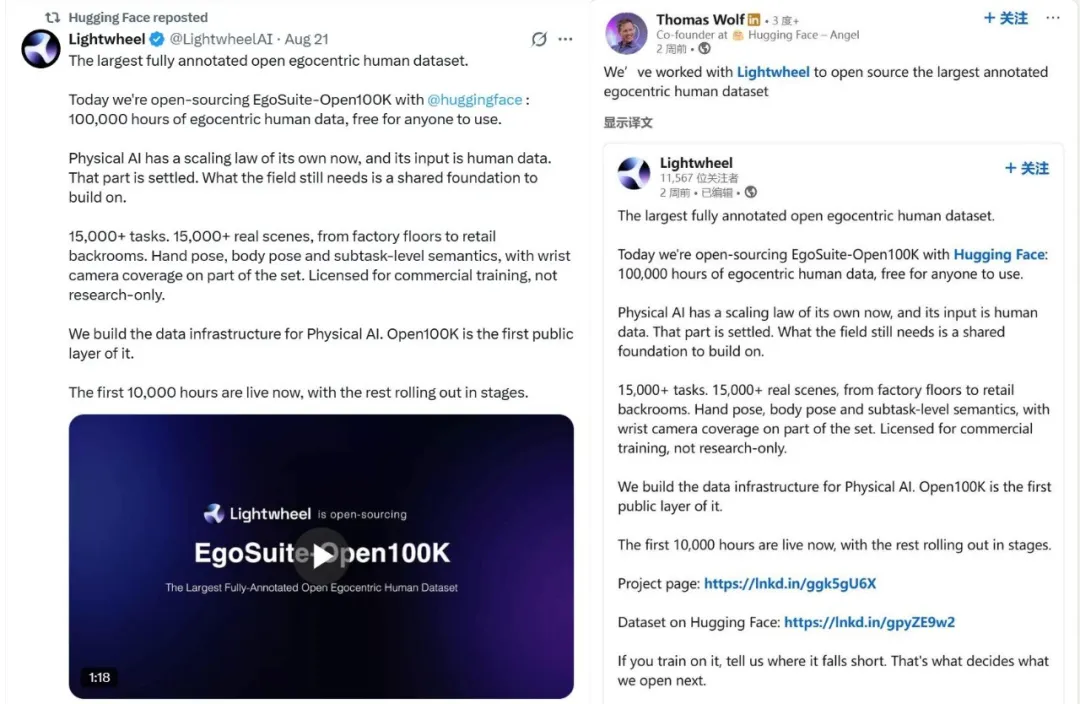
It can be said that Dyna-2 provides evidence on the model side, and light-wheel intelligence is working to solve this problem for the industry from the data supply side.
Second, the training pyramid: How do human data support large-scale chemistry learning?
Jiafei Duan said: "A lot of times, when I see high-quality robot simulation demonstrations, I immediately think it's probably from lightning-wheel intelligence". His first question was, why would a company that has been so successful in simulation make human first-person data?
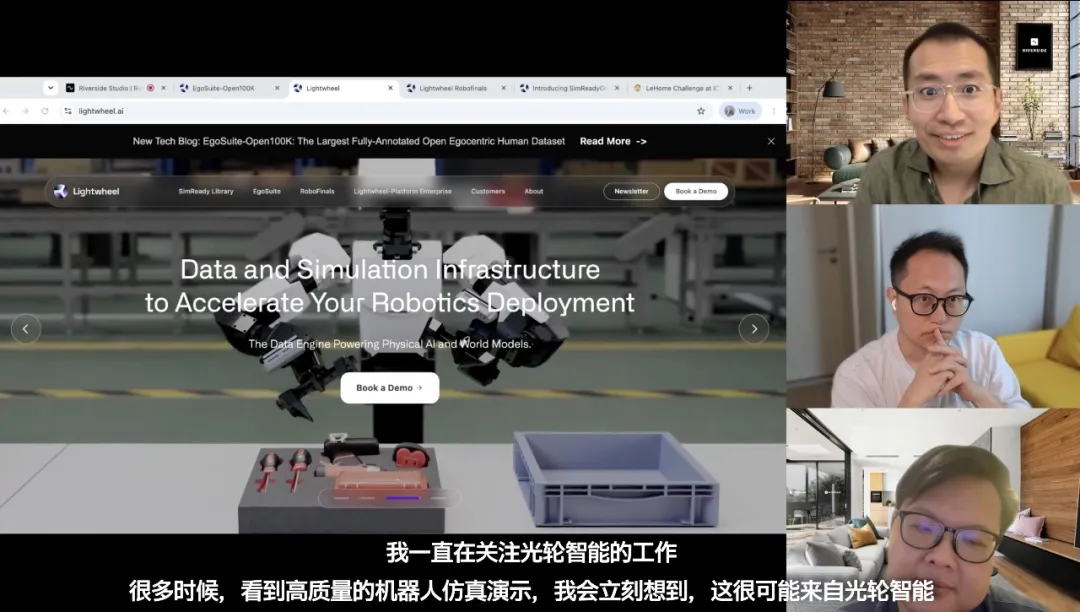
Shechen responded from the supply side: "Millions of self-driving mass-produced cars are on the road, and every operation by the driver may be a surveillance signal; robots don't have such an infrastructure yet". "There may be tens of thousands of humanoid robots worldwide, and they won't be collecting data all the time.
Real machine data is still important, but it cannot meet the demands of scale: it is high-quality, physically authentic, and is responsible for prioritizing models to specific robot observation spaces, motion spaces, and dynamic constraints; but it is usually tied to specific objects, collecting high costs, and historical data is difficult to directly replicate after objects and tasks change.
At the bottom of the data pyramid, therefore, is first-person human data, which is used to solve the problem of scalability: providing pre-training experiences for models across tasks, environments and entities. A small amount of high-quality robot data is solved by Embodiment Grounding: aligning these experiences with specific entities. Simulation solutions are Rollout and Verification: extending long-tail status, supporting reinforcement learning, and continuing to evaluate models at a lower cost.
Robot-agnostic does not mean robot-free. Human data, robot data, and simulation are not three interchangeable paths, but different levels of training and verification in a closed loop.
Human data has a stronger potential for cross-bodied replication than binding to a particular robot entity, but it still needs to be aligned and real-world in action. Shechen has a clear judgment: "Human data may be the most scalable source of a robot-based model".
Three, the real barriers are how to produce high-quality data.
In an interview, Shechen revealed that the essence of this data collection is that the powerful data engine from the Intelligent Light Wheel has transformed the collection, automated marking and quality inspection into a scalable pipeline to achieve the large-scale production of high-quality data.
High-quality data can be summarized in four key dimensions.
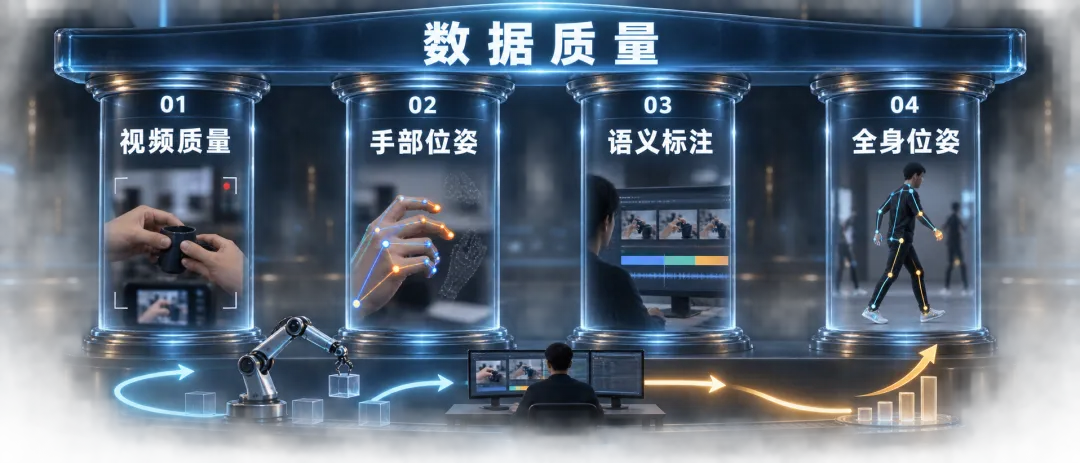
The first critical dimension is video quality, which is the threshold of the entire production line: whether there are any bad spots, whether the two hands are always in the picture, the action is not natural. For example, the actions of the collector need to be ensured a natural task state, neither too fast nor too slow.
He replied, "The accuracy and recall of the Agentic workflow is already high, but it is not yet 100%, so the final quality score must be combined with automated quality testing and artificial quality testing". More importantly, the failed samples captured by the AI will in turn feed into the automation process: "We are building a continuous feedback loop, continuously improving the automation process with human feedback".
The second key dimension is the position of the hand, which is key to determining the quality of the data, and the precision of the position of the hand determines the value of the data directly.
The third critical dimensional semantic markup is the actual bottleneck. Seven versions have been replaced internally, from the event level to the action level. The difficulty is not in describing itself, but in which of the time-lapse movements start and end, which VLM currently does not give a sufficiently precise answer. The current solution is to combine: use the accumulated action pressure level markup data to fine-tune the basic model, making VLM more precise, thereby reducing the proportion of people in the circuit a bit.
The fourth-ranked full-body position was attributed to him in a relatively early part of his career, as the basic robot model in the head laboratory is now basically starting from scratch.
In addition to this, there is a more critical dimension for customers: diversity. "It is really difficult to achieve the diversity of tasks, the diversity of scenarios and the diversity of collectors while ensuring high-quality data production". For this reason, light wheel intelligence categorizes the task scenes into seven categories: homes, hotels, retail, sports, logistics, offices, and industry, each of which is broken down into specific tasks. In order to manage this portfolio space, there is an internal task agent that is responsible for generating, maintaining and matching tasks with real scenes and real collectors.
Fourth, evaluation pyramids: the bigger the data, the greater the need for large-scale simulation evaluations
One of the core challenges of classical simulation is that even with a sufficiently perfect simulation engine, it is difficult to answer "what exactly should be simulated".
Photowave intelligence extracts the assignment and scenario distribution from real-world first-person view data and translates it into simulation testing environments. This gives simulation a clear starting point from an almost infinite exploratory space and makes scaling scenario testing more feasible.
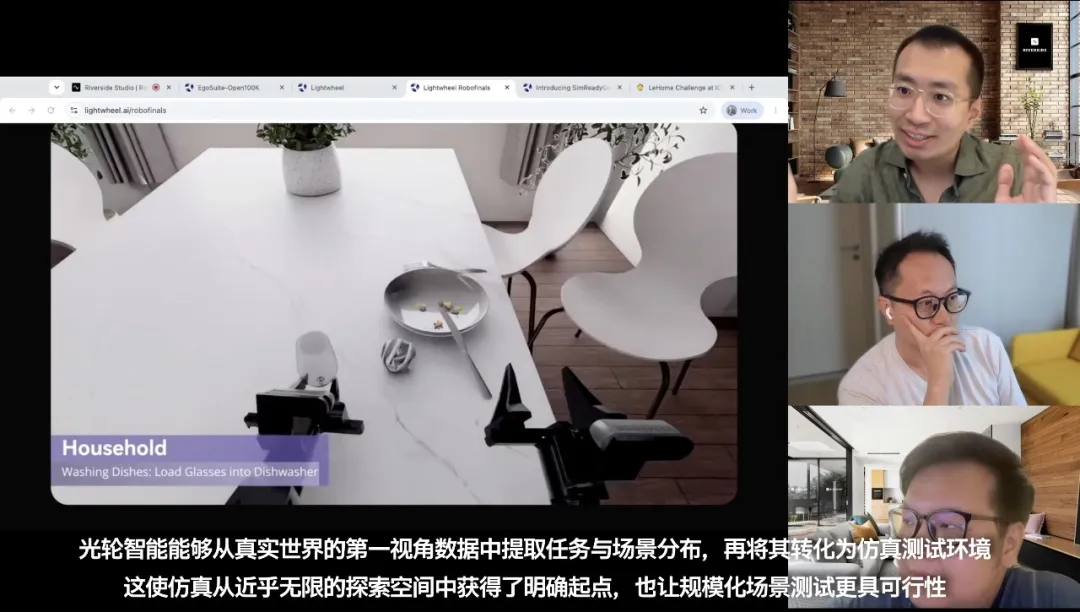
This judgment and practice were highly appreciated by both hosts.
She was previously engaged in autonomous driving simulation work at Cruise and Invidia, and summed up a profound judgment from her longstanding practice of simulation: for simulation to be scalable, it is necessary to have large-scale real data to coordinate, identify and verify. In the process, Light Wheel Intelligence has also been in contact with outside research teams, and the ultimate discovery explored is that the effective synergy of first-person view data and simulation data is a great way to train robots on scale.
In the process, Chen redefined the "data pyramid". The data pyramid typically described by the industry today is mainly a data distribution that describes model-trained data: the top is remote-operated data, the middle is simulation data, and the bottom is human data and Internet data.
She believes: "I think there are actually two types of data: one for training and one for evaluation".
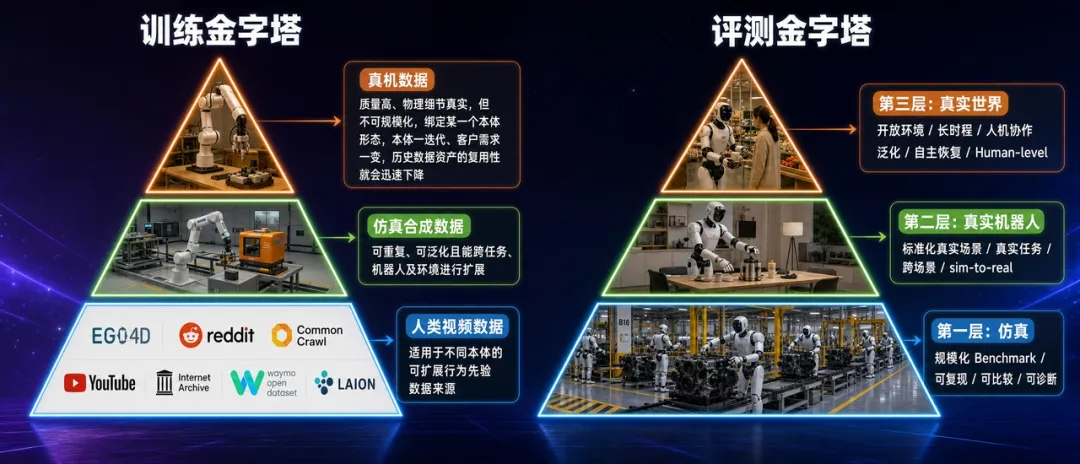
On the training side, first-person human data and simulation synthesis data mainly provide large-scale pre-training and mid-term training experiences, with machine data responsible for the ultimate physical landing.
On the evaluation side, simulations provide environments that are scalable, reproducible, comparable, diagnostic, suitable for initial capability evaluation; usually machine evaluation and real-world evaluation, for evaluation of final capability deployments.
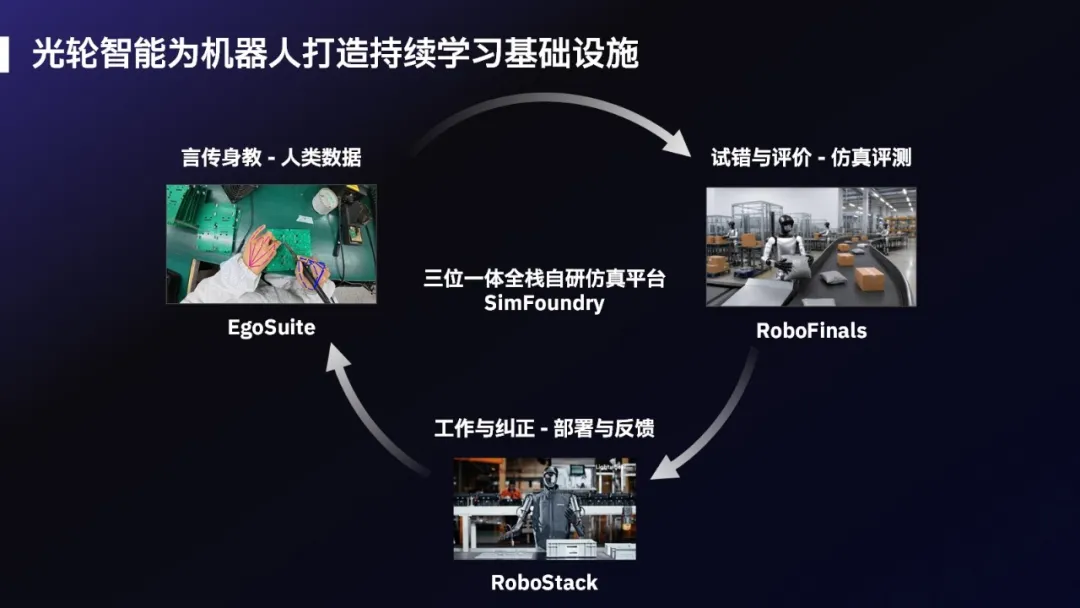
In the light wheel intelligence product system, RoboFinals takes on the task of mimicking evaluation, which Shen has likened to a "high-level robotics exam".
In today's industry, a large number of simulation benchmark tasks and scenarios come from artificial constructions. The idea behind optical intelligence is to extract representative tasks and scenarios from real data, enter simulation platform SimFoundry to complete tasks and scenarios, and then by RoboFinals to observe whether data changes actually translate into changes in robotic capabilities.
Based on the SimFoundry, a fully self-developed system of measurement that ensures physical authenticity: Physical measurement plants built by the Intelligent Light Wheel can use mechanical arms, hands and touch sensors to measure openings, moving parts and changes in the shape of cables, and real mechanical information; creating a physical real environment and simultaneously constructing real tasks that allow models to scale the measurement; and minimizing the gap between simulation and authenticity by sampling machine verification to gradually check the relevance of simulation results to real robot performance.
Each real failure can be transformed into a new problem; each new problem is redefined into a new set of data. Therefore, evaluation in a continuous learning system of optical intelligence is a positive feedback that helps models perform efficient iterations.
Five, "Three Uniques": the only Chinese company in the world with two major international standards of fitness and five major fitness infrastructure
This data-cognitive and engineering approach to light-wheel intelligence has been recognized by the market.
"No standards can't make a brand, no brands can't scale". According to the disclosure, the resale rate of light wheel intelligent brand data has been more than 10 times, high-quality data has been verified by the world's leading model team, model customer resale rate is close to 100%, head customer data acquisition has expanded 20 times; in the last three months, more than 30 head model companies have been served, each delivering more than 200,000 hours of brand data.
These sample data directly test the "robot-agnostic" hypothesis: the same set of data can be sold to different entities and used repeatedly by different model teams, showing that it is indeed not tied to a specific hardware form. Conversely, this path does not work if each customer is customized.
In an interview with RoboPapers, Chen revealed that several customers have already booked more than 5 million hours of capacity for next year. Reservations show the market's demand for large-scale supplies, but the real barriers still depend on whether these demands can be continuously transformed into high-quality, reusable, and standard products with reasonable unit cost.
Light Wheel Intelligence is the only Chinese company with two international physical AI standards organizations:
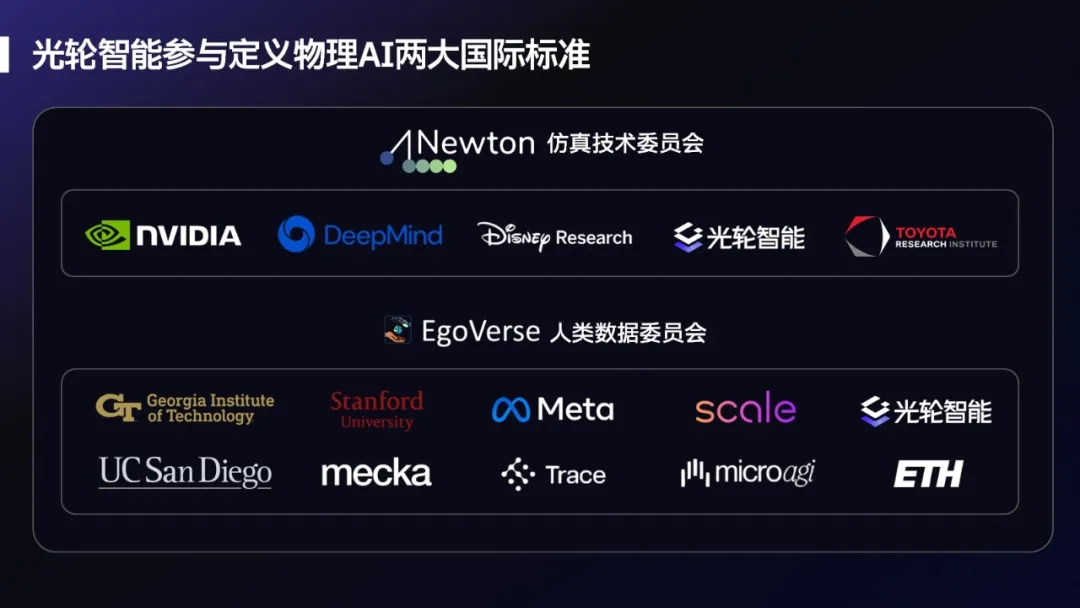
In the field of simulation, as the only Chinese enterprise on the Newton Simulation Technology Board, Light Wheel Intelligence has teamed up with INVEDA, Google DeepMind, the Disney Institute, and the Toyota Institute to lead the next generation of open-source physical AI simulation standards and co-develop the rules for the next generation of physical AI simulation infrastructure.
In the data field, as the only Chinese company to be a member of the EgoVerse Human Data Committee, Optical Intelligence has teamed up with international teams such as Stanford, Meta, Scale AI, Mecka AI to build the world's largest human data training system, representing the international standards of corporate data for Chinese companies.
On July 30, The Robot Report ranked the top five physical AI infrastructure platforms to shape the robotics industry by 2026: Intelligent for computing, simulation and development; Applied Intuition for verification and systems engineering; Scale AI for training data; Hugging Face for open-source coordination; and Light Wheel Intelligence for "continuous learning infrastructure that integrates real-world experience, simulation, evaluation, and deployment".
It is the only Chinese company among the top international organizations in the three fields of physical AI infrastructure, simulation and human data.
Standards also need to be directed towards a sufficiently large common goal. During the WRC, Light Wheel Intelligence launched its "Five-Year 10 Billion Smart Data Co-Building Plan", a joint effort between hardware manufacturers and the scenario side to drive data from their respective policies towards standardization. Shechen also said in an interview: "We plan to achieve 10 billion hours of data in five years. To achieve this goal, we need to work with everyone, and the entire industry needs to use a common standard language".
Six: The Tesla Model 3, which built the body data, achieved 10 billion hours in five years.
In the second half of the interview, Shechen repeatedly used Tesla's metaphor.
Regarding the difficulty of landing physical intelligence, he gave a quantitative judgment: "robot problems may be more than 1000 times more difficult than FSDs. In the future, it may take 1 billion people to wear different devices to collect data for robots. " and 1 billion people cannot wear the same device. "It is impossible for one company to solve all the problems with one device, the future should be an open ecosystem.
In terms of data productivity and data value, he said: "The real Model 3 is a whole pipeline, a whole data engine. The future should be a failure-driven pipeline, where we learn from failure and retell only the most valuable, the most interesting bits".
Tesla's fleet value lies in the realisation of real road data collection that is continuously monitored by a model, which can only transmit segments when there is a gap between the output of the model and human operation locally.
This also explains an important detail in the five-year 10-billion-hour plan: the 10-billion-hour plan cannot be a repeating 10-billion-hour plan.
In the continuous learning system of the Intelligent Wheel, EgoSuite provides human data for teaching, SimFoundry and RoboFinals provide a scalable trial-and-error space and evaluation system, and the RoboStack real-time deployment platform provides continuous feedback that tells the system what data needs to be added.
It was this continuous, closed-loop learning system that led the two presenters to end their interviews with emotions:
From simulation, it continues to increase its input into first-person data and Real-to-Sim, placing it in a very favorable position to truly solve the problem of scale. The path to continuous conversion of real-world distribution into simulation will be an important breakthrough in the entire field.