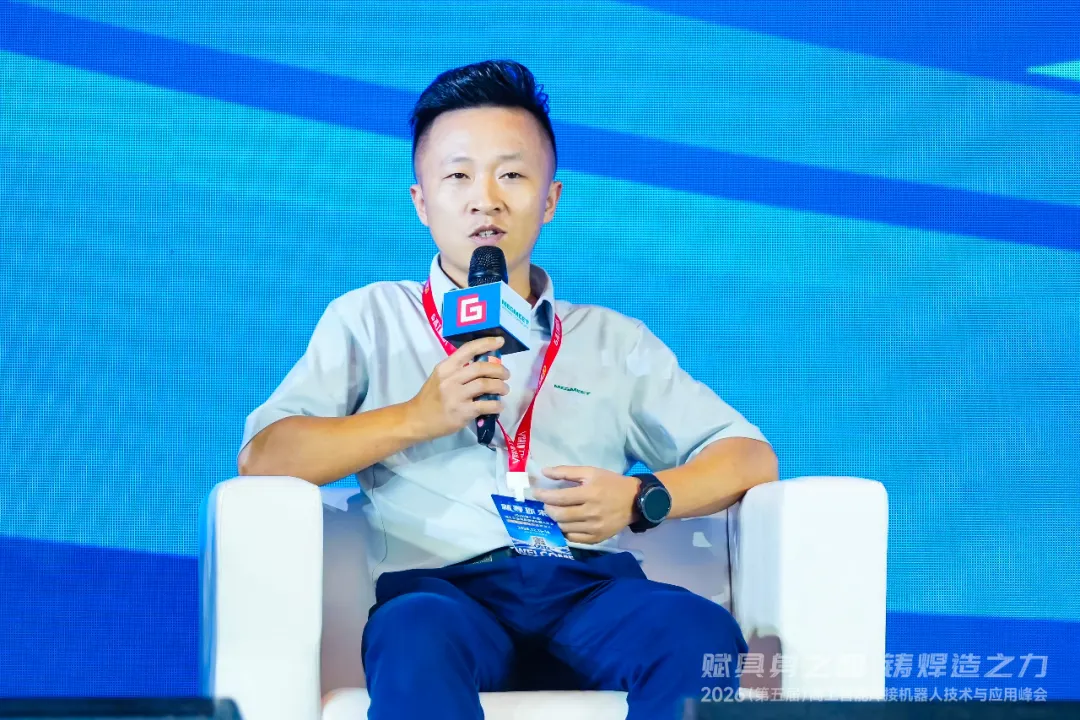
Director of the Magnetic Automobile Industry Zhang Zhenqiang
Zhang Liu, deputy general manager of Tianwan, pointed out that in the automotive sector, the two processes of pointing and arc welding have a non-absolute but obvious separation: thin plate welding with pointing and thick plate welding with arc welding. The reason is that thin plate use arc welding is easy to pierce, heat is not easy to control, while thick plate use pointing requires too much equipment capacity.
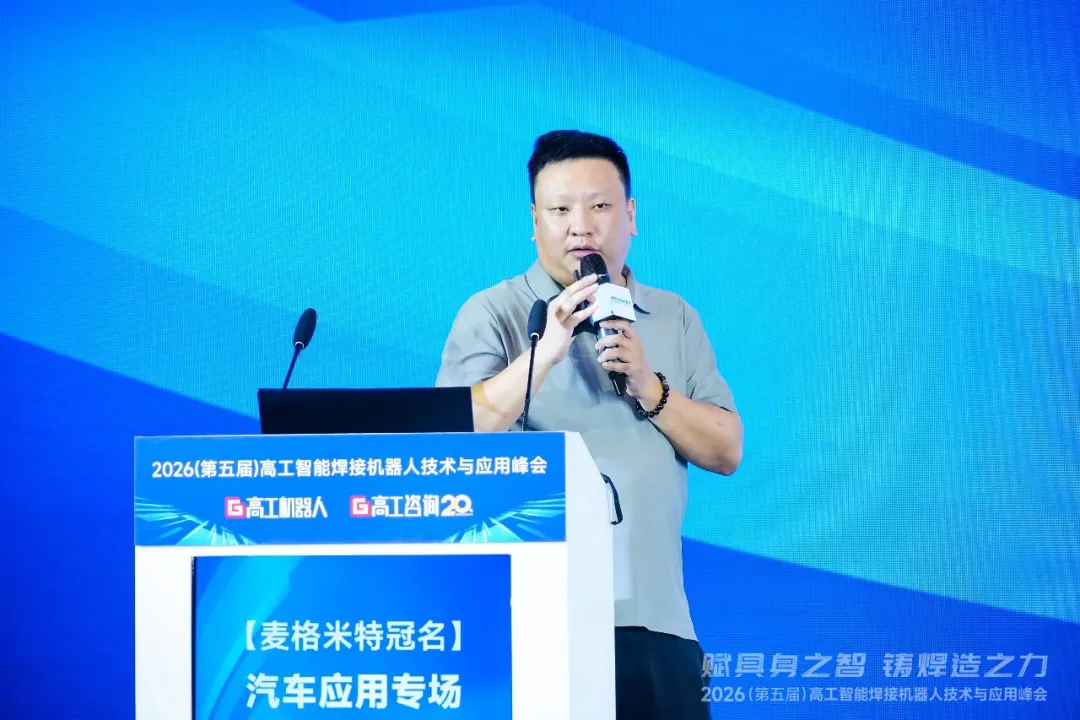
Chang Chang, Deputy General Manager of the company
The body parts are basically thin plates, mainly pointed plates; the bottom plates have undergone the process of combining pointed plates, pointed plates and arc plates, so far almost no longer use pointed plates. Zhang Liu believes that arc plates are more advantageous in lightweighting and welding strength, and the investment cost of pointed plates equipment is higher.
As for the new direction, Zhang Liu focuses on the steel and aluminum mixed connections. He cites an anti-intuitive case: the customer's aluminum alloy side rack scheme is lighter after being converted to steel. The reason is that aluminum alloy stretch rate is less than steel, and the rack needs to be involved in collision absorption, the stretch rate is very high, the parts must be made very thick to meet the requirements, and the weight advantage is instead offset.
He believes that there will be great market prospects for future breakthroughs in the area of substrate structural parts in terms of stability and cost of the process of steel and aluminum mixing connections.
Chairman of the Institute of Manufacturing Technology, Chang'an Automotive Manufacturing Center, Chen Ming stressed that the greatest impact on the connectivity process is the development of materials.
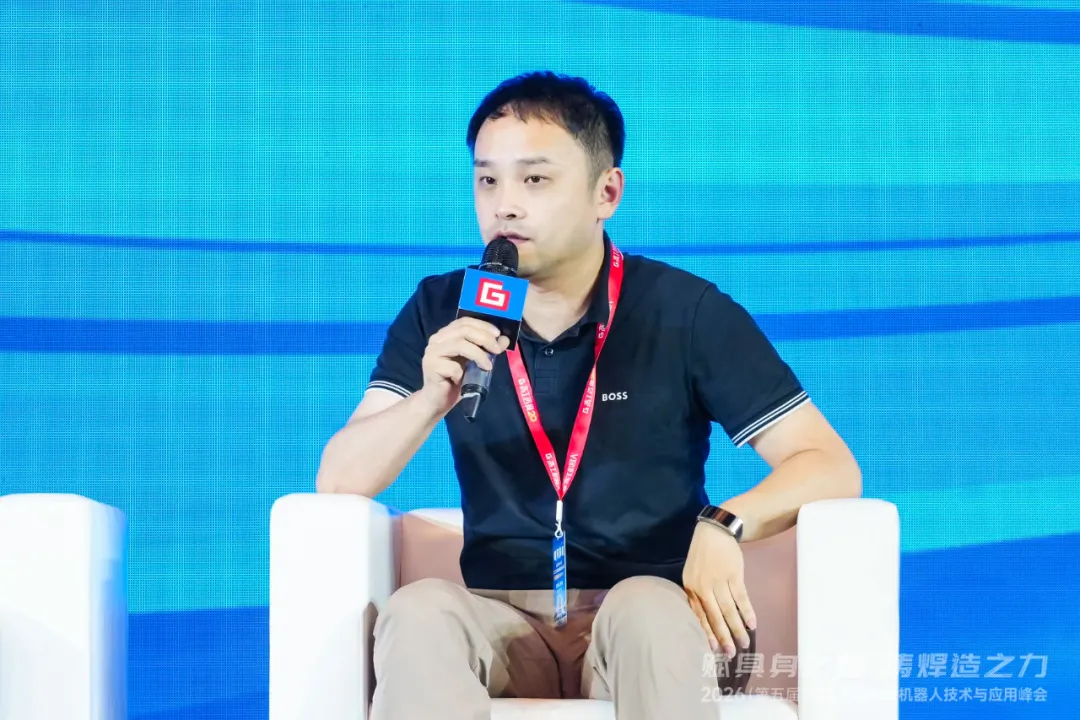
Chairman of the Institute of Manufacturing Technology at Chang'an Automotive Manufacturing Center Chen Changming
The first is lithium alloy. The application of lithium alloy has not yet settled down, and the entire industry is already researching lithium alloy integrated pumps. For two reasons, one is that China is the dominant country in the global lithium resources and lithium capacity, and the second is that lithium prices are lower than lithium prices in the long term.
The second is that aluminum has been re-focused on plastic to replace steel foil. This idea was proposed many years ago, the previous obstacle being that plastic coating surfaces are difficult to achieve metallic painting effects. Today, the two processes of in-mode spraying and in-mode coating have solved this problem.
Flexibility is the basic disc that cannot be turned around.
In the heavy industry, the problem of welding is more direct: the product batch is small, the size is large, the precision is low, and flexible welding is an inevitable problem.
Chen Fanjie, the deputy general manager of Qingdao Intelligent Manufacturing, believes that for the heavy industry, arc welding and laser welding are two lines that cannot be turned around, especially arc welding, which occupies the base plate of China's heavy industry.
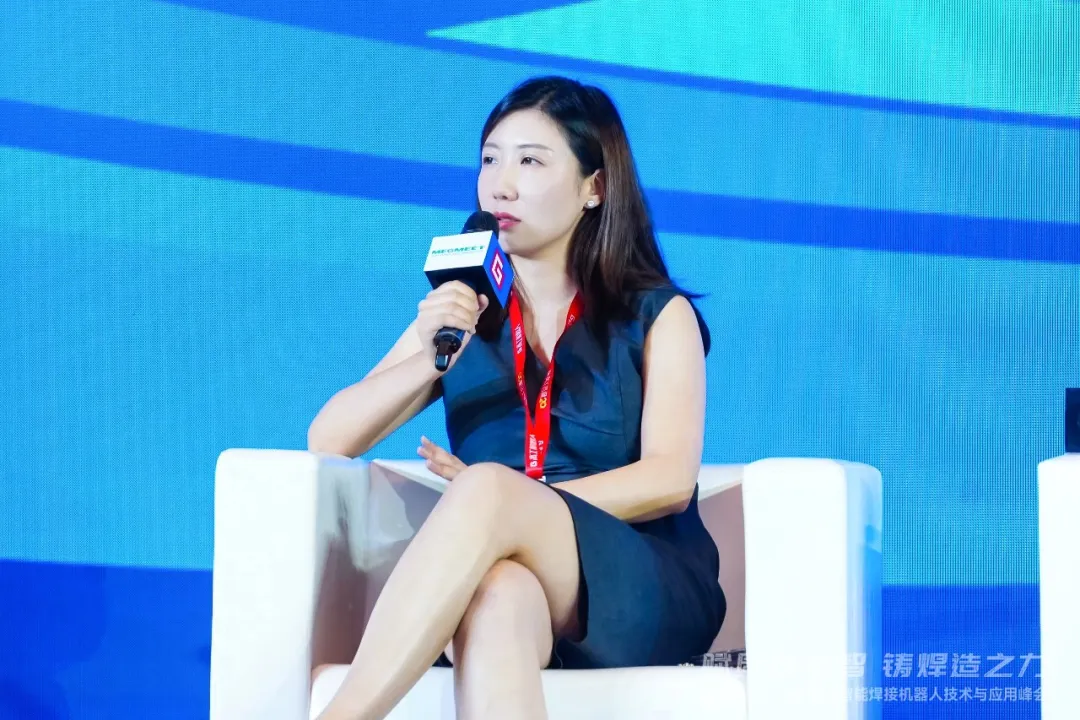
Chen Feng, Deputy General Manager of the group
Laser welding is mainly concentrated on special materials such as high-strength steel and box-shaped thin sheet welding, good forming and high efficiency, but the size gap and assembly gap in the heavy industry is large, it is difficult to guarantee the accuracy of the laser welding required, so it is still gradually penetrating.
Li Zhongqing, director of the welding robot product line at Mitsubishi, said that at the equipment level, the railway industry introduced intelligent welding equipment early on, starting with the use of automated welding equipment of IGM from about 1997-1998, and until today, aluminum alloy turning racks and body welding are still predominantly used in the welding equipment of IGM and CLOOS. The reason is that turning racks are key components for carrying and walking, and their thick racks need to be inspected through secondary or even first level, and the consistency requirements for welding quality are very high, depending on both imported equipment in the long term.
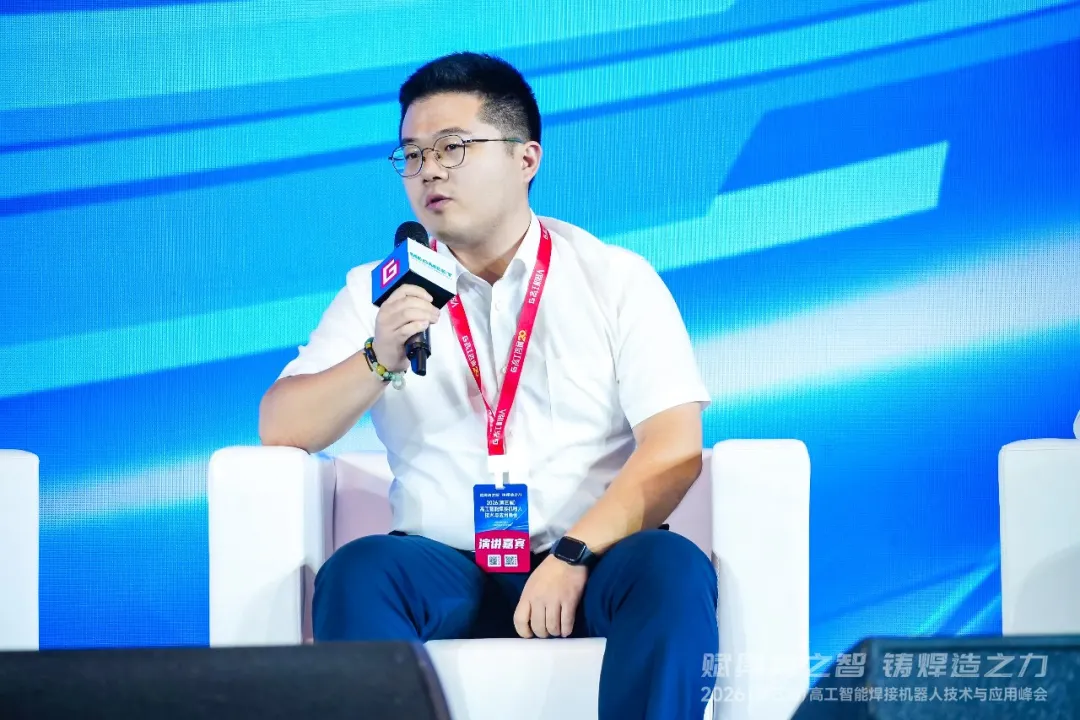
The director of the robot product line, Lee Jong-un, is welding around the train.
For long rectangular and curved racks, the existing demonstration welds are basically able to meet the requirements, but the biggest problem is the change of type. For each change of model, it takes 2 to 3 workshop workers or R & D engineers to moderate on site for about 15 days, so everyone around the car is also thinking about whether it can be solved in a more flexible demonstration-free way.
The first pain point they faced was a decrease in efficiency, shortage of welding workers, recruitment difficulties and unstable welding quality, which had a major impact on production. The second pain point was the control of welding quality, mass production can be guaranteed by extraction and welding, but only small batches of production can be relied on in the process to ensure reliable results.
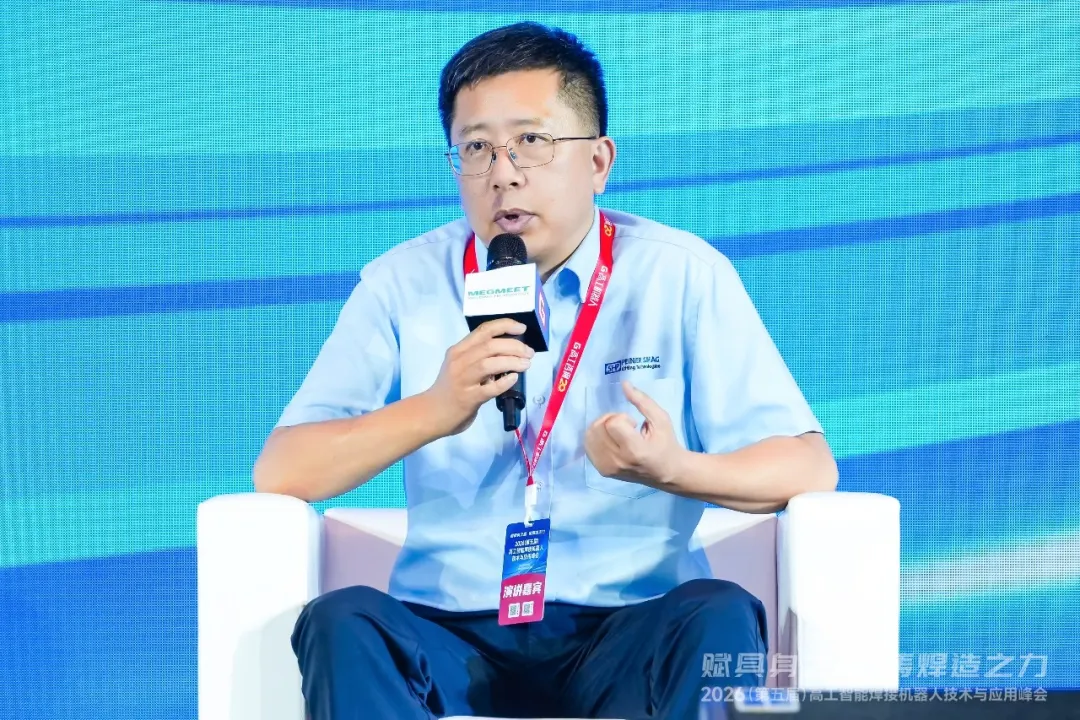
Director of the Technical Center of Penaschash Ji Bat Machinery Limited, Shanghai
From the point of view of integrators, the company's product line manager has clearly added two problems of welding processes that have not yet been solved in the heavy industry. The first is the multi-layer welding exemption: in steel structures, shipbuilding and marine industries, multi-layer welding is required after the opening of the deck. Currently, the standard group single-layer welding exemption is more mature, but only the first multi-layer can be exempted from the demonstration, the second and third routine practices are still artificial intervention.
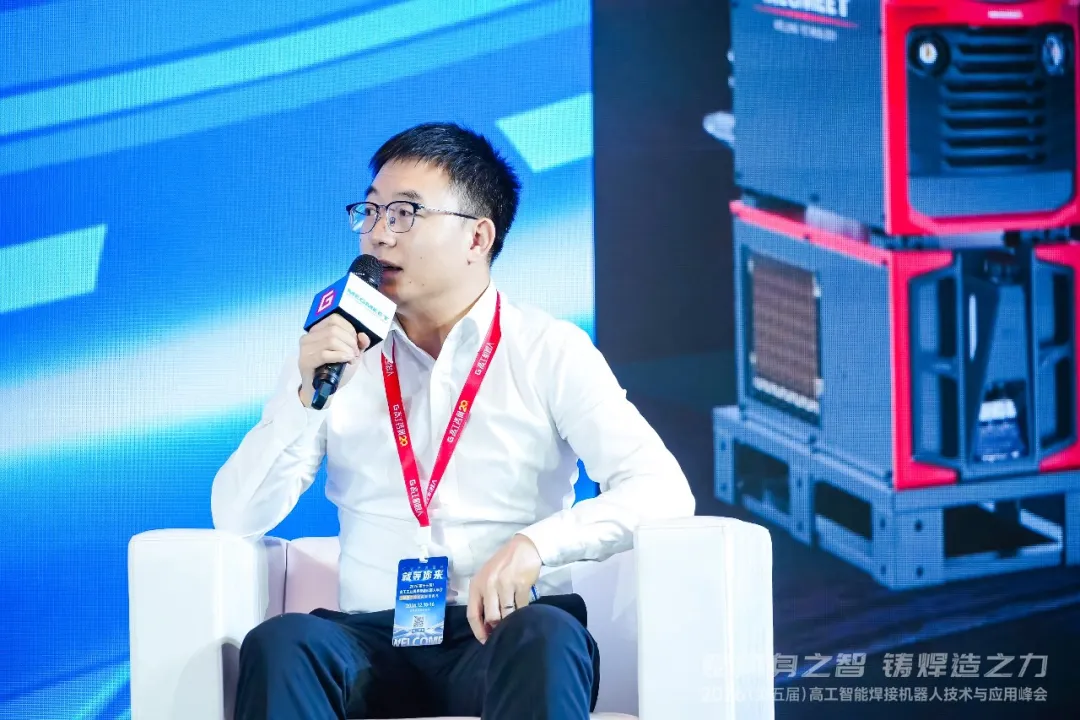
The head of Huawei's super welding product line, Wang Ming
The second is the boundary between arc welding and laser welding in heavy work. arc welding is still the absolute dominant, and laser welding has advantages on thin plates: for example, in the ship industry, when the thickness of the flat plate plate is ≤ 12 mm, the laser welding scheme is not a problem, and the success rate of over 12 mm is low, it is difficult to meet customer requirements. These are also problems that the Chinese manufacturer wishes to further solve in the heavy work welding scene.
Is it possible to avoid a second demonstration?
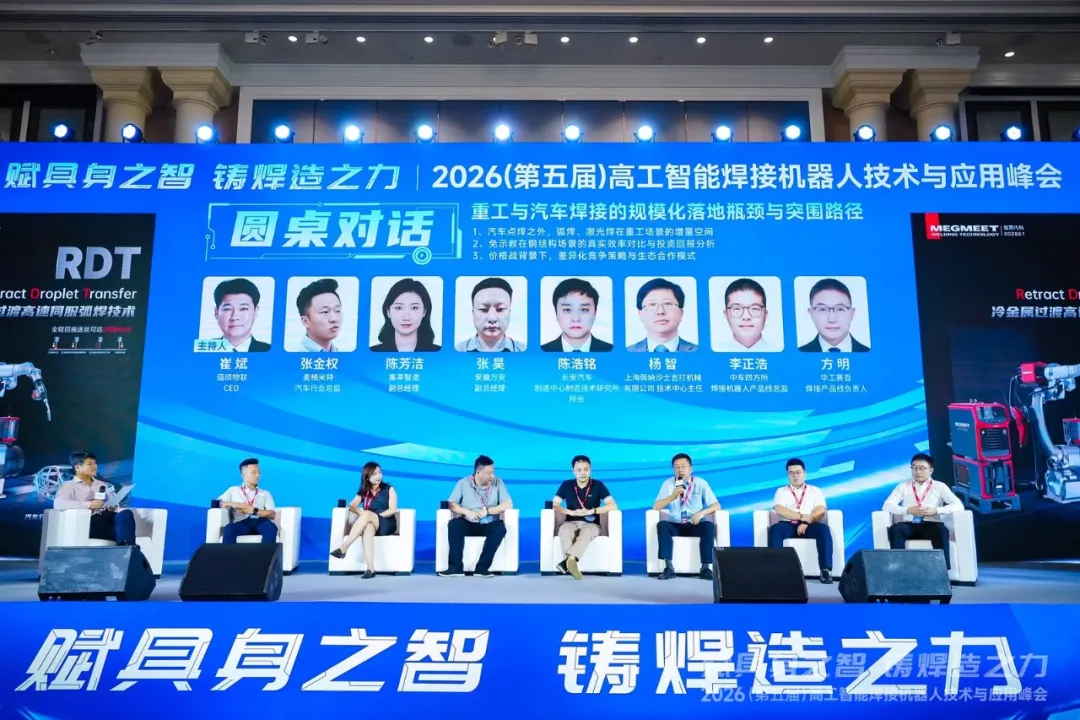
As one of the most talked about technologies at the summit, what are the applications, difficulties and sensations of welding in automobiles and heavy industry?
Zhang Liu makes a different proposition from the mainstream narrative. He believes that for complex structural components such as the substrate, a one-time, comprehensive exemption from displays will still be difficult for at least the current 3 to 5 years, but it is possible to consider exempting secondary displays first.
He said that the first demonstration could be carried out by a specialized technical team that would adjust the coil in place, avoiding fluctuations such as the difference in the manufacture of the gear and the impact of the gun on the second demonstration, thus significantly saving costs and time for the production of hundreds of thousands of products on a monthly basis. In his opinion, this goal is easier to achieve than a complete demonstration.
Chen Feng's response is directly on the technical path. She believes that Zhang Yi proposed a very practical application of welding, but to achieve it, reliance on 3D visual welding alone is far from sufficient. The reason is that the vision can only see the geometric position of the workpiece, not the state of the process: it must be monitored at the time of the first welding, the information must be transmitted to the robot for compensation calculations, and the visual data must be corrected in the course of the second scan, and the current, voltage and even the speed of the second welding process must be adjusted simultaneously.
In other words, this poses high demands on the control algorithm of the robot itself, which must be the development of vision plus specific scenarios in order to achieve this effect. She also reaffirmed her judgment that the present stage of free demonstration has not yet reached the extent applicable to all industries.
Feng Ming agrees with Chen Fanjie, who has been studying welding and non-demonstration related algorithms for almost five years, and has found that: the non-demonstration of welding involves the decision-making layer, the visual perception layer and the algorithm layer, is a system engineering that is lacking.
Workpieces in the automotive industry are all in batches, the same workpiece appears repeatedly, and the rules for visual identification and route planning can be folded in batches, free of demonstration is relatively easy. Heavy industry such as ships, steel structures are small batches of many varieties, and each workpiece can be a new problem, especially in structural dead corners, to achieve true demonstration free of demonstration, but also requires further transformation in AI technology.
As a representative of the repair plant, Chen Ming confirmed the current state of the automotive industry: more general processes have been able to avoid demonstration, but the same problem remains with the more complex shapes, physical and mechanical parts. He pointed out that when it is difficult to find the key influencing factors, it is best to look for the direction of large models and AI.
He confessed that he once believed that large models could not penetrate the professional field, and that Long An automobile for many years also adhered to the path of dedicated models, vertical models; but from the solution of some recent problems, large models have a natural irreplaceable advantage over the interpretation of the underlying semantics, combined with the addition of arithmetic, to solve the most basic process parameters.
The answer to the need
The three questions point to three levels of answers.
Concerning automotive welding: point welding will not disappear, but its boundaries are being redrawn by integrated pressure welding and material replacement. Arc welding is still mainstream in chassis structures, while steel and aluminum mixing connections, aluminum alloy connections, these new needs driven by materials, may be the real increase in process innovation.
About heavy-duty welding: arc welding is a basic disc, laser welding, friction welding penetrates within their boundaries, but the user's most pressing demands are not on some new process, but on flexibility. Shorter model modification cycles, less dependence on machinery, and controllable welding quality for small batch production of single pieces.
Regarding free samples: the general welding process for batch parts is already free of samples, but the complexity of multi-variety batches for small batches still requires algorithms and AI replacement.
There are many underlying changes in the welding process involving a large number of parameters, and in the past it was difficult to fully explain many phenomena that depend on human experience and WPS testing to find the rules. Today, AI and data-driven welding may explain the underlying reasons for the difficulty of welding with robots.
* Cover for AI mapping