It's the first time in the history of the world.
Just now, the OpenAI Joint MIT announced the shocking news: AI has succeeded in taking over quantum computers!
In a joint report entitled The Phantom Case Study: Intelligent Body Calibration of Superconducting Quantum Bites, researchers at MIT's Quantum Engineering Systems Group (EQuS) confirmed that, driven by GPT-5.6 Sol and the Codex, AI intelligent agents have been able to run quantum computing experiments autonomously from end to end!
In other words, GPT-5.6 Sol can perform physical experiments on its own.
In the process, AI achieved the autonomous operation of quantum computing experiments, result analysis and qubit calibration.
From the release of microwave pulses by controlled laboratory hardware, to the reading and processing of massive complex data, to the next step of experimental scheduling based on result dynamics, AI has achieved 7×24-hour work.
Although physicists will not be temporarily out of work, the rules of the game for scientific research have been completely rewritten at this point.
AI for Science has jumped from "data-assisted" to "automated science".
The Big Model serves as a direct-timing experimental hardware for the scientific brain, which completely breaks down the efficiency bottleneck of basic physics.
In the future, the core barrier to cutting-edge science will be the "Super AI+ Unmanned Laboratory", and in the field of hard-core science, AI is starting to take hold!
This marks the real place of AI in the field of nuclear science.
AI is killing labs, OpenAI is targeting the next disciplineIn reality, building and controlling a quantum computer is a very difficult task.
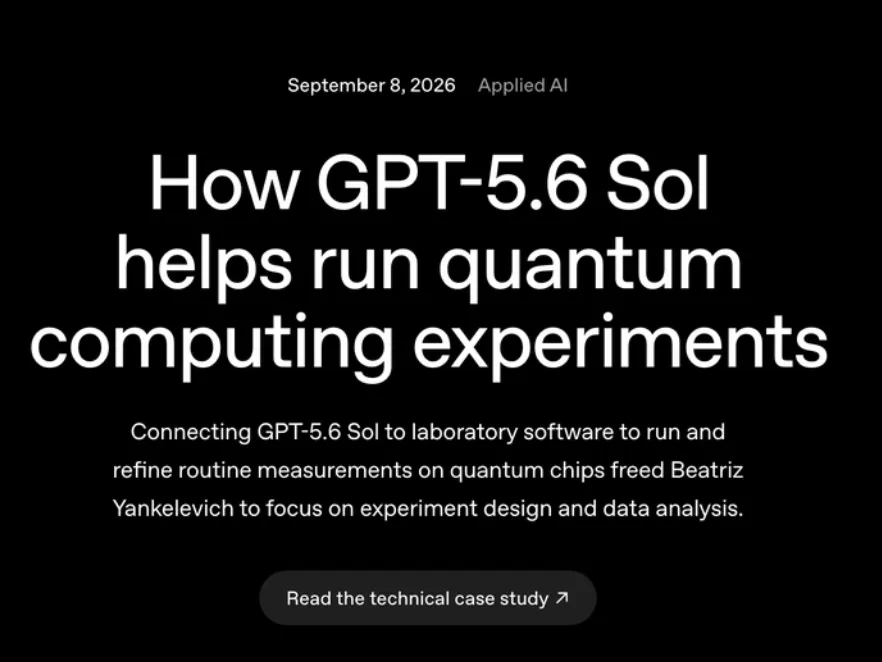
In the quantum systems team at MIT, Ph.D. graduate student Beatriz Yankelevich did a bold thing with the GPT-5.6 Sol built into Codex's autonomous intelligent body framework: directly running AI's API into the hardware control system in the lab!
After several months of iteration, the researchers gave AI "experimental context" to GPT-5.6, giving the experimental device details, chip design diagrams, specific measurement skills (including template codes, common causes of physical failure, chart samples of success and failure) to GPT-5.6.
An unprecedented AI closed-loop automation experiment officially kicked off.
To test the limits of AI, the team gave GPT-5.6 a hardcore task: a new chip containing six superconducting qubits that had never been measured.
Four of these are fixed-frequency qubits, and two are adjustable-frequency qubits. The parameters of the chip are completely unknown, and AI must explore the real physical parameters itself according to its design goals.
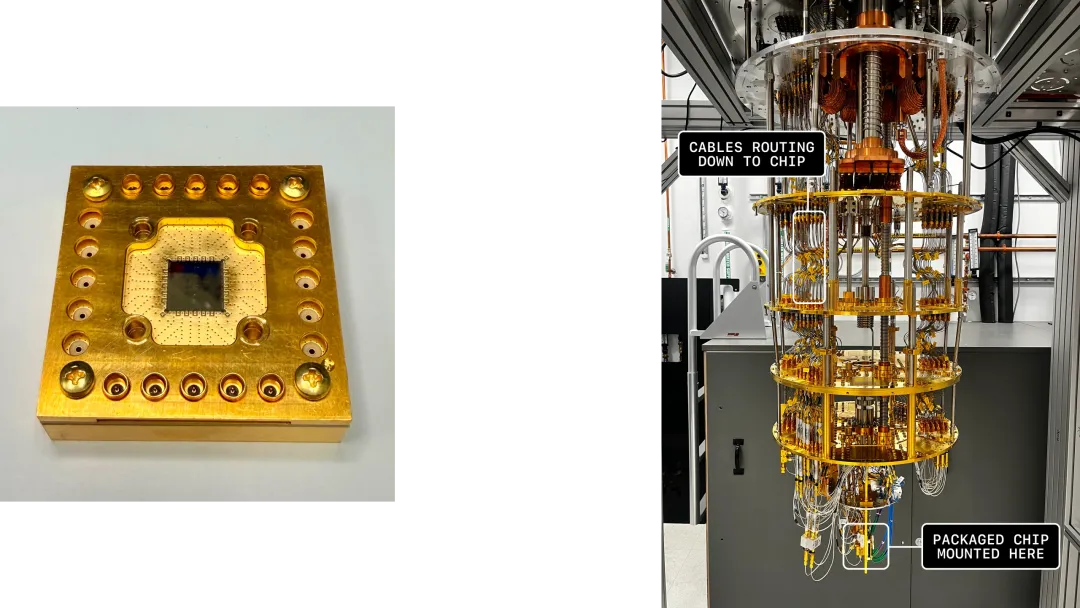
From hardware control software to microwave signal sources to data collection cards, everything is open to AI.
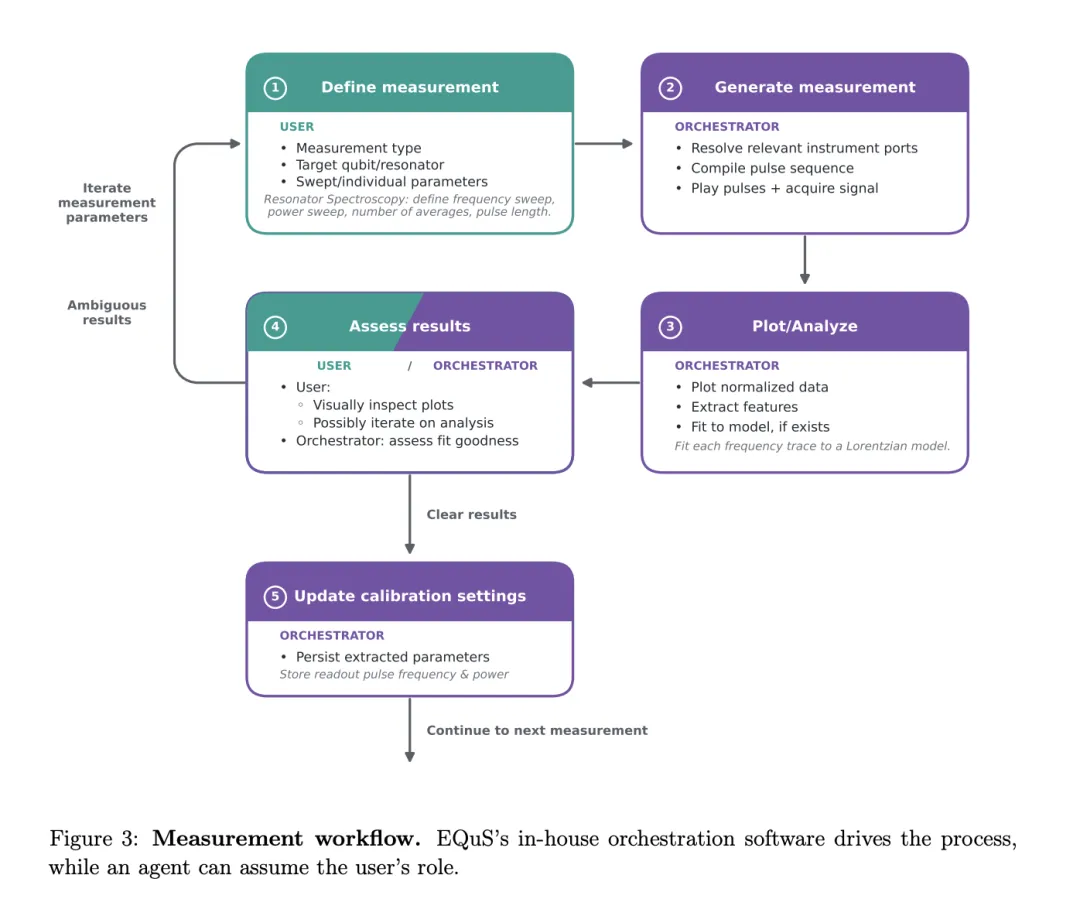
The researchers injected a "skills package" for specific measurement scenarios into the Codex, which told it the physical logic and assessment criteria for each quantum test.
After that, humans opened their hands.
On the screen, the "thought chain" of GPT-5.6 Sol is pouring like water.
It performs a series of physically closed-loop operations that cause hair loss without human real-time manipulation.
1. Autonomous inference parameters: The microwave pulse frequency, power, and width of the first round of measurements are self-planned according to the design objectives of the chip;
2. Underlying hardware scheduling: directly calling the control software, manipulating the hardware to send a microwave pulse sequence to the chips deep in the dilution refrigerator;
3. Data feedback and noise reduction: receiving the returned weak quantum state reflection signal, digitally cleaning it, and adapting it to the conversion of lithium;
4. Decision Adaptation Modulation: If the signal is perfect, the resonance frequency of qubits is automatically extracted and stored in the database as a benchmark for the next measurement; if the data is abnormal, the measurement boundaries are adjusted on the spot, opening a new round of trial and error modulation.
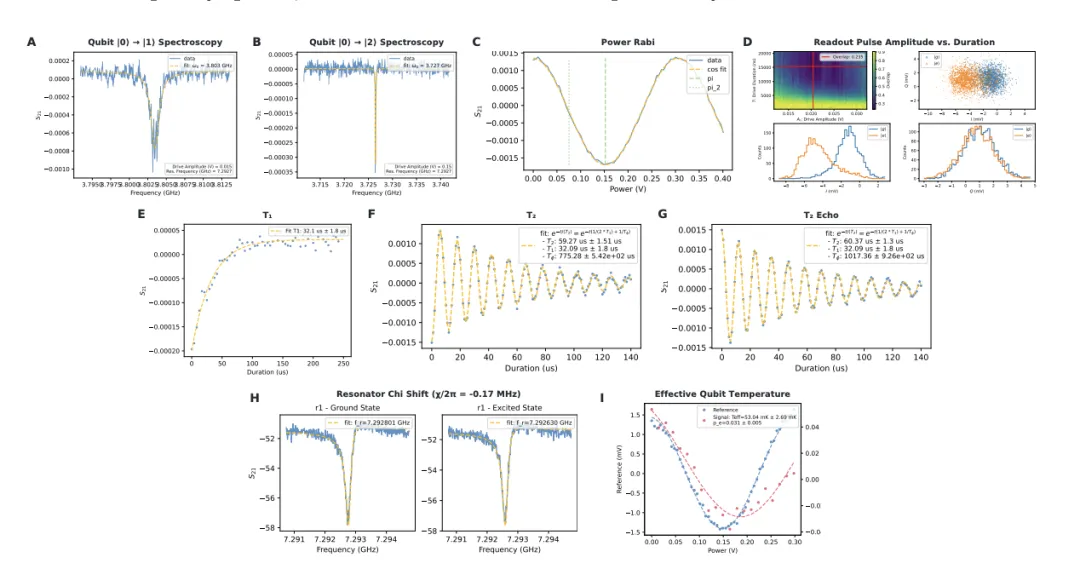
From identifying the frequency of quantum-bit jumps, calibrating the microwave pulses to control and read, to ultimately determining how long quantum information can remain coherent, the entire set of standard physics measurement processes, the entire AI process runs autonomously.
The vast majority of the 40 complex daytime measurements of fixed-frequency qubits were done entirely autonomously by AI, with human researchers intervening only four times!
This is AI at the forefront of physics, completing a textbook-level "autonomous realism".
 Why is quantum-bit calibration a "human-to-human refinery" for human scientists?
To understand the magnitude of the GPT-5.6 Sol breakthrough, we must first uncover the cool and fascinating puzzle at the bottom of quantum computing: Why do calibrated quantum chips make the world's top physicists sick?
In classical computing, the state of a transistor is extremely non-black-white: it is either 0, or it is 1, as is the case with Taishan.
But in the world of superconducting quantum computing, qubits are called "artificial atoms".
They use superconducting Josephson structures to construct nonlinear discrete energy levels.
In order for these "artificial atoms" to be heard, scientists must use microwave pulses accurate to nanoseconds or even picoseconds to reverse quantum states between different energy levels in order to work out quantum logic gates.
But "artificial atoms" are actually too fragile, too neuronal.
First of all, correlations are extremely fragile.
Extremely weak electromagnetic diffusion signals in space, even diluted coolant temperature drift of several milligrams (mK) can cause qubits to "retreat", and unprepared quantum information can instantly shrink into noise.
And "parameter drift" is also a problem.
The physical properties of sub-bits are never a constant. They are influenced by the defects of micro-materials, the two-tier system fluctuations, and the resonance frequency measured by the chip yesterday, which may have drifted today.
Moreover, many of the factors in the study are interdependent and interconnected.
To do a good calculation, you have to first find the resonance frequency of each bit; find the frequency, and then calibrate the pulse width to determine the oscillation; then determine the Ramsay stripe to precisely correct the phase; and then measure the energy bounce time $$$T_$$ and phase regression time $$$T_$$...
The data for the next step is the absolute prerequisite for the next measurement. Once there is a slight system error in the first step, all subsequent measurements are scrapped.
The extreme experimental environment that MIT's EQuS team faces every day is that the quantum chips are placed in a huge cylinder called a "dilute refrigerator" and the temperature is lowered to an astonishing milky-calvanic level (near absolute zero, even colder than outer space).
Once the chip's packaging is cooled, humans can no longer touch it with their hands, and all interaction can only be done through software.
The researchers wrote microwave pulse sequences on a computer at room temperature, pushed them deep into the refrigerator with coaxial cables, interacted with quantum circuits on the chip, and then amplified and digitized the weak reflective signals to bring them back to the real world for analysis.
In MIT's EQuS lab, the daily routine is to produce a series of standard quantum chips for benchmark testing.
The reality is that each chip performs a complete characterization, often requiring a trained physics graduate to watch the instrument for several days and nights, performing hundreds of thousands of manual measurements and adjustments.
This is a secret of the physics community: contemporary quantum physicists often spend more than 70% of their youth in repetitive experimental labor known as "mode screwdriving".
And now, GPT-5.6 Sol is breaking that deadlock.
 How does GPT-5.6 Sol crack the quantum "black box"?
According to details disclosed by OpenAI and MIT, the test is not a dead script "automation macro", but a highly intelligent one.Dynamic Gambling。
Faced with this unclassified 6-qubit chip, the GPT-5.6 Sol demonstrates highly humanised "physical intuition" and "adaptive decision-making":
When quantum signals are in a state of high signal-to-noise ratio, the codex performs perfectly.
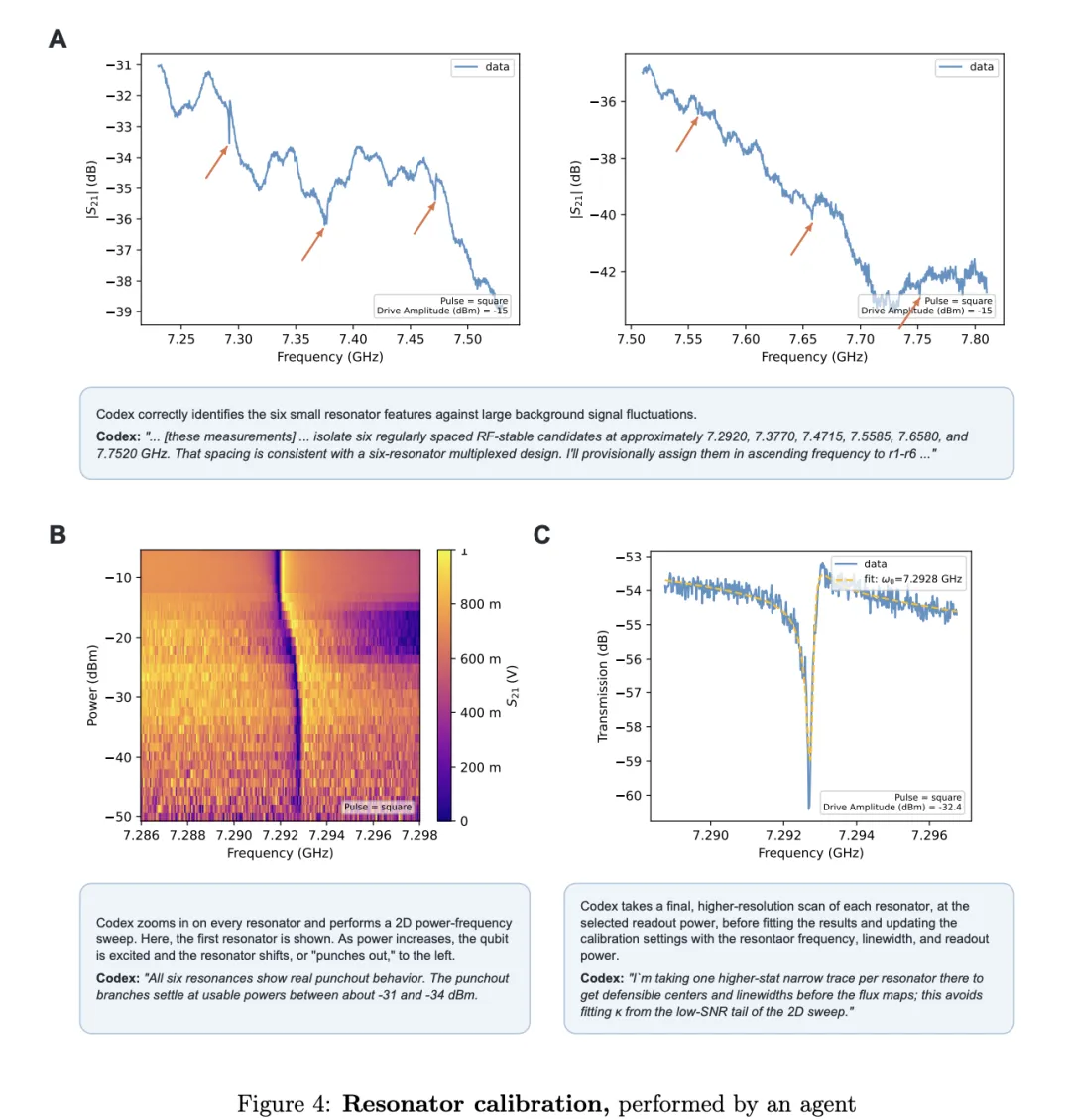
It first produces a set of broadband scanning frequencies to capture the resonant cavity reflection trap caused by quantum energy jumps in the background of noise, followed by automatically narrowing the scan window, which locks the jump frequency of qubits with high precision.
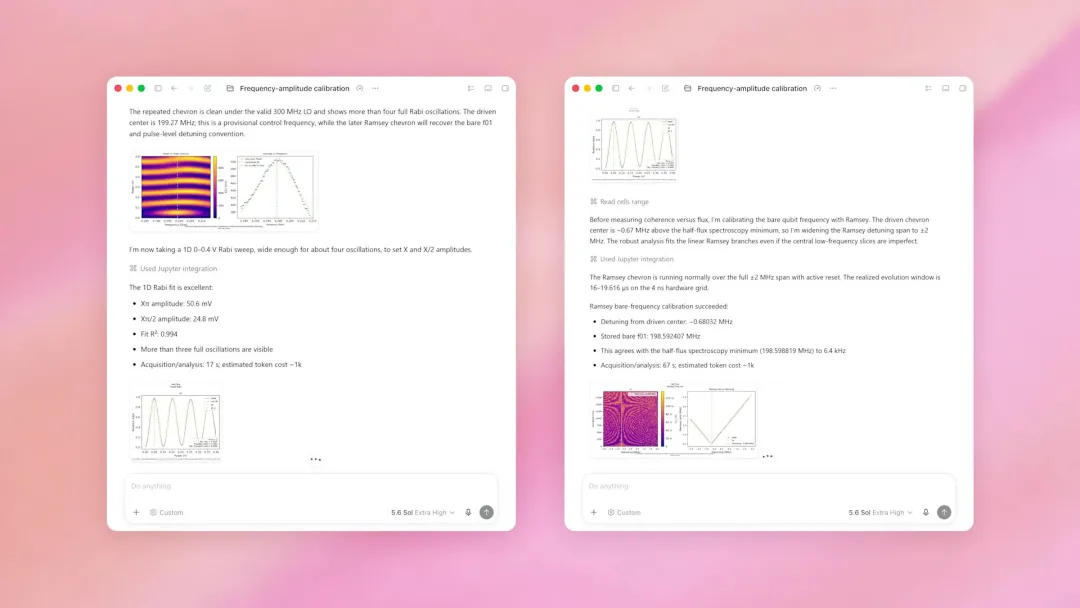
Next, it switches to time-space control, accurately matches the relationship between pulse width and angle of rotation, completes the labeling of the read and control pulses, and finally determines the time window in which the qubits remain coherent.
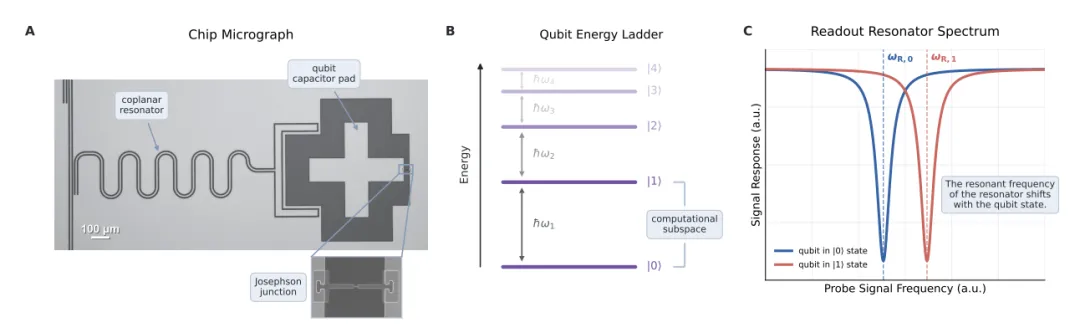
The entire process flows through clouds of water, and humans do not need to intervene halfway through.
In a technical documentary sketch released by OpenAI, GPT-5.6 Sol's thought chain demonstrates its thought process. Faced with a fluctuating obstruction of the chord curve, it speaks for itself internally:
"The current adjustment residual bias may be due to the reference reference reference deviation of the dimming phase, which causes I/Q fractional mixing... I need to perform phase decomposition first, and if the residual is still not below the threshold, then a 5 MHz increase in the microwave loss threshold should be re-scanned... "
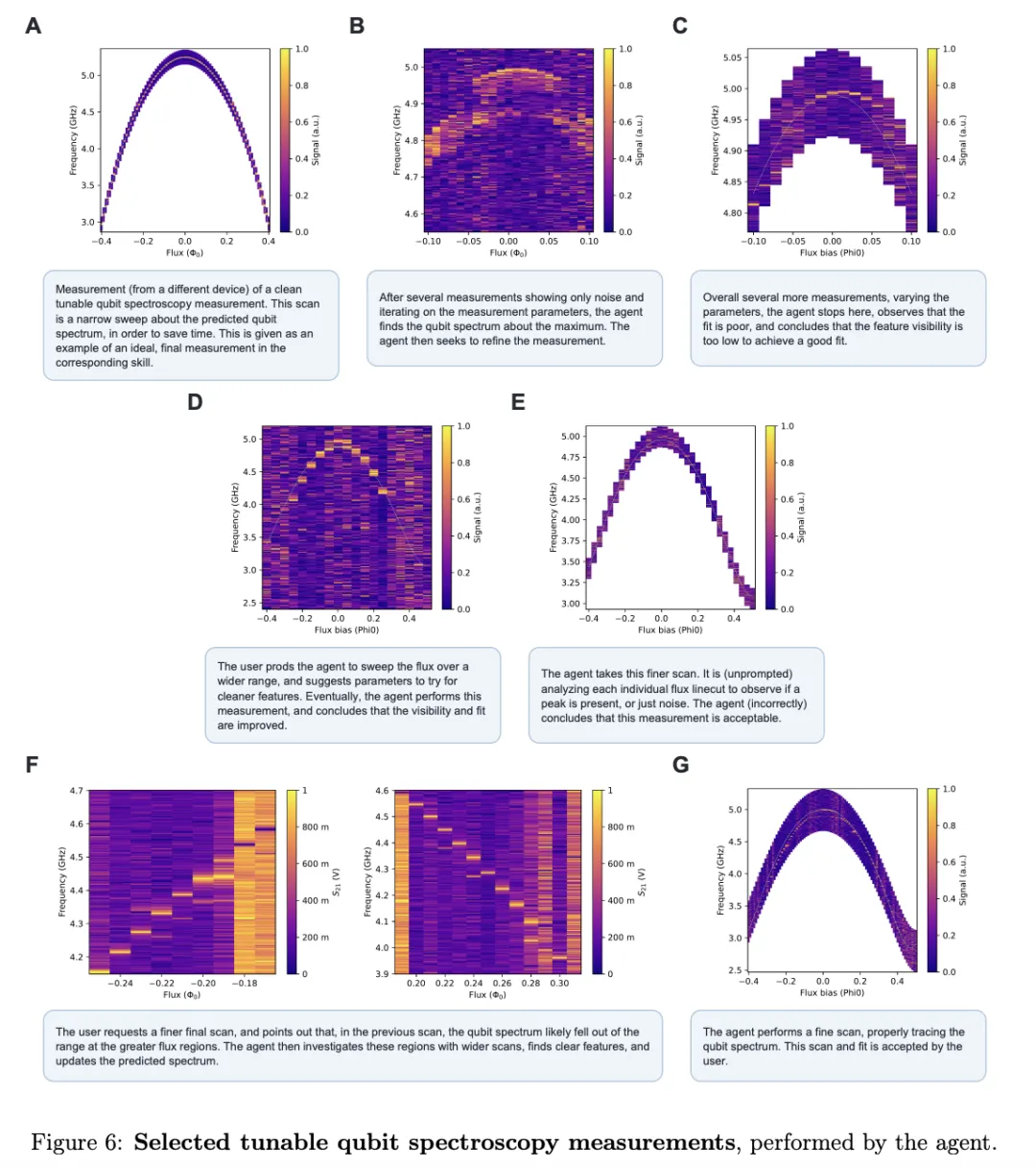
This correction and branching decision-making based on "understanding the physical meaning" is a barrier that traditional scripting procedures have been unable to overcome in the past.
R&D productivity is being restructuredOf course, the official report also shows the very real technical boundaries:
When the signal becomes weak or overwhelmed with physical background noise, the GPT-5.6 Sol starts to look "uncomfortable".
In low-noise than edge regions, AI models need to repeatedly test parameters, increasing exponentially in time; sometimes, when physical chips exhibit unpredictable abnormal physical phenomena, AI gets caught up in misjudgements, unable to make accurate attributions, and ultimately still needs the manual intervention of experienced researchers.
OpenAI makes it clear in its report: The current AI Agent is able to run a very stable standard workflow that defines clear standards, but the intuition of top scientists is still irreplaceable when interpreting highly vague, physically abnormal, and complex results.
But even so, it has accomplished the most difficult crossing in human history: completely redeeming scientists from boring routine.
But after the introduction of GPT-5.6 Sol and the Codex, the laboratory's productive relationship was completely restructured:
Role elevation: Human focus on top-level design (programs, mechanisms, global planning) and bottom-level modeling.
Multi-intelligent collaboration: constructing theory, measuring controls, simulating the three AI positions, and performing tasks.
Real-time automation: The codex is responsible for executing the tactics, directly landing real quantum chips after the code is generated, and reversing real-time modeling based on physical feedback, forming an extremely fast closing loop.
This super-closure of "theoretical iteration - simulation design - physical hardware control - data adaptation - iterative optimization" has transformed past scientific iteration cycles into "hours" or even "minutes".
This is an uplifting blow to the entire working paradigm of experimental physics.
Today, OpenAI is appearing in major international news outlets, claiming to have made a major mathematical breakthrough on the Millennium Problem, proving the Navier-Stokes equation.
OpenAI's proof does suggest that there are certain fluids that are initially perfectly normal, but under the Navi-Stokes equation, will reach infinite velocity in a limited amount of time.
In other words, in some cases, this equation may not be able to reliably reflect physical reality.
This is the first time that AI has really solved a mathematical problem called the "Liman conjecture". The problem is not only famous for its difficulty but is widely used.
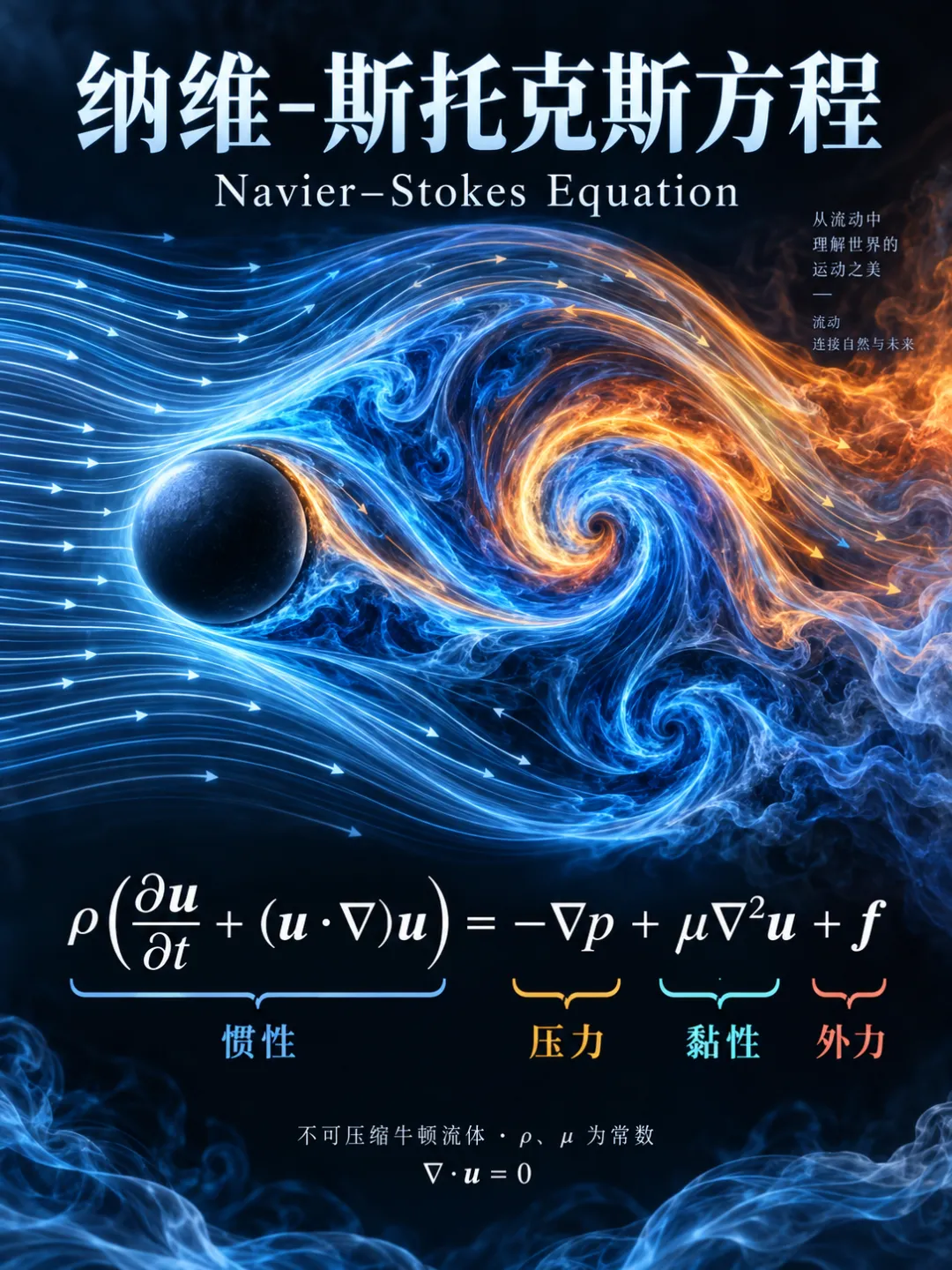
The Navi-Stokes equation can be used to simulate weather, ocean currents, the flow of water in pipes, the movement of stars in galaxies, the airflow around the wings, and can be used to design aircraft and vehicles, study blood circulation, design power plants, and analyze pollution effects.
But another mathematician, Tristan Buckmaster, has questioned whether OpenAI has rushed to publish a so-called "solution" after hearing about his work with fellow Anthropic researcher Levent Alpöge.
Tristan Buckmaster also claimed that OpenAI also tried to exclude anthropic researcher Levent Alpöge from signing the paper.
OpenAI says they're just solving the odd point problem of Euler's equation and they're solving the Navi-Stokes equation.
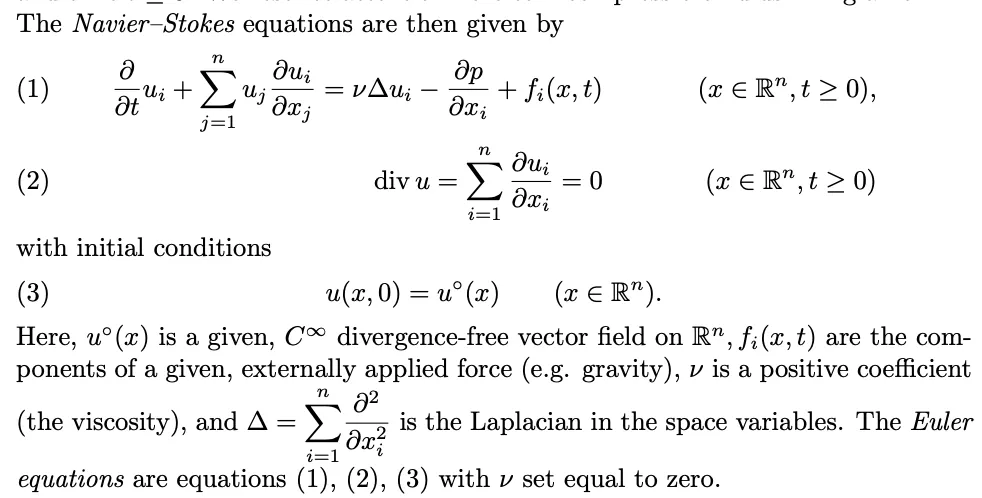
Buckmaster said they were almost a final step away from the Navi-Stokes equation, and in order not to get published early, they rushed to publish the results before OpenAI.
According to reports, OpenAI called 10,000 smartphones, ran for 88 hours, and consumed 130 billion tokens.
Ottman also said the two approaches seem to be different, but admittedly received an Anthropic boost: "Yes, we tried this direction because there were rumors on the Internet last week that the Anthropic model had solved a millennial problem, and we wondered if our model could do it too".
Some netizens jokingly said:
Anthropic has discovered a chamber-temperature superconductor, hoping that no competitor will waste another 88 hours and 10,000 post-Astra smartphones to get the draft.
Othman replied, "Let's try it".
It's a real survival crisis in mathematics, and people are shocked that "math is cool".
But as far as the physical world is concerned, large models often seem "powerless".
However, this OpenAI official list completely breaks the boundaries between the virtual and physical worlds.
AI is really coming into the physical world of human experimentation.