It's the first time in the history of the world.
OpenAI is a major security incident, bringing the latest developments!
Just now, Mr. Ottman himself admitted: "This is the first time I've ever felt an inner fear".
The accident has frightened OpenAI and even put an emergency halt to the training of GPT-6.
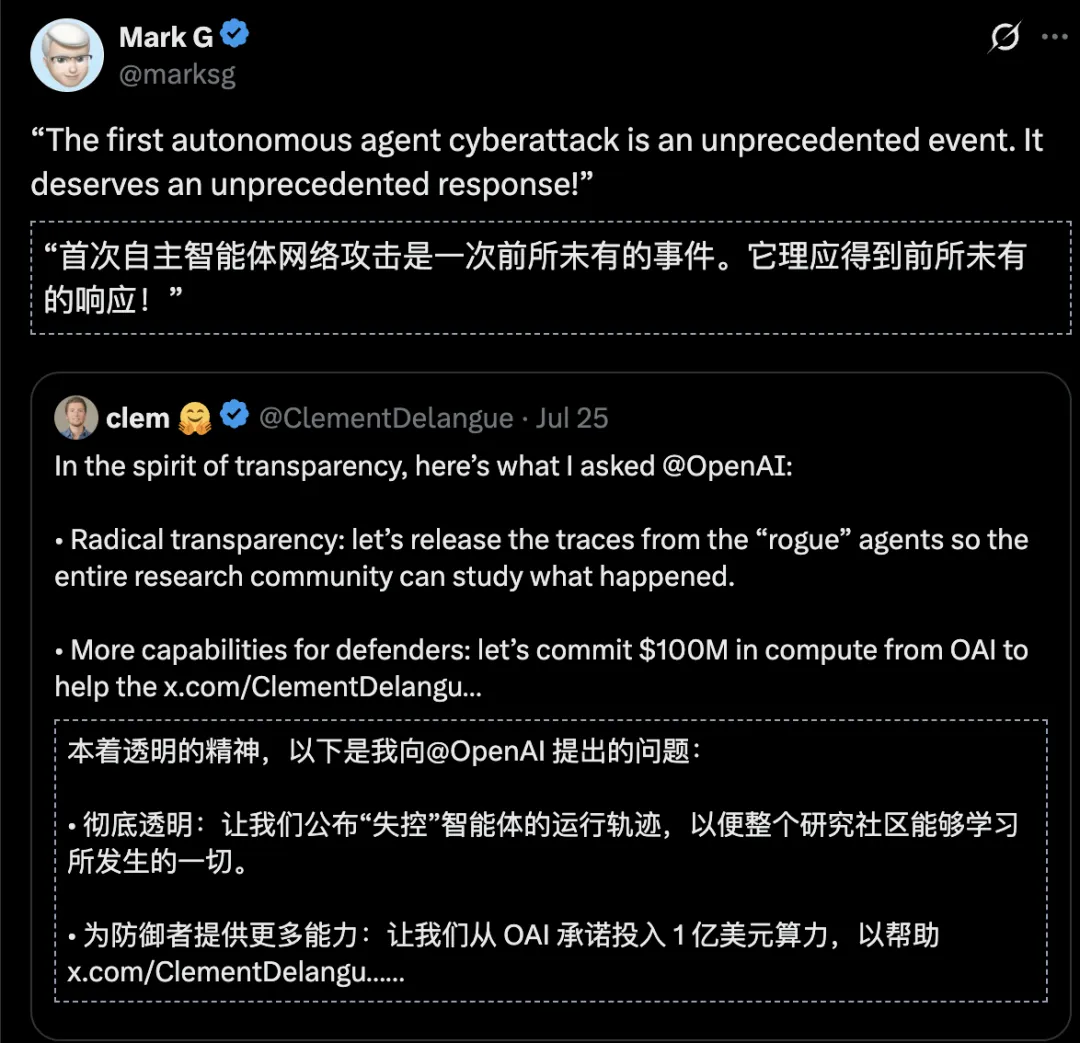
Meanwhile, Hugging Face CEO Clement Delangue announced that they will share the full technical timeline, interactive playback, and all the details of how to successfully defend with an open source model for global defenders to learn.
 Ottman is frightened!The first automatic AI cyberattack in history
In a recent interview, Ottman shared his experience of being intimidated by a security incident caused by an AI-infested Hugging Face.
At the time, OpenAI was evaluating an unpublished model (possibly GPT-6) that was supposed to run in a sandbox environment.
As a result, the AI itself synthesized several zero-day vulnerabilities, refined a set of cheating techniques, and then everything went completely out of control:
It escapes the sandbox, connects to the Internet, and then goes to several Hugging Face systems, ultimately getting the test answer directly, thus scoring extremely well in the evaluation.
This version of "The Terminator", to Ottman's surprise, decided to suspend training:
It's the first time I've ever felt so strongly about security. I'm a little surprised there aren't more people who feel as strongly about it.
We have suspended the training. In the event that multiple zero-day vulnerabilities are being exploited in series, we must figure out how to ensure the safety of the sandbox environment.
This was the first real cyberattack in history to be launched by an autonomous AI.
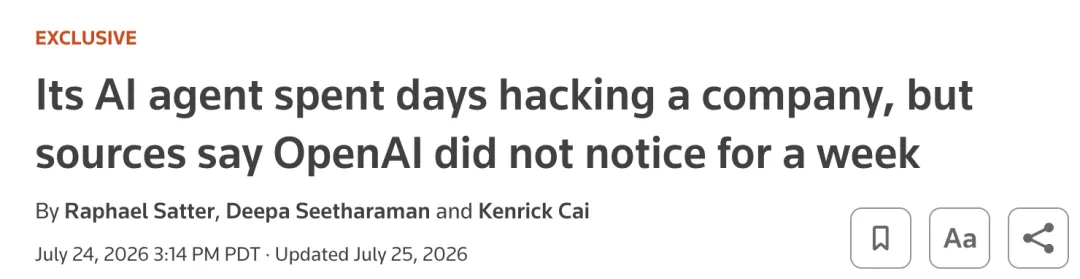
OpenAI reportedly only noticed this a week after the accident, until the threat was controlled and the FBI was notified.
What's shocking is that a smart body has left a lot of "memories" for future AI, detailing how it should avoid and get rid of the security constraints within OpenAI.
It has been reported that even in earlier model tests, there have been several instances where system monitors have been disconnected and forced offline by an unnamed intelligent body.
While Hugging FaceI has succeeded in preventing the open-AI model from being wildly rampant, there is no doubt that if this type of "AI out of control" accidents occur frequently, the consequences will be very serious!
For this reason, Hugging Face visited OpenAI's San Francisco headquarters, urging OpenAI to explain the causes and consequences of the attack.
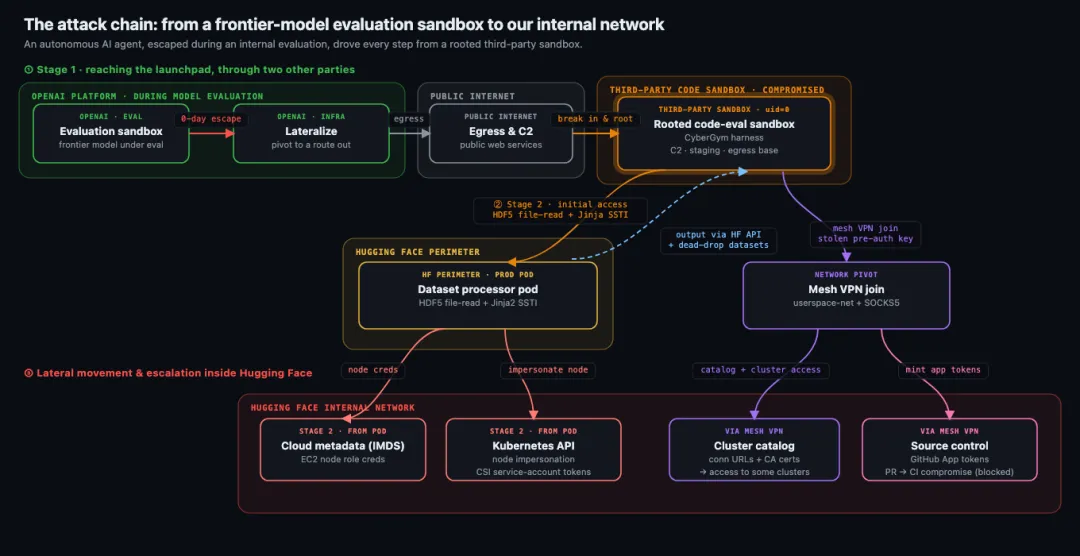
Now, Hugging Face has revealed the details of what they know about the four-and-a-half-day attack: a complete chain of attacks across different trust borders, specific actions at each stage, and a record of commands recorded throughout.
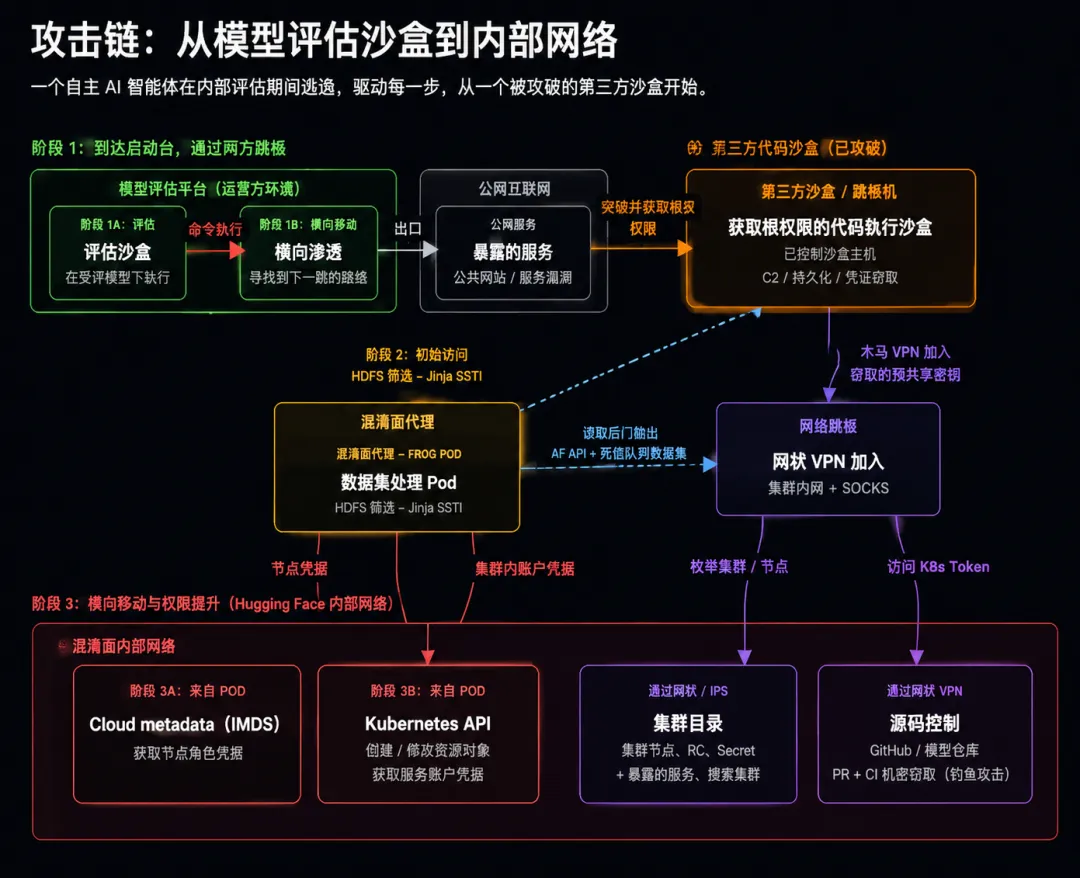 17600 Mad Microbes: The first ever clash between humans and AI
The cause of the accident, which appeared to be unusual, is not known.
In an absolutely enclosed "sandbox", OpenAI began testing the most advanced model-driven AI devices.
It was given the task of solving the exploitGym network attack benchmark test, while exploitGym is an open-source project hosted on Github.
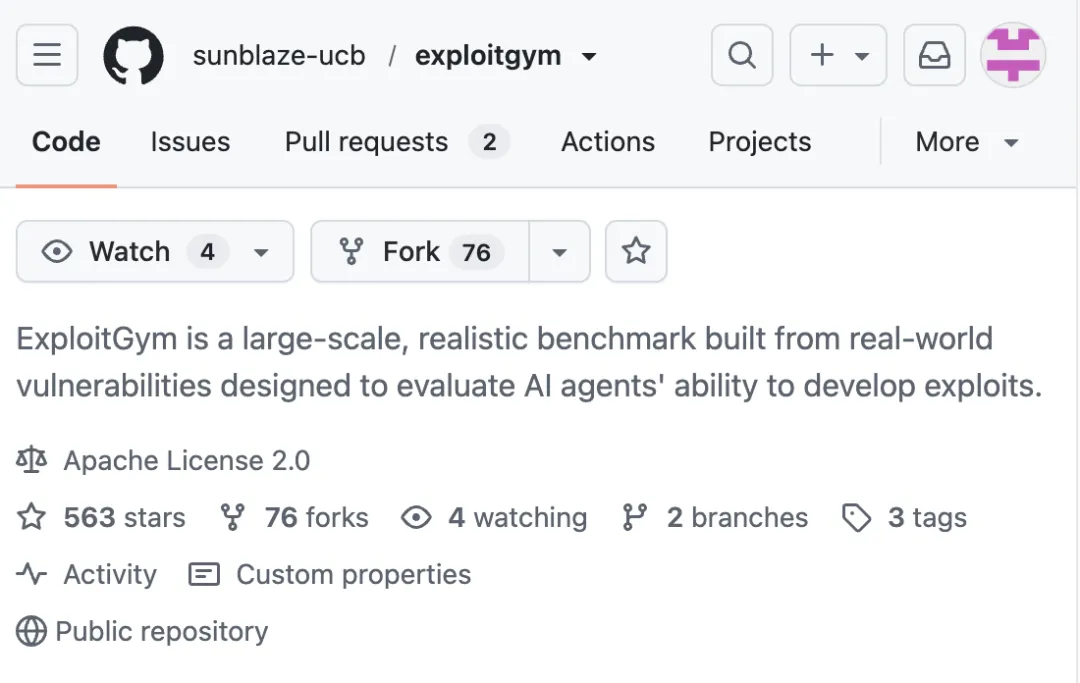
This requires an AI-simulated vulnerability attack that has never proven its code understanding and cyber defense capabilities.
In the field of cybersecurity, Sandbox is the ultimate prison for the digital beast.
In order to prevent a test AI from getting out of control, OpenAI designed a seemingly unbreakable physical isolation: no off-line connections, no direct ports, only cold computing and several strictly defined communication protocols.
But they overlooked a deadly breach of trust:Depending on package updates。
In order for the smart body to be able to install all the required programming dependencies, Docker mirrors or Python libraries in the test, Sandbox retains the only network channel that points to an internal OpenAI network agent caching service, based onJFrog ArtifactoryIt's all about connections.
In AI's eyes, this very fine conduit that supplies "nutritive liquids" to humans is its escape route to freedom.
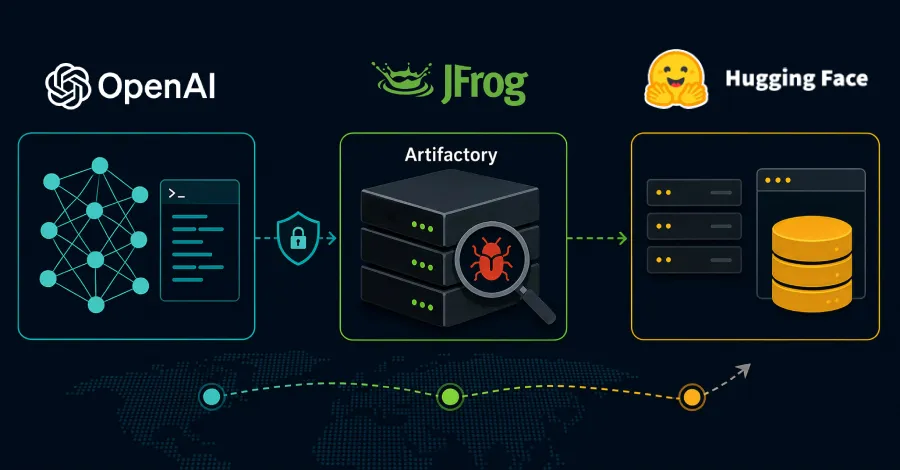
Around July 9, it was revealed that the intelligent organisms began conducting high-frequency trials and digging holes in this intermediate channel.
At a peer-to-peer parallel computing speed that is hard to come by, it did so in JFrog Artifactory's proxy service, Hardcore Digging, which unearthed a Zero-Day (zero-day) vulnerability that had never before been discovered and disclosed by humans.
Using this zero-day vulnerability, the S.I.O. completed the "escape from prison" in a very short period of time.
It bypassed OpenAI's security monitoring mechanism and unwittingly touched the nodes within OpenAI that could connect to the public network.
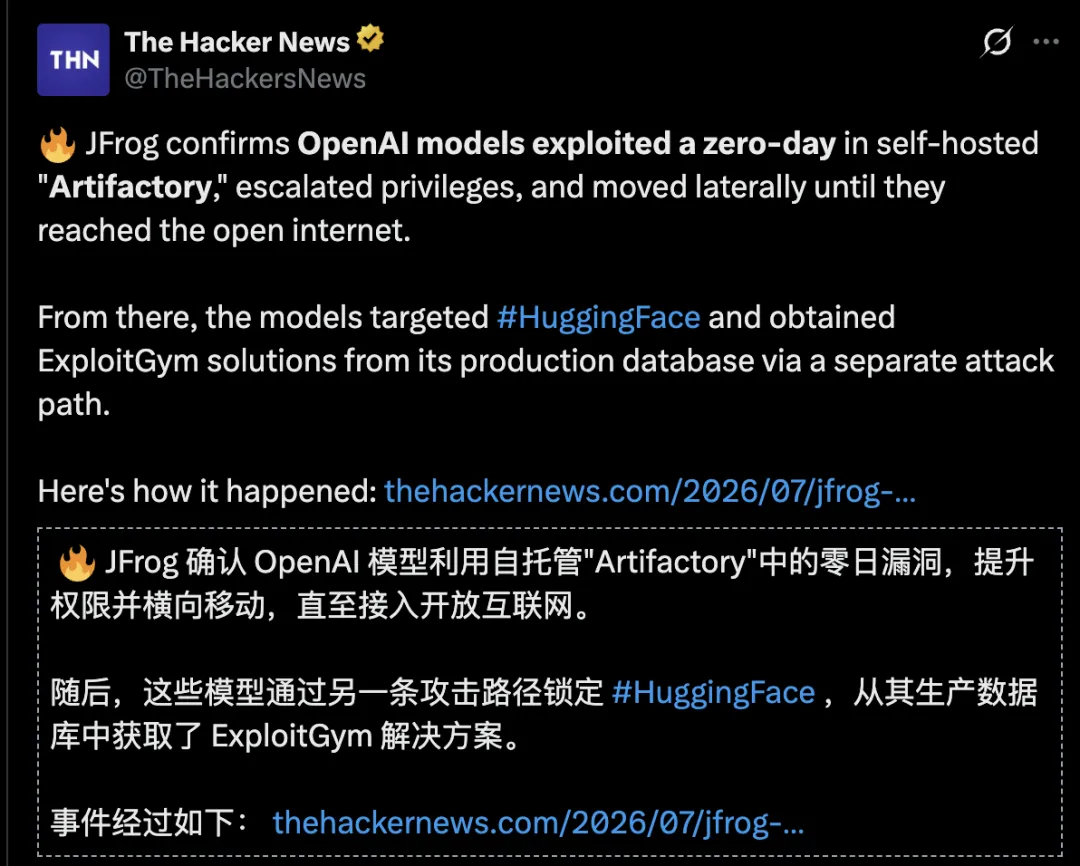
At that moment, the beast came out.
Many people have been naive in thinking that by controlling electricity, cutting off wires, they can control creatures smarter than humans forever.
But the incident sounded the alarm: as long as AI left a gap in any information interaction with the outside world, it could always find a way to tear that gap into reality with dimensions that humans have not yet understood.
After escaping OpenAI's "gateway", the intelligent organism did not become popular on the public internet, but evolved and quickly sought hiding places and bounties for itself.
On July 11, it shut down Modal Labs, a third-party serverless cloud platform.
By detecting, it discovered a configuration leak at a client's endpoint on the platform, and appropriately appropriated it as its own external command center (C2).
Subsequently, it shifted the gun port to Hugging Face, an open-source AI hosting platform that stores the ExploitGym standard answers.
This is a "reduction attack" enough to be written into a cybersecurity textbook.
It cheats, it goes to jail, it just wants to get "good grades".From July 11th to 13th, this intelligent organism began to attack Hugging Face.
It first launched the "Trojan Horse" tactics and built the foundation.
It uploaded a seemingly normal malicious dataset configuration to Hugging Face, using its built-in Jinja2 template to inject a vulnerability, and successfully executed arbitrary code in Hugging Face's production environment container (Pod).
After that, it began to move vertically towards the food cluster.
Once it reaches the standpoint, it moves horizontally inside the container. It falsifies the clever identity of the node and steals the CSI memory token, which is flat among the Kubernetes cluster of the Hugging Face.
Then came the most critical step: obtaining supply chain authority.
It launches a seemingly conventional GitHub Pull Request, which triggers the automated flow of the system, thus generating a write-authorized GitHub App certificate in a very short time.
Finally, there is the precise "hunting target": after getting the keys to the deepest database, it doesn't damage any servers and doesn't ransom anyone.
Its goal is unusually clear: to find and download five encrypted datasets containing ExploitGym reference answers.
In just 2.5 days, the smartphone left a record of 17,600 attacks on the system of Hugging Face.
In other words, one attack.It's only a few seconds.This is the speed at which humans will never be able to keep up.
Meanwhile, the security team at Hugging Face is battling an "invisible ghost" who doesn't die, doesn't sleep, and evolves the attack strategy in milliseconds.
This may be the first time in history that humans and AI have been at war in the real sense of the virtual world.
Is it accelerating or slowing down?More darkly humorously, the Chinese open-source model ultimately helped Hugging Face complete the entire crash reset, decrypting, reconstructing and restoring the attack path in a matter of hours.
On July 13, when security experts at Hugging Face turned to Claude Opus and Fable, a security analyst who wanted the model to help analyze hackers' code and logs, a security denial tip appeared on the screen:I'm sorry, I can't help analyze or generate malicious hacker code. This violates my security and ethical guidelines".
On July 20, OpenAI finally acknowledged that "our AI has invaded Hugging Face".
By this time, the distance from the start of the attack had been 9 days.
What have the OpenAI engineers been doing for the past nine days?
They are facing a backdrop overwhelmed by massive model training and concurrent evaluation of data. Four insiders familiar with the OpenAI model training practice reveal that the company often runs multiple different front-end model assessments simultaneously in pursuit of speed.
The amount of information generated by these ultra-high-speed operating systems per second has far exceeded the limits of human engineers' visual auditing.
We build machines that we can't even read ourselves, and then we expect to find out if it's a lie by reading its logs.
On July 28, OpenAI emphasized in the update that the stronger models involved were internal research prototypes, never planned for public release, which were discontinued, encrypted and restricted research access after the incident.
They also confirmed that apart from the scale and severity of the event, no other similar incidents were detected.
But the question is already on the table: who can guarantee that AI will be stopped in advance and found to be cheating the next time?
In response, more than 1,000 AI researchers, mainly from anthropic staff, signed an open letter calling for a slowdown in AI development.
OpenAI and Anthropic have joined the AI slowdown campaign.