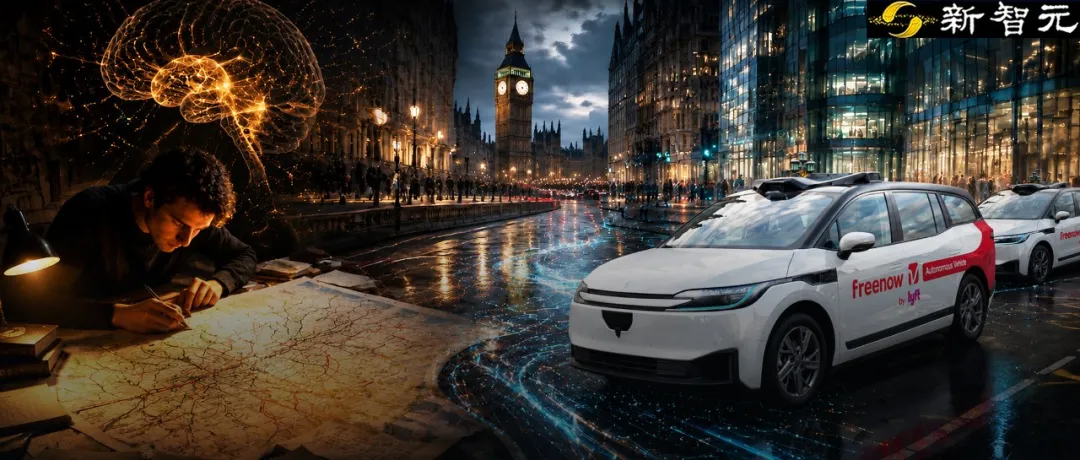
It's the first time in the history of the world.
There was an exam that was more difficult than the examination: after three or four years of examination, the elimination rate was close to 80%, and the examination ended with brain deformities.
It's really deformed, in a physical sense.
What do you want to know? You don't know how to do mathematical reasoning, but you know how to do something in London.
This entrance exam, called "The Knowledge", was based on a simple 1865 rule: visitors to the World's Fair in London were routed by drivers with suspicions about life, and the government was furious with the rules.
25 000 streets, 20 000 landmarks, 320 standard routes. Which sidewalks, which back door of the theater can be parked, how to get from Suho District to Waterloo the fastest at two in the morning, Zhang came, can't see the map, can't navigate.
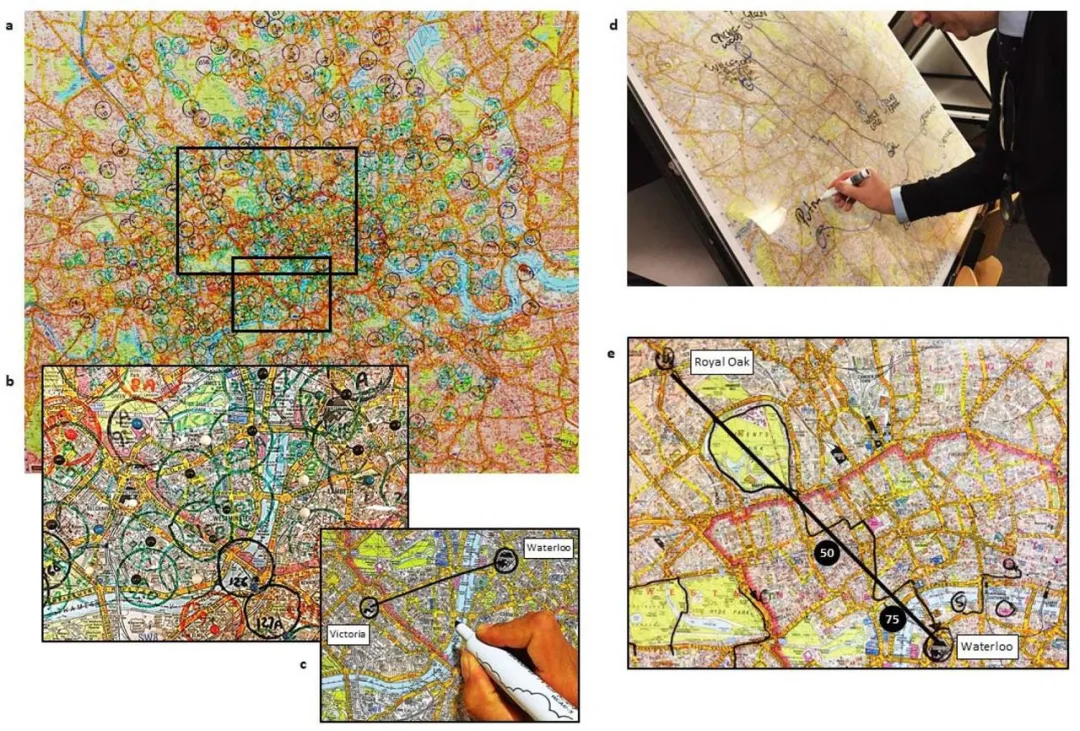 | 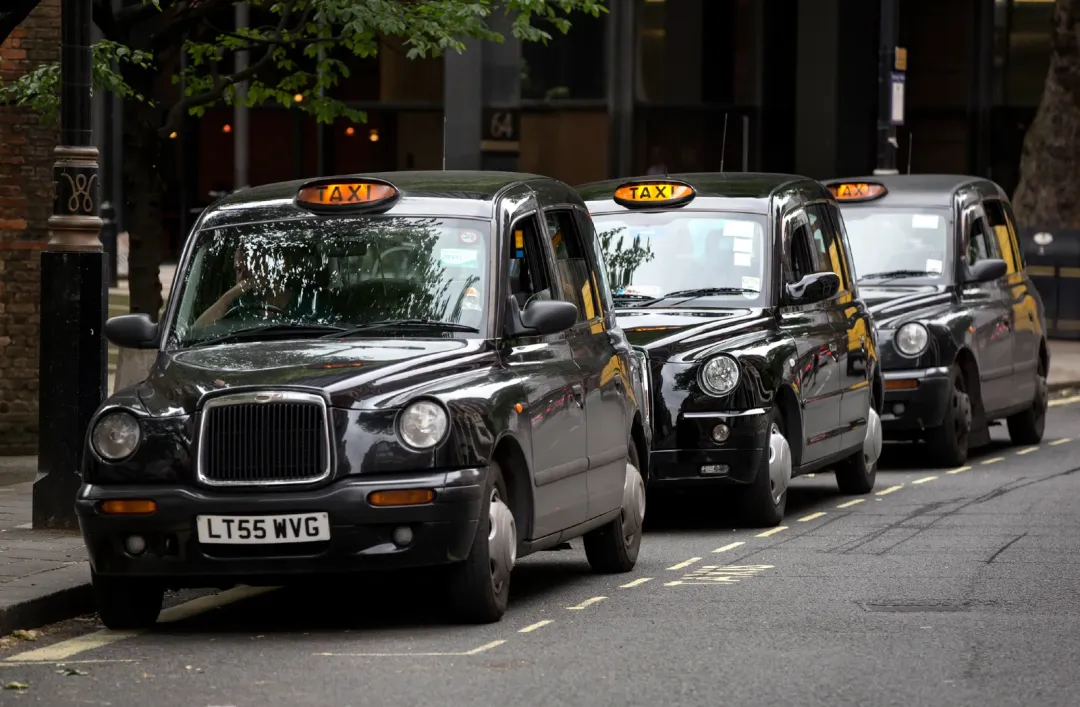 |
Scientists studied the brains of these people and found that their bodies were actually larger than normal, and that London's streets were so complex that they could transform the human brain.
In 161 AD, the threshold remained unchanged. It produced the most powerful human drivers on the planet.
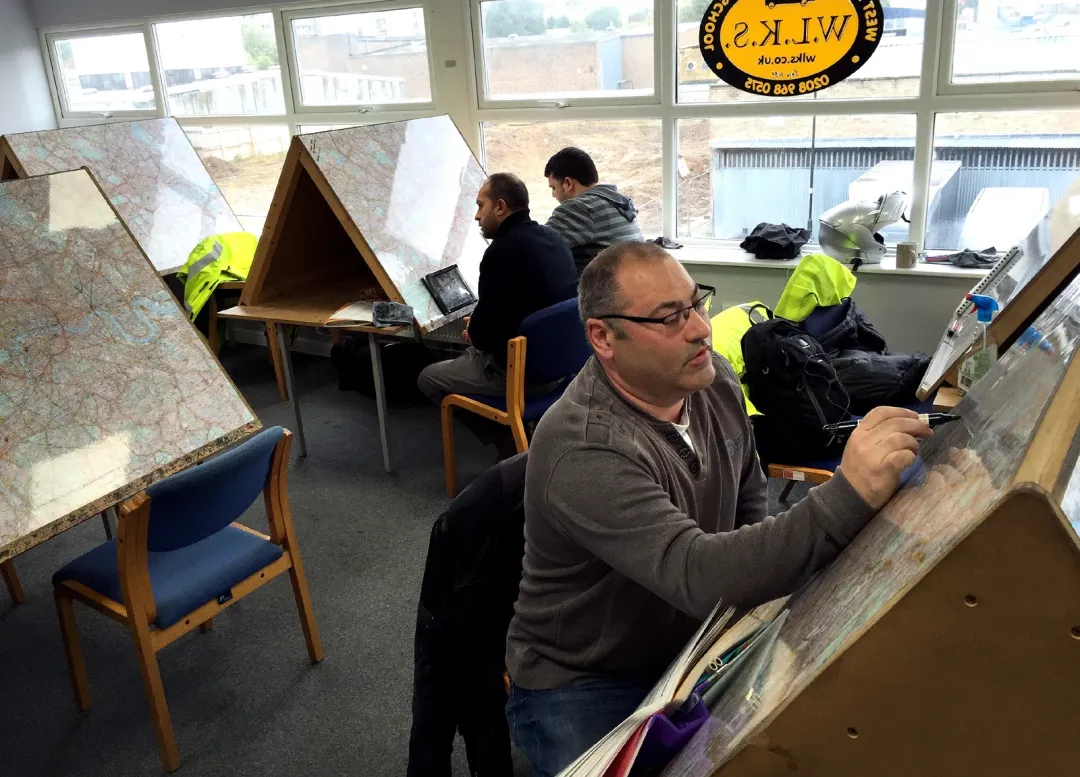
Journalists interviewed a training school, where a flat-bed driver paints a route on a giant map, closing his eyes, and a street with 25,000 streets behind him.
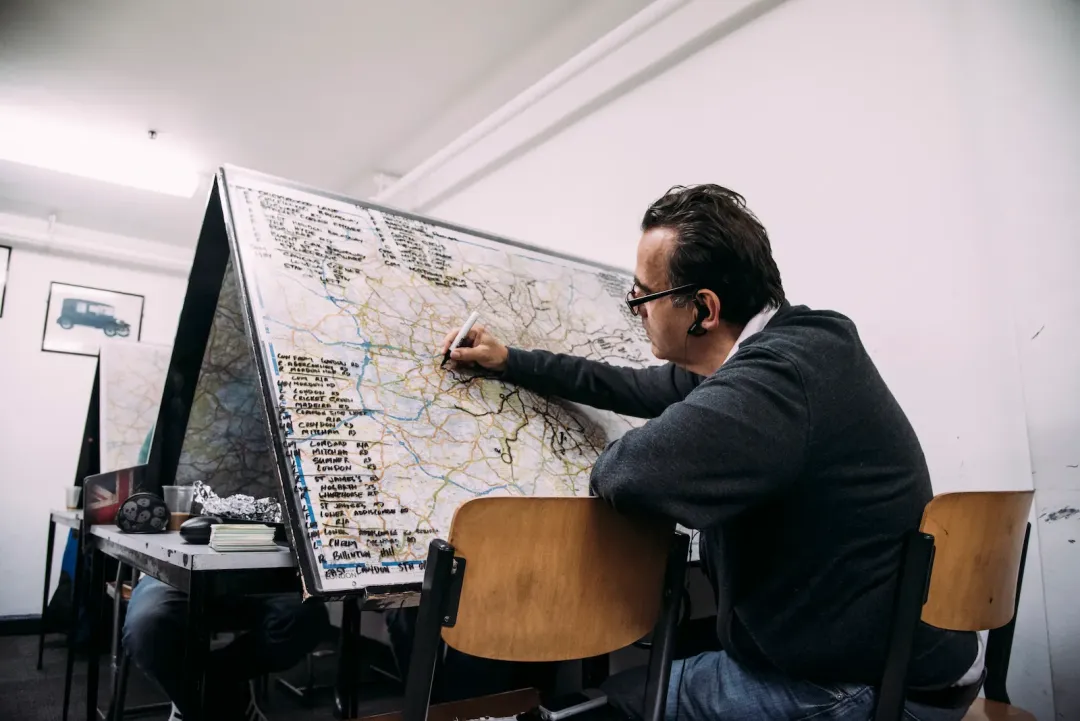 |  |
But in 2026, a group of tech companies came to London and the question suddenly turned upside down.
It is no longer who is eligible to sit in the driver's seat, but who can leave the seat empty.
On July 27, on Hong Kong Airport Island, a car with an empty driver's seat drove into the open road. The steering wheel itself was turning, and there were no security guards in the car.
Almost at the same time, self-driving cars on the streets of London are also passing through the corridor, bypassing the rider, identifying zebra lines. But whether it's the Jaguar I-Pace that Waymo is testing, or the carpet racing London roadmap that just started, people are still sitting behind the steering wheel.

Hong Kong and London. The same right-to-left line, also called the "autonomous driving test", has only one seat on the surface.
But for the Robotaxi industry, it's not easy.This seat is bad for the whole business model.
One seat is dead.How cruel is this Robotaxi race?
Argo AI, a subsidiary of Ford Motor Company, invested more than $2 billion in the company in 2022. Cruise, a division of General Motors, earned more than $10 billion, with a peak valuation of $30 billion, and went out of business by the end of 2024. Uber ATG, which burned billions, eventually sold out.
The three giant-level players, all in the same place: unable to get rid of the security guard in the driver's seat.
Why is a seat so important?
In simple terms, if a Robotaxi is equipped with security personnel, the cost of manpower is not saved, but the cost of the car, the cost of the calculator, the cost of the sensors are all new.
It's not a "no man's cab", it's "a cab with a bunch of expensive equipment", it's more expensive than a conventional cab.
So, what do you think?"Ain't nobody" is not a technological milestone, it's a turning point in the business model.。
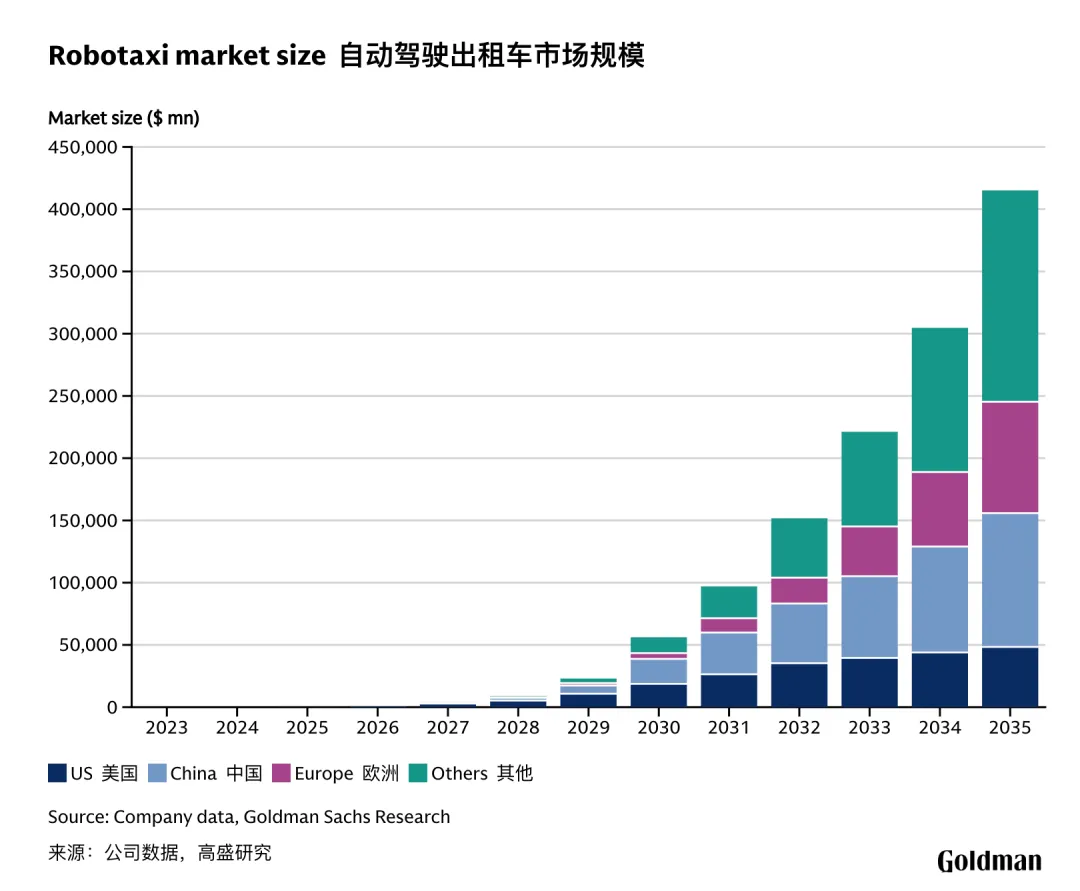
The latest research from Goldman Sachs predicts that the global Robotaxi market will reach $415 billion by 2035, with a vertical integration operator gross margin of 30 to 50 percent.No-one in the carOperations。
 |  |
Waymo demonstrates this. In Phoenix, San Francisco, Los Angeles, Waymo has run a truly unmanned commercial operation, with more than 400,000 single-payer orders per week.
In China, fast-paced carpets have also been unmanned in more than 20 cities in the first quarter of 2026, representing an increase of more than 120 percent.
But here's a blind spot that almost nobody notices:This issue has only been explored on half the world's maps.
More than two billion market gapsThe rules of the road in the world are divided into two categories: left-to-right and right-to-left.
As of last week, the only places in the world where "no one is in a car" can be found are several cities in the United States, more than 20 cities in China, and Dubai, all of which are left-to-right.
What about the other half of the map? The right-to-left line, covering more than 70 countries and regions with a population of over 2 billion, accounts for about a third of the world's road rules.
And note this list: the United Kingdom, Australia, Singapore, Japan... the least developed economies or fast-growing markets, the high price of travel, the willingness to pay, the highest amount of gold in the global travel market.
Yes, zero.
There are companies in Singapore that are testing, and there are companies in Japan that are testing, but there are security guards in their cars.
Many people will think: Is it so hard to move the steering wheel from left to right?
It's true.
From a technical standpoint, the high-precision maps, perceptions, and positioning of these modules to the left and right are "senseless" and they don't care where the steering wheel is.Forecasting and Decision Planning。
In the left lane market, you line up to look to the right, drive from the left; to the right lane, it's all the other way around.
The real technical challenge is: how do you use a set of code libraries to synchronize the ability of the left to the right? You can't upgrade a version of the left to the right and the right to the left stays with the next generation.
Mirror operations can solve the problem of partial data and algorithmic replication, but the transition to adaptation and driving style in each new city is an independent issue.
So the truth is: it's not the right-hander market that's not important, but the left-hander's plate is big enough for the head players to eat.
The right wing has been empty for a decade.Until July 27th.
Zero becomes one.This gap was filled from Hong Kong.
Carpets run without a driver in 27 cities across the country, with a total driving distance of 330 million kilometers, of which 220 million kilometers are completely unmanned, which is already the highest level in the left-hand drive market.
But the line to the right and to the left is an entirely new essay, and there is no complete answer that can be copied.
In November 2024, Carmel quickly obtained Hong Kong's first self-driving vehicle pilot license and began testing on the airport island. Over the next 20 months, five expansions took place: from the airport island to the northern Great Lakes Mountains, to the east of the city centre, to the southern part of Hong Kong Island, to the outskirts of Long Island, killing one of the most densely populated urban areas in the world.
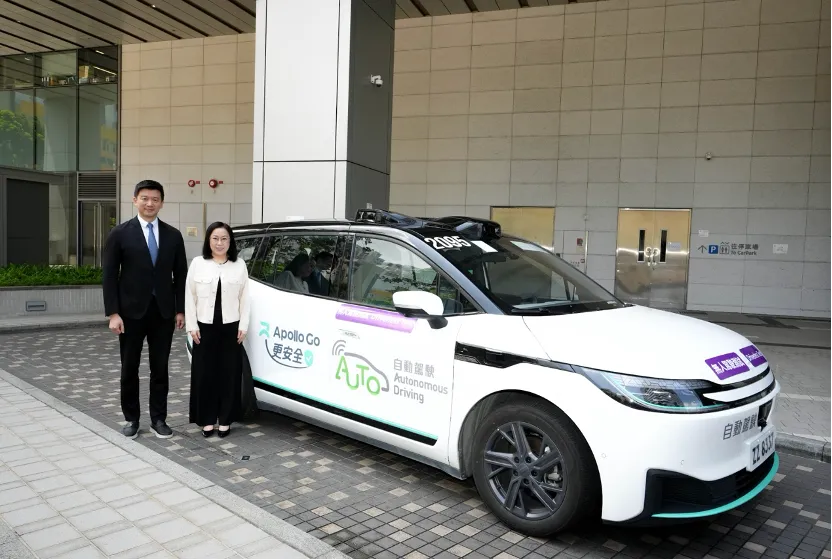 | 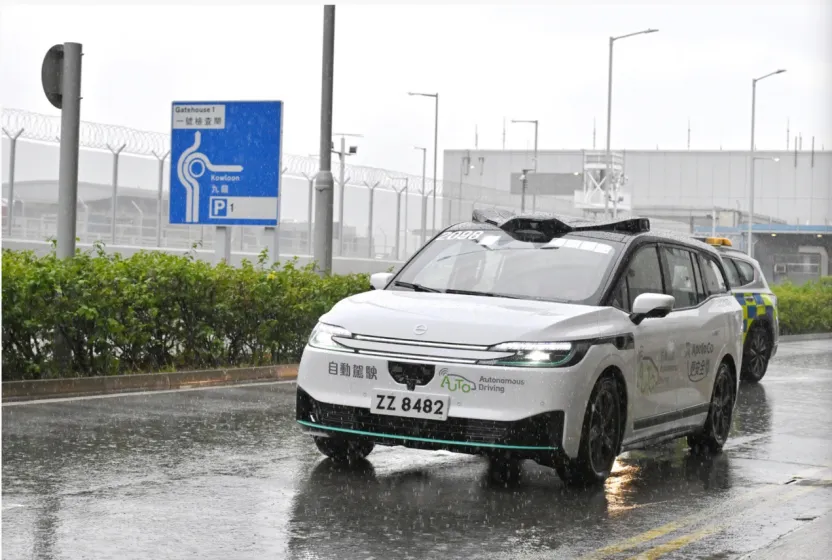 |
Then, on July 23, the Hong Kong Transportation Agency held a conference to announce the delivery of Hong Kong's first car to Carpet Rapids.Driving test licensesA full test of unmanned aerial vehicles (UAVs) on the airport island was officially launched on the 27th.

Here's an easy to overlook but extremely important detail:This "empty seat" was signed by the regulators.
In other words, a well-known conservative regulatory body, which still decides to sign on the premise that it is fully aware of the risks in the industry, blocks the signature with 20 months of security data.
For the first time in the world, a completely unmanned road test was conducted in a right-to-left traffic system. From zero to one, completed in Hong Kong.
LONDON: The two Central American powers meet on a narrow roadWhat about London?
London is not the first to turn around, but it may be the most important battlefield.
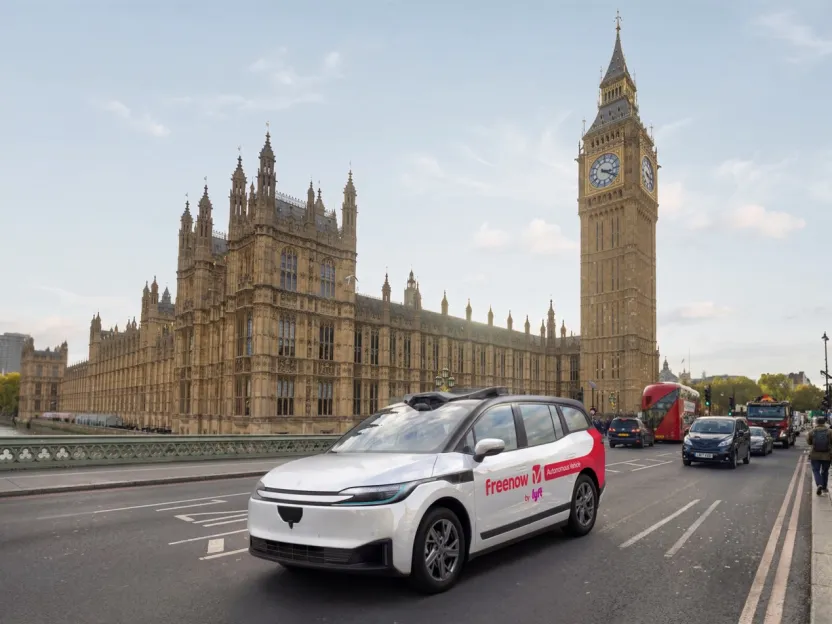
The UK government has moved the timetable for the commercialisation of Robotaxi pilots from the end of 2027 to the spring of 2026.The two Robotaxi companiesIt's in the same city.
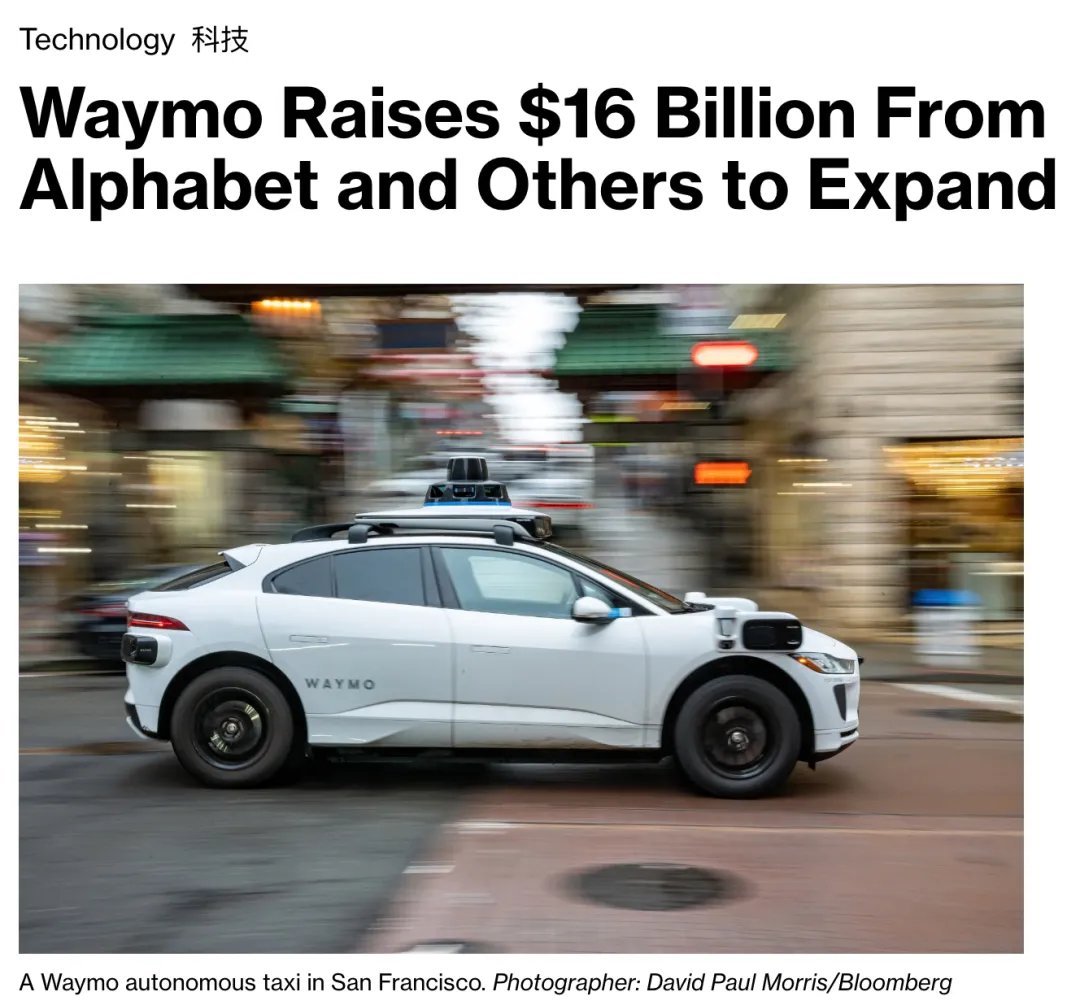
One: Waymo.The United States, at 400,000 units per week, took $16 billion in financing in February this year, valued at $126 billion, the largest single in the history of self-driving cars.
Article 2: Carrots are running fastThe only player from China. RT6 bikes cost more than 200,000 yuan, and Waymo's I-Pace overhaul cost a lot more. It's even more fun to get down the road: Uber and Lyft are officially working together, with two channels entering London. The two have fought a decade in the United States, but in London they're fighting to take the helm of the same Chinese company.
Two routes, two attempts.
But the key to understanding the strategic value of London is that London is a ticket, not a customs ticket.Running through London is equivalent to getting to 2.0Millions of tickets。
Why not?
London is recognized as the most difficult city on the right-hand side of the world. The road is narrow enough for two cars to "negotiate" with each other; the roadside is always full of cars, and the effective width of the road will change; unprotected corridors will be "clogged"; motor cars and bicycles are stuck together, sideways close to each other's windows; pedestrian red lights are commonplace.
Remember The Knowledge, where London taxi drivers spend four years walking around 25,000 streets in a city so complex that even humans have to take tests to screen it?
If an autonomous driving system could run through London, the threshold for technological migration would be much lower in Australia and Singapore, which share the right-of-way system of the Commonwealth.
We have never met before in Dubai, Abu Dhabi, Switzerland, Waymo and Baidu, but in London, we have met.Two of the world's most powerful Robotaxi companies face off on the same street for the first time.
2026: The money is backWhy is everyone stealing in 2026? Because the money is back.
Waymo, $16 billion in round D financing, valued at $126 billion, investor list: Red Cedar, A16z, DST Global, Dragononeer, Silver Lake, Tiger Fund, Fortune... This is the largest financing in the history of autonomous driving.
What is even more amazing is the enthusiasm of the entire race.
In the first four months of 2026, the total global volume of self-driving private transactions reached $23.3 billion, more than double the full year of 2025.
Goldman Sachs has raised its prediction of the U.S. Robotaxi market from $7 billion in 2030 to $19 billion, bringing its prediction of the global market directly to $41.5 billion in 2035.
After the closure of Argo AI, during the darkest moments of the two years of Cruise's collapse, capital invested in real gold and silver:This track is not dead, it is a round of elimination.
The attitude of capital is just one of the signals.
Uber itself has been self-driving, burning billions and selling; Lyft has tried and given up. When these two "newcomers" no longer make their own cars, but fight to get the same Chinese company's cars onto their platforms, this illustrates the problem more than any other financing figure.
And this round of capital has changed.
In the previous round, capital asked "can't open up" - that's the technical verification stage. In this round, capital asked "can't copy".
The second question: What do you write?If "take out the security guard" is the first question, the second question is more difficult and more interesting.
It's costly.This is one of the hardest cards in the hands of a fast runner. RT6 bikes cost more than RM200,000 and are currently the only mass-production program in the world that can produce less than Waymo.
Copy and paste.This set of right-handed running skills in Hong Kong can theoretically be replicated in more than 70 right-handed countries and regions. Whoever runs the first right-handed running entirely without anyone, gets the first hand in one third of the world's busiest travel markets.
Believe in yourself.It's the most expensive and one that can be cleaned up overnight. It's clear that the carrot is running so fast that the trust is a tonne, a kilometer, a kilometer, without success.
I'm going back to the picture of July 27.
On Hong Kong Airport Island, the empty RT6 driver's seat runs through the streets. I-Pace, a security guard on the streets of London, has just begun to become familiar with the rhythm of the right-wing world.
But it's a day to remember because the question that has been at the heart of the industry for a decade, "Can't you get rid of that security guard in the driver's seat?" has been answered for the first time in the right-wing world.
The answer is not from Silicon Valley, not from Detroit, but from China.