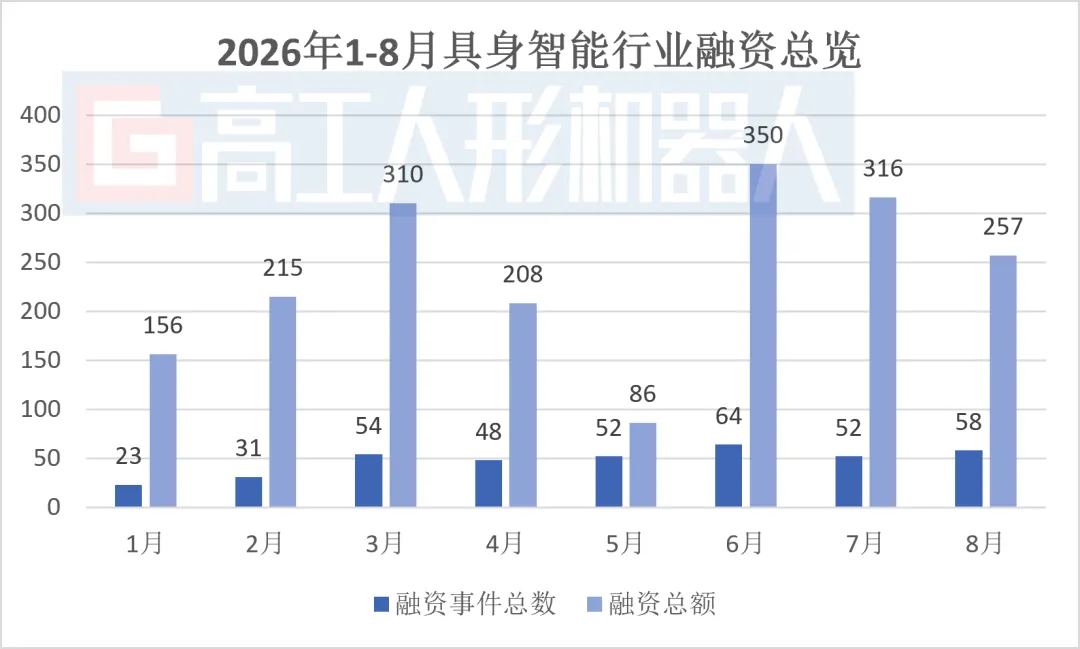
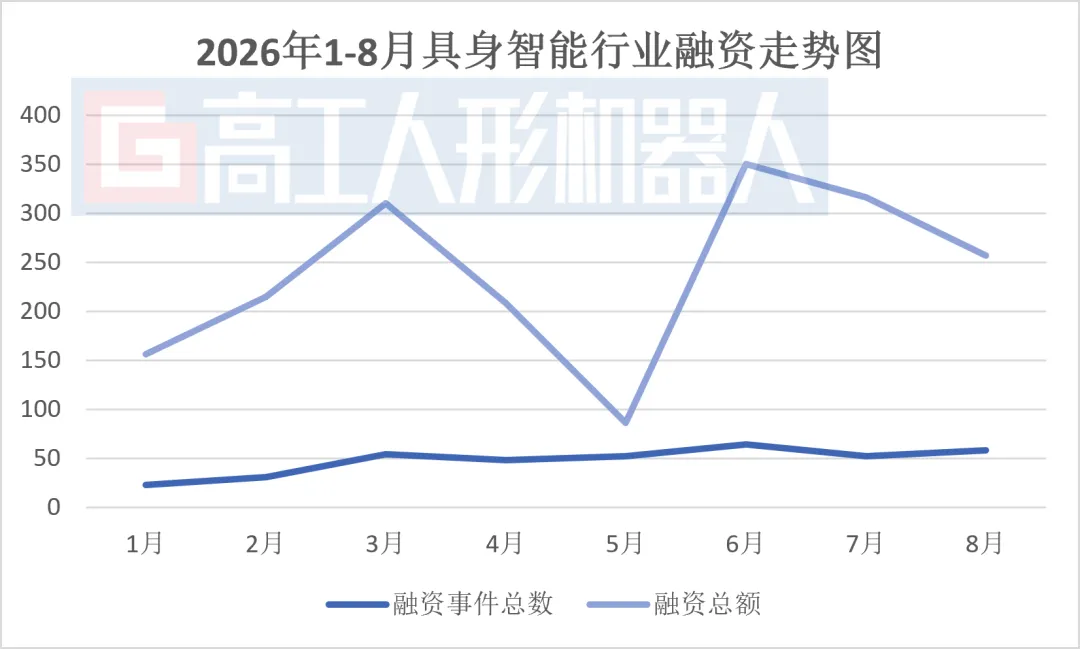
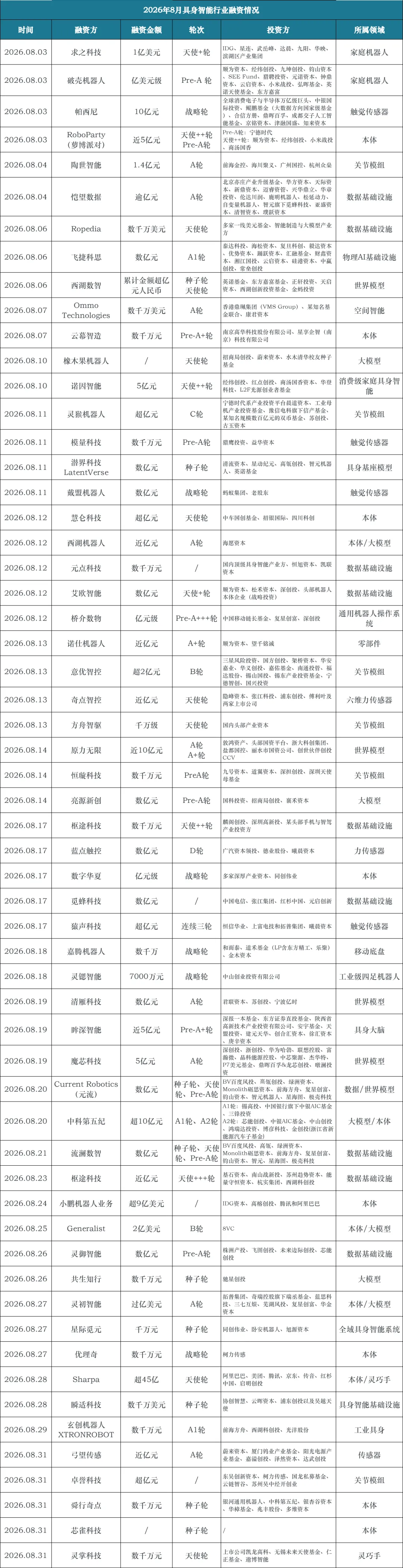
In stark contrast to the overall cooling, multi-furniture smart start-ups made their debut on the capital market in the same year they were founded, confirming that the long-term narrative of the race is still well understood.
Start-ups stacked with financing
Since its inception, the nine companies that completed their financing in August, including breakthrough robots, latentverse technology, point-of-view technology, point-of-view technology, boathouse technology, bee technology, co-living technology, startups, and chip technology, have all been the new faces of this year's startup.
In just one month, nine new companies that received funding ran out, and the track is clearly still in a phase of rapid expansion, far from the typical moment.
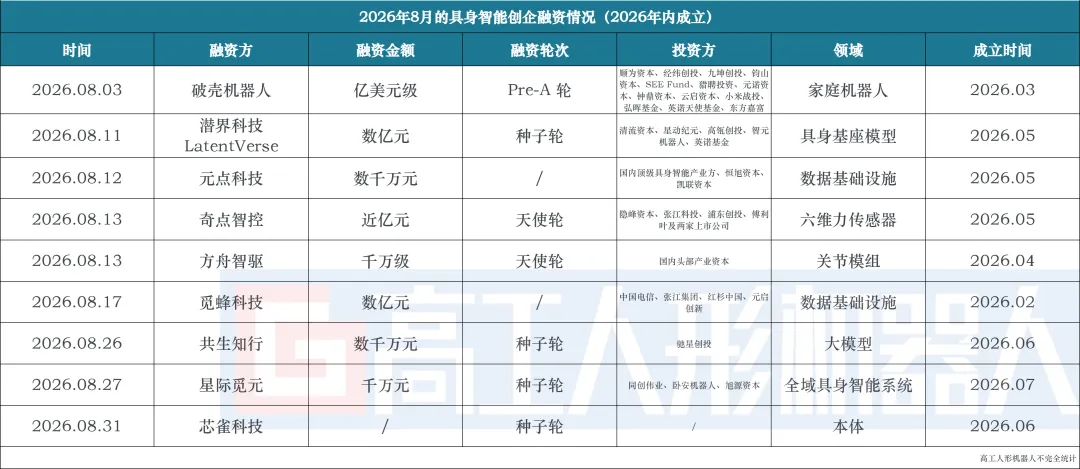
In other words, the body's intelligent industrial chain length, scene fragmentation, body, brain, micro-brain, sensors, joints, and data infrastructure are independent and interdependent, with naturally flowering soils. New players choose to cut in at this point of time, often with clear technical side-writing or scene twisting, from some types of core components, to data loops that specialize in specific vertical scenarios, and to redefine the brain with new algorithmic architectures.
However, the excitement of financing has not yet dissipated, and the crisis has followed. At the same time these start-ups are finalising the financing, a whole new competitive pattern has emerged in large factories.
In August, the domestic physical intelligence sector received two of the largest publicly disclosed investments ever made by enterprises, with the small robot business ranking first and third in terms of funding by Sharpa, while the second still occupies the smart square position of the RM5 billion series of financing by the end of June.
The most worrying of these is undoubtedly the news of the financing of small businesses.
Human racetrack, trampled by elephants
On August 24, Toyota announced the completion of more than $900 million ($6.5 billion) in financing of its humanoid robot business, a landmark move that not only refreshed the public financing record in the field of physical intelligence at home, but also announced a substantial amount of money to officially announce the roadmap from concept exploration to real gold and silver.
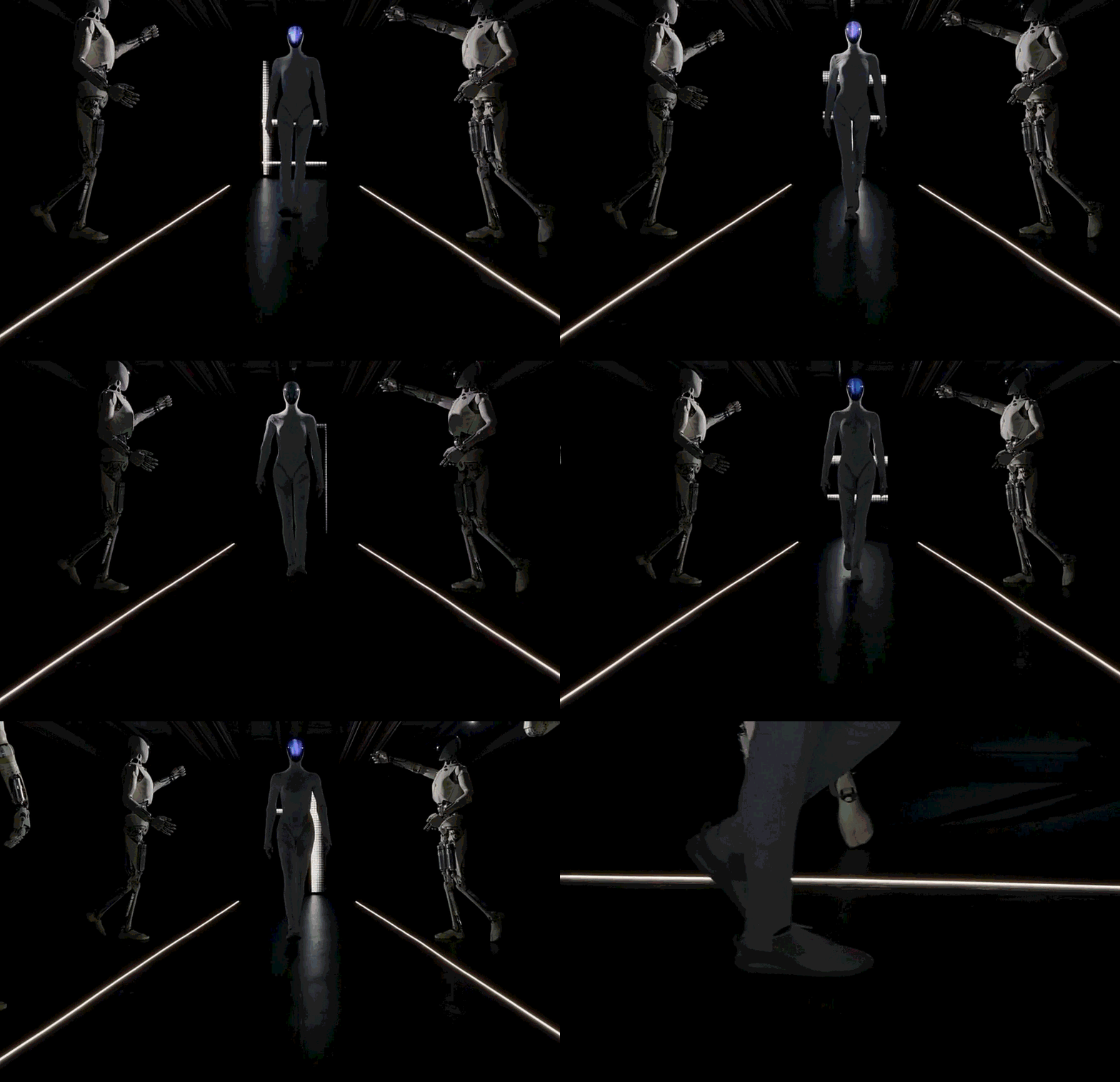
In the past, the participation of automotive companies came in the form of investments or technical reserves, and few independent business units received such quantitative financial support.
A look at the design of the humanoid robot:
On April 15, 2025, Toyota announced that the Toyota AI robot Iron will enter large-scale industrialized mass production in 2026, and has now been deployed to the Guangzhou plant for its Iron Training landings.
On January 8, 2026, Huawei revealed that the mass-produced version of the humanoid robot IRON has completed its first downline modeling, which will begin mass-production in 2026.
On February 25, 2026, the company revealed that it will build a full-chain human-robot mass production base in Guangzhou's Guangzhou city of Tianhe, in the Guangzhou city of Guangzhou.
On June 10, 2026, it was announced that Toyota would raise the robotics business to the group's highest strategic priority, and he served as CEO of the robotics business, with plans to market and deliver IRON to Chinese and overseas markets by 2027.
This not only broke the outside world's skepticism that brake-making robots are just headlines, but also marked the shift of industry competition from PPT demonstrations to a comprehensive struggle between capital markets and engineering capabilities, more likely to push other automakers to accelerate, dragging humanoid robots from the long-term blueprint into an immediate industrial competition.
On the day of the announcement of the financing, Senior Vice President, Intelligent Driving Research and Development, Liu Yi, who will continue to lead the Intelligent Driving Team, will launch a smart start-up project, which Liu will support as a strategic shareholder; and at the mid-2026 results meeting, the Zero-Street Car Management revealed that the company has completed the relevant planning in the field of intelligent robots.
Within a single day, the three car companies simultaneously released clear signals of physical intelligence in different ways. Behind this phenomenon, the technical backbone of the racetrack from Yu Yuan Nan, Chen Yi-ren and others have already completed the track switching and achieving phased results in new areas, obtaining a capital backlog, the positive impact of which cannot be ignored.
Similarly, in August, the circle in the direction of the humanoid robot was also in the news.
On 4 August, the first deliveries of aluminum alloy body robotic structural parts were completed by Five Piece Industry, a specific product of a jointly developed hip fixed support with customers.
On August 11, Guangzhou announced the completion of a multi-million-dollar financing of HuiyangTechnology, a conglomerate of Chinese conglomerates.
On August 19, AIMOGA Robotics, a subsidiary of Chery Automotive's humanoid robot, officially launched its initial public offering (IPO) preparations.
This undoubtedly proclaims a reality that pioneers have begun to take over the rhetoric and market reputation, especially in a race course where humanoid robots rely heavily on accumulation of real-life scenario data, where the barriers between enterprises are reflected not only at the level of algorithms, hardware and capital, but more importantly, time.
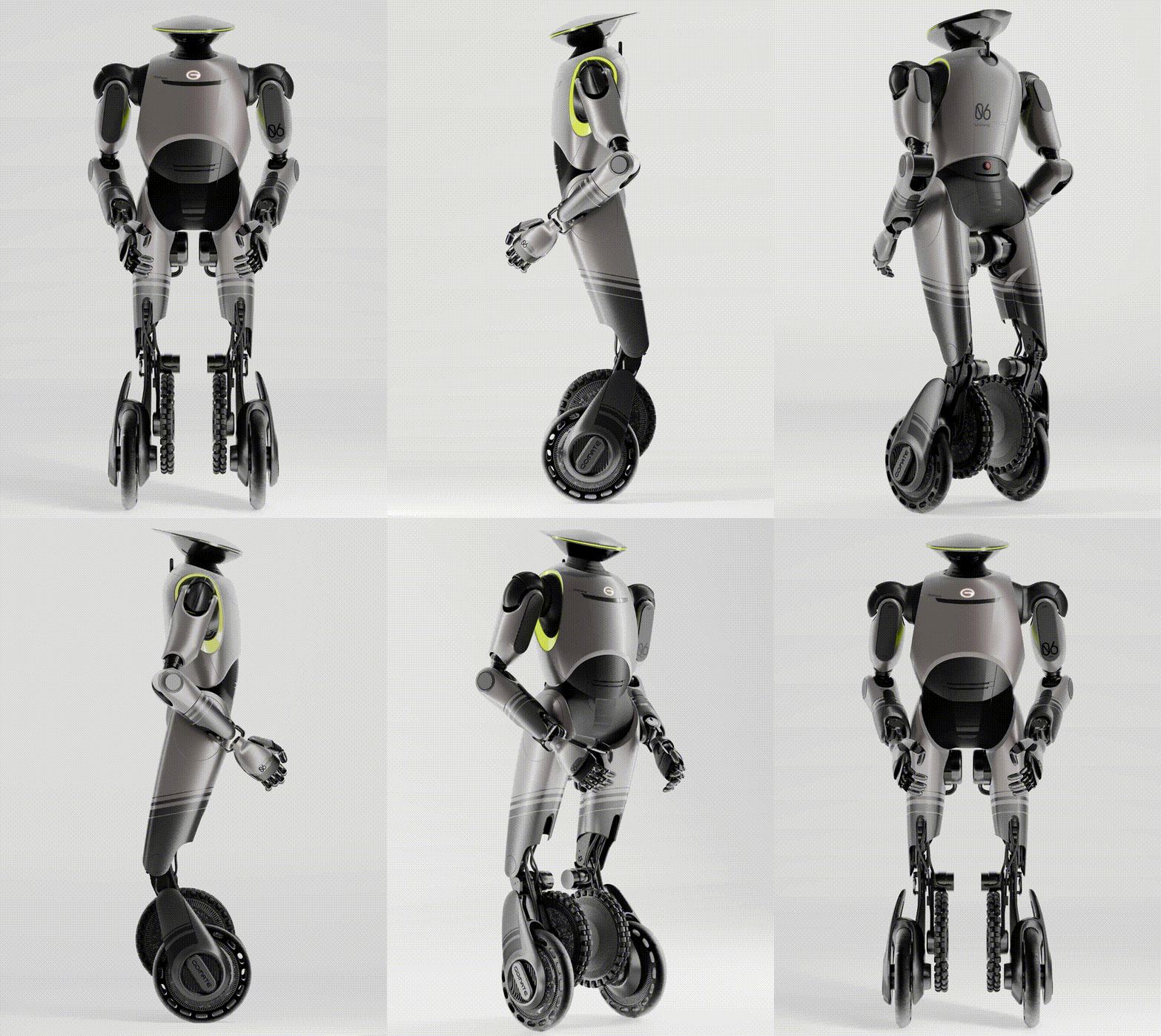
The GoMate
Whoever runs the data collection closure first, whoever completes the scenario verification, whoever builds the data-engineering jets, whoever has the same technical team and the same amount of money, must also fill the gap in the time dimension.
This is a far cry from the argument that early industrial plants would not be able to easily store humanoid robots. Once upon a time, the industry generally believed that such hard technology was better suited for startups, and that giants were more willing to watch shore fires and harvest after the racetrack was clear.
But the reality check in August overturned this hypothesis.
In the meantime, regardless of whether humanoid robots will ultimately become the real second growth curve for automakers, the entry posture of traditional automakers is no longer a test in terms of the current amount of money and resource input.
For startups with only a few years' experience, it is undoubtedly dangerous that when giants come in with supply chain systems, engineered capabilities and massive data accumulation, the lead window for the startup team is narrowing dramatically and the feeling of crisis should not be left in the mouth.
5 billion in capital flows and new windows open on the sensor track
In the August financing list, there is also a view that the sensor enterprises have completed their financing.
In the eight months leading up to 2026, there were a total of 22 financing events in the field of human robot industry sensors, totaling 501 million yuan. Since July, financing in the field has become concentrated, with six transactions per month totalling 1560 million yuan; in August, the completion of seven financing events totaled 191 million yuan, an increase of 22.44% on average.
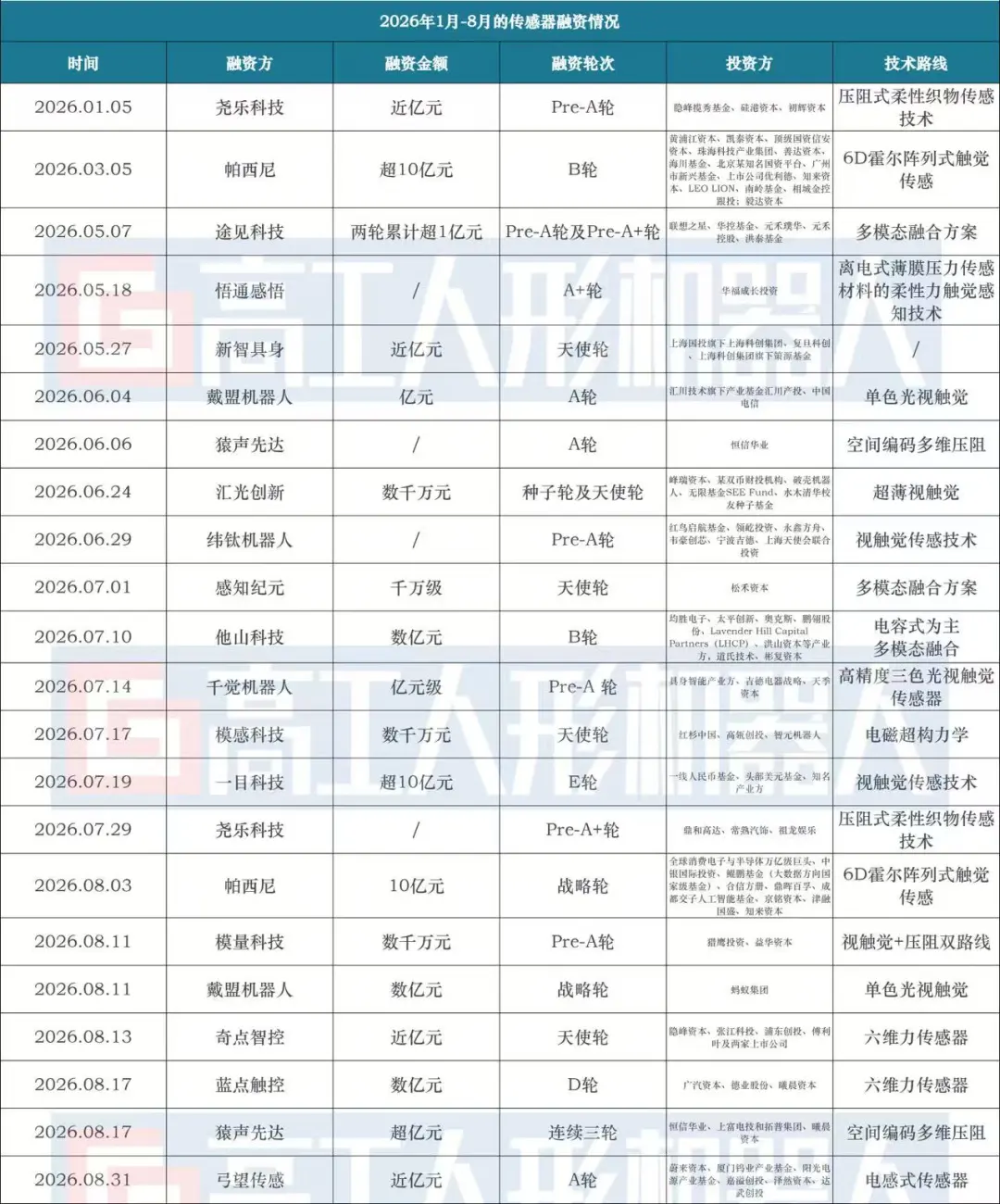
On the product side, according to high-profile robotics statistics, in August, the body-smart industry released cumulatively four touch sensors, three electronic skins, and eight digital gloves.
On the one hand, there is a growing number of people entering the e-skin pathway, which is driven mainly by two drivers: first, the acceleration of human robots to penetrate the home scene and higher demands on safety and flexibility of interaction; second, the widespread use of bio-human robots, whereas the e-skin can make robots more timely and more widely aware of human contact signals and potential needs in human interaction.
On the other hand, new touch sensors are shifting from parametric competition to scene adaptation, waterproofing, overloading, high precision, micro fingerprint integration, and other features are becoming increasingly the focus of the product generation, with landing attributes significantly improved.
Lastly, it is worth mentioning that manufacturers of touch sensors extend into the field of gloves, seemingly well-rounded, but the difference between the two roles should not be overlooked. For a long time, touch sensors have been used as upstream components and are often used by downstream users.
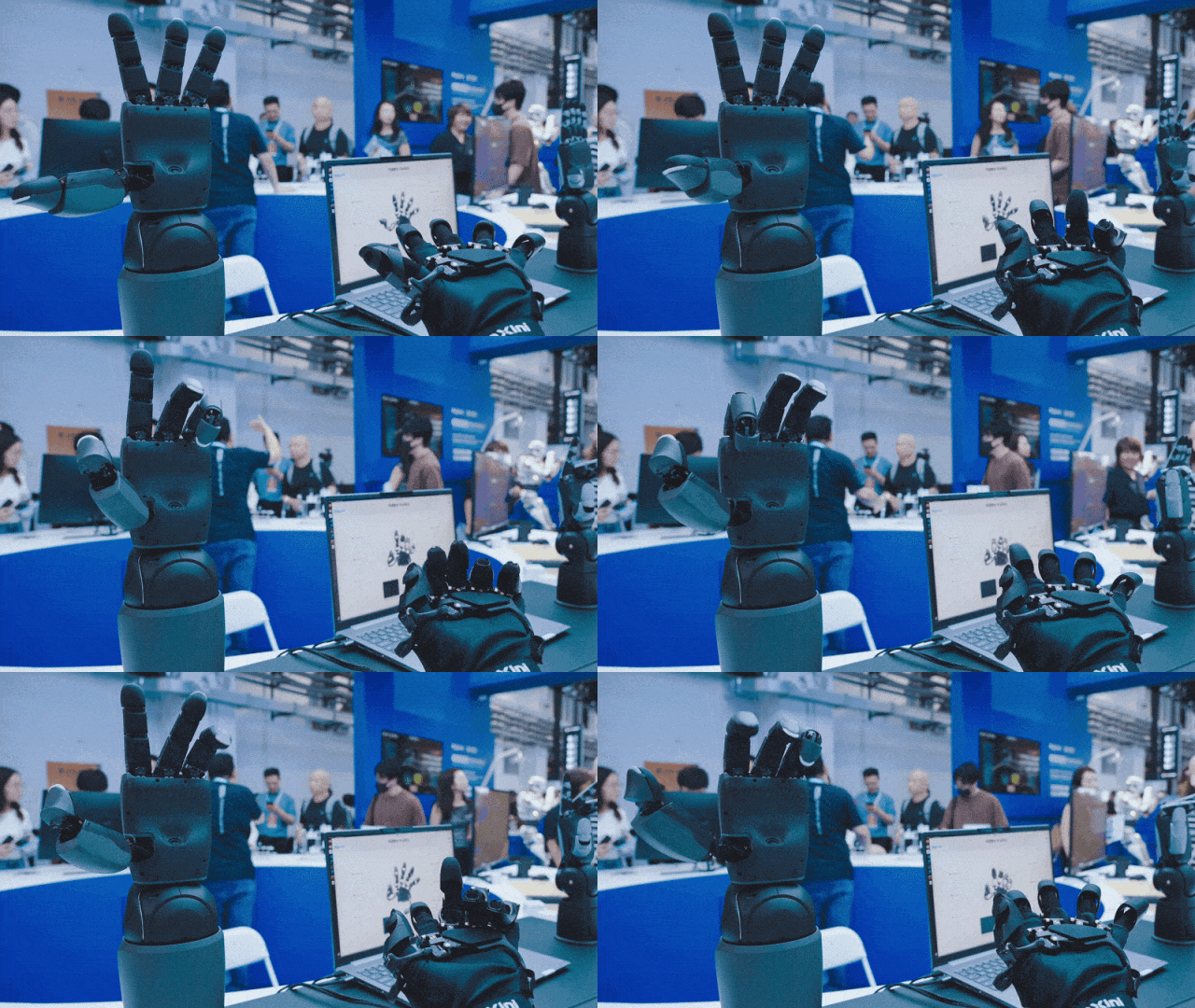
Touch sensor companies themselves manufacture numerical gloves, which essentially bypass the intermediate link in a product-oriented way, allowing the person who knows the most about the sensor to directly define the terminal tool, thus minimizing compromise and loss in the adaptation process.
In the past, they were merely upstream vendors hiding behind the integrated system, and product delivery meant the end of the value chain as to whether the sensors were installed correctly, whether the data was effectively called, and enterprises had neither the capacity to intervene nor to know.
Once market-recognised, touch-sensor companies will be able to upgrade from vending-components to vending-solutions, moving from the back of the industrial chain to the front of the stage, directly touching this core link in body-intelligent model training. This transformation leads to a more fundamental restructuring of speech rights, where touch-sensor companies qualify from passive supply to actively defining industry standards when integrated device manufacturers and data servers rely on your digital handsets.
Based on the above-mentioned industry trends, the high-profile robot will be held on September 23 at the Shenzhen Guangdong Exhibition Center in Beijing for the 2026 High-profile Flexible Operating Future Technology Conference. The conference will be equipped and will begin with the operation of Shenzhen as the core theme, covering the entire process chain from sensors to data, from large models to end-to-end operations, with the aim of bringing together industry forces to explore together the key paths of Flexible Operating Technology from the laboratory to the real world.