“ Wall Street's top bidders collectively changed their minds in the same summer.
On September 1, 2026, New York City was not yet fully in the autumn, and the morning telephone conference on Wall Street was half an hour earlier than usual.
The emails from Goldman Internet and E-commerce stock analyst Eric Sheridan, accompanied by an 80-page Physical AI report, popped up almost simultaneously on the trading terminals of several large hedge funds.
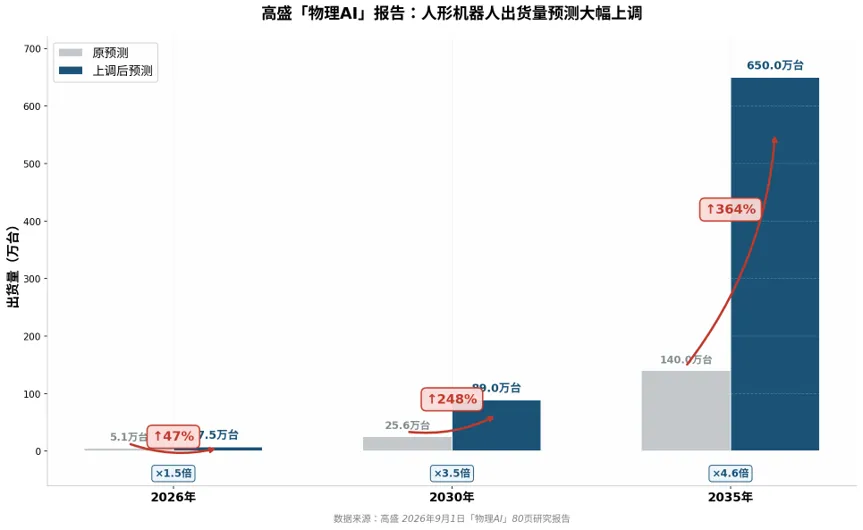
The global human-robot shipment benchmark is forecast to increase from 51,000 to 75,000 units in 2026 to 6.5 million units from 1.4 million units in 2035, almost quadrupling the increase.
But Goldman Sachs isn't the lone whistleblower, and in the same summer, Morgan Stanley raised its Chinese shipment expectations for the second time and Deutsche Bank more than doubled the global figure.
Wall Street traders suddenly realized that those estimates that were considered too optimistic three months ago were being chased by another new report.
From Morgan Stanley to Deutsche Bank, from Canton Consulting to the Institute of Chinese Commerce and Industry, with renowned rigorous and conservative mainstream forecasting agencies, there has been a collective focused drift along the path of the humanoid robot.
Behind this is actually a systematic consensus migration wave, like when the tide is turning and all the floats are pointing in the same direction.
01.
When linear thinking encounters index reality, predicting why it's always halfway slow
The inertia of traditional industry analysis is linear, such as how much is produced this year and 20% more on the basis of next year. But the human-robot industry is breaking this pattern of thinking with exponential growth, which is why the forecasts of major institutions are not verified after release, but quickly surpassed after release.
The data in the Goldman Sachs report is worth repeating. Global shipments increased from 51,000 to 75,000 units in 2026, from 256,000 to 890,000 units in 2030 and from 1.4 million to 6.5 million units in 2035. By 2035, the corresponding market size is about $13.83 billion.
More importantly, Goldman Sachs notes that each humanoid robot will generate a semiconductor demand of $3,000 to $6,000 or more.
This figure reveals a potential fact: A humanoid robot is never a mechanical problem, but a pricing problem for carbon-based physical space. The chips, sensors, and power tools on each robot, worth thousands of dollars, are essentially priced for the computational consumption of a silicon-physical smart chip.
Over the past decade, we've seen an explosion of intelligence on two-dimensional screens. Smart phones, tablets, and data centers have consumed the vast majority of the world's advanced programming capabilities, while the scale of humanoid robots means that smart carriers are beginning to migrate to 3D physical space on a massive scale for the first time.
This is a real long-term prospect for Ingrid, Qualcomm, and Taipei Electric.
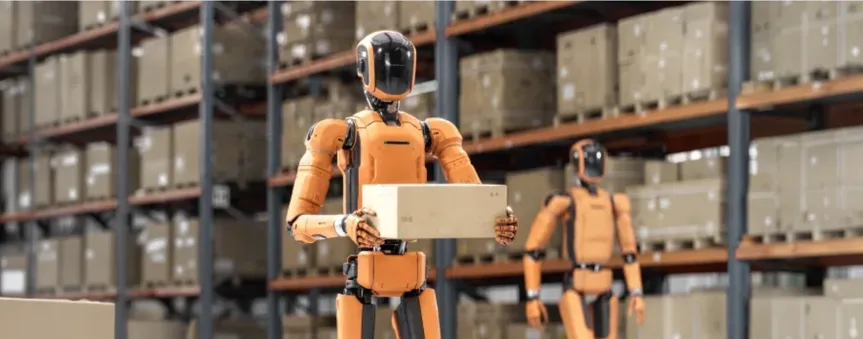
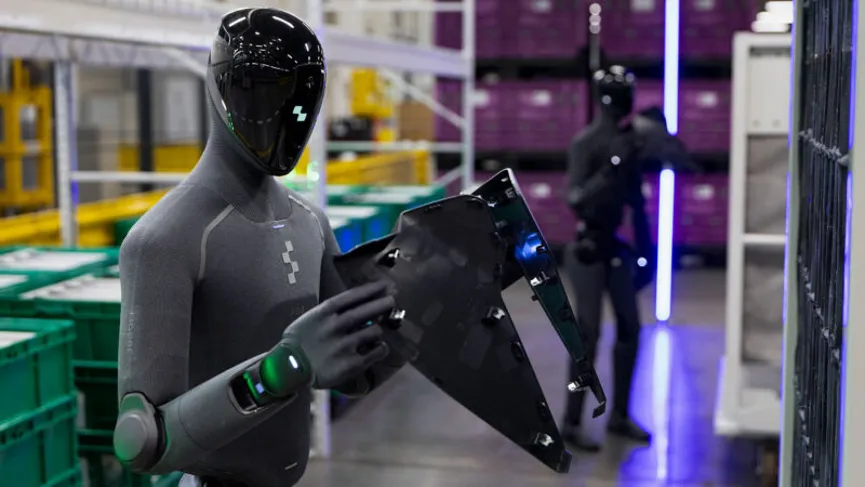
For this reason, Goldman Sachs considers warehouse logistics to be the first battlefield bubble, and the automotive industry qualities to be the second wave of application bubble. This is actually based on a cold-pressure measurement of the current limits of technological bubble capacity.
Structured environments, standardized processes, relatively closed operating spaces, and warehouse logistics are the most realistic transformation exports of human robots in the current stage, as their generalization capabilities require the lowest and error tolerance is the highest.
And the representative of automotive manufacturing is the high-difficulty field of precision, rhythm and multi-machine synergy, which is a necessary link for the robot to move from hydrogen-powered to reliable hydrogen-powered.
Goldman saw this path, so it chose to adjust the prediction curve.
The conclusion of the Institute of Commerce and Industry in China agrees with this, that commercialization will gradually advance along the path of home-scenario mining along the pipeline of pipeline manufacturing, pipeline storage, pipeline services and pipeline logistics. The closer to the terminal consumer scenario, the higher the error tolerance requirements for robots, and the longer the timeline for commercialization, but this is also the source of long-term imagination.
02.
Several agencies gathered weight to assess China's capacity
In contrast to Goldman's revaluation of global trends, Morgan Stanley and Deutsche Bank's year-on-year upswing has focused directly on China.
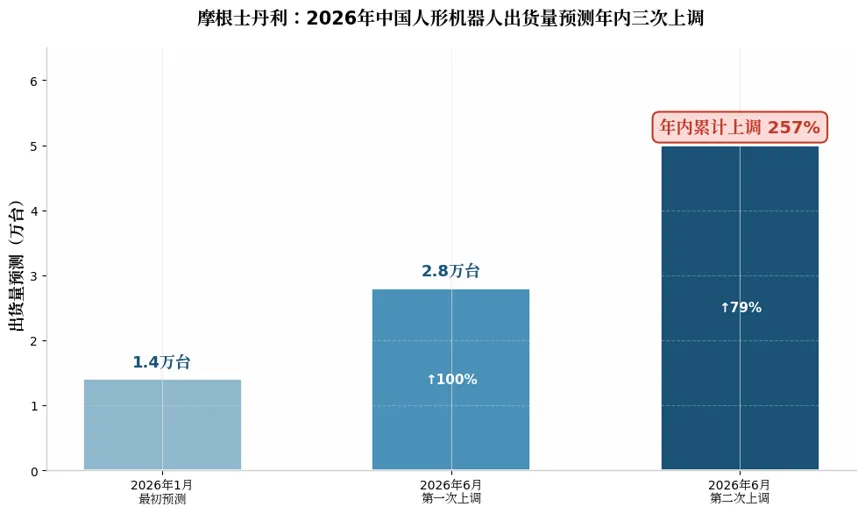
Morgan Stanley originally estimated shipments of 14,000 humanoid robots to China in January of this year, and by the spring, this figure had doubled to 28,000, and was revised again in June, directly to 50,000. Within six months, the figure had more than doubled to 2.5 times.
They set a target of 44.6 million units by 2030, which corresponds to a market size of $15 billion, with a compound annual growth rate of 106% from 2025 to 2030.
As to why the upgrades were made, Tomomo summarized precisely the three main drivers: the acceleration of commercial verification, the strengthening of policy support, and the positive feedback of the supply chain. These three points, translated into industrial language, actually correspond to the same fact that China's engineering closure in the field of physical intelligence has been formed, and the speed of change is far beyond expectations.
Another detail was provided by Deutsche Bank. Its Asia-Pacific director for automation and industrial research, Iris Zheng, noted in a research paper that the human-robot market is transitioning from a bullish phase to an early stage of large-scale commercialization. They predict that global shipments will increase from 175,000 to nearly 50,000 units by 2026, more than doubling, while China expects 40,000 of these nearly 50,000 units, accounting for the vast majority of the global share.
Domino and Deutsche Bank's forecasts form a mutually validating supply curve for humanoid robots, which is in fact determined by the crawling capacity of Chinese manufacturers.
The Chinese Institute of Commerce and Industry's August 2026 White Paper on Global and Chinese Physical Intelligent Development predicts that by 2026, the global shipment of humanoid robots will reach 6.25 million yuan, an increase of about 247%, Chinese manufacturers' exports account for more than 80% of the world; China's humanoid robot shipments will reach about 380,000 units; the market size will be about 3.4 billion yuan; and by 2030, the market size of 38 million robots is expected to surpass 20 billion yuan; while Canton Consulting forecasts that by 2026, the Chinese humanoid robot market will reach 15 billion yuan, maintaining at least 60% growth in 2027.
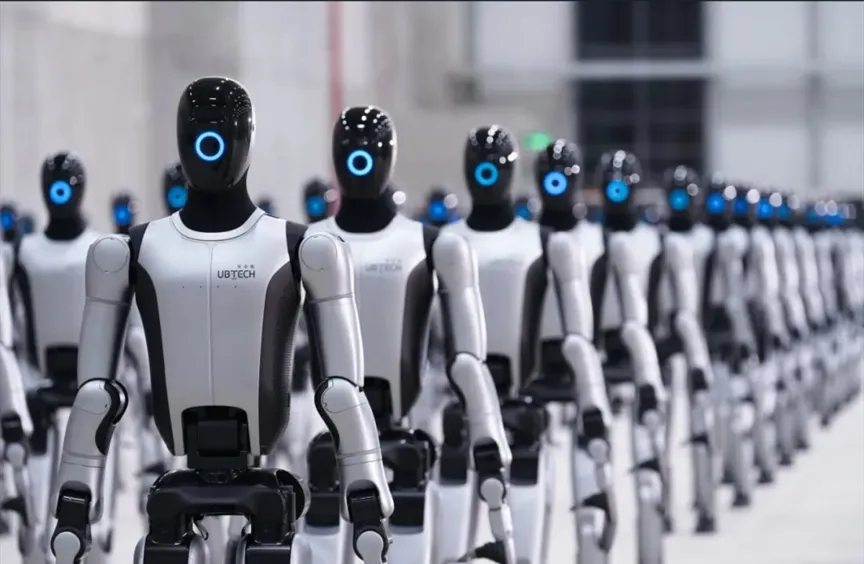
China's advantage in the field of humanoid robots is not a single-point lead in a particular technology, but a systemic advantage in the completion of hydrogen supply chains + mass production capacity + cost control of hydrogen.
03.
Why now?
While there is no reason for speculation to raise collective forecasts, the three main drivers of Morgan Stanley's conclusion are in place, the global reality is more complex.
The aluminum supply chain mentioned by Tommo has received positive feedback, being merely a misrepresentation on paper, but in industrial reality, it responds to a series of extremely specific and subtle signals. Human robots are not isolated, and they rely on precision reducers, force matrix sensors, high energy density batteries, special chips, and so on.
In 2026, these aluminum cartridges are gradually loosening, and the capacity utilisation of several core parts suppliers has changed significantly, with parts of the production line beginning to feel the stress of the aluminum strain.
A positive feedback loop is forming between the downstream and downstream of the industrial chain where the two sides are prejudging each other. The demand for pre-determination by the mainstream manufacturers will explode, and the capacity of the parts will be locked up in advance; the production of the mainstream manufacturers will be pre-determined by the mainstream manufacturers, and the equipment and personnel will be added in advance; while capital sees expansion on both sides and further confirms the judgment that the demand will explode.
In collaboration with the trio, the cost of human-robot BOMs (list of materials) is exploring at a much slower pace than expected.
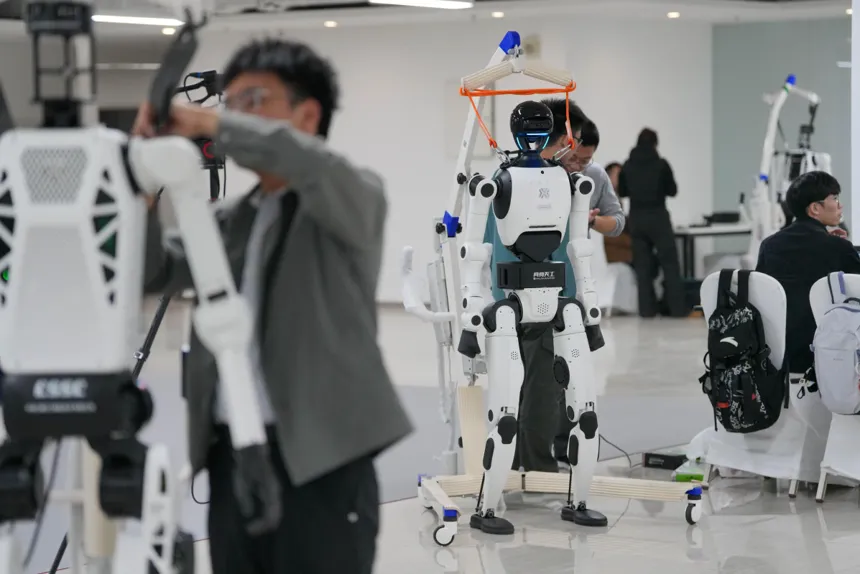
In 2026, China's policy density and coherence in this area continue to accelerate, from local industrial funds to national strategies, and governments are building a complete ecosystem of innovation. In addition to China, countries such as Japan, South Korea, and the European United States are also waving their invisible hands, from R&D subsidies to open application scenarios, forming a combination of policy tools.
One of the driving forces behind the reinforcement of lithium-ion policies is the deep implication: that the policies infuse the market with a premium of lithium-ion certainty even if commercial returns are not fully realized, and that the underlying cost of trial-and-error drops significantly. This certainty is precisely the psychological prerequisite for a race that requires long-term investments and short-term profitability.
Capital is not afraid of loss, it is afraid of uncertainty.
After all, human robots have to enter logistics, factories and other scenarios for on-the-ground verification, with the support of hardcore technology. Technical details such as dexterity, hand-eye coordination, heat dissipation, line-beam life, long-term reliability and Sim-to-Real generalization capabilities are accelerating, a demonstration episode, a live show, and, despite varied technical routes, the technological breakthroughs in 2026 are no doubt remarkable.
Even in the face of technical bottlenecks, bottlenecks are stagnant, but the presence of bottlenecks precisely indicates that the industry has advanced to the stage of a truly active bottleneck.
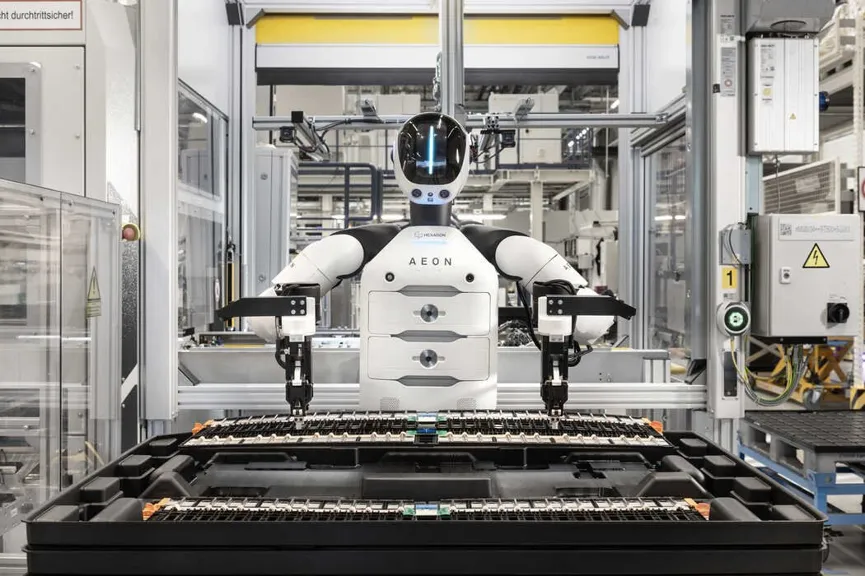
At the same time, with the deep integration of large-scale modeling technology into multi-modal perception and decision planning, robots began to no longer rely on predetermined fixed procedures, but to have the ability to understand instructions and autonomously dismantle tasks in a non-structured environment. This move from automated modeling to autonomous modeling will greatly broaden the application boundaries of robots, allowing them to truly enter home services, complex manufacturing and other long-term scenarios.
The expected increase in human-robot shipments was due to a simultaneous explosion in supply, policy, commercialization, and technology.
Of course, the faster the market is growing, the more companies are testing their ability to balance cash flow with technology. It's easy to rush, it's hard to turn money into revenue, and it's even harder to turn it into sustainable cash flow.
04.
The undercurrent of prosperity, when the arrows of all institutions point in the same direction
It is worth noting that the predictive models of the research institutes are themselves influenced by industrial sentiment and peer-reviewed pollutants.
When Morrow takes the lead in significant upgrades, the psychological costs of other agencies' upgrades will significantly decrease. After all, if your predictions are significantly lower than those of your peers and prove you're wrong, you'll have to take the blame for being too conservative on your own; but if everyone is wrong, it's just a blunder of industry consensus, and no one needs to be held responsible for it.
This type of speculative resonance imaging has occurred repeatedly throughout history - the superuniverse in 2021, cryptocurrencies in 2017, and O2O in 2014. Each time the arrows of all institutions point in the same direction, that direction itself becomes the greatest risk.
Of course, any honest industry analysis is not good enough. Research institutes such as Goldman Sachs, Thomson Reuters and others have also pointed to a series of difficulties in the industry, for example, Goldman Sachs explicitly pointing out that the lack of a unified technology route is the most important hardware bottleneck; Thomson admits that geopolitical tensions remain the main obstacle to development during the offshore deployment of enterprises.
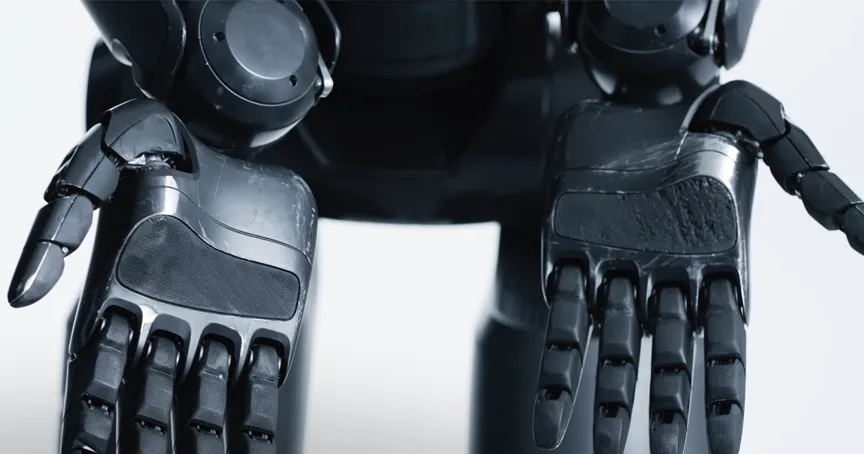
The cost curve also needs to be broken. Combined with the development of humanoid robots over the past six months, the volume of shipments in 2026 is naturally expected to reach expectations. However, it remains to be seen whether near-index growth will become a reality in the future, which is closely linked to costs.
The cost decline has never occurred automatically, it is the result of countless supply chain negotiations, process improvements and design overlapping. The pace at which these efforts are advancing is far more painful than when research institutions adjust forecast numbers.
Finally, the difference between Chinese manufacturers' shipments and their competitiveness deserves to be examined more honestly.
Chinese manufacturers ship more than 80% of the world's shipments, an exciting figure, but one that needs to be questioned is: how much of these shipments has gone to scenarios that really generate commercial value, how much has gone to policy-driven demonstration projects?
For the industry, the real barrier to competition is not whether you can sell the robot out, but whether the people who buy you are willing to buy it a second time.
05.
Link to the Future
In the past few years, the robotics industry has excelled at storytelling, those grand narratives about unlimited visions of the future, about general artificial intelligence. And now, the collective bidding for improved predictions is not because models are more accurate, but because industry reality has won over models.
We have reason to believe that the next five years will be a key window for the industry to move from proof of existence to verification at scale. Real buy-back orders are beginning to emerge in the warehouse logistics scene, humanoid robots are starting to work side by side with human workers in automotive factories, and parts manufacturers in the supply chain are starting to plan production lines for humanoid robots separately, and these changes are more convincing than any predictive curve of any research institution.
At the same time, it is also necessary to maintain a calm optimism that the best predictions are not about the future, but about how we understand the present.