“ Can robots now really comply with extreme scenarios of hydrogen, ethanol and coal dust?
In the depths of the petrochemical pipeline, hydrogen gas is leaking out of the furnace gap, colorless and odorless, and can explode up to 4% of the time mixed with air. In the belly of the workshop where coal powder is processed, hydrogen powder is suspended in the air, and a Martian can detonate a dust explosion. In the core area of the hydrogen energy storage, the ethanol rings under high pressure, and the risk increases by one point each time the temperature rises.
These scenes have a common label: flammable and explosive. An electric spark, an ultra-temperature point, is enough to cause a disaster.
In the past, these high-pressure containment areas were accessed only by people wearing heavy protective clothing. Hands with detectors, step-by-step through tunnels, climbing stairs, drilling through narrow corridors, and each visit was a risky meatpacking.
However, the Department of Emergency Management's report on the explosion did not pause, but went together and pointed to one obvious fact: the threat posed by the explosion was that there were physical limits, and the accident did not occur.
So the industry began to send robots in -- to replace humans with robots -- to get into the most toxic, flammable, and unwanted places.
But the problem is more complicated than imagined. A four-legged robot with dozens of motors, batteries, and control panels, any link that produces an external spark or a surface temperature surge, could become an explosive atmosphere.
So when a robot walks through a dangerous environment, tests its temperature, and catches a gas leak, where does its own safety come from? What proves that the robot itself will not be the starting point of an accident?
The significance of the anti-explosion certification is highlighted in these questionnaires. In fact, this paper certification is never a wall-hanging qualification document, but is the ultimate copy of the life safety seal.
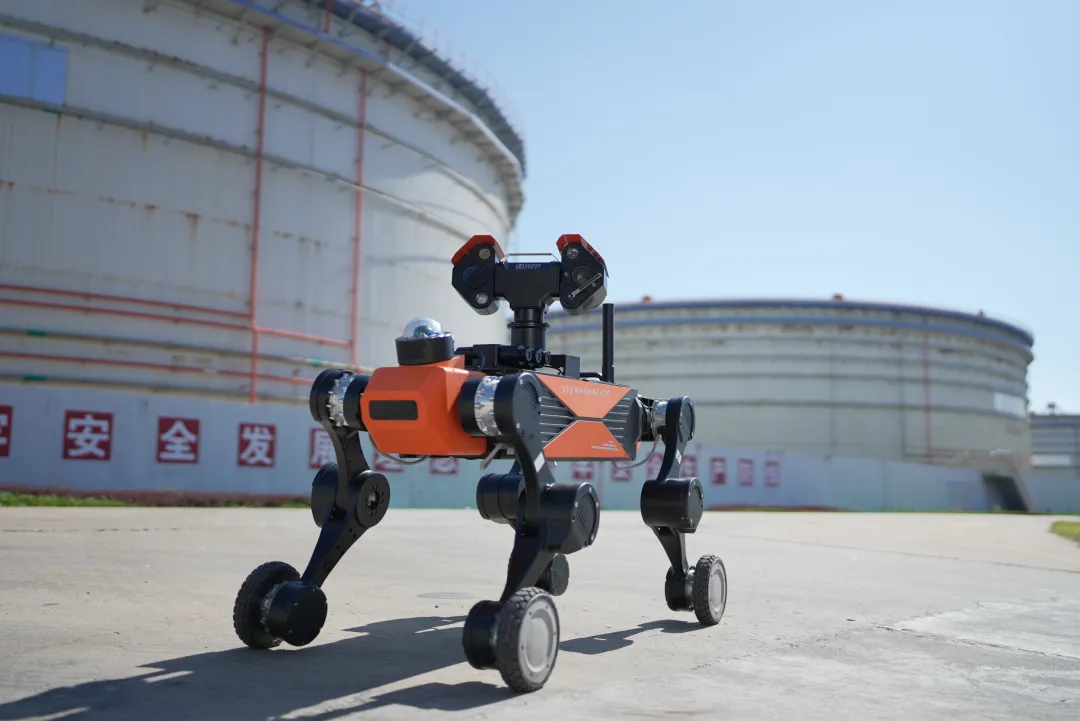
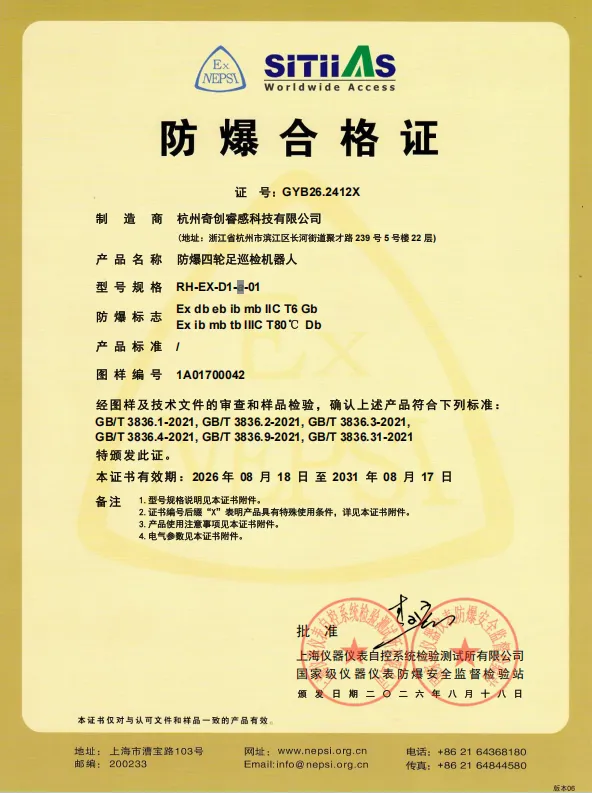
Today, Intelligent Robotics has delivered a step-by-step achievement on the path of explosion-proof certification. The company's Delta Explosion-proof four-wheel patrol robot has taken the country's first Ex IIC T6 Gb gas and Ex IIIC T80°C Db dust double explosion-proof four-wheel certification.
It is worth emphasizing that this is not only an integrated certification, but all of its core anti-explosion components have been independently certified.
This is a compliance high ground that has never been fully occupied before on the National Anti-Bombing Four-Round Track.
01.
With a 45 percent increase in speed, one of the toughest compliance nets is emerging
To understand the weight of this certificate, we must first see what is happening on the track where it is located.
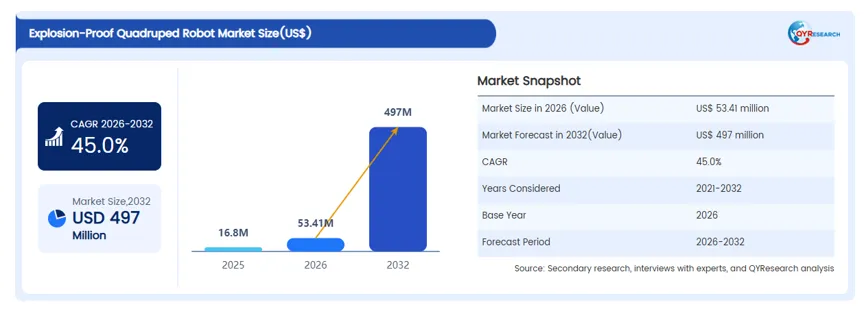
According to QYResearch's current 2026-2032 Global Report on the current and future trends in explosion-proof robotics market with China, sales of the global explosion-proof robotics market in 2025 amounted to approximately $017 million, and this figure is expected to rise to $497 million by 2032.
This means that four-legged anti-explosion robots are becoming one of the fastest-growing sub-categories in the entire field of anti-explosion robots.
Behind the heatwave of the market, there is a real and pressing demand. The core business areas of the oil, chemical, coal, natural gas and other industries are typical flammable explosive high-pressure containment zones. With increasingly stringent regulations on safety production and steadily rising manpower costs, robot replacement containment has become a must-have.
Blast-fighting robotics are at a critical window in high-risk industrial scenarios, moving from man-made patrol to robotic replacement. Compliance capabilities will inevitably become one of the toughest screening networks in high-risk scenarios.
02.
How can a paper and double-blast pump be an industry divider?
In this context, the country's first four-word diamond content is undeniable. Previously, although other companies have certified four-legged explosion-proof robots, Intelligent Robot Delta was the first in the country to achieve the highest level of certification in the four-wheeled diamond superimposed aluminum Ex IIC T6 Gb gas + Ex IIIC T80°C Db dust double-degree diamond.
Why is this double-blast certification so scarce? Because the superposition of each layer of standards is not a simple addition of an explosive coating, but a comprehensive reconstruction of the heat management system, material selection, energy isolation strategy, and structural sealing levels.
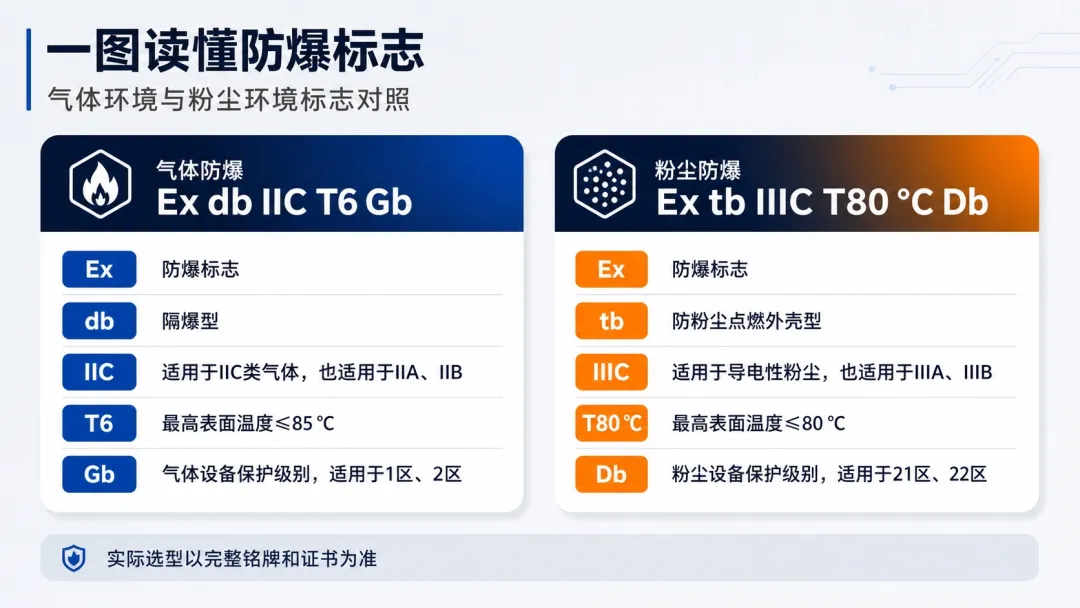
Every indicator in the Ex IIC T6 Gb is pushing the boundaries of safety.
In a gas explosion prevention system, explosive gases are divided into three categories according to their ignition characteristics and explosive capacity: IIA, IIB, and IIC. The IIC is the most demanding of these, covering the most flammable and explosive gas medium, including hydrogen, ethanol, and carbon dioxide.
T6 is the highest grade in the temperature range, requiring that under normal operating and malfunctioning conditions no surface temperature exceed 85°C. This means that even under extreme working conditions, the surface temperature of the equipment is well below the ignition point of the vast majority of explosive gases, eliminating the risk of high-temperature ignition from the source.
Equipment protection level (EPL) for the gas environment (class II) is divided into Ga、Gb、Gc, where Gb represents a high protection level, which means that equipment cannot become a source of ignition under normal operation or expected failure conditions, and can be operated steadily in zone 1, zone 2 explosive hazard zones in a gas environment.
Ex IIIC T80°C Db is even more stringent than gas extremes, as the logic of dust prevention is quite different from that of gas. Gas leakage will spread, will be blown off by the wind; dust will not, it will only accumulate. It will accumulate on the motor casing, accumulate in joint gaps, and accumulate in each heat sink pit. When the surface temperature of the equipment exceeds the minimum ignition temperature of the combustion dust cloud, the accumulated dust can become a continuously burning fuel bed.
IIIC is the highest grade in the dust environment, accurately adapted to conductive flammable dust conditions such as coal dust, lead dust, chemical dust. T80°C tightly controls the surface temperature of the equipment within 80°C, avoiding the maximum safety hazards such as dust accumulation, high temperature self-ignition, explosions.
Of course, the real technical difficulties lie in the dual protection of aluminum, gas and dust, which poses a systemic challenge to the overall design of heat, material selection, energy isolation and structural sealing.
As mentioned above, the logic of gas explosion prevention and dust explosion prevention is quite different, the former requiring structural sealing and energy isolation prioritization, while the latter emphasizes exterior protection and surface temperature control. A device must meet two sets of standards at the same time, which means that from electrical design to mechanical structure, from scattering schemes to sealing processes, each link must simultaneously meet the maximum convention number of metals of the two sets of standards, which is far from as simple as metals 1 + 1 = 2 metals.
Most companies generally choose the transition strategy because of the cost and R&D cycle considerations, because the technical path of single-medium certification is shorter, engineering difficulty is lower, and the certification cycle is more predictable.
While intelligent robots are directly presented with the highest level of dust-and-explosion resistance, this is not only a demonstration of technical strength, but also confidence in the maturity of the product.
The deep meaning of the complete certification of the integrated system+ core components is equally worth digging deep. The common practice in the industry is that the integrated system sends inspection certificates, internal components are fitted to the cabin. But the practice of intelligent robots is completely different, not only integrated compliance certificates, but also core anti-explosion parts are independently certified.
This means two things: for customers, each node on Delta can be independently driven, and the safety and reliability of the entire machine is double-guaranteed; for the industry, these core components can be independently replicated as compliance components to provide standardised modules for the integration of partner detonation systems.
It's actually a way of thinking about the layout from product to platform.
In addition, the issuing body of the certificate, the Shanghai Autonomous Instruments Control System Testing and Testing Limited Company, is itself a token token, a synonym for the highest standards in the industry.
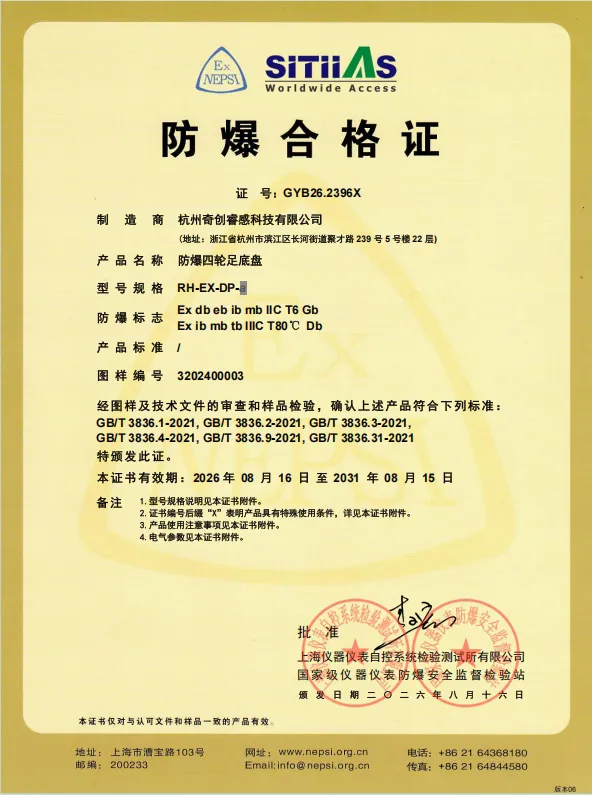
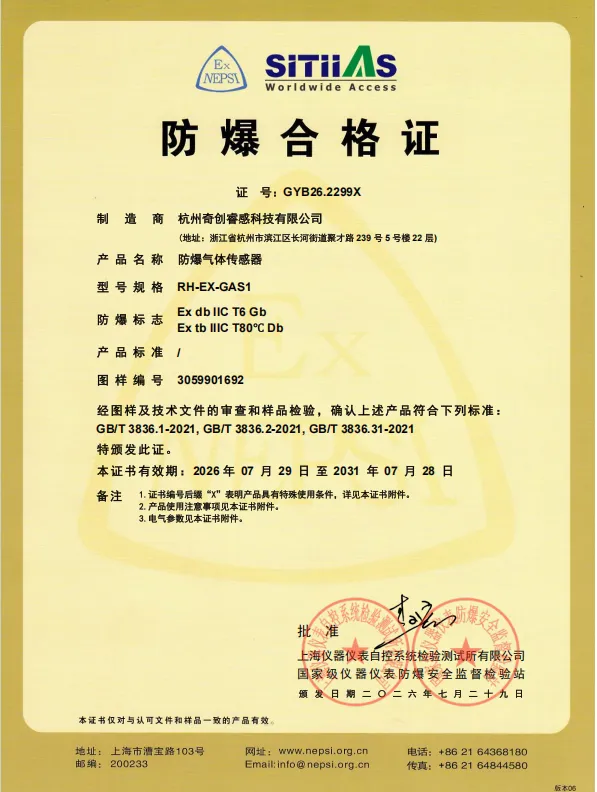
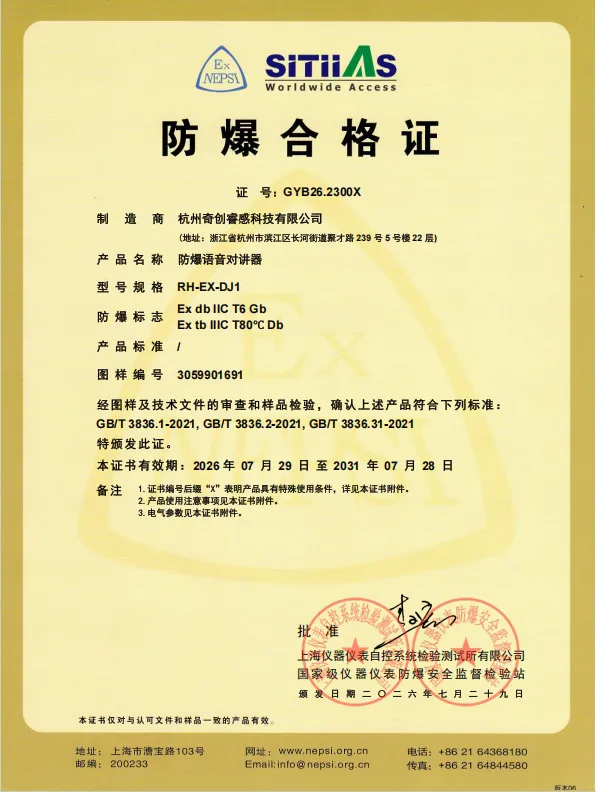
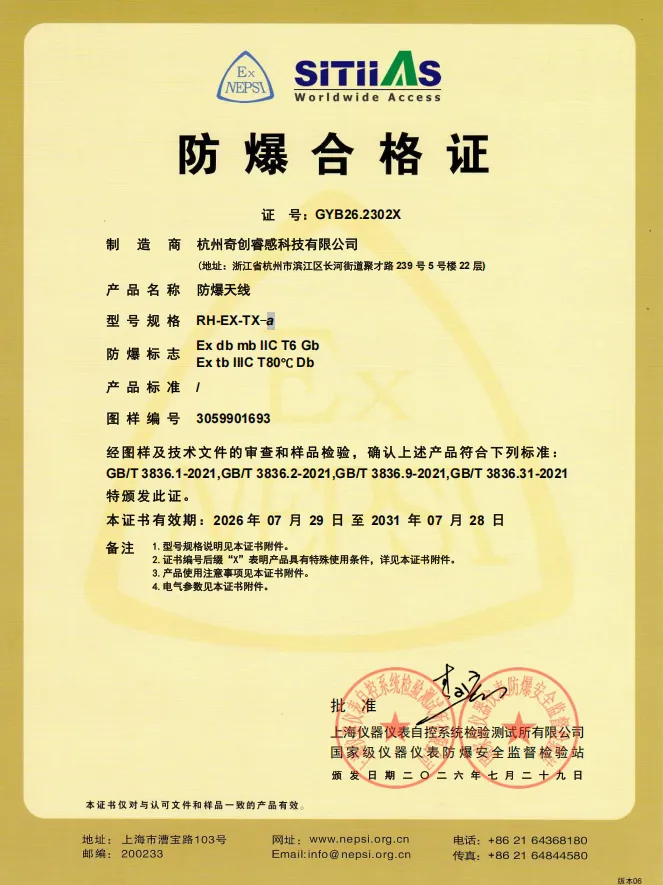
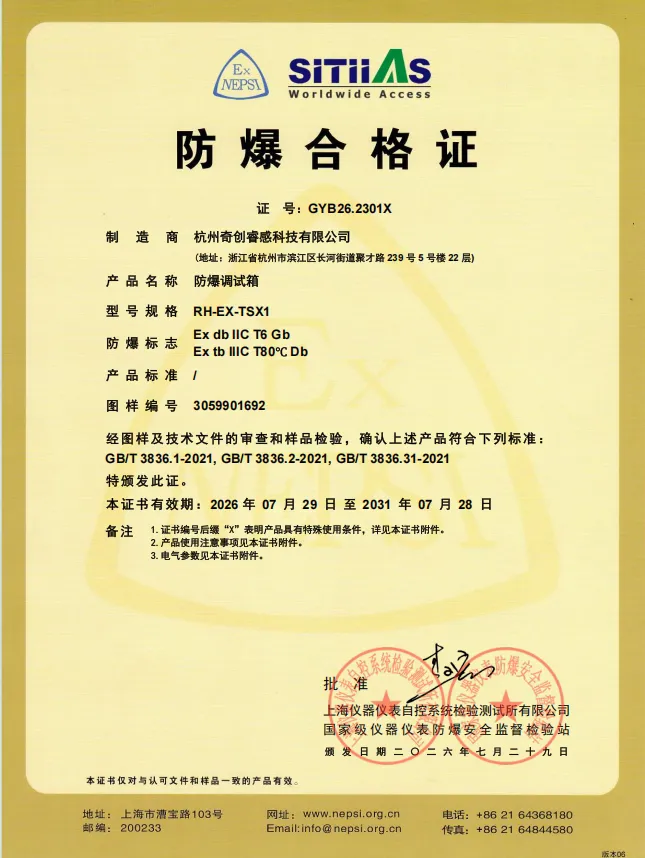
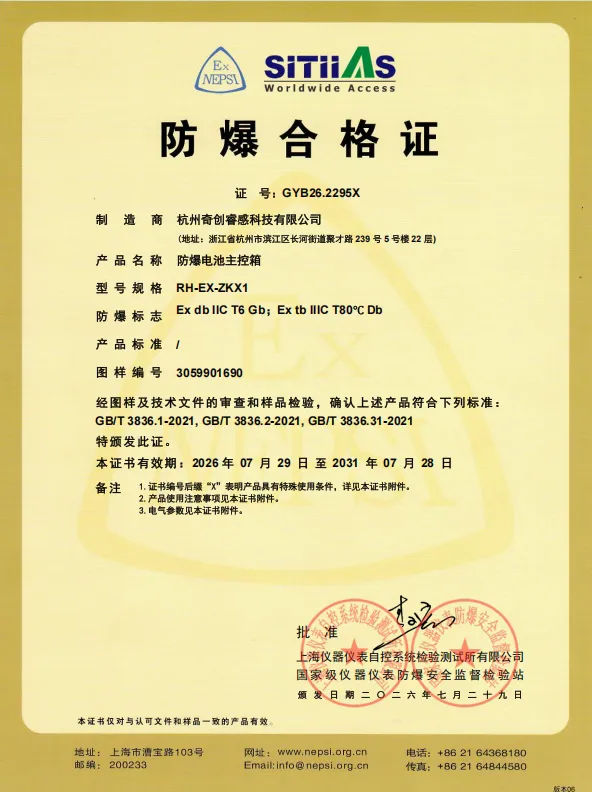
Sliding to the right.
03.
From certification to capability, where is Delta's productivity?
Anti-explosion certification is a threshold, but after crossing the threshold, the real determinant of success is the strength of the product.
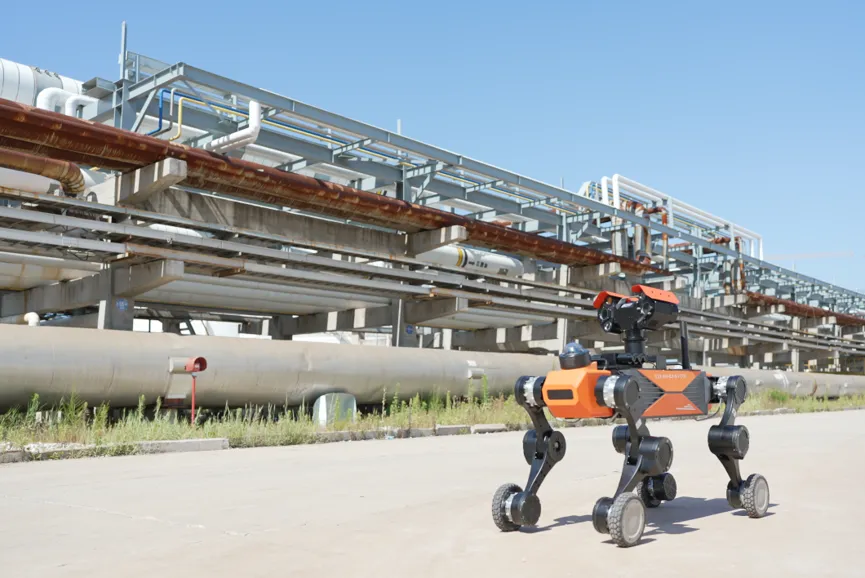
In terms of mobility, Delta exhibits the unique advantages of four-wheeled foot-shaped stairs, slopes, rough terrain, narrow passageways, etc. These traditional wheeled patrol devices can navigate through intricate terrain that cannot be entered, turned, or opened.
Deployment-friendly design awareness is just as important as accessibility. Delta product deployments do not require large-scale conversions to the site, short landing cycles, low application thresholds, while supporting continuous operations across floors. For industrial users, this means that one device can cover more checkpoints and the return on investment cycle is significantly squeezed.
At the perception level, Delta's underpinnings come from full self-development. Intelligent robots have a deep accumulation in the field of infrared chip design, optical power module development, and have achieved fully autonomous development of explosion-proof robots. Specifically, Delta is equipped with a multi-sensor fusion sensing system, integrated laser radar, infrared thermal imaging, high-resolution cameras, sound detection, gas detection, and other devices, forming a comprehensive sensing system that integrates vision, hearing, smell, and temperature.
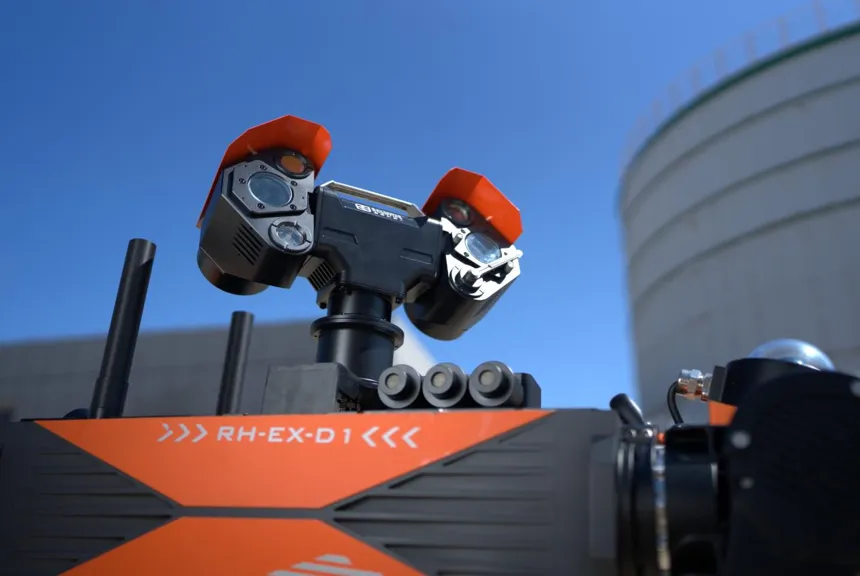
Delta's self-developed AI algorithm is able to process the multi-modal data provided by these sensors in real-time on the edge, transforming them into specific, executable industrial judgments. The product can replace the entire process of man-made finished instrument read-recognition, device appearance defect detection, compliance monitoring of personnel behaviour, device temperature monitoring, visual positioning of gas leakage, liquid leakage screening, and more.
In terms of reliability, Delta also does not have a short board. The whole system reaches IP66 protection rating, waterproof dust performance is excellent, and can withstand harsh outdoor conditions such as rain, high humidity, high dust. The weight of the bottom disc is controlled within 100 kg, while supporting 50 kg on-load expansion, and a precise balance is found between lightweighting and carrying capacity. Over 4 hours of duration, combined with automatic power management and automatic recharging, makes the all-weather circuit board a viable departure logic.
04.
From single-point capability to system programming, what's next for intelligent robots?
Delta's ability to achieve the highest level of twin-explosion resistance in lithium-ion and lithium-ion real-world capabilities is rooted in the positioning of intelligent robots from the beginning different from the industry's usual routes.
It's not a foot-and-mouth company, or an explosion-proof company, but a product solution provider with a super-eye perception+end-side smart brain pump at its core.
The base of this position comes primarily from unique technology. For many years in the field of infrared chips and photovoltaic modules, relying on the strong technology to support the entire industrial chain of silicon infrared chips, detectors, movements to integrated systems, the autonomy and cost control capabilities behind intelligent robots on the powerful hardware supply chain, while also providing the possibility of deep optimization for all sorts of algorithms starting from detector characteristics.
This inheritance of silicon-based technology has enabled intelligent robots to stand on the cutting edge of technology in the field from the day they were born.
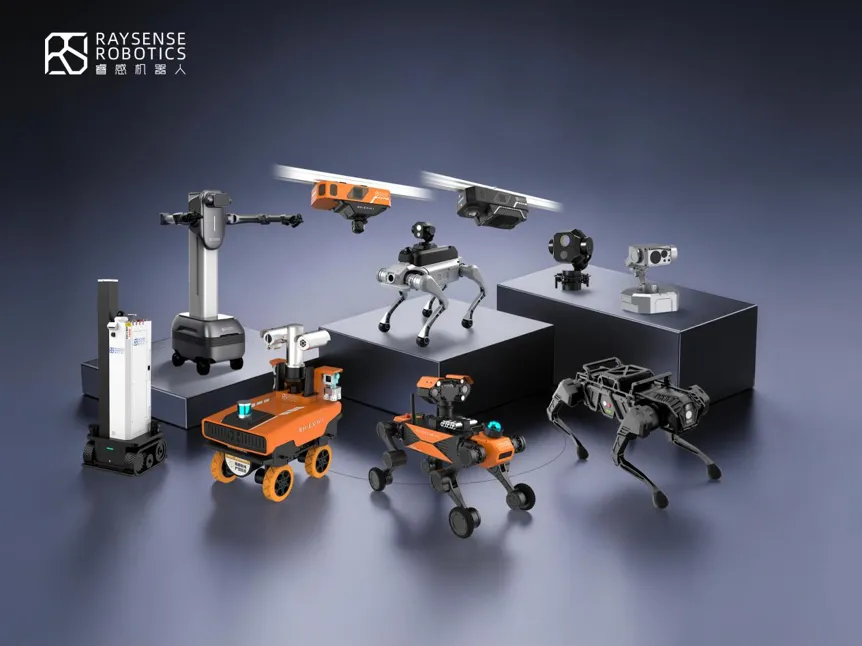
The strategic collaboration with the authoritative body provides another highlight for the technological seriousness of AI robots. By establishing a strategic partnership with the Shanghai Institute of Industrial Automation Instruments, Ltd., a national scientific research institution, AI robots delivered the benchmark result of Delta, a product of long-term refinement of the power of production research under specific industrial proposals.
At the same time, Intel's self-developed robotic explosion-proofing robotics+physical cloud platform, Robo-AI, is upgrading its single-point surveillance capability to a system-level security management infrastructure. A Delta is a surveillance terminal, but a connected Delta group, combined with a cloud-based intelligent analytics platform, constitutes a sensing network covering an entire hazardous area.
Making high-risk area operations evolve from human-watched to unmanned aerial vehicles is a structural reshaping of the bottom line of industrial safety. When robots can step into the most dangerous places, when robots can see invisible leaks, when robots can judge risks beyond their ability to judge, the era of dehumanization of high-risk operations is accelerating.
05.
Link to the Future
China's industrial sector is undergoing a quiet security management revolution. Ten years ago, the replacement of robotic patrol booths in hazardous scenarios was another visionary proposition that needs to be proven repeatedly; five years ago, four-legged explosion-proof robots began to appear, but the fragmentation of the certification, lack of conformity of the components, insufficient capacity to adapt to the scenarios left the race track stuck in a product-rich, awkward stage.
And today, when a four-wheeled platform simultaneously holds the country's first dual-explosion-proof certification for Ex IIC T6 Gb gas and Ex IIIC T80°C Db dust-proofing, and the whole system and core components are all independently certified, a clear signal has been released: the competition for high-scene robots is turning from hydrogen-powered to high-powered.
Anti-blast certification is no longer an add-on, and it is becoming a harsh prerequisite not only in terms of technical reviews, but also in the entire chain of customer procurement decisions, insurance pricing, security audits and regulatory approvals.
Companies like Intelligent Robotics, which are the first to complete the highest level of compliance closures, will take an unshakable lead in this round of industry screening cycles.
In places where sparkling sparkling is most unlikely to occur, Delta has taken the strongest step towards industrial safety as the country's first twin-bomb defence device.