“ On September 2, Savings Card Robot issued an official statement against the overseas patent litigation reported by the media, stating that the company believes there is no case of infringement of each other's patents based on complete technology tracing and patent comparison analysis.
The underlying performance of a robot, hidden in hundreds of groups of precision components - core components such as accelerators, servo systems, controllers - that directly determine the accuracy, load and reliability of the entire machine to achieve autonomous control at these key links, is a core criterion for distinguishing assembly model manufacturers from technology R&D enterprises.
As Chinese robotics enterprises accelerate into the global market's deep water zone, a synchronous comparison of technological originality and intellectual property is emerging around whether a company's technology is traceable, whether the evidence chain is complete, and the market is testing its full colour. In this context, looking at the technical roadmap for smart card robots, the Shanghai-based company, founded in 2014, took a complete self-development path from the underlying hardware to the upper models.
In the judgement of the evolution of the industry, the general intelligent robot is a larger set of capabilities: downwards covering collaborative robots, extending upwards to physically intelligent robots. Based on the basics of collaborative robots, after loading large models, the capabilities of the general intelligent robot continue to evolve, completing the leap from autonomous L2 to fully autonomous L5 capabilities, achieving the gradual evolution of perception, execution, decision-making and cognition, covering industries, services, specialties, etc. Based on this judgement, the company adheres to a full-scale self-research route, completing the complete layout of the card from the core components to the large model of the robot body.
01.
Core components self-development and self-production: holding key processes in your own hands
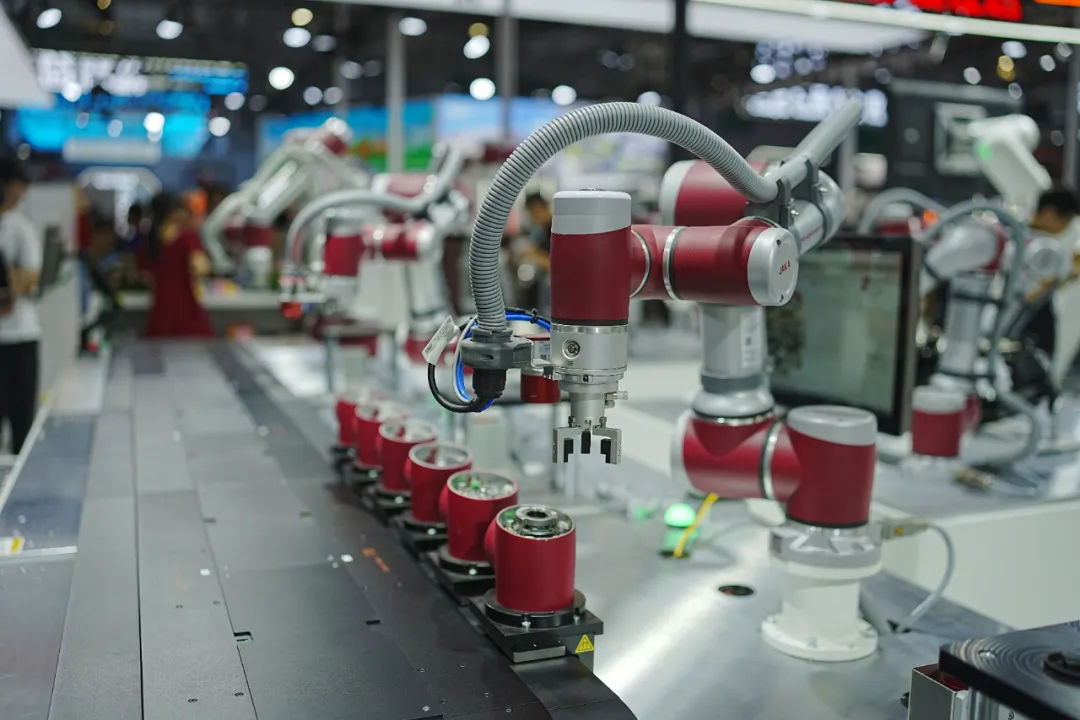
According to the company, the core components of its production base, integrated joints, controllers and other components have achieved autonomous landing of the entire chain from R&D to manufacturing, and the production line has deployed more than 60 R&D collaboration robots, taking on key processes such as assembly, testing, packaging, and manufacturing robots using self-developing robots, forming an intuitive closed-loop verification of technical strength.
The deep autonomy of the underlying technology is also reflected in the reliability of the product. In 2022, Save Card achieved 80,000 hours of testing through the MTBF of the Shanghai Institute of Robotics Industry Technology (MTBF) (average error-free running time) and became the first enterprise in the collaborative robotics industry to achieve this third-party assessment, achieving top industry-level reliability standards. In 2024, Save Card became the first domestic collaborative robot brand to be certified through the SRCI (Standard Robot Instruction Interface) certification, becoming one of the first globally certified brands; in 2026, the company further gained SRCI Broad Release certification, becoming the first domestic certified robot enterprise to achieve the highest level of maturity in this interface, with equipment and wireless connectivity to international mainstream industrial products.
Third-party market data can confirm its market position. According to MIR DataBANK statistics, in 2025, four of the top five companies in the global collaborative robotics market are from China, which accounted for about 11% of global market sales, ranking second globally.
02.
Extension of core capabilities upwards: from collaborative robots to physical intelligence
The essence of physical intelligence is that it enables robots to construct and execute integrated circuits for sensing and making decisions, which is the natural core of the decades-old technology of collaborative robotics. The idea of saving cards is to test the underlying capabilities of collaborative robots that repeatedly verify industrial scenarios.
Hardware and execution layers: Human robots can be viewed as a collaborative mechanical arm that extends freely and formally. Integrated joint modules, high-precision servo drives, real-time mainline controls, these collaborative robots' core hardware and technology, reuse the human robot's body, ensure that higher-level decisions can be achieved in milliseconds, high-precision execution, forming the physical basis for intelligent minds to be acquired.
Power control and interaction layer: collaborative robotic sophisticated soft power control and collision detection technology, building a foundation of human, robot, environmental collaboration, providing support for intelligent landing in the real physical world, achieving sophisticated operations, which is the unique pioneering advantage of collaborative robotic enterprises cutting into the intelligent track.
Perception and algorithm layer: two types of products share the same set of perception systems and simulation training systems; 3D visual, sensory/tactile, encoder real-world perception, motion planning, simulation training, Sim2Real migration and other underlying algorithms and software platforms are all open; physical intelligence overlaps deep learning with multi-modal models on this basis, driving robots from execution of pre-set procedures, upgrading to understanding tasks, autonomous decision-making, and adapting to new scenarios.
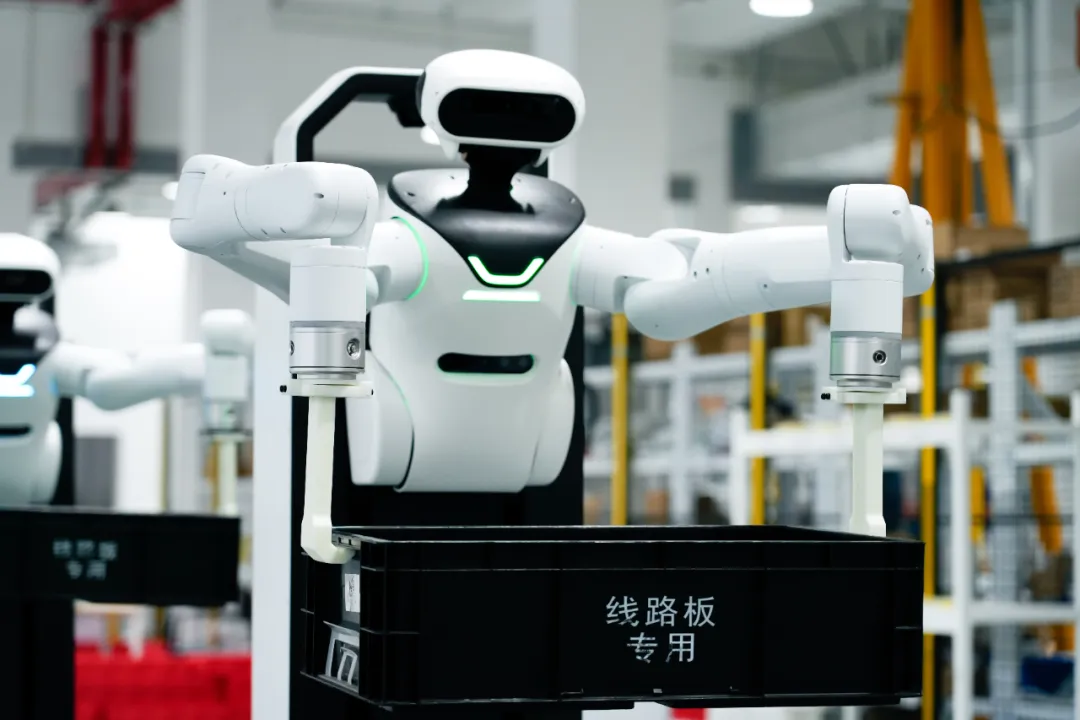
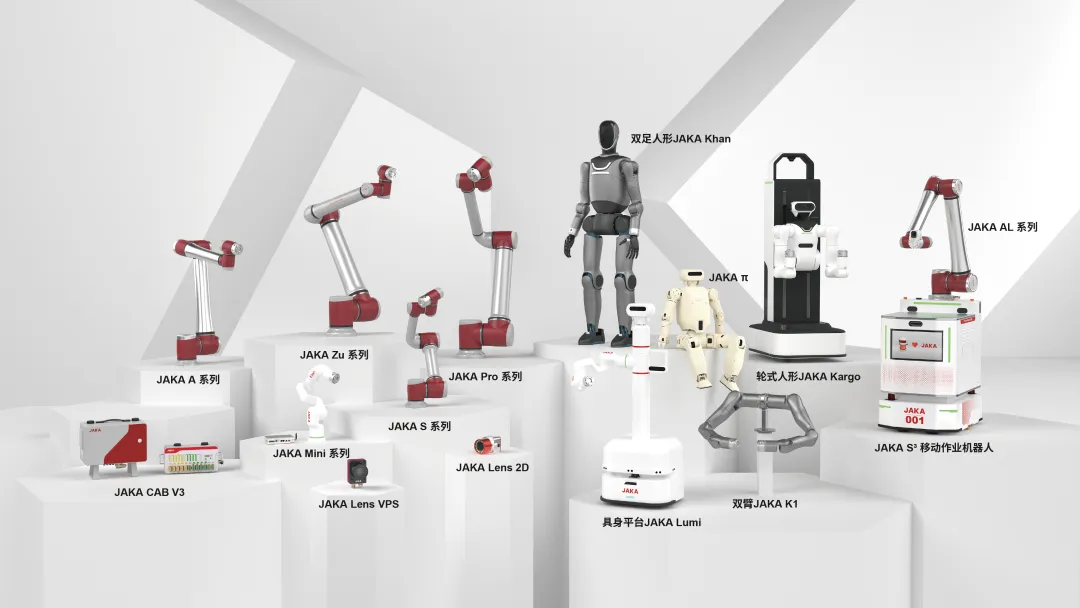
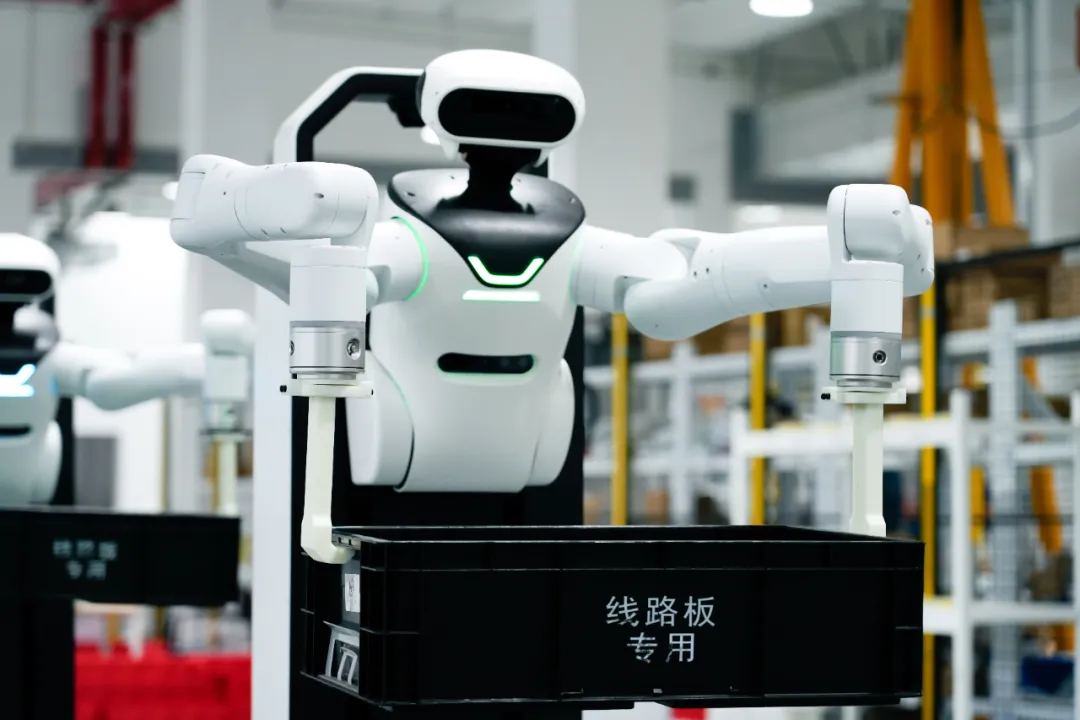
Depending on the base of development and common technology, the JAKA K series twin-armed humanoid robot K1, K1-25, Kargo rotary humanoid robot, JAKA π lightweight humanoid robot have been installed in succession. Among them, the JAKA Kargo rotary humanoid robot has entered many of the world's 500 strongest factories, performing real-world testing and transformation optimization in industrial scenarios such as cross-tasking, cross-industry, long-range operations; relevant applications have also been selected as the typical example of Jiangsu's top ten applications for intelligent robots. This means that the general use of smart robots for smart cards has entered the real-world industrial production line to accept real-stop war testing, rather than the concept demonstration stage.
03.
Verifiable innovation evidence chain: technological autonomy is not a slogan
The answer to the question of technological originality, which is of concern to the outside world, is a traceable, verifiable matrix of innovative results.
According to Save Card, the company has accumulated over 300 licensed patents to date and participated in the development of more than twenty national and group standards, including the national standard GB/T 45579-2025 approved for release in 2025. Robot intelligent vision assessment methods and grades are drawn up by Save Card headers. Products have subsequently passed several international safety certifications such as CR, EU CE, NRTL, North American KCs, and semiconductor SEMI S2, IEC 60601-1 medical safety regulations and other industry access accreditations.
In terms of industry honours, Save Card's participation in the highly advanced robotic technology and equipment engineering project was awarded the 2nd National Technology Invention Award for 2025. In addition, Save Card has won the Chinese Patent Award for Excellence, the National Award for Specialist New Cheese Giant Cheese Enterprise, as well as international awards such as the German iF Design Award (iF DESIGN AWARD), Japan's G-Mark Award for Excellence in Design (Good Design Award), and multiple generic intelligent robots for Excellence in Innovation.
At the research and development point, the SPC continues to promote innovation and collaboration in manufacturing, jointly with the Shanghai University of Transport and Beijing University, co-creating a joint laboratory that combines cutting-edge technology exploration and engineering industrialization. From underlying joint modules, motion control algorithms, to power control technology, to large-scale models, the SPC builds a complete chain of self-development technologies that cover the sensory decision-making process and execute the cognitive process.
04.
Full-fledged self-development, the core of China's robotics out to sea
The continuous expansion into the downstream of the industrial chain, using collaborative robots as the technological backbone, is the path of more than a decade of development of credit card robots, and also reflects the industrial process in which Chinese robotics enterprises move from running and running to leading the way.
In an environment of heightened global competition, competition for intellectual property rights, supply chain security, and the right to speak for brands is becoming increasingly normal. For businesses, the real fortress is not a single technological breakthrough, but a comprehensive system of traceable, verifiable, and sustainable generations of technology, and the resulting innovation chain of evidence.
Technically autonomous, it is becoming China's hardest-hitting robotics enterprise to go offshore.