That's what the industry says.False modulation: the shell is changing, the core is unchanged.It addresses the tool adaptation but fails to deliver on the commitment to cover more scenarios with fewer underlying developments.
Structural difficulties in the industry caused by fragmentation of the scene
Where is the root of the problem?The robotics industryApplicationsThe scene is highly fragmented。
For example, patrol robots have to travel through unstructured terrain, logistics robots have to move high-speed on flat terrain, explosive robots have to overcome ruins, agricultural robots have to adapt to fields and mud, electric robots have to climb iron towers and pipelines.
In this regard, the traditional development paradigm is:“One scene, one model”This means that every time robots enter a new scenario, they have to start from scratch designing machines, driving adaptations, controlling algorithm modeling, simulating training iterations, and so on. These processes are difficult to replicate and overlap with depletion, hardware costs, manpower costs, the layer of costs of algorithm training, directly driving high R&D cycles and landing costs.
Under the consolidated architecture, those who want to change the core capabilities still need to redevelop the whole system, unable to reduce the development burden from the root of the fragmentation scenario.
This dilemma not only plagues integrated manufacturers but also limits the scale of the industry as a whole. When it is impossible for an enterprise to maintain an independent integrated product line for every particular scenario, the industry boundaries are locked in a few standardized scenarios.
The popularity of the concept of modular silicon has risen in the market, but in fact it has largely fallen into the hands of marketing, not forming an industrial revolution that really changes the development paradigm.
The three levels of modularity
In order to understand the true value of modularity, a clear level-based framework is needed.
First layer: External modulation.Replacing end-to-end tools, sensors, shutter accessories. Solving tool fit problems, real but limited value doesn't change the core mobility, only what tools the shutter uses.
Second layer: functional modulation.Subsystem-level replacements such as the replacement of entire sensing modules, communication modules, power supply modules. Solve subsystem upgrades and maintenance problems, but still do not touch the core of the body's dynamic architecture and motion control.
Third layer: whole body modulation.This is the highest level of modularity. Power systems, sensing systems, control lines are all turned on, supporting physical reconstructions of the body structure, and even multi-unit couplings, reassembling a robot with a different structure and performance to change the core performance of the whole machine.
The real purpose of modularization is not to facilitate disassembly, but to change the paradigm of robot development:Using a set of underlying hardware systems to adapt to differentiated scenarios through structural restructuring, reducing“Rebuilding the Wheel”。The true measure of modularity is not whether disassembly is convenient, but whether core performance can be reorganized as the task changes.
This latest technology is D1's integrated modular practice.
While the industry was still in the mud of external modularity, touching the river of functional modular stone, end-technology came up with another answer.
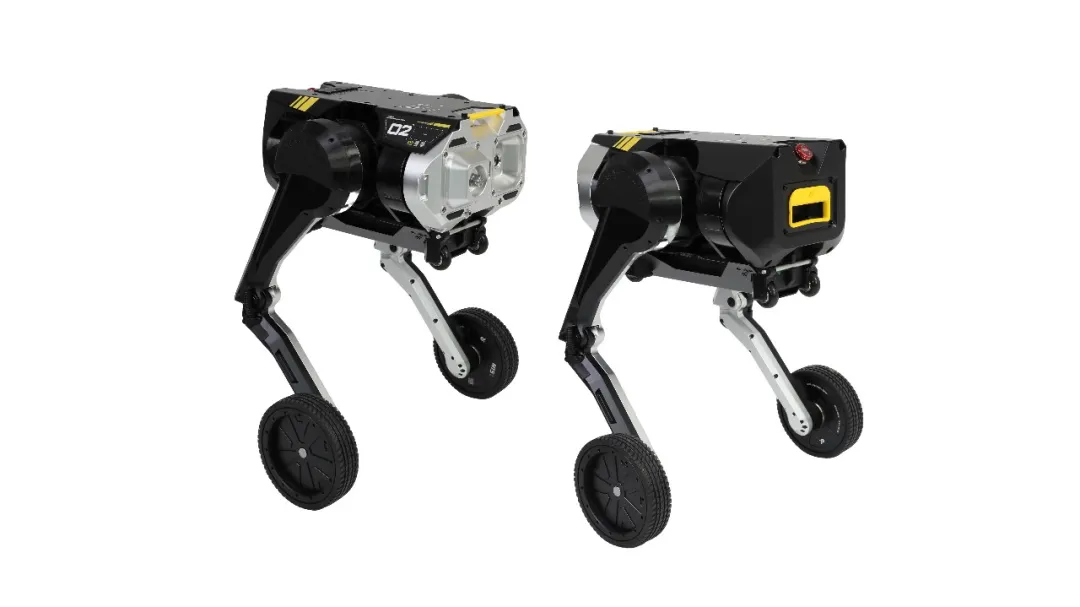
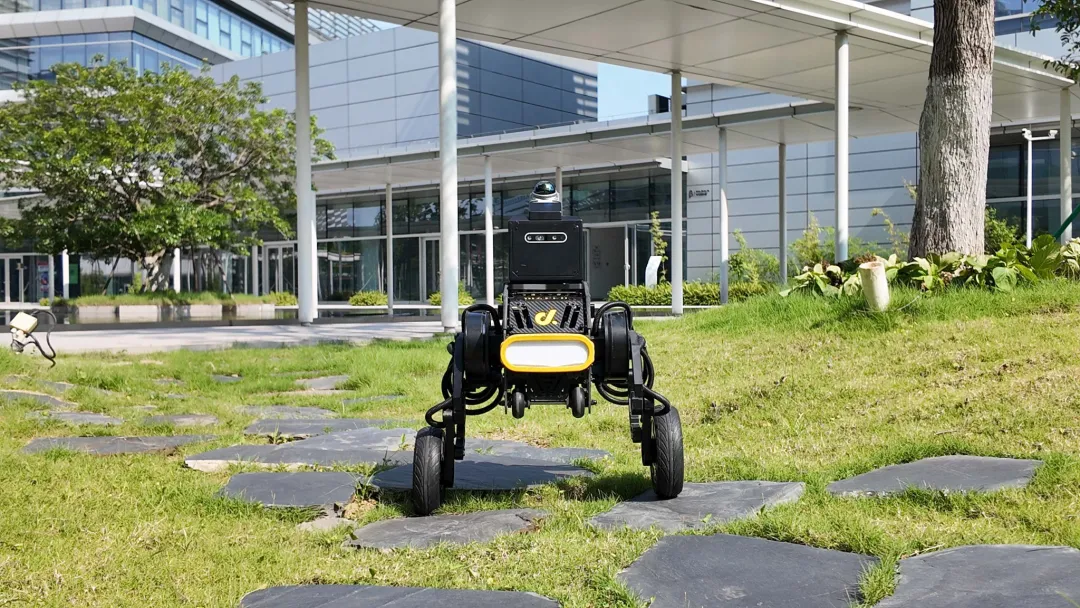
In October 2025, the latest technology introduced the D1 robot, which is known as the D1.“The world's first commercially integrated, modular two-wheeled foot robot”The new speciesIt is also a benchmark for technology with physical intelligence.
The robot, which consists of two fully independent bi-wheel-drive modules, can be folded into a four-wheel-drive robot and can be separated into two separate bi-wheel-drive units.To achieve fusion as a zero-point operation, fusion of zero to form a cohesive force for the whole.。
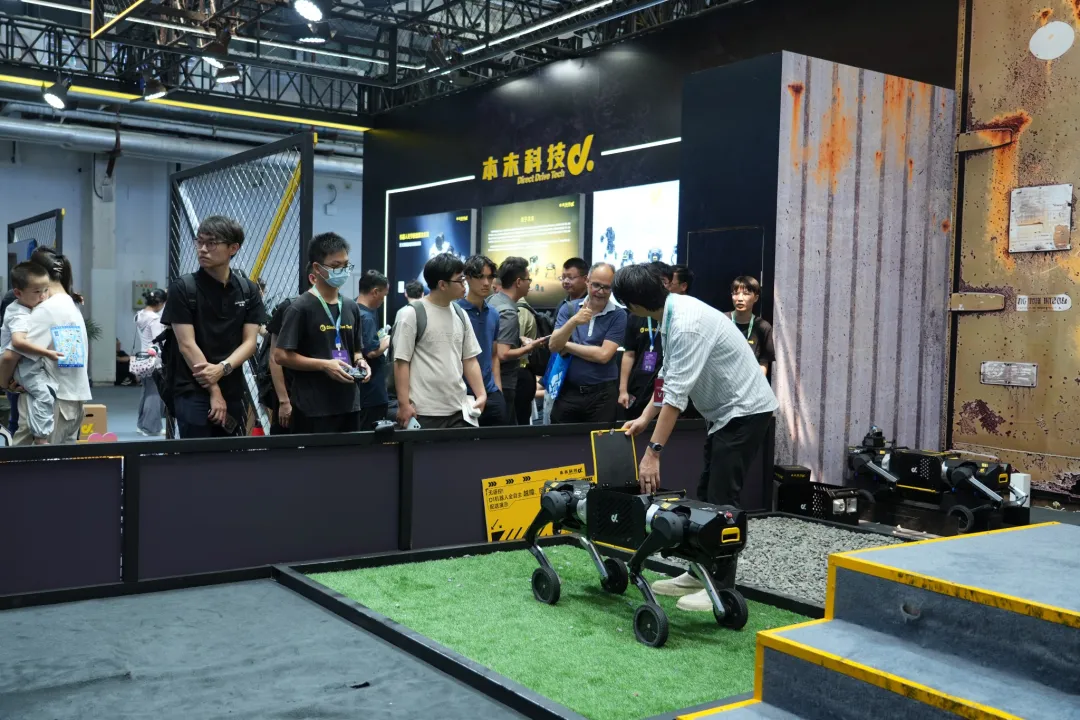
The modular design of D1 is not a simple physical splicing. In addition to achieving mechanical level head-to-head, tail-to-tail physical coupling, the modular design of D1 also opens up the hardware interface, sensing data, and multisynchronous dynamic computation. The machine can operate independently; after a multisynchronous splicing, the system automatically identifies configurations, updates dynamic models, achieves multi-unit coupling synchronization, dynamically reshapes the overall machine load, and overrides barriers.
What does that mean?
The robot relies on this weight structure rather than redesigning the new aircraft to cover differentiated tasks such as overload, complex terrain. The D1 can carry a maximum load of up to 100 kg in four-wheel drive mode, while maintaining a maximum load of 80 kg in stand-by mode. Such load capacity makes the D1 capable of carrying specialized equipment to perform tasks, even directly transporting heavier goods.Co-operation“Common brain”Synchronous algorithms, multiple modules of D1 can be rapidly spelled out in 3 seconds。
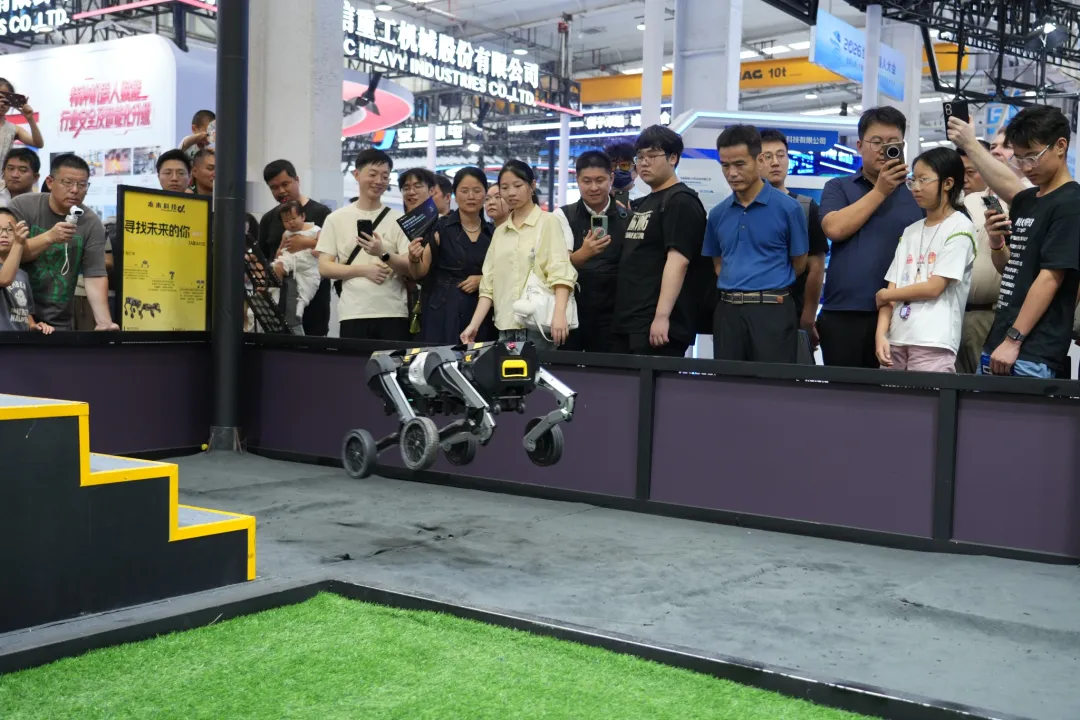
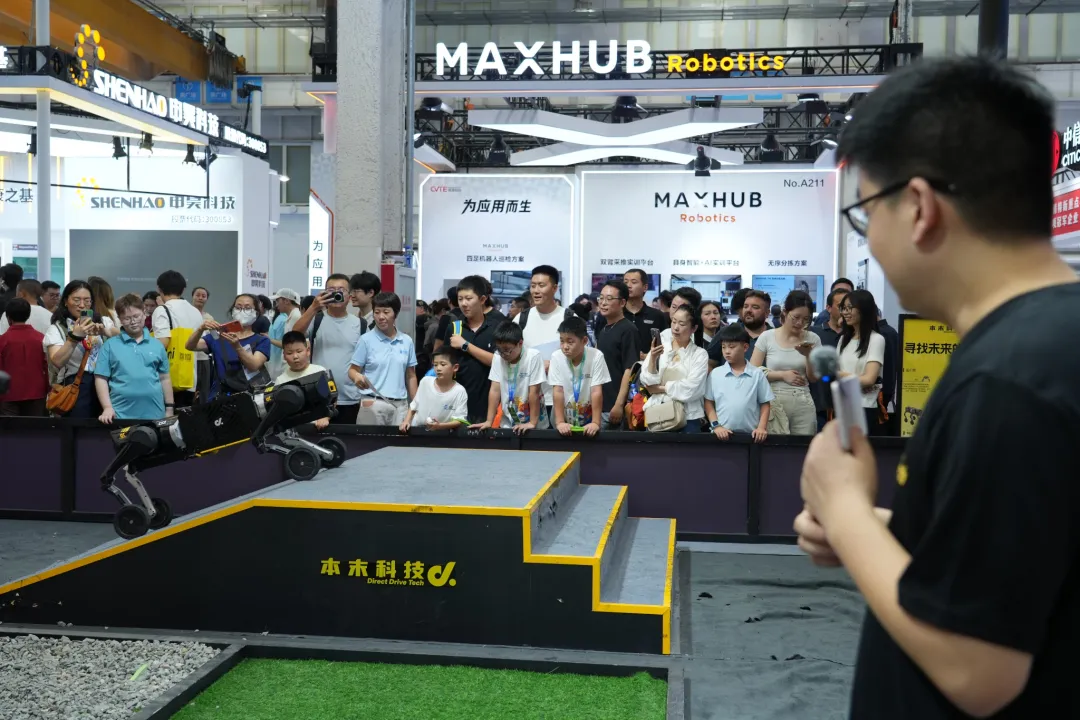
In February 2026, D1 entered the Shandong Provincial Robotics Spring Triathlon, in collaboration with martial arts actors, to make a seamless switch between four-wheel and two-wheel-drive formats, completing separation and splicing autonomously.
The D1 is not only a robot, but also an open platform for intelligent development. Developers do not have to re-invest in hard disk hardware research and development to focus directly on top-level algorithms and scenario function development.
With the core advantages of modular collapsible, wheelchair-free switching, autonomous collaborative operations, the application of D1 is expanding rapidly from patrol, short-distance delivery, smart industry, smart parks, to fire rescue, emergency search and rescue, to scientific research teaching and stage performances.
ImplementationFrom core components to cluster-controlled synchronous circuits
D1's modular capabilities are behind the latest technology around robots.Power modulation technology, wheel-foot robotics technology, modular splicing technologyThe underlying technological system to be built.
At the bottom,The direct-driving technology of this end-of-tech abandoned the traditional steam engine + decelerator steam architecture, integrating high-power motors, multi-dimensional sensing sensors, high-precision drive unit depth, to form“Sensory-controlled integration”The core unit of powerIn 2025, the latest technology direct-driving modules ship approximately 8.5 million units per year, ranking first in China's consumer robot direct-driving modules industry, with a market share of 61.1 percent.
In the middle,It is the second-largest domestic two-wheeled robotics segment in 2025, with products exported to more than 50 countries and regions around the world.
At the top,It is one of the few companies in the global robotics industry that can implement group control in wheelchair robots. In March 2026, it and the University of Shandong jointly launched a modular wheelchair collaboration intelligent algorithm technology offensive around multi-intelligent cluster collaboration algorithm, module compound obstacle control technology, and modular decomposition transport assignment algorithm.
This whole-chain layout allows end-to-end technology to evolve from a component vendor into an underlying power and automation platform that enables the efficient growth of various robotic forms.
It's the end of science and technology.Modulating, integrating and group-controlled technologies are key breakthroughs in the development of intelligent robots.Subsequently, by continuous technological innovation, integrating these three core technologies into product research and development, robots will move from the late-spring stage to the home, industrial, logistics, medical and other multi-industry scene.
Robots are moving towards logos, and D1 is just the beginning, and when modularity really translates from marketing to development paradigms, the borders of the robotics industry are bound to be opened further.