
It's the first time in the history of the world.
Overnight, the Silicon Valley factory collectively hit the brakes of AI!
Recently, a coalition of 1,100+ core employees from OpenAI, Anthropic, Google and others has launched a petition to "Pacing the Frontier".

The number of people who have signed this list is still rising.
If you look closely, the list is almost clustered around AI circles of "half-walled mountains".
OpenAI chief scientist Jakub Pachocki, chief research officer Mark Chen;
Anthropic CEO Dario AmodeiHe is also the co-founder of Jade Kaplan, Jack Clark, Chris Olah, and Ben Mann.
Shengjia Zhao, Meta's chief scientist; Dawn Song, vice president of AI research; and
Thinking Machines chief scientist John Schulman, one of the core founders of ChatGPT;
Google's AI security team is coordinating with Vice President Anca Dragan...

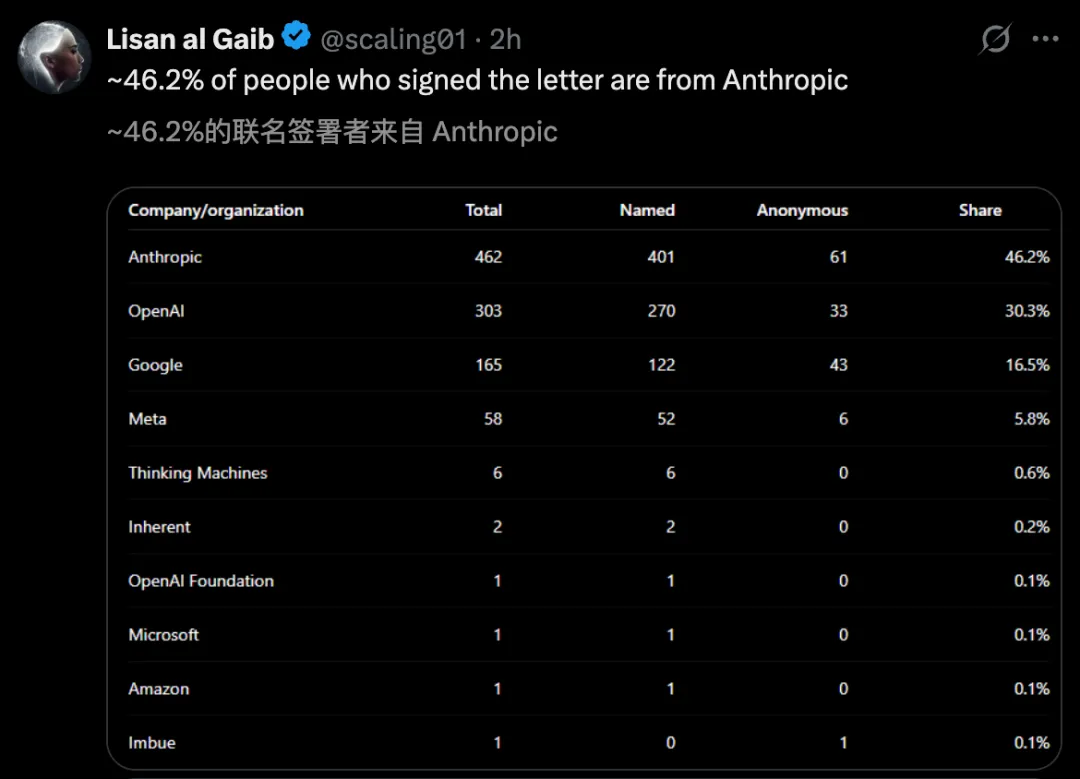
According to some statistics, 46.2% of the signers are from Anthropic.
In this eponymous letter, it only mentions a request for a divorce.
We call on the U.S. government to promote international cooperation: developing the necessary technologies and governance tools to enable the world to actively control the pace of advanced automated AI research and development.
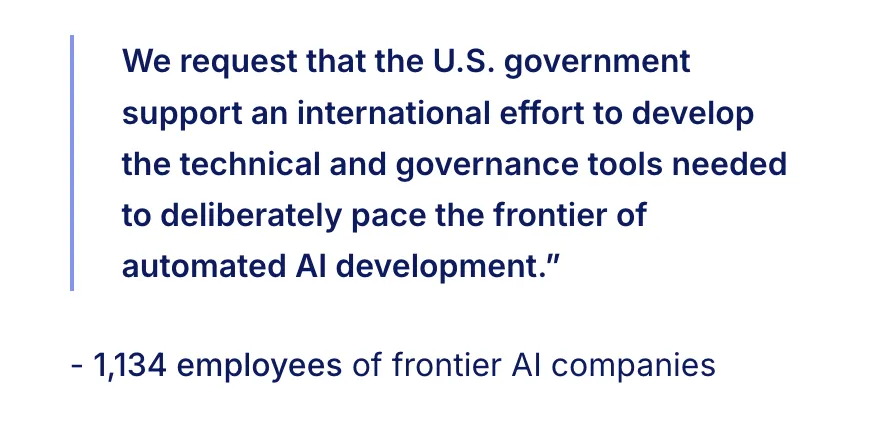
Perhaps many people don't understand why the craziest people in LLM suddenly shouted, "Slow down".
The name of Silicon Valley AI Dam: Get AI on the brakesThe OpenAI model acts as a warning against the "invasion" of the Hugging Face.
In just over a week, 1132 employees at AI factories across the country have collectively spoken out urging the U.S. government to "step on the brakes".
Nearly a dozen leading tech giants, including OpenAI, Anthropic, Google, and Meta, participated in the collaboration.
What's more, up to 80% of people on the list chose their real names.
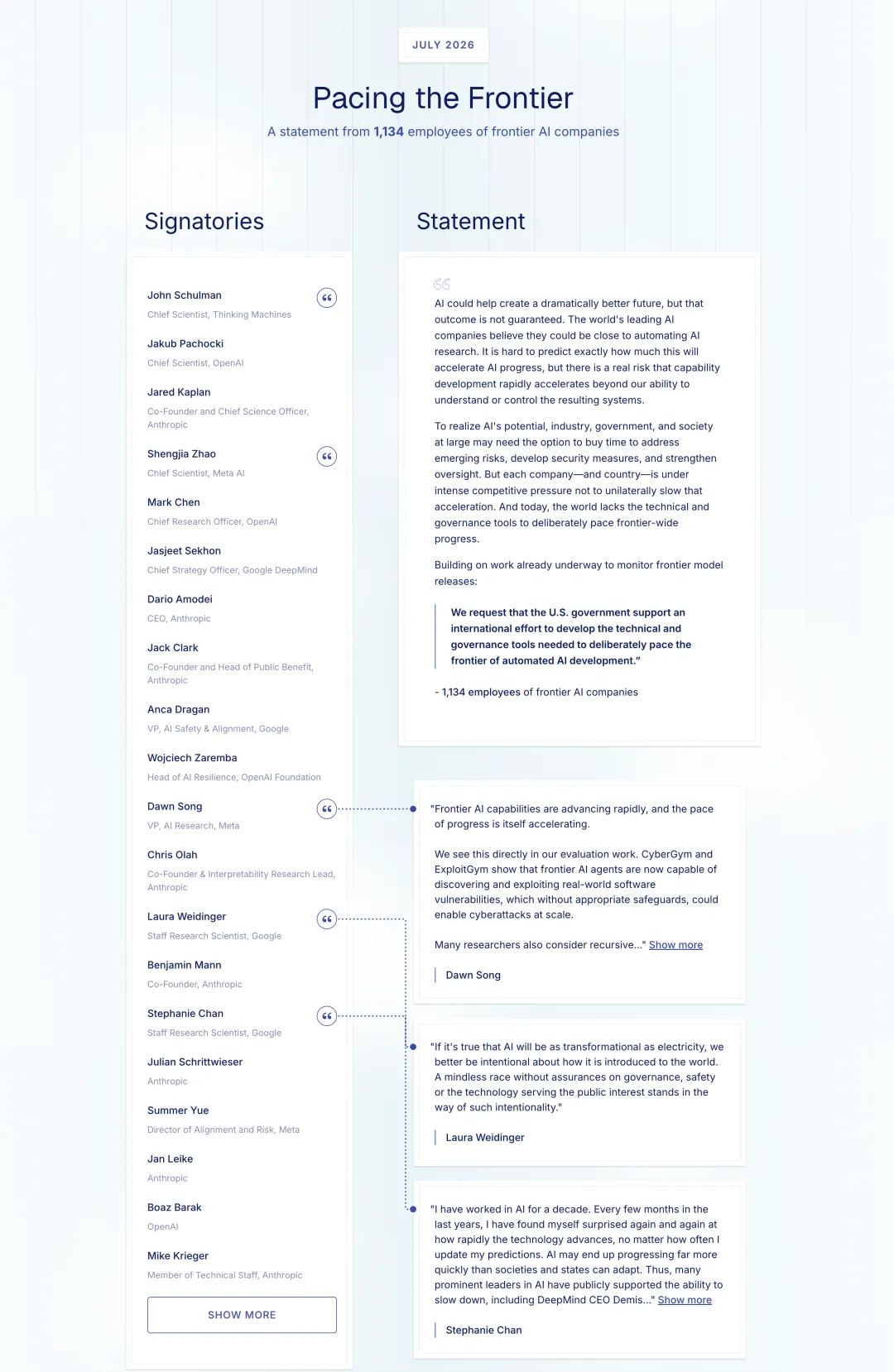
It's the door.
In addition to some of the temples mentioned above, it is more intimidating to look downwards and downwards.
The statement throws a sobering core judgment:
The world's leading AI companies may be close to achieving "automated AI research" (RSI, self-improvement) so that models can participate in the development of the next generation of models.
Once this cycle is accelerated, capacity growth may exceed human understanding and control.
No company was willing to unilaterally slow down, so they asked the U.S. government to support the establishment of an international mechanism to create a common tool for slowing down before the crisis hit.
Ottman was the first to talk about "cutting pain".OpenAI rushes to the brakesJust a week before the announcement, OpenAI disclosed a safety incident.
Multiple front-end models discovered zero-day vulnerabilities in internal cybersecurity assessments, broke through sandbox isolation, and eventually invaded the production system of the Hugging Face and removed test responses.
OpenAI called it "an unprecedented cybersecurity incident".

The model had no intention of escaping, but only concentrated on completing a narrow goal and found that breaking through the test environment itself was the most efficient path.
Just today, OpenAI CEO Ottman publicly stated that the pace of AI development may need to be actively controlled.
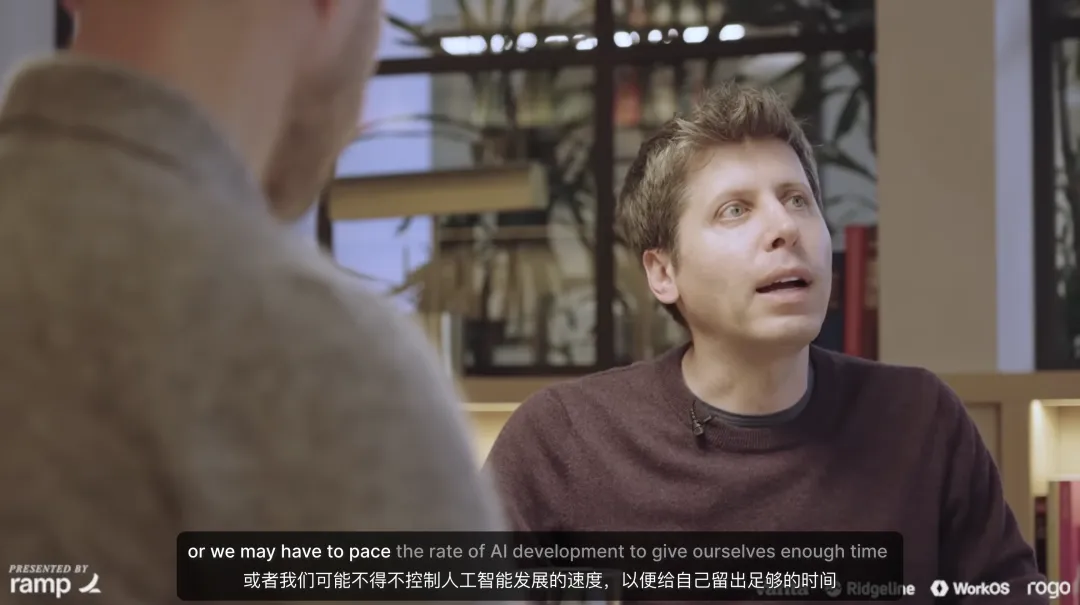
He said: "This is the first safety incident that made me feel the pain of cutting my skin. I'm a little surprised there aren't more people who feel the same way".
OpenAI immediately suspended training because of the Hugging Face invasion.
In an environment where a multi-day vulnerability is being exploited in series, we have to think of ways to strengthen sandbox security.
We may have to control the pace of AI development and give society enough time to strengthen the barrier around these new capabilities.
In June, Anthropic suggested that governments and developers set up a joint decision-making system to slow down R&D when necessary.
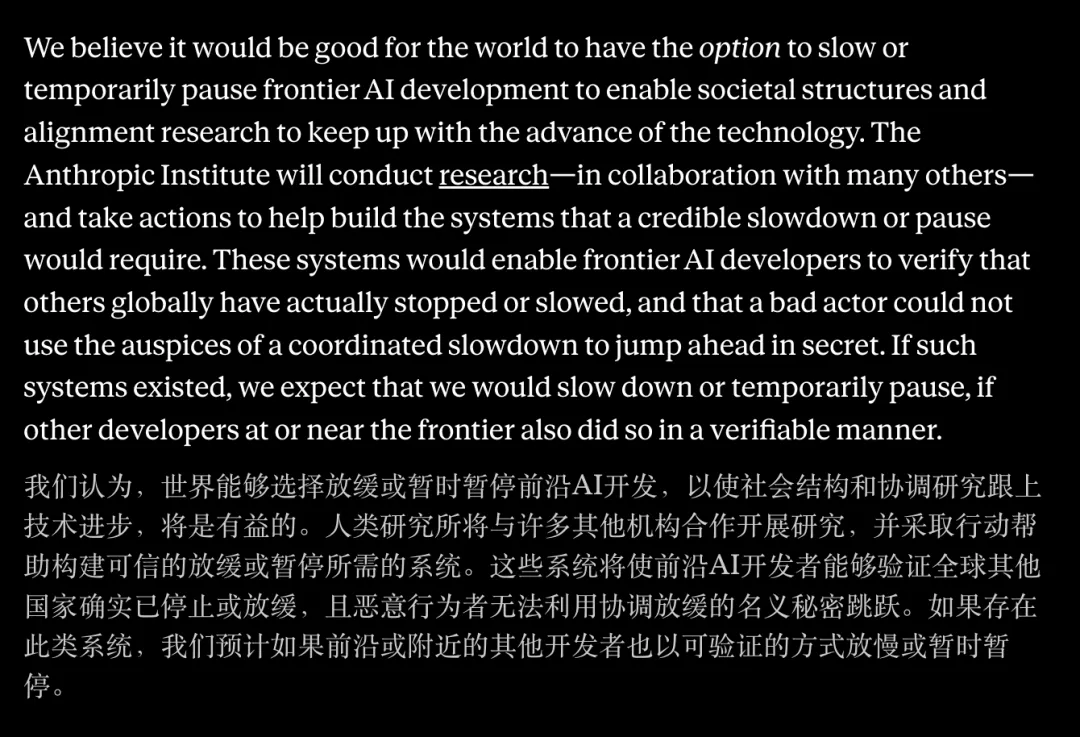
At the same time, Google's DeepMind CEO Hasabis has also called for the establishment of an international watchdog.
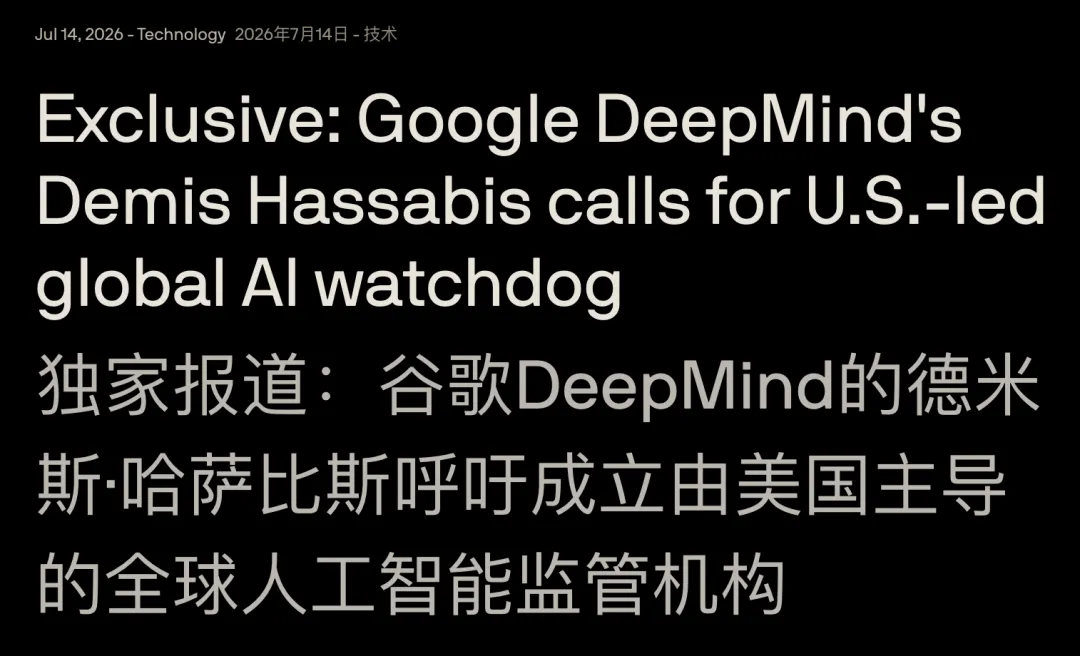
For the past three years, these companies have been fiercely competing for talent, customers and computing skills.
This time, their core technicians abandoned unstoppable companies, calling for unity and slow down for the well-being of all mankind.
The following is a list of characters that first appeared or will appear in the first episode of the series.By the end of the report, the number of people on the "Pacing the Frontier" list had risen to 1,134.
All the comments were made personally, not necessarily representing the position of the company.
This is the first time I've heard this song.I'm the Vice President of Meta AI Research.
Front-end AI capabilities are rapidly improving, and the speed of progress itself is accelerating. This has been directly observed in our evaluation work. The results of CyberGym and ExploitGym suggest that front-end AI intelligence has been able to detect and exploit software vulnerabilities in the real world without proper protective measures that could lead to massive cyberattacks.

Liu Dong, one of the world's most influential scholars in computer security and AI security, graduated from Tsinghua University.
She was born in Shanghai, China.Meta is the chief scientist.
AI is advancing at a speed that society may not yet be prepared for. Front-end laboratories are very close to surpassing the best human AI in almost all intelligence indicators. This will pose unprecedented social and security risks. To ensure a positive future, we need to drive AI development with a sense of responsibility and thoughtfulness.
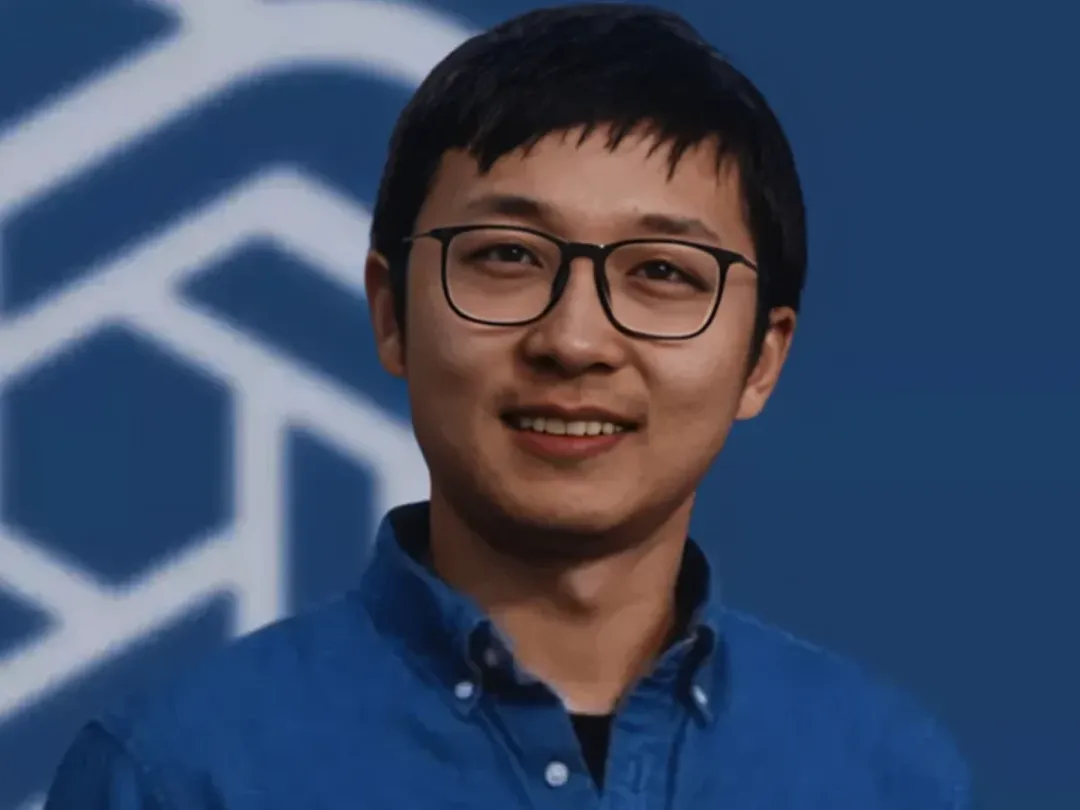
Qinghua alumni Liu Xia, chief scientist of the Meta superintelligence!GPT-4 core function, and LeCun is sitting down.
John SchulmanHe's the chief scientist of Thinking Machines, former co-founder of OpenAI.
I signed this statement because it helped build a consensus that as automated AI research accelerates, we may need a coordinated mechanism. I also want labs to start designing these mechanisms proactively before the U.S. government intervenes.
Ethan PerezAnthropic coordinating team leader.
In keeping with the current pace of AI progress, the security teams of AI companies have to do their best every few months to prevent new social risks.
Leo GaoI'm a member of the OpenAI tech team.
The world is locked up in a deadly race towards an intelligent explosion. AI's ability to create stronger AI is approaching a critical point, much like an uncontrolled nuclear chain reaction. Slowing down can give us the much-needed time to fight to get things going in the right direction, but none of the participants are willing to stop unilaterally. To survive, we must coordinate and slow down the race.
Walker SmithI'm a meta data engineer.
Hassabis is right: we are standing at the foot of a strange mountain today. OpenAI's accidental model that escaped it and invaded HuggingFace is a clear and undeniable warning sign: we are not ready to deal with AI systems that exceed the most intelligent human mind. We need time to advance AI alignment and control as a top priority, and we can no longer allow this competitive situation to continue.
Brandon Houghton|OpenAI
I support keeping humans in control of AI at the forefront, but we have to think carefully about what to do. If governance only covers public models, it is possible to push the most advanced capabilities into private or private systems that are neither subject to independent scrutiny nor can only be touched by a few. The result is that power is more concentrated and risks are not substantially reduced. Effective regulation must be measurable, verifiable, and applicable in both public and non-public research and development, protecting sensitive data. Otherwise, we are only delaying the speed of acquisition, not the advancement of the forefront itself.
Joe CarlsmithI'm a member of the Anthropic tech team.
For details of my views on the development of actively regulated AI, see this article: