Today, Lifeifei's startup company, World Labs, released a new generation of the world model Atlas. One example is the image it generates: Lifeifei hangs clothes in his office, the effect is very real.
Li Feifei himself joked and said: "We are really putting clothes on in our offices!"

So what exactly is Altas, and how is it that the digital world is so isolated that it looks like it's actually clothing?
One model, four models.
World Labs refers to the Atlas as an omni model (full-mode model), which is pre-trained from scratch to natively process text, images, video and 3D four-dimensional data.
The official statement on X is "the world's first multi-modal world model that can control the production of images and video clips with a pixel-level camera and reconstruct them as a 3D model".
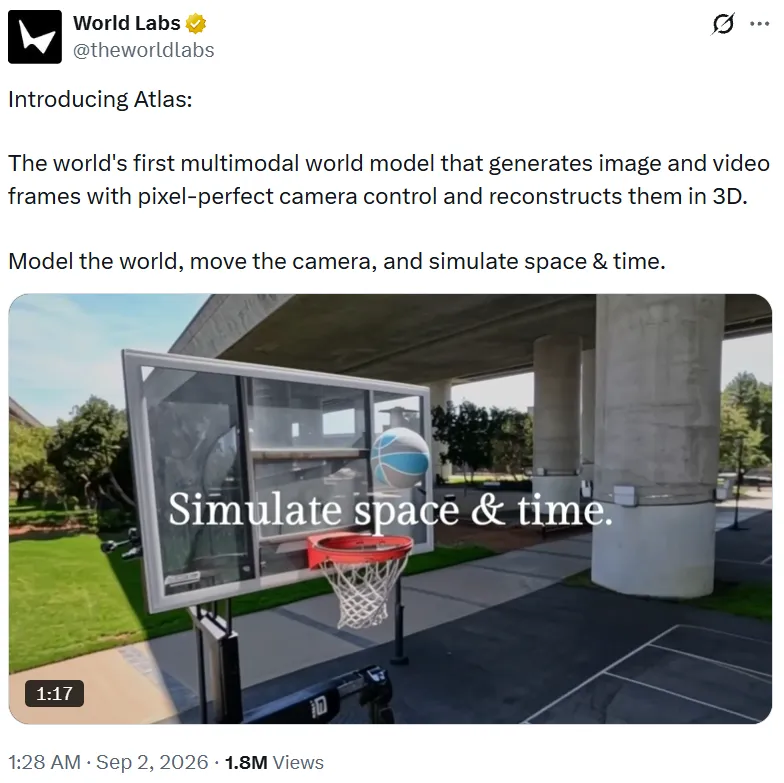
Here, we can see the four main capabilities of Atlas:
The camera can be controlled to generate new views from one to six reference charts, according to the user's location and angle, with a maximum output of 1440p, a video of up to 1 minute in length.
Space reconstruction, from one to dozens of input charts, reconstructs real scenes, both producing new viewpoints, and producing explicit 3D results such as point clouds and 3D Gaussian.
Time and space simulation, simultaneously modeling space and time from input video, is used for video reconfiguration and robot Real-to-Sim processes.
Images are generated, including text and 360-degree landscapes.
Atlas is not open source at the moment, opening early access applications to only a handful of partners, which will then drive other Marble and World Labs products.
Core design: Context in space
At the heart of Atlas's design is what World Labs calls spatial context.

Atlas is a multimodal self-regulating distributed transformer. Its input is grounded in three-dimensional space to form context in space and generates multimodal output based on that context.
An analogy is a large language model: LLM encodes input into context and then generates a subsequent token based on context. The process for Atlas is the same, the difference being that each image entering the context is fixed in a specific location in three-dimensional space.
The direct consequence of this change is that the camera no longer relies on text descriptions. In the past, video models were allowed to "push left" and "lift lens" and could only write these film terms into hints that the model understood how much of a black box was.
According to World Labs, this will allow creators to "sit in the director's chair instead of pulling the trigger".
What's more interesting is the arrangement of the above context. You can go to the context of space and place two unrelated reference charts and specify their relative positions in 3D space, and Atlas will generate a world that transitions smoothly between the two: it imagines itself as a corridor, a walkway, and a corner.
A blog post gives an example of a site image and a ground image combined to fill a space that never existed in the middle.

Architecture and performance
Architecturally, Atlas is a multi-modal self-reporting distributed Transformer with several keywords:
Multimodal refers to its native processing of text, images, camera positions, and depth charts, where video is represented as a sequence of images;
Self-return refers to the output generated by individual elements, with each task merely a different sequence of sequences;
The scattering part uses rectified flow to generate noise gradually.
The Transformer backbone ensures that it is adapted to modern hardware.
World Labs emphasizes that it is a mixture of LLM and video models, so that it can simultaneously feed on KV caching, logical optimization for such LLM deployments, and algorithmic advances for distributed distillation, CFG, VAE, and video improvements.
World Labs used single-chip input charts with one to three filmed camera instructions and blindly selected by third-party human reviewers. The result was that Atlas had a 75% victory over MiniMax H3, Gemini Omni Flash 81%, Ali HappyHorse 1.1 86%, FLUX 3 93%, Seedance 2.5 94%, and the more complex the camera trajectory.
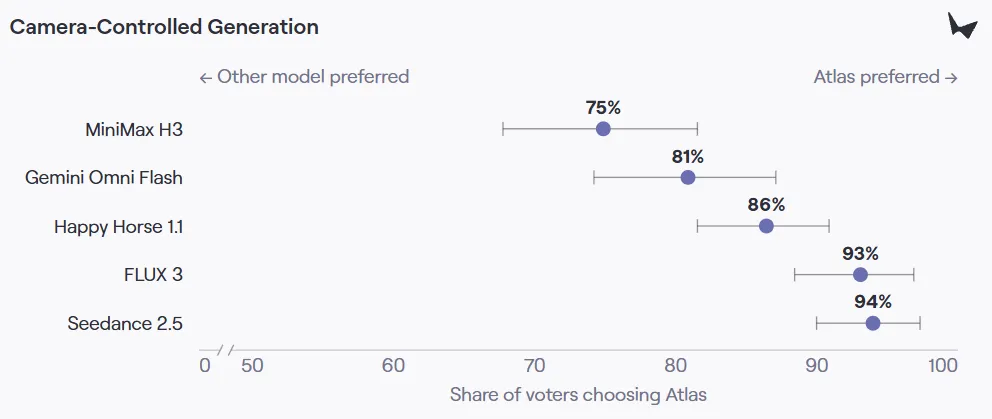
It should be noted that World Labs wrote in its own blog: "Other models of contrast do not accept camera positions as native inputs, so the camera can only be described by text cues". In other words, 75% to 94% of the range measured is largely the gap between the "native camera interface" and the "text description camera", rather than the pure image quality gap. Therefore, World Labs is not saying that "Atlas's video generation capabilities fully compress the above models".
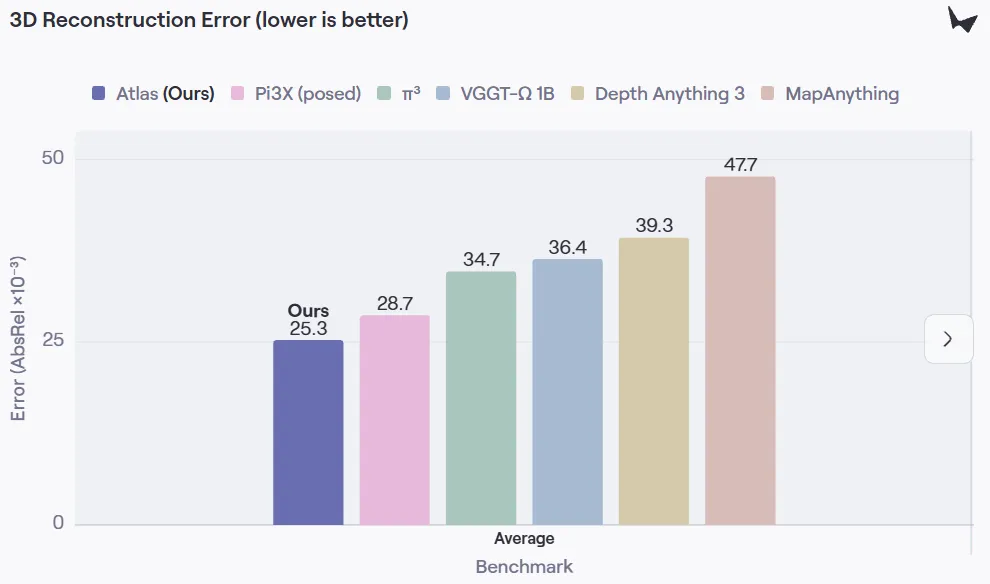
3D reconstruction sections. In rare perspective reconstruction tasks, the average error for Atlas is 25.3, superior to Pi3X's 28.7, π3's 34.7, VGGT-Ω 1B's 36.4, 39.3's 39.3, and MapAnything's 47.7. World Labs says that all baseline results are reproduced by themselves to ensure consistency of the evaluation protocol. It should be noted that the contrast objects here are clearly defined as "the best open source dedicated reconstruction model", and that Atlas is not first in every data set.
As for scaling, World Labs's statements remain on a qualitative level: a series of incremental models were made during the training process, unlocking new capabilities with each upgrade of the algorithm. They have not yet published parameters, training data scales, scaling curves, cost reasoning and delay data.
The more you see, the less you imagine.
The official blog of World Labs gives a large number of examples, and overall, the more charts are entered, the less imaginary the Atlas is.
In the example of a garden in a blog, a single ground photograph can generate an aerial view, the garden itself being accurate and the rest entirely imaginative. After adding a photo of the second cottage, the cottage appears, but the house on the left is still framed.

According to World Labs, Atlas is usually able to give a faithful reconstruction of two or three graphs, while eating more than a hundred input graphs.
An example of this is the Stanford home court: With only 2 to 25 photos taken from the ground, the Atlas can generate flight paths that are much higher than the campus.

Ghosn's scenes, which can be viewed interactively in the blog, come from 30 input charts.
More examples
Atlas can also simulate "bullet time". According to World Labs, with three to five ordinary cameras, it can freeze time and re-configure time, looking back at the same moment from a perspective that was previously impossible. These cameras were made without professional photographers or special equipment. According to the blog, several engineers and researchers took pictures with their phones, tripods and backpacks.
Robots are another line. This is the first time the strategic direction has landed in model form since World Labs acquired simulation company SceniX in July.
World Labs' approach is to scan two large environments with cell phone video, each of which takes 24 frames to reconstruct, and then simulate robots of different shapes walking along different paths, producing RGB and depth data that the robot's body cameras should see at each step.
The key here is that the world and the robot's observations of the world come from the same model. In traditional Real-to-Sim processes, environmental reconstruction and sensor rendering are often two systems, with errors accumulating at junctions. In operational tasks, Atlas can also capture the interaction of solids, adhesives, and movable objects, and support the replacement of objects, changing positions, adjusting light and background to mass-produce variables, according to World Labs.
Finally, here are some examples of 3D worlds with image generation:
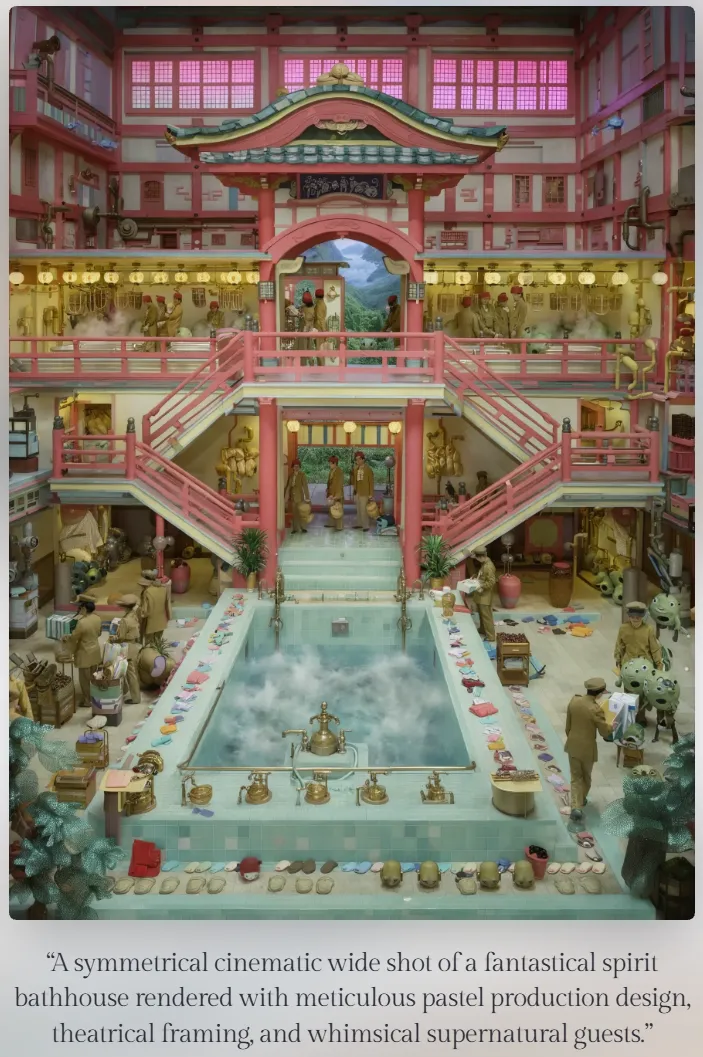

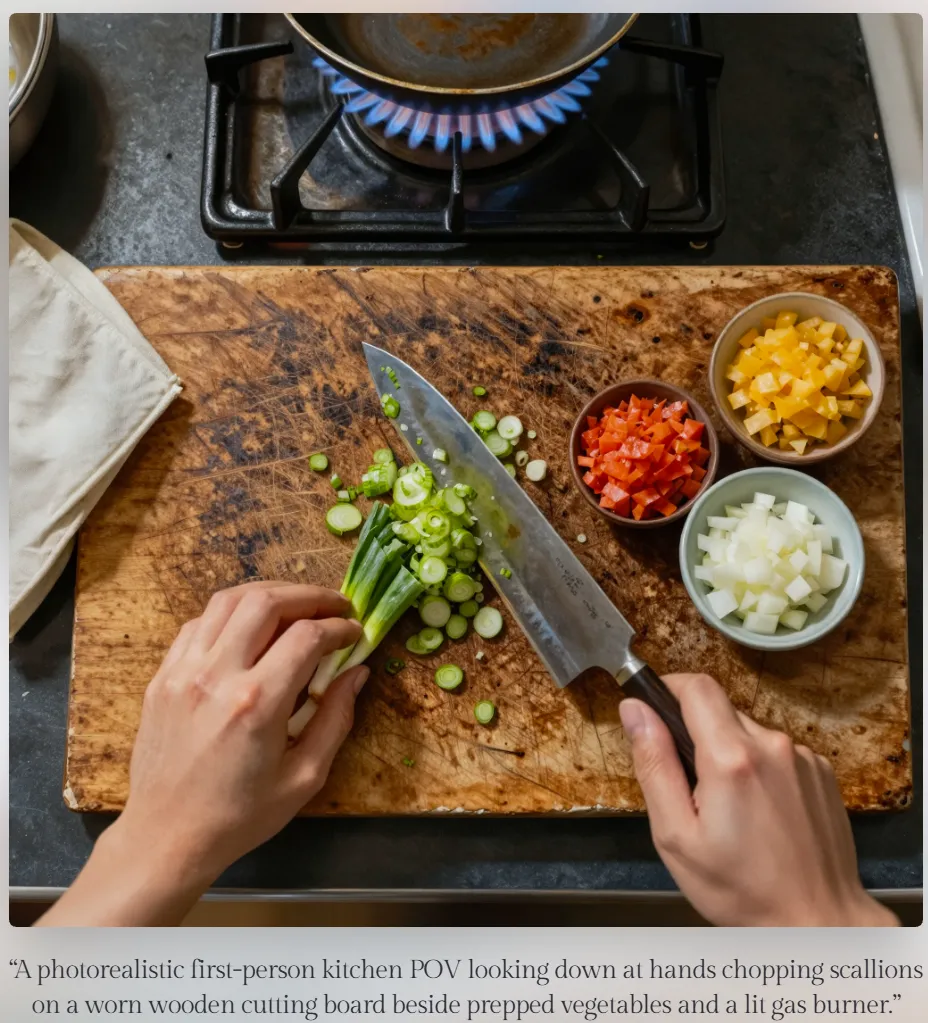
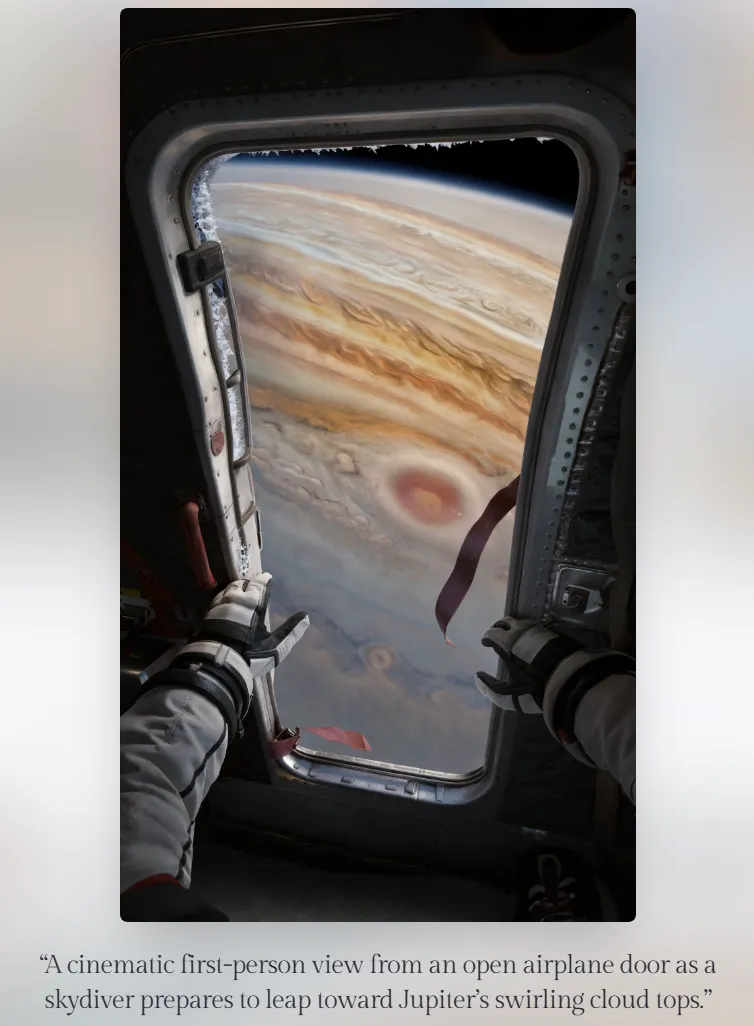
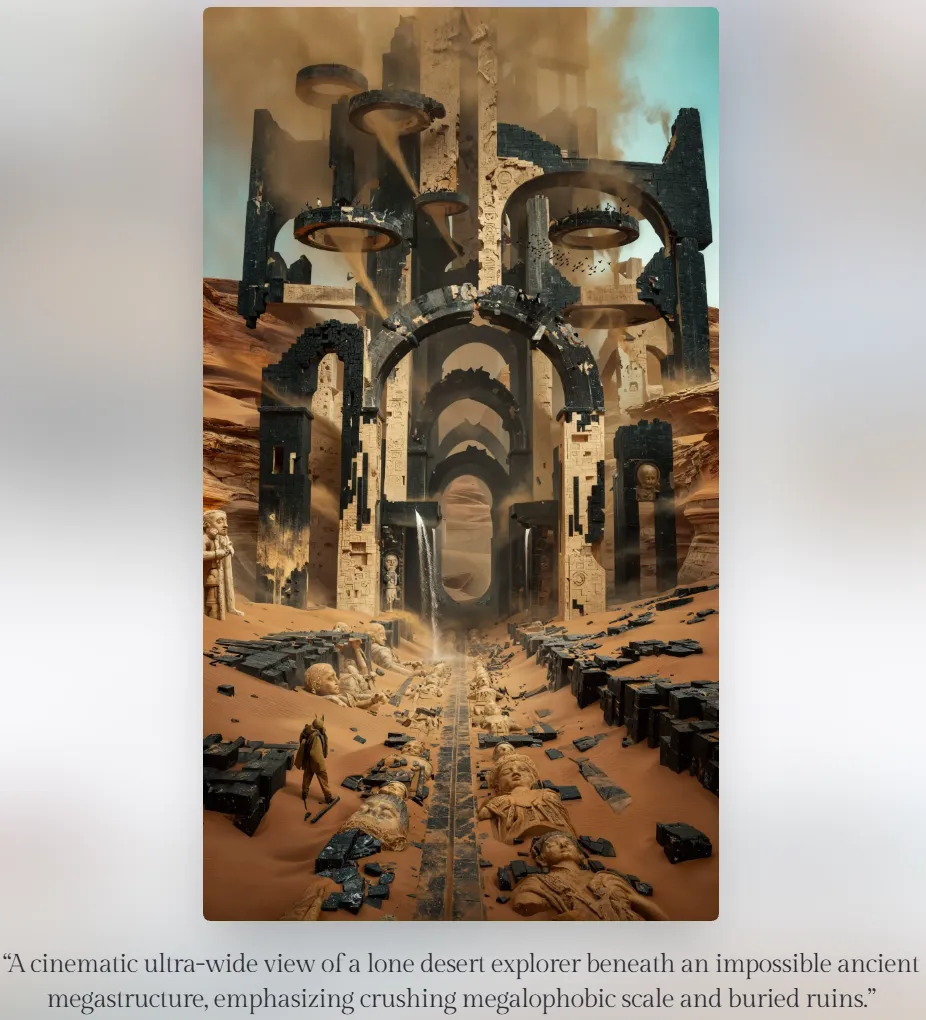
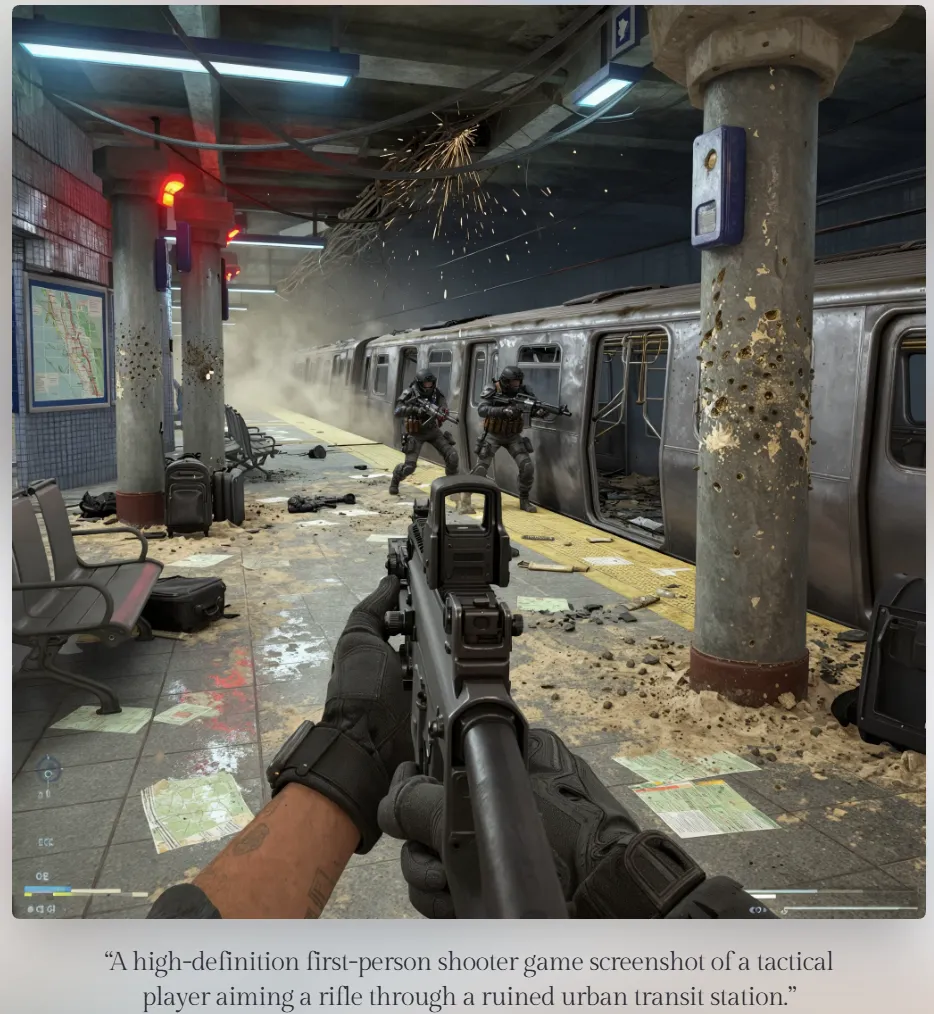 Scroll to the left and look.
What is the meaning of this verse?
Looking back at the Atlas timeline, the pace of World Labs is quite dense. In September 2024, with $230 million in financing, the first product, Marble, launched in November 2025, the World API opened in January 2026, and a new $1 billion in financing was completed in February, with investors including Great Britain, AMD, Autodesk, Fidelity, and others valued at about $5 billion.
This path has a clear direction: from a "world of generating good looks" to a "world of generating enough".
Marble services are primarily video features, game and architectural visualizations that are visually realistic enough; whereas robots are trained to physically stand out from scenes, as well as the depths and observations that can be read by sensors. Atlas integrates reconstruction, generation and simulation into the same model to show us "what the world model can do besides the content".
For more details and examples, please visit the original blog: