LiDAR and visual SLAM's bottlenecks have never been sensors, but the lack of mission closures to date has precisely cut through the core contradictions of current SLAM research from the competitive edge of silicon technology indicators to the real value of silicon landing pads.Trends in papers from recent top conferences (ICRA, IROS, etc.) suggest that SLAM systems are being redefined as the cognitive core of autonomous decision-making driven by robots, rather than just isolated map-making tools.
It should be pointed out that the bottleneck of silicon sensors is not a pseudo-thesis that has been completely solved, but is being attacked systematically by the mainstream paradigm of silicon sensors being integrated.Physical shortcuts such as visual vulnerabilities under light changes, LiDAR recognition limitations in dynamic scenarios, are still present. However, the academic community is no longer entangled in which sensor arrays to filter, but through the compact fusion of LiDAR, Vision, IMU, using deep information to offset dimming, with the help of visual texture auxiliary target recognition, to shift the focus of the problem from the lens-sensing shortcuts to the lens-fusion strategy and lens-computing efficiency.
The real bottleneck is that the SLAM system is still a bi-directional feedback-free buffer, rather than an embedded task-closing buffer.Traditional SLAM outputs static geometric maps that break up with downstream tasks, and the planning modules can only use the map mechanically. However, the real world is dynamic and full of people, movable objects, and temporary obstacles. Traditional SLAM lacks awareness of this, and does not actively choose to build the target area rather than the entire room according to specific tasks such as extracting objects. This open-ended architecture leads to a lot of computational waste in unrelated environments, but critical areas of the task may cause decision errors due to lack of information.
In order to fill this gap, recent summit research has focused on three areas: dynamic semantic understanding and dynamic semantics.Upgrading SLAM from a geometric graph template to a cognitive graph template, enabling the system to infer that a graph is a moving person, and two seconds later will block the path template;The second is Active SLAM.Deep alignment of location-building charts with motion planning, enabling robots to actively adjust trajectories to obtain a better mission execution perspective;The third is the mission-driven scarcity map.Map accuracy and focus areas are adjusted according to the uncertainty dynamics of the downstream task to achieve the desired build-up.
All in all, when the fusion of multiple sensors has brought the underlying physical perception to maturity, the next stage of SLAM's evolution will inevitably shift from the perceptual question of where I'm stuck, to the question of what I should be focused on, which means what kind of cognitive decision-making is important to me.Only if SLAM is truly embedded in the complete task cycle of the Snapper Perceptor Planning Snapper and Snapper can it break away from the positioning of pure algorithm modules and become the hub of Snapper cognition that drives autonomous intelligences. This paradigm shift is precisely what top conference papers currently point to, but not yet fully passed through, the no man's land.
So how do you systematically learn SLAM, 3DGS 3D reconstruction, physical intelligence, and other cutting edge technologies?"Three-D Vision from Inception to Enlightenment"In addition to learning about SLAM and 3DGS, there is also information on self-driving, intelligent, unmanned aerial vehicles, and machine arms clutching.
Many fans ask the following questions:
"Three-D vision from inception to mastery" is the planet of knowledge, inside.What's in it?Is it possible to study video lessons to join the planet?What are the rights of members?The following details will be given to you: (Note: After adding the browser, you can log in to the Knowledge Planet APP/WeChat at the end of the web page to enter the planet)
Today, let's talk about this sadness together.Almost nine years3D visual technology circles.
One, what is a planet of knowledge?
Knowledge Planet is a highly active community platform where you can explore the challenges of research work with small partners from the same research direction, share the latest developments in the field, share 3D Vision's latest summit papers & code information, share videos, explain 3D Vision's important knowledge points, publish high-quality job information, undertake projects, etc.
2nd, 3D vision from entrance to awareness.
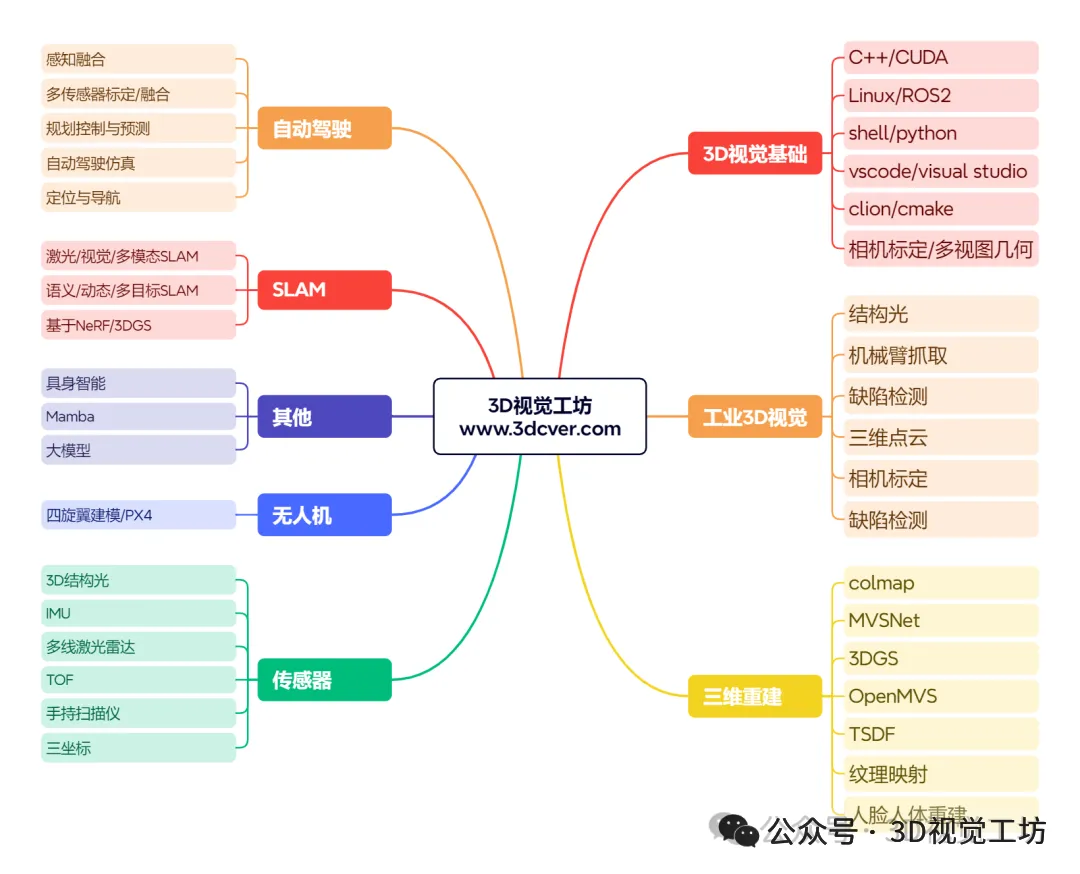
Currently, there are nearly 6,300+ active members, mainly involved in the areas of industrial 3D vision, SLAM, autonomous driving, 3D reconstruction, drones, physical intelligence, large models, and technology fronts.
There are many sub-disciplines, including but not limited to: industrial 3D vision, 3D reconstruction, autonomous driving, physical intelligence, large models, widespread models, and technology fronts, including visual competitions, hardware selection, visual product landing experience sharing, academic & job exchange, etc. We also keep up with the latest cutting-edge technological developments and are a hot topic of discussion on our planet.
| Features | ||
|---|---|---|
| The earliest in the country | Nearly 20 video clips | 3D visual excellence answers |
| The latest summit papers and code sharing | 3DGS exclusive series of videos | Professional think tanks responding to confusion |
| The latest cutting edge technology workshop | Connecting high-quality projects | Source code for each module |
| The latest industry recruitment information | Applications for a job | Research and life spit |
| Sharing the latest industry modules | Ask questions at any time | Monthly Cash Rewards for Accounting |
Summary of the entire series of video tutorials across three planets
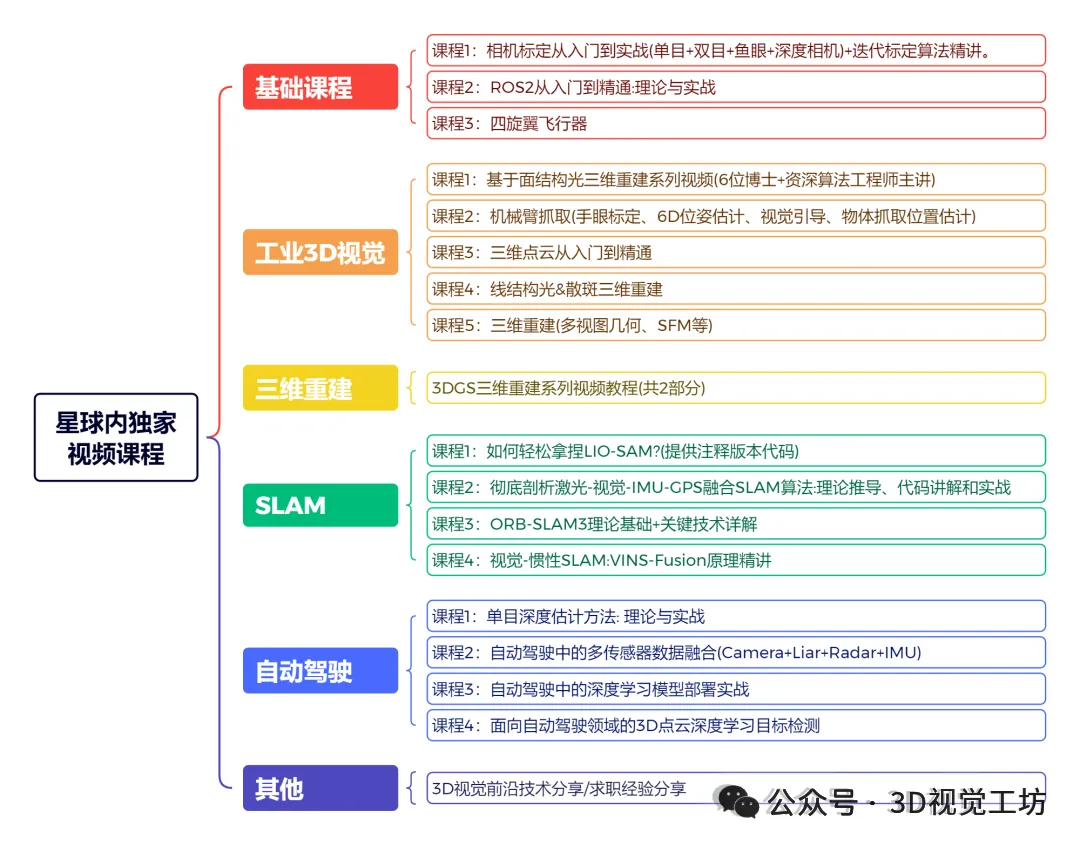
Video tutorials are divided intoTwo large platesThe first block is:Core core curriculumWe've thoroughly honed nearly 20 series of video tutorials, content systems, step-by-step, and more importantly, what you've learned about 3D visual technologies like industrial 3D vision, SLAM, 3DGS, autonomous driving and drones, which we'll cover in more detail below.Technology sharing at the forefrontIn a special event, industry leaders and academic leaders were invited to share live content covering top trends such as physical intelligence, autonomous driving, 3D reconstruction, digital people, distributed modeling, 3D generation, and others. This section is not focused on the content and is no longer discussed in detail.
| Video tutorials from the mainstream (mainstream) | |||
|---|---|---|---|
| 3DGS series | 3DGS-SLAM | Cameras are marked | ROS2 |
| Quad flyers | C++ | Facial structural light | The mechanical arm grabs |
| 3D point clouds | Linear structural light | LIO-SAM | Integration of SLAM algorithms |
| ORB-SLAM3 | VINS-Fusion | Multi-sensor integration | 3D target detection |
| One-point depth estimate | Models deployed in real combat | This section is continuously updated | |
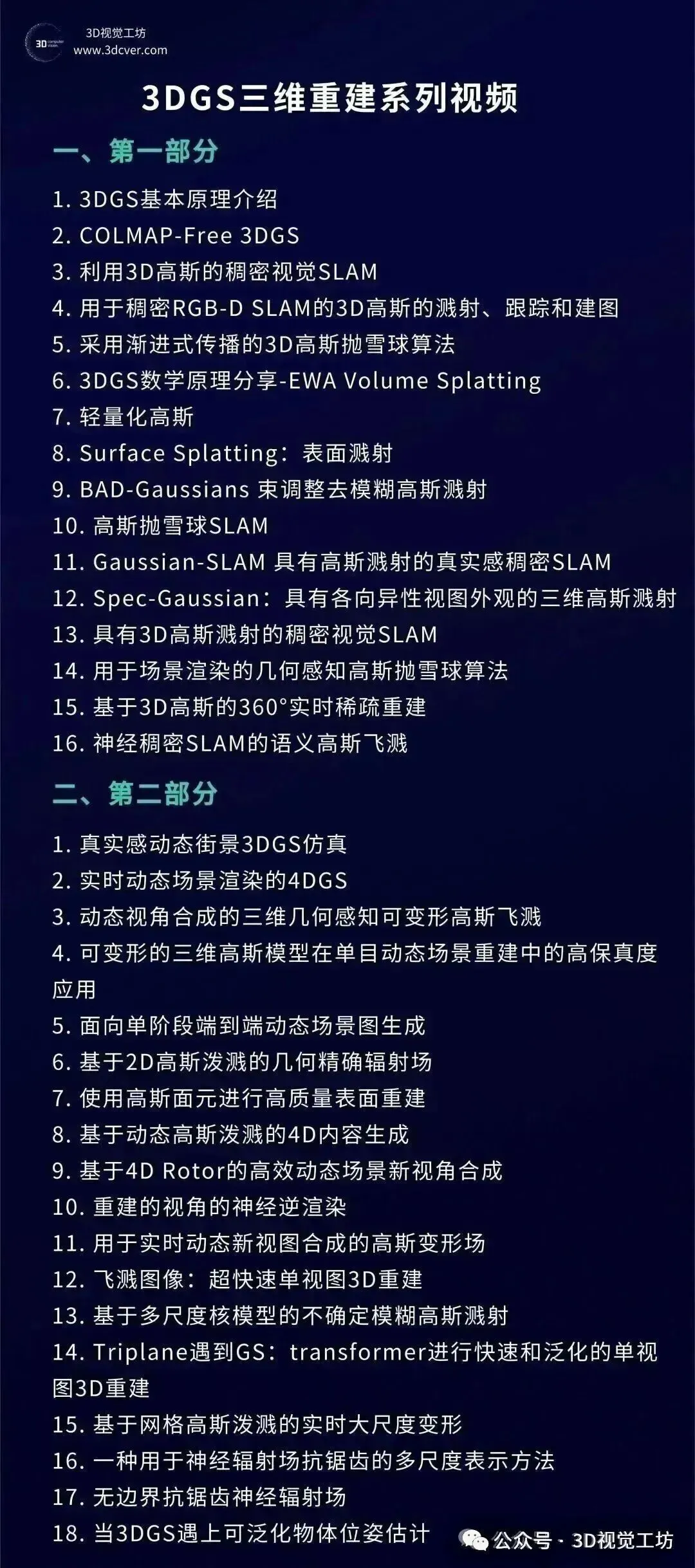
3DGS exclusive video tutorials
3.0.1 3DGS 3D rebuilding series video tutorials
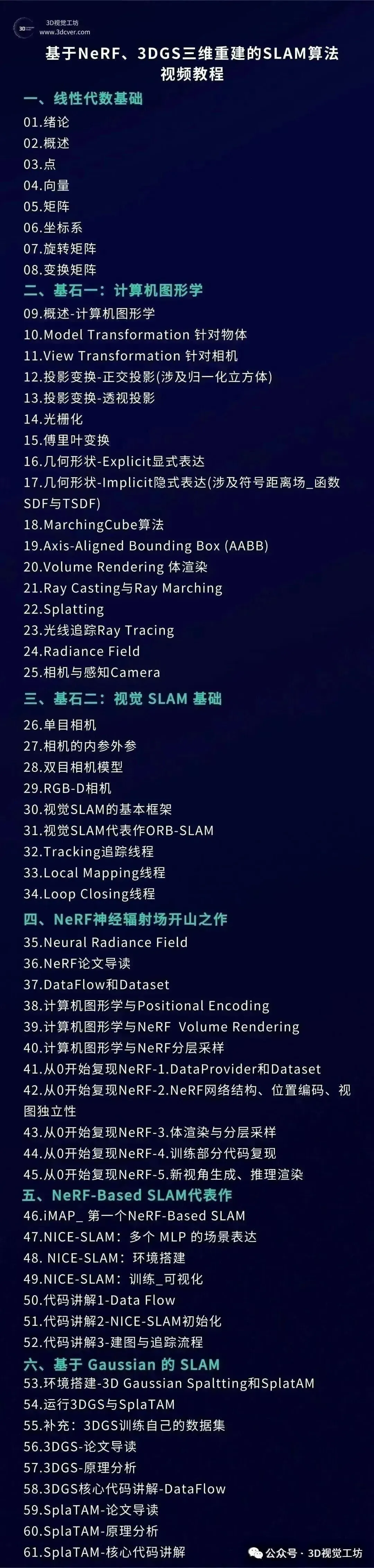
3.0.2 SLAM algorithm video tutorials based on NeRF, 3DGS three dimensional reconstruction
This video tutorial takes you from theoretical and code realization to learning the principles of zero-entry NeRF/Gaussian Based SLAM, reading papers, coding, etc. Theoretical level, from linear algebra to traditional computer graphics, gives you a glimpse into the theoretical foundations and sources of modern 3D reconstruction; the code level teaches you how to reproduce computer graphics, NeRF-related work through multiple hands-on exercises.
3.1 Basic courses
3.1.1 High-precision camera calibration from theoretical to practical combat system instruction
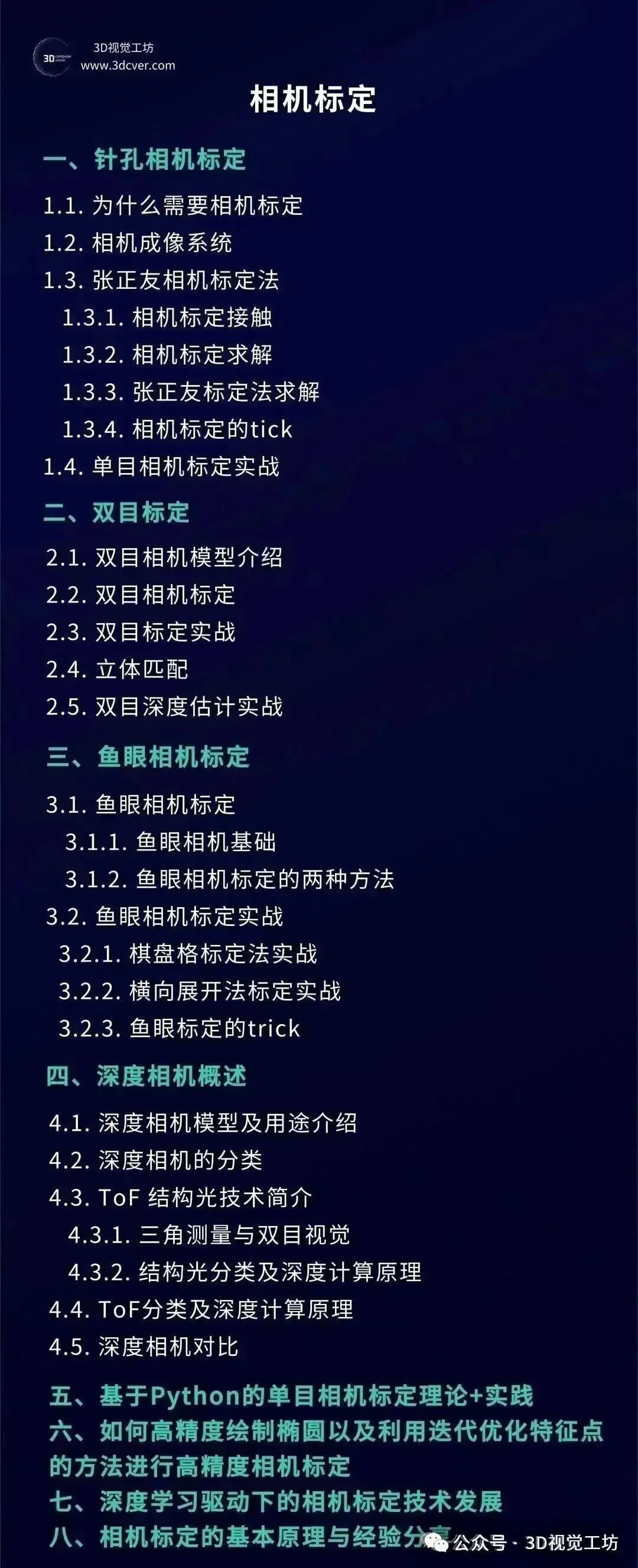
This course mainly consists of two parts: camera labelling and 3D vision; camera labelling includes single-eyed, double-eyed and fish-eyed camera labelling; 3D vision includes stereo vision, structural light and TOF, based on stereo vision.Courses provide corresponding data and code。
Highlights of the CourseIn addition to the basic principles and code that the camera labels, the planet also adds:High-precision camera-labeled improved methods and real-world warfare techniques, which are quite hardcore.。
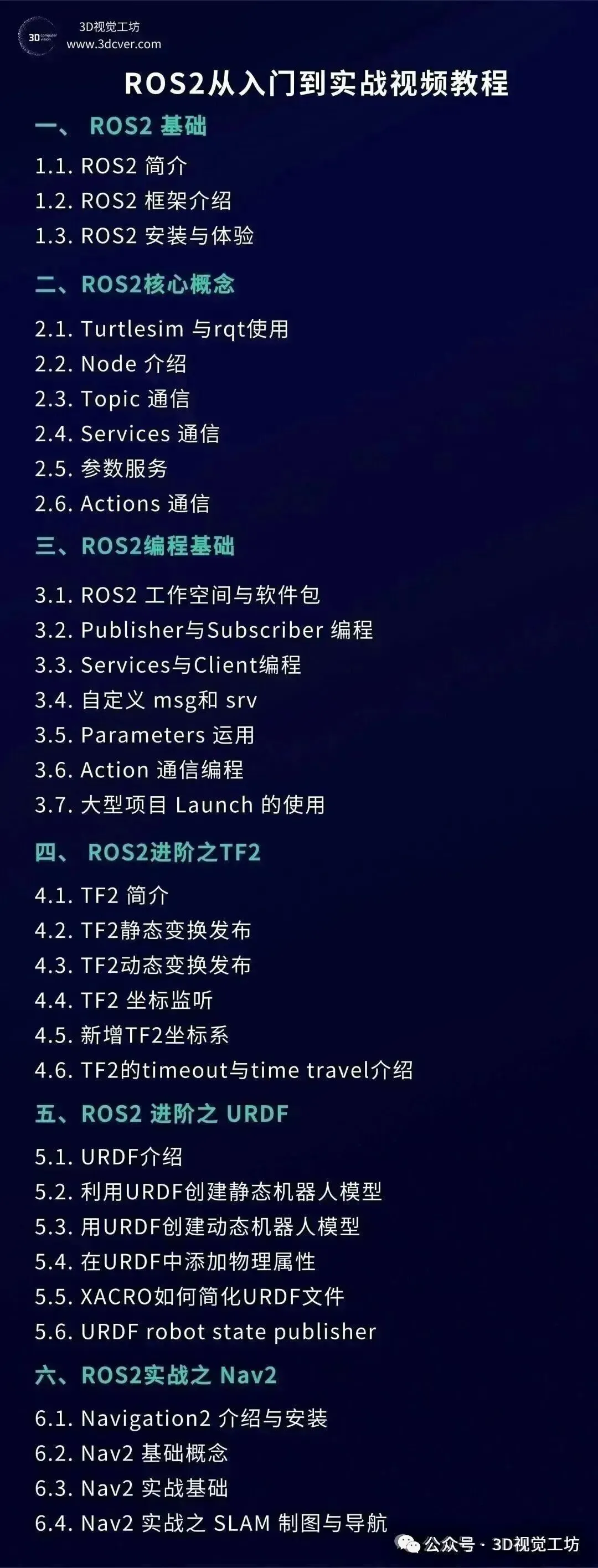
3.1.2 ROS2 from entry to live video tutorials
ROS2 provides a comprehensive hands-on instructional training on ROS2 from entry-level to real-world video tutorials, introductions and high-level presentations, and systematic learning opportunities for all.
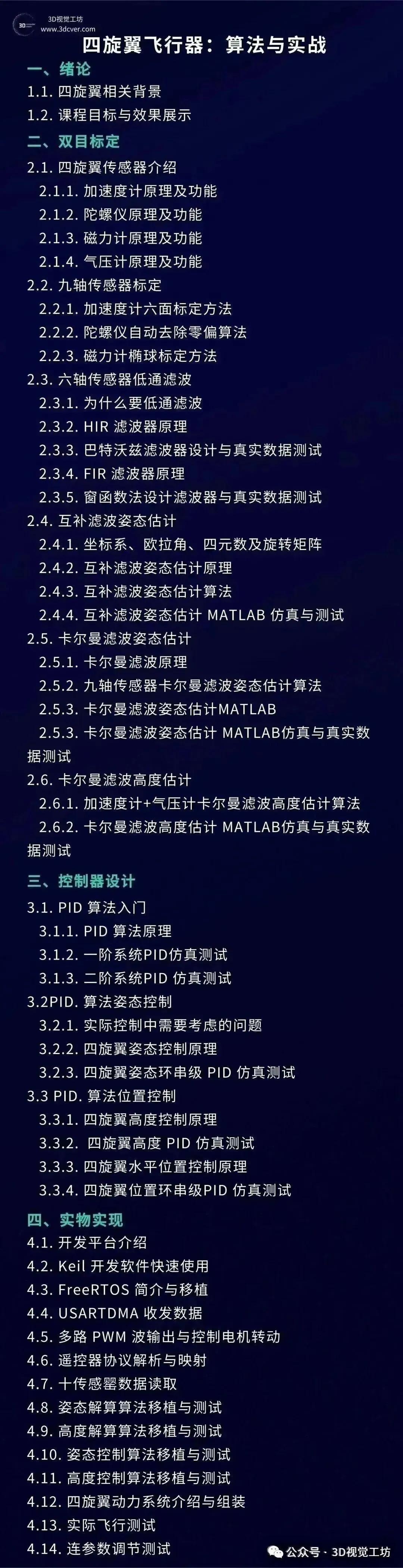
3.1.3 Quad Flyers: Algorithms and Combat
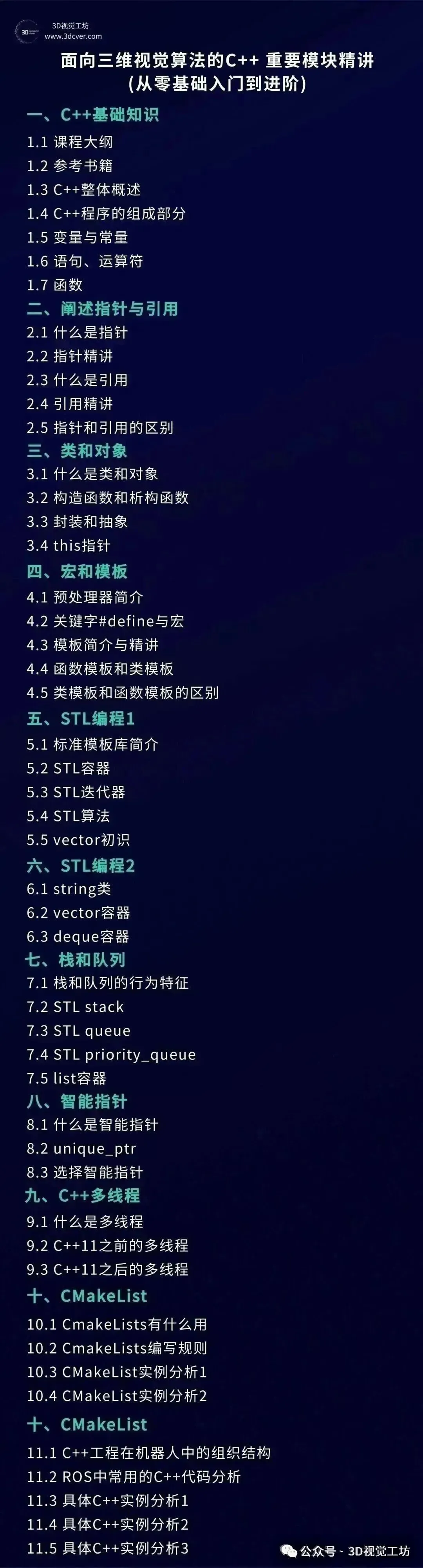
3.1.4 C++ goes from zero-based to advanced
Try to learn through video tutorials, fully understand some of the more difficult modules in C++, master algorithms such as SLAM, learn C++ related job interview skills.
3.2 Industrial 3D visual series video courses
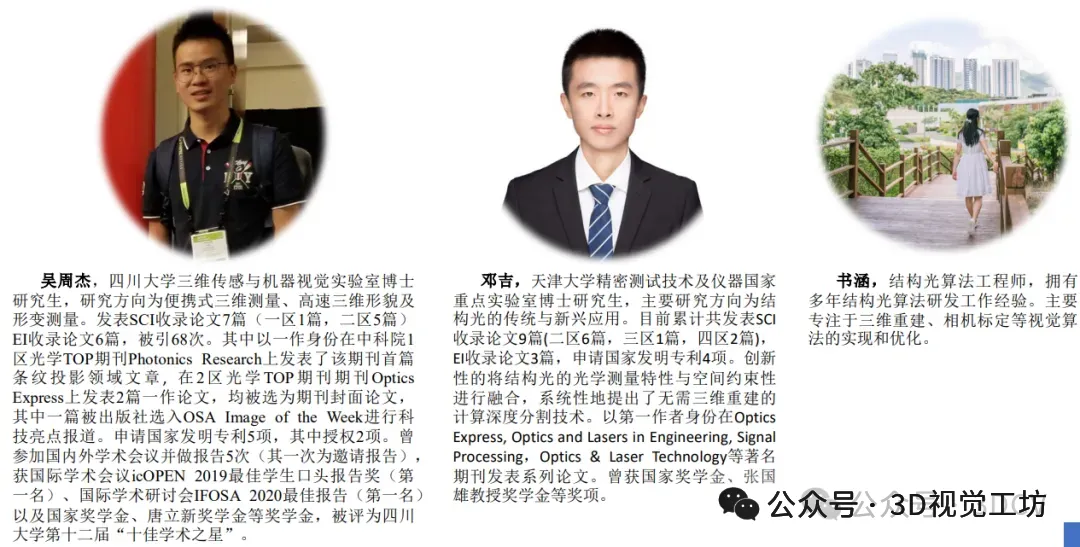
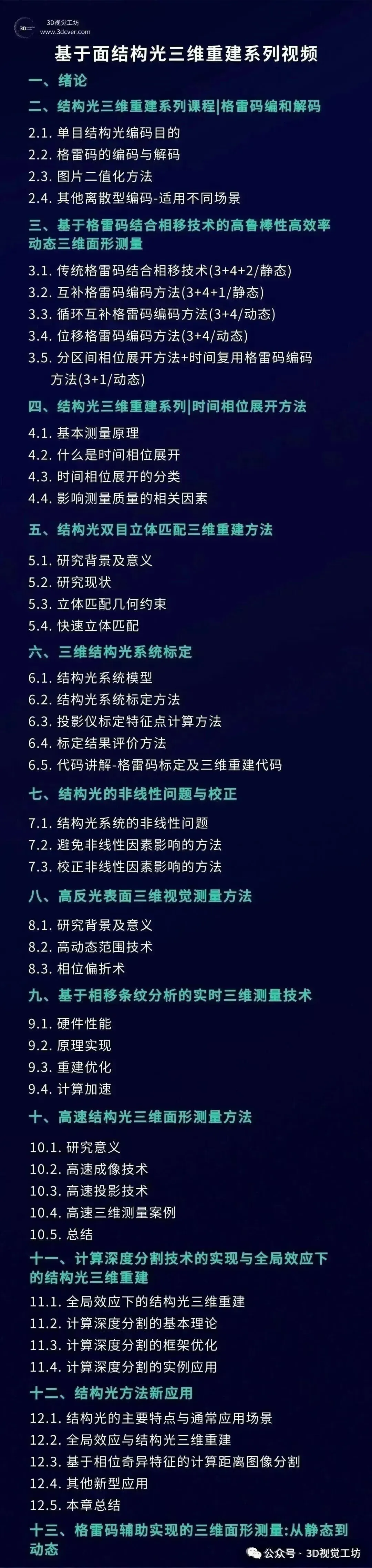
3.2.1 3D reconstruction of video series based on facial structures
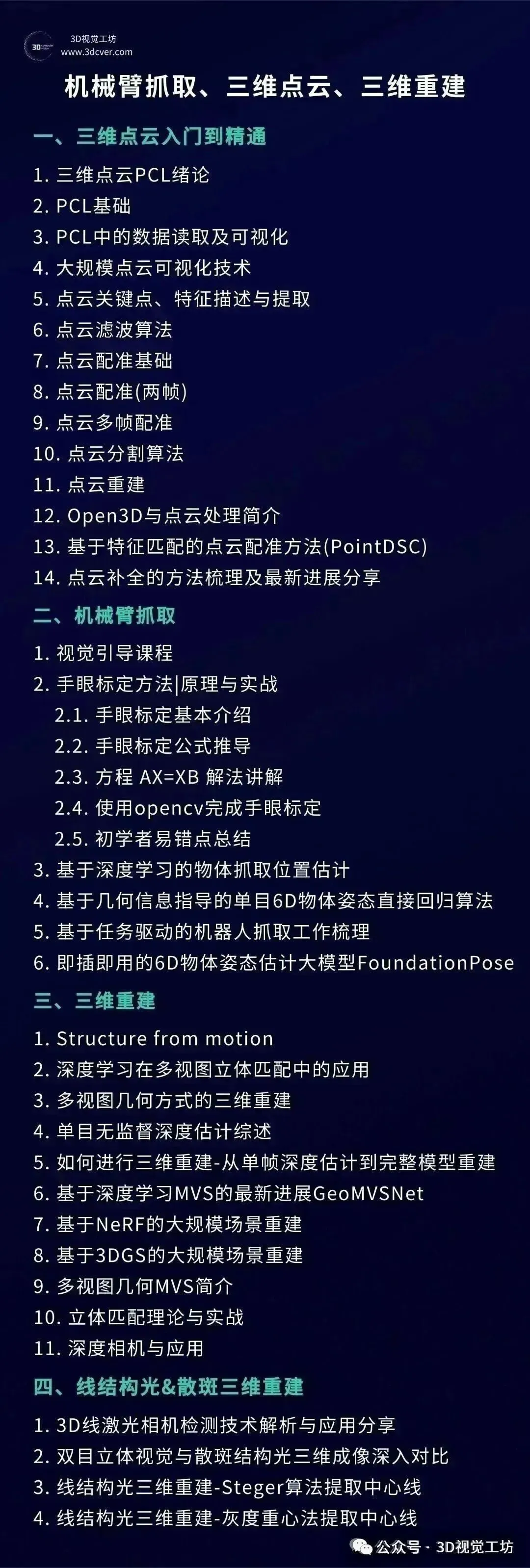
3.2.2 Mechanical arm grabbing, 3D point cloud, 3D reconstruction and so on
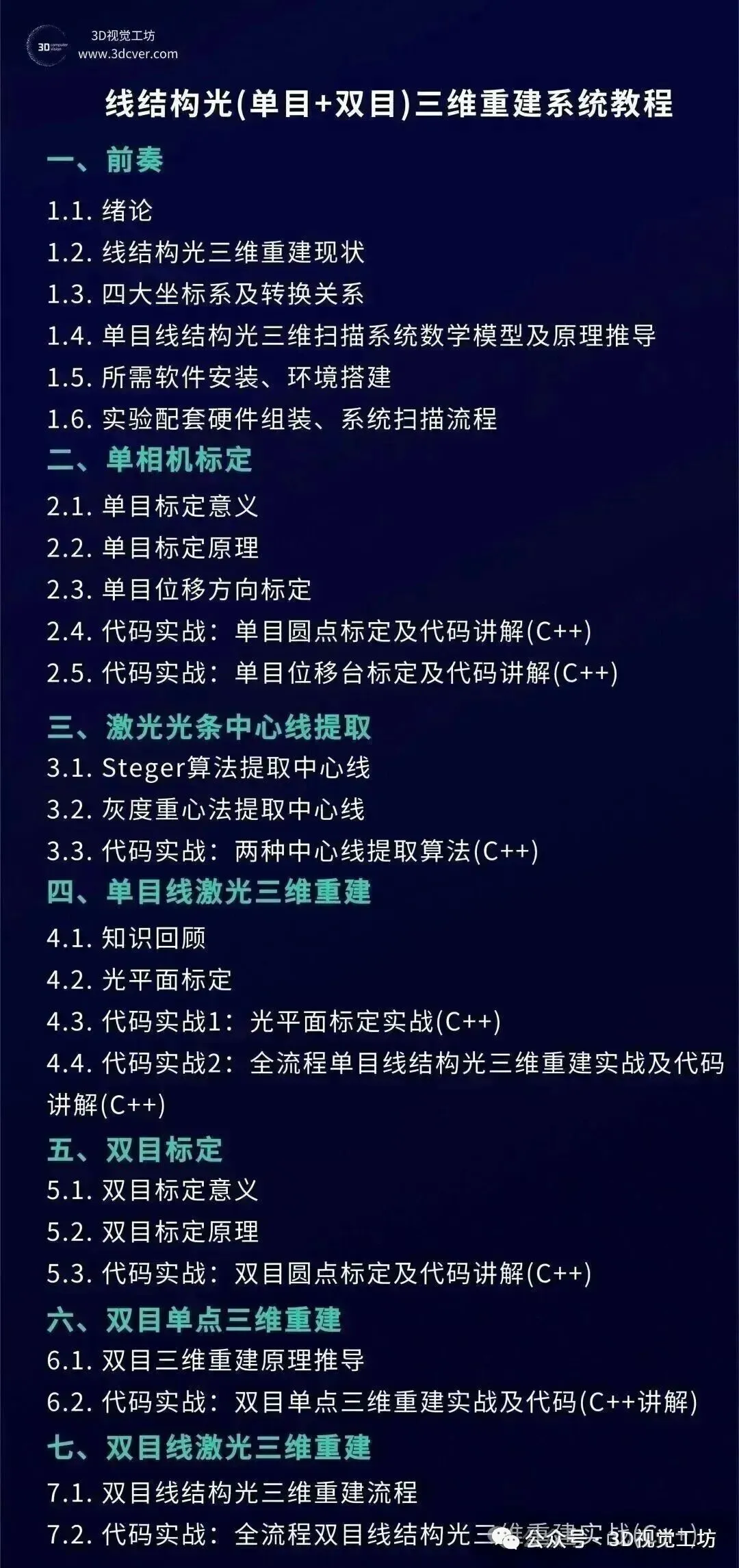
3.2.3 Linear structural light (single) and three-dimensional system reconstruction tutorials
This course focuses on real-world warfare instruction, hand-in-hand with the implementation of a linear laser 3D scanning system of its own from scratch. Almost every chapter is equipped with corresponding lectures and codes to help you better understand the technology of linear laser 3D reconstruction.
3.3 SLAM series of videos
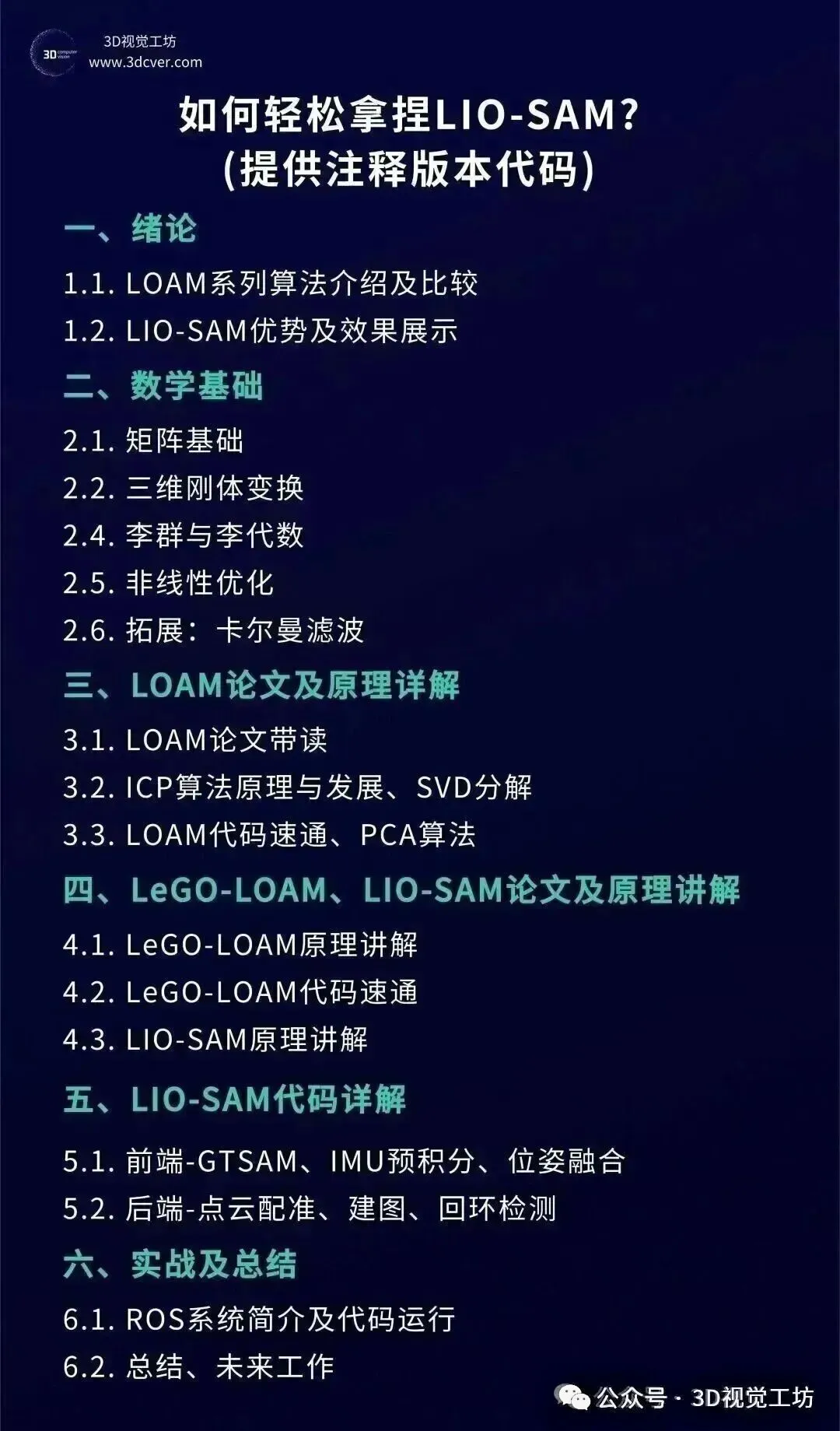
3.3.1 How to easily pinch LIO-SAM?
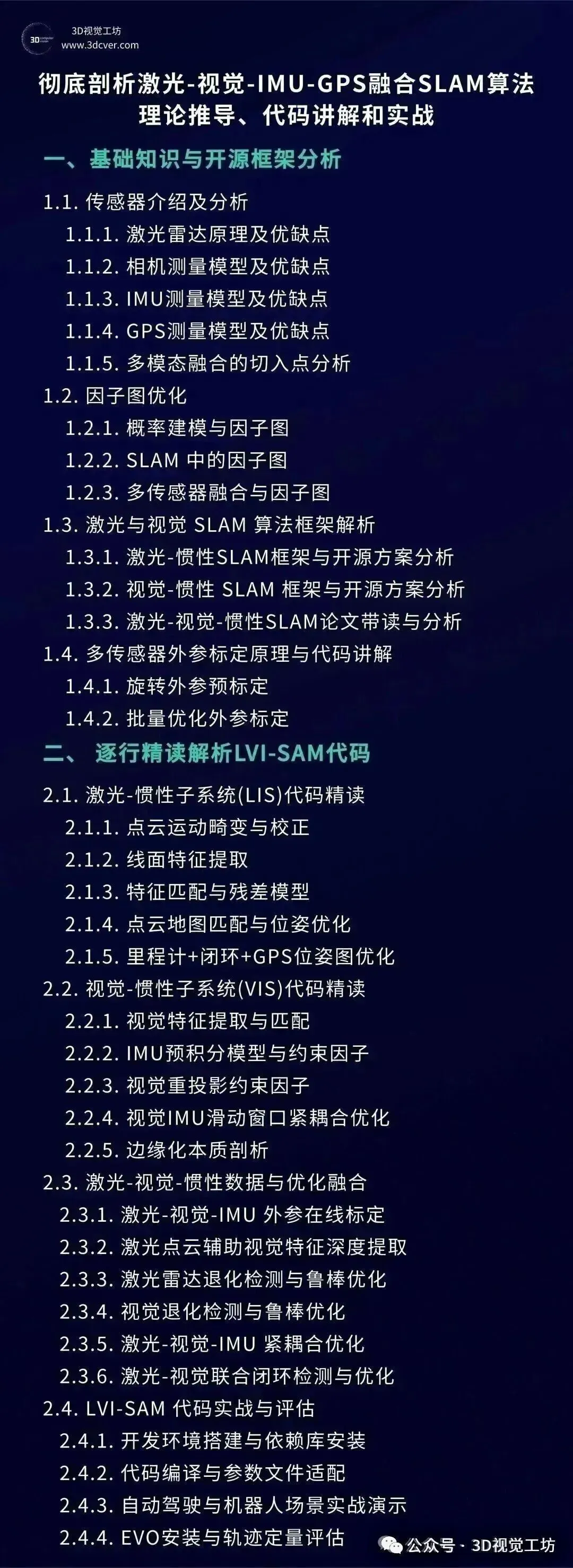
3.3.2 Thoroughly dissect the laser-visual-IMU-GPS fusion SLAM algorithm
This video course explains the technical difficulties and frameworks of the SLAM algorithm for laser radar-vision IMU-GPS integration from both theoretical and code implementation and, based on his years of experience in robotics engineering, explains the methods and techniques for multi-module integration in real-world robotic applications.
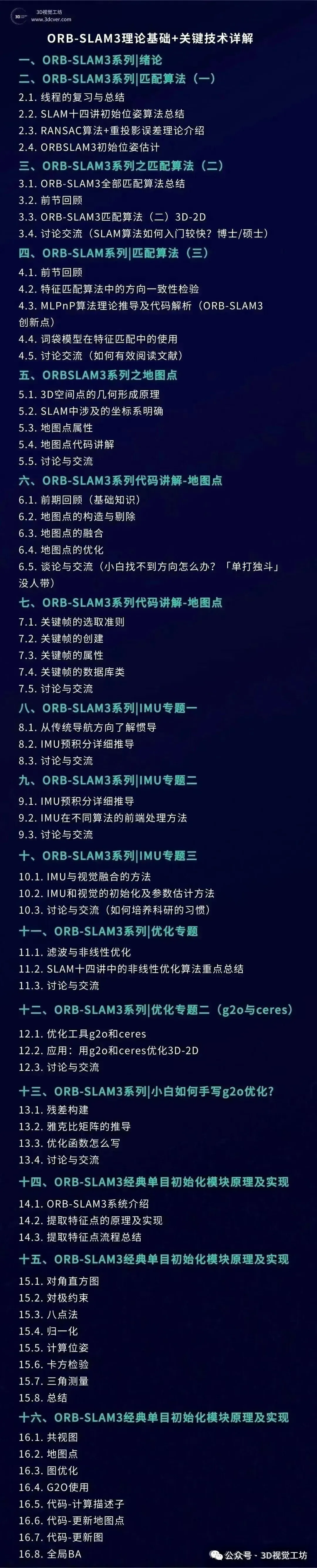
3.3.3 ORB-SLAM3 theoretical basis + key technical details
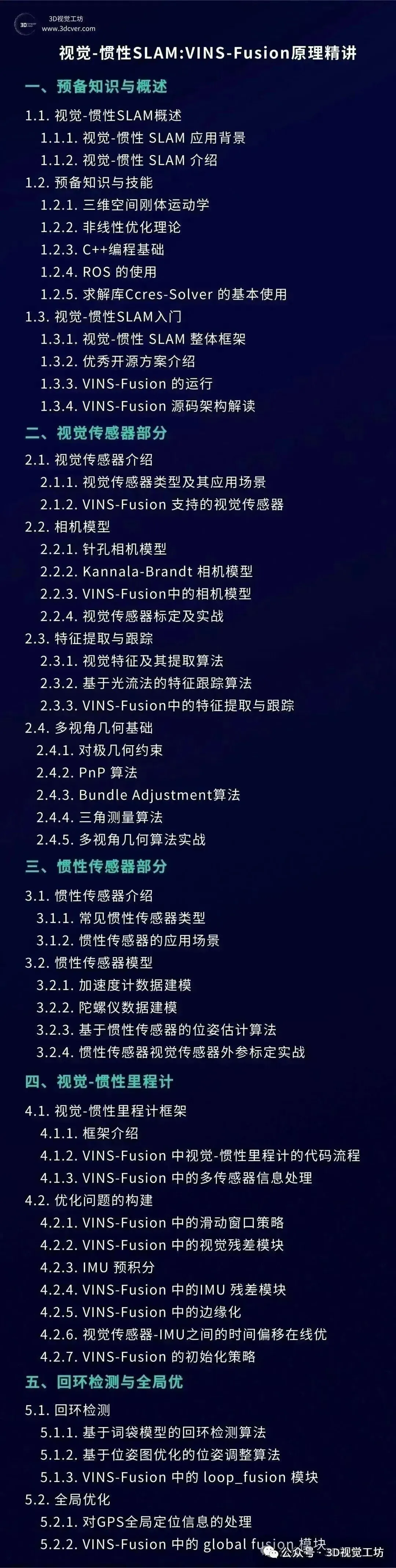
3.3.4 Visual-inertial SLAM: VINS-Fusion Principle Precision
The introductory and practical video tutorials for visual-inertial SLAM, combined with the VINS-Fusion source code, systematically align the basic theoretical knowledge of visual-inertial SLAM. The entire course is taught by first-rate algorithm engineers, from basic theory to code analysis, nursery-level teaching, assisting students to grow from small to large.
3.4 Self-driving
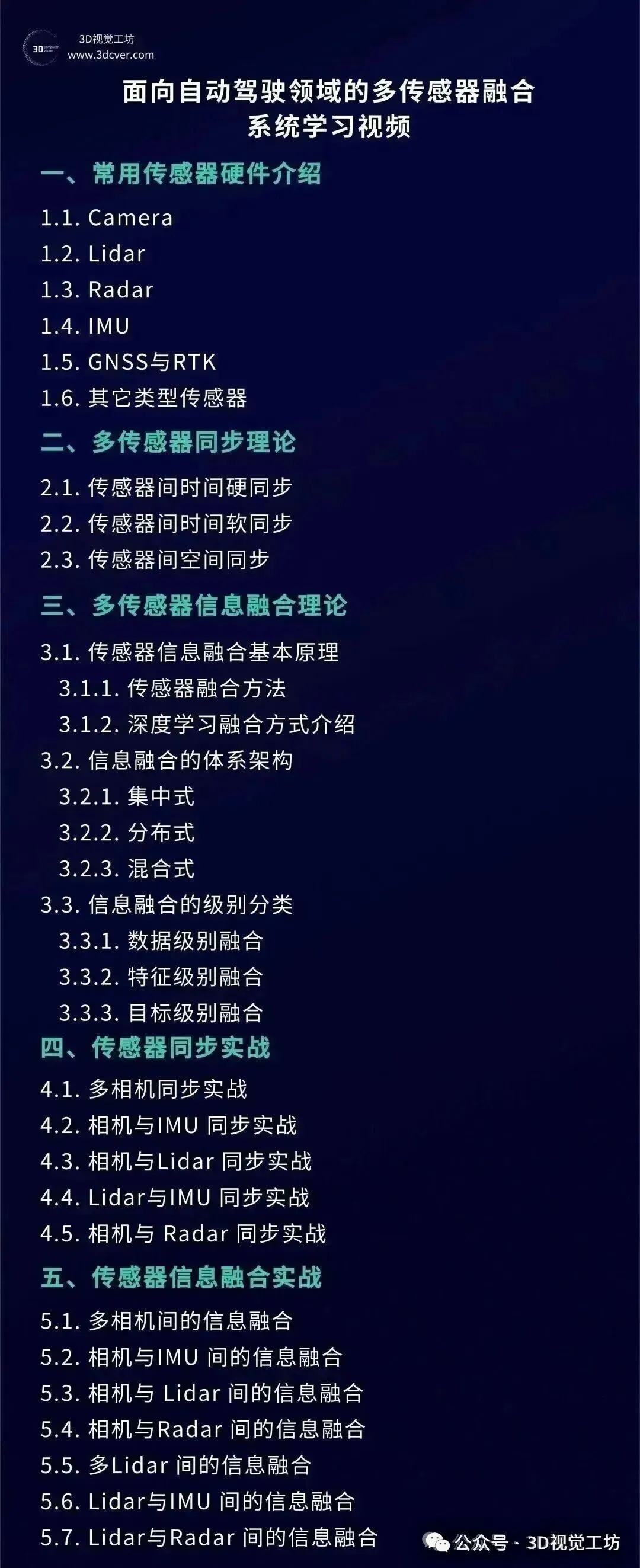
3.4.1 Multi-sensor integrated system tutorials for autonomous driving
Mainly divided into two large modules: theoretical and practical, theoretical sections mainly introduce the sensing hardware commonly used in autonomous driving, time synchronization and spatial synchronization between sensors and knowledge of information fusion rationality between multi-sensors; practical, more oriented engineering applications, how to achieve synchronization and integration between sensors in engineering, etc.
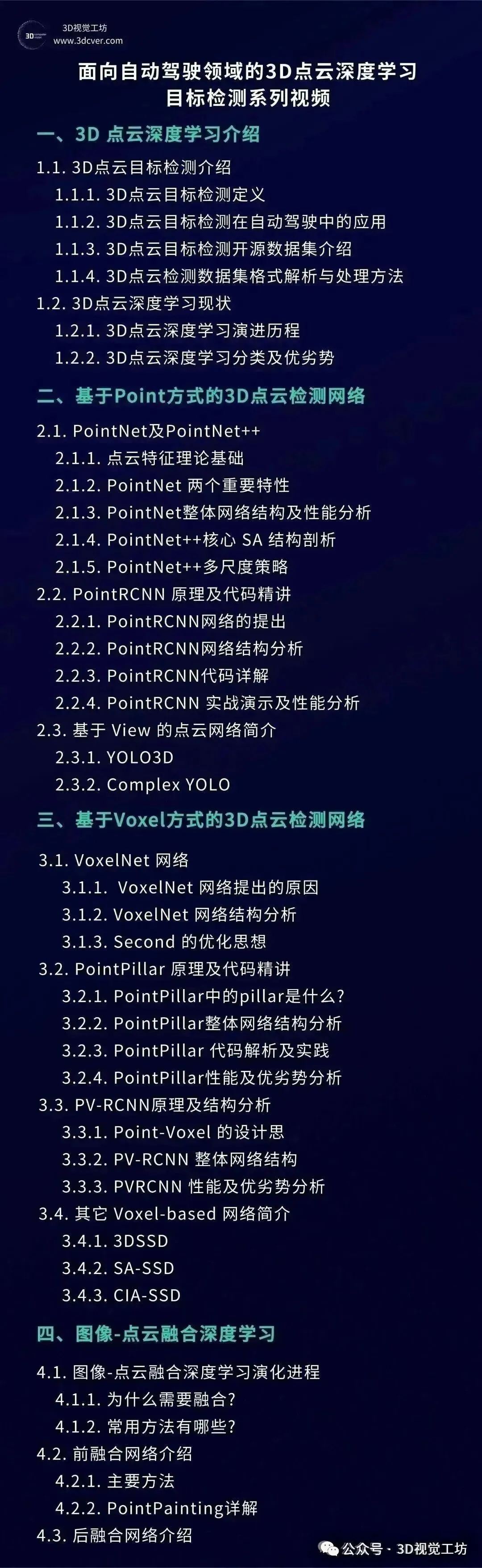
3.4.2 Detection of 3D point cloud deep learning targets for autonomous driving
This video tutorial focuses on 3D point cloud deep learning, system analysis and coding of point-based and Voxel-based 3D targeted detection network architectures to help students gain a faster insight and deeper understanding of point cloud depth.
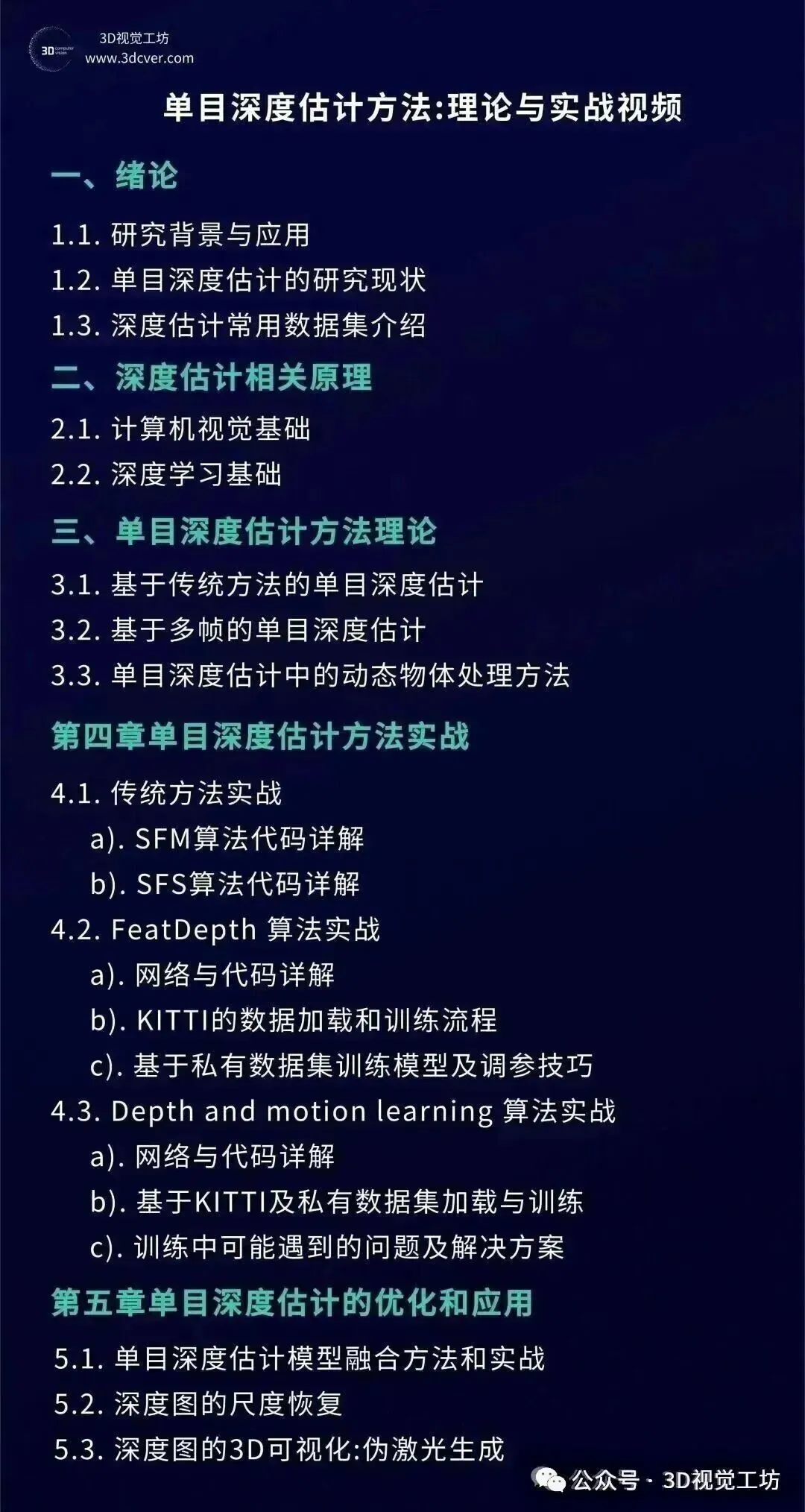
3.4.3 Single-point depth estimation methods: theoretical and real-world video
Video tutorials are mainly divided into two main sections: theoretical and practical, and due to the difficulty of obtaining the depth of the true value of the supervised method, and the effect of the unsupervised method is almost equivalent to that of the supervised method, we focus on the unsupervised method.
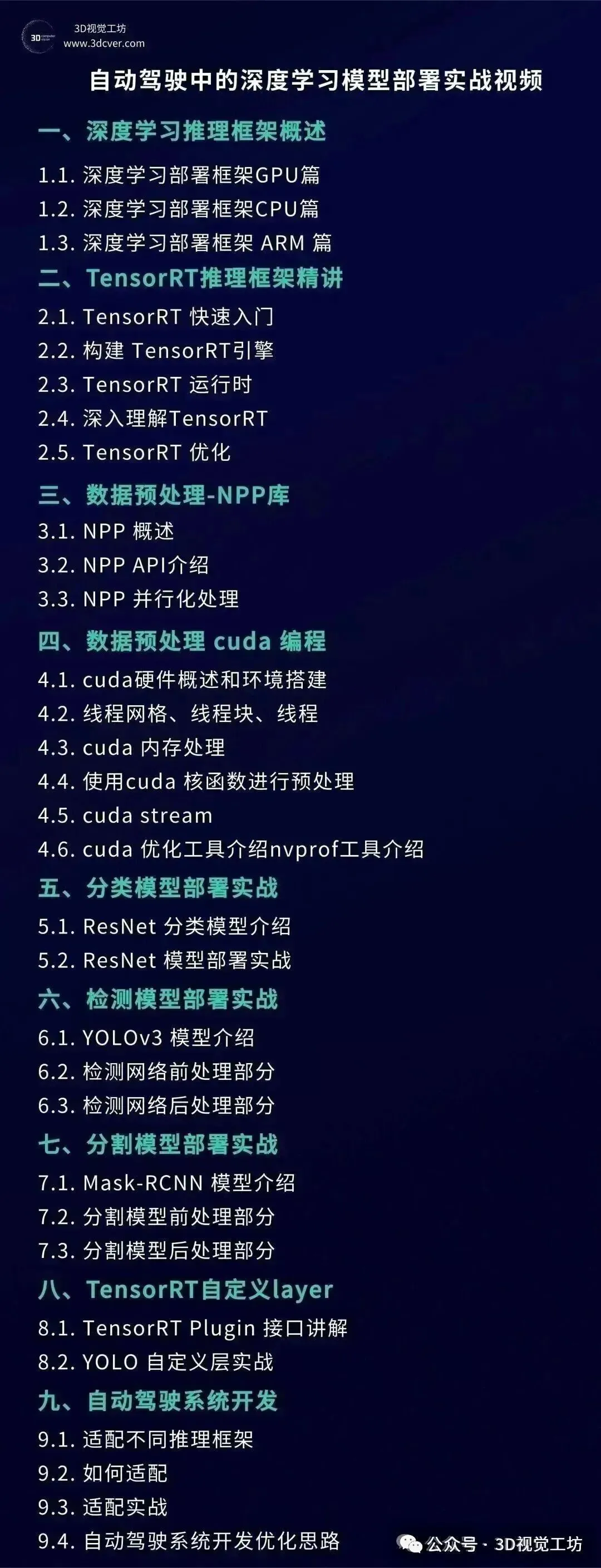
3.4.4 Deep learning models in autonomous driving deploy live video
This video tutorial will use a combination of theoretical and practical thinking, first to explain the programming model of TensorRT and the relevant knowledge of GPU/cuda to the extent that it is known; then the course will use three examples of classification, detection and division to demonstrate the detailed programming process and give the relevant code to achieve a truly landing industry share.
Four 3D visual foundations coming in
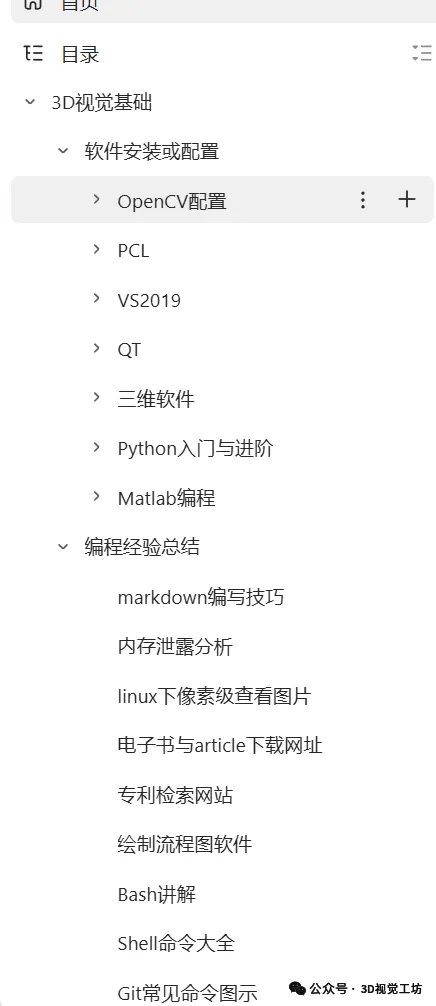
Considering that many beginners may find it difficult to configure 3D visual software or a visual library, we have prepared the configuration tutorial documentation for each module for you to learn.
5 3D visual source code summary
Below is the source code for the 3D vision industry on the planet: