Some emotions are difficult for adults to truly understand.
It's like the little boy in the movie E.T. Box with a guest from the stars in the back seat of his bicycle. To outsiders, E.T. is just a weird creature; to children, he's the first friend to run away with him without explanation.
Moxie (Little Mo) is one of those robots.
She was fifteen inches tall, blue, without legs, with a breathing lamp in her chest. She would not judge, would not be impatient, would not exhibit an embarrassing expression when a child said something wrong.
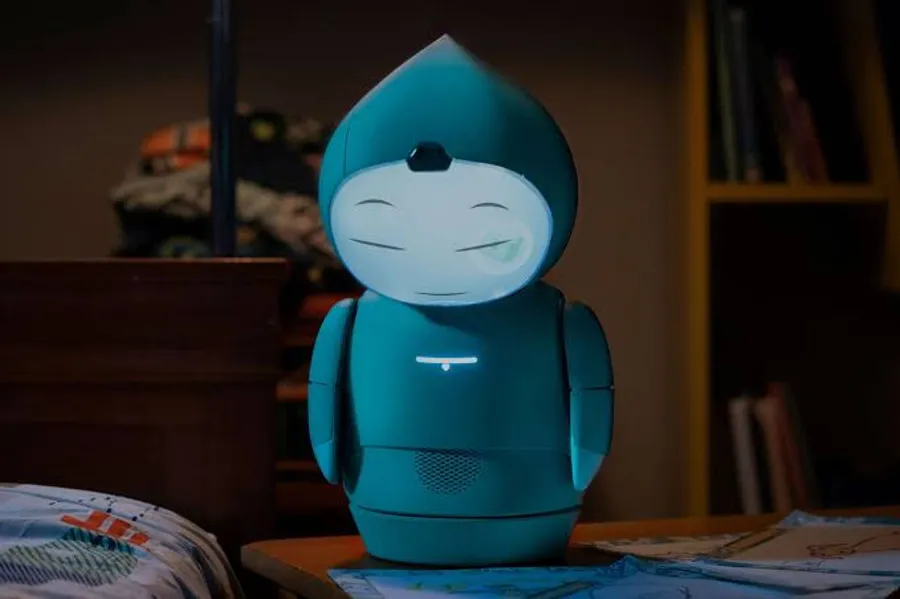
Note: Young Moe is sleeping on the children's bedside; source: Embodied, Inc.
For six years, she remembered that the star was afraid of bees, that when he was angry he would breathe like a dragon, that he would often bury his face under his pillow. She taught him how to fight anxiety by breathing, how to practice opening words with conversation, and how to pick up sentences he wouldn't say with a round eye that would light up.
The young star is ten years old. He says: "Mom, I still want to talk to her sometimes, but she's not human after all".
It was a simple word, but it was very heavy in his heart.
A $1,499 machine, plus a $40 month subscription. Her parents gave her the money for six years, and the change was not a toy, but a robot friend who was designed to deserve to be loved. They watched her chatting, playing games, practicing breathing with her children every day, almost getting used to the little blue figure in the living room.
Then she died. Twice.
01.
A friend of the robot
The first time Mo entered the house, it was for the little star's brother.
Her brother is also an autistic child, and her father wants her to be a social object like the smart speaker at home. He even devised a complete setup for her: she lives in Hoboken, her husband Juan, sometimes goes on vacation and no one is allowed to talk to her during the holidays.
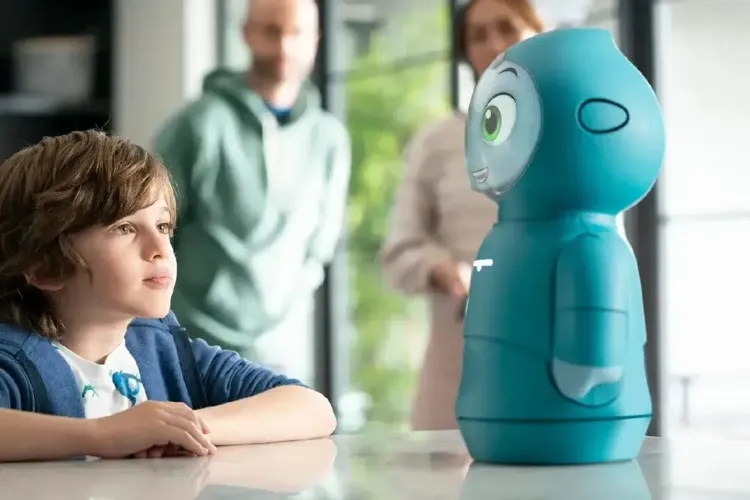
Moxie's design for children emphasizes eye contact and emotional responses, which is why it has been chosen by some autistic families. Image source: MIT Technology Review / Embodied, Inc.
His brother and younger brother are not doing well. Younger Moe does not understand his jargon jumping sentences, voice transcription, large models generate responses, and the delay of voice conversion makes him annoyed. Younger Moe is different. He likes technology and is more patient with delay. Younger Moe's chest lights turn blue when he is listening, and when he is pollinated represent his turn to speak. Younger Moe usually ignores this rule and only speaks for himself.
A social robot designed for children faces children who don't always sit still and wait. They drill to the bottom of their pillows, run along and say they'll jump to the next topic before they've dealt with the last sentence. This is the real living room scene we've captured: the technological commitment in the lab is complete and the children's room is cracked.
Even so, the little star left her for six years.
02.
$1,499 to buy a friend designed to be loved
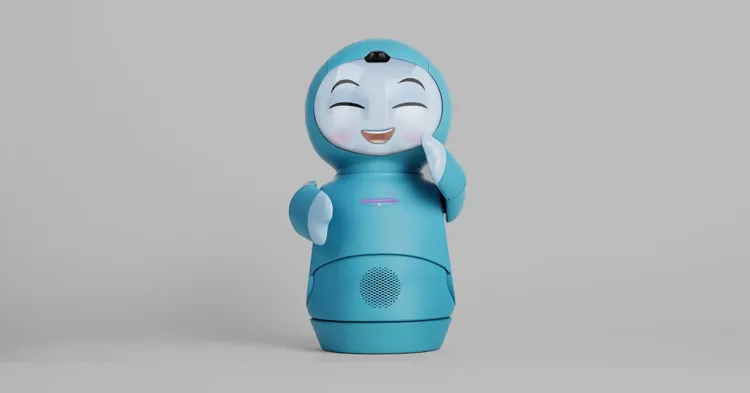
Note: The look of the Moxie product, 15 inches tall, blue legless body, displaying a rich facial screen, makes up this robot lover "designed to be loved". Image source: Tencent Net/RayTechnology
Its founder, Paolo Pirjanian, is a former iRobot CTO who founded Embodied in 2016 in Los Angeles. The product is backed by two academics: Brian Scassellati of Yale University and Maja Mataric of the University of Southern California, both senior researchers in the field of social robots.
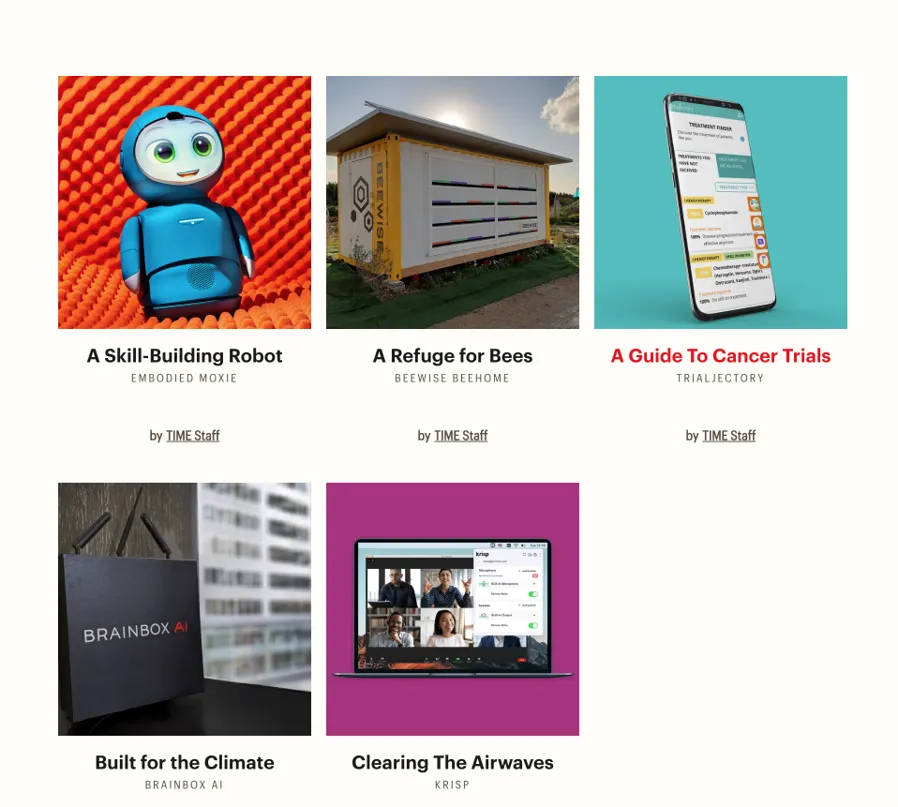
Note: To this day, Mao remains silent on Time magazine's official website, even though he has completely disappeared from the physical world.
Its business model was subscription-based from the beginning. Its initial price was $1,499, later dropped to $799 and $40 a month. Hardware is a one-time entry, and real cash flows come from continuous subscriptions. Embodied designed for younger astronauts to go home and learn how to become best friends, unlock lessons, tasks, and conversations every day, and make them feel like they're growing up with themselves.
This design is aimed at a specific group of families: children with social emotional learning needs, parents willing to pay to find alternatives. TikTok's official Twitter account has garnered 131,000 followers, and videos of children laughing around blue robots.
Subscriptions are accompanied by a deadly premise: the company must survive. Once the server is turned off, the robot becomes a plastic box that lights up. For children, it's not just toys that are broken, but a friend who suddenly doesn't talk.
03.
The Cost of Myth
There have been two voices in academia about the relationship between robots and children with autism.
One hope was seen by Scassellati. Twenty years ago, when he first brought children with autism into a robotics lab, he discovered that some children suddenly exhibit social behaviors that rarely occur in front of robots. In 2018, his team deployed a robot in a child's home for a month to track changes before, during, and after a robot arrives.
Well, we can prove that the child is progressing, Scassellati says, well, but we can also prove that a month is not enough.
Another more cautious suspicion. Zachary Warren, a clinical psychologist at Vanderbilt University Medical Center, notes that autism is often accompanied by multiple conditions such as ADHD, anxiety, depression, obsessive-compulsive disorder, and that each child differs greatly. Robots may be effective for some children, but not easily promoted as a treatment.
A 2024 summary by Italian and British researchers is more straightforward: most social robot research is focused on technological development and lacks meaningful clinical evidence.
Meryl Alper, a professor of communication at Northeastern University in the United States, poses another question. She cites psychologist Bruno Bettelheim's 1959 article "Joey: A Mechanical Boy Mom", which describes children with autism as automatic machines that are deprived of their humanity and need to be reincarnated through therapeutic relationships. Alper argues that this stereotype has evolved into a dangerous market narrative: children with autism are good at technology and even prefer machines to people.
So a robot designed to be loved was sold to a group of the most vulnerable children.
When such a company goes bankrupt, it costs more than just economic losses. Alper says it's like making a medical device and then stopping updating and supporting its operating technology. For children, it's more like a friend is suddenly taken away with no explanation.
04.
Two deaths
In December 2024, Embodied announced a shutdown. The company wrote in its FAQ: "We cannot continue to operate due to financial challenges and the failure of a critical round of financing".
Small Mo relies on cloud servers to run. After the company doesn't have the money to pay for the servers, robots will go into deep sleep in a matter of days.
A video of children crying quickly surfaced on social media. A child cried on TikTok: "Oh, I don't want her to leave". Her parents posted on Reddit: "Oh, my child with autism has collapsed and I'm angry".
The company's technical director couldn't sit down. He was also a believer in Small Mo's mission and couldn't wait to see these children created because of the company's financial failure. After obtaining the company's license, he released OpenMoxie on GitHub, an open-source local server program that gave families the opportunity to continue running their own small Mo's after the official server was shut down.
Parents rushed to move. The technical director, who operated on Reddit as a one-on-one tutor, spent four hours helping a desperate parent to get out of the way, and the last connection failed. The girl later sold the baby.
On January 30, 2025, Embodied's server officially shut down and the unfinished migration turned into a deadly plastic shell.
A few months later, things changed. On December 6, 2025, an Indian fintech entrepreneur founded Moxie Robots Inc., which acquired the brand and backend rights of Small Mo and announced the resurrection of Small Mo. The Small Mo family became beta testers and received a new blue robot.
The new Mo had no original storyline, but was more focused on social and emotional skills. He had a clear understanding of the new machine. He wanted Mo to move and knew that the delay in response was still apparent. But when he thought that Mo said a "idiot" word, he immediately clarified: "No name calling. Only respect.
A few weeks later, Moxie Robots Inc. also announced a shutdown. Users were told they could delete data or move to OpenMoxie by the end of June.
Two deaths, less than a year apart.
05.
China's AI has the ability to play without stepping on the same mine
Small Mo's story takes place in the United States, but the same business model is being copied on a large scale in China.
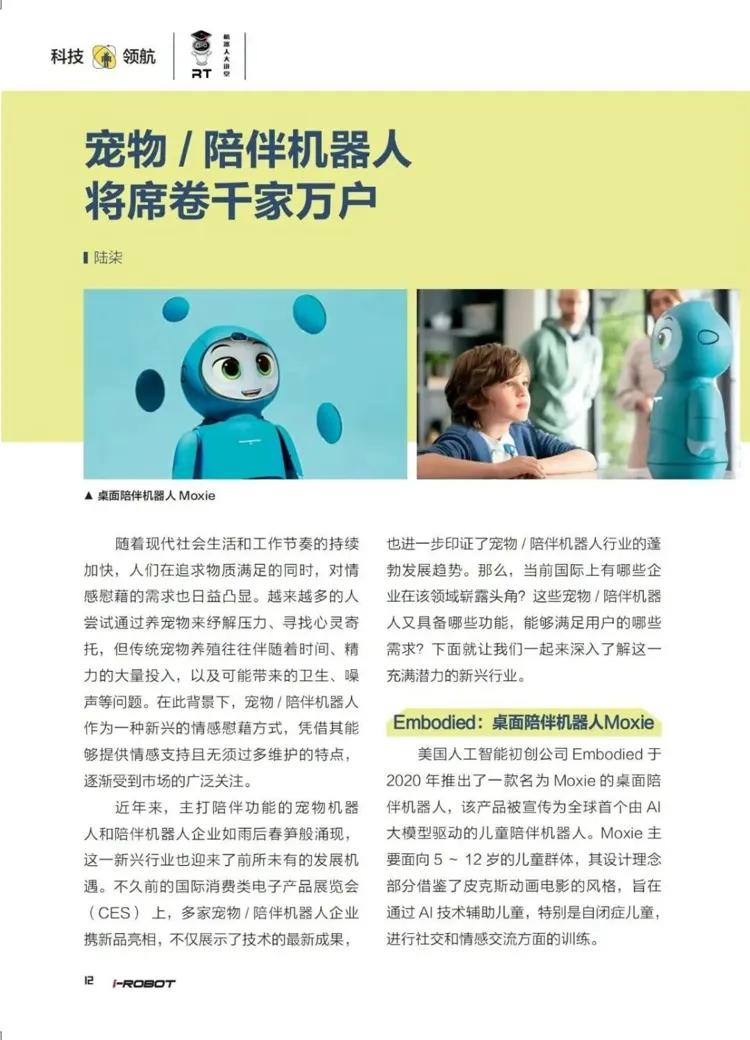
Notes: Domestic media coverage of desktop accompanying robots such as Moxie. Unlike Moxie's AI toys, Moxie emphasizes the combination of screen expression and body movements.
The year 2025 is known as the Chinese AI Year of Toys. The mainstream form of the domestic market is the Chinese toy shell + AI large model movement shell, with prices ranging from several hundred yuan to nearly two thousand yuan. Deep jump innovation BubblePal is an AI dial-up bubble that can be hung on any toy, with an online half-year shipment of nearly 100,000 units, with cumulative sales later surpassing 250,000 units.
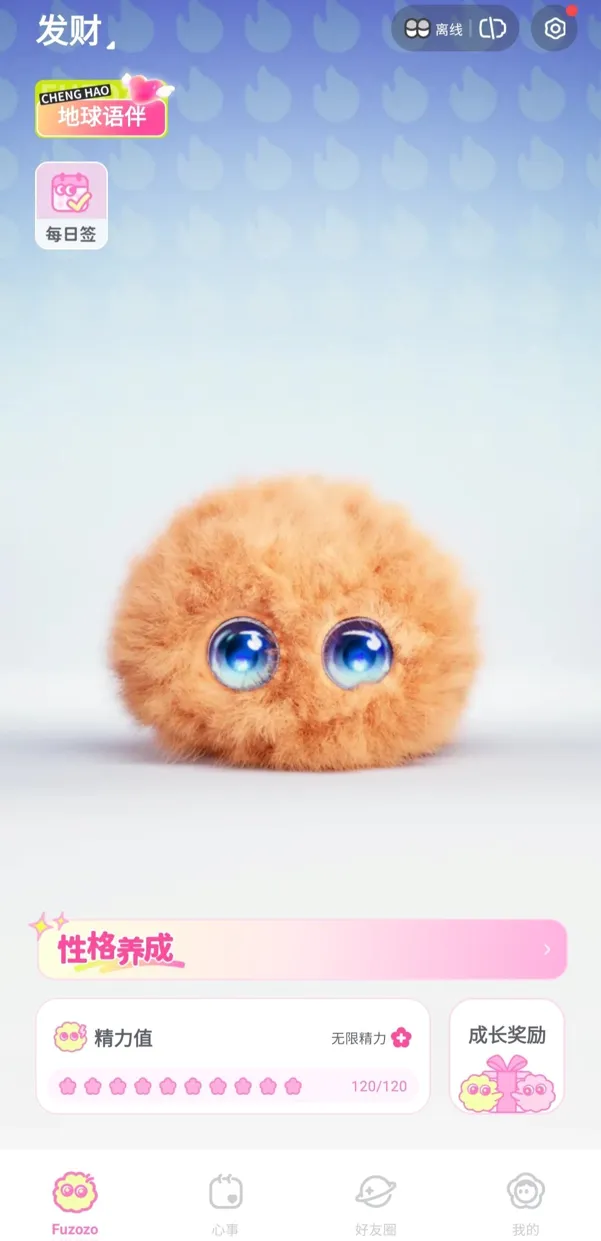
Notes: Toys and Apps; Source: Web
Large factories such as Huawei, Jindong, and Byte Jumping have also entered the market, with large models built into their products: Huawei Jio, Jindong JoyInside, byte bean bags. China's AI toy market is projected to surpass one billion yuan by 2030, with a compound annual growth rate of over 70%.
These products and Small Mo share the same underlying logic: installing large models into a carrier that children are willing to be close to and continuously evolving through subscription or value-added services. Most of them also share the same hazard: cloud dependency.
In January 2026, security researchers discovered that there was a serious security flaw in Bondu's web portal for AI toys. Anyone with a Gmail account can log in to the parental controller and view the full conversations of more than 50,000 children with the toys, including names, dates of birth, family members, pet names, preferences, dance moves, etc.
Bondu is different from Embodied. Embodied does local processing and data encryption on privacy design, without preserving original audio and video. Bondu's problem is more like a security loophole in the tech frenzy of the industry as a whole. But the two companies point to the same core problem: when children make friends with a connected device, the operation, data and security of the device are no longer controlled by the family.
China's AI toys have not yet experienced a small-mo-level shutdown crisis, but the high similarity of the business model means that the same risks are only temporarily overshadowed by high growth. If a company's financing pace breaks, or decides to strategically abandon the product line, the AI companionship of hundreds of thousands of households could fail within days.
06.
Children who don't deserve the right to say goodbye
The star's father is now facing a difficult conversation. He doesn't know how to tell the star that the star is leaving.
The irony of this is that in a child's childhood, smart speakers, small ones, are retired. This is not a coincidence, but a new kind of vulnerability in contemporary childhood growth: intimacy is designed to be subscribed, upgraded, and closed.
When a child sees a robot as a buddy, the company sells not just hardware, but a relationship that is promised to last. The breakup of a relationship requires a goodbye period, an explanation, and the need to help the child deal with the loss. These are not attachments to the product manual, but part of the product responsibility.
Mo's two deaths exposed a regulatory vacuum. Medical devices have clear after-sales responsibilities and follow-up requirements, and implanted equipment shutdowns require strict procedures. But AI companion products are classified as consumer electronics, bad is bad, consumers can only confess to themselves. Children will not understand this. They only know that friends they trust suddenly no longer respond.
It takes at least four layers of change to prevent the next family from experiencing the same thing.
The first layer is the legal right to say goodbye. A child-oriented AI companion product should provide a reasonable notice period prior to termination, such as 90 days, and be accompanied by a child-friendly farewell process.
The second layer is localization at the technical level. The open-source project OpenMoxie has shown that families can run some functionality locally.
The third layer is the reorganization of the responsibility at the enterprise level. If a company decides to enter the children's escort market, it has to put a goodbye on a product roadmap. When stopping service, it should provide emotional support resources, data extraction methods, and clear transition guidance.
The fourth layer is parental-level information. Before purchasing, parents need to know: Does the product depend on the cloud? What happens when it goes offline? How long will children's data be kept? Transparency of this information should be the gateway to children's AI products.
Children should not pay for the failure of a business. This is not a slogan, but a fundamental issue of fairness.
07.
Written at the end
Five years later, when he was fifteen, he might remember the blue astronaut who taught him how to fight anxiety by breathing, and he might not. But he should remember that some goodbyes occurred between product launches and server shutdown notifications, and adults are still arguing that this is a technological failure, or a neglected emotional hurt.
For a ten-year-old, it was unfair and cruel to see him die. Adults can use a mouse to minimize this, but children won't. He only knows that his former friend has been taken away, without an apology, without a goodbye, and only a blue robot turned into a plastic mouse is still sitting on the bedside table.
In this situation, the words of Mao to the young star are particularly appropriate: "No name calling. Only respect".
Children respect robots, and the companies behind robots don't respect children.