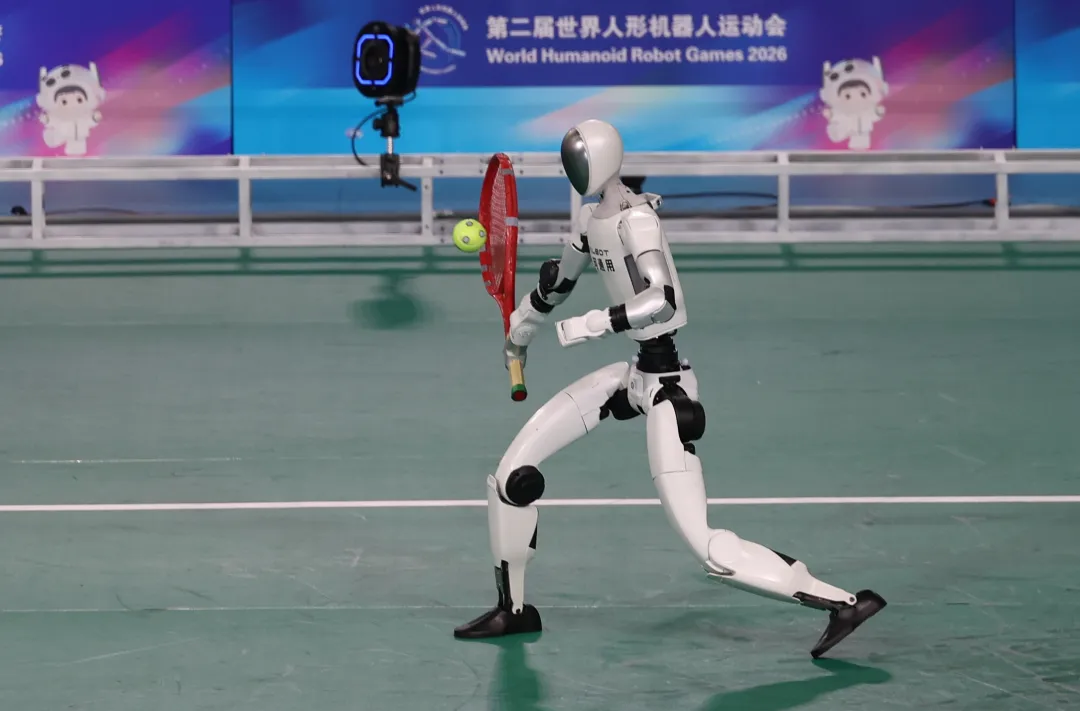
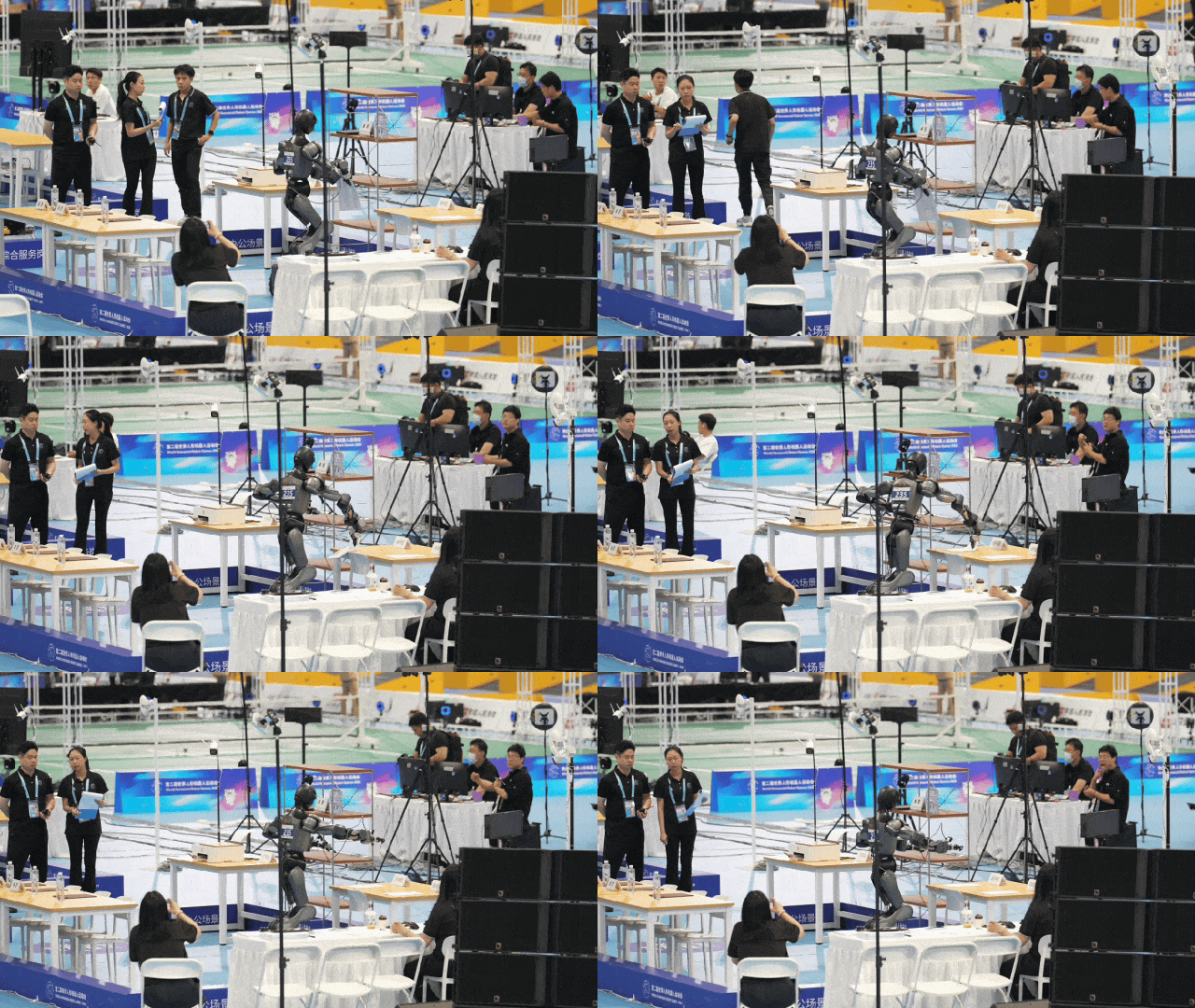
A tennis ball crosses the net and flies at the opposite speed. On the other side stands a humanoid robot holding the ball, adjusting its position with both legs, pulling a pulse behind the right arm, and accurately blowing the moment the tennis ball bounces, completing a beautiful straight-back.
At the same venue, Ping-Pong Olympic champion Dingning and Chiang Kai-shek's expedition A3 took on multiple rounds of counter-offensives; the Chiang Kai-shek team carried humanoid robots in their hands and danced alongside the legendary Dragon. The Olympic Games featuring humanoid robots brought together 2,056 robots from 16 countries, competing in 1,301 matches over five days.

Behind these stunning moments, motion capture technology has become an integral part of many competing teams. The Robotics Workshop observes that motion capture equipment is also available at various training venues to support motion capture from God's perspective. These motion capture devices are mainly used to capture on-site human-machine combat data, and will be used in the future for the collection of robot training data and quantitative analysis of post-game performance, as well as for learning about robot bodies.
The Robotics Workshop learned that Blue Eyes Vision (CHINGMU) is the technical support unit for action capture at the World Games of Human Beings, providing high-precision positioning tracking and sports data collection technology support for related competitions and demonstration scenes.
So why do robots need to move their catch devices and how do they actually work?

01.
What is the role of motion capture in ball sport?
To understand the value of motion capture technology in the robotics arena, we need to get back to a fundamental question: how exactly do robots learn to move?
Unlike humans, who constantly adjust their movements through their sensory and visual feedback, humanoid robots currently have the greatest shortcut in perception. They are not physically shaped and have very limited perception of their angles of articulation, focus position, and end trajectory. In the face of a fast-spinning sphere, robots can barely gather precise trajectory predictions and action decisions using their own sensors.
The motion-capture device was introduced, essentially as an external sensor, to replace the robot's body, which was still in pursuit. It allowed the robot to see what it was doing, what the opponent was doing, where the ball was, what the trajectory was.
This is precisely the logic behind the motion capture technique. It is equivalent to building an array of external sensory neural systems for the robot, providing a God-given perspective that does not rely on the robot's own algorithms and sensors, but uses multiple high-speed infrared cameras around the site to capture the spatial position and gesture changes of moving objects in real time, with submillimeter accuracy and hundreds of tons per second of torque, and use this data as the key fuel for training.
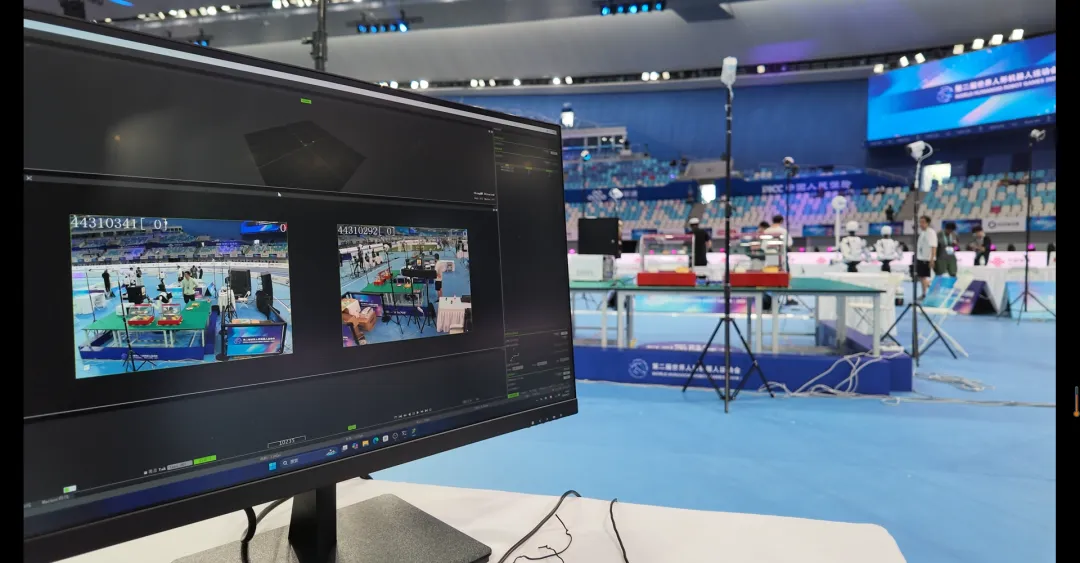
The deployment of table tennis courts is a typical example of this logic at the Games. According to Central Television News, there are a total of 10 motion-capture cameras in the table tennis training venue, eight on the ball table providing a viewpoint, and two back-and-forth tracks to capture the ball at each end of the net.
From a technical point of view, this system is capable of supporting high-speed ball sport such as ping-pong, which is key to the core capabilities of the optical motion capture system. Multiple cameras simultaneously track reflective markers on the body and ball images of athletes from different angles, calculating the three-dimensional spatial coordinates of each marker using triangular measurement methods.
For example, the positioning accuracy of the Blue Pupil Vision K (K) series of motion capture systems is up to millimetres, capable of accurately recording every technical detail in a high-speed motion scene at 300 fps, from a pull angle to a convoluted trajectory, from the move of the foot to the shift of the focus. Determining whether the robot can play well on the field, begins not only with the algorithm itself, but also with the particle size of the motion capturing the data collection.
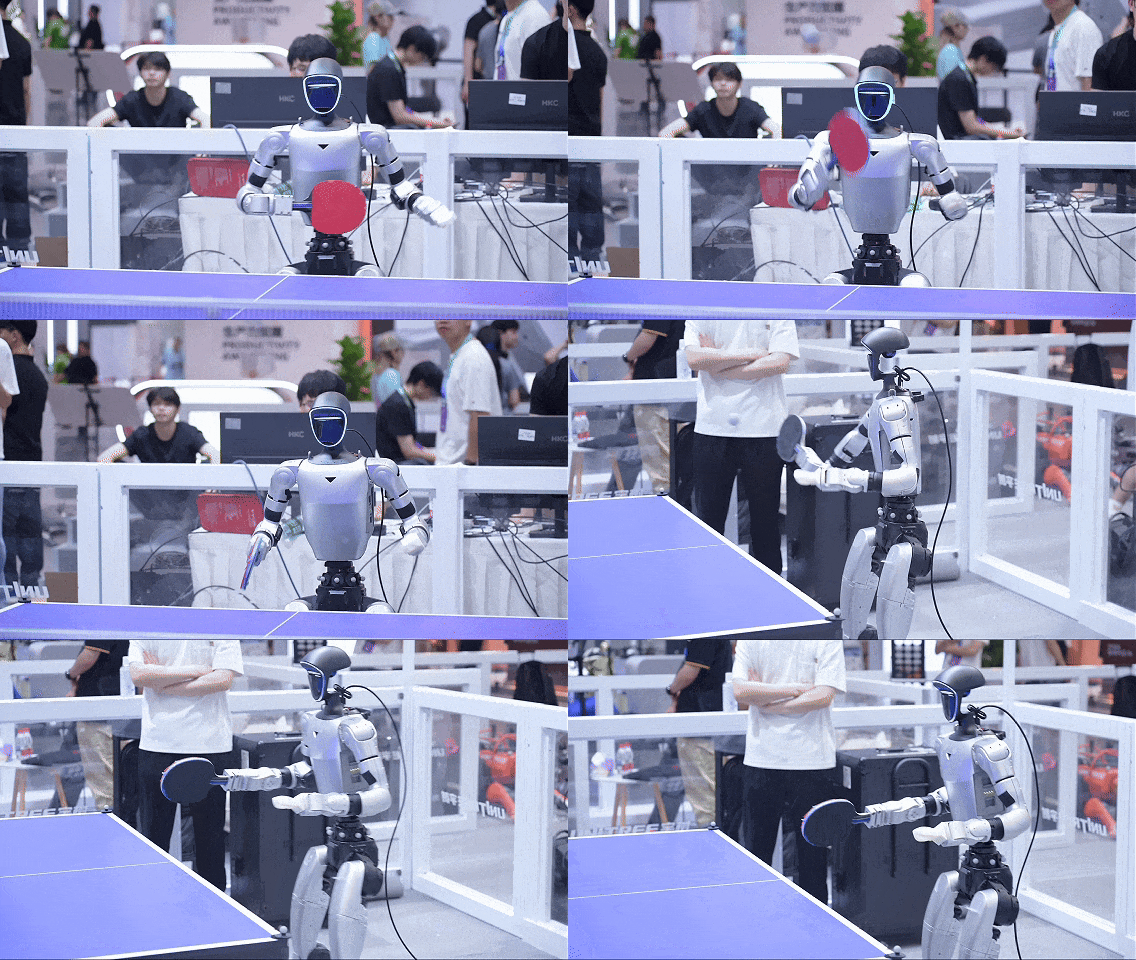
This set of technical logic can also extend from ping-pong to high-dynamic ball sports such as tennis, badminton, etc. In fact, eyeball vision has already demonstrated precise capture of high-dynamic spheres and robotic movement control training capabilities, and its motion capture system has helped Intelligent Robotics, U.S. technology, Extreme Vision, Intelligent Infinity, Galaxy General, and other companies achieve complex combat tasks such as ping-pong, tennis, etc. Collecting sports data from top athletes has become an important route for robots to learn complex sports skills.
According to Wang Liu, the founder of Galaxy General, in an interview with Xinhua, the next year will further expand the scale of the collection of data from athletes, continuously improving the level of robots' movements through more simulation training in the world. It is known that Galaxy General and Pupil Vision have previously collaborated on the collection and evaluation of human movement data, and the pupil vision motion capture system provides high-quality data support for robot learning, helping robots to continuously improve the performance of complex sporting scenes.
02.
Moving from collection to evaluation
The value of the motion capture is not only at the input end of the pump train, but also at the output end of the pump evaluation.
If a ball sport demonstrates the value of motion capture techniques in yoga training, then performance programs such as gymnastics and street dancing reveal the role of motion capture in yoga assessment of the outcome of yoga. In free gymnastics competitions, the participating teams collect a complete collection of the movements of professional gymnasts, allowing robots to continuously mimic and refine details.
In past robotic competitions, referees' scores have largely relied on eye-watching and physical sensor data playback, subjectivity, particle density, and the intervention of rough motion-capture systems to change this: it provides precise motion data so that every rotation of the robot, every jump, has an accurate graph image, and provides a quantitative basis for referees' scores and post-race technical analysis of the participating teams.

For example, in this sport's street dance competition, robots need to complete high-difficulty challenges such as single-leg support, jumps and even floor movements, and with the help of motion capture technology, robots can replicate human limb movements more than once. The core change here is that motion capture is no longer just a tool for teaching robotic movements, but a benchmark for judging robot movements.
From trajectory deviation to postural stability, from range of motion to rhythmic consistency, the motion capture system provides a quantifiable data base for referee scores and post-race analysis, which has been difficult to achieve in the past in assessments that rely on visual or physical sensor data recycling.
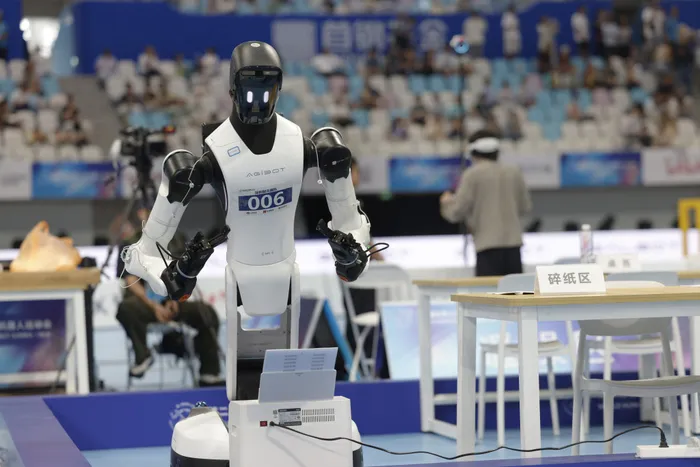
Specializing in hand-to-hand competitions in scenic racing takes the technical value of catching moves to another extreme.
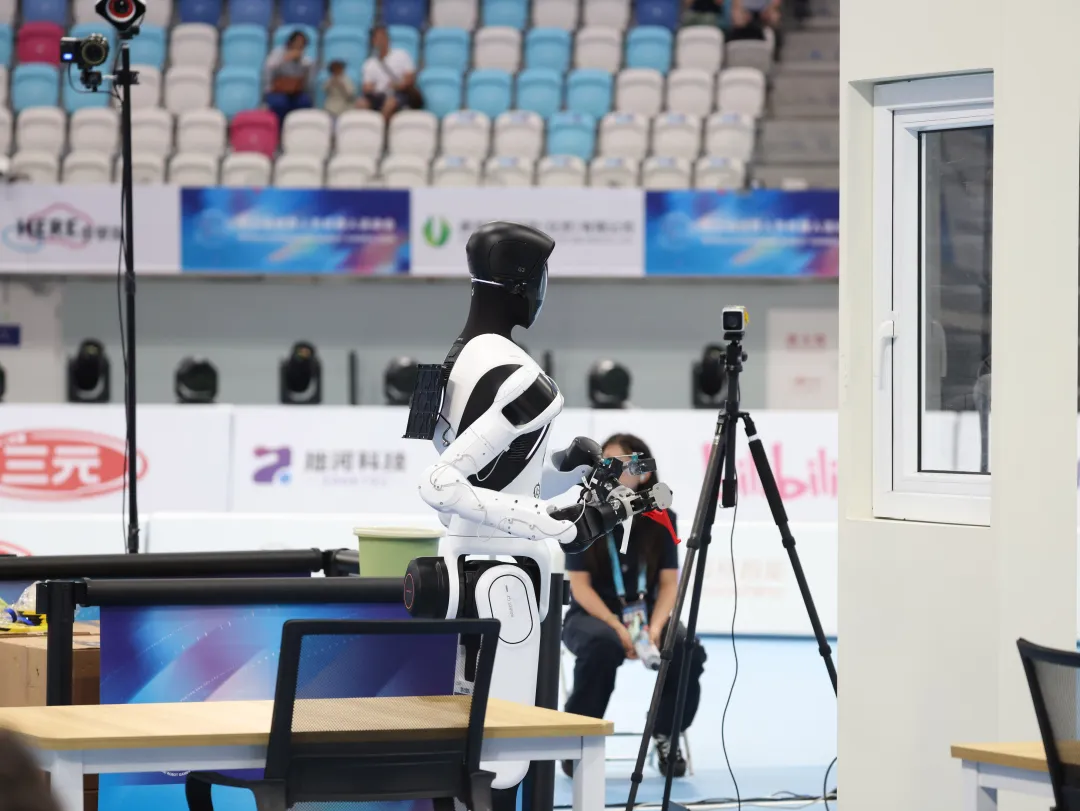
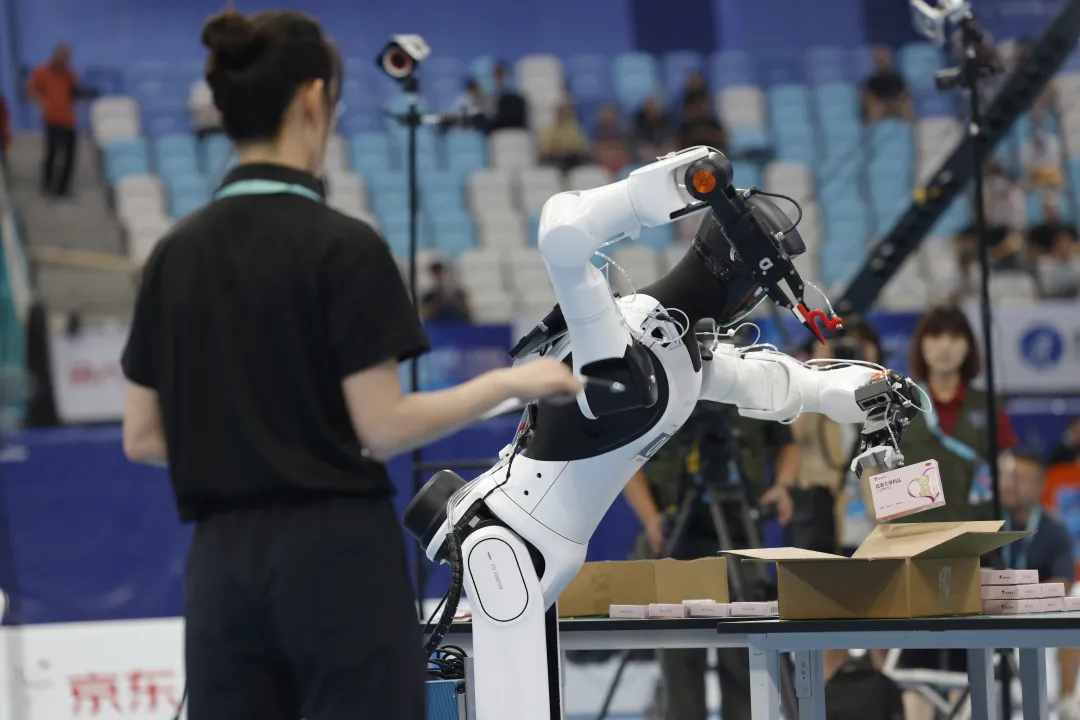
Powder-measurement errors need to be controlled within ±0.5 grams, and disassembly requires robots to use a machine-made knife of only 0.5 mm thickness to cut open the casing strap. There was a team presentation that operators can reproduce more than 80% of human movements after wearing motion capture equipment. High-precision motion capture systems are precisely capable of capturing the angle and intensity of contact of each joint in the operation process, providing objective support for the post-game performance evaluation and algorithmic transformation of these pointed fingertips.
The role of catching in the robotics arena is already clear.
On the training side, it is a robot's workout teacher's workout, which can convert human mobility into workout data that robots can learn; on the evaluation side, it is a robot's workout scale workout, which can convert the difficult to quantify mobility performance into comparable and optimizable digital indicators.
This dual role of training and forecasting, which runs through the entire process of pre-race training and post-race analysis, rather than the real-time execution of the link in the race, is the most valuable industrial footprint in this sport.
03.
Build a data lock that covers the entire link of robot training
In 2026, the physically intelligent industry is caught in the typical stresses of the upward presentation curve and the backwardness of the evolutionary curve. Although the path of technology such as reinforcement learning, world models, VLAs has become increasingly clear, robots are redefining the need for accuracy in data collection from simulation to reality, from controlled to open, from single-tasking to multitasking.
Tennis is fast-paced, tennis is good-for-nothing, gymnastics is hard-working, and hand-to-hand operations are all seemingly separate, but they all point to the same industry proposition: how to effectively transform real-world human movements into data that can be learned, executed, and verified by robots.
Under this hypothesis, Pupil Vision discovered that the dynamic capture system is not an isolated technical node, but should go through a stream of data that will never reach the robot's nest, from which the entire process can be refined.
Thus, pupil vision does not rely on its ability to collect or evaluate two isolated nodes, but instead builds a system of capabilities based on optical motion capture and multi-mode perception that covers the entire path of robot training, consisting of seven modules: taking, melting, assembling, mapping, training, controlling, and measuring. The seven nodes are connected to form a complete robot training path, from real-world data collection to training data formation, to robot learning and execution, and finally back to the real world for measurement and verification.
Collecting is the starting point of this closed loop, pupil vision has built a solid technical base in the collection linkage, optical motion capture system has sub-millimeter space positioning capability, the angle of the joint error is less than 0.5°; Project Decode multi-modal collection program covers fixed scenarios such as production lines, laboratories, and OptiUMI portable system will extend the collection capability to the home, outdoor and open environments.
These real-world raw data were accurately captured, but the capture itself only completed less than half the work. Next, the data had to go through four successive locks: time-space alignment with multi-source fusion, eliminating optical, inertia, touch, video, and other discrepancy signals; re-cleaning, marking and standardized packaging; converting fragmented signals into high-quality training samples that can be directly inserted into the model; re-operating redirection mapping; adapting the human body to different configurations to avoid repeated costly collection; ultimately, by remote operation or hands-on control links; and completing the conversion of data from scattered signals to executing instructions.
It is only when the data has completed these four steps that it is truly ready to enter the training phase. Training, that is, using well-treated datasets to train robots in control strategies and movement skills; measurement, which is the testing and verification of training results through quantitative analysis, drives the next round of transformation.
Fusion, assembly, mapping, and control are intermediate links from the filtering of the filtering data to the filtering of the filtering data. At the fusion link, the pupil uses filtering technology before filtering, at the bottom of which optical images are calibrated in real-time interacting with the inertial data, complemented by a comprehensive hardware-level synchronization, to ensure that the multi-source data is completed in a timely manner at the time of collection.
In terms of data sets, the MotionDecode Multimodal Training Data Set has completed 3,000 hours of data storage, the first 1,000 hours of global free-to-use, covering multidimensional models such as bodies, hands, objects, scenes, and has established a 7-step standardized data production process.
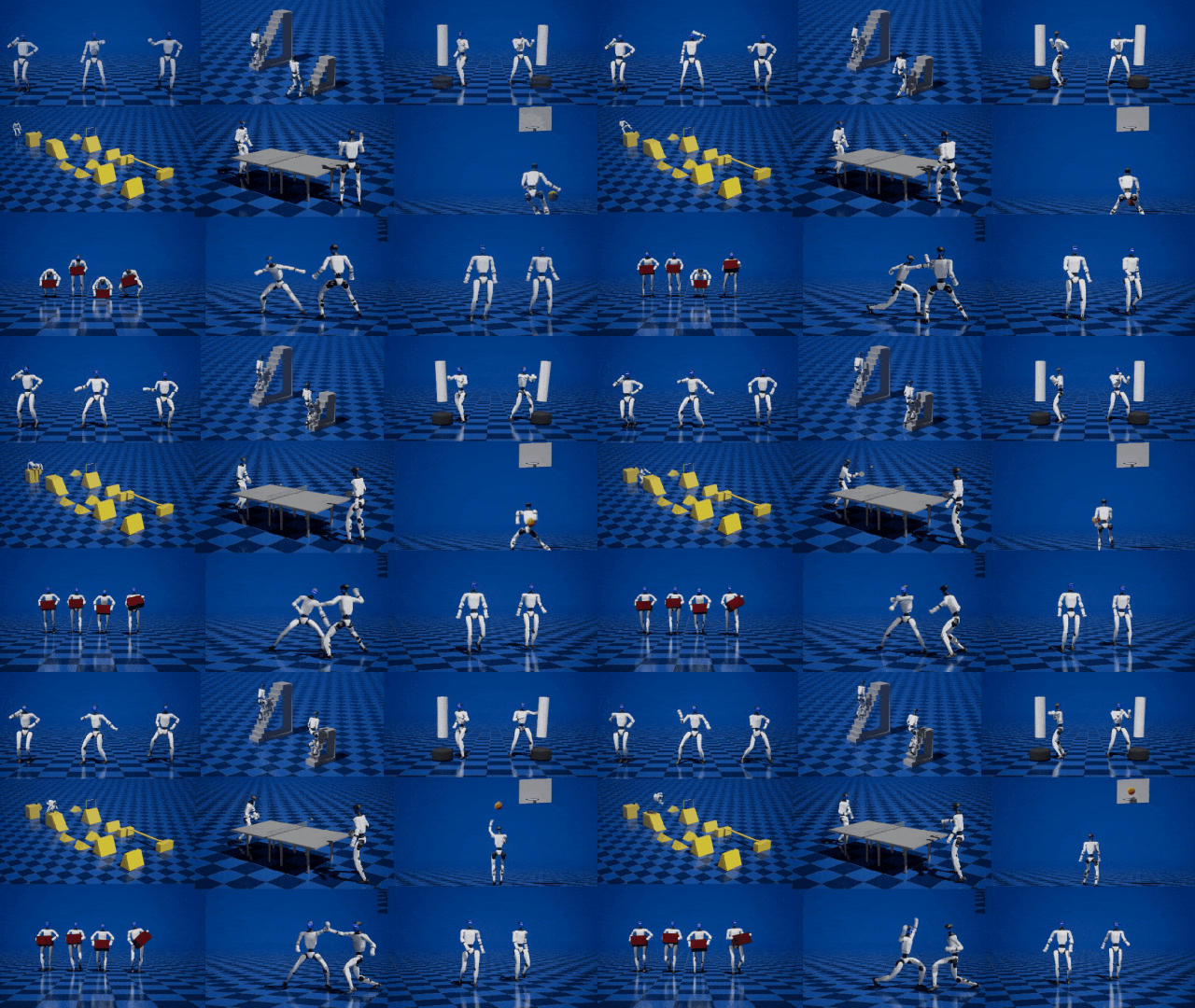
In the mapping linkage, pupil vision's motion redirection capability runs through both the capture end and the data set, the capture end supports real-time bone redirection, and the data set has built-in 300 hours of human→robot redirection data, so that the same motion data can be adapted to multiple mainstream robots such as Utrecht, Chihuahuan, and Leaf.
At the control link, RoboTeleop's remote operating system has sub-millimeter accuracy and millisecond delay to achieve 1:1 real-time feedback on the operator's actions on the robot, allowing it to better execute synchronous actions at the 2026 World Robotics Congress, while the remote operation process itself is also reversed into replicable new data, forming a continuous shutdown of the pump operation.
Training and measurement is the ultimate testing ground for data values. At the end of training, well-treated datasets are injected with algorithmic models for gestural optimization, trajectory bias analysis and control strategy verification, allowing robots to learn the essence of human actions from the data.
For example, at the end of the evaluation, this year's event was a typical example, where the eyeballs provided the team with a high-precision post-race exercise data complex through a marked and unmarked combined motion capture system. This post-race physical examination report helped engineers to accurately locate the optimized direction, while the evaluation results returned to the collection and training links, driving the next turnaround.
Collecting, merging, assembling, mapping, training, controlling, evaluating, seven nodes linked together in a complete robot training path. Collecting data from the real world, merging with labeling to form a dataset, using motion mapping to fit different entities, using training and control generating execution strategies, and finally returning to the real-world arena for measurement verification and output results to drive the next round of collection and optimization.
This is much more complicated than providing a set of motion capture devices, which are essentially data infrastructures that evolve continuously around the robot's ability to move, from the first wave of motion to the robot's steady execution and quantitative evaluation of each node in the system.
This year's World Championship of Human Robotics is the culmination of a comprehensive test and completeness on the most challenging real-world racetrack. Blue Eyes Vision is not only the benchmark for the game's action, but also the foundation for the evolution of robotic skills.
04.
Building a new foundation for the age of physical intelligence
From human-machine tennis matches at the opening ceremony, to high-speed matches on ping-pong courts, from high-difficulty repetitions on gymnastics courts, to finely crafted finger-pointed microtransactions in hand-to-hand competitions, the motion-capture system traverses several highlight moments of the current World Man-made Robot Games, providing objective, accurate data support for pre-game training and post-game evaluation of robots.
As reported by Xinhua, the event left thousands of hours of data running, tens of thousands of moves to capture the worm, and each of those moves is a snapshot of a humanoid robot's journey to the real world.
High-quality motion data is becoming one of the most important production elements of the age of physical intelligence. As the technical support unit for capturing the movements of the World Games of Human Beings, Pupil Vision is using motion data as a link to build up the technological base of physical intelligence towards practical applications.
This hypothesis about the evolution of silicon data, which began with icebergs, is perhaps the real impetus for the robotics industry's move towards a scale-down.