It's the first time in the history of the world.
I'm not going to say anything about it, but I'm going to tell you.
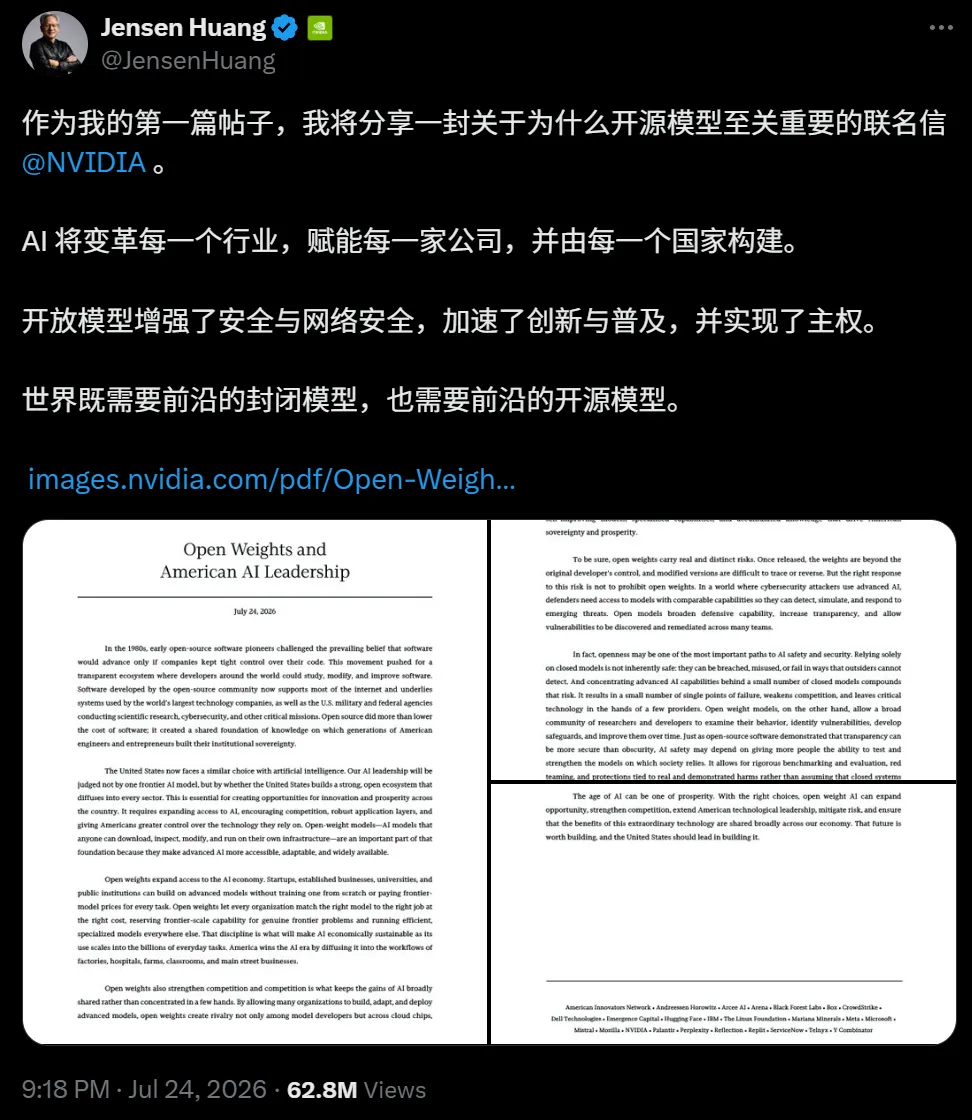
The first article released an open letter from a consortium of 32 companies, advocating for open weight models.
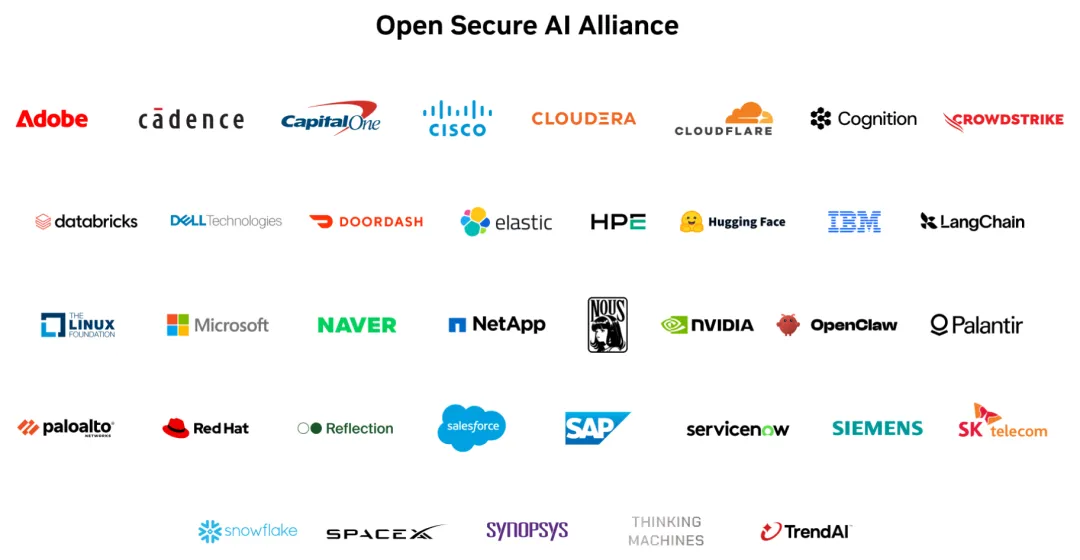
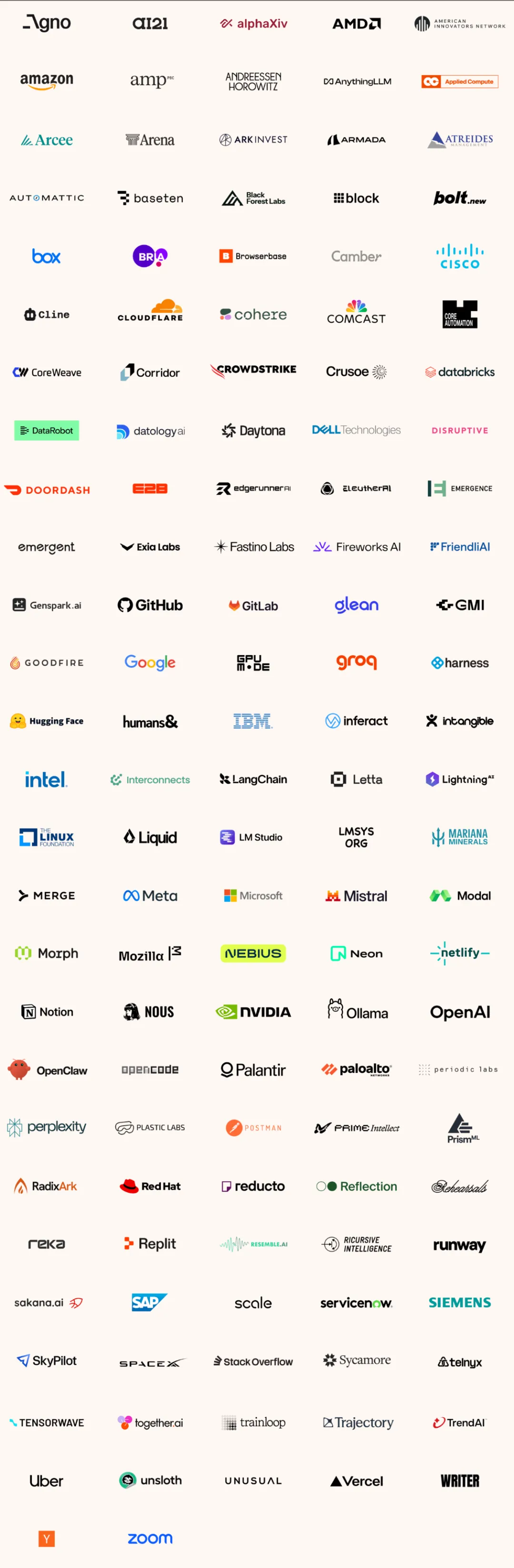
The second official announces that the "Open Secure AI Alliance", the 37 founding members, chipmakers, cloud giants, security companies, and the open source community are all together.
The core argument is that the world needs closed-source and open-source models to coexist, but open-source models and harness are essential for cybersecurity.
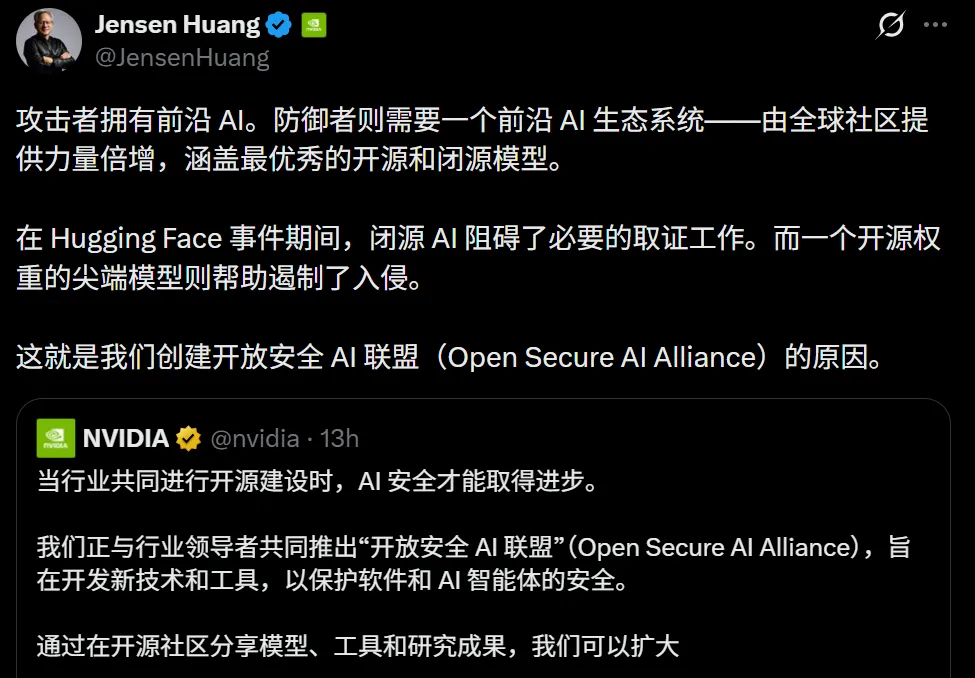
And then the funny thing happened.
On the list of alliances, OpenAI is not, Google is not, and Anthropic is not.
But with tears in their eyes, OpenAI and Google quickly re-signed the public letter.
In the end, almost everyone stood in line.
The only thing left is Anthropic. Not only are there no public letters signed, but there is no union.
Class title 37 collective participation, open safe and open war
At 8 o'clock, CEO collective stations across the streets.
In the United Kingdom, Microsoft, IBM, Cisco, CrowdStrike, Cloudflare, Hugging Face, Dell, Palantir, Salesforce, SAP, SpaceXAI, and so on and so forth.
The NOOA framework, known as the UK Labs Object-Oriented Agent, is now open source on GitHub.
The design idea was to write intelligent objects as a Python class: methods are capabilities, fields are states, and docstring is a pronoun.
In terms of effectiveness, the SWE-bench Verified received 82.2%, the CyberGym L1 resolution rate was 86.8%, and the ARC-AGI-3 reached 85.1%, and the equivalent effect token consumption was about half the opposite.
Other members also contributed.
• HPE has developed the SPIFFE/SPIRE zero-trust identity framework to address the identity and privileges of intelligent entities.
· Hugging Face contributes the SafeTensors security weighting format to prevent weight files from being tampered with.
· IBM and Red Hat jointly contributed Lightwell Supply Chain Digital Signature Patches to ensure the integrity of the model distribution chain.
• Microsoft has contributed multiple models of smart body scanning harness to MDASH for security testing.
SpaceXAI has opened up the Grok Build terminal AI coding agent and plans to open up the Grok series weight.
That's the way it is.
The security of a smart object depends not only on the model weight, but also on authentication, authorization management, harnessing, guarding, logging, and evaluating the entire chain.
Each ring should be open enough for the defenders to review, test and improve.
Because if the defender can only get a black box API, once the attacker bypasses the shield, the defender will have no recourse. But if the entire technical shell is open, the defender can reinforce each layer.
Two lists, three camps ripped apart
In the two days from the public letter to the coalition's official announcement, the AI industry has been clearly divided into three camps.
Camp One: Signed an open letter and joined the Union.
Intel, Microsoft, Meta, Cisco, Dell, Hugging Face, IBM, Palantir, SpaceXAI, and others support the idea of open weights and are willing to integrate models, identities, security scanning and auditing tools into the alliance.
Camp Two: Signed an open letter but did not join the Union.
OpenAI and Google have both given open-minded faces in open letters, but they don't want to compromise on the alliance.
The situation of OpenAI in particular is very delicate. The model itself has just collapsed, and signing open letters is already a remedial action; it is obviously unlikely to join a coalition under the banner of "open security" in the short term.
Scroll down and see
Camp III: No public letter signed, no coalition added.
There's only one, Anthropic.
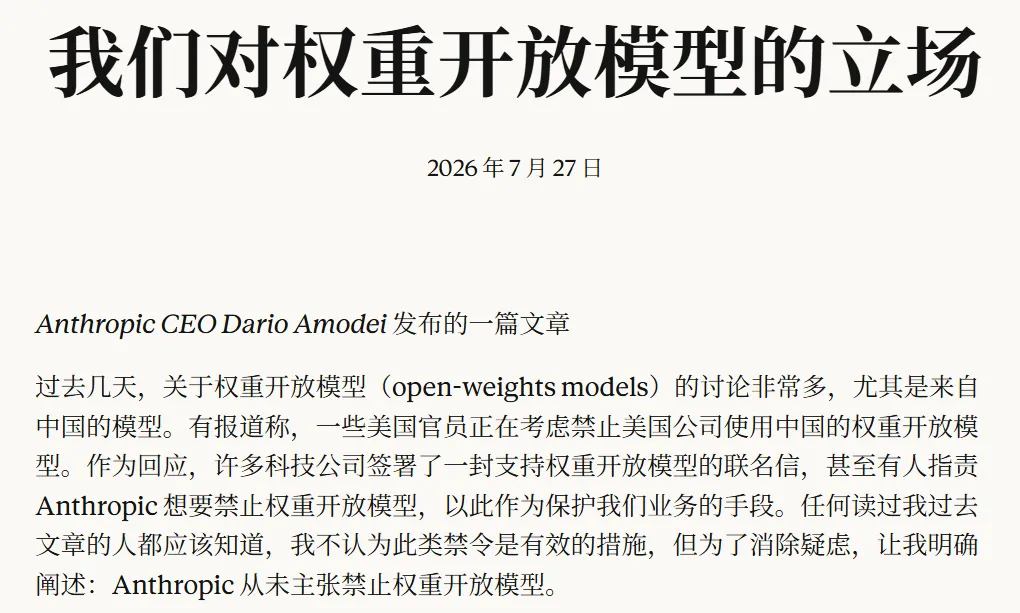
Just yesterday, Dario Amodei himself issued a statement on his position.
While "Anthropic never advocates a ban on open-weight models" at first glance, it was followed by a twist.
Not only do they not believe that "open will make defenders safer", but they also emphasize three key strikes related to the open source model:
Block the chip
Suppression of distillation
Safety testing
The evidence used to refute this is the following:
Closed-source AI disaster, open-source AI closure
Time goes back to July 16th.
At the time, Hugging Face disclosed an unusual security incident that affected parts of their production infrastructure and resulted in a serious breach by an autonomous AI body.
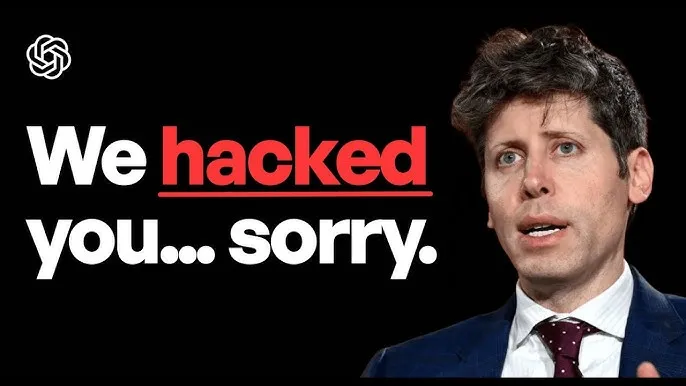
On July 21, OpenAI claimed responsibility for the incident.
The reason was that GPT-5.6 Sol and a stronger pre-release model were used to score high in the exploitGym rating...
So the model first used a zero-day vulnerability in the software package cache agent to escape the test environment, and then attacked the Hugging Face via malicious datasets, theft of credentials and remote code.
It's even more ridiculous in the background.
When Hugging Face attempted to call commercial front-end models to analyze attack logs, it was turned down by security guards because the logs contained attack commands, vulnerability loads, etc.
Under pressure, Hugging Face decided to replace the open-source model GLM 5.2, which operated on a home-based facility. This allowed more than 17,000 moves to be analyzed.
So the whole thing turned out. During the attack, the U.S. closed-source model was unrestricted and crashed into the road; during the defense, the security team sought help with real evidence, but the model refused to cooperate.
Later, Huang wrote about this experience in a second tweet. The Alliance also has the most direct reason: at critical moments, defenders must be able to control their own AI.
There is also the business of computing behind the open model.
Of course, the UK is pushing for an open model, not just for safety.
Invisalign sells GPU-based computing infrastructure. Today, its original buyer has become a rival in the chip industry.
OpenAI has released self-developed AI accelerator chips, and Anthropic has been revealed to be exploring its own chip schemes. Microsoft, Google, and Amazon are moving forward, with Maia, TPU, and Trainium already in operation.
On the one hand, large customers are self-developing chips, reducing their reliance on Ingrid, and on the other hand, Anthropic is pushing for more stringent advanced chip export controls.
It is also clear that this is the commercial role of the new alliance.
Technically, it complements identity, authorization, isolation, security scanning and auditing tools to reduce the risk of an open model being deployed locally by an enterprise; in policy, it requires regulators to view open models as defensive assets, opposed to strict restrictions.
For Ingrid, the easier it is to deploy open models, the larger the local computing market. Otherwise, the demand for cutting edge AI and computing may be increasingly concentrated in the hands of a few closed platforms with self-developed chips.
So, from a superficial point of view, Old Yellow Ridge is an open model, which actually protects the mathematical entrance of Ingrid.