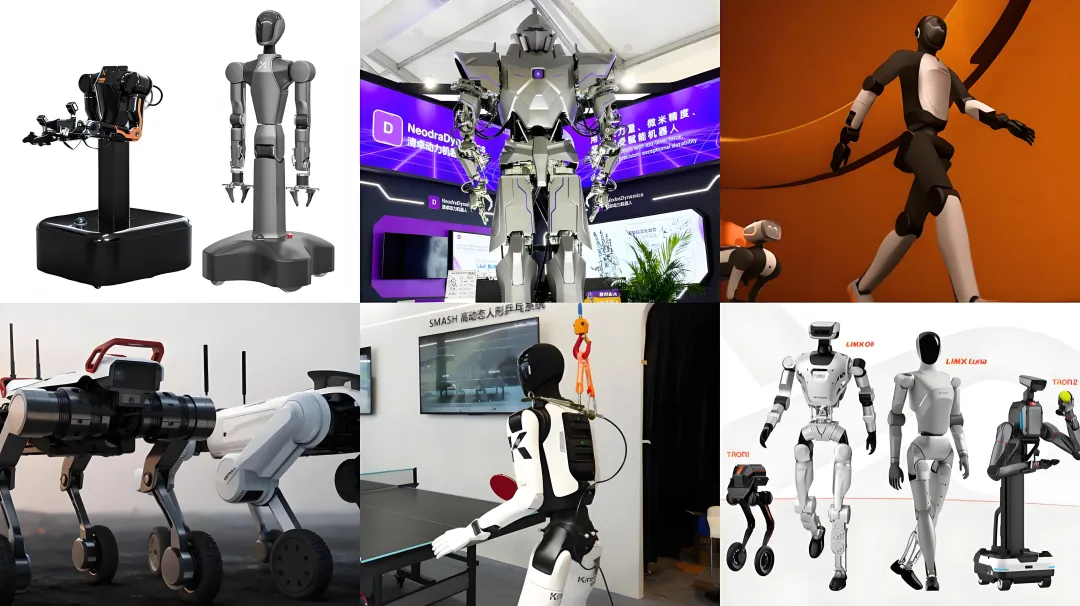
“ A few decades ago, Internet companies were stacking up on the internet, five years ago, tech companies were stacking up on the internet, and now, the word "powered" is becoming a new identity tag for robotics companies.
When you go through the list of companies in the physical intelligence industry, it's not hard to find the high-frequency words "hyperactivity", "clear dynamics", "future dynamics", "vital dynamics", "hyperactivity", and "intermittent dynamics".
Companies with these names, with the words "sparkling" and "sparkling" in them, are cutting this giant cake with amazing speed and in different ways.
This phenomenon of naming actually hides a collective shift in the industry.
01.
A collective wake-up call: Why is a bias a steam-powered pump?
To understand this trend of naming, we have to go back to the essence of physical intelligence, which is that intelligence has a body that can operate in the physical world.
This is also the biggest difference between physical intelligence and AI, it has to have a rigid body, it has to work in the physical world. The brain is stronger, and if the body can't move, can't grasp, can't walk, can't move, then it's still just thinking about braces, not braces.
It's the most basic driving force in the body.
It has at least three meanings here.
● A layer is physical: motor torque, hydraulic drive, battery energy, and robots move on it;
• The other layer is narrative: enterprises have to be dynamic, teams have to be dynamic, industries have to be dynamic, which is a story that both capital and customers understand;
● Another layer of technology: from motion control algorithms to AI decision models, from torque sensors to joint servo systems, power gives robots precise power, smooth interaction, and full technical capabilities for continuous operation.
The three layers of kinetic energy are embedded in each other, precisely treading on a physically intelligent drum. The kinetic drive of the physical layer is the basis, the growth drive of the narrative layer is the catalyst, and the innovation drive of the technical layer is the key to deciding who can really run out.
For this reason, despite its name, the technology has long been known to be a source of energy.
Of course, there is no shortage of references to the name of one of the most famous robotics companies, Boston Power. The company was founded in 1992 by Marc Raibert at MIT and is recognized as a pioneer in the robotics industry.
In addition to its history, it is also highly technologically influential, with its development of the Atlas humanoid robot being the first robot to complete a 360-degree retrograde flight, while the four-legged robot BigDog was born even earlier in 2005.
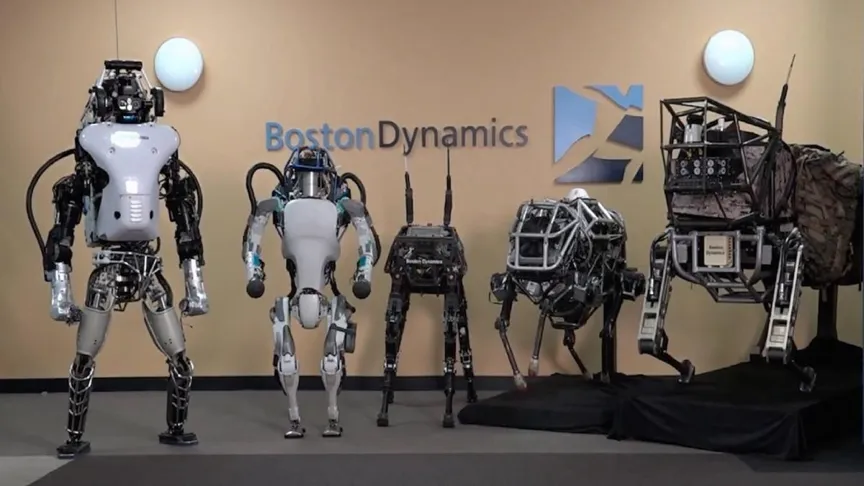
When a handful of Chinese robotics startups adopted the same naming scheme for the X-ray Dynamics, it was perhaps a tribute to Boston Dynamics.
After the tribute, more attention was paid to a definitive battle over the Chinese power grid.
The six steam powered steam companies mentioned above, founded between 2022 and 2024, range in size from millions to billions of dollars in funding, and range in product lines from bipedal to quadruped machine dogs to wheeled robots.
02.
It's called dynamics, but dynamics are different.
If you look at just the word "dynamics", you'll think they're all the same companies. But if you take a look at the front cover, you'll find that each name describes a completely different concept of dynamics.
The Robotics Workshop started from the two perspectives of naming semantics and technical routes to dismantle these power sector enterprises one by one.
(1) Over-dimensional Dynamics: The ambition of playing a table tennis tournament to capture the momentum of the entire chain
It's easy to think of high-dimensional space, multi-modal, full-dimensional intelligence. Robot control is essentially a high-dimensional problem: vision, sensation, touch, inertia, joint angle, temperature, current... All the signals are flowing into the system at the same time on the micro-second scale, and any one of them is dimensional, and the robot can fall.
Superdimensional power combines hydrogen superconductors and hydrogen power pumps, and the signal it sends is that it doesn't just want to be a joint, a motor, but it wants to coordinate the whole chain of perception, decision-making, and execution in high-dimensional space.
From a technical point of view, Super Dynamics is a leading technology company focused on the development of high-performance humanoid robots, founded in July 2025, with a long-standing core team in the fields of robotics, autonomous driving and multi-modal large models, with the ability to self-develop the entire chain from underlying algorithms, robot bodies to product engineering.
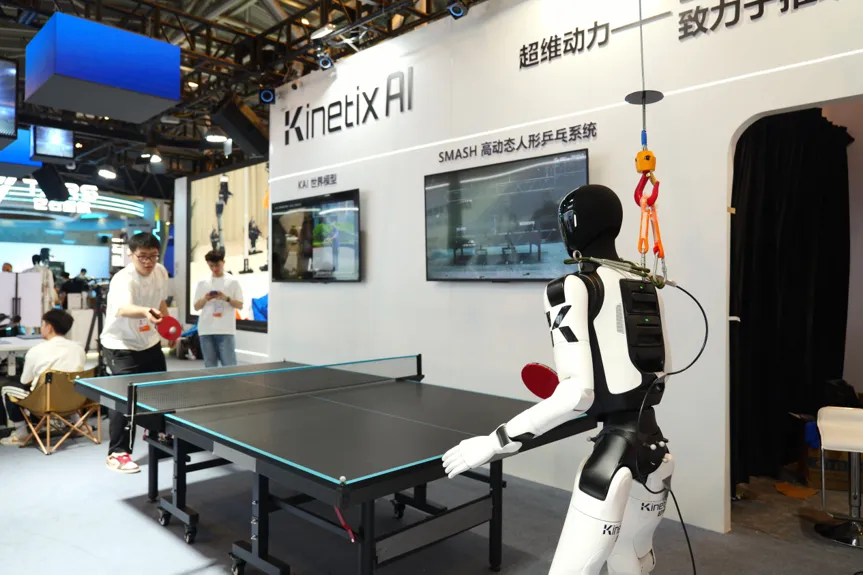
In March 2026, Superdimension Power released the world's first outdoor self-perceiving high-dynamic humanoid table tennis system, SMASH. In April 2026, Superdimension Power officially released the world's first full-size humanoid robot with the highest degree of freedom.
In addition, the company also has a super-high-frequency life simulation hand called KAI Hand, a first-person data collection device called KAI Halo, a KAI world model, and the KAI Embodied AI Infra platform.
At the WRC 2026 venue, the demonstration of super-dimensional power to play table tennis with humanoid robots received widespread attention. The robot is based on the SMASH 2.0 system, which can perform ball recognition, trajectory calculation and batting action planning in millisecond-level windows, and stably play multiple batting styles.
Tennis is an extremely dynamic, extremely precise task, to be able to play tennis well, which means that the whole chain of perception, decision-making, execution is open.
(2) The power of excellence: the super-human athlete who breaks the boundaries
At a time when most physically intelligent companies are still trying to outsmart people, they are trying to outsmart people.
Let's take a look at the name. It has the meaning of clarity, clarity, and also clarity, which implies that the path of technology should be clear and clear; it is excellence, excellence, and the ambition of excellence beyond its peers.
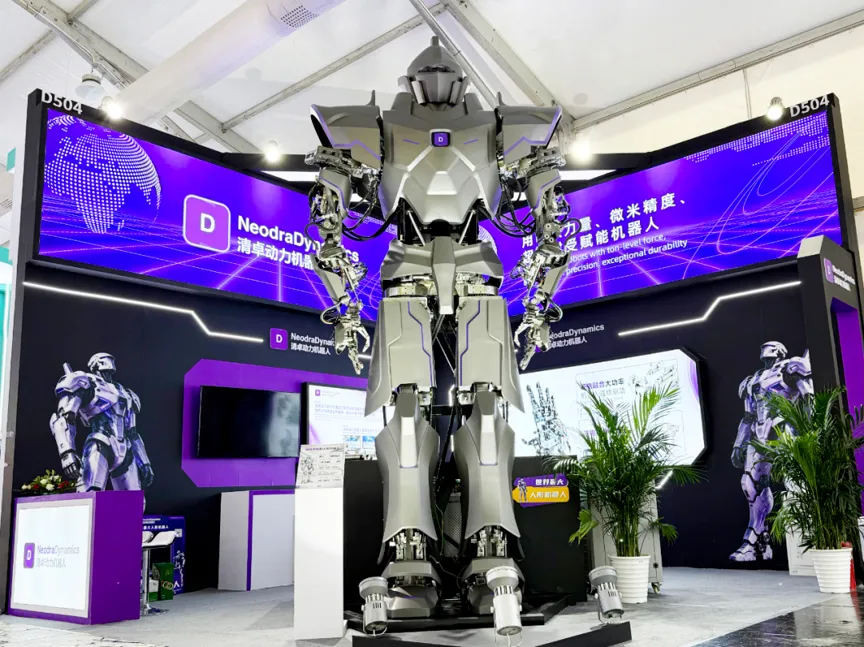
The company was founded in October 2024 by internationally renowned physically intelligent foreign scholars, robotic power entrepreneurs, and digital hydraulics founders. The company is committed to breaking physical limits through innovative hydraulic power blending technologies, empowering robots to create value for humans in extreme environments, improving productivity, reducing work risks, and improving quality of life.
At this WRC, the world's first self-developed liquid-electric hybrid superhuman robot was officially unveiled. It is reported that the product is about 4 meters high, with a total of 41 active freedoms, a maximum load of up to 500 kilograms for two-arms collaboration, and a handshake power of more than 500 kilograms. The other 39 core joints are all equipped with self-developed digital hydraulic linear actuators.
At the same time, the products have extremely strong environmental resistance, can be adapted to all kinds of harsh scenarios such as nuclear biology, deep sea, high low temperature, high dust, and can be applied to the core areas of overload installation, logistics transportation, extreme rescue, deep sea operations, industrial production, and nuclear biochemical operations.
(3) Future Dynamics: A team of 98 polar explorers with a body and a brain
The word "future" is the most borderless word and the most difficult to define forerunner.
The power of the future can be summed up in four words: physical intelligence, world models, and intelligent operating systems as much as possible.
Founded in May 2025, Future Power is the world's leading provider of agile operating software and hardware integrated systems, covering more than 60 percent of corporate customers in less than a year, launching three consecutive hits in six months, and providing nearly 1,000 market validations.In August 2026, Future Power released the all-new generation of mobile agile, two-armed humanoid robot K1, which focuses entirely on mobile + precision operation, with a starting price of only 1.980 thousand yuan. Previously, the company had launched 1.980 thousand yuan of X-series twin-arms and 2.88 million yuan of L1 wheeled elevated twin-arms.
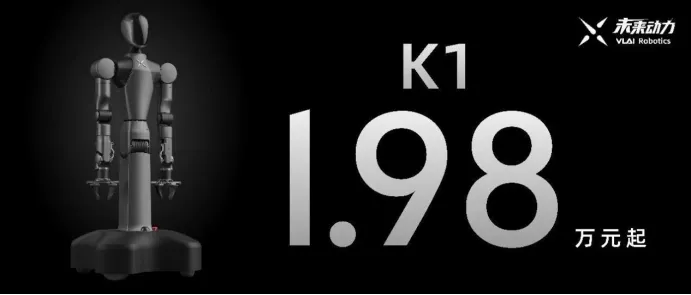 It is worth noting that Future Power members come from Hong Kong University of Science and Technology, Shanghai Institute of Innovation, Renating University, Byte Jumping, Dajiang, etc. The average age of the team is less than 30 after 98 years. More than 80% of the team members have 2-3 years of winning experience in the RoboMaster robotics competition, engineering and generation skills are very strong.
(4) Vitamins: Billion orders from the world's largest manufacturer of lithium-ion batteries for consumer-grade body temperature
These two words naturally make you think of life and vita, life and vitality. In the camp of intelligent companies, life and vitality seem to be very special. Even life and vitality can be dismantled to protect others. This sound is wonderful in service robots.
If a company were to call itself a Vietnamese power pump, its target would likely be not an icy industrial mechanical arm, but to enter people's everyday spaces -- companionship, care, retirement, education, housekeeping -- these scenarios require not huge explosive power, but safety, friendliness, durability, reliable life-force pumps.
This is also the case. Vita Power is a body-smart robot company founded in December 2024, as well as the first consumer-grade body-smart company in the country, dedicated to creating living space robots through innovative AI research and development.
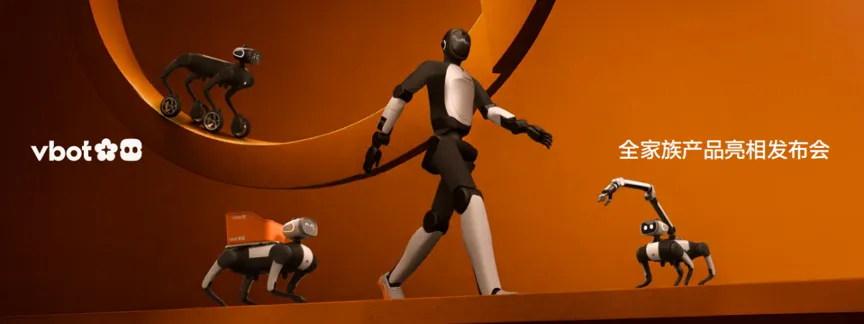
Around the core of the life-space puzzle, Vita Power builds a matrix of family-owned products ranging from quadrupeds to humanoids. In terms of quadrupeds, its first product, Vbot Super Power Machine Dogs, has accumulated 6,540 orders in its first-ever pre-sale period, with pre-order sales of nearly billion yuan, the highest ever record for consumer-grade intelligent products.
At the same time, the company is developing different formats such as educational development versions, commercial wheelbase versions, and other forms of humanoid robots. The Vbot ATOM, a humanoid terminal designed for living space, debuted and opened for booking at WRC 2026.
The number of orders in the main titles confirms a judgment. When robots enter the household with the gesture of a matching partner instead of a matching tool, the market's feedback will be far more than expected.
(5) Strength: Recharged quadruped robots are running into the grid
It was a rotating component in ancient Chinese astronomical instruments, and was later cited as the key to the helium core. Used in the robotics industry, helium almost directly says: "What I am doing is rotating helium".
The connective tissue of a robot is essentially the learning of rotation. Pulsed wavelength reducers, planetary rolling column silks, unbroken torque motors, encoders, torque sensors... These are the precise parts of the body that determine the ability of a robot to behave gracefully.
The company claims to be an industry solution that deepens the real workplace.
From a technical point of view, the company focuses on the full-scale self-development, production and sales of high-performance general-purpose body and core components of intelligent robots. In the technical setting, the company builds from the optimization of the four-legged robot movement control algorithm, the construction of multi-sensor fusion sensing systems, to the complete technical closure of the integrated lightweight design of the overall structure and the modular integration of core functions, with about 90% of the core components achieving self-development.
On the product side, Hyundai Power has introduced four-legged robots from the Hypertron series, including the heavy-duty Hypertron-T01 and the medium-sized Hypertron-SW01 models. In commercial terms, Hyundai Power has chosen a route cut from the vertical scene, which is geared towards high-speed scenarios such as power patrol, fire rescue, special operations, to provide a solution that delivers performance metrics and landing mobility.
Currently, the company's first industry-class heavily loaded four-legged robot Hypertron-T01 has been mass-produced and delivered in bulk to leading power grid enterprises and put into normal operation.
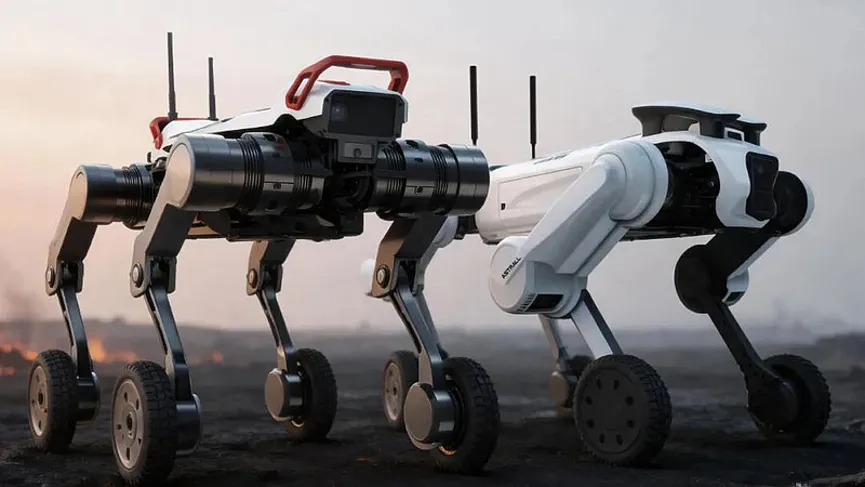
At a time when coal-fired power plants are still telling the story of the future, coal-fired power has allowed robots to run into the real power grid. This ability to land is the hardest cornerstone of nuclear power.
(6) Step-by-step dynamics: 15 billion tonnes of home pumps were built in the early years of the industry
A chase is a chase, and a line is a boundary. To be joined together is like a man chasing a boundary.
In the context of robots, the boundaries can be slopes, debris, ladders, narrow spaces in the physical environment, or the boundaries of algorithmic capabilities that models have never seen before, but are everywhere in the real world.
With physical intelligence, there is an underlying problem: the model is stronger in the training environment, and the real world has never seen it before. Who can help AI deal with more borderline cases? The name Intermediate Dynamics implies a company that is willing to let robots hit the wall in the real world, to challenge complex terrain. Its drive is not steady drive, but breakthrough drive.
Established in January 2022, the company focuses on full-size humanoid robots, motion control and robotics. Its products include full-size general-purpose humanoid robots LimX Oli, full-size interactive humanoid robots LimX Luna, multi-form humanoid platform TRON 2, and more.
According to reports, the founder of Intermotive, Zhang Zhang, has positioned the company as a robotic pump factory while covering hardware design, manufacturing, AI models, intelligent operating systems and product definitions. According to him, physical intelligence is still in the early stages of the industry, supply chains, models and software systems are not fully mature, and Zhang Zhang is the best way to solve all the problems when external industry is not yet able to solve all the problems.
In July 2026, Intermediate Power completed its pre-IPO round of nearly $200 million, valuing the investment at 15 billion yuan; a half-year cumulative financing of about $400 million.
03.
In the name of motivation, under ambition
If you put a couple of companies together, you'll see a clear brake dynamics brake chart.
The first class is the robotics movement: doing the robot body, allowing the robot to grow into an athlete with the ability to run and jump; the second class is the core components: doing the joints, decelerators, drivers, and becoming a robotic-era robot; and the third class is the systemic intelligence movement: the full spectrum of cognitive decision-making capabilities that attempt to define the next generation of robotics.
But their paths are vastly different, with slow motion hitting the C-end market at extreme prices, step-by-step power valuing billions of dollars from a globalization perspective, ultra-dimensional power redefining the core with ultra-high degrees of freedom, VITA power cutting the smallest unit into the household with vacuum cleaner crap, VITA power using full-frame self-development and deep-farming industrial scenarios, and future power using low-cost open platform service research developers.
Of course, the above classification is not absolute. Most of these companies span two or three segments, and even if they are now still separate segments, they will move from component to integrated, or from integrated to reverse-defining components, as technology and business evolve.
From the Boston Dynamics to the China Dynamics Chain, it was itself an unconscious spiritual stampede that led to a name-calling migration for a physically intelligent track. Although the business model was once questioned, its hard-core dynamics technology has long sealed the deadlock.
Physical intelligence is needed not only to drive smart cars, but also to drive cars that can withstand gravity, friction, inertia and uncertainty.
Each frontrunner is a window through which different technological beliefs and business choices are revealed. They combine the common vocabulary from the name to become a keyword in the industry and a self-fulfilling prophecy for Chinese robotics startups.
But the real power pump is never written on business licenses, it's written on every fall and rise, every mass production downline, every delivery of every real scene.
It's only when robots actually run, and the dynamics of these names go up, that the numbers are calculated.