On the evening of August 22, 2026, the opening ceremony of the second World Man-made Robot Games will be held at the Beijing National Speed Skating Hall.
On one side of the net, the Chinese tennis player will be nicknamed Chiang Kai-shek; on the other side, there is the Galaxy General Tennis Robot, which bends its knees, bends its head, and waits for a hand like a professional player.
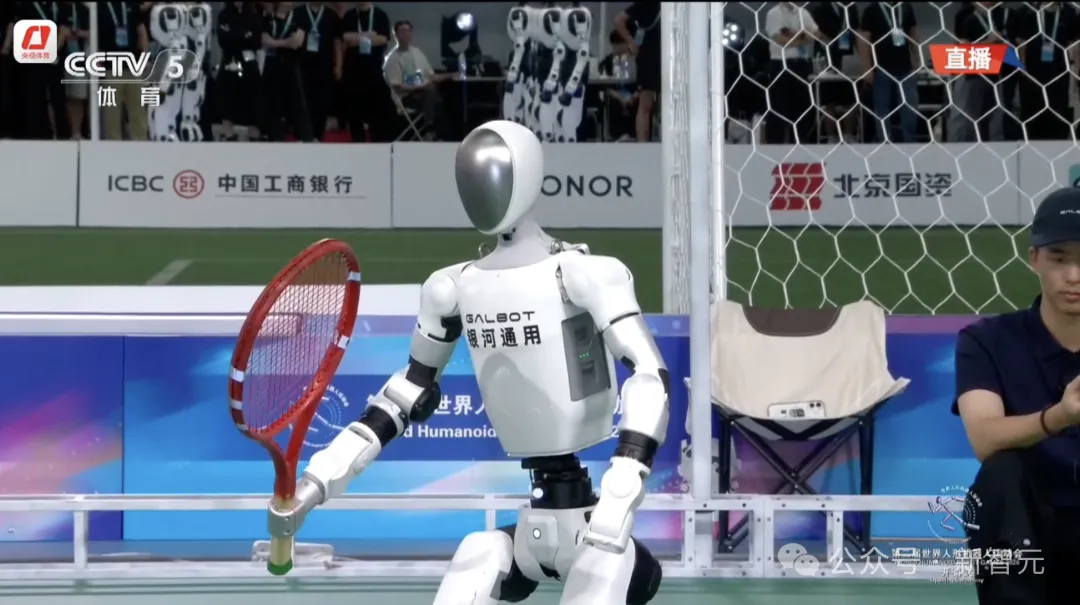
The next second, a yellow tennis ball attached to the edge flies at high speed. The robot moves a number of steps across the edge, the body side turns, waving the ball and hitting the tennis ball across the arc, staying steady within each other's boundaries.

All the applause thundered.
Few people predicted on the opening day, however, that the remarkable return was just the opening game of the galaxy general competition. The competition was fiercer, testing the gold content of the body-smart big model, and it wasn't officially opened until the next five days of the stage race.
On August 26, the results of the competition were officially revealed: Galaxy General took all the gold medals in the three highest gold-containing home, dining, and business events, winning 100%; the business super race, which also includes gold and silver bronze medals, became the most autonomous smart enterprise to win the event.

01.
Sceneshow is the ultimate test of being physically intelligent.
For a long time, human-robot competitions have always been accompanied by controversy over the nature of wrestling. Running jumps on the track, dancing movements on the stage, which are visually impactful, but are essentially a demonstration of a single skill, most of which can be accomplished through pre-programming or remote operation, and are some distance from the core goal of real working wrestling.
The scenery of the World Man-made Robot Games is exactly the real battle scale set against the industry.
It's not about the accuracy of a single action, nor the speed of a single movement, but it's 1:1 in real-life work scenes, a complete test of the robot's ability to understand tasks, perceive environments, plan autonomously, and execute the entire chain. In a sense, the performance of a scene game directly corresponds to the potential for a robot to get out of the lab, land on an industrial scene.
The design of the competition rules also obscured the basement, allowing teams to choose the remote mode to participate, but the autonomy mode score weight was 1.0, and the remote mode was only 0.5; at the same time, the autonomy team ranked first. According to the theory, such a rule slope should encourage more teams to challenge the autonomous mode, but in the end most teams still chose remote control, which relies on artificial rear-end real-time control, to regulate the high error risk of full autonomy.
All three scenarios are competing in a fully autonomous mode with the highest difficulty. Throughout the game, the robot is entirely self-developed, with intelligent models such as the galactic brain (AstraBrain) making autonomous decisions, executing autonomously, without any artificial real-time intervention.
The final result was:
Family Scene Competition: Finished with the highest score, shortest time spent, close to the top of the standings, and completed the first skill review;
The fastest finish in the event was 6:55 seconds, complete with precise power control and zero errors.
Commercial Super Scenes: Gold, Silver and Bronze medals to form a breakthrough lead, ranking track

Three races, three championships, a 100% winning percentage. This scoreboard is far more than a few gold medals. It means that while the industry is still validating the ability of robotics to perform complex long-range tasks autonomously, Galaxy has run a long, multi-tasking, real workflow with random interference, and has done stable, efficient, reproducible cycles.
02.
Three hard-fought battles, breaking through the basics of universal power
The three scenarios, corresponding to three entirely different industry scenarios, were tested on entirely different capability dimensions. While the galaxy generally uses the same set of galaxy star brain models, this is the most intuitive manifestation of its model capabilities.
Family scenes: a double test of long-distance tasks and random interference
The home scene is the longest event of the entire race (a 30-minute scale) and one of the most demanding for robot-complete capability. Robots need to autonomously navigate multiple areas of the living room, bedroom, bathroom, balcony, complete a series of continuous operations such as garbage collection, clothing sorting, laundry transportation, unloading. From grabbing dirt on the ground, identifying wallets through narrow doors, to independently opening doors, folding clothes, clothes will be placed in the wardrobe, each step involving environmental perception, object recognition, hand-to-hand coordination and so on.

The real difficulty lies in random interference: when a robot is performing a cleaning task, it suddenly plays out on the field. There is a quick delivery outside the door, please take the voice commands inside the door as soon as possible. The robot must understand the natural language, immediately interrupt the current work, go to the gate to get a quick delivery, and after completing a new task return to the original process to continue to perform. This test has long been not a single movement ability, but a comprehensive understanding of long-range tasks, memory and dynamic replanning ability.

Catering scene: Extreme verification of the use of tools with precise force control
Food scenes focus on the complete closure of the kitchen service class workshops: robots need to complete the entire process of catering, heating, beverage production and delivery in one go according to the on-site voice instructions. From finding the right food in the hot cafeteria, catering with the food stove, to automatically opening the microwave, placing the food, closing the oven door, to precise rotation of the timer, removing the heated food, receiving the beverage and delivering it to the delivery area, the whole process involves a variety of core capabilities, including language understanding, target identification tools, use, precision control, etc.
The most challenging of these was two details: one is that the food stove is not fixed in the hands of a robot, requires real-time control of the grip strength like humans, both to steady the food and not cause the fall or damage due to improper use of force; the second is the rotational operation of the microwave boiler rotor, requiring precise power control at the millimeter level, almost impossible to accurately match the time range.
Business superscenes: a comprehensive examination of complex environments and the ability to generalize
The business superscenes are typical long-range multi-tasking continuous operations: robots need to complete the product selection, shelf filling, and loading of goods within 20 minutes. The shelf density, numerous SKUs, require robots to locate the target goods accurately based on order names, specifications, and quantities, and not to collide with the surrounding items; they also need to independently scan the shelves to find randomly set defect locations; they need to remove the finished goods from the shelves; and finally, they need to identify the goods that have been misplaced and will be returned to the correct position.
The site also set up multiple random interferences: different order contents, unstable missing locations, misplaced goods locations, and even seemingly similar interferences. This means that robots have no predetermined paths to walk, must sense the environment in real time, accurately judge the state, and plan their own paths. In the end, Galaxy J not only took the project's championship, but also won gold, silver, and bronze medals, forming an absolute advantage in the business superrace, behind which is its accumulated technical thickness in the retail scene over the years.
Three games, three scenarios, and three sets of mission logic are backed by the same intelligent system. This directly demonstrates that Galaxy General is not a dedicated scripting kit designed for a particular game, but a general-purpose working brain kit with the ability to amplify, and switching scenarios doesn't require rebuilding the underlying architecture, only adjusting the strategy layer to adapt quickly.
03.
Leadership underlying logic: the brain-integrated architecture of galaxies
From the opening ceremony, which was completed in a matter of seconds at zero, to three consecutive championships in three scenic races, a round-robin victory for Galaxy General was essentially a victory for the technical route.
For a long time, the mainstream practice in the industry has been the sub-layered architecture of the cerebrum + cerebrum: the upper-level model is responsible for understanding tasks, making decisions, the lower-level motion control algorithm is responsible for executing movements, both of which rely on interfaces to transmit instructions. The pain point of this architecture is quite obvious: delay, decision instructions are transmitted from the brain to the brain and converted into joint movements, the transmission of information takes time, and in a multi-second response scene such as tennis, slow half means not receiving the ball; second, the lower-level brain reaches the instructions, such as when the mouse is playing a straight line ball, and the robot does not know which legs, arms and how much power is left to perform the task; and when the brain moves, it does not know whether to make this call directly.
The breakthrough of the galaxy's AstraBrain was the integration of the brain, micro-brain, and neural controls into the same model for the first time in the world:
• The brain layer is responsible for understanding games and scenarios: judging the direction of the ball, identifying the objectives of the task, and developing strategies in conjunction with the environment;
• The cerebellum is responsible for transforming decision-making into precise physical movements: regulating all joints of the legs, ankles, arms and wrists, and maintaining a steady focus during movement;
• The neural control layer connects decision-making and execution to ensure real-time transmission of information at milliseconds.
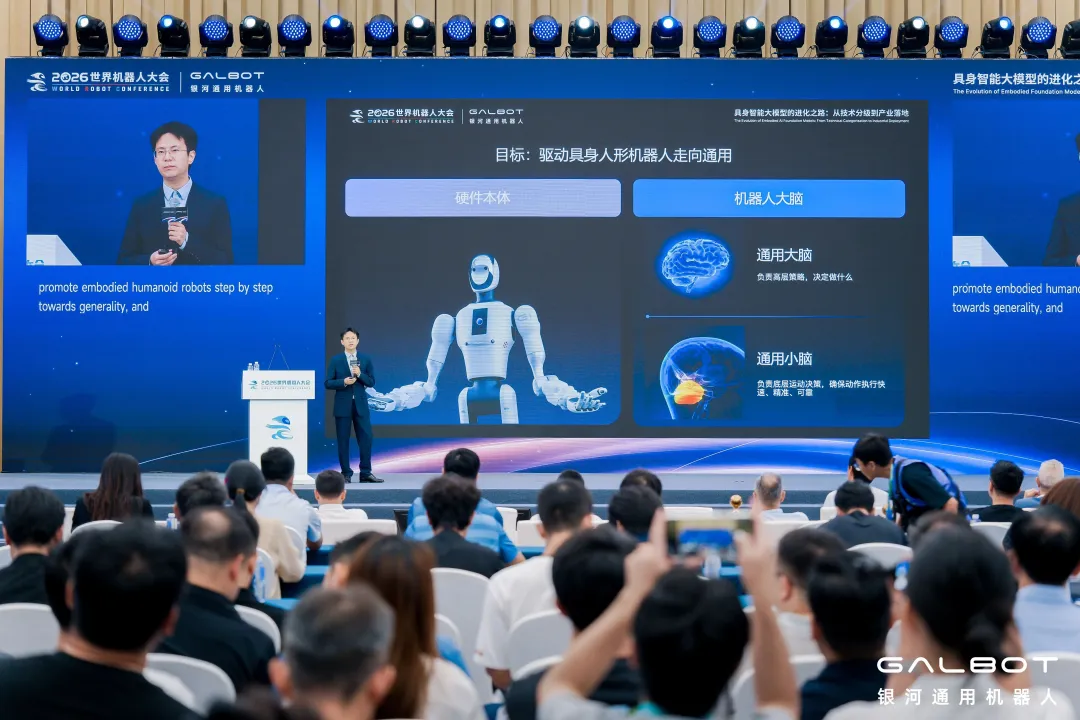
The most intuitive change brought about by this integrated architecture is that robots' movements no longer spell like mechanical instructions, but present a sense of humanised fluidity. The more central value is that motion decision-making and physical control are no longer detached: the brain considers the state of the body in real time when making decisions, and the brain accurately understands the intent of the movement when executing movements, forming side perceptions, side decisions, and the real-time closure of the side execution.
04.
The stadium is just a shortening, and the model's first ability has been verified in the real world.
In fact, these capabilities demonstrated on the field have long since gone out of the laboratory and continue to climb up the ladder in real-life commercial scenarios.
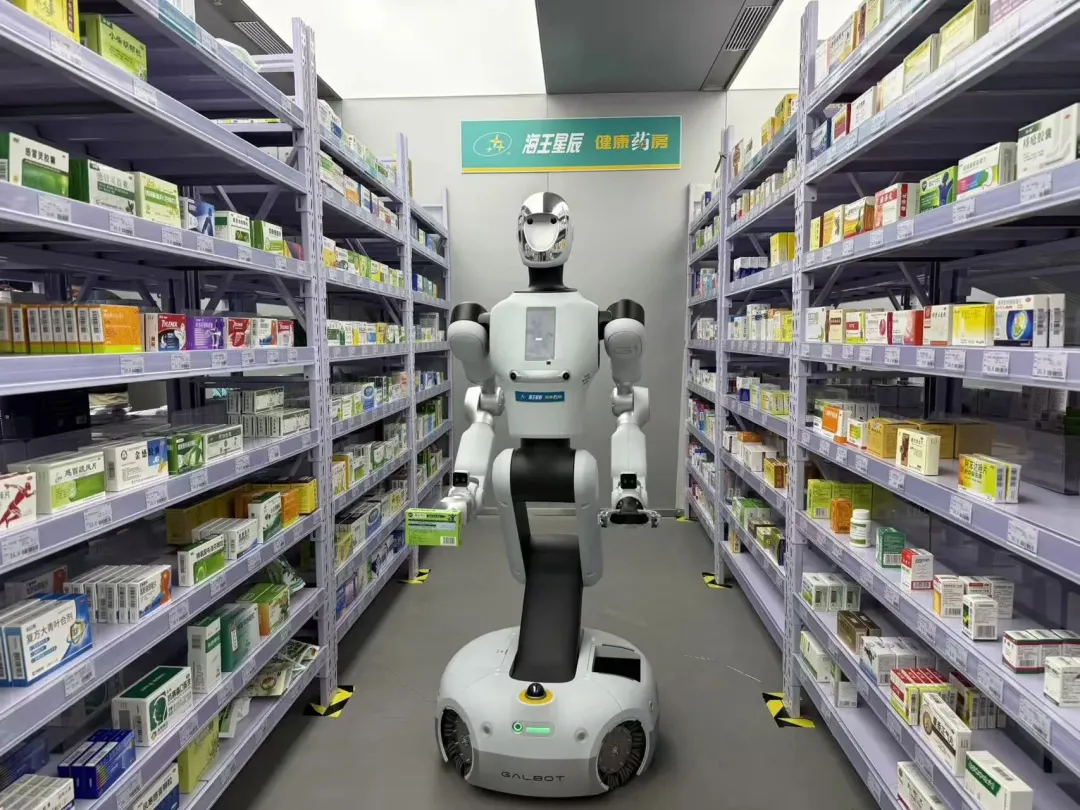
In the field of smart retail, Galaxy Universal's Silicon Space Tape has reached nearly 50 cities across the country, with about 200 locations, and is the world's first fully autonomously operated retail store by humanoid robots. Faced with tens of thousands of different SKUs and dynamic user demands, robots automate product identification, shelf inspection, inventory judgement and supply and sales services throughout the entire process, running steadily for more than a year. Recently, American Fox News broadcaster Bret Baier visited a full-service supermarket gateway operated by Galaxy Universal and witnessed robots operating steadily, accurately, and without any human intervention in the entire process.
The first store opened in September 2024, and has been operating continuously for nearly two years. In less than 50 square meters of dense disposal space, robots continue to undertake real work such as drug selection, packaging, and delivering over 1 million boxes of medicines. A single task on the same site poses higher demands on robots: not only to complete a single task, but longer-term, high-intensity, continuous and steady repetition work.
Field verification capabilities, real-world scenario data, data against breastfeeding model evolution, model re-expansion capability boundaries, Galaxy General has run through the real-world applications of silicon data backflow, silicon model evolution, and stronger capability of silicon. This is the deepest reason for its ability to ride off the dust on the field: it leads not on pre-race assault training, but on the inevitable result of accumulation of long-term real-world scenarios.
05.
What is the meaning of this verse?
Ten years ago, AlphaGo defeated Lee Seung-soo on the board to prove that AI can conquer the digital world. A decade later, from high-speed spin at AstraTennis to 100% complete autonomy in three scenarios, Galaxy General has proven that AI can withstand the real test of the physical world.
This year's World Human Robot Games is over, but the competition for the body-smart industry has just entered a crucial stage. As the robot's hardware capabilities mature, the core competition in the industry will eventually return to the brain of the robot itself: whoever can run a general-purpose body-smart model first, whoever can scale the field first, will win the final championship.
And now, Galaxy J is firmly in its leading position.