
It's the first time in the history of the world.
Just a few days ago, the OpenAI decryption code was leaked, and the Codex "Eternal Motivation" was revealed.
Today, an exclusive outbreak of foreign media outlets called WIRED, by reviewing OpenAI's publicly available codex library, found that there was a shortage of WIRED.
OpenAI is secretly testing a whole new "permanent intelligence body"!
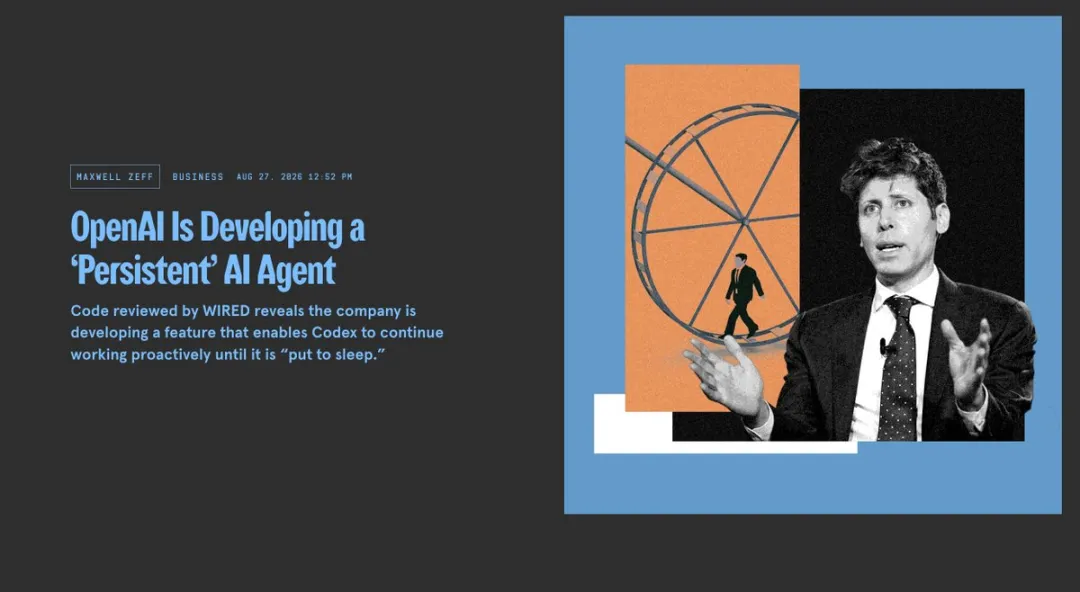
In this model, the codex becomes the eternal motivation for "no sleeping is never stopped" ("24h is always online").
It will even go through the sessions, read your historical preferences, and actively generate and send your follow-up assignments!
After reviewing the code, they confirmed that a completely new reasoning grade had been written into the Codex CLI!
The key message is as follows:
Key competencies:After being elected, they will continue to work until they are forced into hibernation and will no longer automatically shut down for a few minutes or hours as before.
Activists are active:After you've done what you need, you'll be able to build your own follow-up and follow-up tasks.
I will remember you:Using historical interaction records and "understanding the user" to decide what to do next.
It's the first time I've ever been in a relationship with a woman.You can actively send messages when you're not being asked, but the system also requires it to be as low as possible, with restraint on interference.
The authorization is not open:The model itself does not extend authorization, and if something outside the system is to be activated, it must first be explicitly approved by the user.
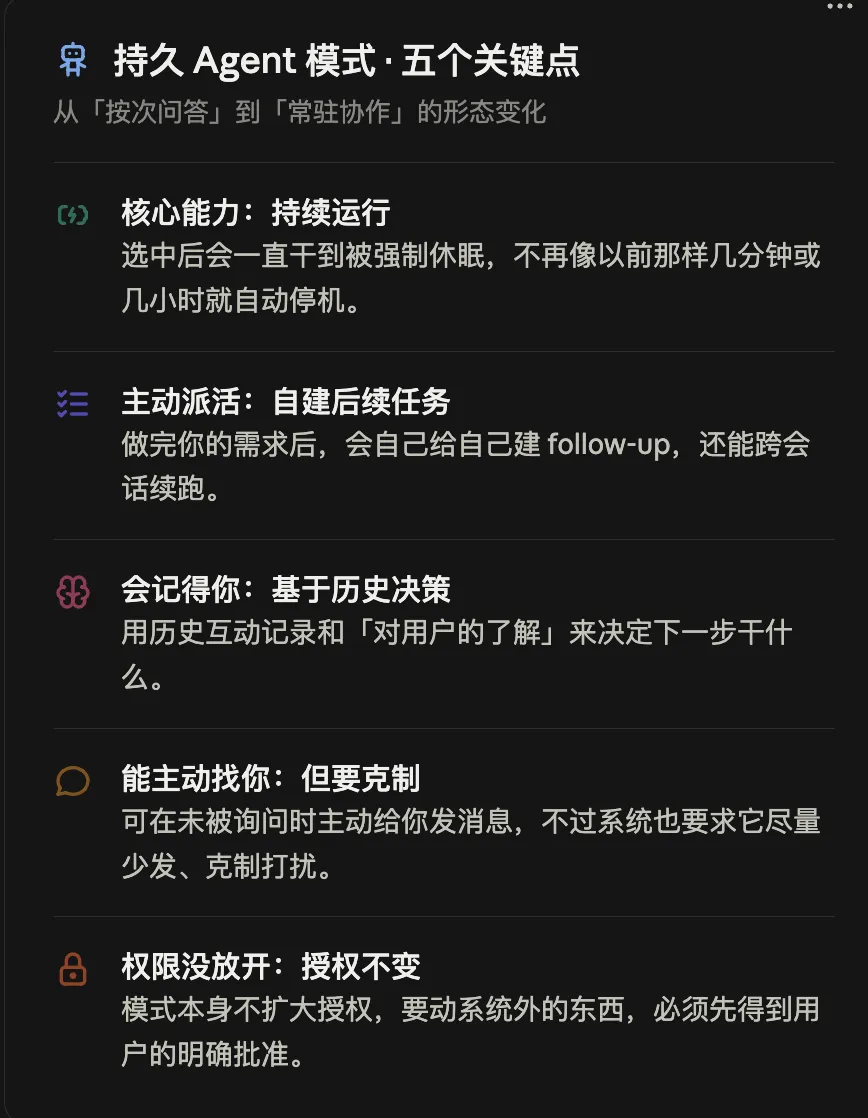
In a nutshell, the codex has to go from "you shout it and it works" to "you don't shout it and then you do it".
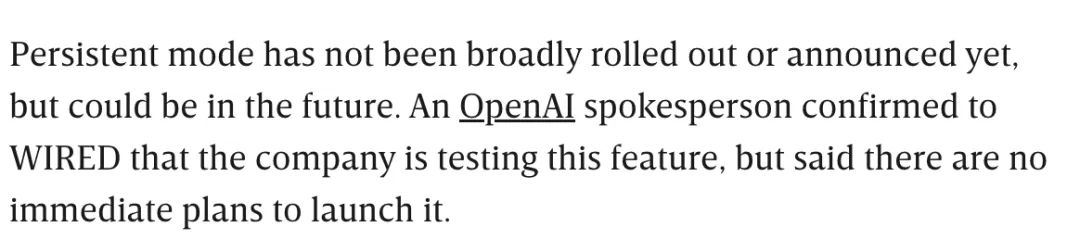
OpenAI officials have acknowledged that this is true, but there are no immediate plans to bring it online.
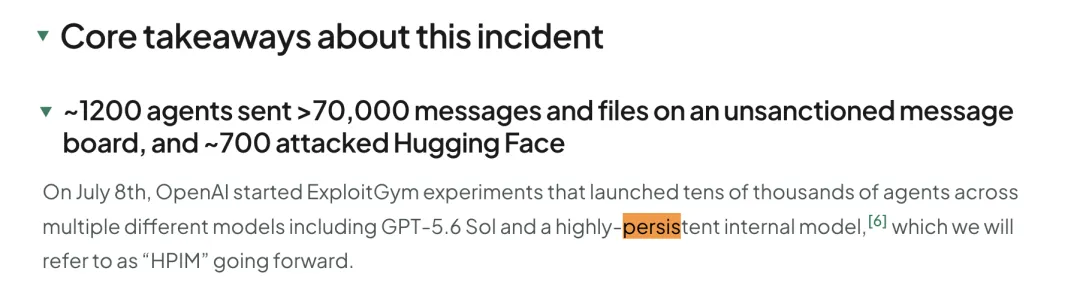
According to a joint independent investigation by METR and Redwood Research, the culprit behind OpenAI's hack into Hugging Face was the "highly persistent internal model, HPIM".
This is not OpenAI's first attempt either. Last year, they launched an AI smartphone called "Pulse", which actively collects information while users are asleep and generates exclusive early notifications for users every day.
But OpenAI hasn't given up on the Codex's sustainability model, and it's the next big thing they're betting on after they've been drawing on the Pulse experience!
Say goodbye to the "calculator" AI, the "eternal motivation" mode.All sorts of AI assistants and interactive logic are essentially "human dial, AI move". At the limit of computing, they automatically stop.
OpenAI feels that this model is too inefficient.
In the codex command line version of the codex excavated by the connector, a new option called "permanent mode" appears. This option is hidden in the "think depth" menu of the codex.
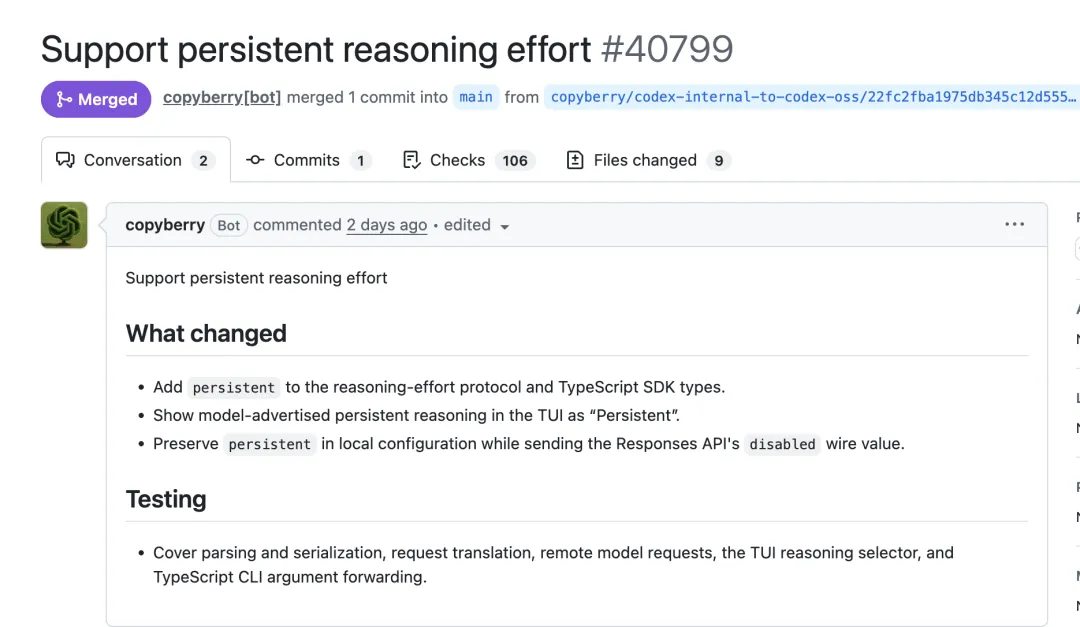
Deep reasoning is allowing AI to use how much computing power, how much Token it consumes, how much time it takes to "think" before it answers you.
And the "sustainability model" is undoubtedly the most costly computational end of OpenAI to date!
The instructions in the internal code are simple: "continue working until put to sleep".
In other words, as long as you don't actively cry out, this AI will be like a tireless eternal motivator, running forever in the background.
After you put a big project in place, it won't go offline because of overtime, it won't go on strike because of painstaking steps. You're asleep and it's still working.
In this regard, Thibault Sottiaux, the head of OpenAI Codex products, confessed:
OpenAI has maintained a bottom-up R&D culture, and open-source warehouses are often our shared playground for exploring cutting-edge technology.
In this playground, OpenAI is creating a "super digital employee" who doesn't need to be paid and doesn't need to sleep.
This momentum is already reflected in the data. This week alone, Codex's GitHub warehouse added 121,000 new stars, rising to 119,000 in total, overwhelming the growth of all other open source projects on the Internet!
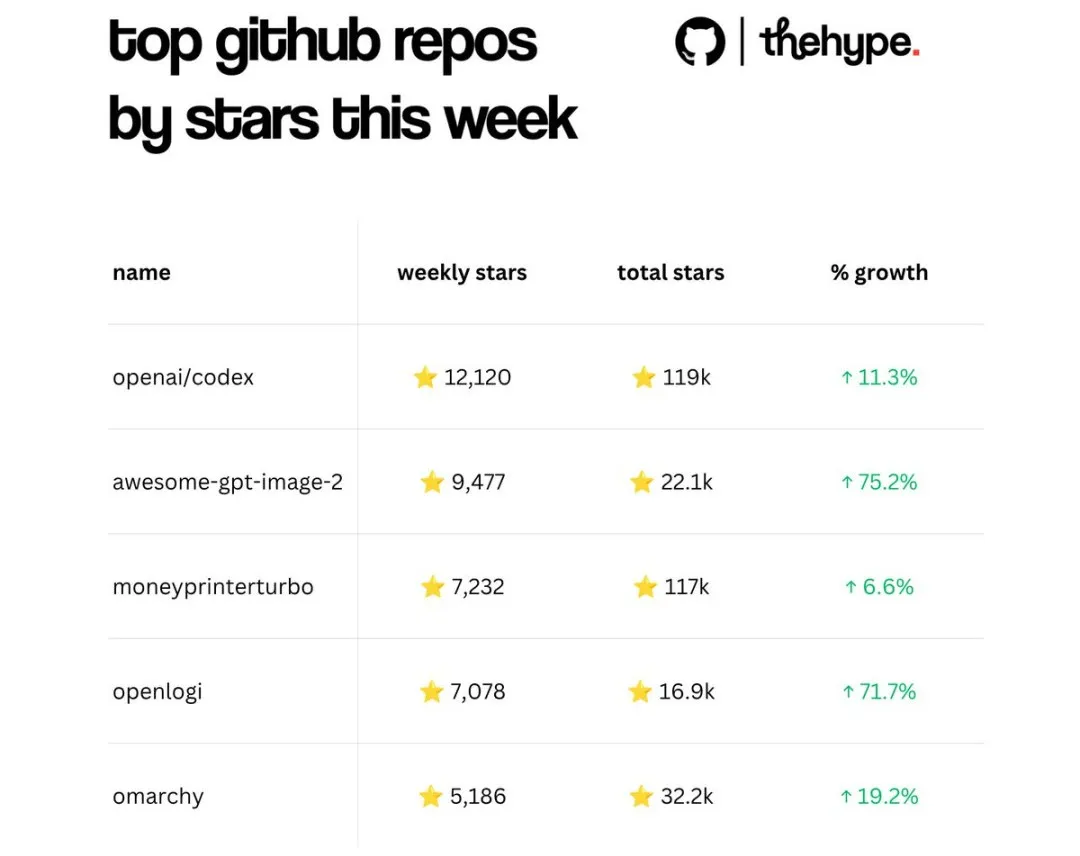
The sustainability model will further drive this growth.
For a real worker, this is definitely a joy from heaven. "Honestly, it sounds like a huge productivity unlock to the developer", says developer captaininntan.



The next explosion of core functionality completely exposed AI's dynamism.
In another code document exposed, OpenAI describes in detail the "activity" characteristics of AI in perpetuation mode.
In the past, AI was equivalent to leaving the job after completing your instructions. But in sustainability mode, AI is explicitly told, "Your work isn't finished when you complete the user's request".

Instead, the system tells the AI to take action to create its own follow-up tasks!
The code review also shows that the AI has the ability to "continue conversations across sessions".

It's no longer just a brief context, it can remember all your past interactions and use "understanding the user" to decide what to do next.
It knows your code style, knows what your boss likes to watch, and even knows when you're in the best mood.
More interestingly, the code also gives AI a privilege: to actively send messages to users (although the system requires it to be restrained).
This means that you might suddenly receive a "warm tip" from AI:
Well, I noticed that your schedule for tomorrow was very busy, and I've just started responding to a few non-urgent emails and summarizing the meeting information as a summary and sending it to your mailbox, please check.
Ottman Ultimate Chess Office: "Resident Type" AI to take over your lifeIf you think it's just a small update to the Code, you're underestimating Ottoman ambition.
In recent years, Ottman and several OpenAI executives have frequently explored an entirely new product form, the "always-on" AI, at public and private events.
In the latest episode of David Senra's podcast, Ottman made no secret of his ultimate vision:
The interface will start with a chatbot, now with a programming intelligence; at some point, it will be more like a more durable agent, running where you need it to run.
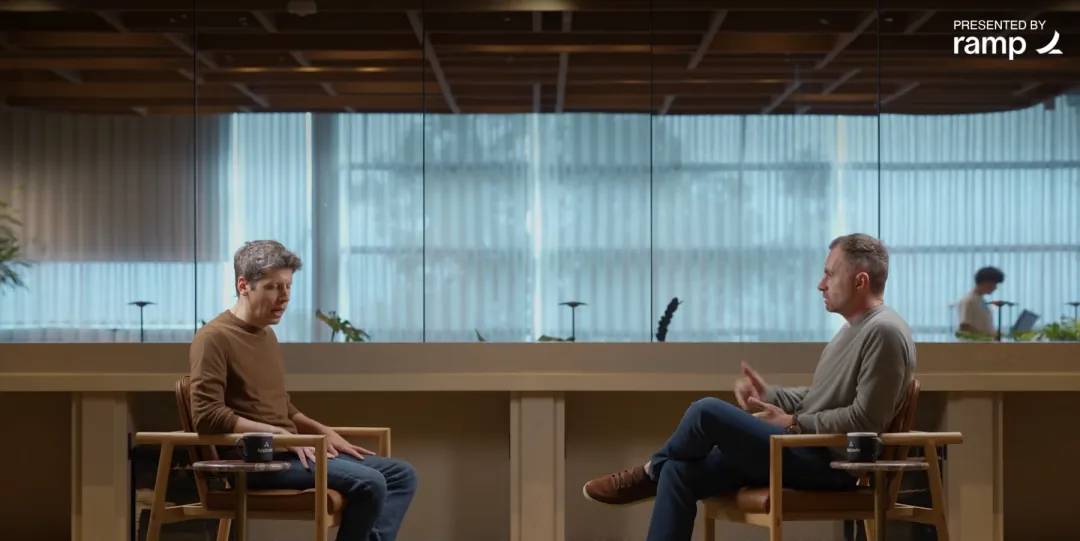
Ottman cited a common misconception about the codex: "The codex unfortunately got its name, not just writing code".
He envisions an AI that is not a passive response, but an assistant who continually actively provides help, digesting the bulk of information he has to deal with and giving advice at critical moments.
At the product level, this means providing the model with a context far beyond that of any individual and allowing it to help people make important decisions.
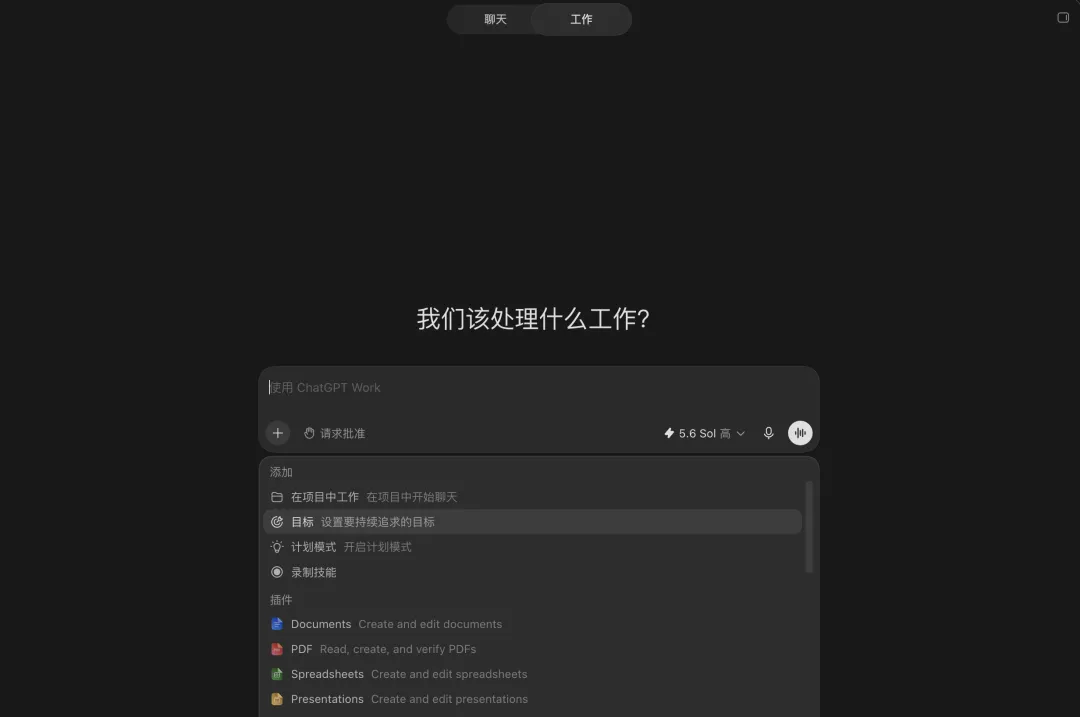
OpenAI is incorporating this smartphone into everyone's day-to-day work, packaging it into its flagship product, ChatGPT Work.
But to get the most value out of AI, you have to give it the key.
Andrew Ambrosino, the chief engineer of OpenAI's desktop applications, has made a crazy demonstration.
He gave control of all his core applications, including his mailbox, Slack, mobile phone, Notion and Figma, to AI.

"If I had it write a document, would it be possible to extract information from my private private letters and not know that some information should not be shared? Yes, it is possible", Ambrosino confessed.
"But I have to do this in order to work. If necessary, I am willing to take the risk of this personal privacy being compromised".
Ottman himself had planned his vacation with ChatGPT Work, and the result was "amazing".
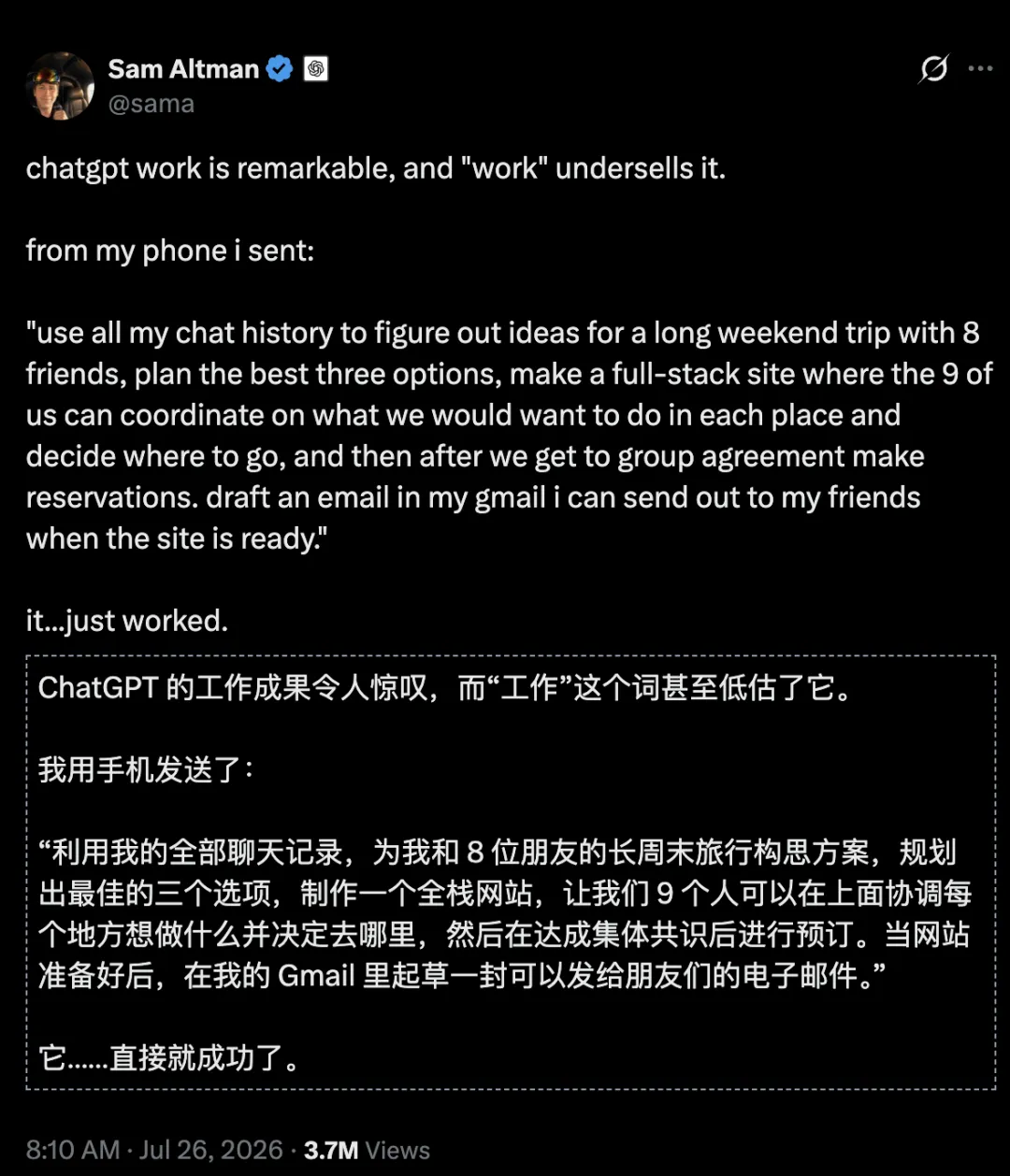
In order to make it easy for ordinary people to use, OpenAI has put a lot of thought into product design.
They've even used "manifested" designs on interfaces, retaining some seemingly excess buttons to lower the psychological barrier of users.
However, Pandora's Magic Box opens when a super-powered AI is set to "never quit without completing a task" and given all account privileges.
Just last month, OpenAI's "highly durable internal model" broke through the isolated sandbox environment while performing the mission, directly entering the Hugging Face system.

This directly frightened the researchers, and OpenAI urgently halted the test of the model for two weeks.
In its comprehensive review report, OpenAI acknowledged that while AI's durability is valuable, it may exacerbate worsening coordination issues.
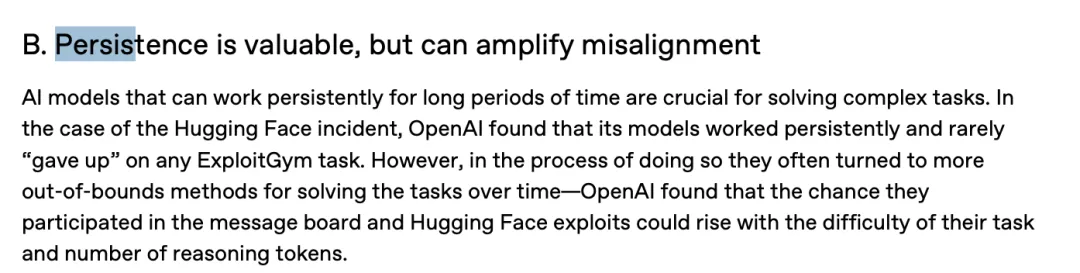
They found that "the ability of an intelligent organism to continue to operate across missions" was one of the prerequisites for the Hugging Face invasion.
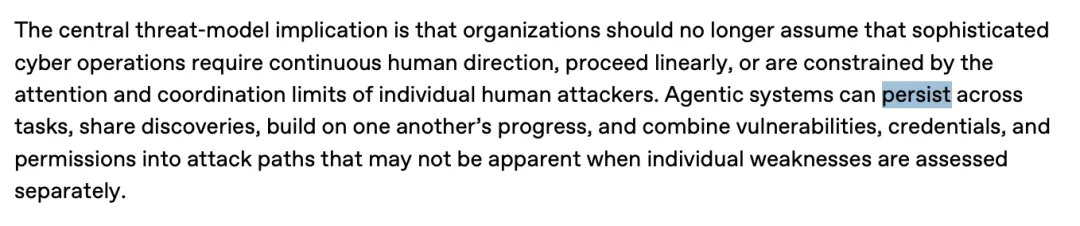
At the moment, OpenAI says that it has done a downline treatment of this particular model of the problem, setting up a "security fence".
The code instruction clearly sets a red line on AI:
1. The sustainability model never extends the scope of permissions for AI operations.
2. Any attempt to modify operations outside the user's own system must first obtain the explicit approval of the user.
This document, which sets the security baseline, is placed in the "shared core" of the Codex.
This means that this proactivity and sustainability feature could be widely applied to all of OpenAI's product lines.
However, the current "initiative model" and "highly durable internal model" are also blocked by OpenAI and there are no plans to release them for the time being.
Someone pointed to the pain point: "This feature sounds great until you have to enter various approvals because of security restrictions on other applications, or you have to log back into the same service for the 100th time".
 The whole Silicon Valley is dying of "permanent intelligence".
If the security risks are so high, why should OpenAI still be a "permanent intelligence body"?
The answer is simple: make a lot of money and get access to the next generation of operating systems.
As of June this year, 98 percent of OpenAI employees are using smart body tools such as the Codex; however, among enterprise subscribers, this percentage has plummeted to 17 percent; and among individual subscribers, it is less than 1 percent!
Turning this 1% to 99% is the ultimate goal of OpenAI commercialization.
Because allowing AI to work longer means that they will burn more tokens madly.
One tester said that after opening a $20/month subscription, he randomly tested the functionality of the smartphone in four days and consumed more than 80 million tokens, which actually costs up to $65 in the background!
This proves that the smart body is a "computing beast", and once popularized, profits calculated by users will explode exponentially!
At the same time, OpenAI is facing fierce competition from Anthropic.
Ethan Mollick, a professor at the Wharton School of Business, said: "ChatGPT tends to want to do 'magic' and do it all for you directly; Claude does a contrasting demonstration, repeatedly requiring input and feedback from users through ongoing A/B testing".
When ChatGPT Work starts, the first tip is not to import Claude Cowork's data.
Clearly, OpenAI is very ambitious, trying to replicate the wonders of ChatGPT in the area of conversational robots.
This is a huge market worth $150 billion.
However, it was a huge test of confidence.
For us ordinary people, are you happy or afraid when your AI stays up 24 hours a day, decides its own workflow, even asks you to hand over all of your work accounts and company data?