Over the past decade, the Chinese tech industry has been flooded with talent, drawing a clear migration path: from the Internet to new energy, from new energy to physical intelligence.
After 2015, the smartest product managers and algorithm engineers rushed to build new cars; after 2025, the top self-driving and AI architectural talents began rushing to robotics companies.
In this war, the young man became one of the most remarkable young men to emerge, as the central leader of the young man was leaving one by one.
At the same time as the executive departure trend continues to ferment, the capital market has given the opposite signal. On August 24, the Xiaoming Group announced the completion of its first round of over $900 million in financing of its humanoid robot business, with a post-investment valuation of over $6.3 billion (approximately 43 billion yuan), by IDG Capital Holdings, Qualcomm Investments, Tencent and Alibaba as strategic investors.
On the one hand, the core executives are disconnected, on the other hand, the capital is heavily betting, the story of the little robot, which is going through two days of ice and fire.
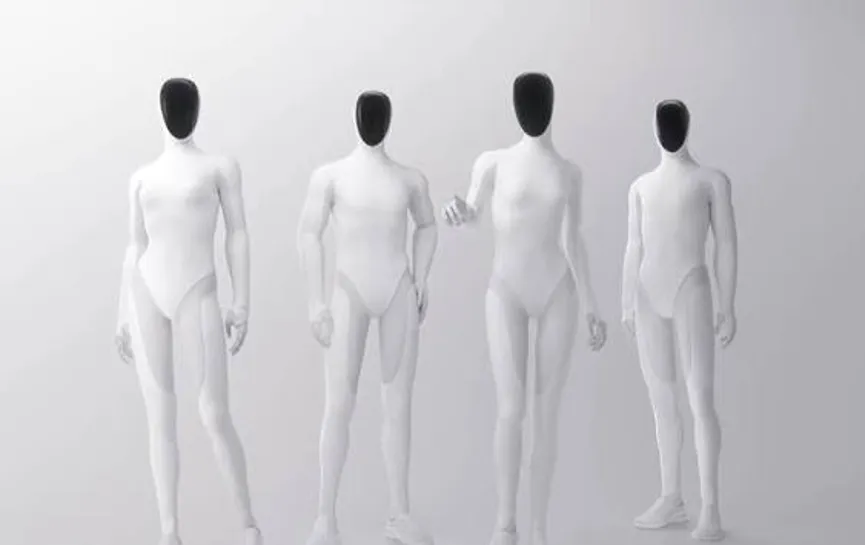
Earlier this month, a change in personnel in the robotics circle sparked concern. Chen Yonghai, the former vice president of products of the Xiaoming Group, has joined the company as president of operations, reporting to chairman and CEO Liu Yongyang.
Chen Yong-hei, who became acquainted with Hua Xiaoxun 15 years ago, joined Hua Xiaoxun's founding UC in 2010 and, after joining Hua Xiaoxun Automobile in 2022, led the construction of the product center, planning and setting up the product creation and upgrading plan for the Hua Xiaoxun Group for the next three years.
Just four months ago, the former vice president of Chevrolet, Li Li Liang, the first driver in the driver's seat, joined Volkswagen as chief technology officer.
In less than a year, from October 2025 to July 2026, at least six core executives have left the company, covering autonomous driving, smart seats, product centers, robots, AI infrastructure and integrated systems. Almost every key line of business is losing blood.
From the founder to the CTO, to the president of operations, the circle of physically intelligent people is being overwhelmed by former executives.
01.
An off-the-job list covering all core business lines
Let's take a look at the timeline.
In October 2025, Li Li, the head of the autonomous driving center in Chongqing, resigned, officially stating that Chongqing was temporarily suspended for physical reasons, but a week later announced his official resignation.
In December 2025, Chen Yonghai, Vice President of the Product Center, resigned from the post, temporarily replaced by President Wang Xiaoping.
In April 2026, the group's vice president, head of Intelligent Seating, stepped down, previously on leave of absence due to family reasons.
At the beginning of June 2026, Senior Director of Robotics Products, Shiaoyang officially resigned. He was the head of the benchmark system of small-sized humanoid products built from 0 to 1 and served for 1,675 days. It is worth noting that in May 2026, Shiaoyang continued to share publicly the ideas of quantum production design of IRON as a visiting lecturer at the University of Science and Technology.
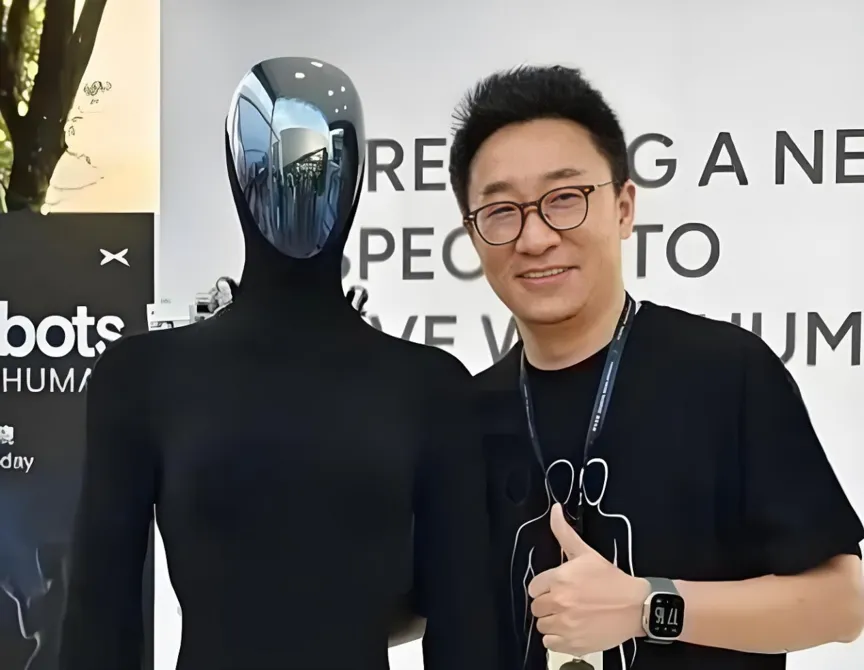
At the end of June 2026, the head of the robotics business, Miryan Kagawa, resigned.
In July 2026, the head of the AI Infrastructure Department, Lu Jing, was revealed to be leaving office, the next stop being OpenAI.
If we move the timeline a little further, in May 2025, the overall head of the corporate headquarters will be well below the threshold of leaving the business.
This means that from mid-2025 to mid-2026, almost all of Nokia's core business lines have undergone a blood transfusion. From self-driving to smart cars, from product centers to robotics, from AI infrastructure to the entire machine itself, there is no single key link that can uniquely shape its body.
What is even more disturbing is that the executives who left the shelter are plunging in the same direction.
02.
Where they went: A talent flowing to a map
If you look at the direction of these executives, you can see that there is a clear trend towards talent in the industry.
In April 2026, Li Liang officially joined engine robots as chief technology officer, coordinating the full lifecycle management of intelligent technology.
In August 2026, Chen Yong-hai joined the company as its operations president. According to sources, after leaving the company, Chen Yong-hai wanted to start his own startup as a robot, and other robotic companies invited him to join the company.
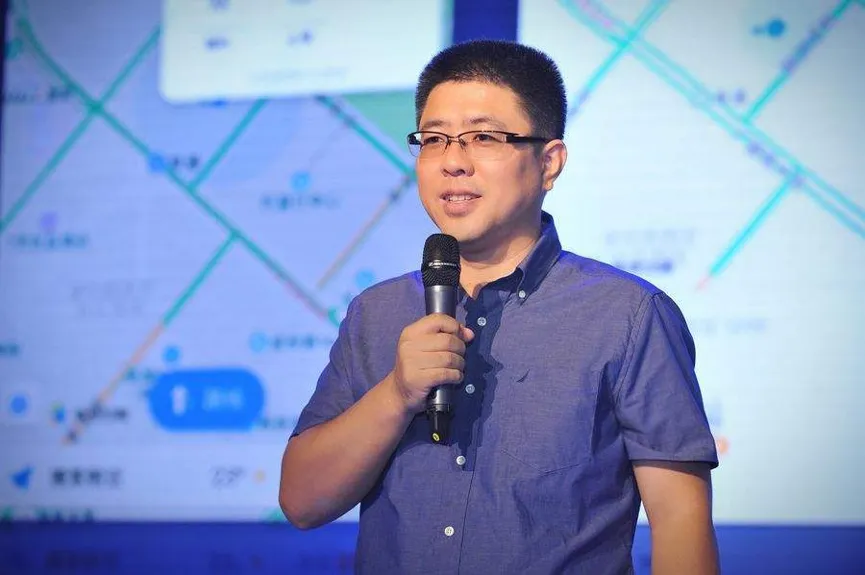
Rudyard Kipling is about to join OpenAI to participate in research and development in the direction of intelligent robots.
I'm not sure if I'm going to make it.
She rejected the invitations of several leading robotics companies and carmakers, temporarily suspending employment choices.
In the meantime, Mr. Milan Kavanaugh has gone to a non-public disclosure.
There is no clear information on the next station to be opened to the public after the monkey left the cottage.
Of the four executives who have been cleared to go, Li Li and Chen Yonghai both went to Shanghai, where one was the first chairman and one was the former vice president of products. The founder of their new company, Shanghai, is the former general manager of Shanghai, and in 2020 he co-founded Shanghai, China, as general manager and led the research and development of China's first generation robotic PCX5.
03.
Why they're leaving: intergenerational switching, organizational restructuring and routing.
Executive executives are often dismissed for no single reason. There are at least three structural factors behind this turn of events.
1. Li Liyuan: a city guard who was eliminated by the wave of Chinese AI natives
Li Liang's background is bright: Chinese undergraduate, New York University doctor, formerly at Baidu, Jindong, responsible for autonomous driving. In August 2023, after the former head of Intelligent Driving, Liu Xiaobo, left to join Great Britain, Li Liang faced the threat of taking over fully autonomous driving in China.
During his tenure, he completed the deployment of urban NGP in hundreds of cities across the country, pushing the end-to-end mass-production of intelligent driving programs online.
But the problem is right here. There are voices within the company that argue that Lee Liu's switch to AI is slow, and there are differences with the company's new direction in technical routes and budget allocations. As the industry rapidly shifts from rule-driven assisted driving to end-to-end intelligent driving based on large models, the shifting pressure on technical routes has increased. In March 2024, Lee Liu introduced a purer AI talent with a Facebook and Cruise background.
Lee Lee's departure was essentially a victim of the shift from the rule-of-thumb era to the AI era. This is not a question of personal ability, but of technological intergenerational switching.
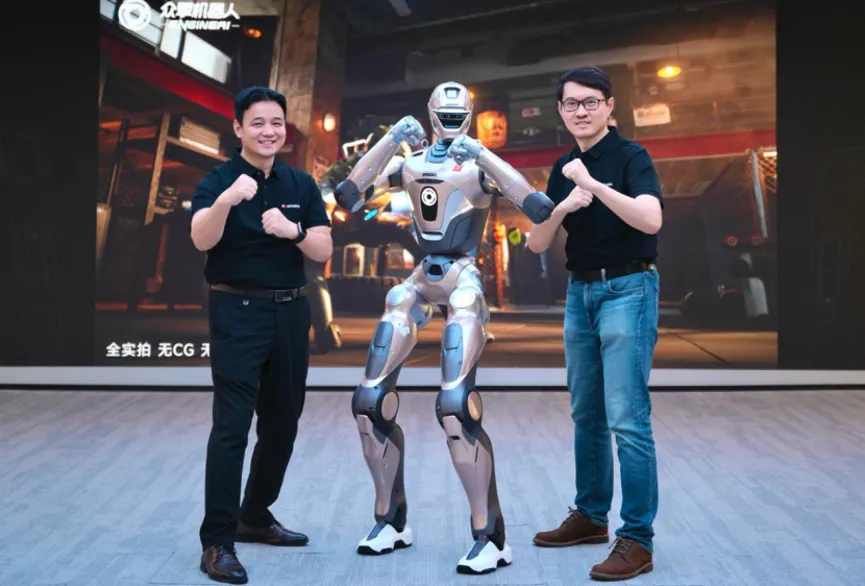
2. Chen Yong Hai and Liu: Internet executives are fascinated by car companies
Chen Yong-hai, who met Hua Xiaoxun at the age of 15, joined UC in 2010, joined Xiaoxun in 2022, and has spent three years expanding the Xiaoxun product center from a small team of dozens to a professional team of 3,400 people, is the driving force behind model movements such as the G6 and X9.
Prior to joining Xiaoyuan, Liu was the Director of Quality Map Products, responsible for navigation and map product planning. At the end of 2021, Liu joined the Xiaoyuan Group as the head of the Internet Center, fully leading the R&D and deployment of the Xiaoyuan. In February 2026, Xiaoyuan merged the Xiaoyuan Center with the Autonomous Driving Center to form the Xiaoyuan General Intelligent Center Xiaoyuan, a position equivalent to being optimized by Xiaoyuan.
The departure of the two is quite representative, as a group of executives with an internet factory background have left after serving in a new energy car company, such as Kim Ji-hwa of Alibaba, who joined the Ideal Car chip division shortly after leaving office.
3. Robot Cast Iron Triangle Dispersed Gang: Key Characters Leave the Job and Cause a Chain Reaction
The collapse of the robot team is the most outrageous.
It was the iron triangle of a small-scale robot. Today, the iron triangle is scattered.
This exposes the fluctuations in the strategies for hiring people in high-end jobs. Several hunters have revealed that people who were first able to look across the field in high-end jobs have been switched over to those who preferred to work directly with robots, and more recently to those who can look across the field again.
The fluctuations in user strategies and the instability in the HR team are turning recruitment into a gamble.
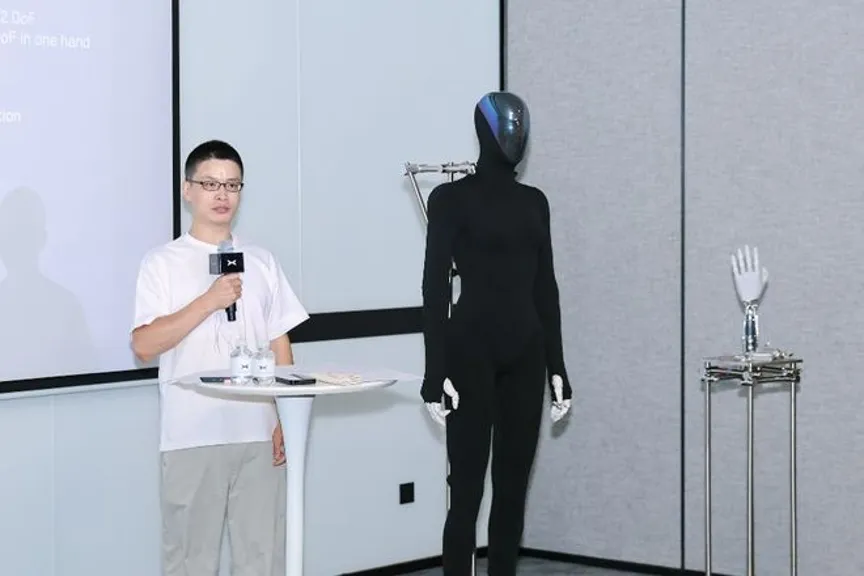
4. Luo Seong: General worker of the chip that was dug by OpenAI
This is probably one of the most unexpected things about Ruth's departure.
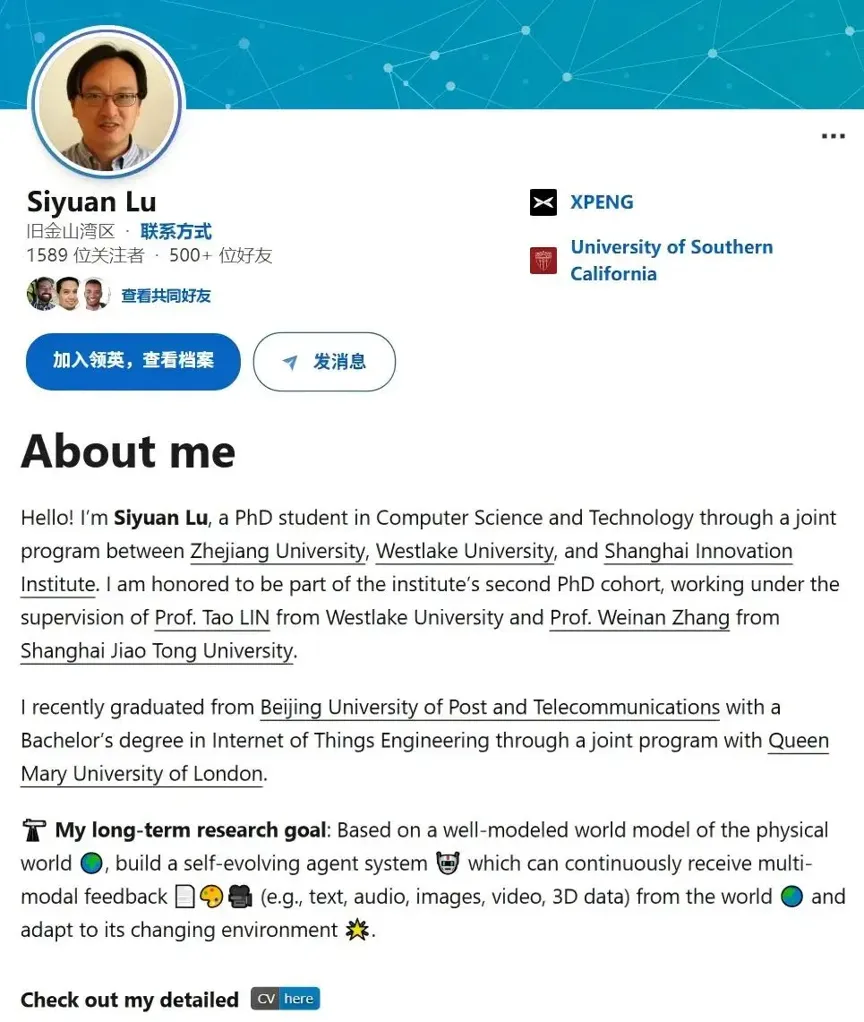
According to public records, he is a Ph.D. in physics from the University of Southern California, where he has led the construction of a small-scale AIInfra-complete system, managing a team of about 200 people. His responsibilities include model training frameworks, GPU cluster management, self-development chip compilers, data processing, model quantization optimization, and complete links to end-to-end logical deployments and mass-production sites.
His value is particularly critical in the microchip's self-development pathway. It is known that the microchip's self-development chip-supported compiler and reasoning operating system must be completed by the AI Infra team, which is a key premise for microchip to be able to truly drive mass production of end-to-end models.
The team is expected to be divided into three or more independent teams, each headed by a different manager.
A core technical team of 200 people was split into three on the night before the robot was mass-produced, and coordination costs and efficiency losses should not be overlooked.
04.
What Little Monkey Is Doing: Turning to Physical A.I.
In the face of the loss of core executives, it is not without action. On the contrary, it is doing an extremely radical strategic and organizational restructuring.
The first is the strategic transformation: from smart car companies to AI companies.
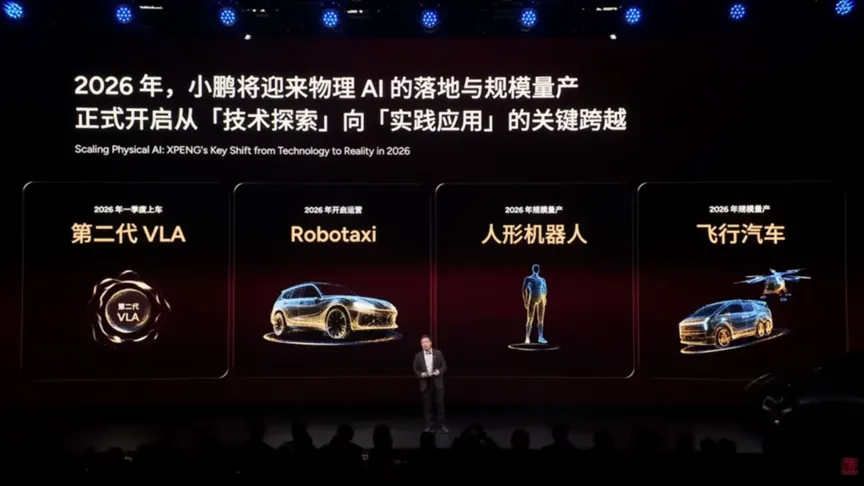
In April 2026, the company officially changed its name to the Group. The name change was a complete transformation of the business boundaries from a single automotive business to a physical AI technology group covering autonomous driving, humanoid robots IRON, and flying cars.
He has identified 2026 as a critical year for the commercialization of AI in physics.
Second, organizational restructuring: breaking down the smoking cesspools of smoking technology.
In February 2026, Xi Jinping merged the Autonomous Driving Center with the Intelligent Seating Center into a General Intelligence Center, led by Xi Jinping and reporting directly to Xi Jinping.
On June 10, 2026, Ho Chi Minh released a full-time internal letter announcing that he would personally serve as CEO of the robotics business. Thereafter, the robotics center created nine new secondary departments, including the Product Department, the Department of Physical Systems Engineering, the Department of Operations and Security Development, etc. Ho Chi Minh not only served as CEO of the robotics business, but also as Head of the Product Department.
The choice was to hand over the car business to Wang Feng, his own All in Robot.
Third, the swing of human strategy.
The strategic direction is clear and does not mean that there are no problems with execution. As mentioned above, the preferences for recruitment in high-end positions are changing repeatedly, and the HR team is unstable, making it even more difficult to rebuild the organization.
One of the founders himself comes down to play the game, explaining two things: first, it's important enough; second, there's no better person to handle it.
05.
Link to the Future
Over the course of a year, six core executives resigned, with a monopoly chain of business lines behind each name.
But if we look at it from a higher perspective, we will see that the disappearance of executives from small businesses is not an isolated incident.
After October 2025, Liu Xiaobo almost simultaneously adjusted the autonomous driving team. Liu Xiaobo resigned as head of the AI platform, Liu Yuli, as well as several core personnel, including World Model Head, Manning, and Huang Xiaobo, head of intelligent driving products.
The entire smart car industry is undergoing an organizational restructuring that goes from thinking about cars to thinking about AI.
From an industry point of view, this is precisely a shortened version of the race track that is running through the heat. While OpenAI, Tesla, and many robotic startups are ramping up AI and robotic talent, traditional car companies' talent premiums are being re-priced.
Over the past few years, internet talent has flooded into the automotive industry, marking the rise of the new energy automotive industry. Today, automotive executives and AI talent are moving from smart cars to physical intelligence, which is the beginning of the next industrial cycle.
In an internal letter, Ho Chi Minh gave a clear timetable: mass production of humanoid robots by the end of 2026; a quarter of 2027, robots will enter retail stores under the Ho Chi Minh line as export purchases; and a gradual introduction to households in 2028.
This is an extremely radical plan. After all, we are less than six months away from the fourth quarter of 2026.
The direction of the little mouse is not wrong, but on the night before mass production, the most feared is not the absence of a story, but the absence of people who can bring the story down.